10%, 20% or 40% Urea: Which Strength Is Right for a Foot Cream?
- Understanding moisture modulation and keratolysis across urea concentrations
- Mechanism of action by concentration and functional outcome
- Indications by consumer profile and clinical presentation
- Safety, tolerability, and special-population considerations
- Formulation, packaging and manufacturing imperatives for each strength
- Raw material specifications and sourcing controls
- Stability, pH, and preservative system adjustments
- Packaging strategies to maintain efficacy and user safety
- Regulatory classification, claims, and go-to-market positioning
- Cosmetic versus therapeutic classification and regional differences
- Claims substantiation and clinical endpoints
- SKU strategy, pricing and distribution channels
- Supplier selection, quality control and scale-up metrics
- Factory capabilities, certifications and audit checkpoints
- Analytical testing, acceptance criteria and batch release
- Commercial KPIs and time-to-market planning
- Why partner with an experienced full-service OEM/ODM for intensive foot solutions
- Technical capability requirements assessed by brand owners
- Integrating clinical and marketing assets to support High Quality claims
- Operational and commercial advantages of a consolidated supplier
- Beyond Basix: manufacturing competence and product portfolio advantages
- Facility credentials and production scale
- Research, development and compliance strengths
- Product breadth and go-to-market support
- Certifications, quality assurance and partner commitments
- Frequently Asked Questions
High-density summary: Selecting the correct urea concentration for an intensive foot formulation requires aligning clinical indication, regulatory classification, manufacturing capability, and market positioning. Ten-percent urea solutions prioritize daily hydration and maintenance for mild xerosis; 20% offers enhanced keratolytic and hygroscopic activity for moderate hyperkeratosis and rough heels; 40% is reserved for targeted debridement and callus reduction, requiring controlled manufacturing, explicit labeling, and heightened safety testing. Buyers and brand owners must weigh supplier GMP/ISO credentials, stability and preservative strategies, packaging compatibility, claims substantiation, and risk mitigation for sensitive populations (e.g., diabetics). This guide outlines mechanism-of-action differences, practical formulation notes, regulatory checkpoints (see Urea (Wikipedia), FDA cosmetics overview), manufacturing expectations guided by international quality frameworks (ISO 9001, WHO GMP) and procurement checklists for scaling a branded intensive foot product.
Understanding moisture modulation and keratolysis across urea concentrations
Mechanism of action by concentration and functional outcome
Urea acts as both a humectant and a keratolytic agent. At lower percentages (around 5–10%), the primary effect is humectancy: the molecule attracts and binds water in the stratum corneum, improving skin pliability. Mid-range concentrations (15–25%) combine humectant function with moderate protein denaturation that loosens corneocyte connections, aiding exfoliation of thickened skin. High concentrations (30–50%) have pronounced keratolytic activity, promoting maceration and removal of hyperkeratotic plaques. For procurement, this means product intent—daily maintenance versus clinical debridement—should dictate target active loading.
Indications by consumer profile and clinical presentation
Clinical indications differ by concentration. A 10% active level generally targets consumers with chronic dry skin, mild fissuring, or preventive maintenance programs sold through retail channels. A 20% formula addresses moderate calluses, rough heels, and visibly thickened skin and often supports marketing claims of visible smoothing within days when combined with occlusive delivery systems. A 40% formulation is used for targeted removal of stubborn calluses and severe hyperkeratosis; manufacturers should position these as intensive treatments with usage limits, cautionary labeling, and potentially physician supervision for at-risk users.
Safety, tolerability, and special-population considerations
Irritation risk increases with concentration. Patch testing data and controlled clinical evaluations are advisable before claim substantiation. For populations with compromised circulation or neuropathy (for example, people with diabetes), conservative approaches and explicit contraindications are standard. Buyers should require suppliers to provide dermatological test reports, sensitization panels, and, where applicable, adverse event monitoring plans as part of post-market surveillance.
Formulation, packaging and manufacturing imperatives for each strength
Raw material specifications and sourcing controls
Urea raw material must meet pharmaceutical/cosmetic-grade specifications (purity, heavy metals, microbial limits). For higher-load products, crystallization and solubility planning become critical: urea is highly water-soluble but can affect viscosity, freezing point, and preservative efficacy. Procurement teams should request Certificates of Analysis (CoA), endotoxin/microbial reports, and SDS sheets, and verify supplier traceability chains against quality standards.
Stability, pH, and preservative system adjustments
Urea can hydrolyze over time, increasing ammonia content and potentially raising pH; this can compromise fragrance stability and promote irritation. Formulas at 20–40% often require pH buffers and robust preservative systems validated to the formulation matrix. Stability protocols should include accelerated and real-time testing, photostability checks, and preservative efficacy tests (e.g., challenge tests) to validate shelf life under expected storage conditions.
Packaging strategies to maintain efficacy and user safety
Packaging should minimize air and microbial ingress. For high-concentration actives, consider tube or pump systems with tamper-evident seals and single-use sachets for intensive treatments to control dose and contact time. Barrier materials must be compatible with the final formula; urea can interact with certain elastomers and adhesives, so compatibility testing is essential. Batch coding and serialization assist in recalls and traceability.
Regulatory classification, claims, and go-to-market positioning
Cosmetic versus therapeutic classification and regional differences
Regulatory classification depends on region and claims. In many markets, moisturizing and smoothing claims keep products within the cosmetics category, referenced in regulatory overviews such as the FDA cosmetics overview. However, stronger keratolytic claims or concentrations intended to treat medical conditions can trigger drug/OTC classification or medical device rules, which require additional registration, clinical data, and labeling controls. Brand owners must consult regulatory counsel early and document the intended use and claim architecture.
Claims substantiation and clinical endpoints
For B2B buyers, well-defined endpoints reduce launch risk. Typical measurable endpoints include transepidermal water loss (TEWL), corneometry, callus thickness reduction, and subject-reported outcomes like reduction in cracking or discomfort. A controlled clinical study (n≥30–50, depending on claim) with photographic evidence and objective instrumentation strengthens claims and marketing copy while mitigating regulatory inquiries.
SKU strategy, pricing and distribution channels
Lower-strength products (10%) suit mass retail and e-commerce price points; mid-range (20%) can be High Quality retail or professional channels; high-strength (40%) often fits specialty medical or professional-use segments. Buyers should model margins with production batch sizes, packaging costs, clinical validation spend, and expected return rates. SKU complexity increases supply chain cost; therefore, target market segmentation must be confirmed before committing to multi-strength launches.
| Parameter | ~10% Urea | ~20% Urea | ~40% Urea |
|---|---|---|---|
| Primary function | Humectant, maintenance hydration | Combined humectant + moderate keratolysis | Strong keratolysis/debridement |
| Typical channel | Mass retail, e-commerce | High Quality retail, professional lines | Specialty/medical or supervised use |
| Safety profile | Low irritation risk | Moderate—patch recommended | Higher irritation risk—label warnings required |
| Stability concerns | Minimal | Moderate—pH and preservative impact | High—hydrolysis and preservative efficacy issues |
| Regulatory vigilance | Standard cosmetic notification in many markets | Depends on claims; often cosmetic | May trigger medicinal/OTC classification in some jurisdictions |
| Packaging recommendation | Airless pump or tube | Airless pump with dosing control | Single-use sachets, sealed applicators, or professional-use kits |
Supplier selection, quality control and scale-up metrics
Factory capabilities, certifications and audit checkpoints
Buyers should verify supplier credentials including ISO 9001 and GMP adherence; production facilities with pharmaceutical-grade dust-free workshops and validated cleanrooms reduce contamination risk. Supply agreements should specify CoA provision, batch retention, and non-conforming goods procedures. On-site audits, third-party testing, and supplier scorecards are effective governance mechanisms.
Analytical testing, acceptance criteria and batch release
Standard release tests include potency (active percentage), pH, preservative efficacy, microbial limits, and accelerated stability. For higher concentrations, additional tests (ammonia levels from urea hydrolysis, heavy metals, and extractables from packaging) are prudent. Acceptance criteria should be codified in master batch records and agreed upon before production runs commence.
Commercial KPIs and time-to-market planning
Key performance indicators include lead time, minimum order quantity (MOQ), cost per unit at scale, yield loss, and time for stability/clinical work. For intensive foot care products that require clinical substantiation, allow an extended timeline for study completion and regulatory review. Buyers should model scenarios for 12-, 24-, and 36-month demand to ensure MOQ alignment and avoid overstock.
Why partner with an experienced full-service OEM/ODM for intensive foot solutions
Technical capability requirements assessed by brand owners
Advanced production of high-load urea formulas requires tight process controls: accurate ingredient dosing, temperature-controlled mixing, validated filling lines, and contamination control. A one-stop manufacturer should provide formulation R&D, stability testing, clinical support, packaging engineering, and turnkey logistics—all crucial to reduce technical risk and compress development timelines.
Integrating clinical and marketing assets to support High Quality claims
Beyond product manufacture, buyers benefit from partners who can coordinate clinical endpoints, photography protocols, and claims substantiation documents. These assets accelerate marketing approvals and support label verbiage that aligns with regulatory safety requirements while delivering credible consumer messaging.
Operational and commercial advantages of a consolidated supplier
Working with a vertically integrated manufacturer reduces touchpoints and improves traceability. Consolidated billing, warehousing, and coordinated quality systems simplify logistics and enable faster response to trend shifts in footcare demand, such as seasonal spikes or retailer promotions.
Beyond Basix: manufacturing competence and product portfolio advantages
Facility credentials and production scale
Our manufacturing platform supports complex formulas requiring high cleanliness and precision. Guangzhou Beyond Basix Cosmetics Ltd. operates a 12,000-square-meter facility with a 100,000-level GMPC pharmaceutical-grade dust-free workshop and 12 production lines equipped with advanced machinery imported from Germany, the US, and other regions. These capabilities enable reliable production of moisturizing maintenance formulas through high-load keratolytic treatments under controlled conditions.
Research, development and compliance strengths
We have more than 23 years of experience in research, production, and sales, and have focused on the development of actives-based skincare for 12 years. Our regulatory and quality framework includes ISO 9001 certification and GMP processes aligned with international guidance. Buyers can evaluate our CoAs, stability protocols, and clinical support as part of a transparent vendor selection process.
Product breadth and go-to-market support
Beyond Basix operates four major brands—LANTHOME, PANSLY, FIRSTSUN, and SAUVASINE—and supplies a broad portfolio across Skincare Products, Hair Care Products, Eye Care Products, and Body Care Products. We provide turnkey options from concept to shelf, including private formulation, custom packaging solutions, and scale manufacturing to meet varied distribution strategies, whether targeting mass retail, High Quality channels, or medical-professional segments.
Certifications, quality assurance and partner commitments
We maintain ISO 9001, CE, MSDS, GMP, HALAL and other certifications relevant to global trade. Our commitment is to offer competitive pricing while maintaining quality, regulatory compliance, and responsive service. Buyers seeking a reliable partner for intensive foot treatment lines will benefit from our integrated R&D, manufacturing, and commercial capabilities.
For technical specifications, sample requests, and customized proposals for intensive footcare formulations across different urea strengths, procurement teams should request an official capability dossier and batch release data from the chosen manufacturer (see global quality references such as ISO 9001, WHO GMP, and general ingredient guidance at Urea information).
Note: Regulatory classification varies by jurisdiction—consult local regulatory guidance such as the FDA cosmetics overview prior to launch.
Contact Beyond Basix to discuss formulation options, MOQ, finished-goods costing, and timelines for launch planning.
Frequently Asked Questions
Which urea concentration is best for everyday moisturizing foot products?
For daily maintenance and mild xerosis, a 10% urea formulation typically provides effective humectancy with a low irritation profile and is suitable for mass retail channels.
When should a brand select 20% urea for a foot treatment?
A 20% active level is appropriate when targeting moderate hyperkeratosis and rough heels; it balances improved keratolytic activity with acceptable tolerability but requires pH and preservative optimisation and substantiation for smoothing claims.
Is 40% urea appropriate for over-the-counter retail, or does it require medical supervision?
Forty-percent preparations have strong keratolytic effects and higher irritation risk, so regulatory scrutiny and conservative labeling are advised; in some jurisdictions, such high concentrations may trigger additional regulatory requirements or be better positioned for professional or medical distribution.
What manufacturing certifications and documentation should buyers request from an OEM/ODM?
Buyers should request ISO 9001 and GMP evidence, Certificates of Analysis (CoA) for raw materials, stability and preservative efficacy data, microbial test results, batch release protocols, and a facility audit report or third-party audit summary.
How should packaging be specified for high-concentration urea products?
Packaging must ensure dose control, barrier protection, and material compatibility: airless pumps, single-use sachets, or sealed applicators are recommended for high-concentration actives; compatibility and extractables testing should be performed to avoid container interactions.

Elevate your professional skincare offerings with this Private Label Copper Peptide Anti-Wrinkle Firming Serum, a powerhouse concentrate designed for superior age-defying results. This sophisticated formula leverages the synergistic effects of GHK-Cu and SNAP-8 to address multiple layers of skin aging. The GHK-Cu copper peptides act as a vital signaling mechanism to enhance skin density and firmness, while the advanced SNAP-8 octapeptide specifically targets expression lines, helping to relax the appearance of deep-seated wrinkles for a smoother, more refined surface.
This lightweight, rapid-absorption serum provides a professional-grade solution for clients seeking a non-invasive lift. It effectively restores elasticity, improves skin texture, and provides essential antioxidant protection. Perfect for high-end beauty brands, this serum leaves the complexion looking visibly contoured, hydrated, and youthfully revitalized.
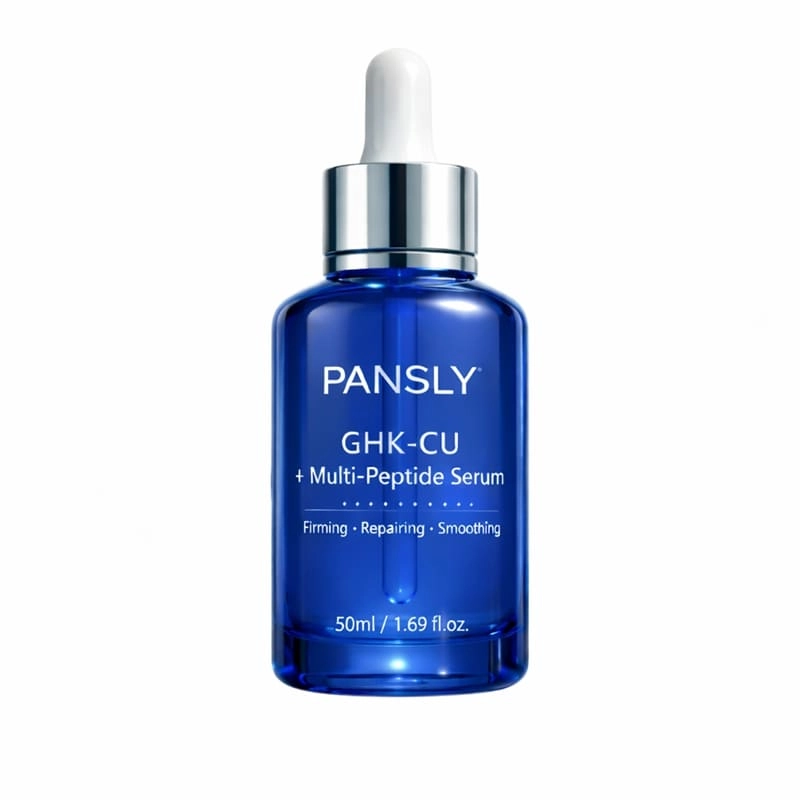
Experience visible rejuvenation with this GHK-Cu Copper Peptide Smoothing & Firming Face Serum, a high-performance concentrate designed to restore the structural integrity of aging skin. This advanced formula centers on GHK-Cu, a powerful signaling peptide clinically recognized for its ability to support natural collagen and elastin production. By promoting dermal density, it effectively tightens sagging skin and smooths the appearance of deep-set wrinkles and fine lines.
The lightweight, silky texture absorbs instantly, delivering antioxidant protection to neutralize environmental stressors that accelerate aging. Enhanced with deep-moisturizing agents, the serum reinforces the skin's moisture barrier, leaving the complexion feeling remarkably soft and resilient. With consistent use, skin texture is refined and facial contours appear more lifted, resulting in a youthfully firm and revitalized glow.
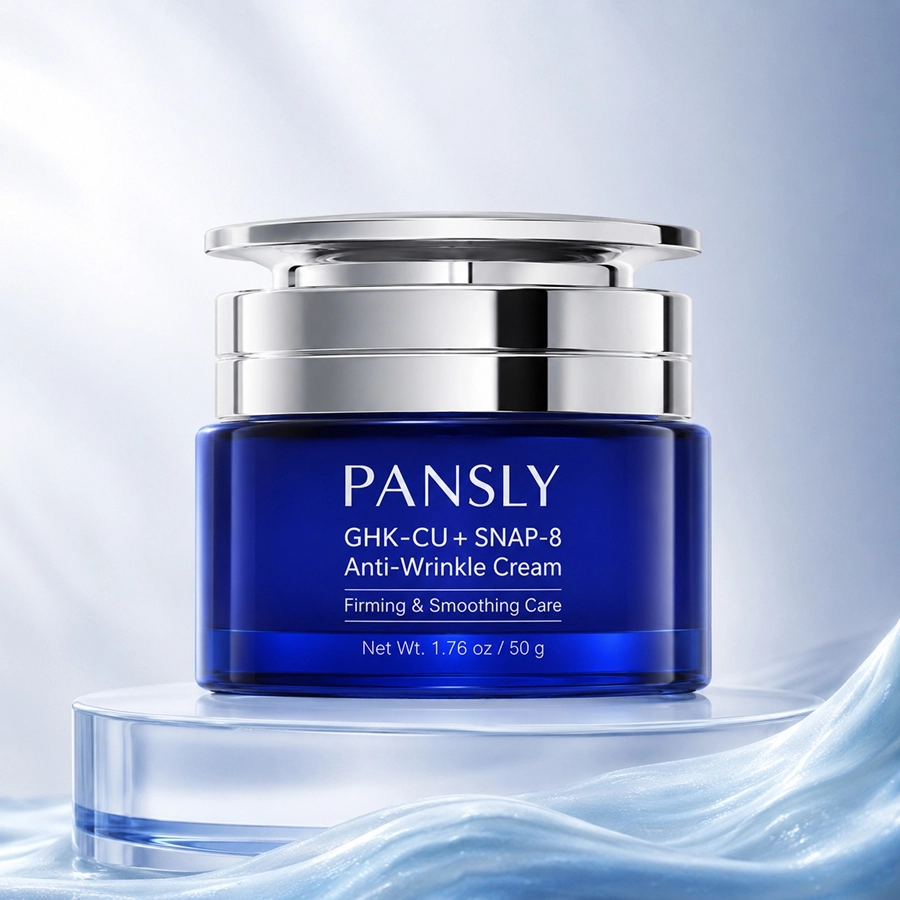
This Pansly GHK-CU + SNAP-8 Anti-Wrinkle Firming Cream is triple-peptide anti-aging facial cream, delivers targeted wrinkle smoothing, firming lifting and deep nourishment for dull, saggy, fine-line prone skin. Full OEM & ODM private label service is supported, including custom formula, packaging options, fast sampling and bulk export supply.
Five core premium active ingredients work synergistically for comprehensive anti-wrinkle care:
GHK-CU Copper Peptide lifts saggy skin, enhances skin resilience and tightens loose facial contour;
SNAP-8 Peptide targets expression lines to visibly soften and fade wrinkles;
Acetyl Hexapeptide-8 reduces the appearance of dry fine lines for smoother skin texture;
Ceramide NP reconstructs skin moisture barrier to lock nourishment and boost comfort;
Hyaluronic Acid delivers multi-layer rich deep moisture to relieve dry rough skin.
Luxury rich creamy texture spreads smoothly and melts into skin gently, leaving soft comfortable finish without heavy greasiness. Daily use blurs fine lines, firms loose skin, deeply nourishes and stabilizes barrier, refining uneven texture to reveal smooth, plump, youthful luminous skin.
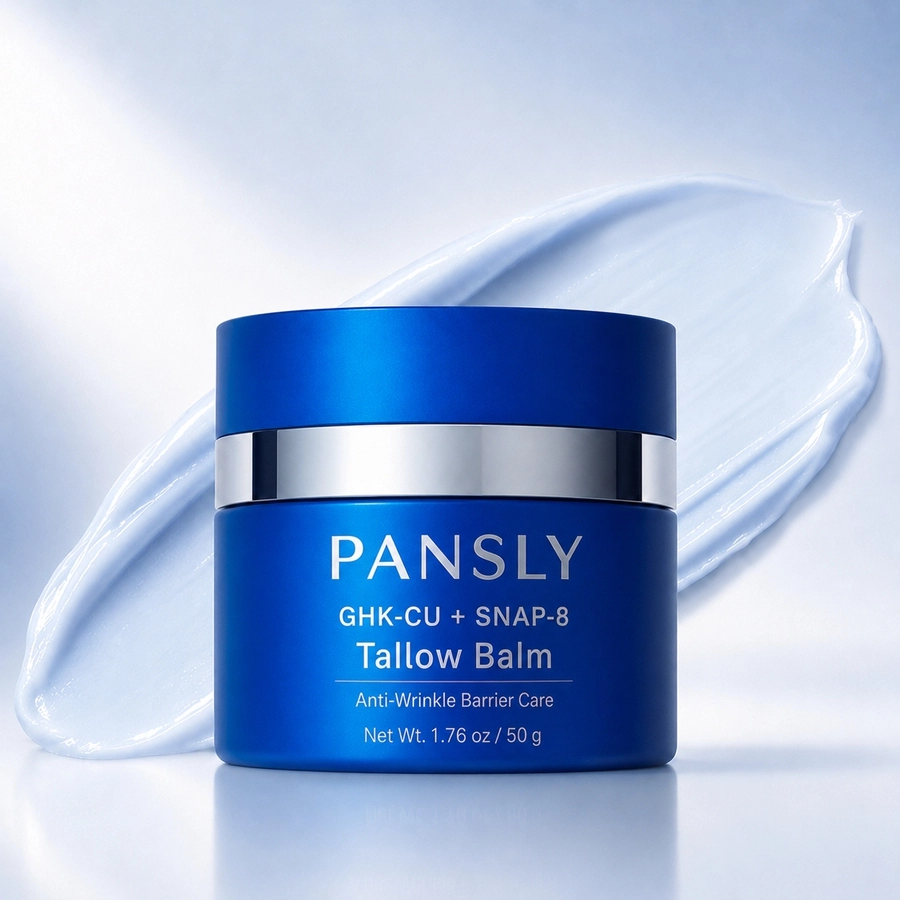
This Pansly GHK-CU + SNAP-8 Tallow Balm is a nourishing anti-wrinkle facial balm specially formulated for dry, fragile and sensitive skin, combining anti-aging wrinkle smoothing and barrier repairing effects. We offer full private label OEM service, including custom logo, adjustable formula, diversified packaging and lid color options.
It contains five core skin care active ingredients: GHK-CU visibly improves fine lines and revives dull complexion; SNAP-8 softens expression lines to smooth wrinkled skin texture; Grass-Fed Beef Tallow delivers deep lipid nourishment to relieve dry rough skin; Ectoin stabilizes the skin barrier and alleviates skin discomfort; Ceramide NP strengthens barrier structure to create smooth, healthy skin.
Luxury creamy blue balm texture glides smoothly and melts quickly on skin, providing long-lasting deep moisturizing comfort. Daily use fades fine lines & expression lines, nourishes dry delicate skin, repairs damaged barrier and leaves silky smooth skin finish.
Click here to customize the Beauty
we respond within a few hours
Monday–Friday, 9AM–6PM
3A01, Building A, Zhisheng Square, No. 4 Zhifu Road, Helong Street, Baiyun District, Guangzhou, China.


Leave a request, and we'll email you back within 24 hours.
© 2026 Beyond Basix. All Rights Reserved.