
The latest trends for anti aging moisturizer | Beyond Basix Ultimate Insights
- Regional supply chain resilience and macroeconomic drivers
- Manufacturing consolidation and capacity modernization
- Cost pressures, regional sourcing, and nearshoring
- Regulatory harmonization impacting formulation strategy
- Ingredient innovation and formulation science
- Next-generation actives: peptides, stabilized retinoids, and non-prescription cosmeceuticals
- Encapsulation, targeted delivery, and microbiome-friendly systems
- Cleaner labels and clinically backed naturals
- Commercial channels, consumer preferences, and packaging sustainability
- Omnichannel acceleration and personalization
- Sustainable packaging and post-consumer recyclability
- Price-tier stratification and margin optimization
- Quality, compliance, and digital traceability
- Certifications, on-site testing, and batch-level transparency
- Digital QA: blockchain and provenance reporting
- Clinical substantiation and claim governance
- Operational playbook for B2B buyers
- Due diligence checklist for selecting an OEM/ODM
- Risk mitigation through co-development and phased launches
- Commercial terms and long-term innovation partnerships
- FAQ
- What are the most effective active ingredients in modern anti aging moisturizer formulations?
- How should brands evaluate OEMs for quality and regulatory compliance?
- What packaging formats are gaining traction for anti aging moisturizer products?
- Can clean-label anti aging moisturizers be clinically effective?
- What production timelines should brands expect for a new anti aging moisturizer SKU?
- How will sustainability requirements affect cost and sourcing for anti aging moisturizer lines?
- FAQ Main Title
Beyond Basix provides an enterprise-grade briefing on anti aging moisturizer trends, combining 23 years of manufacturing IQ, on-the-ground GMP capabilities, and forward-looking ingredient and supply-chain insights so B2B buyers can evaluate risk, scale, and margin for new product lines with confidence.
Regional supply chain resilience and macroeconomic drivers
Manufacturing consolidation and capacity modernization
Large contract manufacturers and One-Stop OEM/ODM for Skincare providers have consolidated capacity to meet rising demand for high-efficacy anti aging moisturizer products. Facilities that combine pharmaceutical-grade dust-free workshops with multi-line flexibility, like Beyond Basix’s 12,000-square-meter complex and 100,000-level GMPC area, are now standard selection criteria for global brands seeking reliable lot-to-lot consistency and certification alignment with ISO cosmetic GMP guidelines.
Cost pressures, regional sourcing, and nearshoring
Macro pressures—currency volatility, freight rate normalization, and raw material consolidation—are pushing brands to favor partners that can source botanical actives, stable peptides, and encapsulation systems efficiently for an anti aging moisturizer portfolio. Buyers increasingly require OEM/ODM partners to provide transparent traceability, supplier qualification, and multi-origin contingency plans to ensure uninterrupted supply for age-defying moisturizers and wrinkle-reducing creams.
Regulatory harmonization impacting formulation strategy
Global regulatory bodies continue to refine cosmetic safety frameworks; product claims for an anti aging moisturizer require harmonized safety dossiers and substantiation. Compliance pathways—whether under FDA cosmetics guidance, regional notified bodies, or halal/CE certifications—shape which active concentrations and delivery systems OEMs can offer without protracted approval timelines.
Ingredient innovation and formulation science
Next-generation actives: peptides, stabilized retinoids, and non-prescription cosmeceuticals
Ingredient evolution is the most visible driver in anti aging moisturizer performance claims. Stabilized retinoid derivatives, multi-peptide complexes, and mitochondrial-supporting botanicals are being combined with barrier-centric lipids to deliver clinically perceptible improvements without irritation. For B2B purchasers, the presence of third-party clinical data and well-documented stability testing is a differentiator when selecting an OEM for anti-aging moisturizer SKUs.
Encapsulation, targeted delivery, and microbiome-friendly systems
Encapsulation technologies (liposomes, solid lipid nanoparticles, and polymeric microcapsules) are accelerating efficacy while protecting sensitive actives in anti aging moisturizer formulations. Concurrently, formulators prioritize microbiome-friendly excipients and low-irritancy bases to broaden product suitability for sensitive and mature skin cohorts, supporting higher conversion rates for brand partners.
Cleaner labels and clinically backed naturals
The demand for natural-origin and clean-label anti aging moisturizer options is real but pragmatic: B2B customers want botanical actives with clinical endpoints and standardized extraction methods to avoid batch variability. Suppliers that balance clean-label marketing with quantifiable potency (e.g., standardized polyphenol content) reduce buyer anxiety around efficacy and regulatory disputes.
Commercial channels, consumer preferences, and packaging sustainability
Omnichannel acceleration and personalization
Distribution for anti aging moisturizer is shifting: D2C and omnichannel strategies dominate High Quality launches, while clinical and professional channels remain essential for cosmeceutical-positioned products. Brands seeking OEM partners increasingly expect white-label capabilities that integrate personalized SKU variants—different actives, textures, and packaging formats—without requiring separate tooling investments.
Sustainable packaging and post-consumer recyclability
Sustainability is no longer optional. Airless refill systems, PCR plastics, and mono-material cartridges are being specified for anti aging moisturizer lines to meet retailer and regulatory sustainability commitments. Selecting a partner with packaging engineering and supplier audits reduces scope-3 risk and shortens time-to-market for sustainable SKUs.
Price-tier stratification and margin optimization
The category bifurcates into High Quality clinically proven anti-aging moisturizers and accessible age-defying creams. OEM/ODM partners that offer multi-tier formulation matrices—shared base formulas with tiered actives—allow brands to expand distribution while protecting margins and simplifying inventory management.
Quality, compliance, and digital traceability
Certifications, on-site testing, and batch-level transparency
Buyers now insist on ISO, GMP, and third-party testing transparency for anti aging moisturizer production. In-factory QC, accelerated stability protocols, and retained sample programs reduce post-market risk. Partners that can demonstrate documented compliance—such as ISO 9001 and halal certification—are favored for rapid retail scaling.
Digital QA: blockchain and provenance reporting
Digital traceability solutions are becoming harder requirements for brand reputation management. Blockchain-enabled provenance reporting for key actives and packaging allows brands to publish verifiable supply chain claims for anti aging moisturizer SKUs and satisfy retailer auditing with reduced manual overhead.
Clinical substantiation and claim governance
Substantiating anti-aging claims increasingly requires real-world evidence: measured wrinkle-depth reduction, TEWL improvement, and consumer self-assessment scores. OEMs offering in-house or partnered clinical testing pathways help brands achieve compliant claims without outsourcing complexity.
| Category | Historical (2014–2023) | Future (2024–2030) |
|---|---|---|
| Ingredient focus | Single-actives (retinol, vitamin C) with formulation limitations | Complex actives blends, stabilized derivatives, encapsulation for anti aging moisturizer delivery |
| Manufacturing | Discrete line manufacturing, seasonal capacity constraints | Flexible multi-line production, modular fill lines supporting rapid SKU variants |
| Claims and testing | Basic claims with limited clinical support | Clinically-backed claims, consumer studies, and digital provenance for each anti aging moisturizer SKU |
| Packaging | Standard jars and tubes; limited recyclability | Airless systems, refillable cartridges, PCR materials prioritized for sustainability |
| Go-to-market | Retail-led launches and prestige distribution | Omnichannel-first launches with D2C personalization and subscription models for moisturizers |
Operational playbook for B2B buyers
Due diligence checklist for selecting an OEM/ODM
Qualified buyers should evaluate facility certifications, batch-release procedures, ingredient traceability, clinical testing partnerships, formulation IP transfer agreements, and supply-chain redundancy for anti aging moisturizer production. Beyond Basix’s multiple certifications and dedicated production lines are examples of capabilities that address these buyer requirements.
Risk mitigation through co-development and phased launches
Phased development—prototype labs, pilot production batches, and limited-market clinical validation—reduces commercial risk for anti aging moisturizer launches. OEM partners who offer scaled pilot lines and regulatory support shorten time-to-retail while preserving quality controls.
Commercial terms and long-term innovation partnerships
Strategic buyers seek OEM/ODM agreements that include innovation roadmaps, exclusivity windows for patented actives, and rolling capacity commitments to manage demand spikes. Long-term collaboration with a One-Stop OEM/ODM for Skincare provider ensures consistent supply and supports joint development of next-generation anti aging moisturizer systems.
FAQ
What are the most effective active ingredients in modern anti aging moisturizer formulations?
Modern anti aging moisturizer formulations combine stabilized retinoid derivatives, peptides (matrix-supporting and signaling), antioxidants like stabilized vitamin C derivatives, niacinamide for barrier support, and hydration enhancers such as hyaluronic acid; selection depends on target claims and tolerability.
How should brands evaluate OEMs for quality and regulatory compliance?
Assess facility certifications (GMP/ISO), in-house QC capabilities, retained sample policies, and the OEM’s track record for regulatory submissions; request dossier examples and batch records for comparable anti aging moisturizer products before signing commercial terms.
What packaging formats are gaining traction for anti aging moisturizer products?
Airless pumps, refillable cartridges, single-dose ampoules for actives, and PCR-compatible tubes are high-demand packaging formats that extend shelf life, reduce oxidation, and meet sustainability goals.
Can clean-label anti aging moisturizers be clinically effective?
Yes—clean-label efficacy depends on standardized botanical extracts with documented biomarker activity, proper formulation science to ensure bioavailability, and third-party testing to substantiate claims; raw “natural” labeling without standardization risks inconsistent performance.
What production timelines should brands expect for a new anti aging moisturizer SKU?
Standard lead times vary by complexity: prototype to first-run batches typically takes 12–20 weeks, including formulation, stability testing, and packaging procurement; accelerated pathways exist for simpler formulations or established ingredient libraries.
How will sustainability requirements affect cost and sourcing for anti aging moisturizer lines?
Sustainable materials and certified ingredients can increase unit cost but often improve retail acceptance and long-term margins; OEMs that optimize packaging engineering and bulk sourcing can offset costs for partners at scale.
Contact Beyond Basix today to discuss OEM/ODM partnerships, pilot runs, and co-development for clinically proven anti aging moisturizer lines.
Skin care overview on Wikipedia
FDA cosmetics regulations and guidance
FAQ Main Title
What are the most effective active ingredients in modern anti aging moisturizer formulations?
Modern anti aging moisturizer formulations combine stabilized retinoid derivatives, peptides (matrix-supporting and signaling), antioxidants like stabilized vitamin C derivatives, niacinamide for barrier support, and hydration enhancers such as hyaluronic acid; selection depends on target claims and tolerability.
How should brands evaluate OEMs for quality and regulatory compliance?
Assess facility certifications (GMP/ISO), in-house QC capabilities, retained sample policies, and the OEM’s track record for regulatory submissions; request dossier examples and batch records for comparable anti aging moisturizer products before signing commercial terms.
What packaging formats are gaining traction for anti aging moisturizer products?
Airless pumps, refillable cartridges, single-dose ampoules for actives, and PCR-compatible tubes are high-demand packaging formats that extend shelf life, reduce oxidation, and meet sustainability goals.
Can clean-label anti aging moisturizers be clinically effective?
Yes—clean-label efficacy depends on standardized botanical extracts with documented biomarker activity, proper formulation science to ensure bioavailability, and third-party testing to substantiate claims; raw “natural” labeling without standardization risks inconsistent performance.
What production timelines should brands expect for a new anti aging moisturizer SKU?
Standard lead times vary by complexity: prototype to first-run batches typically takes 12–20 weeks, including formulation, stability testing, and packaging procurement; accelerated pathways exist for simpler formulations or established ingredient libraries.
How will sustainability requirements affect cost and sourcing for anti aging moisturizer lines?
Sustainable materials and certified ingredients can increase unit cost but often improve retail acceptance and long-term margins; OEMs that optimize packaging engineering and bulk sourcing can offset costs for partners at scale.

Elevate your professional skincare offerings with this Private Label Copper Peptide Anti-Wrinkle Firming Serum, a powerhouse concentrate designed for superior age-defying results. This sophisticated formula leverages the synergistic effects of GHK-Cu and SNAP-8 to address multiple layers of skin aging. The GHK-Cu copper peptides act as a vital signaling mechanism to enhance skin density and firmness, while the advanced SNAP-8 octapeptide specifically targets expression lines, helping to relax the appearance of deep-seated wrinkles for a smoother, more refined surface.
This lightweight, rapid-absorption serum provides a professional-grade solution for clients seeking a non-invasive lift. It effectively restores elasticity, improves skin texture, and provides essential antioxidant protection. Perfect for high-end beauty brands, this serum leaves the complexion looking visibly contoured, hydrated, and youthfully revitalized.
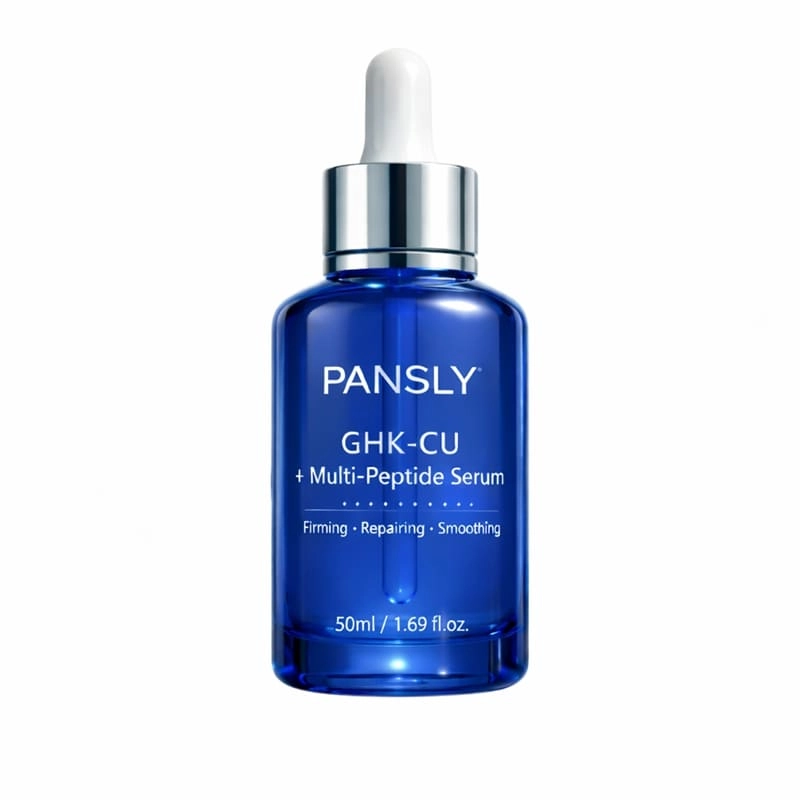
Experience visible rejuvenation with this GHK-Cu Copper Peptide Smoothing & Firming Face Serum, a high-performance concentrate designed to restore the structural integrity of aging skin. This advanced formula centers on GHK-Cu, a powerful signaling peptide clinically recognized for its ability to support natural collagen and elastin production. By promoting dermal density, it effectively tightens sagging skin and smooths the appearance of deep-set wrinkles and fine lines.
The lightweight, silky texture absorbs instantly, delivering antioxidant protection to neutralize environmental stressors that accelerate aging. Enhanced with deep-moisturizing agents, the serum reinforces the skin's moisture barrier, leaving the complexion feeling remarkably soft and resilient. With consistent use, skin texture is refined and facial contours appear more lifted, resulting in a youthfully firm and revitalized glow.
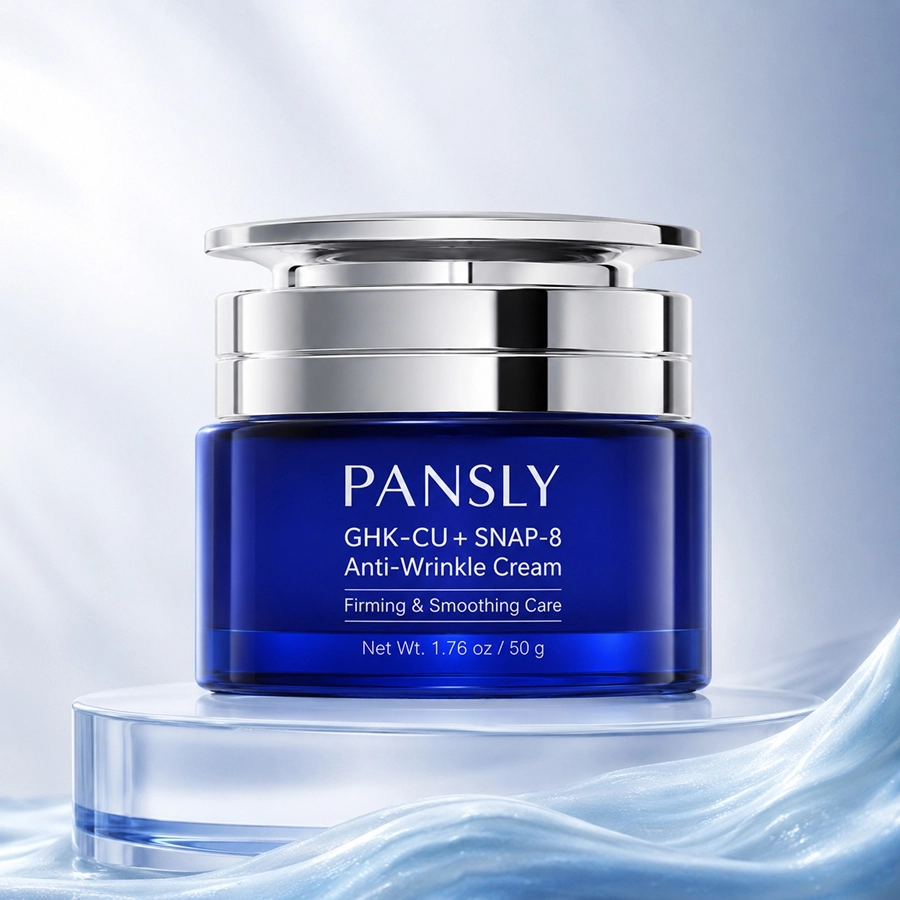
This Pansly GHK-CU + SNAP-8 Anti-Wrinkle Firming Cream is triple-peptide anti-aging facial cream, delivers targeted wrinkle smoothing, firming lifting and deep nourishment for dull, saggy, fine-line prone skin. Full OEM & ODM private label service is supported, including custom formula, packaging options, fast sampling and bulk export supply.
Five core premium active ingredients work synergistically for comprehensive anti-wrinkle care:
GHK-CU Copper Peptide lifts saggy skin, enhances skin resilience and tightens loose facial contour;
SNAP-8 Peptide targets expression lines to visibly soften and fade wrinkles;
Acetyl Hexapeptide-8 reduces the appearance of dry fine lines for smoother skin texture;
Ceramide NP reconstructs skin moisture barrier to lock nourishment and boost comfort;
Hyaluronic Acid delivers multi-layer rich deep moisture to relieve dry rough skin.
Luxury rich creamy texture spreads smoothly and melts into skin gently, leaving soft comfortable finish without heavy greasiness. Daily use blurs fine lines, firms loose skin, deeply nourishes and stabilizes barrier, refining uneven texture to reveal smooth, plump, youthful luminous skin.
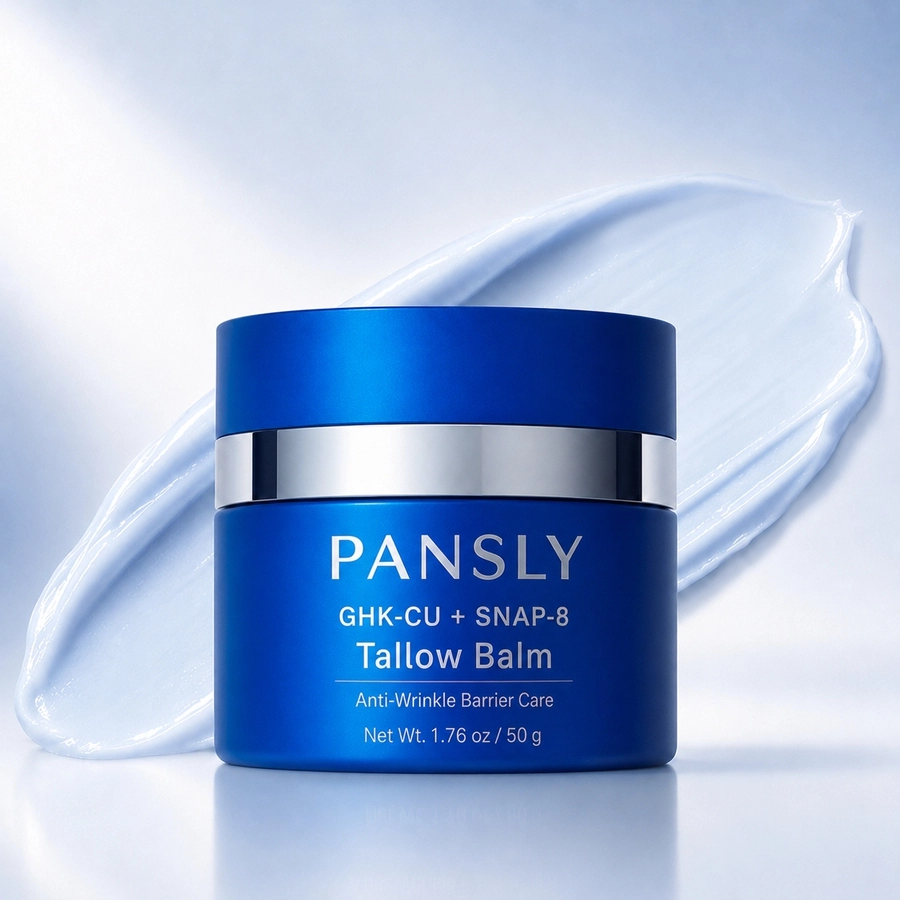
This Pansly GHK-CU + SNAP-8 Tallow Balm is a nourishing anti-wrinkle facial balm specially formulated for dry, fragile and sensitive skin, combining anti-aging wrinkle smoothing and barrier repairing effects. We offer full private label OEM service, including custom logo, adjustable formula, diversified packaging and lid color options.
It contains five core skin care active ingredients: GHK-CU visibly improves fine lines and revives dull complexion; SNAP-8 softens expression lines to smooth wrinkled skin texture; Grass-Fed Beef Tallow delivers deep lipid nourishment to relieve dry rough skin; Ectoin stabilizes the skin barrier and alleviates skin discomfort; Ceramide NP strengthens barrier structure to create smooth, healthy skin.
Luxury creamy blue balm texture glides smoothly and melts quickly on skin, providing long-lasting deep moisturizing comfort. Daily use fades fine lines & expression lines, nourishes dry delicate skin, repairs damaged barrier and leaves silky smooth skin finish.
Click here to customize the Beauty
we respond within a few hours
Monday–Friday, 9AM–6PM
3A01, Building A, Zhisheng Square, No. 4 Zhifu Road, Helong Street, Baiyun District, Guangzhou, China.


Leave a request, and we'll email you back within 24 hours.
© 2026 Beyond Basix. All Rights Reserved.
