
The B2B Buyer’s Guide to botanical bath bombs | Beyond Basix Ultimate Insights

- Why Botanical Bath Bomb Sourcing Requires More Than a Sample
- Wholesale Market Positioning for Botanical Bath Bombs
- Bulk Procurement Risks and Buyer Due Diligence
- ROI Analysis for Bath and Body Product Lines
- Technical Specification Checklist for Botanical Bath Bombs
- Formula Performance and Manufacturing Specifications
- Botanical Ingredient Traceability and Claim Control
- Wholesale Packaging and Shelf-Life Protection
- How to Vet a One-Stop OEM/ODM Manufacturing Partner
- Supplier Reliability and Factory Capability
- OEM/ODM Development Process and Sample Approval
- Compliance Documentation and Quality Assurance
- Commercial Planning, Quality Control, and Launch Execution
- MOQ, Lead Time, and Landed-Cost Planning
- Batch Release and Quality Control for Botanical Bath Bombs
- Launch ROI and Reorder Strategy
- Responsible Formulation and Consumer Transparency
- Why Beyond Basix Supports Scalable Wholesale Supply
- FAQ: Botanical Bath Bombs Procurement
Botanical Bath Bombs Procurement Summary: Botanical bath bombs are water-activated bath products formulated with ingredients such as sodium bicarbonate, citric acid, fragrance, colorants, oils, clays, salts, and selected botanical materials. For B2B buyers, the strongest supplier is not simply the one offering the lowest unit price; it is the partner that can document raw-material quality, control moisture and reaction stability, validate packaging, meet applicable cosmetic regulations, provide dependable batch consistency, and support commercially viable customization. Beyond Basix combines more than 23 years of cosmetics manufacturing experience with a 12,000-square-meter facility, a 100,000-level GMPC pharmaceutical-grade dust-free workshop, 12 production lines, and a One-Stop OEM/ODM for Skincare service covering formulation, production, packaging, and brand support.
Why Botanical Bath Bomb Sourcing Requires More Than a Sample
Wholesale Market Positioning for Botanical Bath Bombs
Botanical bath bombs occupy a useful position between traditional bath indulgence and ingredient-led personal care. Buyers can use them for spa retail, hotel amenities, gift sets, seasonal launches, subscription boxes, wellness collections, and e-commerce bundles. The botanical proposition may be built around dried flowers, plant powders, essential-oil-inspired fragrance profiles, mineral salts, or visually recognizable ingredients. However, the presence of a botanical does not automatically prove a skincare benefit. Commercial claims should be supported by ingredient documentation and appropriate testing, while language such as “detoxifying,” “healing,” or “anti-inflammatory” requires particular regulatory caution.
Bulk Procurement Risks and Buyer Due Diligence
The principal risks in bulk procurement are moisture absorption, premature acid-base reaction, cracking, inconsistent color, fragrance loss, poor dissolution, staining, excessive residue, and packaging failure. Botanical ingredients introduce additional variables, including microbial risk, color migration, allergen disclosure, pesticide or contamination concerns, and supply-season variation. A qualified manufacturer should explain how botanicals are sourced, inspected, stored, processed, and incorporated into the formula rather than treating them as decorative additions. Buyers should request specifications, certificates of analysis where applicable, safety data, allergen information, and a defined approval process for substitutions.
ROI Analysis for Bath and Body Product Lines
Return on investment depends on more than the factory quotation. A realistic model should include formula development, mold or tooling costs, testing, artwork, packaging, freight, import duties, inspection, rejected units, marketplace fees, and inventory carrying costs. Botanical bath bombs can support attractive perceived value when the sensory experience, visual presentation, and ingredient story are coherent. Buyers should compare expected gross margin by channel and calculate contribution margin after fulfillment and promotional discounts. A High Quality ingredient story is commercially useful only when it is clearly communicated and supported by reliable supply.
Technical Specification Checklist for Botanical Bath Bombs
Formula Performance and Manufacturing Specifications
A professional product brief should define target weight, dimensions, shape, color, fragrance level, botanical inclusion, dissolution time, foam or fizz profile, residue tolerance, hardness, moisture limit, and intended shelf life. Sodium bicarbonate and citric acid ratios influence effervescence, while binders, oils, clays, starches, and salts affect hardness and dispersibility. Water activity and environmental humidity are important because bath bombs can react during production or storage if moisture control is inadequate. The finished specification should distinguish acceptable natural variation from defects that require rejection.
| Vetting Area | What the Buyer Should Request | Why It Matters Commercially |
|---|---|---|
| Raw materials | Ingredient list, supplier qualification process, certificates of analysis where relevant, allergen and botanical documentation | Supports traceability, claim review, and consistent product quality |
| Formula performance | Target weight, hardness, dissolution behavior, fragrance profile, color standard, residue expectations | Reduces complaints and keeps repeat batches aligned with approved samples |
| Microbiological control | Risk assessment and applicable finished-product testing plan | Helps manage contamination risk, especially when botanicals are included |
| Packaging | Moisture barrier specifications, seal integrity, transit testing, carton configuration | Protects fizzing performance and reduces damage during shipping |
| Quality system | Batch records, release procedures, nonconformance process, audit information, relevant certifications | Demonstrates repeatability and supplier accountability |
| Commercial terms | MOQ, lead time, payment terms, sampling costs, replacement policy, Incoterms | Improves landed-cost forecasting and inventory planning |
Botanical Ingredient Traceability and Claim Control
Botanical selection should begin with the intended consumer experience and the product’s regulatory classification in each target market. Buyers should identify the exact botanical name, plant part, extraction or drying method, carrier materials, and recommended use level. Dried petals may enhance visual identity but can create drainage or cleanup concerns; fine powders may disperse more consistently but can alter color and sediment. Essential oils and fragrance materials require careful review for skin sensitization and labeling obligations. The International Fragrance Association standards and guidance are a useful reference point for fragrance safety discussions, although market-specific legal requirements remain controlling.
Wholesale Packaging and Shelf-Life Protection
Packaging is a performance component for botanical bath bombs, not merely a branding surface. Paper wraps, cartons, pouches, shrink film, and sealed jars offer different levels of moisture protection, recyclability, presentation, and cost. The selected pack should be evaluated against warehouse humidity, transport duration, opening experience, and the fragility of the product. A supplier should provide packaging samples and, where appropriate, conduct seal, compression, vibration, or transit evaluations. Shelf-life statements should be based on the manufacturer’s stability rationale and applicable market expectations rather than an unsupported universal period.
How to Vet a One-Stop OEM/ODM Manufacturing Partner
Supplier Reliability and Factory Capability
Factory evaluation should cover ownership or control of production, equipment suitability, staffing, quality responsibilities, capacity planning, and subcontracting practices. A supplier that offers formulation, filling, packing, quality control, and documentation through one coordinated system can reduce communication gaps and shorten corrective-action cycles. Beyond Basix has more than 23 years of experience in cosmetics research, production, and sales. Its 12,000-square-meter facility includes a 100,000-level GMPC pharmaceutical-grade dust-free workshop and 12 production lines, with advanced machinery imported from Germany, the United States, and other regions.
OEM/ODM Development Process and Sample Approval
A disciplined OEM/ODM process normally moves from product brief to formula proposal, laboratory sample, sensory review, packaging compatibility assessment, pilot confirmation, stability or safety evaluation as applicable, production approval, and first-batch release. Buyers should document every approved parameter, including color reference, fragrance name, botanical appearance, shape, weight tolerance, packaging artwork, and carton markings. Sample approval should not be treated as a substitute for batch controls. The purchase agreement should state how deviations are assessed and who pays for rework, replacement, or approved change requests.
Compliance Documentation and Quality Assurance
Compliance requirements vary by destination, product claims, ingredients, and sales channel. In the United States, the U.S. Food and Drug Administration cosmetics resources provide important regulatory information, while other markets may require responsible-person arrangements, product notifications, safety assessments, language-specific labeling, or importer documentation. Buyers should ask for the ingredient declaration in the correct nomenclature, batch coding method, safety data where relevant, microbial or other test reports appropriate to the formula, and evidence supporting any stated certification. Beyond Basix reports certifications and documentation including ISO 9001, CE, MSDS, GMP, and HALAL; buyers should confirm the scope and current validity of each document for the intended product and market.
Commercial Planning, Quality Control, and Launch Execution
MOQ, Lead Time, and Landed-Cost Planning
Minimum order quantity may be influenced by raw-material purchasing, mold configuration, packaging print runs, filling efficiency, and production-line scheduling. Request separate quotations for development, standard production, custom fragrance, custom molds, printed packaging, and replenishment orders. Lead time should be divided into artwork approval, raw-material procurement, laboratory development, testing, production, quality release, and shipping. This structure helps buyers identify whether a delay is caused by formulation complexity, packaging, factory capacity, or logistics rather than accepting one vague delivery estimate.
Batch Release and Quality Control for Botanical Bath Bombs
Each production batch should be evaluated against an approved specification. Typical controls may include appearance, odor, weight, dimensions, hardness, packaging integrity, labeling accuracy, and performance checks such as dissolution or fizz behavior. Where the formula risk assessment indicates it, microbiological testing and stability work should be included. Buyers should agree on sampling methodology, acceptable quality limits, retain-sample practice, and complaint investigation timelines. The ISO 9001 quality management framework can help buyers understand the value of documented processes, continual improvement, and controlled corrective actions.
Launch ROI and Reorder Strategy
Before launch, build a reorder model using realistic sell-through rather than optimistic first-month demand. Track return rates, breakage, customer reviews, scent preference, dissolution complaints, packaging damage, and repeat-purchase behavior. Botanical bath bombs may perform differently across climates, so inventory should be protected from heat and humidity throughout warehousing and distribution. A supplier review after the first commercial batch should examine actual yield, defect rate, delivery performance, documentation accuracy, and responsiveness. These measurements provide a stronger basis for renegotiating price or scaling volume than a simple unit-cost comparison.
Responsible Formulation and Consumer Transparency
Responsible product development means avoiding exaggerated botanical claims, clearly declaring relevant fragrance allergens where required, and communicating usage precautions. Bath products should include suitable directions, warnings, storage information, and advice for consumers with sensitive skin when appropriate. Buyers should also consider whether loose botanicals could create plumbing, cleanup, or slip concerns and select particle size, quantity, and packaging accordingly. The World Health Organization guidance on quality risk management offers a broader framework for identifying and controlling risks, even though each cosmetics project requires its own assessment.
Why Beyond Basix Supports Scalable Wholesale Supply
Beyond Basix is positioned as a comprehensive cosmetics care manufacturer for brands seeking coordinated development and production support. In addition to its manufacturing infrastructure, the company has focused on skincare products with effective ingredients for 12 years and operates four major brands: LANTHOME, PANSLY, FIRSTSUN, and SAUVASINE. This combination of product experience, facility capacity, documented quality systems, and multi-stage service can help B2B buyers move from concept to commercially prepared botanical bath bombs with fewer handoffs. The practical next step is to submit a detailed brief covering target market, formula concept, botanical ingredients, packaging, expected annual volume, price position, and certification needs.
FAQ: Botanical Bath Bombs Procurement
What should B2B buyers check before ordering botanical bath bombs?
Buyers should check the formula specification, botanical traceability, fragrance and allergen documentation, moisture control, packaging barrier performance, applicable testing, batch-release procedures, MOQ, lead time, and total landed cost. They should also confirm that claims are supportable in each destination market.
How do botanical ingredients affect bath bomb manufacturing?
Botanical ingredients can introduce microbial, color, moisture, contamination, seasonal-supply, and residue variables. Dried petals may affect drainage or cleanup, while powders may change dispersion and sediment. The supplier should define botanical identity, processing method, use level, storage conditions, and quality controls.
Can Beyond Basix provide OEM/ODM support for botanical bath bombs?
Beyond Basix provides comprehensive cosmetics manufacturing support and can coordinate product development, production, packaging, quality management, and brand requirements. Its resources include more than 23 years of cosmetics experience, a 12,000-square-meter facility, a 100,000-level GMPC pharmaceutical-grade dust-free workshop, and 12 production lines.
How can buyers calculate the ROI of wholesale botanical bath bombs?
Calculate contribution margin after the factory price, development and tooling, testing, packaging, freight, duties, inspection, fulfillment, marketplace fees, discounts, and expected rejects. Compare the result with realistic sell-through and reorder assumptions by channel rather than relying only on the quoted unit price.
Why is packaging important for botanical bath bombs?
Bath bombs can absorb moisture and react prematurely, while botanicals may increase visual and physical variability. Packaging should provide suitable moisture protection, preserve fragrance and fizzing performance, withstand transport, and meet the brand’s presentation and sustainability objectives. Seal and transit evaluations can reduce damage and complaints.
What compliance documents should a buyer request from a bath bomb supplier?
Request the correct ingredient declaration, applicable safety data, botanical and allergen information, relevant test reports, batch coding details, quality records, and evidence for stated certifications. Destination-market requirements may include safety assessments, notifications, responsible-person arrangements, and specific labeling, so document needs should be confirmed before production.

Elevate your professional skincare offerings with this Private Label Copper Peptide Anti-Wrinkle Firming Serum, a powerhouse concentrate designed for superior age-defying results. This sophisticated formula leverages the synergistic effects of GHK-Cu and SNAP-8 to address multiple layers of skin aging. The GHK-Cu copper peptides act as a vital signaling mechanism to enhance skin density and firmness, while the advanced SNAP-8 octapeptide specifically targets expression lines, helping to relax the appearance of deep-seated wrinkles for a smoother, more refined surface.
This lightweight, rapid-absorption serum provides a professional-grade solution for clients seeking a non-invasive lift. It effectively restores elasticity, improves skin texture, and provides essential antioxidant protection. Perfect for high-end beauty brands, this serum leaves the complexion looking visibly contoured, hydrated, and youthfully revitalized.
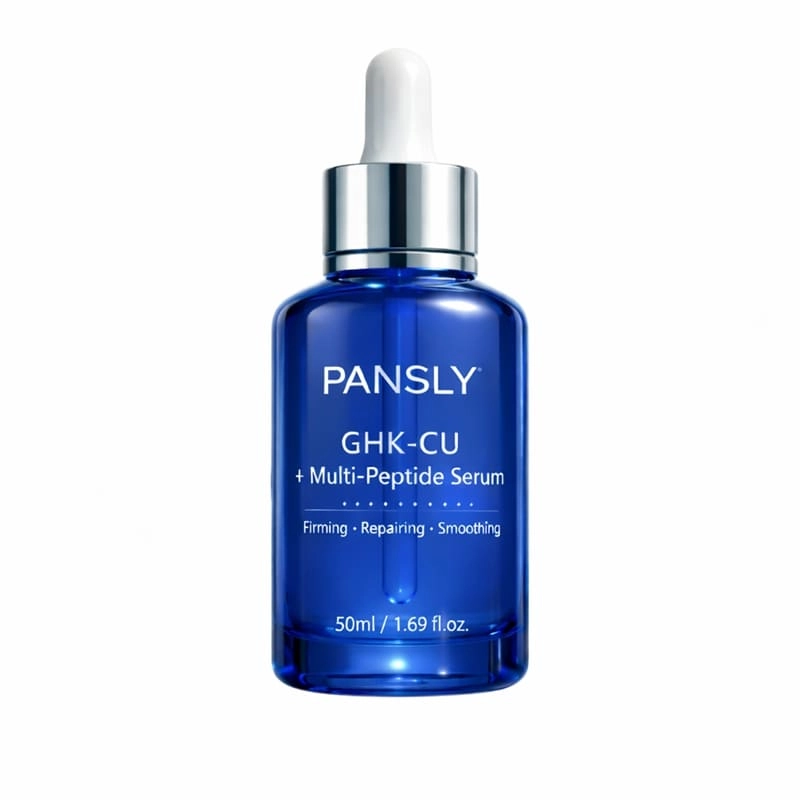
Experience visible rejuvenation with this GHK-Cu Copper Peptide Smoothing & Firming Face Serum, a high-performance concentrate designed to restore the structural integrity of aging skin. This advanced formula centers on GHK-Cu, a powerful signaling peptide clinically recognized for its ability to support natural collagen and elastin production. By promoting dermal density, it effectively tightens sagging skin and smooths the appearance of deep-set wrinkles and fine lines.
The lightweight, silky texture absorbs instantly, delivering antioxidant protection to neutralize environmental stressors that accelerate aging. Enhanced with deep-moisturizing agents, the serum reinforces the skin's moisture barrier, leaving the complexion feeling remarkably soft and resilient. With consistent use, skin texture is refined and facial contours appear more lifted, resulting in a youthfully firm and revitalized glow.
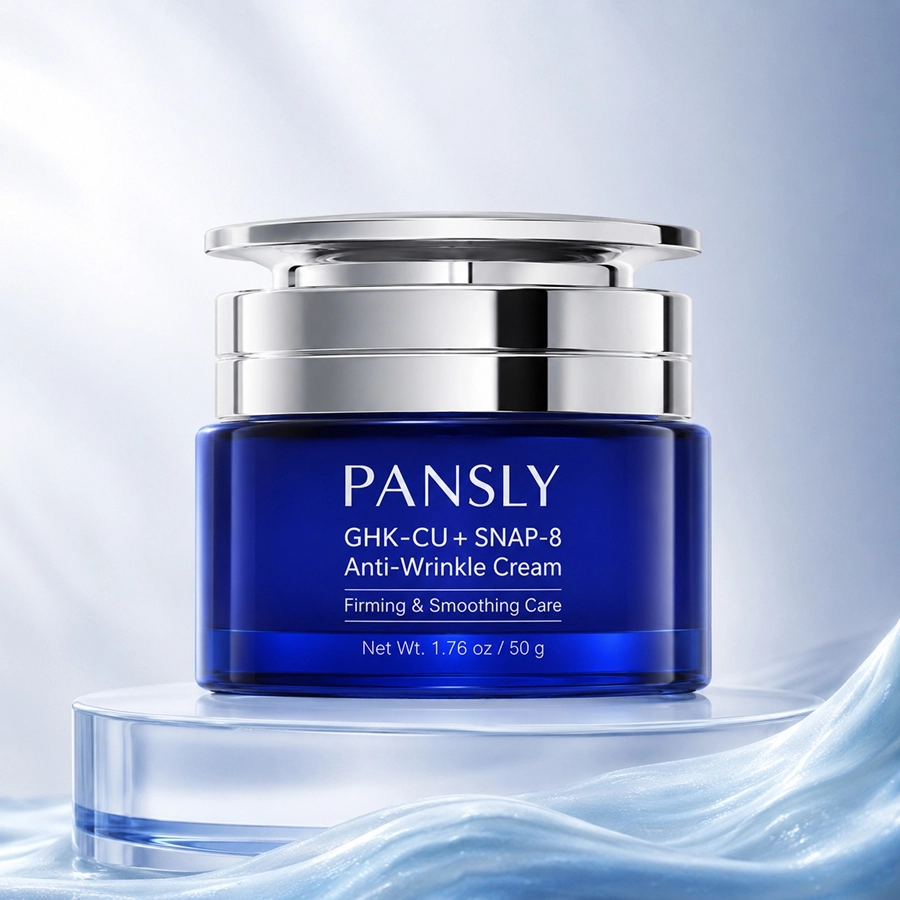
This Pansly GHK-CU + SNAP-8 Anti-Wrinkle Firming Cream is triple-peptide anti-aging facial cream, delivers targeted wrinkle smoothing, firming lifting and deep nourishment for dull, saggy, fine-line prone skin. Full OEM & ODM private label service is supported, including custom formula, packaging options, fast sampling and bulk export supply.
Five core premium active ingredients work synergistically for comprehensive anti-wrinkle care:
GHK-CU Copper Peptide lifts saggy skin, enhances skin resilience and tightens loose facial contour;
SNAP-8 Peptide targets expression lines to visibly soften and fade wrinkles;
Acetyl Hexapeptide-8 reduces the appearance of dry fine lines for smoother skin texture;
Ceramide NP reconstructs skin moisture barrier to lock nourishment and boost comfort;
Hyaluronic Acid delivers multi-layer rich deep moisture to relieve dry rough skin.
Luxury rich creamy texture spreads smoothly and melts into skin gently, leaving soft comfortable finish without heavy greasiness. Daily use blurs fine lines, firms loose skin, deeply nourishes and stabilizes barrier, refining uneven texture to reveal smooth, plump, youthful luminous skin.
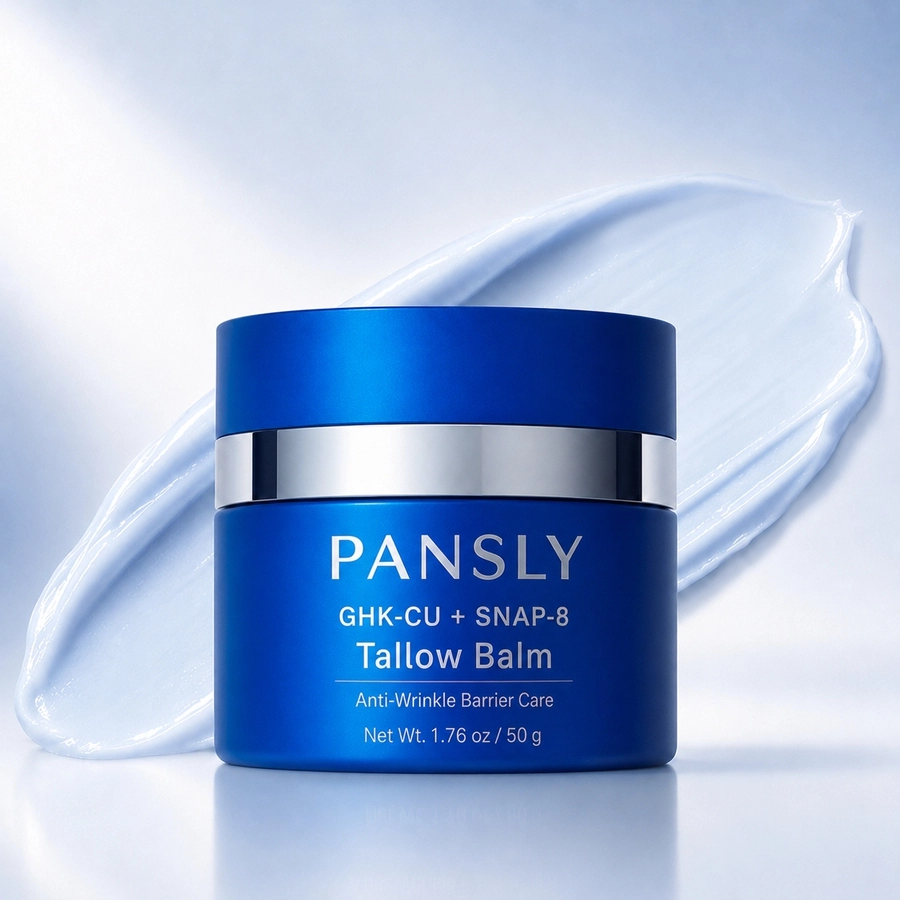
This Pansly GHK-CU + SNAP-8 Tallow Balm is a nourishing anti-wrinkle facial balm specially formulated for dry, fragile and sensitive skin, combining anti-aging wrinkle smoothing and barrier repairing effects. We offer full private label OEM service, including custom logo, adjustable formula, diversified packaging and lid color options.
It contains five core skin care active ingredients: GHK-CU visibly improves fine lines and revives dull complexion; SNAP-8 softens expression lines to smooth wrinkled skin texture; Grass-Fed Beef Tallow delivers deep lipid nourishment to relieve dry rough skin; Ectoin stabilizes the skin barrier and alleviates skin discomfort; Ceramide NP strengthens barrier structure to create smooth, healthy skin.
Luxury creamy blue balm texture glides smoothly and melts quickly on skin, providing long-lasting deep moisturizing comfort. Daily use fades fine lines & expression lines, nourishes dry delicate skin, repairs damaged barrier and leaves silky smooth skin finish.
Click here to customize the Beauty
we respond within a few hours
Monday–Friday, 9AM–6PM
3A01, Building A, Zhisheng Square, No. 4 Zhifu Road, Helong Street, Baiyun District, Guangzhou, China.


Leave a request, and we'll email you back within 24 hours.
© 2026 Beyond Basix. All Rights Reserved.
