
Bath Bomb OEM/ODM Quality Control: Testing, Certifications, and Inspections

- Quality Assurance Framework for Private-Label Bath Products
- Raw material qualification and supplier control
- Formula design and pilot-batch validation
- In-process controls and batch traceability
- Testing, Certifications, and Regulatory Evidence
- Physical, chemical, and performance testing
- Microbiological and safety assessment
- Certifications and what they actually prove
- Factory Inspections and Supplier Due Diligence
- What an effective factory audit should examine
- Sampling, acceptance criteria, and release decisions
- Packaging, transport, and stability risk
- How Beyond Basix Supports a Controlled OEM/ODM Program
- Manufacturing infrastructure and technical capacity
- Broader portfolio for coordinated product launches
- Certification awareness and partnership execution
- Frequently Asked Questions
A reliable bath bomb OEM/ODM program depends on documented ingredient control, formulation testing, microbiological safety, packaging validation, regulatory review, and independent inspections. Buyers should assess a supplier’s GMP systems, batch records, stability evidence, certification scope, production capacity, and export documentation before approving a private-label bath product. This guide explains the quality checkpoints, test methods, certifications, factory audits, and supplier-selection criteria needed to reduce compliance risk and protect launch timelines.
Quality Assurance Framework for Private-Label Bath Products
Bath bombs appear simple because their primary ingredients are commonly familiar powders, salts, oils, colorants, and fragrances. In commercial production, however, the product is a chemically sensitive compressed solid that must remain stable during storage and then dissolve predictably in water. Moisture exposure, inconsistent particle size, excessive oil, weak compression, unsuitable packaging, and incompatible colorants can all create customer complaints or regulatory problems.
Raw material qualification and supplier control
Quality begins before the first production batch. A responsible bath product supplier should maintain approved specifications for sodium bicarbonate, citric acid, mineral salts, clays, botanical extracts, fragrance oils, essential oils, pigments, binders, and functional additives. Each incoming material should be linked to a supplier, lot number, certificate of analysis, receiving date, and release decision.
Certificates of analysis are useful but should not be treated as a substitute for internal verification. Depending on the material and risk profile, checks may include identity, appearance, odor, moisture, particle size, pH contribution, heavy metals, allergen information, and microbiological status. Fragrance documentation should also support intended use and market requirements. When a formula contains botanicals or natural powders, greater variability should be expected and controlled through defined acceptance ranges.
Formula design and pilot-batch validation
Product development should establish measurable targets rather than relying only on visual approval. Typical specifications include unit weight, dimensions, hardness, friability, color uniformity, fragrance intensity, dissolution time, water reaction, pH after dissolution, residue, and packaging compatibility. The formula must balance rapid activation in the bath with sufficient mechanical strength for filling, transportation, retail handling, and e-commerce delivery.
Pilot batches help identify problems that may remain hidden in laboratory samples. The development team should evaluate mixing order, liquid addition rate, compression pressure, mold release, drying conditions, and environmental humidity. A formula that performs well in a small controlled room may behave differently on a high-speed production line. Scale-up approval should therefore compare pilot and commercial-equipment results using the same documented criteria.
In-process controls and batch traceability
During manufacture, operators should monitor weighing accuracy, sieve condition, blend uniformity, moisture exposure, compression settings, line clearance, and coding. A batch manufacturing record should identify the formula version, raw material lots, equipment, operators, processing times, deviations, yield, and quality-control results. Traceability allows a supplier to isolate affected units quickly if a packaging defect, raw-material issue, or market complaint occurs.
Environmental controls are especially important for effervescent products. Excess humidity can trigger premature reaction between acidic and alkaline components, causing swelling, cracking, reduced performance, or loss of fragrance. Production rooms, storage areas, and filling zones should have suitable monitoring and documented response procedures. Cleaning and allergen controls are also necessary when multiple fragrances, colors, or botanical ingredients are handled on shared equipment.
Testing, Certifications, and Regulatory Evidence
Testing should be risk-based and connected to the product specification, destination market, and claims displayed on the label. A bath bomb positioned solely as a cleansing or fragranced bath product may follow a different regulatory pathway from one making antimicrobial, therapeutic, skin-treatment, or medical claims. Buyers should confirm classification with qualified regulatory professionals before finalizing artwork.
Physical, chemical, and performance testing
Physical testing commonly covers appearance, average weight, weight variation, dimensions, hardness, friability, moisture, and packaging seal integrity. Performance testing can assess dissolution behavior in controlled water conditions, visible residue, color release, foam or fizz characteristics, and post-use water pH. These tests should use defined methods and acceptance criteria so that different production lots can be compared objectively.
Chemical review should confirm that all ingredients are permitted for the intended market and use. Fragrance materials, color additives, preservatives, exfoliating particles, and essential oils require particular attention because restrictions differ by jurisdiction and product category. If a product includes claims related to sensitive skin, relaxation, detoxification, moisturizing, or botanical benefits, the evidence and wording should be reviewed before commercialization. Claims that imply treatment or disease prevention can change the regulatory obligations.
Microbiological and safety assessment
Although low-water bath bombs are generally less supportive of microbial growth than water-based creams, microbiological risk is not automatically absent. Botanical powders, starches, clays, contaminated equipment, humid storage, and poor packaging can introduce contamination. Testing may include total aerobic microbial count, yeast and mold, and specified objectionable organisms according to the product risk assessment and destination-market expectations.
Safety documentation should also consider skin irritation, sensitization, eye exposure, fragrance allergens, colorant migration, and accidental ingestion risks. The appropriate evaluation depends on the formula, claims, user population, and market. The U.S. FDA cosmetics laws and regulations provide a useful reference for understanding how ingredients, labeling, safety substantiation, and product claims interact in the United States.
Certifications and what they actually prove
Certifications should be examined by scope, issuing body, validity period, site address, and covered activities. ISO 9001 indicates that an organization operates a quality management system against defined requirements; it does not, by itself, certify that every bath bomb is safe or suitable for a particular country. The ISO 9001 standard information helps buyers distinguish management-system certification from product approval.
GMP evidence is more directly relevant to controlled cosmetic manufacturing because it addresses hygiene, premises, equipment, documentation, production, quality control, complaints, and corrective actions. The WHO good manufacturing practices guidance explains the principles behind consistent pharmaceutical and health-product manufacturing; cosmetic GMP schemes may use related controls while applying their own scope.
Other documents may include halal certification, vegan declarations, allergen statements, safety data sheets, product information files, certificates of free sale, and market-specific registrations. A CE mark should not be presented as a universal cosmetics certification because CE marking applies to products within applicable European Union harmonization legislation, not to ordinary cosmetics simply because they are sold in Europe. Buyers should verify whether a certificate is relevant to the actual product and claim.
| Quality evidence | Primary purpose | Buyer verification point |
|---|---|---|
| Raw material certificate of analysis | Confirms a material lot meets defined specifications | Check lot linkage, test parameters, issuer, and acceptance criteria |
| Finished-product test report | Confirms the production batch meets physical, chemical, and microbiological requirements | Match the report to the final formula, batch number, and market |
| ISO 9001 certificate | Shows a certified quality management system | Verify site address, certification body, scope, and expiry |
| GMP audit or certificate | Demonstrates controlled hygiene, production, documentation, and quality processes | Confirm the scheme, audit date, facility, and covered product category |
| Third-party pre-shipment inspection | Checks quantity, packaging, workmanship, and selected specifications before dispatch | Define sampling plan, inspection level, defect limits, and report format |
Factory Inspections and Supplier Due Diligence
Documents provide evidence, but a factory inspection shows whether the documented system operates in practice. Buyers can use a prequalification audit before signing a development agreement, an in-process inspection during manufacturing, and a pre-shipment inspection before goods leave the facility. The inspection plan should be agreed in writing rather than introduced after production has started.
What an effective factory audit should examine
An audit should review facility zoning, personnel hygiene, pest control, ventilation, humidity monitoring, water management where relevant, equipment maintenance, calibration, cleaning records, warehouse segregation, rejected-material control, and fire and occupational-safety arrangements. The auditor should observe actual production and compare it with standard operating procedures, not merely review prepared documents in a meeting room.
Quality-system review should include deviation management, change control, complaint handling, recall readiness, corrective and preventive actions, training records, internal audits, and management review. A supplier that cannot explain how it handles a failed test or customer complaint may present greater long-term risk than a supplier with a smaller but transparent operation.
Sampling, acceptance criteria, and release decisions
Inspection results are meaningful only when sampling rules and defect definitions are predetermined. Buyers should classify defects as critical, major, or minor and specify acceptable quality limits where appropriate. Critical defects may involve contamination, incorrect ingredients, missing warnings, or unsafe packaging. Major defects may include broken units, incorrect fragrance, severe weight variation, poor seals, or unreadable batch codes.
Sampling should cover cartons, inner packaging, finished units, labels, and shipping marks. Photographs, retained samples, laboratory reports, and signed inspection records strengthen the release decision. A passed visual inspection does not replace laboratory testing, and a laboratory pass does not guarantee correct quantity or retail presentation. Both dimensions of quality must be controlled.
Packaging, transport, and stability risk
Packaging is a functional part of the formula system. Moisture-barrier films, foil laminates, shrink wraps, cartons, inserts, and desiccants should be assessed for compatibility and sealing performance. Packaging validation can include compression, drop, vibration, transit simulation, accelerated aging, and humidity exposure, depending on the distribution channel.
Stability studies should monitor appearance, odor, hardness, weight, dissolution, color, microbial status, and package integrity over time. Accelerated conditions can reveal likely failure modes but should not be represented as a direct substitute for real-time data. Shelf-life decisions should be supported by documented evidence and reviewed whenever the formula, fragrance, packaging, production site, or storage conditions change.
How Beyond Basix Supports a Controlled OEM/ODM Program
Beyond Basix is Guangzhou Beyond Basix Cosmetics Ltd., a comprehensive cosmetics care manufacturer with more than 23 years of experience in research, production, and sales. Our operating model is designed for brand owners that need more than a basic filling service: it combines product development, manufacturing coordination, quality documentation, packaging support, and scalable supply planning within a One-Stop OEM/ODM for Skincare framework.
Manufacturing infrastructure and technical capacity
Our 12,000-square-meter facility includes a 100,000-level GMPC pharmaceutical-grade dust-free workshop and 12 production lines. Advanced machinery imported from Germany, the United States, and other regions supports consistent processing, repeatable output, and higher production efficiency. This infrastructure helps project owners move from concept samples to commercial production while maintaining greater control over specifications, batch records, and delivery planning.
For bath and body projects, our engineering and quality teams can coordinate formula parameters, raw-material documentation, packaging selection, production checks, and finished-product evaluation. The specific test program is determined by the formula, claims, destination market, packaging format, and customer requirements. This approach prevents generic testing from creating a false sense of compliance.
Broader portfolio for coordinated product launches
Beyond Basix has focused on skincare products with effective ingredients for 12 years and operates four brands: LANTHOME, PANSLY, FIRSTSUN, and SAUVASINE. Our broader capabilities cover Skincare Products, Hair Care Products, Eye Care Products, and Body Care Products, enabling buyers to coordinate complementary product lines with one manufacturing partner.
This portfolio can be valuable for distributors and emerging brands planning a complete personal-care range. A bath bomb launch may be paired with body scrubs, shower products, hand care, hair care, eye care, or skincare items that share a visual identity and retail strategy. Consolidating development and sourcing can simplify communication, reduce supplier fragmentation, and improve consistency across packaging and brand presentation.
Certification awareness and partnership execution
Our stated certifications and compliance documents include ISO 9001, CE, MSDS, GMP, HALAL, and more. Buyers should always request current copies, verify the issuing organization and scope, and confirm relevance to the intended product and market. Transparent document review is a core part of responsible procurement, especially when a project involves exports, retailer qualification, sensitive-skin positioning, or religious-compliance requirements.
Beyond Basix is committed to providing competitive products, services, and pricing while supporting long-term partner growth. A practical onboarding process should define the product brief, target cost, minimum order quantity, formula ownership, testing plan, packaging specifications, approval stages, production schedule, inspection rights, and after-sales procedure. Clear agreements at the beginning reduce later disputes over samples, substitutions, tolerances, claims, and shipment release.
For buyers comparing a bath product development partner, the strongest selection decision is not based on a certificate or sample alone. It should consider technical communication, documented quality controls, factory capacity, regulatory awareness, inspection transparency, packaging knowledge, and the ability to support adjacent categories. A supplier that can demonstrate these controls offers a stronger foundation for repeat orders, retailer confidence, and sustainable brand growth.
Frequently Asked Questions
What tests should be performed on bath bombs before shipment?
Typical testing covers appearance, average weight, weight variation, dimensions, hardness, friability, moisture, packaging seal integrity, dissolution behavior, water pH, residue, fragrance, and microbiological status according to the product risk assessment and destination-market expectations.
Does ISO 9001 certify that a bath bomb is safe?
No. ISO 9001 indicates that an organization operates a certified quality management system against defined requirements; it does not by itself certify that every bath bomb is safe or suitable for a particular country.
Why is humidity control important during bath bomb production?
Excess humidity can trigger premature reaction between acidic and alkaline components, causing swelling, cracking, reduced performance, or loss of fragrance. Production rooms, storage areas, and filling zones should therefore have suitable monitoring and response procedures.
What should a factory inspection cover?
A factory inspection should examine facility zoning, personnel hygiene, pest control, ventilation, humidity monitoring, equipment maintenance, calibration, cleaning records, warehouse segregation, rejected-material control, safety arrangements, deviation management, change control, complaints, recalls, corrective actions, and training.
How should buyers verify a cosmetics certification?
Buyers should check the certificate scope, issuing body, validity period, site address, covered activities, and relevance to the actual product and destination market. Current copies should be requested and independently verified where possible.
Why does packaging matter for effervescent bath products?
Packaging is part of the formula system because moisture exposure can affect stability, hardness, fragrance, appearance, and effervescent performance. Barrier materials, seals, cartons, and transport protection should be assessed for compatibility and integrity.

Elevate your professional skincare offerings with this Private Label Copper Peptide Anti-Wrinkle Firming Serum, a powerhouse concentrate designed for superior age-defying results. This sophisticated formula leverages the synergistic effects of GHK-Cu and SNAP-8 to address multiple layers of skin aging. The GHK-Cu copper peptides act as a vital signaling mechanism to enhance skin density and firmness, while the advanced SNAP-8 octapeptide specifically targets expression lines, helping to relax the appearance of deep-seated wrinkles for a smoother, more refined surface.
This lightweight, rapid-absorption serum provides a professional-grade solution for clients seeking a non-invasive lift. It effectively restores elasticity, improves skin texture, and provides essential antioxidant protection. Perfect for high-end beauty brands, this serum leaves the complexion looking visibly contoured, hydrated, and youthfully revitalized.
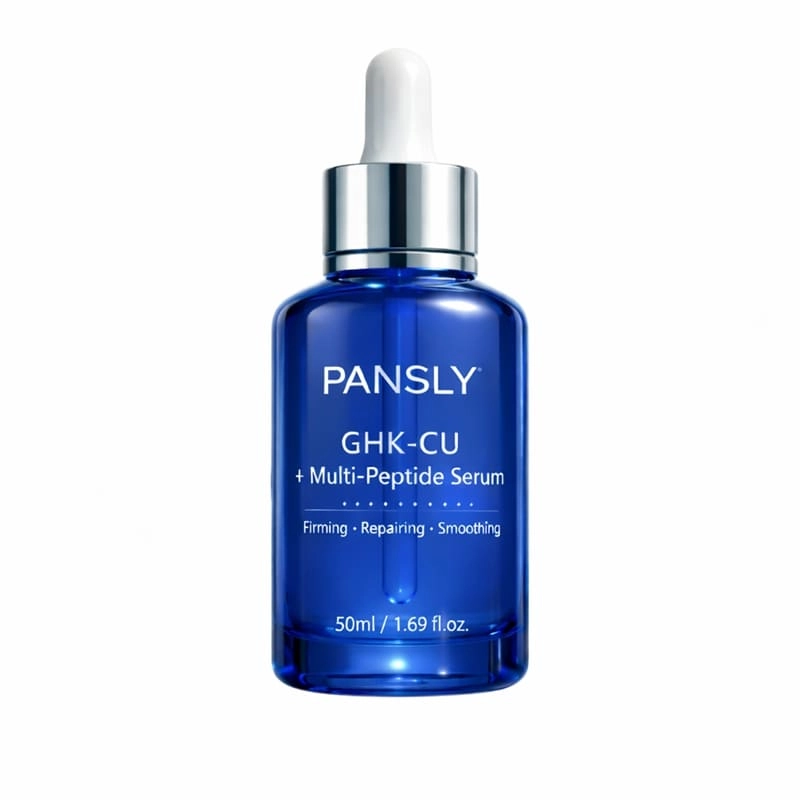
Experience visible rejuvenation with this GHK-Cu Copper Peptide Smoothing & Firming Face Serum, a high-performance concentrate designed to restore the structural integrity of aging skin. This advanced formula centers on GHK-Cu, a powerful signaling peptide clinically recognized for its ability to support natural collagen and elastin production. By promoting dermal density, it effectively tightens sagging skin and smooths the appearance of deep-set wrinkles and fine lines.
The lightweight, silky texture absorbs instantly, delivering antioxidant protection to neutralize environmental stressors that accelerate aging. Enhanced with deep-moisturizing agents, the serum reinforces the skin's moisture barrier, leaving the complexion feeling remarkably soft and resilient. With consistent use, skin texture is refined and facial contours appear more lifted, resulting in a youthfully firm and revitalized glow.
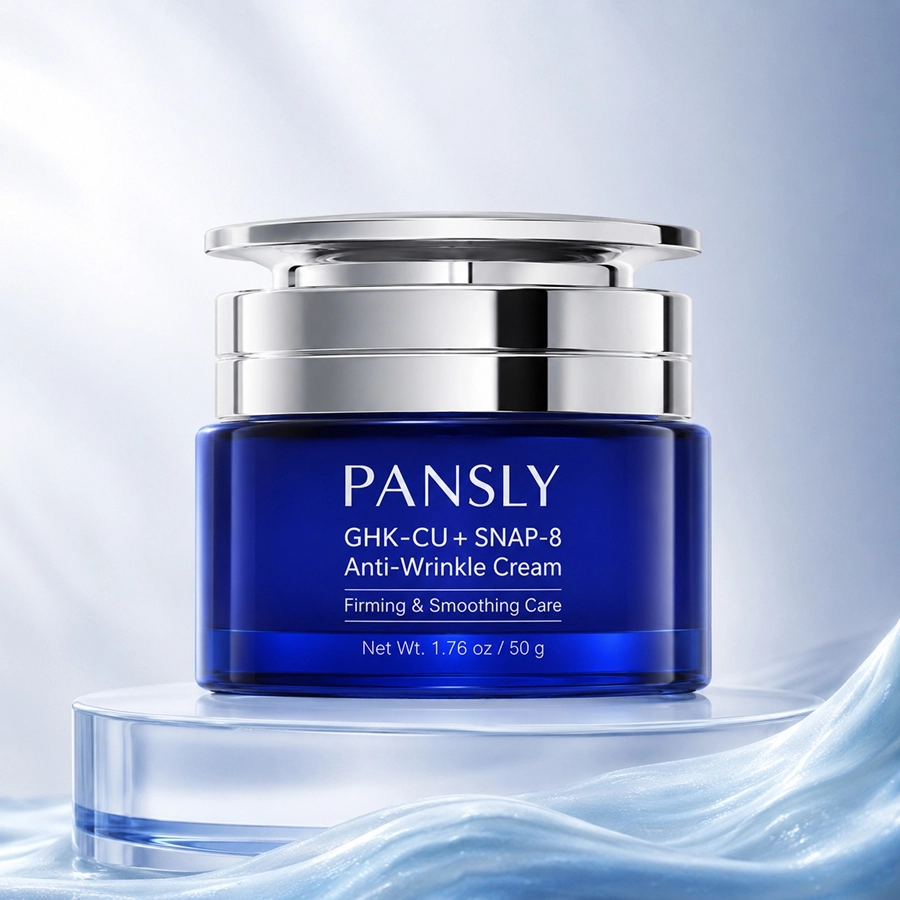
This Pansly GHK-CU + SNAP-8 Anti-Wrinkle Firming Cream is triple-peptide anti-aging facial cream, delivers targeted wrinkle smoothing, firming lifting and deep nourishment for dull, saggy, fine-line prone skin. Full OEM & ODM private label service is supported, including custom formula, packaging options, fast sampling and bulk export supply.
Five core premium active ingredients work synergistically for comprehensive anti-wrinkle care:
GHK-CU Copper Peptide lifts saggy skin, enhances skin resilience and tightens loose facial contour;
SNAP-8 Peptide targets expression lines to visibly soften and fade wrinkles;
Acetyl Hexapeptide-8 reduces the appearance of dry fine lines for smoother skin texture;
Ceramide NP reconstructs skin moisture barrier to lock nourishment and boost comfort;
Hyaluronic Acid delivers multi-layer rich deep moisture to relieve dry rough skin.
Luxury rich creamy texture spreads smoothly and melts into skin gently, leaving soft comfortable finish without heavy greasiness. Daily use blurs fine lines, firms loose skin, deeply nourishes and stabilizes barrier, refining uneven texture to reveal smooth, plump, youthful luminous skin.
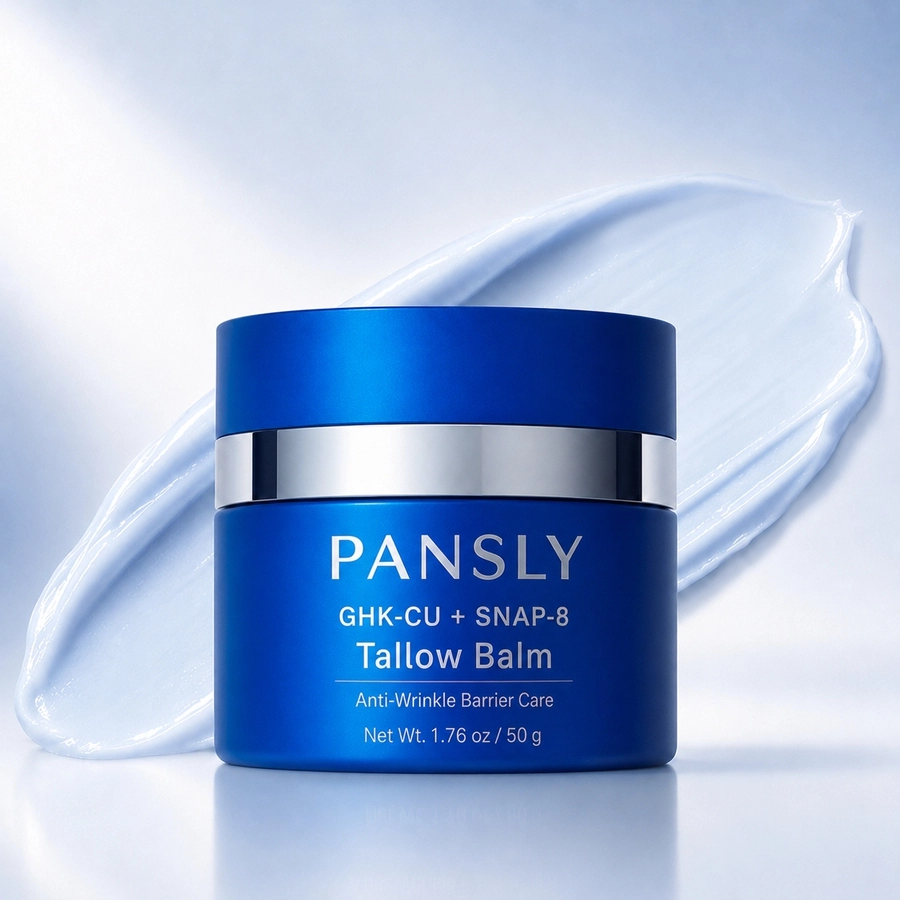
This Pansly GHK-CU + SNAP-8 Tallow Balm is a nourishing anti-wrinkle facial balm specially formulated for dry, fragile and sensitive skin, combining anti-aging wrinkle smoothing and barrier repairing effects. We offer full private label OEM service, including custom logo, adjustable formula, diversified packaging and lid color options.
It contains five core skin care active ingredients: GHK-CU visibly improves fine lines and revives dull complexion; SNAP-8 softens expression lines to smooth wrinkled skin texture; Grass-Fed Beef Tallow delivers deep lipid nourishment to relieve dry rough skin; Ectoin stabilizes the skin barrier and alleviates skin discomfort; Ceramide NP strengthens barrier structure to create smooth, healthy skin.
Luxury creamy blue balm texture glides smoothly and melts quickly on skin, providing long-lasting deep moisturizing comfort. Daily use fades fine lines & expression lines, nourishes dry delicate skin, repairs damaged barrier and leaves silky smooth skin finish.
Click here to customize the Beauty
we respond within a few hours
Monday–Friday, 9AM–6PM
3A01, Building A, Zhisheng Square, No. 4 Zhifu Road, Helong Street, Baiyun District, Guangzhou, China.


Leave a request, and we'll email you back within 24 hours.
© 2026 Beyond Basix. All Rights Reserved.
