
The latest trends for beef tallow cream | Beyond Basix Ultimate Insights
- Macro drivers reshaping natural lipid skincare
- Consumer preference for traditional, efficacious lipids
- Supply chain resilience and rendering innovation
- Regulatory and labeling dynamics
- Formulation, technology & efficacy advances
- Refining, fractionation and stabilized tallow esters
- Emulsion systems and delivery technology
- Clinical data and skin barrier science
- Market dynamics: manufacturing, sourcing & go-to-market
- OEM/ODM capabilities and scale economics
- Regional sourcing, traceability, and sustainability High Qualitys
- Private label, storytelling and niche positioning
- Operations & risk management for buyers
- Quality control and batch certification
- Packaging, stability and supply continuity
- Commercial terms and partner selection
- FAQ Main Title
Beyond Basix presents a concise, forward-looking analysis that synthesizes manufacturing capacity, formulation science, and market demand for beef tallow cream—highlighting why tallow-based cream formulations are re-emerging as a high-value category for High Quality restorative moisturizers, private-label ranges, and niche sustainable skincare lines.
Macro drivers reshaping natural lipid skincare
Consumer preference for traditional, efficacious lipids
Recent shifts toward ingredient provenance and efficacy have elevated interest in animal-derived lipids; beef tallow cream is being repositioned not as a retro curiosity but as a performance lipid with a fatty-acid profile close to human sebum that supports barrier repair. This demand is concentrated in markets where clean-label, artisanal, and clinically demonstrable products carry price High Qualitys, pushing OEM/ODM partners to create tallow-based cream SKUs that balance tradition with clinical validation.
Supply chain resilience and rendering innovation
Rendering and fractionation improvements have significantly reduced odor and variability in rendered tallow, enabling stable beef tallow cream bases suitable for modern formulations. Advances in vacuum deodorization, hydrogenation control, and molecular distillation allow contract manufacturers to source standardized tallow fractions for consistent sensory and oxidative stability outcomes.
Regulatory and labeling dynamics
Label transparency requirements and allergen disclosure affect animal-fat formulations. Manufacturers producing beef tallow cream must align with regional cosmetics regulations and claim substantiation. For regulatory frameworks see U.S. FDA Cosmetics Guidance and for quality management systems see ISO 9001 Quality Management.
Formulation, technology & efficacy advances
Refining, fractionation and stabilized tallow esters
Modern refining techniques produce high-purity tallow esters and triglyceride blends that mitigate past concerns—oxidation, rancidity, and heavy odor—making beef tallow cream viable in high-end skincare. By using fractionated tallow derivatives and antioxidant systems, formulators can deliver the emollience of rendered tallow while achieving shelf life parity with plant oils.
Emulsion systems and delivery technology
Microemulsion and high-shear homogenization allow beef tallow cream to be built into lightweight spreads, balms, and lotion textures. Encapsulation and nanodispersion methods improve delivery of actives in tallow matrices, enabling targeted barrier repair and sustained release of lipophilic ingredients.
Clinical data and skin barrier science
Evidence on skin lipids underscores how structurally compatible lipids aid barrier restoration; for academic context see barrier lipid research at NCBI/PMC review on skin lipids. OEM/ODM partners should invest in small-scale clinicals and in-vitro follicular and transepidermal water loss (TEWL) tests to validate beef tallow cream claims for barrier repair.
Market dynamics: manufacturing, sourcing & go-to-market
OEM/ODM capabilities and scale economics
As a One-Stop OEM/ODM for Skincare partner, Beyond Basix’s GMP-capable infrastructure drives cost-competitive production of beef tallow cream at scale. Contract manufacturing for tallow-based cream requires dedicated rendering specifications, antioxidant strategies, and QC protocols to ensure batch-to-batch uniformity and regulatory traceability.
Regional sourcing, traceability, and sustainability High Qualitys
Buyers increasingly require traceability to farm level and third-party audits for animal welfare and sustainability. Sourcing certified-rendered tallow with chain-of-custody documentation supports High Quality pricing for beef tallow cream positioned as ethically sourced restorative skincare.
Private label, storytelling and niche positioning
Brand owners can leverage the authenticity of tallow-based cream by pairing heritage storytelling with modern clinical validation: think artisanal narrative + documented TEWL reduction + clean-label preservatives. This hybrid positioning helps convert skeptical consumers and justifies margin uplift for private-label ranges.
| Metric | 2018-2023 (Historical) | 2024-2028 (Near-term) | 2029-2032 (Projected) |
|---|---|---|---|
| Consumer interest in natural/lipid-based skincare | Moderate growth; natural cosmetics CAGR ~8–10% (general market) | Accelerated demand for efficacy and provenance; niche tallow searches up 15–25% YoY in specialty markets | Consolidation into High Quality restorative category; tallow-based cream becomes established niche across EU/North America |
| Manufacturing readiness | Limited specialized rendering options; most formulators favored plant lipids | Scaling of deodorization/fractionation; OEMs offering standardized tallow fractions | Widespread availability of stabilized tallow esters and validated supply chains |
| Regulatory & claims | Basic cosmetic labeling; few clinical claims | Greater scrutiny; more clinical TEWL and irritancy testing for claims | Standardized claim language and accepted clinical endpoints for barrier restoration |
Operations & risk management for buyers
Quality control and batch certification
Buyers of beef tallow cream must require Certificate of Analysis, peroxide value limits, and microbial testing tailored to animal-derived fats. Adopting a HACCP-style approach and consistent antioxidant strategies reduces risk of recalled batches and consumer complaints.
Packaging, stability and supply continuity
Packaging choices—airless pumps, metallized tubes, or glass jars—impact perceived High Quality position for beef tallow cream and oxidative stability. Seasonality in rendering supply can be hedged through multi-source contracts and strategic inventory for steady supply.
Commercial terms and partner selection
When engaging an OEM/ODM, buyers should evaluate a partner’s end-to-end capability: from raw tallow specification to finished beef tallow cream stability testing, regulatory dossiers, and private-label artwork. Beyond Basix’s 12,000 m2 GMP lines and certifications (ISO, GMP, HALAL) reduce validation time and mitigate vendor risk.
For historical context on tallow and its uses see the technical overview at Wikipedia - Tallow.
Strategic recommendation: position beef tallow cream as a performance lipid SKU—pairing robust clinical endpoints, transparent sourcing, and refined sensory profiles—so it fits both modern clean-label narratives and efficacious restorative claims backed by test data and regulatory-compliant labels.
Regulatory and safety reference materials for product developers include guidance from the U.S. FDA and standards related to clinical testing; for science-based barrier context, refer to the NCBI review on skin lipids.
To discuss formulation pathways, private-label timelines, or to request technical dossiers for beef tallow cream, contact Beyond Basix.
FAQ Main Title
What is beef tallow cream and why is it returning to skincare?
Beef tallow cream is a moisturizer based on rendered bovine fat (tallow) formulated for topical use; it’s regaining interest because its fatty-acid profile closely resembles human skin lipids, supporting barrier repair, and because modern refining reduces odor and stability issues that historically limited its use.
Are there regulatory issues with marketing beef tallow cream?
Yes. Manufacturers must comply with regional cosmetics regulations, label ingredients transparently, and substantiate claims with appropriate testing (e.g., TEWL, irritancy). Products sold in specific markets may require additional documentation for animal-derived ingredients and allergen or halal certifications.
Can beef tallow cream be formulated with modern textures and stability?
Yes. Advances in fractionation, deodorization, and emulsion technology allow beef tallow cream to be formulated as lightweight lotions, balms, or serums with stabilized antioxidant systems and encapsulation methods to improve delivery of actives and shelf life.
What supply-chain risks should buyers consider for tallow-based products?
Risks include seasonal rendering variability, traceability to source, oxidative stability of raw tallow, and potential reputational concerns related to animal-derived ingredients. Mitigation measures include multi-source contracts, COA requirements, and supplier audits.
How should OEM/ODM partners validate efficacy claims for beef tallow cream?
OEM/ODM partners should perform standardized in-vitro and small-scale clinical tests (e.g., TEWL, corneometry, irritation panels) and maintain documentation for claims; peer-reviewed barrier-lipid science can support mechanistic claims but should be augmented with product-specific data.
Is there consumer demand and market potential for beef tallow cream?
There is niche but growing consumer demand in premium restorative and artisanal segments, especially where provenance, efficacy and clean-label narratives are valued; success depends on validated efficacy, transparent sourcing, and suitable sensory profiles.

Elevate your professional skincare offerings with this Private Label Copper Peptide Anti-Wrinkle Firming Serum, a powerhouse concentrate designed for superior age-defying results. This sophisticated formula leverages the synergistic effects of GHK-Cu and SNAP-8 to address multiple layers of skin aging. The GHK-Cu copper peptides act as a vital signaling mechanism to enhance skin density and firmness, while the advanced SNAP-8 octapeptide specifically targets expression lines, helping to relax the appearance of deep-seated wrinkles for a smoother, more refined surface.
This lightweight, rapid-absorption serum provides a professional-grade solution for clients seeking a non-invasive lift. It effectively restores elasticity, improves skin texture, and provides essential antioxidant protection. Perfect for high-end beauty brands, this serum leaves the complexion looking visibly contoured, hydrated, and youthfully revitalized.
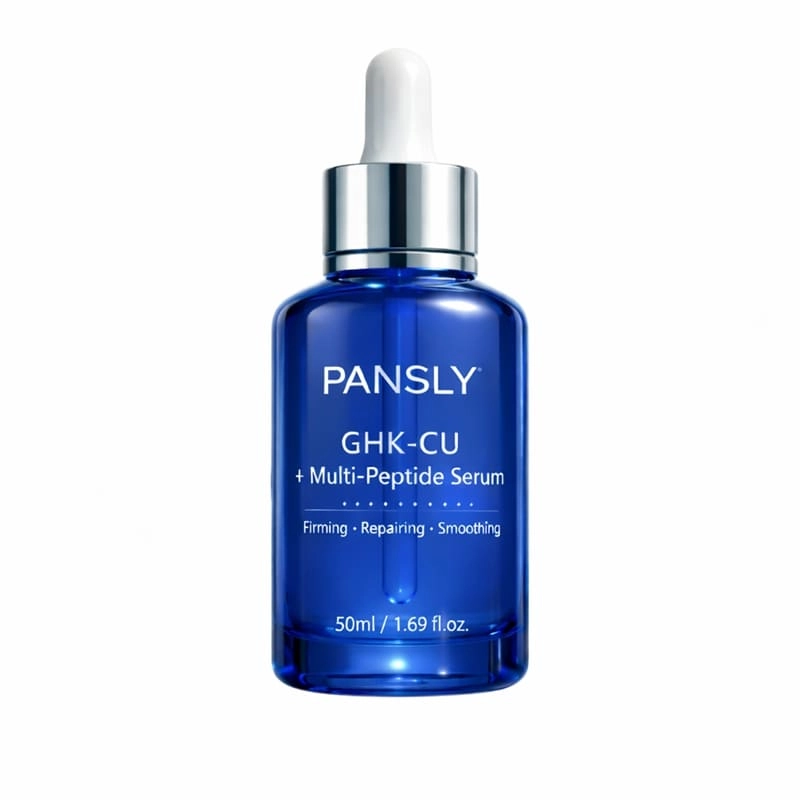
Experience visible rejuvenation with this GHK-Cu Copper Peptide Smoothing & Firming Face Serum, a high-performance concentrate designed to restore the structural integrity of aging skin. This advanced formula centers on GHK-Cu, a powerful signaling peptide clinically recognized for its ability to support natural collagen and elastin production. By promoting dermal density, it effectively tightens sagging skin and smooths the appearance of deep-set wrinkles and fine lines.
The lightweight, silky texture absorbs instantly, delivering antioxidant protection to neutralize environmental stressors that accelerate aging. Enhanced with deep-moisturizing agents, the serum reinforces the skin's moisture barrier, leaving the complexion feeling remarkably soft and resilient. With consistent use, skin texture is refined and facial contours appear more lifted, resulting in a youthfully firm and revitalized glow.
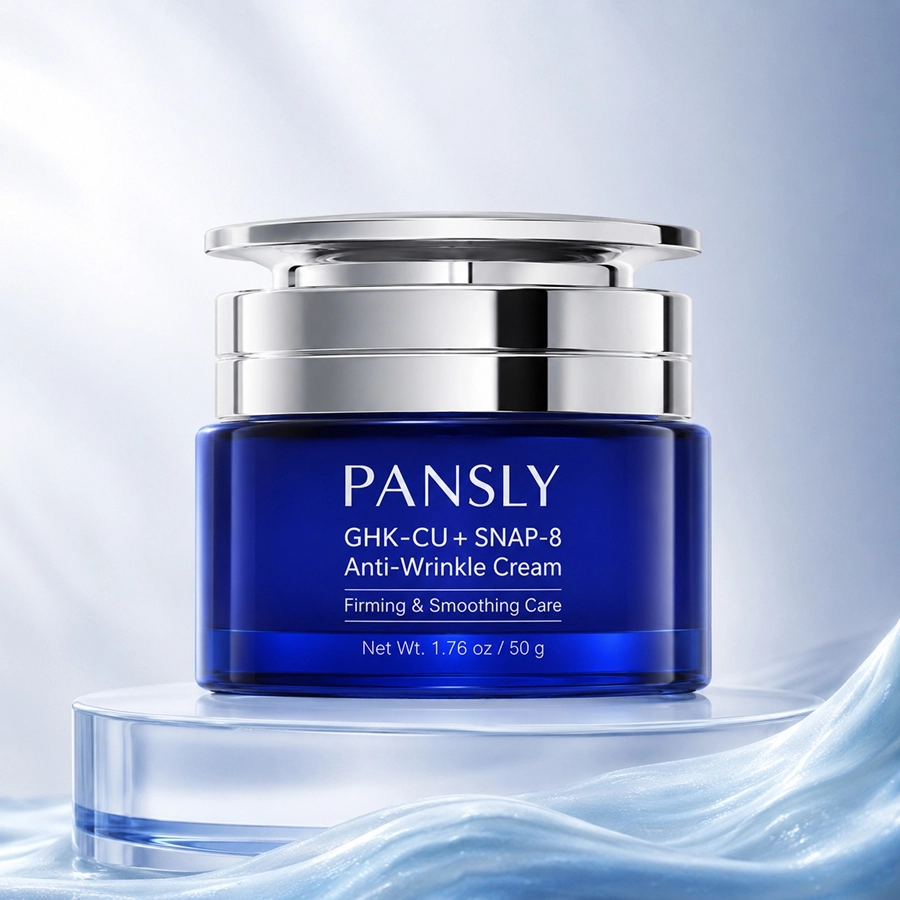
This Pansly GHK-CU + SNAP-8 Anti-Wrinkle Firming Cream is triple-peptide anti-aging facial cream, delivers targeted wrinkle smoothing, firming lifting and deep nourishment for dull, saggy, fine-line prone skin. Full OEM & ODM private label service is supported, including custom formula, packaging options, fast sampling and bulk export supply.
Five core premium active ingredients work synergistically for comprehensive anti-wrinkle care:
GHK-CU Copper Peptide lifts saggy skin, enhances skin resilience and tightens loose facial contour;
SNAP-8 Peptide targets expression lines to visibly soften and fade wrinkles;
Acetyl Hexapeptide-8 reduces the appearance of dry fine lines for smoother skin texture;
Ceramide NP reconstructs skin moisture barrier to lock nourishment and boost comfort;
Hyaluronic Acid delivers multi-layer rich deep moisture to relieve dry rough skin.
Luxury rich creamy texture spreads smoothly and melts into skin gently, leaving soft comfortable finish without heavy greasiness. Daily use blurs fine lines, firms loose skin, deeply nourishes and stabilizes barrier, refining uneven texture to reveal smooth, plump, youthful luminous skin.
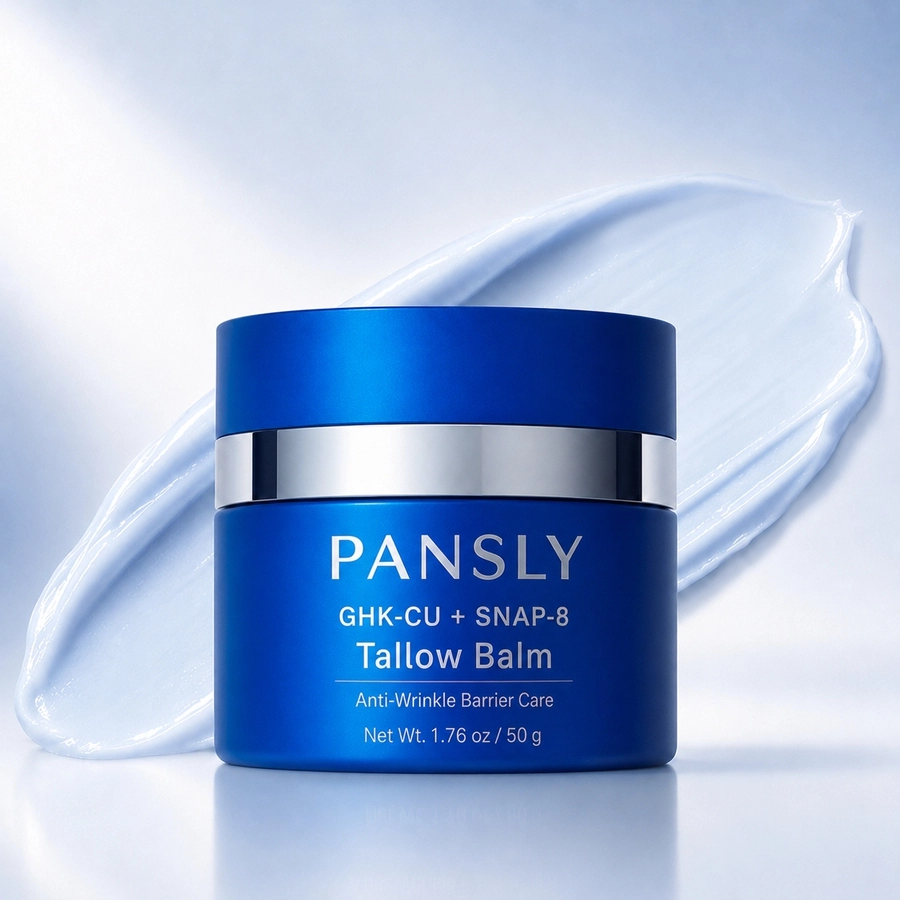
This Pansly GHK-CU + SNAP-8 Tallow Balm is a nourishing anti-wrinkle facial balm specially formulated for dry, fragile and sensitive skin, combining anti-aging wrinkle smoothing and barrier repairing effects. We offer full private label OEM service, including custom logo, adjustable formula, diversified packaging and lid color options.
It contains five core skin care active ingredients: GHK-CU visibly improves fine lines and revives dull complexion; SNAP-8 softens expression lines to smooth wrinkled skin texture; Grass-Fed Beef Tallow delivers deep lipid nourishment to relieve dry rough skin; Ectoin stabilizes the skin barrier and alleviates skin discomfort; Ceramide NP strengthens barrier structure to create smooth, healthy skin.
Luxury creamy blue balm texture glides smoothly and melts quickly on skin, providing long-lasting deep moisturizing comfort. Daily use fades fine lines & expression lines, nourishes dry delicate skin, repairs damaged barrier and leaves silky smooth skin finish.
Click here to customize the Beauty
we respond within a few hours
Monday–Friday, 9AM–6PM
3A01, Building A, Zhisheng Square, No. 4 Zhifu Road, Helong Street, Baiyun District, Guangzhou, China.


Leave a request, and we'll email you back within 24 hours.
© 2026 Beyond Basix. All Rights Reserved.
