How to Choose the peptide anti-aging manufacturer and supplier ?
- Manufacturing landscape and common sourcing pitfalls
- Industry snapshot and supplier types
- Typical sourcing pitfalls and how to avoid them
- Regulatory context and market acceptance thresholds
- Technical vetting: peptide integrity, formulation and testing
- Peptide sourcing, identity and impurity profiling
- Formulation compatibility, stability and preservative strategies
- Analytical verification and third-party labs
- Factory audit and compliance checklist for peptide anti-aging manufacturers
- Facility, GMP and production controls
- Certifications, documentation and supplier transparency
- Traceability, cold-chain and supplier controls
- Logistics, IP protection and commercial negotiation
- Lead times, capacity and MOQ assessment
- Intellectual property and contractual safeguards
- Pricing, cost drivers and commercial flexibility
- Frequently Asked Questions
When sourcing peptide anti-aging products buyers must prioritize verifiable raw-material traceability, analytical peptide identity and purity, GMP-level production environments, stability and efficacy data, regulatory compliance, and secure IP and supply-chain terms; this guide provides a step-by-step due diligence framework, sample audit checklist, supplier comparison, and logistics considerations to evaluate One-Stop OEM/ODM for Skincare partners capable of delivering consistent, clinically credible peptide anti-aging formulations for commercial markets.
Manufacturing landscape and common sourcing pitfalls
Industry snapshot and supplier types
The peptide anti-aging market is served by three dominant supplier archetypes: peptide raw-material traders, contract peptide formulators, and One-Stop OEM/ODM for Skincare factories that control formulation, filling and packaging. Each model implies different risk profiles: traders often lack manufacturing oversight; contract formulators may not own ingredient traceability; One-Stop OEM/ODM partners provide end-to-end control but must be audited for genuine capabilities and certificate validity.
Typical sourcing pitfalls and how to avoid them
Common failures when purchasing peptide anti-aging include accepting unverified certificates of analysis (CoA), insufficient stability testing (leading to peptide degradation), unclear cold-chain logistics for labile peptides, and ambiguous IP ownership in formulations. Mitigate these by demanding original CoAs, third-party analytical reports, validated stability protocols, and written IP clauses in your supply agreements.
Regulatory context and market acceptance thresholds
Regulatory expectations for peptide anti-aging vary by market; the U.S. FDA treats most topical cosmetics differently from drugs but enforces safety and labeling under its cosmetics jurisdiction, while the EU has specific ingredient notification and safety assessment requirements; buyers should reference the U.S. FDA guidance and EU cosmetics rules when qualifying suppliers. See Cosmetics Regulation - U.S. FDA and EU Cosmetics Regulation - European Commission for baseline requirements.
Technical vetting: peptide integrity, formulation and testing
Peptide sourcing, identity and impurity profiling
Require the supplier to provide full peptide raw-material documentation: batch CoA, peptide sequence confirmation (MS/MS), HPLC purity profiles, endotoxin testing where applicable, and source lab or manufacturer credentials. Peptide anti-aging actives are sensitive to sequence impurities and synthesis byproducts; insist on high-resolution mass spectrometry results and peptide purity thresholds (commonly >95% for finished actives) to reduce risk of reduced efficacy or adverse reactions.
Formulation compatibility, stability and preservative strategies
Peptides for anti-aging often require specific pH windows, chelating strategies, and stabilizing excipients (e.g., glycerin, trehalose, peptide-stabilizing carriers). Validate supplier stability protocols: accelerated and real-time stability testing, photostability, and preservative efficacy testing (challenge tests). Without validated stability data your peptide anti-aging product could lose potency or become microbiologically unsafe before the first commercial shipment.
Analytical verification and third-party labs
Independent verification reduces supplier risk. Require third-party lab certificates for peptide identity and potency, and check laboratory accreditation (e.g., ISO/IEC 17025). Use independent labs to confirm CoAs and run orthogonal tests (HPLC + LC-MS) for robust verification. For a primer on peptides see Peptide - Wikipedia.
Factory audit and compliance checklist for peptide anti-aging manufacturers
Facility, GMP and production controls
On-site audits must confirm a dust-free environment for filling of sensitive peptide anti-aging products, segregated mixing and filling lines, and validated cleaning procedures to prevent cross-contamination. Inspect HVAC controls, particulate monitoring records, and monitoring trends for the 100,000-level GMPC workshops when present. Confirm the supplier adheres to recognized quality systems—ISO 9001 or equivalent—and maintains batch records and deviation logs for traceability. Reference ISO quality frameworks at ISO 9001 Quality Management - ISO.
Certifications, documentation and supplier transparency
Validate certifications such as GMP, MSDS, HALAL, CE where relevant, and ensure certificates are current and issued by accredited bodies. Ask for recent audit reports, product dossiers, and safety assessments prepared by a qualified toxicologist or safety assessor. Beware of falsified documents—contact issuing bodies when in doubt.
Traceability, cold-chain and supplier controls
Peptide anti-aging actives are temperature-sensitive; confirm cold-chain logistics for raw materials and finished goods, including temperature logs and validated shipping partners. Evaluate the supplier's supplier: does the manufacturer source peptide intermediates from accredited peptide synthesis houses? Effective traceability maps every lot back to the synthesis house and raw-material vendors.
| Criteria | Standard Requirement | Importance (High/Med/Low) |
|---|---|---|
| GMP Facility | Validated cleanrooms, documented batch records, environmental monitoring | High |
| Peptide CoA & Identity | HPLC purity >95%, LC-MS/MS identity, impurity profile | High |
| Stability Data | Accelerated & real-time stability, preservative challenge test | High |
| Third-Party Testing | ISO/IEC 17025 accredited lab verification | Medium |
| Certifications | ISO 9001, GMP, MSDS, CE/HALAL as required | Medium |
| IP & NDA Controls | Signed NDAs, contract clauses for ownership and confidentiality | High |
| Supply Chain Traceability | Lot-to-lot traceability to raw material source | High |
Logistics, IP protection and commercial negotiation
Lead times, capacity and MOQ assessment
Evaluate production capacity against your launch schedule. For peptide anti-aging products, typical lead times include peptide procurement (2–6 weeks), formulation and stability testing (8–16 weeks for meaningful data), and manufacturing fill/finish (2–6 weeks). Obtain realistic lead-time commitments and penalties in supply contracts; confirm manufacturer operating capacity with documented production line throughput.
Intellectual property and contractual safeguards
Secure NDAs, define IP ownership (formulations, process improvements), include quality escape clauses, and set warranty and recall procedures. Ensure contracts specify remedies for out-of-spec batches and intellectual property breach. Use registered trademarks and patents where applicable; for chemical and biological safety frameworks consult global norms as needed.
Pricing, cost drivers and commercial flexibility
Cost drivers for peptide anti-aging include peptide active cost (synthesis complexity), stabilization chemistry, packaging (airless pumps vs jars), and testing overhead. Negotiate volume tiers, sample allowances for stability and clinical testing, and flexibility around formulation changes. A transparent cost breakdown helps identify where value engineering can reduce landed cost without compromising peptide stability or efficacy.
For regulatory alignment and public-health considerations consult global authorities when assessing claims and safety, see World Health Organization for general guidance on product safety and ISO for standards referenced by many manufacturers.
Final vetting recommendation: prioritize One-Stop OEM/ODM for Skincare partners that can demonstrate audited cleanroom operations, robust peptide analytical data, validated stability programs, third-party testing, and contract terms that secure IP and supply continuity; treat supplier selection as a phased qualification process with document review, small pilot production and integrated stability/consumer-safety testing before scaling.
Guangzhou Beyond Basix Cosmetics Ltd. is a leading comprehensive cosmetics care manufacturer with over 23 years of experience in research, production, and sales, operating a 12,000-square-meter facility that includes a 100,000-level GMPC pharmaceutical-grade dust-free workshop and 12 production lines equipped with advanced machinery imported from Germany, the US, and other regions, focusing on the development of skincare products with effective ingredients for 12 years and operating four major brands—LANTHOME, PANSLY, FIRSTSUN, and SAUVASINE—certified with ISO 9001, CE, MSDS, GMP, HALAL, and more, committed to offering the best products, services, and prices, aiming to grow and progress together with our partners, and we are more than just skincare—connect with us today!
Frequently Asked Questions
What documents should I request from a peptide anti-aging supplier before a factory audit?
Request original Certificates of Analysis (CoA) for peptide actives, LC-MS/HPLC data, MSDS, current GMP and ISO certificates, third-party lab reports (ISO/IEC 17025), recent environmental monitoring logs, stability study summaries, and supplier-to-supplier traceability documentation.
How do I verify the identity and purity of peptide anti-aging actives?
Require high-resolution analytical data such as LC-MS/MS for sequence confirmation and HPLC chromatograms for purity; where possible, commission an independent laboratory to reproduce the supplier's results and validate impurity profiles and potency.
What on-site audit priorities are essential for manufacturers producing peptide anti-aging products?
Prioritize cleanroom classification and maintenance, segregation of mixing/filling operations, validated cleaning procedures, environmental monitoring records, validated equipment calibration, batch records for traceability, and documented deviation and CAPA procedures.
How long should stability testing be for peptide anti-aging formulations before commercial launch?
Minimum recommended testing includes accelerated stability (3–6 months) combined with a short real-time dataset; for robust commercial launch plans, aim for at least 6–12 months of real-time data supplemented by meaningful accelerated studies and preservative challenge testing.
What contractual protections should I include when working with an OEM/ODM on peptide anti-aging products?
Include NDAs, explicit IP ownership clauses for formulations and process improvements, quality warranty terms, defined remedies for out-of-spec production, acceptance testing protocols, lead-time guarantees, and terms for product recalls and liability allocation.
How do I manage cold-chain and logistics risks for peptide anti-aging actives?
Ensure suppliers provide validated cold-chain procedures, temperature-monitoring data for shipments, qualified shipping partners, contingency plans for temperature excursions, and clear responsibilities in the contract for maintaining required storage temperatures from raw material receipt through finished goods delivery.

Elevate your professional skincare offerings with this Private Label Copper Peptide Anti-Wrinkle Firming Serum, a powerhouse concentrate designed for superior age-defying results. This sophisticated formula leverages the synergistic effects of GHK-Cu and SNAP-8 to address multiple layers of skin aging. The GHK-Cu copper peptides act as a vital signaling mechanism to enhance skin density and firmness, while the advanced SNAP-8 octapeptide specifically targets expression lines, helping to relax the appearance of deep-seated wrinkles for a smoother, more refined surface.
This lightweight, rapid-absorption serum provides a professional-grade solution for clients seeking a non-invasive lift. It effectively restores elasticity, improves skin texture, and provides essential antioxidant protection. Perfect for high-end beauty brands, this serum leaves the complexion looking visibly contoured, hydrated, and youthfully revitalized.
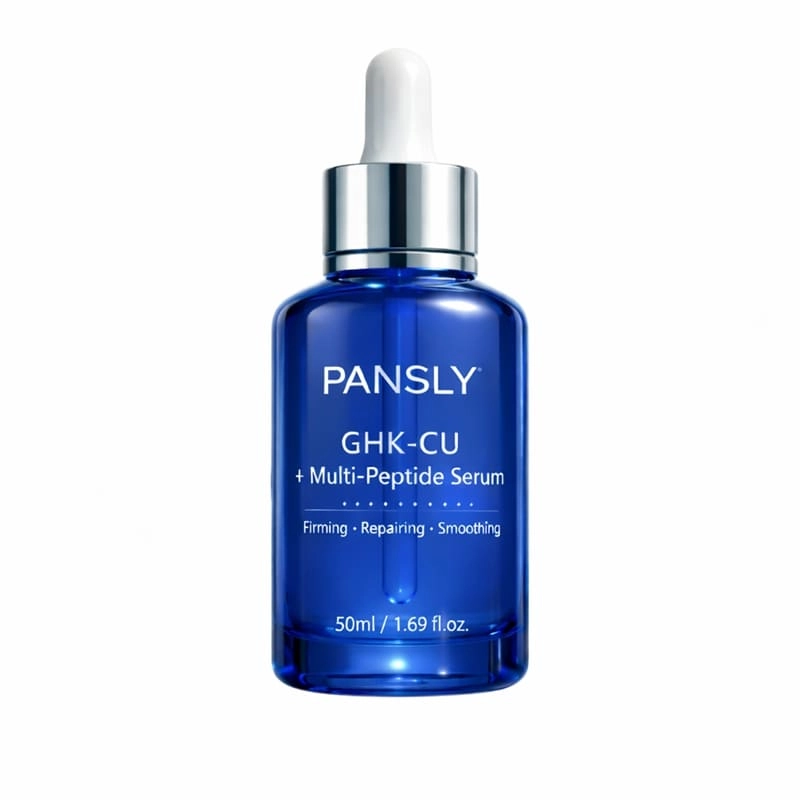
Experience visible rejuvenation with this GHK-Cu Copper Peptide Smoothing & Firming Face Serum, a high-performance concentrate designed to restore the structural integrity of aging skin. This advanced formula centers on GHK-Cu, a powerful signaling peptide clinically recognized for its ability to support natural collagen and elastin production. By promoting dermal density, it effectively tightens sagging skin and smooths the appearance of deep-set wrinkles and fine lines.
The lightweight, silky texture absorbs instantly, delivering antioxidant protection to neutralize environmental stressors that accelerate aging. Enhanced with deep-moisturizing agents, the serum reinforces the skin's moisture barrier, leaving the complexion feeling remarkably soft and resilient. With consistent use, skin texture is refined and facial contours appear more lifted, resulting in a youthfully firm and revitalized glow.
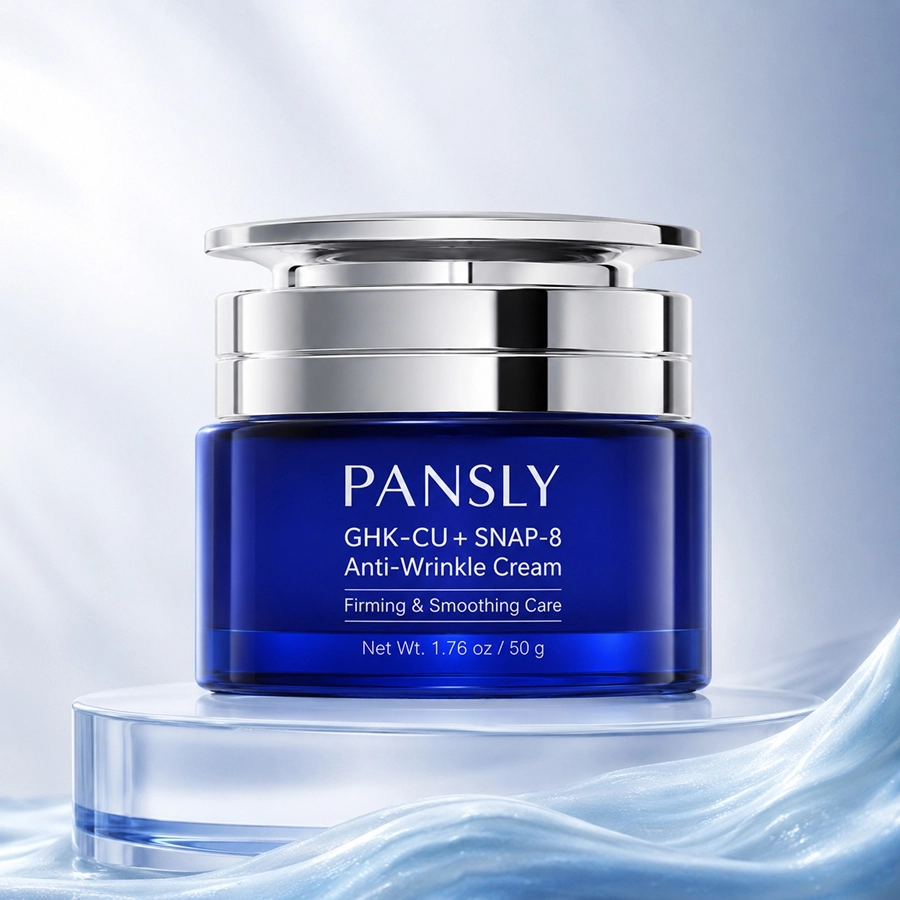
This Pansly GHK-CU + SNAP-8 Anti-Wrinkle Firming Cream is triple-peptide anti-aging facial cream, delivers targeted wrinkle smoothing, firming lifting and deep nourishment for dull, saggy, fine-line prone skin. Full OEM & ODM private label service is supported, including custom formula, packaging options, fast sampling and bulk export supply.
Five core premium active ingredients work synergistically for comprehensive anti-wrinkle care:
GHK-CU Copper Peptide lifts saggy skin, enhances skin resilience and tightens loose facial contour;
SNAP-8 Peptide targets expression lines to visibly soften and fade wrinkles;
Acetyl Hexapeptide-8 reduces the appearance of dry fine lines for smoother skin texture;
Ceramide NP reconstructs skin moisture barrier to lock nourishment and boost comfort;
Hyaluronic Acid delivers multi-layer rich deep moisture to relieve dry rough skin.
Luxury rich creamy texture spreads smoothly and melts into skin gently, leaving soft comfortable finish without heavy greasiness. Daily use blurs fine lines, firms loose skin, deeply nourishes and stabilizes barrier, refining uneven texture to reveal smooth, plump, youthful luminous skin.
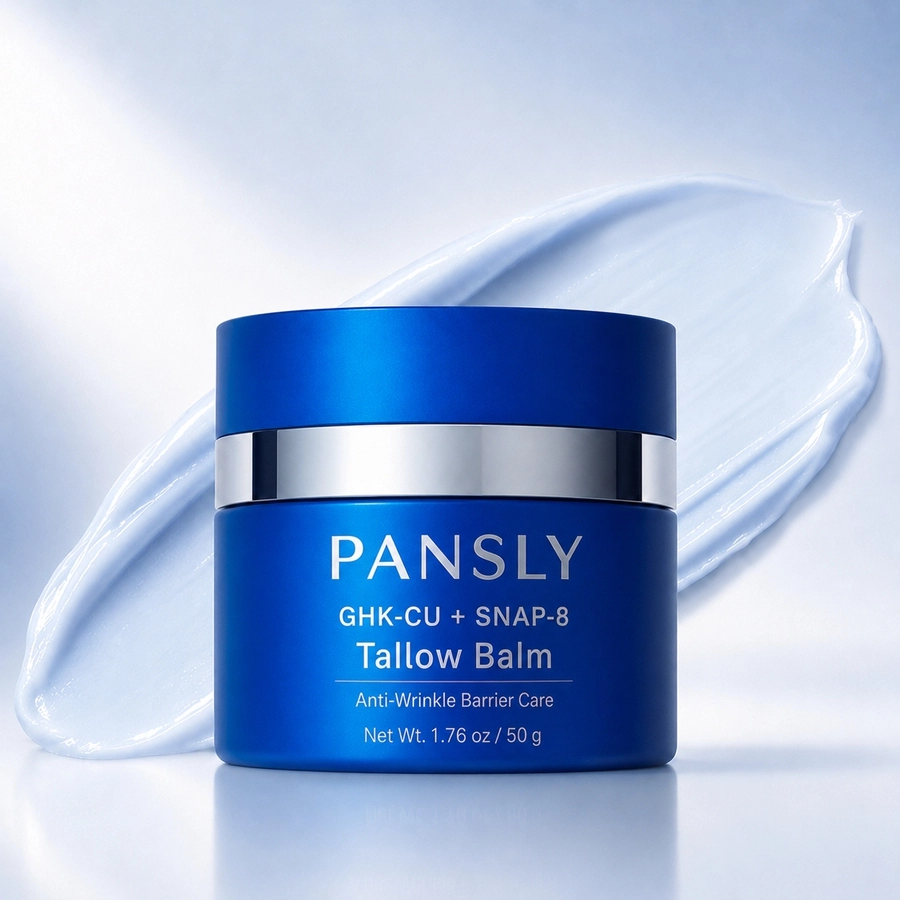
This Pansly GHK-CU + SNAP-8 Tallow Balm is a nourishing anti-wrinkle facial balm specially formulated for dry, fragile and sensitive skin, combining anti-aging wrinkle smoothing and barrier repairing effects. We offer full private label OEM service, including custom logo, adjustable formula, diversified packaging and lid color options.
It contains five core skin care active ingredients: GHK-CU visibly improves fine lines and revives dull complexion; SNAP-8 softens expression lines to smooth wrinkled skin texture; Grass-Fed Beef Tallow delivers deep lipid nourishment to relieve dry rough skin; Ectoin stabilizes the skin barrier and alleviates skin discomfort; Ceramide NP strengthens barrier structure to create smooth, healthy skin.
Luxury creamy blue balm texture glides smoothly and melts quickly on skin, providing long-lasting deep moisturizing comfort. Daily use fades fine lines & expression lines, nourishes dry delicate skin, repairs damaged barrier and leaves silky smooth skin finish.
Click here to customize the Beauty
we respond within a few hours
Monday–Friday, 9AM–6PM
3A01, Building A, Zhisheng Square, No. 4 Zhifu Road, Helong Street, Baiyun District, Guangzhou, China.


Leave a request, and we'll email you back within 24 hours.
© 2026 Beyond Basix. All Rights Reserved.