
Why Combine SNAP-8 and GHK-Cu in a Private Label Peptide Facial Cleanser?
Combining SNAP-8 and GHK-Cu in a private-label peptide facial cleanser can deliver complementary mechanisms—neurotransmission modulation to soften expression lines and copper-mediated matrix remodelling to support dermal repair—while posing formulation and regulatory challenges that require GMP-grade sourcing, stability optimization, preservative and chelator management, and robust clinical or in vitro validation; procurement teams should prioritize certified suppliers, stability and microbial testing, claim substantiation, and scalable manufacturing partners with controlled cleanroom facilities to reduce time-to-market and regulatory risk.
- Synergistic peptide pairing for modern cleansing formulations
- How SNAP-8 and copper tripeptide complement each other
- Use-case differentiation: rinse-off vs. low-contact formulations
- Procurement implications for peptide sourcing
- Formulation engineering: stability, compatibility, and efficacy
- Key stability and compatibility challenges
- Preservative systems and microbial control
- Delivery technologies and claim support
- Manufacturing, QC and scale-up considerations for private label lines
- Production environment and process controls
- Analytical release criteria and ongoing stability
- Supply chain and lead-time management
- Comparative performance and risk matrix
- Data-driven decision checkpoints
- Mitigating regulatory and marketing risk
- Claim language and regulatory boundaries
- Clinical and in vitro validation strategies
- Adverse event management and pharmacovigilance-like processes
- Why partner with an experienced One-Stop OEM/ODM for peptide products
- End-to-end capabilities reduce time-to-market
- Beyond Basix value proposition and competitive strengths
- Applied capabilities across product categories
- Commercial and technical collaboration model
- Frequently Asked Questions
- What are the main formulation compatibility issues when blending a neuropeptide like SNAP-8 with copper peptides?
- How should procurement teams validate peptide suppliers for private-label projects?
- Are peptide-containing cleansers considered cosmetics or drugs?
- What testing is essential to substantiate anti-wrinkle or skin-support claims for a peptide wash?
- How can manufacturers ensure consistent copper peptide activity through shelf life?
Combining SNAP-8 and GHK-Cu in a private-label peptide facial cleanser can deliver complementary mechanisms—neurotransmission modulation to soften expression lines and copper-mediated matrix remodelling to support dermal repair—while posing formulation and regulatory challenges that require GMP-grade sourcing, stability optimization, preservative and chelator management, and robust clinical or in vitro validation; procurement teams should prioritize certified suppliers, stability and microbial testing, and manufacturing partners with controlled cleanroom facilities to reduce time-to-market and regulatory risk.
Synergistic peptide pairing for modern cleansing formulations
How SNAP-8 and copper tripeptide complement each other
SNAP-8 (a neuro-modulatory oligopeptide used to reduce repetitive micro-contractions) primarily targets expression wrinkle pathways at the epidermal–dermal junction, while copper-binding tripeptides such as GHK-Cu act as bioactive signals for collagen synthesis, antioxidant pathways and extracellular matrix remodelling. When incorporated into a wash-off or mild leave-on cleansing step, this pairing offers both immediate texture-smoothing benefits (via reduced micro-contraction) and longer-term structural support (via increased matrix turnover). Buyers evaluating such blends should request mechanistic data or reputable literature summaries; a searchable repository of clinical and biochemical literature is available via PubMed - GHK-Cu.
Use-case differentiation: rinse-off vs. low-contact formulations
Private-label owners must decide whether to launch a rinse-off facial cleanser with a short contact time or a low-contact enzymatic/cream cleanser that leaves peptides on the skin longer. For quick-rinse formats, higher effective concentrations and delivery enhancers may be needed to achieve measurable benefit; for low-contact gels or micellar creams, lower concentrations with appropriate vehicle design can maintain efficacy while improving stability. Product positioning (daily gentle cleanser vs. targeted peptide wash) determines formulation strategy, testing burden, and marketing claims.
Procurement implications for peptide sourcing
Selecting raw material vendors for SNAP-8 analogues and copper peptides requires checking batch-level Certificates of Analysis (CoA), heavy metals limits, and endotoxin/microbial test results. Buyers should require evidence of GMP or pharmaceutical-grade manufacturing (for example, adherence to GMP guidance such as WHO GMP) and full traceability for each peptide lot. Contract terms should include agreed stability windows and re-test dates to prevent active degradation during storage or transit.
Formulation engineering: stability, compatibility, and efficacy
Key stability and compatibility challenges
Copper-peptide complexes are sensitive to chelating agents, oxidizers, and high pH; oxidative stress or incompatible surfactants can reduce copper availability and activity. SNAP-8 can be susceptible to enzymatic cleavage and requires protection from proteases or acidic hydrolysis, depending on the vehicle. Formulators must map out ingredient interactions (chelators, EDTA, vitamin C, oxidizing preservatives) during preformulation screening. pH control, appropriate choice of non-ionic or amphoteric surfactants, and antioxidant systems are common mitigation strategies.
Preservative systems and microbial control
A cleanser must meet preservative efficacy requirements while not impairing peptide activity. Preservatives such as phenoxyethanol, low-level parabens, or approved organic systems may be selected depending on regional regulation and desired claim sets. Challenge testing and preservative efficacy testing (PET) are mandatory for marketability; suppliers with on-site microbiology labs can accelerate release and reduce back-and-forth between R&D and manufacturing.
Delivery technologies and claim support
Encapsulation, liposomal carriers, or complexation strategies can stabilize peptides during processing and enhance short-term skin residence time for rinse-off systems. When claiming anti-wrinkle or skin-firming benefits, buyers should plan for either in vitro assays (e.g., fibroblast collagen expression) or consumer usage studies to substantiate efficacy. Adherence to regulatory guidance on cosmetic claims (see FDA - Cosmetics) helps avoid unsupported marketing statements.
Manufacturing, QC and scale-up considerations for private label lines
Production environment and process controls
Producing peptide-enriched cleansers demands strict environmental control to prevent contamination and ensure consistent potency. A 100,000-level or better cleanroom, validated HVAC, and segregated filling lines reduce cross-contamination risk. Batch records should capture peptide addition points, in-process checks, temperature control during mixing, and CIP/SIP procedures for relevant equipment. Buyers should request on-site audits or third-party verification as part of vendor qualification.
Analytical release criteria and ongoing stability
Analytical testing should include peptide assay (HPLC or LC-MS), copper content (ICP-MS when relevant), pH, preservative levels, and microbial limits. Establishing accelerated and long-term stability protocols ensures that peptide integrity and claim-supporting potency are maintained through shelf life. An OEM partner that provides complete analytical packages can reduce time-to-market and simplify regulatory dossiers.
Supply chain and lead-time management
Peptide raw materials often require longer lead times and temperature-controlled shipping. Contract terms must define inventory buffers, reorder points, and responsibilities for cold-chain breaches. For private-label launches, run small pilot batches to validate manufacturing parameters before scaling; this approach minimizes costly recalls and rework.
Comparative performance and risk matrix
| Attribute | SNAP-8 (neuro-modulatory peptide) | GHK-Cu (copper tripeptide) | Combined formulation |
|---|---|---|---|
| Primary mechanism | Reduces neurotransmitter-related micro-contractions | Stimulates collagen, wound-healing signalling and antioxidant responses | Immediate smoothing + longer-term dermal support |
| Typical formulation role | Targeted surface action to reduce expression lines | Matrix remodelling and barrier repair signalling | Complementary multifunctional cleanser or pre-wash therapy |
| Stability concerns | Proteolytic/enzymatic degradation, pH sensitivity | Deactivation by chelators/oxidizers; pH and metal ion interactions | Requires pH control, chelator management, and antioxidant protection |
| Manufacturing notes | Add late in process; avoid high shear and heat | Manage metal ion balance; avoid incompatible preservatives | Staged addition protocols, validated mixing, and analytical release testing |
| Regulatory/testing needs | Safety data, microbiology, stability | Metal analysis, safety/toxicity evaluation, stability | Combined safety substantiation and clinical or in-vitro efficacy testing |
Data-driven decision checkpoints
Before finalizing a private-label peptide cleanser, buyers should require: batch CoAs for each peptide lot, accelerated stability showing retained activity, preservative efficacy testing, ICP-metal analysis for copper content, and documented manufacturing SOPs. These checkpoints reduce post-launch risk and support credible marketing claims.
Mitigating regulatory and marketing risk
Claim language and regulatory boundaries
Cosmetics regulations vary by market. Claims suggesting alteration of physiological functions may trigger drug classification in some jurisdictions. To stay within cosmetic frameworks, phrase benefits as visibly reduces the appearance of expression lines or supports skin surface texture rather than asserting structural tissue regeneration unless backed by drug-tier evidence. The FDA provides guidance on cosmetics and claims on its site (FDA - Cosmetics).
Clinical and in vitro validation strategies
A stepwise validation plan starts with in vitro assays (collagen gene expression, fibroblast proliferation), moves to instrumental clinical endpoints (profilometry, corneometry), and culminates in consumer-use studies for perceptual claims. Investors and brand owners should budget for these activities to ensure defensible claims and to support High Quality positioning.
Adverse event management and pharmacovigilance-like processes
Although cosmetics are not drugs, establishing a post-market surveillance and complaint handling process is essential. Track consumer feedback, adverse reactions, and batch numbers. An OEM partner that retains retained samples and provides batch-traceability data accelerates root-cause analysis and corrective actions.
Why partner with an experienced One-Stop OEM/ODM for peptide products
End-to-end capabilities reduce time-to-market
Working with an experienced full-service manufacturer streamlines sourcing, formulation, testing, filling and packaging. A qualified partner with integrated R&D, microbiology, and analytical labs reduces coordination overhead and ensures consistent release criteria for peptide-enriched cleansers.
Beyond Basix value proposition and competitive strengths
Guangzhou Beyond Basix Cosmetics Ltd. offers over 23 years of industry experience in research, production, and sales, backed by a 12,000-square-meter facility that includes a 100,000-level GMPC pharmaceutical-grade dust-free workshop and twelve production lines equipped with advanced machinery from Germany and the United States. Our R&D and manufacturing teams specialize in peptide technologies and have supported peptide-containing product development for more than a decade. Certifications including ISO 9001, GMP and relevant safety documentation provide supply chain and quality assurances buyers require.
Applied capabilities across product categories
We manufacture a broad portfolio spanning Skincare Products, Hair Care Products, Eye Care Products, and Body Care Products. Capabilities include formulation engineering for sensitive actives, small-batch private label, scalability to large orders, full stability and microbiology testing, and packaging lines capable of diverse formats (bottles, tubes, pumps). Buyers benefit from consolidated vendor management, standardized CoAs, and transparent QC reporting.
Commercial and technical collaboration model
Beyond Basix collaborates with brand owners on specification setting, pilot batches, analytical method transfers, claim substantiation plans, and regulatory documentation. This collaborative model reduces iteration cycles in formulation and provides a direct path from prototype to qualified large-scale production runs, improving ROI and shortening launch timelines.
Frequently Asked Questions
What are the main formulation compatibility issues when blending a neuropeptide like SNAP-8 with copper peptides?
Primary compatibility issues include copper chelation or oxidation, peptide proteolysis, and preservative interactions; mitigation requires pH control, avoidance of strong chelators or incompatible actives, staged addition of peptides late in the process, and validated antioxidant/preserver systems.
How should procurement teams validate peptide suppliers for private-label projects?
Procurement should require GMP evidence, batch-level Certificates of Analysis, heavy metals and microbial testing results, cold-chain documentation if required, and supplier traceability. On-site audits or third-party quality assessments are recommended for high-risk or large-volume projects.
Are peptide-containing cleansers considered cosmetics or drugs?
Classification depends on claims and jurisdiction; most peptide-containing cleansers are marketed as cosmetics when claims are limited to appearance-based outcomes, but therapeutic claims (e.g., altering tissue structure) may trigger drug regulations. Consult local regulatory guidance such as FDA - Cosmetics and align claims accordingly.
What testing is essential to substantiate anti-wrinkle or skin-support claims for a peptide wash?
Essential testing includes stability studies showing retained peptide potency, preservative efficacy testing, in-vitro assays (e.g., collagen expression), instrumental clinical endpoints (profilometry, imaging), and consumer-use studies for perceptual claims; objective data reduces risk of regulatory or consumer disputes.
How can manufacturers ensure consistent copper peptide activity through shelf life?
Consistency requires validated storage and processing conditions, appropriate chelation management, antioxidant systems, low-exposure packaging, and regular assay testing (e.g., LC-MS for peptide integrity and ICP-MS for copper content) during stability studies.
Contact our team to request formulation dossiers, pilot samples, or a quotation and view our product capabilities in Skincare Products, Hair Care Products, Eye Care Products, and Body Care Products.

Elevate your professional skincare offerings with this Private Label Copper Peptide Anti-Wrinkle Firming Serum, a powerhouse concentrate designed for superior age-defying results. This sophisticated formula leverages the synergistic effects of GHK-Cu and SNAP-8 to address multiple layers of skin aging. The GHK-Cu copper peptides act as a vital signaling mechanism to enhance skin density and firmness, while the advanced SNAP-8 octapeptide specifically targets expression lines, helping to relax the appearance of deep-seated wrinkles for a smoother, more refined surface.
This lightweight, rapid-absorption serum provides a professional-grade solution for clients seeking a non-invasive lift. It effectively restores elasticity, improves skin texture, and provides essential antioxidant protection. Perfect for high-end beauty brands, this serum leaves the complexion looking visibly contoured, hydrated, and youthfully revitalized.
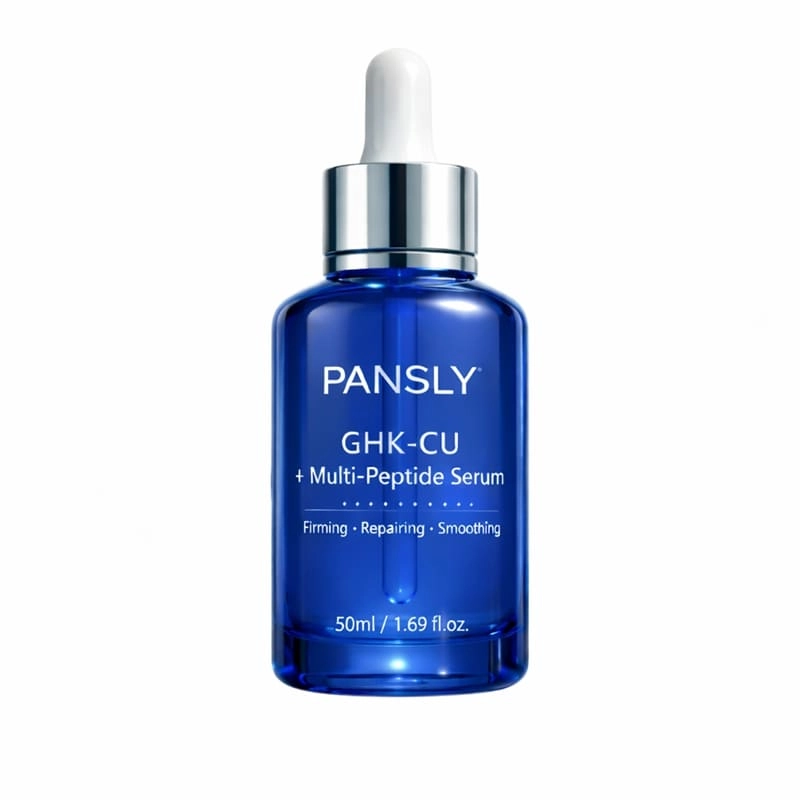
Experience visible rejuvenation with this GHK-Cu Copper Peptide Smoothing & Firming Face Serum, a high-performance concentrate designed to restore the structural integrity of aging skin. This advanced formula centers on GHK-Cu, a powerful signaling peptide clinically recognized for its ability to support natural collagen and elastin production. By promoting dermal density, it effectively tightens sagging skin and smooths the appearance of deep-set wrinkles and fine lines.
The lightweight, silky texture absorbs instantly, delivering antioxidant protection to neutralize environmental stressors that accelerate aging. Enhanced with deep-moisturizing agents, the serum reinforces the skin's moisture barrier, leaving the complexion feeling remarkably soft and resilient. With consistent use, skin texture is refined and facial contours appear more lifted, resulting in a youthfully firm and revitalized glow.
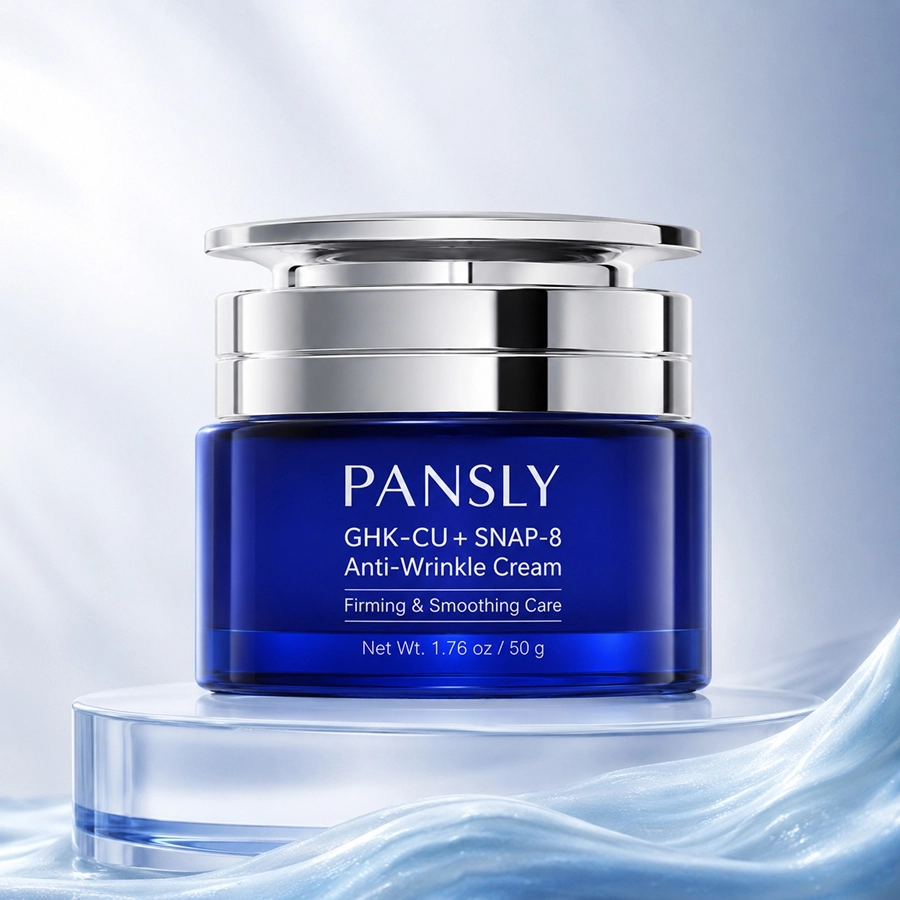
This Pansly GHK-CU + SNAP-8 Anti-Wrinkle Firming Cream is triple-peptide anti-aging facial cream, delivers targeted wrinkle smoothing, firming lifting and deep nourishment for dull, saggy, fine-line prone skin. Full OEM & ODM private label service is supported, including custom formula, packaging options, fast sampling and bulk export supply.
Five core premium active ingredients work synergistically for comprehensive anti-wrinkle care:
GHK-CU Copper Peptide lifts saggy skin, enhances skin resilience and tightens loose facial contour;
SNAP-8 Peptide targets expression lines to visibly soften and fade wrinkles;
Acetyl Hexapeptide-8 reduces the appearance of dry fine lines for smoother skin texture;
Ceramide NP reconstructs skin moisture barrier to lock nourishment and boost comfort;
Hyaluronic Acid delivers multi-layer rich deep moisture to relieve dry rough skin.
Luxury rich creamy texture spreads smoothly and melts into skin gently, leaving soft comfortable finish without heavy greasiness. Daily use blurs fine lines, firms loose skin, deeply nourishes and stabilizes barrier, refining uneven texture to reveal smooth, plump, youthful luminous skin.
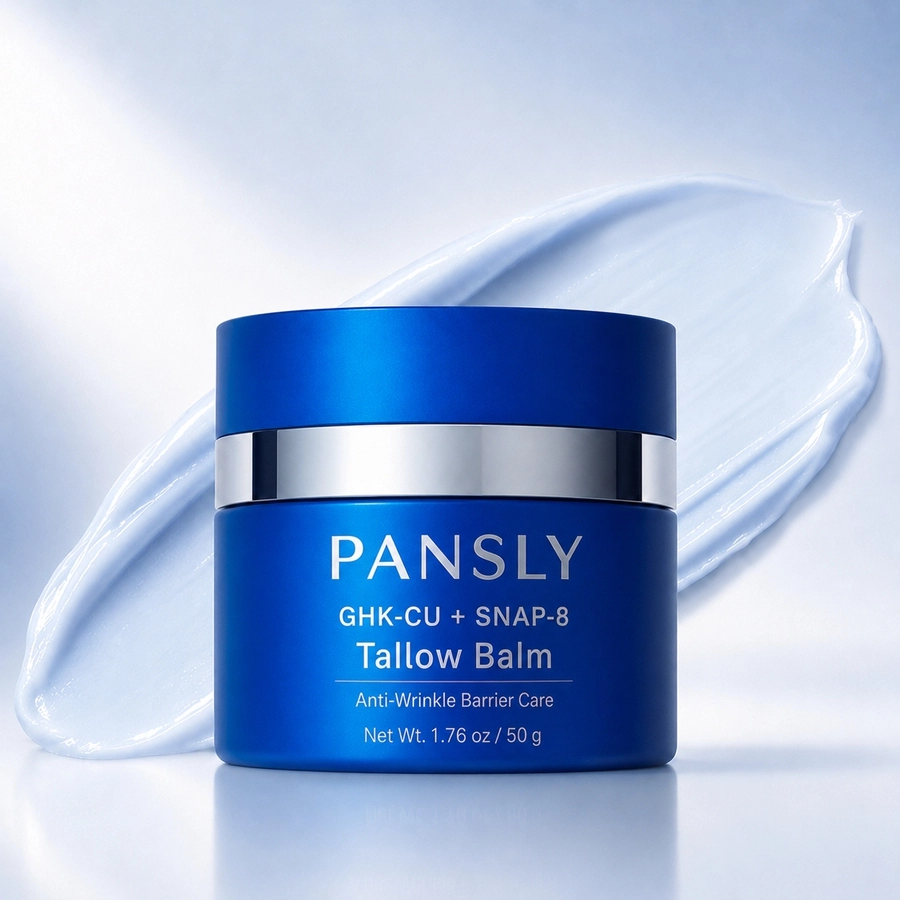
This Pansly GHK-CU + SNAP-8 Tallow Balm is a nourishing anti-wrinkle facial balm specially formulated for dry, fragile and sensitive skin, combining anti-aging wrinkle smoothing and barrier repairing effects. We offer full private label OEM service, including custom logo, adjustable formula, diversified packaging and lid color options.
It contains five core skin care active ingredients: GHK-CU visibly improves fine lines and revives dull complexion; SNAP-8 softens expression lines to smooth wrinkled skin texture; Grass-Fed Beef Tallow delivers deep lipid nourishment to relieve dry rough skin; Ectoin stabilizes the skin barrier and alleviates skin discomfort; Ceramide NP strengthens barrier structure to create smooth, healthy skin.
Luxury creamy blue balm texture glides smoothly and melts quickly on skin, providing long-lasting deep moisturizing comfort. Daily use fades fine lines & expression lines, nourishes dry delicate skin, repairs damaged barrier and leaves silky smooth skin finish.
Click here to customize the Beauty
we respond within a few hours
Monday–Friday, 9AM–6PM
3A01, Building A, Zhisheng Square, No. 4 Zhifu Road, Helong Street, Baiyun District, Guangzhou, China.


Leave a request, and we'll email you back within 24 hours.
© 2026 Beyond Basix. All Rights Reserved.
