Cracked Heel Cream vs Daily Foot Moisturizer: How Should Brands Position the Product?
Comprehensive strategic guidance for brands and procurement teams on differentiating intensive heel repair formulations from everyday foot moisturizers, covering formulation profiles, regulatory claim pathways, manufacturing controls, packaging and merchandising strategies, and buy-side procurement checklists; includes a data comparison table, citations to FDA, ISO and peer-reviewed literature, and a practical OEM/ODM transition playbook highlighting Guangzhou Beyond Basix’s manufacturing, R&D and certification strengths for private label foot care lines.
- Market differentiation: therapeutic heel repair versus everyday foot hydration
- Clinical intent and buyer expectations
- Function-driven ingredient architectures
- Segmentation and retail placement logic
- Formulation and manufacturing considerations for repair versus maintenance lines
- Active concentrations, stability and preservative systems
- Process controls and GMP compliance
- Packaging formats to drive usage and differentiation
- Go-to-market strategy: claims, pricing, and assortment engineering
- Claims roadmap and regulatory guardrails
- SKU architecture and private label assortment planning
- Trade and digital promotional tactics
- Operational checklist: what buyers must verify before contracting an OEM/ODM
- Quality documentation and third-party testing requirements
- Supply chain resilience and MOQ flexibility
- Testing and post-market surveillance
- Why choose a One-Stop OEM/ODM for Skincare partner with proven capabilities
- Manufacturing capacity, certifications and traceability
- R&D, formulation expertise and ingredient sourcing
- Commercial support: co-branding, packaging and regulatory assistance
- Operational advantages and supply continuity
- Implementation roadmap for B2B buyers
- Phase 1 — Concept and claims scoping
- Phase 2 — Development and validation
- Phase 3 — Scale-up and commercialization
- Frequently Asked Questions
Comprehensive strategic guidance for brands and procurement teams on differentiating intensive heel repair formulations from everyday foot moisturizers, covering formulation profiles, regulatory claim pathways, manufacturing controls, packaging and merchandising strategies, and buy-side procurement checklists; includes a data comparison table, citations to FDA, ISO and peer-reviewed literature, and a practical OEM/ODM transition playbook highlighting Guangzhou Beyond Basix’s manufacturing, R&D and certification strengths for private label foot care lines.
Market differentiation: therapeutic heel repair versus everyday foot hydration
Clinical intent and buyer expectations
Buyers require clarity on whether a SKU will be marketed as a targeted fissure-repair treatment or as a routine emollient for daily maintenance. Therapeutic-positioned products must justify stronger actives, higher functional claims, and often clinical data; routine moisturizers emphasize sensory attributes, fast absorption, and repeat purchase behavior. This decision drives labeling, pricing, and channel selection (pharmacy vs. mass-market).
Function-driven ingredient architectures
Products for cracked heels typically rely on keratolytic and humectant actives—such as urea at 10–40% concentrations, salicylic acid, or alpha-hydroxy acids—to reduce hyperkeratosis and promote desquamation, supported by occlusives to seal fissures. Daily foot hydrating emulsions emphasize low-to-moderate humectants (glycerin, low-dose urea), light emollients, and skin-feel modifiers to suit frequent application and broader consumer appeal. Peer-reviewed evidence supports urea’s efficacy in hyperkeratotic conditions (PubMed: Urea in dermatology).
Segmentation and retail placement logic
Distributors and brand owners should map SKUs to retail ecosystems: clinically positioned heel treatments perform better in pharmacies and professional channels where consumers seek problem-solving solutions; daily foot creams fit personal care aisles, subscription services, and hospitality amenity programs. Margin expectations, average order quantities, and return policies differ substantially between these channels.
Formulation and manufacturing considerations for repair versus maintenance lines
Active concentrations, stability and preservative systems
Higher active loads in targeted repair formulas require rigorous stability testing and preservative efficacy validation to ensure safety across shelf-life. Manufacturers must balance pH, solubility and preservative compatibility—especially with keratolytics like salicylic acid—and run accelerated stability protocols in addition to real-time testing. Refer to regulatory distinctions for topical cosmetics versus therapeutic claims set by authorities (FDA: What are cosmetics).
Process controls and GMP compliance
Consistent batch-to-batch performance for problem-solving foot treatments often means tighter in-process controls, validated mixing stages, and sampling regimes. A reliable supplier should operate within certified quality systems such as ISO 9001 and GMP frameworks to support audits and product dossiers (ISO 9001).
Packaging formats to drive usage and differentiation
Design decisions—tubes with narrow nozzles for thick repair balms, airless pumps for hyaluronic-enriched daily serums, or jars for heavy occlusive pastes—impact perceived value and unit economics. Primary packaging also influences dosing accuracy for actives and can be a critical factor for regulators and retailers assessing product safety and shelf-life.
Go-to-market strategy: claims, pricing, and assortment engineering
Claims roadmap and regulatory guardrails
Claims must be evidence-backed. Cosmetic claims center on moisturization, softening, or smoothing while therapeutic claims (e.g., repairs fissures) can trigger drug or medical device pathways in some jurisdictions. Brand owners should engage regulatory counsel early and reference official guidance when designing labels and advertising.
SKU architecture and private label assortment planning
Effective assortments often layer a flagship intensive repair SKU with complementary daily maintenance variants to create cross-sell funnels. For procurement, this suggests negotiating MOQs with flexibility for multiple formats and consolidating ingredient sourcing to achieve economies of scale.
Trade and digital promotional tactics
B2B sales teams should prepare evidence packages (stability, microbiology, usage instructions) and point-of-sale assets that differentiate efficacy claims. Digital strategies for repeat-use moisturizers will emphasize subscription and bundles; intensive treatments demand clinician endorsements or pharmacist-facing education materials.
Operational checklist: what buyers must verify before contracting an OEM/ODM
Quality documentation and third-party testing requirements
Buyers should request certificates of analysis, stability data, preservative efficacy reports, and any clinical or consumer use studies. Requesting on-site audit access or third-party GMP verification is standard practice for problem-solution products that carry higher consumer safety sensitivity.
Supply chain resilience and MOQ flexibility
Confirm lead times for raw actives (urea, salicylates), secondary packaging, and contingency plans for ingredient substitutions. A supplier’s ability to offer graduated MOQs, pilot runs, and scale-up plans reduces launch risk.
Testing and post-market surveillance
Establish post-market monitoring plans for adverse event reporting and consumer feedback analysis. This is particularly important for intensively active formulations where misuse or off-label application can cause irritation.
| Attribute | Cracked-heel intensive repair | Daily foot moisturizer |
|---|---|---|
| Intended use | Targeted treatment for fissures, hyperkeratosis | Routine hydration and maintenance |
| Typical actives | Urea 10–40%, salicylic acid, AHA | Glycerin, low-dose urea, ceramides, emollients |
| Claim type | Functional/therapeutic-style claims (may require substantiation) | Cosmetic claims (moisturizes, softens) |
| Frequency of use | Short-term intensive (night use, 1–2x daily) | Daily (AM/PM) or as-needed |
| Packaging | Tubes, jars, occlusive dressings | Pumps, tubes, travel sizes |
| Regulatory focus | Higher scrutiny for claims and safety data | Standard cosmetic safety and stability |
| Typical trade channel | Pharmacy, specialist retail, e-commerce with medical positioning | Mass retail, beauty, hospitality, subscription |
Why choose a One-Stop OEM/ODM for Skincare partner with proven capabilities
Manufacturing capacity, certifications and traceability
We offer a vertically integrated solution with manufacturing scale and compliance to support both clinically positioned repair formulas and high-volume daily care lines. Guangzhou Beyond Basix Cosmetics Ltd. is a leading comprehensive cosmetics care manufacturer with over 23 years of experience in research, production, and sales. Our 12,000-square-meter facility includes a 100,000-level GMPC pharmaceutical-grade dust-free workshop and 12 production lines, equipped with advanced machinery imported from Germany, the US, and other regions. We are certified with ISO 9001, CE, MSDS, GMP, HALAL, and more, which underpins traceability and audit readiness for global buyers.
R&D, formulation expertise and ingredient sourcing
Our team focuses on effective actives and has concentrated R&D efforts on performance-driven skincare for over a decade. With 12 years dedicated to active ingredient optimization, the company supports customized heel-repair concentrations, stability matrices, and sensory tuning for everyday formulations. For clinical substantiation and claims management, third-party laboratory testing and consumer panels are available as part of the development roadmap.
Commercial support: co-branding, packaging and regulatory assistance
Beyond Basix supports full turnkey private labeling, including artwork translation, CPNP/notification submissions for the EU, ingredient disclosure documentation, and product dossiers for regulatory review. Our capabilities extend across Skincare Products, Hair Care Products, Eye Care Products and Body Care Products, enabling multi-category launches and consolidated vendor management for buyers.
Operational advantages and supply continuity
We structure MOQs to accommodate pilot runs, offer scalable production ramps, and maintain multiple raw material sourcing channels to mitigate supply disruptions. Buyers receive a clear development timeline, sample approval stages, and access to certificates and testing documentation for expedited retailer onboarding.
Implementation roadmap for B2B buyers
Phase 1 — Concept and claims scoping
Define target consumer pain points, acceptable claim language, and desired retail channel. Decide whether to position as an empirically supported repair treatment or a mass-market maintenance product, and establish KPIs for efficacy and sensory performance.
Phase 2 — Development and validation
Co-develop prototypes, run accelerated and real-time stability, complete preservative efficacy tests, and undertake patch testing or small-scale consumer trials. Ensure label copy and warnings reflect chosen claims and legal framework in intended markets.
Phase 3 — Scale-up and commercialization
Approve packaging, finalize supply agreements, plan logistics and post-market surveillance, and launch with retailer education and evidence packs. Monitor initial sell-through and iterate SKUs based on consumer feedback and reorder metrics.
For regulatory context and safety frameworks relevant to topical products, consult the FDA definitions of cosmetics vs. drugs (FDA: What are cosmetics), global quality standards such as ISO 9001 (ISO 9001), and clinical literature on clinical actives like urea (PubMed review: urea). Additional clinical practice and dermatology guidance can be found through professional associations such as the American Academy of Dermatology (AAD).
Our One-Stop OEM/ODM for Skincare model reduces friction for brand owners: consolidated product development, certified manufacturing, and cross-category product expertise help shorten time-to-market and reduce procurement complexity. Connect with Beyond Basix for capability presentations, factory audits, and sample programs that align with retailer and regulatory requirements.
Contact our commercial team for turn-key development options and to review our catalog of Skincare Products, Hair Care Products, Eye Care Products, and Body Care Products.
Frequently Asked Questions
How should a brand decide between launching a targeted heel repair cream or a daily foot moisturizer?
Brands should align product intent with channel and consumer needs: choose an intensive heel repair if the target market seeks problem-solving efficacy and is likely to purchase through pharmacy or specialist channels; choose a daily moisturizer for mass-market distribution, subscription services, and frequent repeat purchases. Decision drivers include acceptable claims, required evidence, expected price point, and sensory preferences.
What active ingredients deliver clinically meaningful results for cracked heels?
Keratolytics and humectants such as urea (commonly 10–40% for hyperkeratosis), salicylic acid, and alpha-hydroxy acids are effective for reducing thickened skin and fissures. Occlusives (petrolatum, dimethicone) and emollients support barrier repair. Clinical literature on urea’s role in dermatologic care provides evidence for higher-concentration applications (PubMed).
What regulatory differences must buyers consider when positioning a foot product as therapeutic versus cosmetic?
Therapeutic claims that imply disease treatment or repair may trigger drug regulations in certain jurisdictions, requiring clinical substantiation and potentially different registration pathways. Cosmetic positioning limits claims to beautification or moisturization and typically requires safety and stability data rather than clinical trials. Consult regulatory guidance such as the FDA’s definition of cosmetics (FDA) early in development.
What minimum testing and documentation should procurement request from an OEM/ODM?
Request stability studies (accelerated and real-time), preservative efficacy test reports, certificates of analysis for key actives, microbiological controls, patch testing results, and the manufacturer’s quality certifications (ISO 9001, GMP). A transparent supplier will provide batch records and allow audits or third-party inspections.
What are typical lead times and MOQ expectations for private label foot care products?
Lead times vary by complexity: simple lotion formulations may have shorter development cycles (8–12 weeks for pilot runs), while intensive formulations with higher actives and clinical testing can extend timelines. MOQs depend on packaging and complexity; many OEMs offer pilot run options to validate market fit before committing to large production volumes. Confirm raw-material sourcing timelines for specialized actives during contract negotiations.

Elevate your professional skincare offerings with this Private Label Copper Peptide Anti-Wrinkle Firming Serum, a powerhouse concentrate designed for superior age-defying results. This sophisticated formula leverages the synergistic effects of GHK-Cu and SNAP-8 to address multiple layers of skin aging. The GHK-Cu copper peptides act as a vital signaling mechanism to enhance skin density and firmness, while the advanced SNAP-8 octapeptide specifically targets expression lines, helping to relax the appearance of deep-seated wrinkles for a smoother, more refined surface.
This lightweight, rapid-absorption serum provides a professional-grade solution for clients seeking a non-invasive lift. It effectively restores elasticity, improves skin texture, and provides essential antioxidant protection. Perfect for high-end beauty brands, this serum leaves the complexion looking visibly contoured, hydrated, and youthfully revitalized.
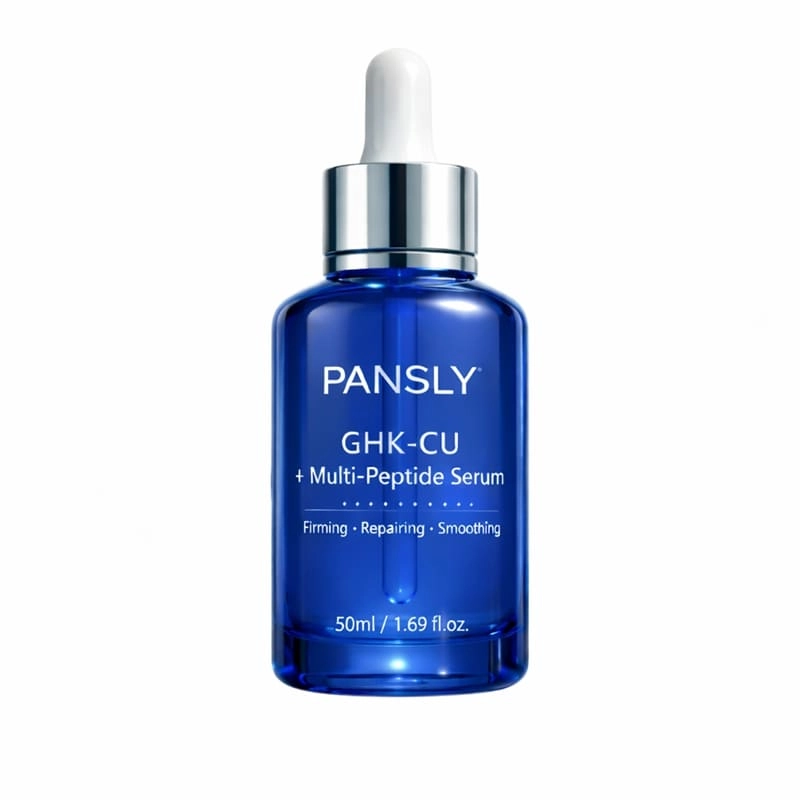
Experience visible rejuvenation with this GHK-Cu Copper Peptide Smoothing & Firming Face Serum, a high-performance concentrate designed to restore the structural integrity of aging skin. This advanced formula centers on GHK-Cu, a powerful signaling peptide clinically recognized for its ability to support natural collagen and elastin production. By promoting dermal density, it effectively tightens sagging skin and smooths the appearance of deep-set wrinkles and fine lines.
The lightweight, silky texture absorbs instantly, delivering antioxidant protection to neutralize environmental stressors that accelerate aging. Enhanced with deep-moisturizing agents, the serum reinforces the skin's moisture barrier, leaving the complexion feeling remarkably soft and resilient. With consistent use, skin texture is refined and facial contours appear more lifted, resulting in a youthfully firm and revitalized glow.
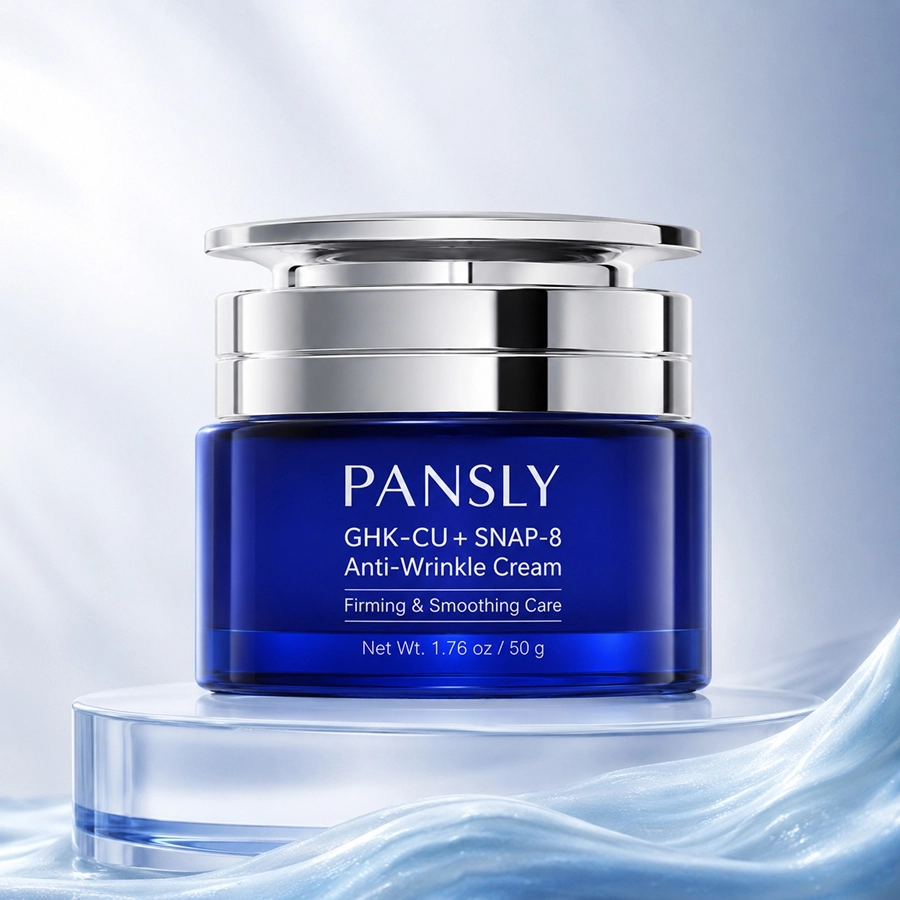
This Pansly GHK-CU + SNAP-8 Anti-Wrinkle Firming Cream is triple-peptide anti-aging facial cream, delivers targeted wrinkle smoothing, firming lifting and deep nourishment for dull, saggy, fine-line prone skin. Full OEM & ODM private label service is supported, including custom formula, packaging options, fast sampling and bulk export supply.
Five core premium active ingredients work synergistically for comprehensive anti-wrinkle care:
GHK-CU Copper Peptide lifts saggy skin, enhances skin resilience and tightens loose facial contour;
SNAP-8 Peptide targets expression lines to visibly soften and fade wrinkles;
Acetyl Hexapeptide-8 reduces the appearance of dry fine lines for smoother skin texture;
Ceramide NP reconstructs skin moisture barrier to lock nourishment and boost comfort;
Hyaluronic Acid delivers multi-layer rich deep moisture to relieve dry rough skin.
Luxury rich creamy texture spreads smoothly and melts into skin gently, leaving soft comfortable finish without heavy greasiness. Daily use blurs fine lines, firms loose skin, deeply nourishes and stabilizes barrier, refining uneven texture to reveal smooth, plump, youthful luminous skin.
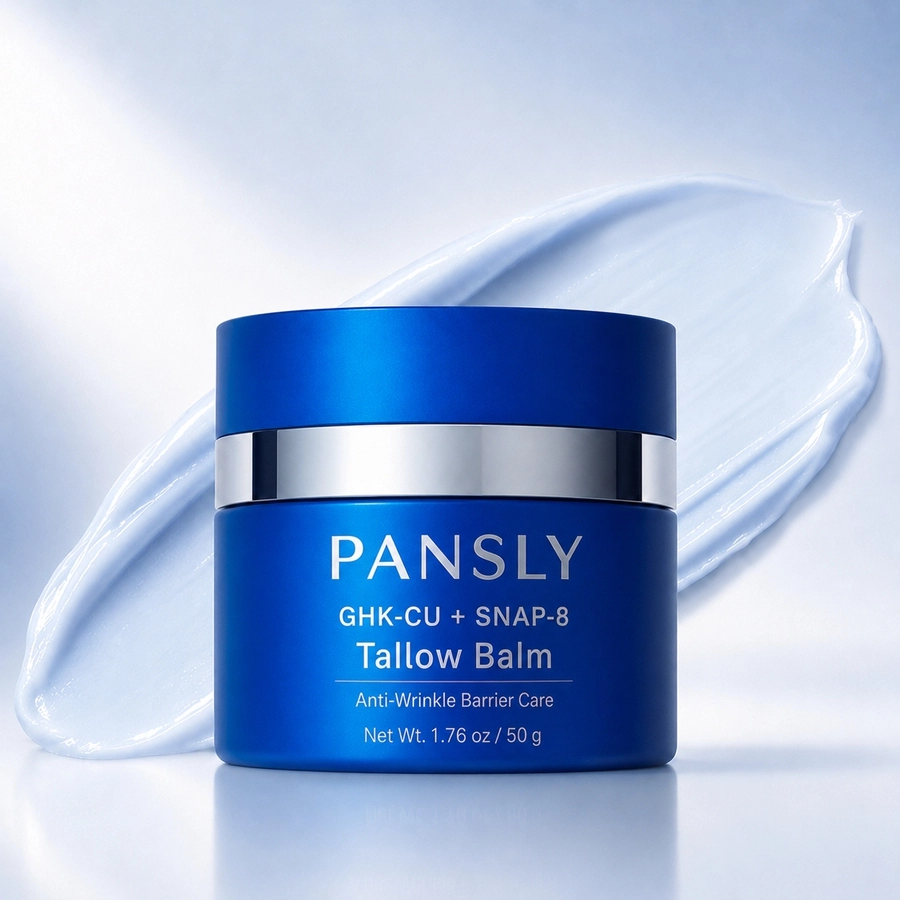
This Pansly GHK-CU + SNAP-8 Tallow Balm is a nourishing anti-wrinkle facial balm specially formulated for dry, fragile and sensitive skin, combining anti-aging wrinkle smoothing and barrier repairing effects. We offer full private label OEM service, including custom logo, adjustable formula, diversified packaging and lid color options.
It contains five core skin care active ingredients: GHK-CU visibly improves fine lines and revives dull complexion; SNAP-8 softens expression lines to smooth wrinkled skin texture; Grass-Fed Beef Tallow delivers deep lipid nourishment to relieve dry rough skin; Ectoin stabilizes the skin barrier and alleviates skin discomfort; Ceramide NP strengthens barrier structure to create smooth, healthy skin.
Luxury creamy blue balm texture glides smoothly and melts quickly on skin, providing long-lasting deep moisturizing comfort. Daily use fades fine lines & expression lines, nourishes dry delicate skin, repairs damaged barrier and leaves silky smooth skin finish.
Click here to customize the Beauty
we respond within a few hours
Monday–Friday, 9AM–6PM
3A01, Building A, Zhisheng Square, No. 4 Zhifu Road, Helong Street, Baiyun District, Guangzhou, China.


Leave a request, and we'll email you back within 24 hours.
© 2026 Beyond Basix. All Rights Reserved.