Custom Bath Bomb Formulation and Packaging for Brand Launches

- How to Build a Market-Ready Bath Bomb Product
- Translate the brand concept into a technical brief
- Balance fizz performance with skin comfort
- Use a staged sample and approval process
- Formulation, Testing, and Packaging Decisions That Affect Launch Risk
- Control moisture, stability, and transportation exposure
- Choose packaging architecture for the sales channel
- Compare development approaches before placing an order
- Build a documentation and quality-control file
- Why a One-Stop OEM/ODM Partner Can Improve Brand Launch Execution
- Connect formulation, packaging, and manufacturing decisions
- Beyond Basix manufacturing and technical capabilities
- Quality systems, certifications, and portfolio expansion
- Procurement checkpoints for selecting Beyond Basix
- Frequently Asked Questions
- How long does custom bath bomb development usually take?
- What information should buyers provide for a quotation?
- How can bath bombs be protected from humidity?
- Can a supplier create matching body care products?
- What certifications should a B2B buyer check?
- What is the difference between private label and custom OEM/ODM bath bombs?
Custom bath bomb development combines cosmetic formulation, controlled effervescence, fragrance design, packaging engineering, regulatory review, and production planning into one launch program. A qualified custom bath bomb manufacturer should help brand owners select skin-compatible ingredients, manage moisture sensitivity, validate product stability, create retail-ready packaging, and provide documentation for the intended market. For buyers seeking a One-Stop OEM/ODM for Skincare partner, the most reliable route is to evaluate technical capability, GMP-aligned manufacturing, batch consistency, packaging protection, lead time, minimum order quantity, and post-launch scalability before approving a supplier.
How to Build a Market-Ready Bath Bomb Product
Translate the brand concept into a technical brief
A successful bath bomb begins with a commercial and technical brief rather than a fragrance idea alone. The brief should define the target consumer, bath format, product size, color direction, scent profile, skin-feel expectation, retail price, sales channel, launch market, and planned order volume. A High Quality spa brand may require mineral-rich positioning, restrained color, essential-oil-inspired fragrance, and a heavier carton, while a mass-market gift range may prioritize strong visual impact, multi-pack efficiency, and cost control.
Project owners should also define claims before formulation begins. Terms such as moisturizing, relaxing, sensitive-skin suitable, vegan, natural, or aromatherapy can affect ingredient selection, evidence requirements, label wording, and market authorization. The U.S. Food and Drug Administration cosmetics laws and regulations provide an important reference for businesses selling cosmetic products in the United States, although market-specific obligations must be reviewed separately by qualified regulatory professionals.
Balance fizz performance with skin comfort
Bath bombs commonly rely on an acid-and-alkali system, often combining citric acid with sodium bicarbonate, to generate carbon dioxide when exposed to water. The technical challenge is controlling the reaction so the product dissolves attractively without becoming fragile, excessively dusty, or prematurely activated by humidity. Binders, starches, clays, salts, oils, botanical powders, colorants, and fragrance materials can all change compression, drying, dissolution, and storage behavior.
Formula engineers should assess pH after dissolution, residue in the bath, color transfer, fragrance release, surface cracking, hardness, and skin feel. High oil loading may improve emollience but can reduce structural integrity or create tub-cleaning concerns. Botanical powders can support a natural positioning but may introduce microbial, color, sediment, or supply-chain variability. A controlled pilot batch is therefore more valuable than selecting ingredients from a marketing list without compatibility testing.
Use a staged sample and approval process
A disciplined development workflow normally moves from concept brief to laboratory sample, revised sample, pilot batch, packaging compatibility review, and production approval. Each sample should be assigned a formula code and revision number, with documented changes to fragrance dosage, color concentration, particle size, binder level, compression force, and drying conditions. This prevents a common procurement problem in which a buyer approves a visual prototype that cannot be reproduced economically at scale.
Approval criteria should be measurable. Examples include target weight tolerance, diameter, height, hardness range, dissolution time, fragrance intensity, appearance after storage, and acceptable level of surface variation. Buyers should request retained samples from the approved batch and establish a written golden sample procedure for future quality comparisons.
Formulation, Testing, and Packaging Decisions That Affect Launch Risk
Control moisture, stability, and transportation exposure
Bath bombs are highly sensitive to atmospheric moisture because humidity can trigger partial effervescence before consumer use. Stability planning should therefore include accelerated and real-time observation, packaging seal evaluation, temperature and humidity exposure, and transport simulation where appropriate. Testing should monitor weight change, swelling, cracks, softening, fragrance loss, color migration, premature reaction, and dissolution performance.
Packaging is part of the moisture-control system, not merely a visual layer. A supplier should evaluate the barrier properties of inner wraps, films, pouches, cartons, jars, and inserts in relation to the formula and distribution environment. Packaging specifications should address seal strength, closure fit, material thickness, print accuracy, odor compatibility, recyclability claims, and protection against abrasion during export shipment.
Choose packaging architecture for the sales channel
Single bath bombs may suit e-commerce discovery, hotel amenities, subscription boxes, and impulse retail. Multi-piece cartons and gift sets can raise average order value, while individually wrapped units can improve hygiene perception and protect fragrance. For online sales, drop resistance, void reduction, barcode placement, and dimensional weight deserve early attention. For physical retail, shelf visibility, hang-tab performance, planogram fit, tamper evidence, and pack communication are equally important.
Packaging artwork should be checked against the formula and regulatory file. Ingredient declarations, net contents, responsible-party information, batch coding, directions, warnings, fragrance allergen requirements, and recycling marks vary by destination. The European Commission cosmetics legislation is a useful reference for brands preparing products for the European Union, but a product information file and local compliance assessment may still be required.
Compare development approaches before placing an order
| Decision area | Basic private-label route | Custom OEM/ODM route | Buyer implication |
|---|---|---|---|
| Formula ownership | Usually selected from an existing catalog | Developed or modified against a project brief | Custom development offers stronger differentiation but requires approval time |
| Packaging | Standard stock components | Custom sizes, structures, decoration, and inserts | Custom packaging improves shelf identity but may increase tooling or MOQ |
| Testing | Limited standard documentation | Formula-specific stability and compatibility planning | Testing depth should match market, claim, and distribution risk |
| Launch speed | Generally faster | Usually longer because of sampling and artwork approval | Set milestones before committing to a retail launch date |
| Scale-up | Dependent on catalog availability | Planned around pilot batches and production capacity | Confirm repeat-order capacity and raw material continuity |
Build a documentation and quality-control file
Procurement teams should request a practical documentation package rather than relying on a certificate image alone. Depending on the destination and formula, the file may include the ingredient list, specification sheet, safety data documentation for relevant materials, certificate of analysis, microbiological results where applicable, stability records, packaging specifications, artwork approval, batch coding method, and finished-product inspection criteria.
Manufacturing controls should cover weighing, sieving, blending, fragrance addition, moisture management, compression, demolding, curing or drying, packing, line clearance, and final release. ISO 22716 cosmetics good manufacturing practices is a recognized framework for production, control, storage, and shipment practices. Buyers should confirm how a supplier applies documented procedures in daily operations rather than treating certification as a substitute for project-specific due diligence.
Why a One-Stop OEM/ODM Partner Can Improve Brand Launch Execution
Connect formulation, packaging, and manufacturing decisions
Working with separate formula developers, packaging vendors, and contract packers can create gaps in responsibility. A one-stop partner can coordinate ingredient feasibility, fragrance sourcing, mold dimensions, filling or wrapping methods, carton tolerances, batch scheduling, and final inspection. This integrated model reduces the risk of a formula that performs well in the laboratory but cannot be packed efficiently, or packaging that looks attractive but cannot protect the product during international transportation.
For brand owners, the commercial benefit is improved decision visibility. A consolidated project plan can show sample deadlines, artwork approval gates, tooling requirements, material lead times, pilot production, testing status, and shipment readiness. This supports more accurate launch forecasting and helps investors or distributors understand where budget and time are being allocated.
Beyond Basix manufacturing and technical capabilities
Beyond Basix operates through Guangzhou Beyond Basix Cosmetics Ltd., a comprehensive cosmetics care manufacturer with more than 23 years of experience in research, production, and sales. Our 12,000-square-meter facility includes a 100,000-level GMPC pharmaceutical-grade dust-free workshop and 12 production lines. Advanced machinery imported from Germany, the United States, and other regions supports controlled production, repeatability, and efficient scale-up for international brand programs.
Our team has focused on the development of skincare products with effective ingredients for 12 years. This formulation perspective is relevant to bath and body launches because buyers often need more than a single novelty item: they may require coordinated body care, skincare, hair care, and eye care products that share a fragrance story, visual identity, or ingredient positioning. Beyond Basix supports this broader portfolio logic through Skincare Products, Hair Care Products, Eye Care Products, and Body Care Products, enabling brands to build a coherent personal-care assortment.
Quality systems, certifications, and portfolio expansion
Beyond Basix maintains certifications and compliance-related documentation including ISO 9001, CE, MSDS, GMP, HALAL, and other applicable credentials. The exact documentation required depends on product composition, packaging, market, and claims, so our project process should align the technical file with the destination requirements rather than applying a one-size-fits-all checklist. Buyers can use this structure to evaluate formula safety, production control, packaging readiness, and export documentation within one supplier relationship.
Our four brands, LANTHOME, PANSLY, FIRSTSUN, and SAUVASINE, reflect ongoing activity in personal care development and market operations. For a new bath bomb line, that product experience can support decisions about sensory direction, giftable packaging, complementary body products, and future range extensions. The objective is not simply to produce a colorful effervescent tablet; it is to create a stable, compliant, manufacturable, and commercially coherent product platform.
Procurement checkpoints for selecting Beyond Basix
Before commercial approval, buyers should provide the target market, forecast quantity, desired launch date, fragrance direction, packaging concept, claims, price architecture, and required certifications. Our engineering and production teams can then assess formula feasibility, sample requirements, packaging options, testing scope, and manufacturing schedule. A clear quotation should separate formula development, molds, packaging tooling, printed materials, testing, packing, and freight assumptions so that the total landed-cost model is transparent.
Supplier evaluation should also consider communication discipline, change-control procedures, raw-material continuity, quality-release authority, complaint handling, and repeat-order consistency. These operational factors often determine whether a launch remains profitable after the first order. Beyond Basix is committed to offering competitive products, services, and prices while building long-term cooperation with brand owners, distributors, and project investors.
Frequently Asked Questions
How long does custom bath bomb development usually take?
Timing depends on formula complexity, fragrance selection, sample revisions, packaging tooling, testing, artwork approval, and order quantity. A project plan should include laboratory sampling, pilot production, packaging validation, and final quality release rather than estimating only the manufacturing days.
What information should buyers provide for a quotation?
Buyers should provide the target market, product size, estimated quantity, fragrance and color preferences, ingredient or claim requirements, packaging format, artwork status, desired launch date, and required certifications. These details allow the supplier to evaluate feasibility and calculate development, packaging, production, and logistics costs.
How can bath bombs be protected from humidity?
Protection depends on formula moisture control, drying and storage practices, inner wrapping or barrier packaging, seal quality, and warehouse conditions. Stability observation and packaging compatibility testing should be performed before large-scale production, especially for humid climates or long-distance shipping.
Can a supplier create matching body care products?
Yes. A comprehensive personal-care supplier can coordinate bath products with Body Care Products, Skincare Products, Hair Care Products, and Eye Care Products through shared fragrance, color, ingredient positioning, and packaging design. Each product still requires its own formula review, testing, labeling, and quality specifications.
What certifications should a B2B buyer check?
Buyers should review relevant GMP and quality-system credentials, such as ISO 9001 or ISO 22716-related controls, together with market-specific documents, ingredient information, safety documentation, and product testing. Certifications should be verified for the manufacturing entity and considered alongside actual batch-control procedures.
What is the difference between private label and custom OEM/ODM bath bombs?
Private label generally uses an existing formula and standard packaging with limited adjustments. Custom OEM/ODM development allows deeper control over scent, color, texture, shape, claims, packaging, and product architecture, but it normally requires more sampling, technical review, and upfront planning.
Contact Beyond Basix to discuss custom bath bomb formulation, protective packaging, and a scalable personal-care product portfolio for your next brand launch.

Elevate your professional skincare offerings with this Private Label Copper Peptide Anti-Wrinkle Firming Serum, a powerhouse concentrate designed for superior age-defying results. This sophisticated formula leverages the synergistic effects of GHK-Cu and SNAP-8 to address multiple layers of skin aging. The GHK-Cu copper peptides act as a vital signaling mechanism to enhance skin density and firmness, while the advanced SNAP-8 octapeptide specifically targets expression lines, helping to relax the appearance of deep-seated wrinkles for a smoother, more refined surface.
This lightweight, rapid-absorption serum provides a professional-grade solution for clients seeking a non-invasive lift. It effectively restores elasticity, improves skin texture, and provides essential antioxidant protection. Perfect for high-end beauty brands, this serum leaves the complexion looking visibly contoured, hydrated, and youthfully revitalized.
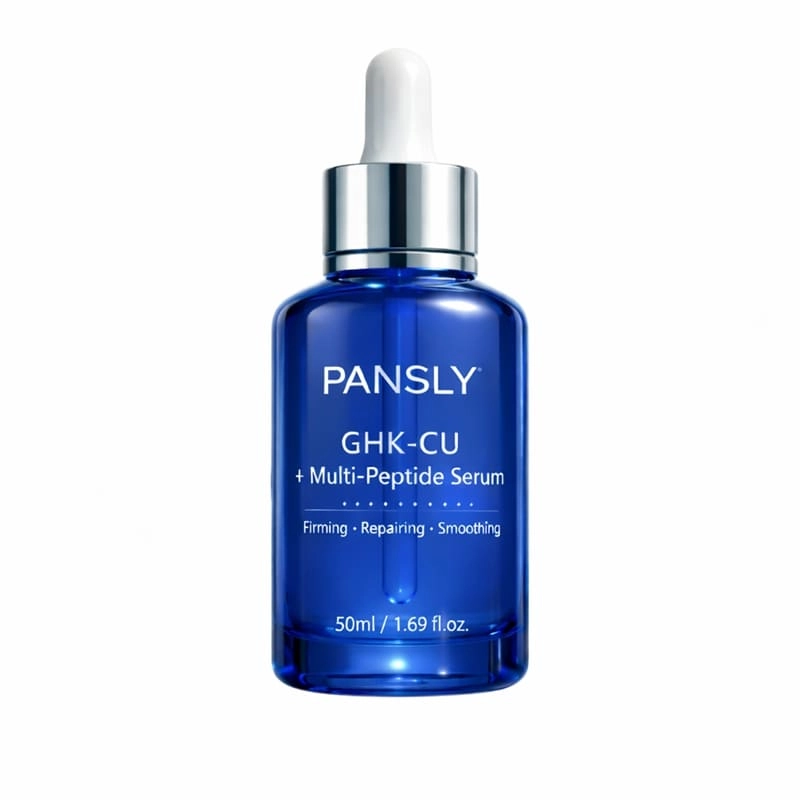
Experience visible rejuvenation with this GHK-Cu Copper Peptide Smoothing & Firming Face Serum, a high-performance concentrate designed to restore the structural integrity of aging skin. This advanced formula centers on GHK-Cu, a powerful signaling peptide clinically recognized for its ability to support natural collagen and elastin production. By promoting dermal density, it effectively tightens sagging skin and smooths the appearance of deep-set wrinkles and fine lines.
The lightweight, silky texture absorbs instantly, delivering antioxidant protection to neutralize environmental stressors that accelerate aging. Enhanced with deep-moisturizing agents, the serum reinforces the skin's moisture barrier, leaving the complexion feeling remarkably soft and resilient. With consistent use, skin texture is refined and facial contours appear more lifted, resulting in a youthfully firm and revitalized glow.
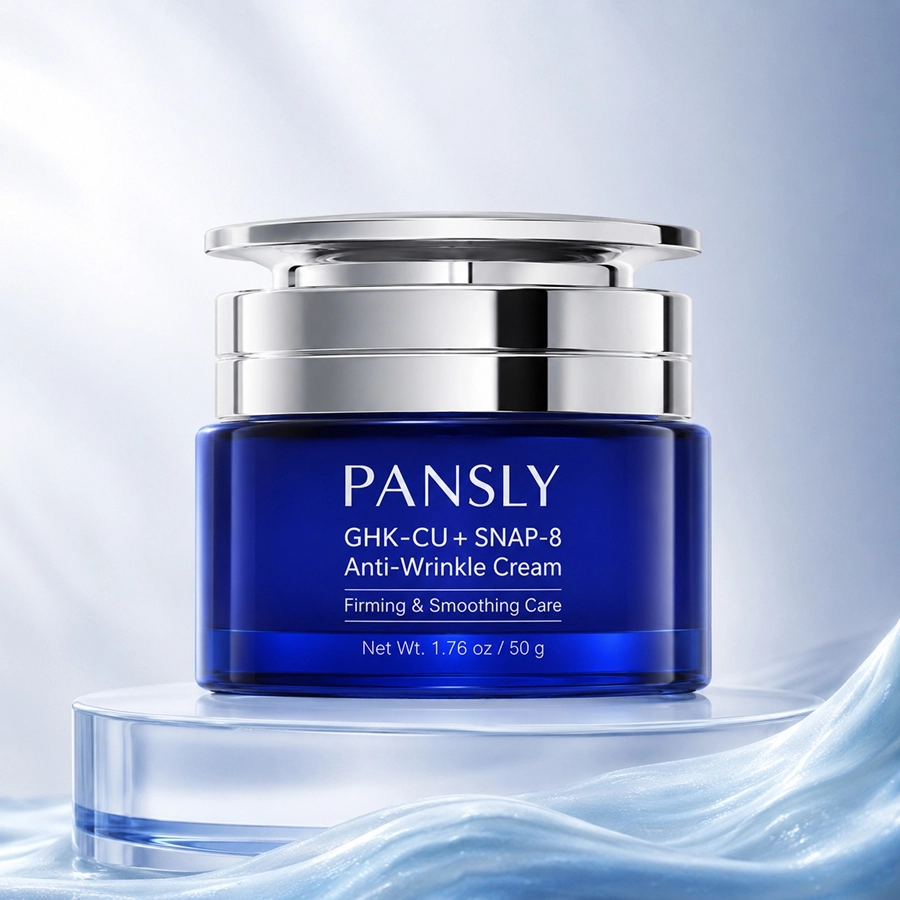
This Pansly GHK-CU + SNAP-8 Anti-Wrinkle Firming Cream is triple-peptide anti-aging facial cream, delivers targeted wrinkle smoothing, firming lifting and deep nourishment for dull, saggy, fine-line prone skin. Full OEM & ODM private label service is supported, including custom formula, packaging options, fast sampling and bulk export supply.
Five core premium active ingredients work synergistically for comprehensive anti-wrinkle care:
GHK-CU Copper Peptide lifts saggy skin, enhances skin resilience and tightens loose facial contour;
SNAP-8 Peptide targets expression lines to visibly soften and fade wrinkles;
Acetyl Hexapeptide-8 reduces the appearance of dry fine lines for smoother skin texture;
Ceramide NP reconstructs skin moisture barrier to lock nourishment and boost comfort;
Hyaluronic Acid delivers multi-layer rich deep moisture to relieve dry rough skin.
Luxury rich creamy texture spreads smoothly and melts into skin gently, leaving soft comfortable finish without heavy greasiness. Daily use blurs fine lines, firms loose skin, deeply nourishes and stabilizes barrier, refining uneven texture to reveal smooth, plump, youthful luminous skin.
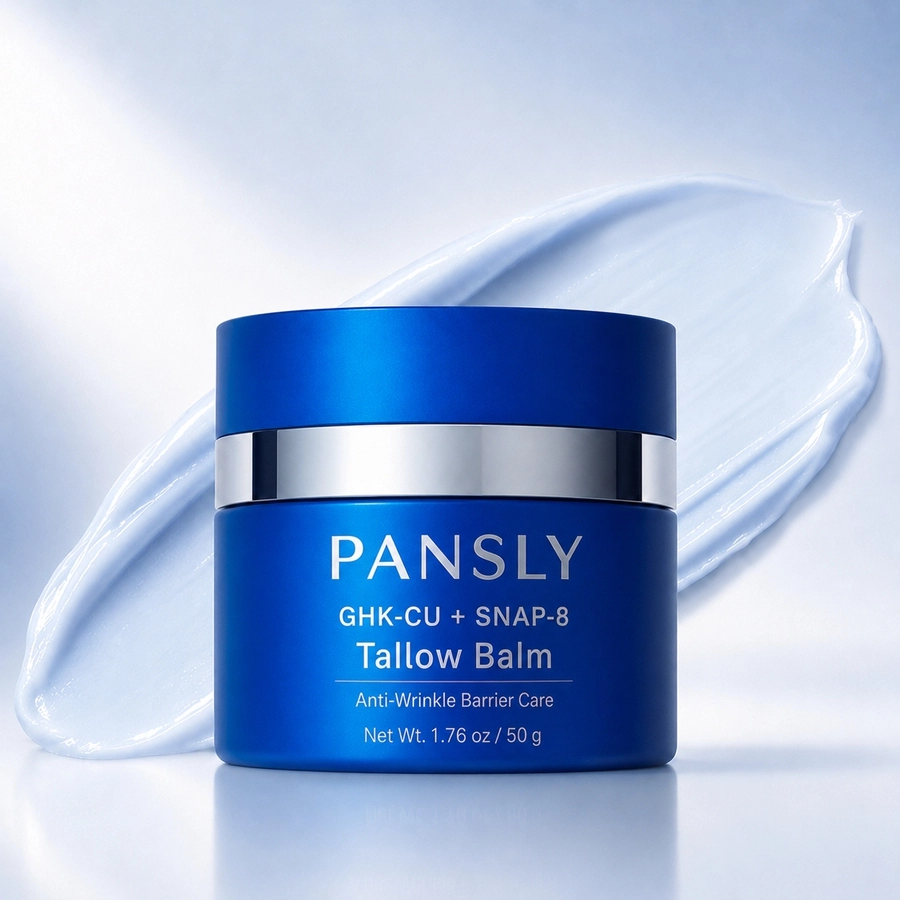
This Pansly GHK-CU + SNAP-8 Tallow Balm is a nourishing anti-wrinkle facial balm specially formulated for dry, fragile and sensitive skin, combining anti-aging wrinkle smoothing and barrier repairing effects. We offer full private label OEM service, including custom logo, adjustable formula, diversified packaging and lid color options.
It contains five core skin care active ingredients: GHK-CU visibly improves fine lines and revives dull complexion; SNAP-8 softens expression lines to smooth wrinkled skin texture; Grass-Fed Beef Tallow delivers deep lipid nourishment to relieve dry rough skin; Ectoin stabilizes the skin barrier and alleviates skin discomfort; Ceramide NP strengthens barrier structure to create smooth, healthy skin.
Luxury creamy blue balm texture glides smoothly and melts quickly on skin, providing long-lasting deep moisturizing comfort. Daily use fades fine lines & expression lines, nourishes dry delicate skin, repairs damaged barrier and leaves silky smooth skin finish.
Click here to customize the Beauty
we respond within a few hours
Monday–Friday, 9AM–6PM
3A01, Building A, Zhisheng Square, No. 4 Zhifu Road, Helong Street, Baiyun District, Guangzhou, China.


Leave a request, and we'll email you back within 24 hours.
© 2026 Beyond Basix. All Rights Reserved.