
Custom Bath Bomb MOQ, Pricing, Samples, and Lead Times Explained

- How Private-Label Bath Bomb Orders Are Structured
- What MOQ actually covers
- Typical quantity scenarios for planning
- How to lower MOQ without weakening the product
- Bath Bomb Pricing: The Variables Behind the Quotation
- Formula and ingredient economics
- Packaging, decoration, and logistics
- How to compare quotations correctly
- Samples, Testing, and Lead-Time Control
- What a useful sample process includes
- Lead-time milestones that affect launch dates
- Quality and compliance checkpoints
- Why a One-Stop OEM/ODM Partner Can Improve Project ROI
- Beyond Basix manufacturing capability
- Integrated product categories and documentation
- How Beyond Basix supports procurement decisions
- Frequently Asked Questions
Custom bath bomb procurement is shaped by more than the unit price quoted by a supplier. Minimum order quantity (MOQ), formulation requirements, fragrance selection, color stability, mold design, packaging format, testing, compliance documentation, and production capacity all influence the commercial outcome. Buyers comparing a private-label bath fizzer supplier should evaluate the complete project cost and timeline rather than selecting the lowest initial quotation. A practical sourcing plan normally separates development, sampling, compliance review, packaging approval, bulk manufacturing, and shipment. This approach helps brand owners, distributors, retailers, and hospitality operators forecast cash flow, protect launch dates, and avoid quality problems associated with rushed production.
How Private-Label Bath Bomb Orders Are Structured
What MOQ actually covers
MOQ is the smallest commercial quantity a factory is prepared to produce under defined conditions. It may apply per fragrance, color, shape, size, formula, packaging design, or total order. A supplier may accept a lower total volume when several variants share one base formula and standardized packaging, while a fully individualized assortment can require a separate threshold for each SKU. Buyers should request an MOQ matrix that identifies the assumptions behind every number.
Several cost centers explain why custom bath fizzers often have different minimums from standard stock items. Product development uses laboratory labor and raw-material quantities; molds may require tooling; printed cartons and labels involve artwork setup and print runs; and production lines need cleaning, changeover, and quality checks between variants. A smaller first order can therefore carry a higher unit cost because fixed expenses are distributed across fewer pieces.
Typical quantity scenarios for planning
There is no universal MOQ across the global personal-care industry. A realistic quotation depends on the factory, formula, format, packaging, and market. For planning purposes, buyers can ask suppliers to price three scenarios: a pilot batch for market testing, a standard launch batch using shared components, and a scale-up order using dedicated packaging or tooling. The comparison should show unit price, tooling, artwork, testing, packaging, freight assumptions, and replenishment conditions separately.
| Project stage | Primary purpose | Commercial questions | Risk-control output |
|---|---|---|---|
| Concept and feasibility | Confirm product format, fragrance, color, claims, and target market | Can the requested specification be manufactured consistently? | Technical brief and preliminary quotation |
| Laboratory sample | Assess appearance, scent, dissolution, skin feel, and packaging fit | How many revisions are included and who pays for courier delivery? | Approved development sample |
| Pilot or pre-production batch | Validate production settings and packaging workflow | Will the pilot use production-equivalent materials and equipment? | Batch record, inspection results, and approval decision |
| Commercial production | Manufacture sellable inventory | What are the accepted tolerances, release criteria, and delivery terms? | Finished goods, quality documents, and shipment plan |
How to lower MOQ without weakening the product
MOQ pressure can often be reduced through controlled standardization rather than aggressive negotiation. Shared molds, stock fragrance families, common carton dimensions, plain inner wrapping, and one base formula with coordinated color variants may lower setup complexity. Buyers can also launch fewer SKUs, use a master carton with interchangeable labels, or phase the assortment across two purchase orders. However, an apparently low MOQ is not beneficial if it creates excess packaging inventory, unstable raw-material supply, or a formula that cannot support the intended claims.
Bath Bomb Pricing: The Variables Behind the Quotation
Formula and ingredient economics
The core composition commonly includes an acid component, an alkaline component, binding or processing aids, fragrance, colorants, and optional skin-conditioning ingredients. Cost changes with ingredient grade, dosage, allergen requirements, natural or synthetic positioning, essential-oil selection, exfoliating particles, botanical powders, and moisturizing additives. A product marketed for sensitive skin requires especially careful fragrance, colorant, and claim review. Buyers should ask for an ingredient specification and confirm whether the quote includes stability work, microbiological evaluation, and documentation needed for the destination market.
Claims can alter both development effort and compliance exposure. Terms such as moisturizing, soothing, brightening, natural, vegan, organic, or dermatologically tested should be supported by appropriate evidence and used consistently across the formula, packaging, product page, and advertising. The FDA Cosmetics Labeling Guide explains United States labeling considerations, while European projects may need to address the European Union Cosmetics Regulation. A supplier cannot remove the brand owner's responsibility to verify market-specific obligations.
Packaging, decoration, and logistics
Packaging often becomes a major part of the landed cost. Individual film, shrink wrap, paper bands, folding cartons, rigid boxes, tins, gift sets, and plastic-free formats require different materials, machinery, labor, and protective testing. Fragile bath bombs can chip during filling, transport, or retail handling, so packaging should be evaluated for compression, vibration, moisture exposure, and fragrance migration. Custom embossing, foil stamping, specialty paper, inserts, and molded trays may add tooling charges and longer procurement cycles.
A sound quote should distinguish ex-works or free-on-board pricing from delivered cost. Freight, export cartons, insurance, duties, customs brokerage, inspection fees, and warehousing may not be included in the factory unit price. Bath bombs also contain moisture-sensitive materials; buyers should therefore review inner-barrier protection, storage conditions, carton sealing, and shipment timing. The ISO 22716 cosmetics GMP standard provides internationally recognized guidance for production, control, storage, and shipment practices in cosmetic manufacturing.
How to compare quotations correctly
Price comparison is meaningful only when specifications are equivalent. Each quotation should state net weight, dimensional tolerance, fragrance dosage, color system, formula ownership, packaging construction, print coverage, testing scope, order quantity, Incoterm, payment schedule, and validity period. Buyers should also ask whether rejected goods are replaced, reworked, credited, or destroyed. A slightly higher unit price may produce a lower total cost when it includes stronger quality controls, better packaging engineering, fewer revisions, and more predictable replenishment.
Samples, Testing, and Lead-Time Control
What a useful sample process includes
A sample is not merely a visual preview. It should allow the project team to assess color, scent intensity, surface finish, hardness, crumble resistance, dissolution behavior, residue, packaging fit, and user experience. The sample request should identify the intended formula, size, fragrance, color reference, decoration, packaging mock-up, and target market. For high-volume launches, the final approval sample should be made with production-equivalent raw materials and, where practical, the same processing route used for bulk manufacturing.
Sample revisions should be documented rather than handled through informal messages. A version number, date, formula reference, fragrance code, and approval signature create a traceable baseline. Buyers should retain an approved control sample and define what happens if the commercial batch differs in scent, shade, weight, shape, or dissolution performance. This is particularly important for products sold through marketplaces, chains, hotels, spas, or subscription programs where consumer reviews can quickly expose inconsistency.
Lead-time milestones that affect launch dates
Lead time begins with a clear technical brief, not with the first inquiry. A typical project may include feasibility review, quotation, laboratory development, sample delivery, buyer feedback, formula refinement, packaging artwork, artwork proofing, component production, testing, raw-material purchasing, bulk manufacturing, final inspection, and shipment. The calendar varies significantly according to the number of variants and whether packaging is stocked or custom-made.
Buyers should build contingency time for fragrance approval, color adjustment, mold modification, print corrections, customs clearance, and potential rework. The critical path is often packaging rather than mixing and pressing. A supplier should provide milestone dates and identify which approvals are buyer-controlled. Payment delays, late artwork, incomplete regulatory information, and changes after approval can all move the dispatch date.
Quality and compliance checkpoints
Quality review should cover incoming materials, in-process weight and dimensions, appearance, fragrance, packaging, finished-goods release, and retained samples. Depending on the formula and market, documentation may include an ingredient list, safety data information, certificate of analysis, microbiological results, stability or compatibility records, allergen information, and manufacturing certifications. WHO good manufacturing practices guidance offers a useful quality-system reference, although the precise legal requirements depend on the product category and destination country.
Bath bombs are generally low-water products, but that does not eliminate the need for responsible testing. Fragrance materials, botanical ingredients, pigments, packaging contact, storage humidity, and consumer use conditions can affect safety and performance. A qualified technical team should determine an appropriate test plan instead of applying the same checklist to every product.
Why a One-Stop OEM/ODM Partner Can Improve Project ROI
Beyond Basix manufacturing capability
Beyond Basix is Guangzhou Beyond Basix Cosmetics Ltd., a comprehensive cosmetics care manufacturer with more than 23 years of experience in research, production, and sales. Our 12,000-square-meter facility includes a 100,000-level GMPC pharmaceutical-grade dust-free workshop and 12 production lines. Advanced machinery imported from Germany, the United States, and other regions supports consistent processing, scalable output, and coordinated production planning.
Our development focus includes skincare products with effective ingredients, supported by 12 years of formulation development. This background is relevant to bath and body programs that require more than a basic pressed product. Texture, fragrance, skin-conditioning positioning, packaging usability, and claim communication can be considered as part of a broader personal-care architecture. Our four brands—LANTHOME, PANSLY, FIRSTSUN, and SAUVASINE—also reflect our continuing involvement in cosmetics product development and market presentation.
Integrated product categories and documentation
We support buyers seeking a broader product portfolio across Skincare Products, Hair Care Products, Eye Care Products, and Body Care Products. A bath bomb launch can therefore be developed as part of a coordinated body-care collection, seasonal gift program, spa amenity range, or wider skincare assortment. Shared project management may reduce communication gaps between formula development, packaging, production, and documentation teams.
Our certifications and documents include ISO 9001, CE, MSDS, GMP, HALAL, and other applicable materials according to project requirements. Buyers should still confirm the exact certificate scope, validity, product applicability, and destination-market requirements before placing an order. Transparent documentation supports distributor onboarding, retailer review, customs preparation, and internal quality assurance.
How Beyond Basix supports procurement decisions
Our team works with project owners to clarify target positioning, product specifications, packaging expectations, sample feedback, MOQ assumptions, and delivery milestones. The objective is not simply to manufacture a low-cost bath product; it is to create a commercially viable program with repeatable quality and a realistic replenishment path. A structured quotation can help buyers compare pilot quantities with scale-up volumes, identify fixed costs, and decide which features genuinely contribute to retail value.
For procurement teams, the most useful supplier relationship is built on technical transparency. Before approval, buyers should align on formula version, artwork version, tolerances, inspection standards, approved sample, documentation package, payment terms, and remedies for nonconforming goods. With coordinated manufacturing resources and experience across personal-care categories, Beyond Basix aims to help partners reduce avoidable delays while developing products that support long-term brand growth.
Contact Beyond Basix to review a bath and body concept, request a structured OEM/ODM quotation, or explore coordinated Skincare Products, Hair Care Products, Eye Care Products, and Body Care Products for your next commercial launch.
Frequently Asked Questions
What is the MOQ for custom bath bombs?
There is no universal MOQ. It may apply per fragrance, color, shape, size, formula, packaging design, or total order. Buyers should request an MOQ matrix and compare pilot, standard launch, and scale-up scenarios.
What factors determine private-label bath bomb pricing?
Pricing is influenced by formula ingredients, fragrance and color requirements, product size, tooling, packaging construction, decoration, testing, order quantity, Incoterms, freight, duties, and other logistics costs.
How many samples should a buyer request before bulk production?
A buyer should request enough samples to assess color, scent, surface finish, hardness, crumble resistance, dissolution, residue, packaging fit, and user experience. The final approval sample should use production-equivalent materials and processing whenever practical.
How long does custom bath bomb production take?
The schedule varies according to formula complexity, number of variants, packaging availability, testing, artwork approval, component production, and factory capacity. The project should include feasibility, sampling, packaging, testing, manufacturing, inspection, and shipment milestones.
What documents should a bath bomb supplier provide?
Depending on the formula and destination market, buyers may request an ingredient list, safety data information, certificate of analysis, microbiological results, stability or compatibility records, allergen information, manufacturing certifications, and retained-sample or batch-release records.
How can a buyer reduce the MOQ for a new bath bomb range?
MOQ pressure may be reduced by using shared molds, stock fragrance families, common carton dimensions, standardized inner wrapping, one base formula, fewer launch SKUs, or phased purchasing. These choices should not compromise formula consistency, packaging protection, or replenishment reliability.

Elevate your professional skincare offerings with this Private Label Copper Peptide Anti-Wrinkle Firming Serum, a powerhouse concentrate designed for superior age-defying results. This sophisticated formula leverages the synergistic effects of GHK-Cu and SNAP-8 to address multiple layers of skin aging. The GHK-Cu copper peptides act as a vital signaling mechanism to enhance skin density and firmness, while the advanced SNAP-8 octapeptide specifically targets expression lines, helping to relax the appearance of deep-seated wrinkles for a smoother, more refined surface.
This lightweight, rapid-absorption serum provides a professional-grade solution for clients seeking a non-invasive lift. It effectively restores elasticity, improves skin texture, and provides essential antioxidant protection. Perfect for high-end beauty brands, this serum leaves the complexion looking visibly contoured, hydrated, and youthfully revitalized.
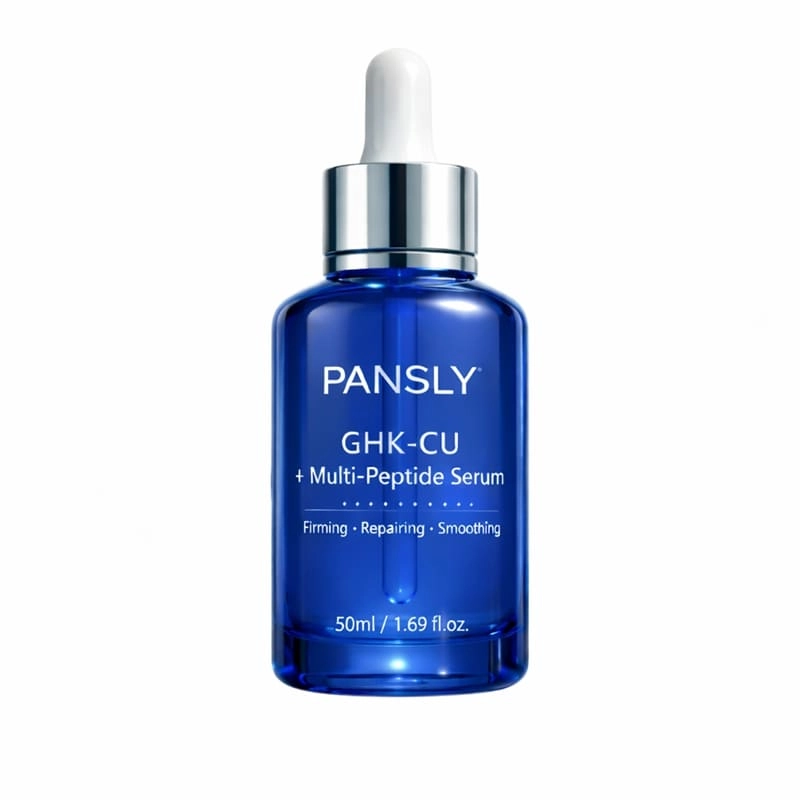
Experience visible rejuvenation with this GHK-Cu Copper Peptide Smoothing & Firming Face Serum, a high-performance concentrate designed to restore the structural integrity of aging skin. This advanced formula centers on GHK-Cu, a powerful signaling peptide clinically recognized for its ability to support natural collagen and elastin production. By promoting dermal density, it effectively tightens sagging skin and smooths the appearance of deep-set wrinkles and fine lines.
The lightweight, silky texture absorbs instantly, delivering antioxidant protection to neutralize environmental stressors that accelerate aging. Enhanced with deep-moisturizing agents, the serum reinforces the skin's moisture barrier, leaving the complexion feeling remarkably soft and resilient. With consistent use, skin texture is refined and facial contours appear more lifted, resulting in a youthfully firm and revitalized glow.
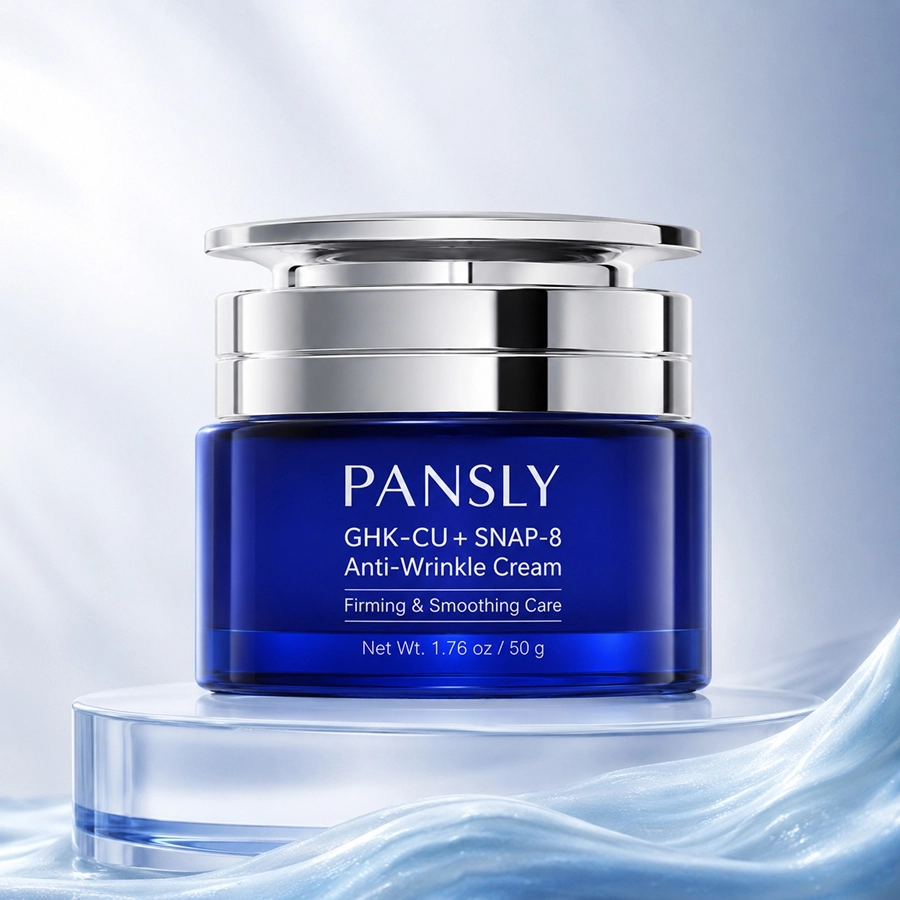
This Pansly GHK-CU + SNAP-8 Anti-Wrinkle Firming Cream is triple-peptide anti-aging facial cream, delivers targeted wrinkle smoothing, firming lifting and deep nourishment for dull, saggy, fine-line prone skin. Full OEM & ODM private label service is supported, including custom formula, packaging options, fast sampling and bulk export supply.
Five core premium active ingredients work synergistically for comprehensive anti-wrinkle care:
GHK-CU Copper Peptide lifts saggy skin, enhances skin resilience and tightens loose facial contour;
SNAP-8 Peptide targets expression lines to visibly soften and fade wrinkles;
Acetyl Hexapeptide-8 reduces the appearance of dry fine lines for smoother skin texture;
Ceramide NP reconstructs skin moisture barrier to lock nourishment and boost comfort;
Hyaluronic Acid delivers multi-layer rich deep moisture to relieve dry rough skin.
Luxury rich creamy texture spreads smoothly and melts into skin gently, leaving soft comfortable finish without heavy greasiness. Daily use blurs fine lines, firms loose skin, deeply nourishes and stabilizes barrier, refining uneven texture to reveal smooth, plump, youthful luminous skin.
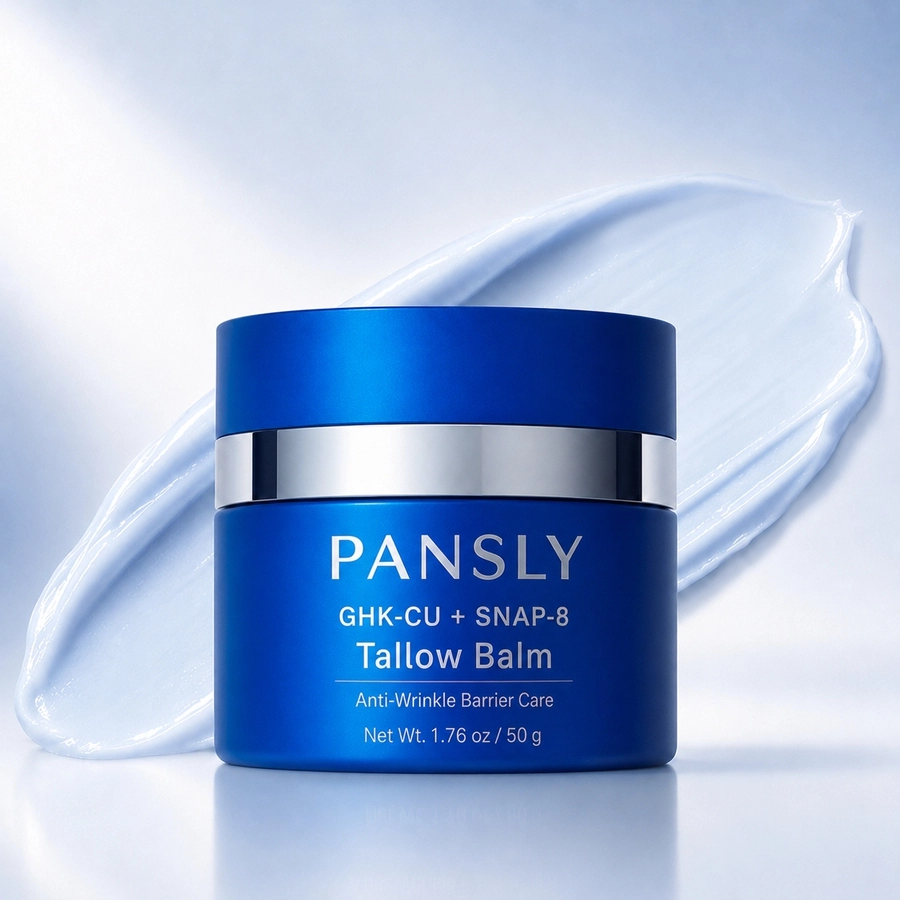
This Pansly GHK-CU + SNAP-8 Tallow Balm is a nourishing anti-wrinkle facial balm specially formulated for dry, fragile and sensitive skin, combining anti-aging wrinkle smoothing and barrier repairing effects. We offer full private label OEM service, including custom logo, adjustable formula, diversified packaging and lid color options.
It contains five core skin care active ingredients: GHK-CU visibly improves fine lines and revives dull complexion; SNAP-8 softens expression lines to smooth wrinkled skin texture; Grass-Fed Beef Tallow delivers deep lipid nourishment to relieve dry rough skin; Ectoin stabilizes the skin barrier and alleviates skin discomfort; Ceramide NP strengthens barrier structure to create smooth, healthy skin.
Luxury creamy blue balm texture glides smoothly and melts quickly on skin, providing long-lasting deep moisturizing comfort. Daily use fades fine lines & expression lines, nourishes dry delicate skin, repairs damaged barrier and leaves silky smooth skin finish.
Click here to customize the Beauty
we respond within a few hours
Monday–Friday, 9AM–6PM
3A01, Building A, Zhisheng Square, No. 4 Zhifu Road, Helong Street, Baiyun District, Guangzhou, China.


Leave a request, and we'll email you back within 24 hours.
© 2026 Beyond Basix. All Rights Reserved.
