Custom Packaging and Formula Options for Anti-Wrinkle Eye Cream OEMs
Structured guidance for brand owners and procurement teams on selecting bespoke packaging systems and evidence-driven formulations for periorbital de-aging products, focusing on barrier technologies, ingredient compatibility, stability testing, regulatory compliance, and scalable OEM/ODM execution—plus a comparison of containment formats and a practical checklist for minimizing contamination risk and ensuring claim substantiation.
- Periorbital Packaging & Formulation Architecture
- Packaging formats and barrier performance
- Material compatibility and ingredient stability
- Design for sensorial experience and dosing control
- Active Ingredient Pathways and Delivery Strategies
- Choice of actives for periorbital rejuvenation
- Advanced delivery systems
- Preservative strategies and clean-label options
- Quality Systems, Regulatory Compliance & Scale Considerations
- Manufacturing standards and documentation
- Stability testing and claim substantiation
- Scale-up risks and lead-time management
- Sustainability, Cost Optimization and Go-to-Market Trade-Offs
- Recyclability vs. protective performance
- MOQ, unit cost drivers, and packaging customization
- Market positioning and labeling requirements
- Why choose a One-Stop OEM/ODM partner for periorbital lines
- Integrated development shortens time-to-market
- Cost efficiencies through vertical capabilities
- Continuous improvement and claim support
- Our Capabilities and How Beyond Basix Supports OEM Projects
- Manufacturing scale and facility credentials
- Regulatory certifications and quality assurance
- Product breadth and technical focus
- Partnership model and client ROI
- Frequently Asked Questions
High-density briefing for procurement decision-makers: selecting the right combination of containment design, active delivery strategy, and manufacturing controls is critical when developing periorbital rejuvenation products; this guide explains barrier packaging choices, formula pathways (peptides, retinoid alternatives, hydrating actives), preservative approaches, regulatory checkpoints (including ISO 22716 and FDA guidance), stability and compatibility testing, minimum order and lead-time trade-offs, and production-scale assurances to reduce launch risk and protect clinical claims.
Periorbital Packaging & Formulation Architecture
Packaging formats and barrier performance
Choice of containment directly impacts oxidation, microbial contamination, and perceived value. Airless pumps and single-dose ampoules provide high barrier protection and extended in-use stability by limiting headspace and air ingress. Rigid tubes with laminated barriers are cost-effective for emulsions containing light-sensitive retinoid derivatives, while glass dropper bottles suit oil-based serums but require secondary tamper-proof seals to meet pharmaceutical-grade expectations.
Material compatibility and ingredient stability
Polypropylene (PP), high-density polyethylene (HDPE), and fluorinated PET are commonly used for their chemical resistance to solvents and actives. Metalized or UV-coated glass reduces photodegradation of vitamin A derivatives. Critical procurement checks: request extractables/leachables reports from the supplier, confirm compatibility with emulsifiers and solvents, and require accelerated oxidation data to avoid formula/package interactions that undermine shelf life.
Design for sensorial experience and dosing control
Packaging is part of the efficacy perception matrix. Micro-dosing pumps and precision-roll-on applicators improve controlled application to delicate under-eye skin and reduce overuse. For High Quality positioning, consider matte-coated surfaces, embossing, and multi-component caps that combine hygiene with aesthetics, ensuring the design remains compatible with high-speed filling lines to avoid bottlenecks in scale-up.
Active Ingredient Pathways and Delivery Strategies
Choice of actives for periorbital rejuvenation
Manufacturers should prioritize ingredients with robust literature and measurable biomarkers: short-chain peptides (matrix-supporting), stabilized retinoid analogues or plant-based alternatives (e.g., bakuchiol) for epidermal turnover, hyaluronic acid fractions for volumizing and hydration, and antioxidants (vitamin C derivatives, niacinamide) for photodamage protection. Each active drives specific preservative and packaging needs; acid-stable formulas may require different barrier systems than peptide-rich emulsions.
Advanced delivery systems
Nanoencapsulation, liposomal carriers, and micelle delivery can increase percutaneous penetration while minimizing irritation—especially crucial near the ocular margin. Biocompatible encapsulation mitigates instability of oxidation-prone actives and can be optimized for time-release. OEMs should demand encapsulation characterization (size distribution, encapsulation efficiency) and in-vitro permeation data during formulation transfer.
Preservative strategies and clean-label options
Preservative system selection affects marketing claims and regulatory labeling. Broad-spectrum systems (parabens, phenoxyethanol combinations) are effective and well-documented, while consumer-driven preservative-free or natural preservative approaches require rigorous multi-strain challenge testing (ISO 11930) and often stronger barrier packaging like single-dose vials to maintain safety in use.
Quality Systems, Regulatory Compliance & Scale Considerations
Manufacturing standards and documentation
Buyers should verify adherence to cosmetic GMPs and documented quality management systems. ISO 22716 provides specific guidance for cosmetic production and should be cross-checked with supplier documentation; regulatory references include ISO 22716 (cosmetic GMP) and national guidance such as the FDA Cosmetics portal for US-market labeling. Essential deliverables from the OEM: batch records, COA (Certificate of Analysis), MSDS, and stability study reports.
Stability testing and claim substantiation
Stability studies must cover accelerated, real-time, and in-use conditions. For under-eye formulations intended to reduce lines or improve firmness, clinical endpoints (instrumental measures of wrinkle depth, corneometry for hydration) support claims. Manufacturers should provide validated protocols and, where applicable, human repeat-insult patch tests or ophthalmologist-reviewed safety reports for periocular tolerance.
Scale-up risks and lead-time management
Transitioning from lab batches to production requires harmonizing formulation rheology with filling equipment, validating cleaning regimes to prevent cross-contamination, and planning packaging procurement lead times (glass suppliers often have longer lead times than plastics). Project owners should request technology transfer plans, acceptance criteria for first article inspection (FAI), and pilot production timelines aligned with marketing launch windows.
Sustainability, Cost Optimization and Go-to-Market Trade-Offs
Recyclability vs. protective performance
Sustainable materials (mono-material PP or PET) simplify recycling but may provide lower barrier protection versus multi-layer laminates or metalized glass. Lifecycle assessments and end-of-life considerations should be part of procurement KPIs; brands must balance eco-credentials with the need to protect oxidation-sensitive actives.
MOQ, unit cost drivers, and packaging customization
Custom molding, bespoke colors, or High Quality finishing increase tooling costs and minimums. Buyers should evaluate total landed cost rather than unit price alone, factoring in fill efficiency, packaging defect rates, and returns. Working with a one-stop OEM/ODM often reduces coordination overheads and enables bundling discounts across skincare, hair care, and body care product lines.
Market positioning and labeling requirements
Claims hierarchy (e.g., reduces the appearance of fine lines vs. clinically shown to improve skin elasticity) determines testing scope and label verbiage. For EU market entry, compliance with the Cosmetics Regulation (including Safety Assessment and Product Information File) is mandatory; for the US, maintain truthful, non-misleading claims per FDA guidance and ensure allergens and preservative declarations meet regional rules.
| Packaging Type | Barrier Performance | Contamination Risk | Typical In-Use Shelf Life | Best Use Cases |
|---|---|---|---|---|
| Airless pump | Very high (minimal air exposure) | Low | 6–12 months after opening (with antioxidants) | Peptide serums, retinoid emulsions |
| Single-dose ampoule | Maximum (sealed unit) | Minimal | 12+ months (sealed) | High-potency actives, clinical lines |
| Screw-top jar | Low (open to air each use) | High without spatula | 3–6 months after opening | Rich creams, night treatments |
| Laminated tube | Moderate (barrier layers possible) | Moderate | 6–12 months after opening | Light emulsions, travel formats |
Why choose a One-Stop OEM/ODM partner for periorbital lines
Integrated development shortens time-to-market
Working with a supplier that combines R&D, formulation, pilot manufacturing, and packaging procurement reduces coordination risk and accelerates revisions during stability and compatibility testing. A single accountable partner mitigates delays caused by multi-vendor handoffs and clarifies responsibility for regulatory documentation.
Cost efficiencies through vertical capabilities
Consolidated procurement of raw materials and packaging across skincare, hair care, eye care, and body care portfolios can lower unit cost and reduce MOQs for High Quality components. Centralized quality control and standardized batch records improve traceability for audits and retailer onboarding.
Continuous improvement and claim support
Experienced manufacturers provide iterative support—optimizing formulations for sensory profile, improving preservative efficiency for claim retention, and advising on the right clinical endpoints to substantiate marketing statements that resonate with professional and retail channels.
Our Capabilities and How Beyond Basix Supports OEM Projects
Manufacturing scale and facility credentials
Guangzhou Beyond Basix Cosmetics Ltd. provides comprehensive development-to-delivery services. Our team operates a 12,000-square-meter facility with a 100,000-level GMPC pharmaceutical-grade dust-free workshop and 12 production lines equipped with advanced machinery imported from Germany and the US, enabling efficient scale-up from pilot runs to full production.
Regulatory certifications and quality assurance
Our operations are certified with ISO 9001, GMP, CE, MSDS documentation, HALAL certification, and robust QA/QC protocols aligned with ISO 22716. Buyers receive complete batch documentation, stability reports, and safety data to support international market entry, including EU and US regulatory requirements outlined by authorities such as the FDA and regional standards.
Product breadth and technical focus
With a focused investment in effective actives for over 12 years, Beyond Basix operates four brands—LANTHOME, PANSLY, FIRSTSUN, and SAUVASINE—and supports development across Skincare Products, Hair Care Products, Eye Care Products, and Body Care Products. Our R&D teams specialize in stability optimization, encapsulation technologies, and customized preservative systems to align with claim strategies and sensitization limits for periocular use.
Partnership model and client ROI
We commit to competitive pricing while maintaining quality-driven processes. Project owners benefit from our turnkey model: formulation, packaging sourcing, clinical/compatibility testing coordination, and scalable production. This approach minimizes supplier fragmentation, reduces time-to-shelf, and improves margin predictability for brand launches.
Contact Beyond Basix to review formulation dossiers, request packaging samples, and initiate a project plan tailored to your periorbital product specifications.
Frequently Asked Questions
What is the typical minimum order quantity (MOQ) for customized eye contour products?
MOQ varies by packaging complexity and customization level; standard ranges for custom-labeled emulsions or serums commonly start between 1,000–5,000 units, while bespoke molded components or high-end glass assemblies may require larger orders and tooling fees.
Which packaging options best reduce contamination risk for fragile under-eye formulas?
Airless dispensing systems and single-dose ampoules provide the best in-use protection against oxidation and microbial contamination; these formats are recommended for formulas with minimal preservative systems or high-potency actives.
What stability and safety testing should be requested from an OEM?
Buyers should require accelerated and real-time stability studies, photostability testing for light-sensitive actives, preservative efficacy (challenge) testing per ISO 11930, extractables/leachables reports, and periocular tolerance data such as ophthalmologist-reviewed safety assessments or human patch tests where applicable.
Can preservative-free periorbital formulas be manufactured safely at scale?
Yes, but preservative-free products typically rely on single-dose formats, lower water activity, or sterile filling processes and necessitate stricter packaging barriers and shorter in-use shelf life; full microbial control validation is required before commercialization.
How does packaging choice affect claim substantiation and shelf life?
Packaging influences in-use stability: high-barrier systems reduce active degradation and help maintain potency, which supports long-term claim substantiation. Conversely, open jars increase exposure and may necessitate higher preservative levels and more conservative claims tied to shorter in-use windows.

Elevate your professional skincare offerings with this Private Label Copper Peptide Anti-Wrinkle Firming Serum, a powerhouse concentrate designed for superior age-defying results. This sophisticated formula leverages the synergistic effects of GHK-Cu and SNAP-8 to address multiple layers of skin aging. The GHK-Cu copper peptides act as a vital signaling mechanism to enhance skin density and firmness, while the advanced SNAP-8 octapeptide specifically targets expression lines, helping to relax the appearance of deep-seated wrinkles for a smoother, more refined surface.
This lightweight, rapid-absorption serum provides a professional-grade solution for clients seeking a non-invasive lift. It effectively restores elasticity, improves skin texture, and provides essential antioxidant protection. Perfect for high-end beauty brands, this serum leaves the complexion looking visibly contoured, hydrated, and youthfully revitalized.
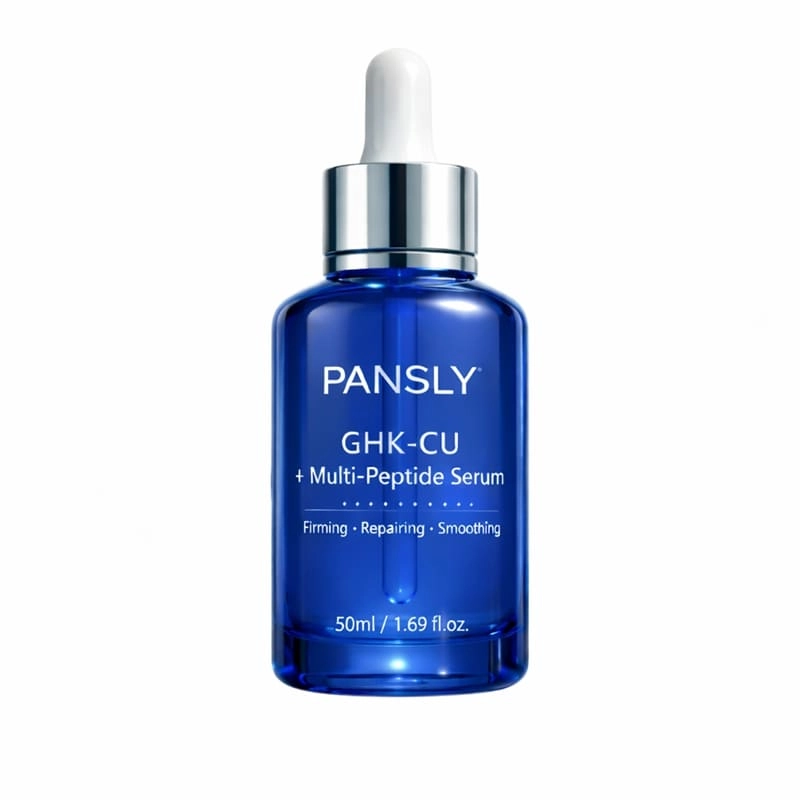
Experience visible rejuvenation with this GHK-Cu Copper Peptide Smoothing & Firming Face Serum, a high-performance concentrate designed to restore the structural integrity of aging skin. This advanced formula centers on GHK-Cu, a powerful signaling peptide clinically recognized for its ability to support natural collagen and elastin production. By promoting dermal density, it effectively tightens sagging skin and smooths the appearance of deep-set wrinkles and fine lines.
The lightweight, silky texture absorbs instantly, delivering antioxidant protection to neutralize environmental stressors that accelerate aging. Enhanced with deep-moisturizing agents, the serum reinforces the skin's moisture barrier, leaving the complexion feeling remarkably soft and resilient. With consistent use, skin texture is refined and facial contours appear more lifted, resulting in a youthfully firm and revitalized glow.
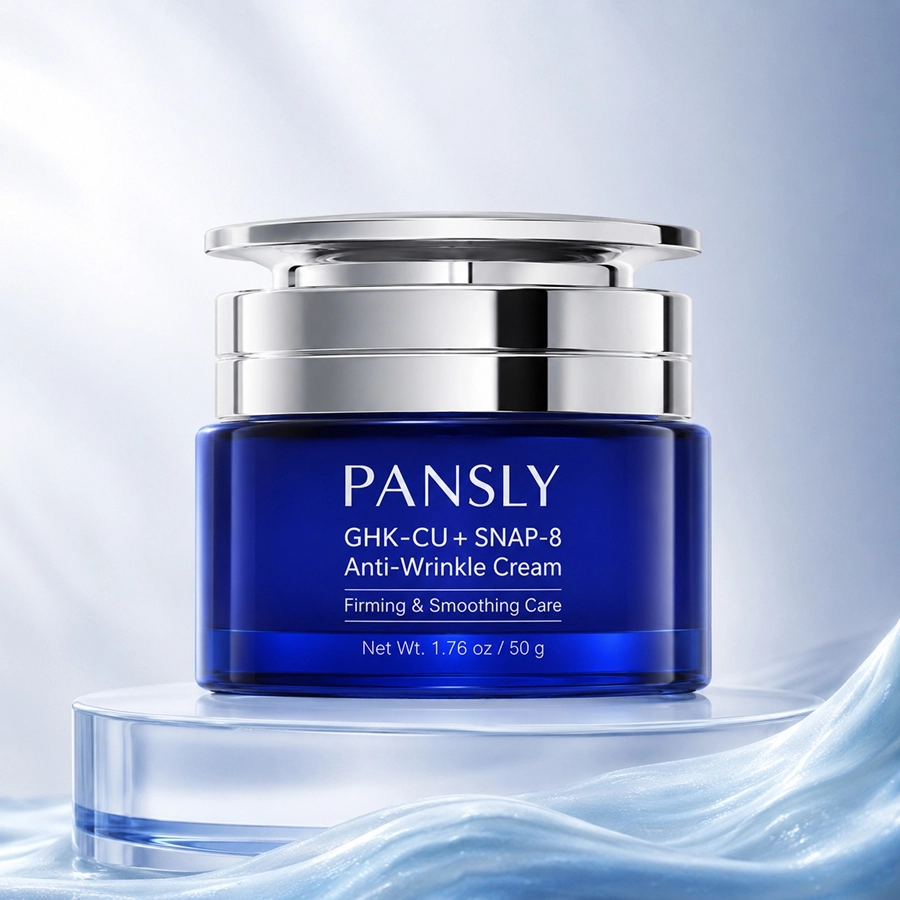
This Pansly GHK-CU + SNAP-8 Anti-Wrinkle Firming Cream is triple-peptide anti-aging facial cream, delivers targeted wrinkle smoothing, firming lifting and deep nourishment for dull, saggy, fine-line prone skin. Full OEM & ODM private label service is supported, including custom formula, packaging options, fast sampling and bulk export supply.
Five core premium active ingredients work synergistically for comprehensive anti-wrinkle care:
GHK-CU Copper Peptide lifts saggy skin, enhances skin resilience and tightens loose facial contour;
SNAP-8 Peptide targets expression lines to visibly soften and fade wrinkles;
Acetyl Hexapeptide-8 reduces the appearance of dry fine lines for smoother skin texture;
Ceramide NP reconstructs skin moisture barrier to lock nourishment and boost comfort;
Hyaluronic Acid delivers multi-layer rich deep moisture to relieve dry rough skin.
Luxury rich creamy texture spreads smoothly and melts into skin gently, leaving soft comfortable finish without heavy greasiness. Daily use blurs fine lines, firms loose skin, deeply nourishes and stabilizes barrier, refining uneven texture to reveal smooth, plump, youthful luminous skin.
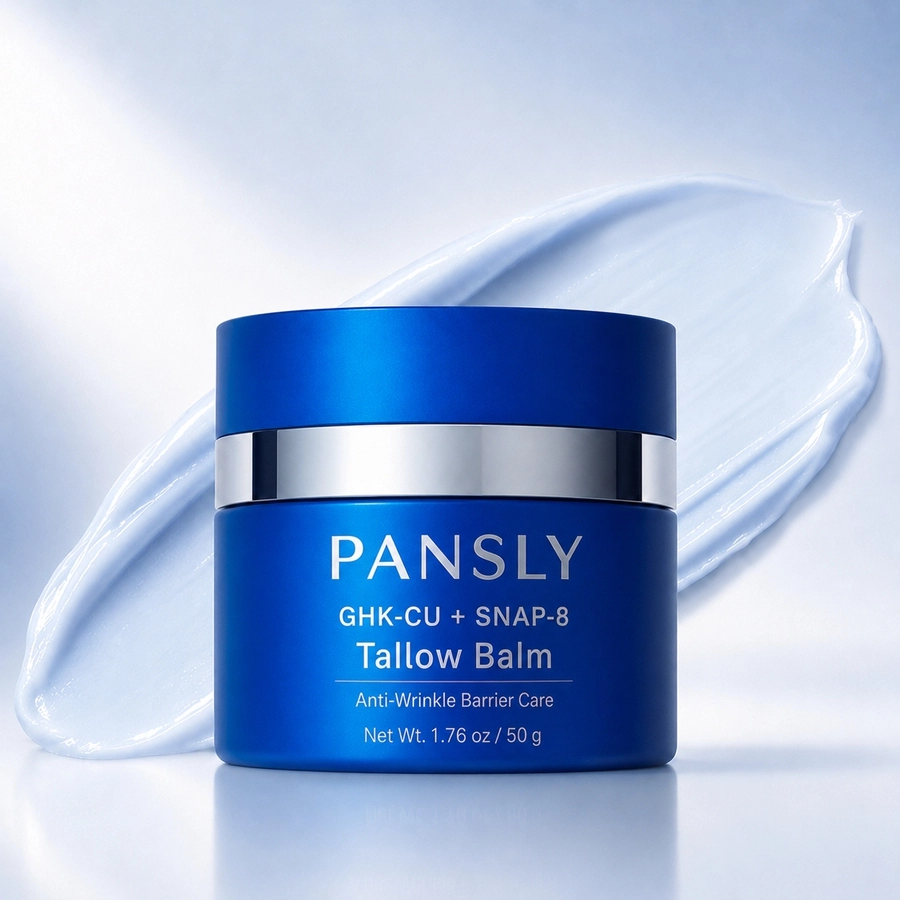
This Pansly GHK-CU + SNAP-8 Tallow Balm is a nourishing anti-wrinkle facial balm specially formulated for dry, fragile and sensitive skin, combining anti-aging wrinkle smoothing and barrier repairing effects. We offer full private label OEM service, including custom logo, adjustable formula, diversified packaging and lid color options.
It contains five core skin care active ingredients: GHK-CU visibly improves fine lines and revives dull complexion; SNAP-8 softens expression lines to smooth wrinkled skin texture; Grass-Fed Beef Tallow delivers deep lipid nourishment to relieve dry rough skin; Ectoin stabilizes the skin barrier and alleviates skin discomfort; Ceramide NP strengthens barrier structure to create smooth, healthy skin.
Luxury creamy blue balm texture glides smoothly and melts quickly on skin, providing long-lasting deep moisturizing comfort. Daily use fades fine lines & expression lines, nourishes dry delicate skin, repairs damaged barrier and leaves silky smooth skin finish.
Click here to customize the Beauty
we respond within a few hours
Monday–Friday, 9AM–6PM
3A01, Building A, Zhisheng Square, No. 4 Zhifu Road, Helong Street, Baiyun District, Guangzhou, China.


Leave a request, and we'll email you back within 24 hours.
© 2026 Beyond Basix. All Rights Reserved.