
From Overnight Repair to Spa Care: Five Foot Cream Concepts for Private Label Brands
Private-label brand owners seeking to expand into intensive foot therapies require a product roadmap that balances fast-acting repair, salon-grade pampering, clinical-grade heel restoration, lightweight daily maintenance, and seasonal protective care—each optimized for formulation efficacy, scalable production, regulatory compliance, and retail positioning. This article outlines five differentiated foot cream concepts with formulation attributes, packaging and supply-chain considerations, claim substantiation frameworks, and go-to-market tactics for contract brands and distributors, while showcasing how an experienced One-Stop OEM/ODM partner can accelerate time-to-shelf, ensure GMP-level safety, and deliver cost-efficient customization.
- Concept Frameworks for Targeted Foot Therapies
- 1. Fast-Acting Overnight Repair Balm
- Procurement & Manufacturing Notes
- Claims & Testing Strategy
- Salon & Spa-Grade Pedicure Cream: Sensory-Led High Quality Offering
- Formulation Direction
- Packaging & POS Considerations
- Supply Chain & QA
- Clinical Heel Restoration: Dermatologist-Grade Repair
- Active Selection & Safety
- Regulatory and Claims Management
- Manufacturing Controls and Batch Release
- Lightweight Daily Maintenance & Protective Lotions
- Formulation for High-Frequency Use
- Retail Positioning & Cross-Sell Opportunities
- Logistics & Shelf-Life Optimization
- Seasonal & Protective Formulas for Climate Extremes
- Winter Barrier Creams and Summer Cooling Gels
- Market Differentiation & Claims
- Inventory & Demand Forecasting
- Technical Comparison: Production & Formulation Parameters
- Quality Systems, Regulatory Pathways, and Testing Protocols
- Quality Management for Contract Brands
- Labeling, Allergen Disclosure, and Market-Specific Rules
- Stability, Preservative Efficacy, and Microbial Controls
- Working with a One-Stop OEM/ODM Partner for Foot Care Lines
- Why a Turnkey Manufacturer Accelerates Time-to-Market
- Cost, MOQ and Flexibility Considerations
- Data-Driven Launch Playbooks
- Partner Profile: Beyond Basix Capabilities & Value Proposition
- Manufacturing Scale and Technical Strength
- R&D, Ingredients Expertise, and Brand Support
- Certifications, Compliance, and Product Range
- How Beyond Basix Supports Procurement Teams
- Frequently Asked Questions
Private-label brand owners seeking to expand into intensive foot therapies require a product roadmap that balances fast-acting repair, salon-grade pampering, clinical-grade heel restoration, lightweight daily maintenance, and seasonal protective care—each optimized for formulation efficacy, scalable production, regulatory compliance, and retail positioning. This article outlines five differentiated foot cream concepts with formulation attributes, packaging and supply-chain considerations, claim substantiation frameworks, and go-to-market tactics for contract brands and distributors, while showcasing how an experienced One-Stop OEM/ODM partner can accelerate time-to-shelf, ensure GMP-level safety, and deliver cost-efficient customization.
Concept Frameworks for Targeted Foot Therapies
1. Fast-Acting Overnight Repair Balm
Concept: A rich occlusive treatment intended for nightly use that penetrates thickened skin and accelerates barrier restoration by combining keratolytic actives with humectants and emollients. For buyers, the focus should be on selecting clinically proven concentrations (e.g., 5–10% urea or 10–20% AHAs for exfoliation where allowed), texture stability for occlusive performance, and compatibility with socks-friendly packaging (tubes or jars with spatulas).
Procurement & Manufacturing Notes
Spec requirements should include targeted active loadings, microbiological limits, and rheology parameters for spreadability. Suppliers must demonstrate batch stability over expected shelf life and provide preservative efficacy testing. Production scalability considerations: higher viscosity formulas may require high-shear homogenization and heated mixing tanks—specify equipment constraints early to avoid CAPEX surprises.
Claims & Testing Strategy
Buyers should demand validated claims via in-use studies (2–4 weeks), TEWL measurements, and corneometry where possible. Regulatory teams must confirm allowable actives and concentrations per destination market rules—consult the U.S. regulatory overview such as U.S. FDA - Cosmetics for guidance on labeling and ingredient restrictions.
Salon & Spa-Grade Pedicure Cream: Sensory-Led High Quality Offering
Formulation Direction
Concept: A luxe, aromatic formulation emphasizing sensory experience—light milky textures, essential oil blends for aromatherapy, and moderate hydration actives (shea butter, peptides, botanical extracts). Prioritize smooth rub-in feel and quick absorption to align with salon workflow.
Packaging & POS Considerations
High-end finishes (matte pumps, airless jars) increase perceived value but add unit cost and lead time. Buyers should balance retail price expectations and minimum order quantities (MOQs). For spa channels, consider salon-size refill packs or salon tubs to improve margin for professional partners.
Supply Chain & QA
Essential oils and botanicals introduce variability and potential allergen labeling. Require certificates of analysis (CoAs), standardized extract ratios, and stability data. Documented supplier traceability mitigates recall risk and supports retailer onboarding.
Clinical Heel Restoration: Dermatologist-Grade Repair
Active Selection & Safety
Concept: A scientifically rigorous cream for fissured heels and hyperkeratosis using higher-potency actives (urea, salicylic acid alternatives, ceramide blends). Buyers pursuing clinical positioning must insist on detailed safety dossiers, dermal irritation patch testing, and, where applicable, clinical endpoints validated by third parties.
Regulatory and Claims Management
When pursuing therapeutic-style claims, brands must be cautious to avoid drug classification in many jurisdictions. Consult authoritative standards and regulations—see ISO standards for quality systems and manufacturing controls—to craft compliant claims that focus on skin condition improvement rather than disease treatment.
Manufacturing Controls and Batch Release
Manufacturers should provide GMP batch records, process validations, and retention samples. Microbial control is critical in thicker formulations; preservative efficacy testing (PET) and water activity targets must be provided to meet retail and regulatory expectations.
Lightweight Daily Maintenance & Protective Lotions
Formulation for High-Frequency Use
Concept: Low-viscosity, fast-absorbing lotions for daily application and for climates where heavy creams feel greasy. Focus on humectants (glycerin, hyaluronic acid low-MW), low-comedogenic emollients, and SPF compatibility if daytime protection is desired.
Retail Positioning & Cross-Sell Opportunities
Daily lotions pair well with pumice or exfoliating scrubs as a regimen. Buyers should design merchandising strategies (bundle SKUs) to increase average order value and reinforce routine use—digital shelf content supporting regimen steps improves conversion.
Logistics & Shelf-Life Optimization
Lower-viscosity products often have different preservative needs and filled-in-line speeds. Confirm fill-line compatibility and target shelf-life (commonly 24–36 months) and require accelerated stability and real-time stability data from the manufacturer.
Seasonal & Protective Formulas for Climate Extremes
Winter Barrier Creams and Summer Cooling Gels
Concept: Formulas tailored for environmental stressors—high-lipid barrier creams for cold/dry conditions, and cooling aloe-based gels for hot/humid climates. Ingredient sourcing should reflect seasonality and supplier reliability for key actives (e.g., lanolin alternatives, menthol complexes).
Market Differentiation & Claims
Seasonal SKUs allow limited-edition launches with High Quality pricing. Ensure labels clearly state environmental intent (e.g., cold-weather barrier) and substantiate claims with lab tests simulating temperature and humidity extremes.
Inventory & Demand Forecasting
Buyers should model MOQ vs. sell-through for seasonal SKUs to avoid long tail inventory. Contract terms with manufacturers should include flexible production windows and guaranteed reorder pricing to manage demand spikes.
Technical Comparison: Production & Formulation Parameters
| Parameter | Overnight Repair | Spa Pedicure Cream | Clinical Heel Restoration | Daily Maintenance |
|---|---|---|---|---|
| Typical Active Types | Urea, AHAs, occlusives | Botanicals, light peptides | High-concentration urea, ceramides | Glycerin, low-MW hyaluronic |
| pH Target | 4.5–6.5 | 5.0–6.5 | 4.0–6.0 | 5.0–7.0 |
| Viscosity | High (balm) | Medium | High | Low |
| Typical Fill Types | Jar, tube | Airless pump, jar | Tube, jar | Pump, squeeze bottle |
| Manufacturing Considerations | High-shear mix, heated phases | Fragrance control, botanical standardization | Controlled dosing, PET required | High-speed filling compatibility |
Quality Systems, Regulatory Pathways, and Testing Protocols
Quality Management for Contract Brands
Buyers should prioritize suppliers with documented quality systems (ISO 9001) and pharmaceutical-grade dust-free production where needed. For cosmetics manufactured under higher sanitation standards, reference to global good manufacturing practice frameworks such as WHO - GMP is useful when assessing facility standards.
Labeling, Allergen Disclosure, and Market-Specific Rules
Different markets have distinct ingredient notification and labeling systems. Brands planning multi-region distribution must request regulatory support from their manufacturer. For markets such as the U.S., consult U.S. FDA - Cosmetics. For quality management frameworks, review Good Manufacturing Practice - Wikipedia and ISO standards.
Stability, Preservative Efficacy, and Microbial Controls
Manufacturers should supply accelerated and real-time stability reports, preservative efficacy testing (ISO 11930 aligned where applicable), and microbial limits. Buyers must define acceptance criteria in purchase agreements to avoid unexpected batch rejections upon receipt.
Working with a One-Stop OEM/ODM Partner for Foot Care Lines
Why a Turnkey Manufacturer Accelerates Time-to-Market
Working with an integrated OEM/ODM reduces handoffs between R&D, regulatory, and production. A single partner that handles formula development, stability testing, filling, and labeling simplifies project management, shortens lead times, and centralizes accountability—critical for private brands with constrained internal resources.
Cost, MOQ and Flexibility Considerations
Buyers should negotiate MOQs, packaging options, and R&D scope early. A manufacturer with diverse production lines can offer tiered pricing and multiple filling formats, enabling pilot launches at reduced initial inventory and scalable increases as demand grows.
Data-Driven Launch Playbooks
Manufacturers that provide completed dossiers (CoAs, stability, PET) and digital marketing assets accelerate retailer onboarding. Insist on deliverables schedule clauses in the contract so that product claims, ingredient lists, and certification documents are available before merchandising begins.
Partner Profile: Beyond Basix Capabilities & Value Proposition
Manufacturing Scale and Technical Strength
We are Guangzhou Beyond Basix Cosmetics Ltd., a leading comprehensive cosmetics care manufacturer with over 23 years of experience in research, production, and sales. Our 12,000-square-meter facility includes a 100,000-level GMPC pharmaceutical-grade dust-free workshop and 12 production lines, equipped with advanced machinery imported from Germany, the US, and other regions. This infrastructure supports high-viscosity balms, airless filling, and fragrance-controlled spa formulations while ensuring consistent batch quality for multi-SKU programs.
R&D, Ingredients Expertise, and Brand Support
Focusing on the development of skincare products with effective ingredients for 12 years, we operate four major brands: LANTHOME, PANSLY, FIRSTSUN, and SAUVASINE. Our R&D teams specialize in active selection, sensorial optimization, and claim substantiation—delivering formulation prototypes, stability data, and in-use study support tailored to foot care regimens.
Certifications, Compliance, and Product Range
We are certified with ISO 9001, CE, MSDS, GMP, HALAL, and more. Our product portfolio spans Skincare Products, Hair Care Products, Eye Care Products, and Body Care Products—enabling bundled program strategies and cross-category promotional campaigns. Committed to offering the best products, services, and prices, we aim to grow and progress together with our partners.
How Beyond Basix Supports Procurement Teams
Our project management approach includes: detailed technical specifications, CoA delivery, batch retention, and post-launch support for quality issues. For buyers targeting regulated markets, we provide regulatory consultation, labeling templates, and assistance with market-specific ingredient restrictions to reduce launch risk and ensure retailer acceptance.
Connect with us today to explore turnkey foot care programs and scalable private-brand solutions.
Frequently Asked Questions
What formulation differences should buyers expect between overnight repair and daily maintenance foot products?
Overnight repair formulas are typically higher-viscosity balms with occlusives and stronger keratolytic actives (e.g., urea or AHAs) to soften thickened skin overnight; daily maintenance formulas are low-viscosity, fast-absorbing lotions emphasizing humectants and lightweight emollients for frequent use. Procurement should verify rheology, active loadings, and preservative systems for each type.
Which regulatory checks are essential when launching a foot cream in multiple markets?
Essential checks include ingredient allowed-lists and concentration limits per target market, correct labeling and allergen disclosure, preservative and microbial testing (PET), and maintenance of GMP or ISO-aligned quality systems. Brands should consult authoritative resources such as the U.S. FDA - Cosmetics and international standards like ISO when preparing dossiers.
How can a one-stop OEM/ODM partner reduce time-to-market for private-label foot care lines?
A turnkey manufacturer consolidates R&D, formula optimization, stability testing, filling, labeling, and certification under one project plan, reducing handoffs, minimizing lead-time variability, and centralizing accountability. This approach shortens development cycles and simplifies procurement coordination for buyers.
What manufacturing considerations affect packaging choices for foot creams?
High-viscosity products benefit from jars or wide-neck tubes and may require spatulas; airless pumps are preferred for premium sensory products and to minimize contamination. Packaging choice impacts fill-line compatibility, unit cost, MOQ, and shelf presentation—buyers should align SKU pricing strategy with packaging investment.
What quality documentation should suppliers provide before batch release?
Suppliers should provide batch manufacturing records, certificates of analysis (CoAs) for raw materials, microbial test results, preservative efficacy testing, accelerated and real-time stability reports, and retention sample policies. These documents are critical for buyer acceptance criteria and retailer onboarding.

Elevate your professional skincare offerings with this Private Label Copper Peptide Anti-Wrinkle Firming Serum, a powerhouse concentrate designed for superior age-defying results. This sophisticated formula leverages the synergistic effects of GHK-Cu and SNAP-8 to address multiple layers of skin aging. The GHK-Cu copper peptides act as a vital signaling mechanism to enhance skin density and firmness, while the advanced SNAP-8 octapeptide specifically targets expression lines, helping to relax the appearance of deep-seated wrinkles for a smoother, more refined surface.
This lightweight, rapid-absorption serum provides a professional-grade solution for clients seeking a non-invasive lift. It effectively restores elasticity, improves skin texture, and provides essential antioxidant protection. Perfect for high-end beauty brands, this serum leaves the complexion looking visibly contoured, hydrated, and youthfully revitalized.
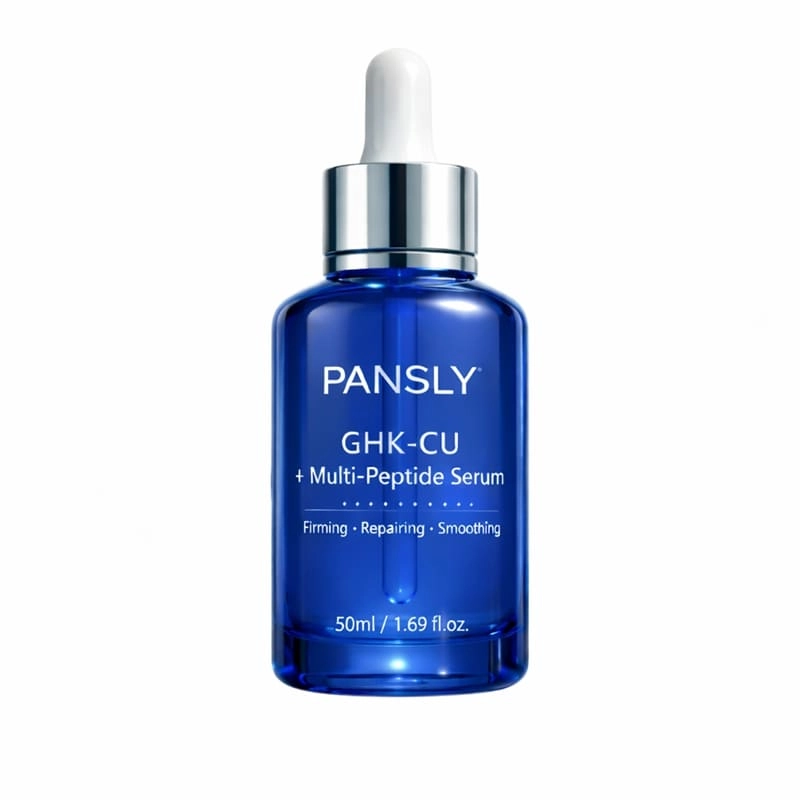
Experience visible rejuvenation with this GHK-Cu Copper Peptide Smoothing & Firming Face Serum, a high-performance concentrate designed to restore the structural integrity of aging skin. This advanced formula centers on GHK-Cu, a powerful signaling peptide clinically recognized for its ability to support natural collagen and elastin production. By promoting dermal density, it effectively tightens sagging skin and smooths the appearance of deep-set wrinkles and fine lines.
The lightweight, silky texture absorbs instantly, delivering antioxidant protection to neutralize environmental stressors that accelerate aging. Enhanced with deep-moisturizing agents, the serum reinforces the skin's moisture barrier, leaving the complexion feeling remarkably soft and resilient. With consistent use, skin texture is refined and facial contours appear more lifted, resulting in a youthfully firm and revitalized glow.
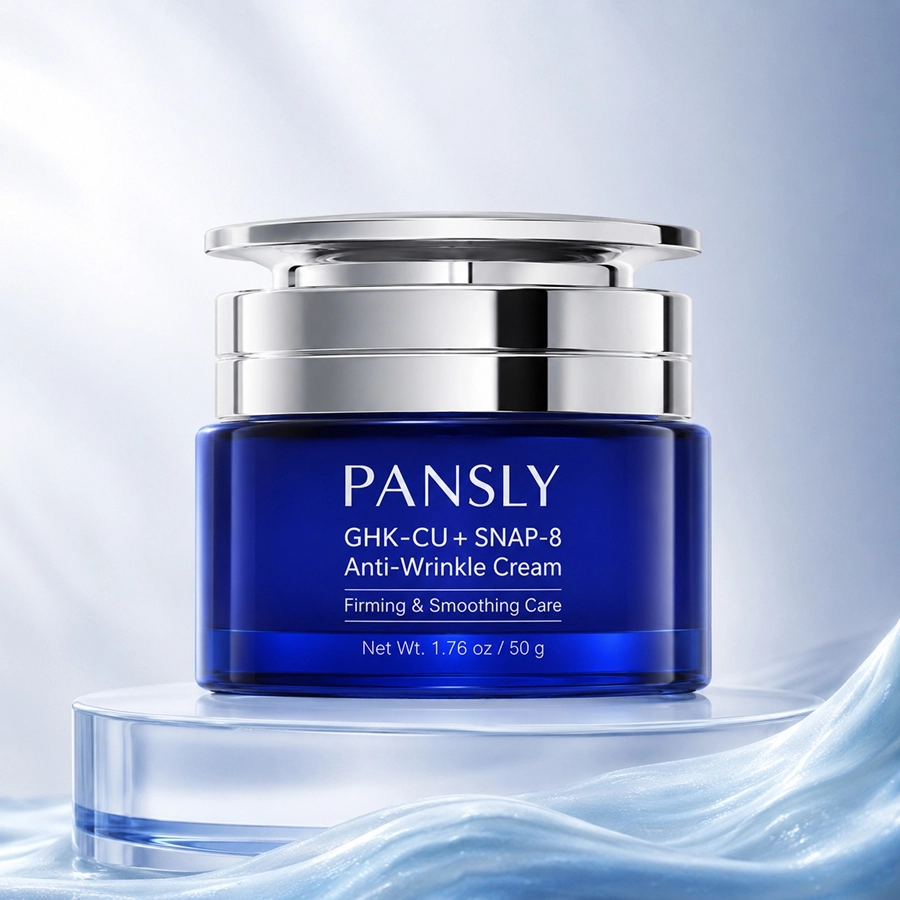
This Pansly GHK-CU + SNAP-8 Anti-Wrinkle Firming Cream is triple-peptide anti-aging facial cream, delivers targeted wrinkle smoothing, firming lifting and deep nourishment for dull, saggy, fine-line prone skin. Full OEM & ODM private label service is supported, including custom formula, packaging options, fast sampling and bulk export supply.
Five core premium active ingredients work synergistically for comprehensive anti-wrinkle care:
GHK-CU Copper Peptide lifts saggy skin, enhances skin resilience and tightens loose facial contour;
SNAP-8 Peptide targets expression lines to visibly soften and fade wrinkles;
Acetyl Hexapeptide-8 reduces the appearance of dry fine lines for smoother skin texture;
Ceramide NP reconstructs skin moisture barrier to lock nourishment and boost comfort;
Hyaluronic Acid delivers multi-layer rich deep moisture to relieve dry rough skin.
Luxury rich creamy texture spreads smoothly and melts into skin gently, leaving soft comfortable finish without heavy greasiness. Daily use blurs fine lines, firms loose skin, deeply nourishes and stabilizes barrier, refining uneven texture to reveal smooth, plump, youthful luminous skin.
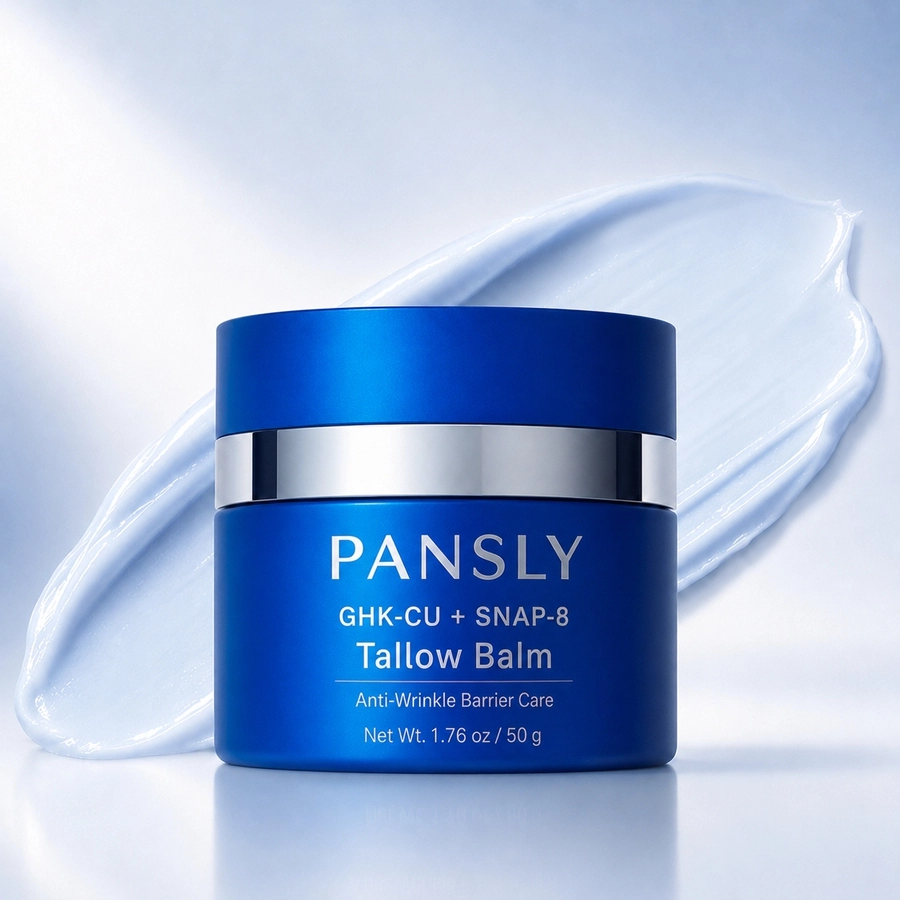
This Pansly GHK-CU + SNAP-8 Tallow Balm is a nourishing anti-wrinkle facial balm specially formulated for dry, fragile and sensitive skin, combining anti-aging wrinkle smoothing and barrier repairing effects. We offer full private label OEM service, including custom logo, adjustable formula, diversified packaging and lid color options.
It contains five core skin care active ingredients: GHK-CU visibly improves fine lines and revives dull complexion; SNAP-8 softens expression lines to smooth wrinkled skin texture; Grass-Fed Beef Tallow delivers deep lipid nourishment to relieve dry rough skin; Ectoin stabilizes the skin barrier and alleviates skin discomfort; Ceramide NP strengthens barrier structure to create smooth, healthy skin.
Luxury creamy blue balm texture glides smoothly and melts quickly on skin, providing long-lasting deep moisturizing comfort. Daily use fades fine lines & expression lines, nourishes dry delicate skin, repairs damaged barrier and leaves silky smooth skin finish.
Click here to customize the Beauty
we respond within a few hours
Monday–Friday, 9AM–6PM
3A01, Building A, Zhisheng Square, No. 4 Zhifu Road, Helong Street, Baiyun District, Guangzhou, China.


Leave a request, and we'll email you back within 24 hours.
© 2026 Beyond Basix. All Rights Reserved.
