
Five Premium Product Concepts for Private Label PDRN NAD+ Eye Patches
- How to Build a High Quality Under-Eye Treatment Platform
- Define the role of each active before selecting a formula
- Select the delivery format according to the customer experience
- Build claims around measurable and supportable outcomes
- Five Differentiated Concepts for a Private-Label Eye-Care Range
- Concept one: PDRN NAD+ Recovery Hydrogel for overnight-looking refreshment
- Concept two: Brightening Bio-Cellulose Patch for a more luminous eye contour
- Concept three: Peptide Firming Eye Mask for High Quality anti-fatigue routines
- Concept four: Cooling Caffeine Eye Patch for urban professionals
- Concept five: Sensitive-Skin Barrier Comfort Patch
- Procurement, Testing, and Commercialization Checklist
- Compare the development variables before approving a sample
- Control supply-chain and regulatory risk
- Plan MOQ, margin, and repeat-order economics
- Why Beyond Basix Fits a One-Stop OEM/ODM Skincare Program
- Integrated manufacturing capacity for eye-care launches
- Technical depth across active skincare and product categories
- Quality systems and partnership support
- Frequently Asked Questions
Private-label pdrn nad+ eye patches are emerging as a High Quality eye-care format for brands seeking visible hydration, refreshed-looking skin, and an advanced biotechnology narrative in a convenient daily treatment. The strongest commercial concepts combine carefully controlled active-ingredient positioning with suitable hydrogel or biocellulose materials, air-tight packaging, stability validation, compliant claims, and a clear target customer. This guide presents five product directions, explains the procurement logic behind each, and shows how a one-stop OEM/ODM for skincare partner can convert an initial concept into a scalable eye-care product line.
How to Build a High Quality Under-Eye Treatment Platform
Define the role of each active before selecting a formula
PDRN, commonly associated with polynucleotides derived from DNA fragments, is typically positioned in High Quality skincare around skin-conditioning, repair-support, and revitalized appearance benefits. NAD+ is a naturally occurring coenzyme involved in cellular energy metabolism, but topical cosmetic positioning requires disciplined language. A finished product should not imply that a cosmetic patch treats disease, reverses aging, or produces pharmaceutical outcomes. Instead, brand owners can focus on appearance-based benefits such as smoother-looking, more hydrated, brighter-looking, and less tired-looking skin.
A credible formula brief should identify the intended role of every material. PDRN or a cosmetic-grade DNA fragment ingredient may serve as the hero storytelling component, while NAD+ or an NAD-related ingredient supports the energy-care narrative. Humectants such as glycerin, betaine, and hyaluronic acid can improve moisturization; panthenol and allantoin may support a comfort-oriented positioning; peptides and caffeine can reinforce a firming or refreshed appearance concept. The supplier should provide ingredient documentation, recommended use levels, compatibility guidance, and claims-support information before the packaging copy is finalized.
Select the delivery format according to the customer experience
Hydrogel patches deliver a recognizable High Quality sensorial experience because they feel cool, flexible, and serum-rich on the skin. They are suitable for retail gift sets, spa channels, and social-commerce demonstrations. Biocellulose offers close facial contact and a thin, high-adherence profile, which can be attractive for sensitive-skin or professional-treatment positioning. Nonwoven and cotton-based masks may offer cost advantages, but they usually require stronger differentiation through serum composition, packaging, or accessories.
Shape is also a commercial decision. A wide crescent can cover the tear-trough and upper cheek area, while a narrow ergonomic patch may be easier to wear during commuting or desk work. Thickness, serum loading, edge integrity, and adhesion should be assessed through pilot testing rather than selected solely from a catalogue. For global distribution, packaging must also protect moisture content and prevent leakage during temperature changes, transportation, and warehouse storage.
Build claims around measurable and supportable outcomes
Buyers should request a claims matrix that separates ingredient facts, consumer-perception claims, instrumental results, and legally sensitive language. For example, “helps moisturize the delicate eye area” is generally more supportable than “regenerates cells.” A manufacturer can support the first type through formulation data, moisturizing assessments, user evaluations, and appropriate instrumental testing. Product claims should be reviewed against the destination market, including the applicable cosmetic framework and advertising requirements.
The U.S. Food and Drug Administration cosmetics guidance explains that cosmetic products and claims must be distinguished from drug claims, while the ISO 22716 good manufacturing practices standard provides an internationally recognized framework for cosmetic production and quality management. These references do not replace local legal review, but they provide useful procurement checkpoints for product owners and importers.
Five Differentiated Concepts for a Private-Label Eye-Care Range
Concept one: PDRN NAD+ Recovery Hydrogel for overnight-looking refreshment
This flagship concept is designed for consumers who want a visibly rested appearance after travel, late work hours, or insufficient sleep. The formula architecture can combine a PDRN-focused active system with an NAD+ narrative, multi-molecular hyaluronic acid, panthenol, and a skin-comfort complex. A translucent rose-gold or pearl hydrogel can communicate High Quality value, while an individually sealed sachet supports hygiene and portability.
From a procurement perspective, the key challenge is maintaining a strong story without overloading the formula with incompatible ingredients. The product development team should evaluate pH, viscosity, preservative efficacy, active stability, serum migration, and patch adhesion. A suitable launch claim set may include “intensely moisturizes,” “helps reduce the look of fatigue,” and “leaves the eye area feeling refreshed,” subject to substantiation and market review. This concept is well suited to department stores, High Quality online channels, hotel amenities, and beauty subscription boxes.
Concept two: Brightening Bio-Cellulose Patch for a more luminous eye contour
The second direction targets dullness and uneven-looking tone around the eye area. A biocellulose substrate can create a close-fitting, high-end treatment experience, while the active system may include PDRN, NAD+ positioning, niacinamide at a suitable level, licorice-derived ingredients, and antioxidant support. The commercial focus should remain on radiance and refreshed appearance rather than medical depigmentation or permanent correction.
Biocellulose products often require careful attention to hydration retention, membrane strength, serum loading, and removal of protective layers. Buyers should assess whether the patch remains intact after opening and whether the material conforms to different facial contours. Outer packaging can use clinical white, soft silver, or translucent blue to communicate biotechnology, but the design should also make usage time, storage instructions, ingredient information, and responsible claims easy to understand.
Concept three: Peptide Firming Eye Mask for High Quality anti-fatigue routines
This concept connects nucleotide-inspired skincare with a firming and smoothing ritual. PDRN and NAD+ can serve as hero-story ingredients, while signal peptides, caffeine, adenosine, and film-forming moisturizers support a smoother-looking, more toned appearance. The patch may be produced in a thicker hydrogel format to maximize serum perception and create a luxurious at-home facial experience.
For buyers, the most important development issue is evidence. “Firming” and “line-smoothing” claims should be supported through controlled user evaluations or instrumental methods selected for the intended claim. A supplier should also confirm the source, purity specification, and recommended concentration of each peptide, because peptide nomenclature alone does not establish performance. This product can be sold as a 30-pair monthly program, a two-pair trial kit, or a professional back-bar treatment add-on.
Concept four: Cooling Caffeine Eye Patch for urban professionals
The fourth concept is built around immediate sensory relief and a refreshed appearance. A cooling hydrogel, caffeine, PDRN-inspired repair-care storytelling, NAD+ positioning, aloe, and electrolytes can address the needs of office workers, frequent travelers, and consumers exposed to dry indoor environments. The package should emphasize a short application time, mess-free use, and convenient storage.
Temperature perception should be created through the material, formula, and storage recommendation rather than relying on aggressive cooling agents that may cause discomfort near the eyes. The development brief should include sting testing, fragrance evaluation, compatibility with contact-lens users where legally and technically appropriate, and clear instructions to avoid direct contact with the eyes. Small cartons, recyclable sachet structures, and travel bundles can improve conversion in pharmacies, airports, and direct-to-consumer channels.
Concept five: Sensitive-Skin Barrier Comfort Patch
The fifth direction serves customers who prefer minimal fragrance, low-irritation routines, and barrier-support language. A gentle hydrogel or soft biocellulose base can be paired with PDRN, NAD+ positioning, ectoin, beta-glucan, ceramides, panthenol, and soothing botanical fractions selected for compatibility. The formula should avoid unnecessary colorants and strong sensory effects, with packaging that communicates dermatological care without making unverified clinical claims.
This concept can expand the addressable market beyond traditional anti-aging buyers. It is suitable for dry-skin consumers, seasonal skincare routines, post-travel care, and High Quality sensitive-skin collections. Buyers should request stability data, preservative challenge results, microbial specifications, and a documented review of allergens and fragrance components. Clear batch coding and traceability are especially important when the brand wants to build trust with pharmacies, clinics, or professional distributors.
Procurement, Testing, and Commercialization Checklist
Compare the development variables before approving a sample
| Procurement variable | Hydrogel format | Biocellulose format | Buyer decision point |
|---|---|---|---|
| Consumer sensation | Cool, serum-rich, substantial | Thin, close-fitting, treatment-oriented | Match the format to channel and price position |
| Visual differentiation | Color, translucency, thickness, shape | Material story and close facial contact | Choose the feature customers can recognize quickly |
| Packaging sensitivity | Requires strong moisture and leak protection | Requires moisture retention and protective layers | Validate packaging with transport simulation |
| Typical positioning | Luxury retail, gifts, spa, social commerce | Clinical-inspired, sensitive skin, professional care | Align claims and visual identity with buyer expectations |
| Development focus | Adhesion, serum loading, edge integrity | Membrane strength, fit, hydration retention | Approve only after pilot and stability review |
The table should be treated as a starting framework rather than a substitute for product testing. A serious development program normally includes raw-material qualification, formula screening, packaging compatibility, accelerated and real-time stability, microbial testing, preservative efficacy where applicable, and production-line trials. The World Health Organization guidance on good manufacturing practices reinforces the importance of controlled processes, documentation, and quality systems, even though cosmetic regulations vary by market.
Control supply-chain and regulatory risk
PDRN-related materials can differ substantially in source, molecular profile, purity, and documentation. Buyers should request a specification sheet, certificate of analysis, safety data where relevant, origin statement, allergen information, and lot traceability. The term NAD+ also requires careful technical review because different suppliers may propose the coenzyme itself, a precursor, or a related cosmetic ingredient. The INCI listing and finished-product claims must accurately reflect what is actually present.
Packaging artwork should not be released before the formula, INCI list, net content, country-of-origin information, responsible-person details, warnings, and shelf-life or period-after-opening requirements have been confirmed. Importers should also verify whether the destination market requires product notification, safety assessment, local-language labeling, or additional restrictions on advertising. A one-stop supplier can reduce handoff errors by coordinating formulation, filling, packaging, documentation, and inspection through one project workflow.
Plan MOQ, margin, and repeat-order economics
Minimum order quantity should be evaluated against the complete cost structure rather than the sachet price alone. Formula complexity, active materials, hydrogel tooling, printing plates, carton design, testing, freight, and quality inspection can all affect the launch budget. A staged approach can reduce risk: begin with a validated base formula and standard patch shape, test demand with a focused design, and introduce custom colors, molds, or High Quality secondary packaging after reorder data is available.
Retail price should reflect the number of patches per box, application frequency, packaging quality, distribution margin, promotional allowance, and expected return rate. For B2B buyers, useful supplier questions include: What is the sample lead time? Which tests are included? What are the standard and custom MOQ levels? Can the supplier reserve the same material and active specification for repeat production? How are deviations, complaints, and corrective actions managed? These answers reveal operational maturity more reliably than a low initial quotation.
Why Beyond Basix Fits a One-Stop OEM/ODM Skincare Program
Integrated manufacturing capacity for eye-care launches
Beyond Basix is Guangzhou Beyond Basix Cosmetics Ltd., a comprehensive cosmetics care manufacturer with more than 23 years of experience across research, production, and sales. Our 12,000-square-meter facility includes a 100,000-level GMPC pharmaceutical-grade dust-free workshop and 12 production lines. Advanced machinery imported from Germany, the United States, and other regions supports consistent production, filling, packaging, and scale-up for private-label programs.
For brands developing advanced under-eye masks, our value is not limited to supplying a finished sample. Our engineering and product teams can coordinate concept selection, ingredient evaluation, patch material recommendations, packaging direction, pilot production, quality control, and commercial manufacturing. This integrated model helps project owners reduce communication gaps between separate laboratories, packaging vendors, and filling factories.
Technical depth across active skincare and product categories
For 12 years, our development focus has centered on skincare products featuring effective ingredients and differentiated consumer experiences. That specialization supports the development of nucleotide-inspired eye treatments, moisturizing hydrogel masks, peptide-led care, soothing barrier formulas, and brightening routines. Buyers can also extend a successful eye-care concept into complementary Skincare Products, Hair Care Products, Eye Care Products, and Body Care Products, creating a broader assortment from one manufacturing relationship.
Our operating experience includes four major brands: LANTHOME, PANSLY, FIRSTSUN, and SAUVASINE. These brands contribute to a practical understanding of packaging architecture, category segmentation, formula storytelling, and consumer-facing product presentation. For private-label customers, this category breadth can support coordinated launches such as an eye patch paired with a serum, facial mask, scalp treatment, body lotion, or travel skincare kit.
Quality systems and partnership support
Beyond Basix maintains certifications and documentation including ISO 9001, CE, MSDS, GMP, HALAL, and more, according to product and market requirements. Buyers should still confirm which certification applies to the exact facility, product, and destination market, but a documented quality system provides a stronger foundation for supplier qualification, audit preparation, and distributor confidence.
Our partnership approach is designed around practical commercialization: dependable communication, controlled sampling, transparent production milestones, suitable pricing, and support for repeat orders. Brand owners and distributors can select a High Quality hydrogel, biocellulose, cooling, firming, brightening, or sensitive-skin direction and then refine the formula and presentation around their target channel. The objective is to create a product that is technically feasible, legally supportable, visually distinctive, and profitable at the intended sales volume.
Contact Beyond Basix to develop a differentiated private-label eye-care concept and explore our complete range of skincare, hair care, eye care, and body care products.
Frequently Asked Questions
What should buyers verify when sourcing a private-label PDRN and NAD+ eye treatment?
Buyers should verify the ingredient specification, INCI listing, certificate of analysis, source and purity documentation, stability, microbial specifications, packaging compatibility, claims support, MOQ, lead time, and destination-market labeling requirements.
Which material is better for premium under-eye patches: hydrogel or biocellulose?
Hydrogel provides a cool, serum-rich, substantial experience and suits luxury retail, gifts, spa, and social-commerce channels. Biocellulose offers a thin, close-fitting, treatment-oriented experience and can suit clinical-inspired or sensitive-skin positioning; the best choice depends on target customers, price point, and packaging plan.
Can NAD+ be used in cosmetic eye patches?
NAD+ positioning requires technical and regulatory review because suppliers may provide NAD+ itself, a precursor, or a related cosmetic ingredient. The INCI listing, formula documentation, and finished-product claims must accurately reflect the ingredient present and comply with the destination market.
What testing is recommended before launching an eye patch product?
A serious development program should consider raw-material qualification, formula screening, packaging compatibility, accelerated and real-time stability, microbial testing, preservative efficacy where applicable, and production-line trials. Sting, comfort, adhesion, serum loading, and edge integrity should also be assessed for the selected patch material.
How can a one-stop OEM/ODM supplier reduce launch risk?
A one-stop supplier can coordinate formulation, ingredient documentation, patch-material selection, packaging, filling, testing, quality control, and production through one workflow. This reduces handoff errors and helps align the product concept with manufacturing feasibility, regulatory documentation, and repeat-order requirements.
What does Beyond Basix offer for private-label eye-care development?
Beyond Basix offers more than 23 years of cosmetics manufacturing experience, a 12,000-square-meter facility, a 100,000-level GMPC pharmaceutical-grade dust-free workshop, 12 production lines, advanced imported machinery, and support across research, production, sales, packaging, and quality management. The company also develops skincare, hair care, eye care, and body care products.

Elevate your professional skincare offerings with this Private Label Copper Peptide Anti-Wrinkle Firming Serum, a powerhouse concentrate designed for superior age-defying results. This sophisticated formula leverages the synergistic effects of GHK-Cu and SNAP-8 to address multiple layers of skin aging. The GHK-Cu copper peptides act as a vital signaling mechanism to enhance skin density and firmness, while the advanced SNAP-8 octapeptide specifically targets expression lines, helping to relax the appearance of deep-seated wrinkles for a smoother, more refined surface.
This lightweight, rapid-absorption serum provides a professional-grade solution for clients seeking a non-invasive lift. It effectively restores elasticity, improves skin texture, and provides essential antioxidant protection. Perfect for high-end beauty brands, this serum leaves the complexion looking visibly contoured, hydrated, and youthfully revitalized.
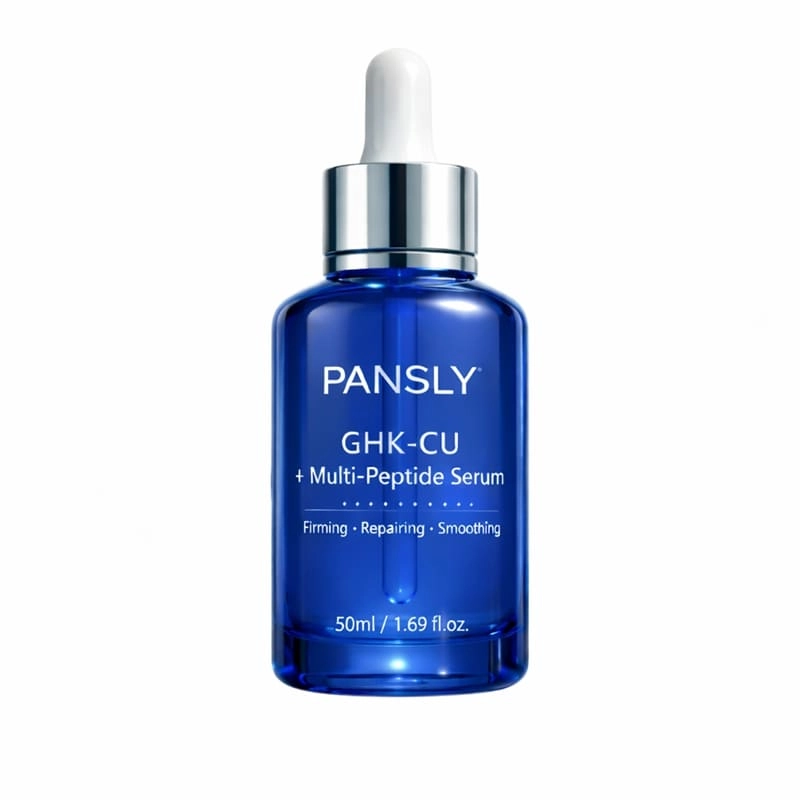
Experience visible rejuvenation with this GHK-Cu Copper Peptide Smoothing & Firming Face Serum, a high-performance concentrate designed to restore the structural integrity of aging skin. This advanced formula centers on GHK-Cu, a powerful signaling peptide clinically recognized for its ability to support natural collagen and elastin production. By promoting dermal density, it effectively tightens sagging skin and smooths the appearance of deep-set wrinkles and fine lines.
The lightweight, silky texture absorbs instantly, delivering antioxidant protection to neutralize environmental stressors that accelerate aging. Enhanced with deep-moisturizing agents, the serum reinforces the skin's moisture barrier, leaving the complexion feeling remarkably soft and resilient. With consistent use, skin texture is refined and facial contours appear more lifted, resulting in a youthfully firm and revitalized glow.
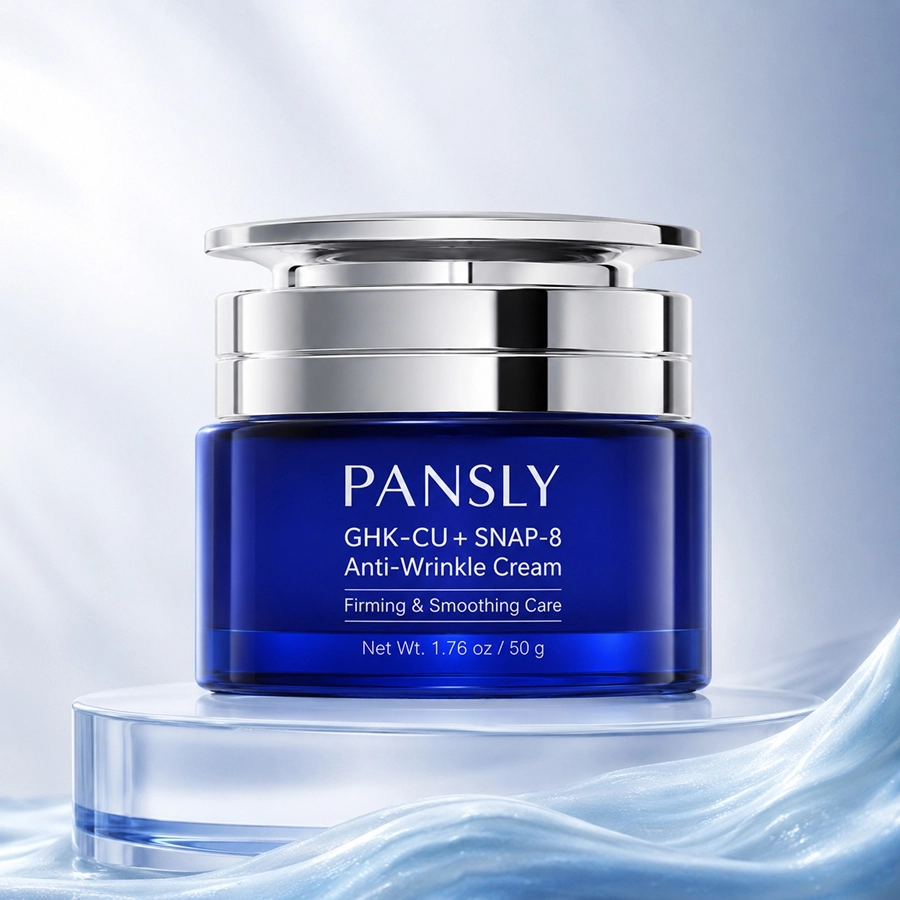
This Pansly GHK-CU + SNAP-8 Anti-Wrinkle Firming Cream is triple-peptide anti-aging facial cream, delivers targeted wrinkle smoothing, firming lifting and deep nourishment for dull, saggy, fine-line prone skin. Full OEM & ODM private label service is supported, including custom formula, packaging options, fast sampling and bulk export supply.
Five core premium active ingredients work synergistically for comprehensive anti-wrinkle care:
GHK-CU Copper Peptide lifts saggy skin, enhances skin resilience and tightens loose facial contour;
SNAP-8 Peptide targets expression lines to visibly soften and fade wrinkles;
Acetyl Hexapeptide-8 reduces the appearance of dry fine lines for smoother skin texture;
Ceramide NP reconstructs skin moisture barrier to lock nourishment and boost comfort;
Hyaluronic Acid delivers multi-layer rich deep moisture to relieve dry rough skin.
Luxury rich creamy texture spreads smoothly and melts into skin gently, leaving soft comfortable finish without heavy greasiness. Daily use blurs fine lines, firms loose skin, deeply nourishes and stabilizes barrier, refining uneven texture to reveal smooth, plump, youthful luminous skin.
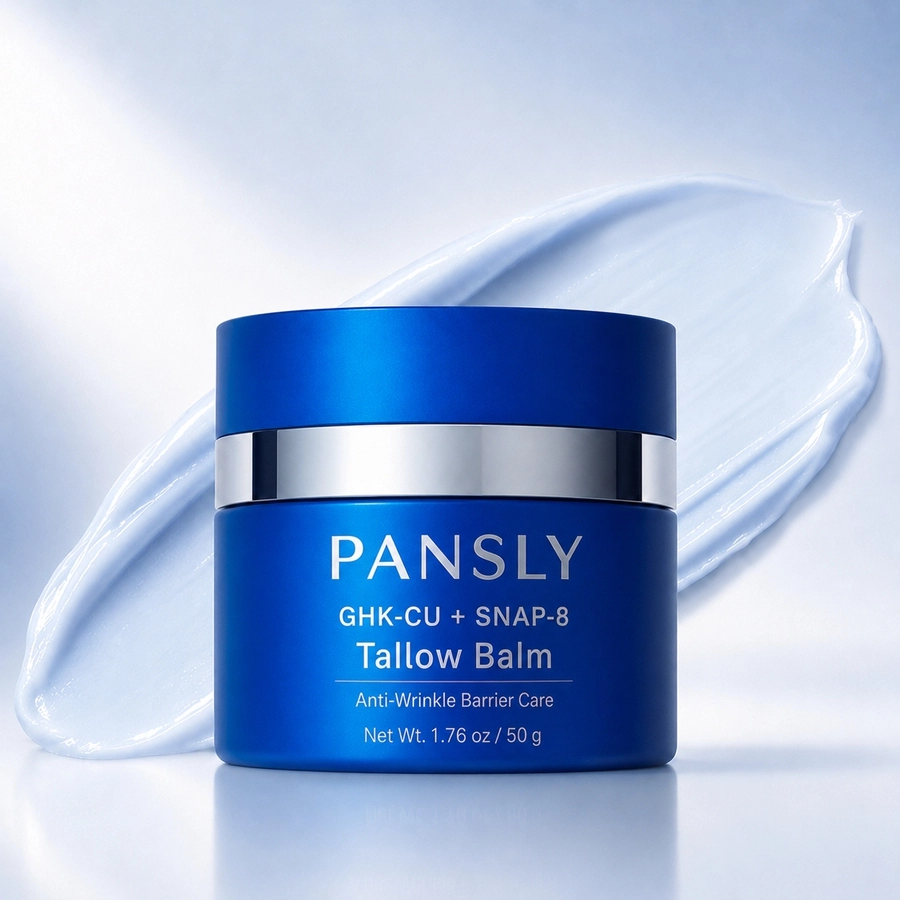
This Pansly GHK-CU + SNAP-8 Tallow Balm is a nourishing anti-wrinkle facial balm specially formulated for dry, fragile and sensitive skin, combining anti-aging wrinkle smoothing and barrier repairing effects. We offer full private label OEM service, including custom logo, adjustable formula, diversified packaging and lid color options.
It contains five core skin care active ingredients: GHK-CU visibly improves fine lines and revives dull complexion; SNAP-8 softens expression lines to smooth wrinkled skin texture; Grass-Fed Beef Tallow delivers deep lipid nourishment to relieve dry rough skin; Ectoin stabilizes the skin barrier and alleviates skin discomfort; Ceramide NP strengthens barrier structure to create smooth, healthy skin.
Luxury creamy blue balm texture glides smoothly and melts quickly on skin, providing long-lasting deep moisturizing comfort. Daily use fades fine lines & expression lines, nourishes dry delicate skin, repairs damaged barrier and leaves silky smooth skin finish.
Click here to customize the Beauty
we respond within a few hours
Monday–Friday, 9AM–6PM
3A01, Building A, Zhisheng Square, No. 4 Zhifu Road, Helong Street, Baiyun District, Guangzhou, China.


Leave a request, and we'll email you back within 24 hours.
© 2026 Beyond Basix. All Rights Reserved.
