
How to Formulate a SNAP-8 GHK-Cu Facial Cleanser Without Compromising Peptide Stability
Practical, procurement-focused guidance for developing a peptide-enriched facial cleansing system that preserves SNAP-8 (acetyl octapeptide) and copper tripeptide (GHK-Cu) activity: this article explains formulation design rules, surfactant selection, pH windows, preservative compatibility, production controls, and scale-up best practices for brand owners and contract manufacturers seeking a high-performance peptide face wash without stability loss.
- Peptide-friendly cleansing design principles and stability risks
- Understand peptide chemistries and failure modes
- Target environmental windows for peptide preservation
- Specific incompatibilities to avoid during ingredient selection
- Formulation strategies that balance cleansing performance and peptide integrity
- Surfactant systems: mild amphoterics and non-ionic blends
- Water activity, buffers, and excipients that support peptide stability
- Delivery approaches: micellar, low-foam and rinse-off considerations
- Process controls, analytical testing, and regulatory preparation
- Manufacturing practices that reduce degradation
- Analytical release and stability testing
- Regulatory, safety, and labelling considerations for peptide cleansers
- Scale-up, supplier selection, and procurement guidance for brand owners
- Technical due diligence when selecting a contract manufacturer
- Quality agreements, sampling plans, and stability commitments
- Packaging, cold chain, and shelf-life logistics
- Why a specialized OEM/ODM partner matters for peptide cleansers
- Integration of formulation science and manufacturing capability
- Evidence and standards that build buyer confidence
- Case for partnering with a proven contract manufacturer
- Manufacturing credentials and how Beyond Basix supports peptide cleanser projects
- Facility and certification advantages
- Formulation and analytical capabilities
- Brand support, certification coverage, and product categories
- Commercial and procurement benefits
- Frequently Asked Questions
Practical, procurement-focused guidance for developing a peptide-enriched facial cleansing system that preserves SNAP-8 (acetyl octapeptide) and copper tripeptide (GHK-Cu) activity: this article explains formulation design rules, surfactant selection, pH windows, preservative compatibility, production controls, and scale-up best practices for brand owners and contract manufacturers seeking a high-performance peptide face wash without stability loss.
Peptide-friendly cleansing design principles and stability risks
Understand peptide chemistries and failure modes
SNAP-8 (an acetylated octapeptide derivative) and GHK-Cu (a copper-bound tripeptide) present distinct formulation constraints: SNAP-8 is sensitive to proteolytic cleavage and hydrolysis under extreme pH, while GHK-Cu’s activity depends on intact copper coordination and avoidance of chelating displacement. Formulators must prioritize physicochemical drivers of degradation—pH, oxidation, metal chelation, high temperature, and surfactant-induced denaturation—so that process and ingredient selection minimize structural loss during manufacture and shelf life.
Target environmental windows for peptide preservation
For many cosmetic peptides, a mildly acidic to near-neutral environment reduces hydrolysis and deamidation rates; formulators commonly design cleansers in the pH 4.5–6.5 window to balance skin compatibility with peptide stability. Avoid prolonged high-temperature processing and alkaline regimes that accelerate backbone cleavage. For copper complexes, low free-copper activity and minimal exposure to strong competing chelators preserve the metal–peptide complex.
Specific incompatibilities to avoid during ingredient selection
Avoid strong chelating agents (high levels of EDTA or phosphates) that can strip copper from GHK-Cu, and minimize use of harsh ionic surfactants that unfold peptide structures. Oxidizing actives (high levels of peroxides or unstable vitamin formulations) increase peptide oxidation risk; select antioxidant systems and low-metal manufacturing water where possible.
Formulation strategies that balance cleansing performance and peptide integrity
Surfactant systems: mild amphoterics and non-ionic blends
For peptide-preserving wash bases, choose mild surfactants such as amphoteric betaines, glucosides (e.g., decyl glucoside), and sulfosuccinates. These systems provide adequate cleansing and foam while reducing protein denaturation compared with aggressive anionic sulfates. Combining a gentle primary with a co-surfactant can optimize rheology and sensory performance without sacrificing peptide conformation.
Water activity, buffers, and excipients that support peptide stability
Use buffered systems with organic or inorganic buffers (citric acid/sodium citrate blends are common) to maintain target pH. Avoid high levels of powerful chelators; where chelation is required to control trace metals, specify chelators that do not outcompete GHK-Cu for copper binding. Inclusion of compatible stabilizers such as low-level polyols (glycerin, propanediol) and certain polymers can reduce peptide aggregation while improving skin feel.
Delivery approaches: micellar, low-foam and rinse-off considerations
Rinse-off formulas shorten skin contact time and relieve some stability pressure, but product storage and shelf life remain critical. Micellar liquids can encapsulate peptides in non-denaturing environments, while balm-to-oil and cleansing balms provide an anhydrous or low-water phase that inherently reduces peptide hydrolysis. Each delivery format requires tailored preservation and challenge testing to ensure peptide integrity through expected shelf conditions.
| Approach | Typical pH | Common Surfactant Types | Peptide Compatibility | Manufacturing Notes |
|---|---|---|---|---|
| Conventional sulfate-rich gel | 5.0–7.0 | SLES/SLS + cocamidopropyl betaine | Moderate to low — sulfates can increase denaturation risk | Standard hot-fill; avoid high-temperature holds; additional antioxidants recommended |
| Mild amphoteric/non-ionic blend (recommended) | 4.5–6.0 | Decyl glucoside, coco-glucoside, betaines | High — compatible with most peptides when pH controlled | Cold-process options; reduced shear; GMP environment preferred |
| Micellar/low-water format | 4.5–6.0 | Non-ionic micelle formers, mild amphoterics | Very high — lower hydrolytic stress | Preservation must consider micelle sequestration effects; stability testing essential |
| Anhydrous balm/solid cleanser | N/A (minimal water) | Surfactant-free or anhydrous surfactants | Highest for hydrolysis-prone peptides | Different process and filling equipment; typically more complex packaging |
Process controls, analytical testing, and regulatory preparation
Manufacturing practices that reduce degradation
Critical manufacturing controls include temperature monitoring, reduced kneading/shear where peptides are present, cold- or warm-fill operations instead of high-heat processing, and minimizing open-batch exposure to contaminants. Facility-level controls—cleanrooms, validated HVAC, and water treatment—reduce trace metal and microbial risk factors that can affect peptide stability and product safety.
Analytical release and stability testing
Implement peptide-specific analytical methods during release and shelf testing. High-performance liquid chromatography (HPLC), LC–MS, or peptide mapping identify degradation products and quantify intact peptide. Accelerated stability studies (40°C/75% RH) and real-time shelf-life protocols provide evidence of retained peptide activity and support labeling decisions. For copper-peptide systems, include metal binding integrity assessments.
Regulatory, safety, and labelling considerations for peptide cleansers
Cosmetic peptides and rinse-off formulations must follow regional cosmetic regulations. In the United States, refer to U.S. FDA cosmetics guidance for cosmetic safety and labelling expectations; for international quality systems, align with standards such as ISO 22716 (cosmetics GMP). Document batch records, supplier quality agreements, and preservative system rationales as part of regulatory readiness.
Scale-up, supplier selection, and procurement guidance for brand owners
Technical due diligence when selecting a contract manufacturer
Buyers should evaluate manufacturers for peptide-handling experience, validated cold-fill capabilities, analytical labs capable of peptide quantification, and cleanroom or GMP-grade facilities. Verify certifications (ISO 9001, GMP) and inspect production lines for corrosion control and segregated filling zones to prevent cross-contamination of metal ions and oxidants.
Quality agreements, sampling plans, and stability commitments
Specify clear quality agreements that enumerate raw material identity, peptide assay release criteria, allowable degradants, and stability commitments. Require retained sample programs and challenge test results for the proposed preservative and packaging system. Insist on notification timelines for out-of-spec events and change-control governance.
Packaging, cold chain, and shelf-life logistics
Packaging choices (opaque, airless, low-headspace containers) reduce oxidation and photodegradation. For peptide-enriched rinses, plan for transport conditions and warehouse temperature controls that align with validated shelf-life claims. Where necessary, include cold chain logistics for bulk peptide deliveries to protect raw material potency prior to manufacturing.
Why a specialized OEM/ODM partner matters for peptide cleansers
Integration of formulation science and manufacturing capability
Peptide-containing cleansers require integrated capabilities: formulation R&D, peptide-compatible production lines, peptide assay testing, and regulatory know-how. An experienced One-Stop OEM/ODM provider reduces technical risk by offering end-to-end services from ingredient sourcing through release testing and packaging validation.
Evidence and standards that build buyer confidence
Buyers should request stability study data, method validation reports, and certificates of analysis for peptide raw materials. Cross-reference supplier credentials with authoritative standards and agencies such as published peptide references and industry GMP norms to ensure the outsource partner adheres to recognized best practices.
Case for partnering with a proven contract manufacturer
Working with an established manufacturer shortens time-to-market and reduces reformulation cycles. Procurement teams benefit from consolidated vendor management, negotiated raw material sourcing, and scale-up experience that mitigates cost overruns and ensures consistent peptide retention in finished goods.
Manufacturing credentials and how Beyond Basix supports peptide cleanser projects
Facility and certification advantages
We operate a 12,000-square-meter production campus with a 100,000-level GMPC pharmaceutical-grade dust-free workshop and 12 dedicated production lines. Our facilities are equipped with advanced machinery imported from Germany and the United States, enabling precise temperature control and low-shear processing required for peptide-sensitive formulations. Beyond Basix maintains ISO 9001 and GMP-aligned processes to ensure consistent lot-to-lot performance.
Formulation and analytical capabilities
Our R&D teams focus on effective-ingredient development and have concentrated on peptide-compatible skincare systems for over 12 years. We provide method development and stability protocols, including HPLC/LC–MS peptide quantification, accelerated and real-time stability programs, and finished-product release testing tailored to copper-peptide integrity.
Brand support, certification coverage, and product categories
Beyond Basix operates four proprietary brands—LANTHOME, PANSLY, FIRSTSUN, and SAUVASINE—while supporting private-label and bespoke product lines. We are certified with ISO 9001, CE, MSDS, GMP, HALAL, and other relevant credentials. Our factory capability covers Skincare Products, Hair Care Products, Eye Care Products, and Body Care Products, enabling cross-category formulation insights for peptide applications and supporting multi-SKU rollouts.
Commercial and procurement benefits
We commit to competitive pricing, transparent quality agreements, and joint development roadmaps that align with buyer timelines. For peptide-enriched rinse-off systems, our cold-fill lines, analytical labs, and validated stability data help accelerate market entry while protecting product claims and consumer safety.
For independent guidance on cosmetic regulation and peptide science, consult the U.S. FDA cosmetics guidance, the ISO GMP framework at ISO 22716, and peptide references such as GHK-Cu literature to align formulation and compliance strategies.
Buyers and brand owners seeking turnkey peptide facial cleansers can request formulation briefs, stability protocols, and factory audits as part of initial technical proposals from qualified OEM/ODM partners.
Contact Beyond Basix to start technical evaluation or view our product offerings.
Frequently Asked Questions
What pH range is recommended to preserve SNAP-8 and GHK-Cu in a rinse-off cleanser?
Formulators typically target a mildly acidic to near-neutral pH (approximately 4.5–6.5) for peptide-containing wash formulations, balancing skin compatibility with reduced rates of peptide hydrolysis and deamidation. Exact pH should be validated in stability testing for the specific formulation.
Which surfactant systems minimize peptide denaturation during use and storage?
Mild amphoteric and non-ionic surfactants—such as betaines (cocamidopropyl betaine), glucosides (decyl/coco-glucoside), and sulfosuccinates—are preferred, as they clean effectively while being less likely to denature peptide structures than aggressive anionic sulfates.
How should GHK-Cu be protected from chelation and metal displacement in a cleanser formula?
Avoid high levels of strong chelating agents that can outcompete the copper coordination (e.g., excessive EDTA). If chelation is required to control trace metals, choose chelators and concentrations that do not disrupt GHK-Cu binding, and validate copper–peptide integrity analytically during stability studies.
What manufacturing controls are essential to reduce peptide degradation during production?
Key controls include temperature monitoring, low-shear mixing when peptides are present, cold- or warm-fill processing rather than high-heat operations, validated water treatment to minimize trace metals, and GMP-grade environmental controls to reduce contamination risk.
What analytical tests are necessary to demonstrate peptide stability in a finished cleanser?
Peptide-specific assays—HPLC, LC–MS, or peptide mapping—are required to quantify intact peptide and identify degradants. Include accelerated (e.g., 40°C/75% RH) and real-time stability studies, and test the preservative system and packaging under expected distribution conditions.

Elevate your professional skincare offerings with this Private Label Copper Peptide Anti-Wrinkle Firming Serum, a powerhouse concentrate designed for superior age-defying results. This sophisticated formula leverages the synergistic effects of GHK-Cu and SNAP-8 to address multiple layers of skin aging. The GHK-Cu copper peptides act as a vital signaling mechanism to enhance skin density and firmness, while the advanced SNAP-8 octapeptide specifically targets expression lines, helping to relax the appearance of deep-seated wrinkles for a smoother, more refined surface.
This lightweight, rapid-absorption serum provides a professional-grade solution for clients seeking a non-invasive lift. It effectively restores elasticity, improves skin texture, and provides essential antioxidant protection. Perfect for high-end beauty brands, this serum leaves the complexion looking visibly contoured, hydrated, and youthfully revitalized.
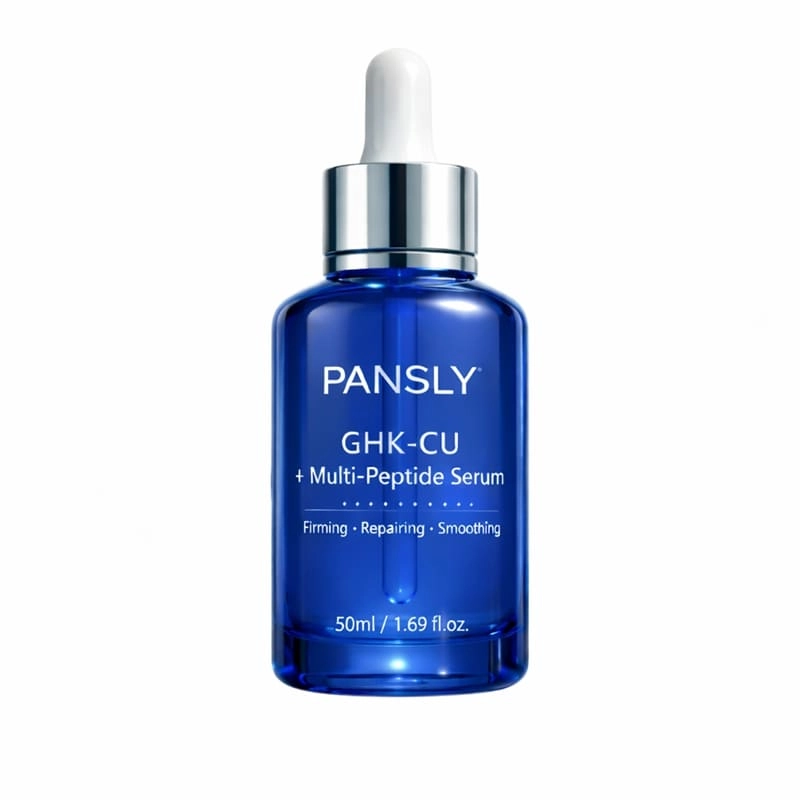
Experience visible rejuvenation with this GHK-Cu Copper Peptide Smoothing & Firming Face Serum, a high-performance concentrate designed to restore the structural integrity of aging skin. This advanced formula centers on GHK-Cu, a powerful signaling peptide clinically recognized for its ability to support natural collagen and elastin production. By promoting dermal density, it effectively tightens sagging skin and smooths the appearance of deep-set wrinkles and fine lines.
The lightweight, silky texture absorbs instantly, delivering antioxidant protection to neutralize environmental stressors that accelerate aging. Enhanced with deep-moisturizing agents, the serum reinforces the skin's moisture barrier, leaving the complexion feeling remarkably soft and resilient. With consistent use, skin texture is refined and facial contours appear more lifted, resulting in a youthfully firm and revitalized glow.
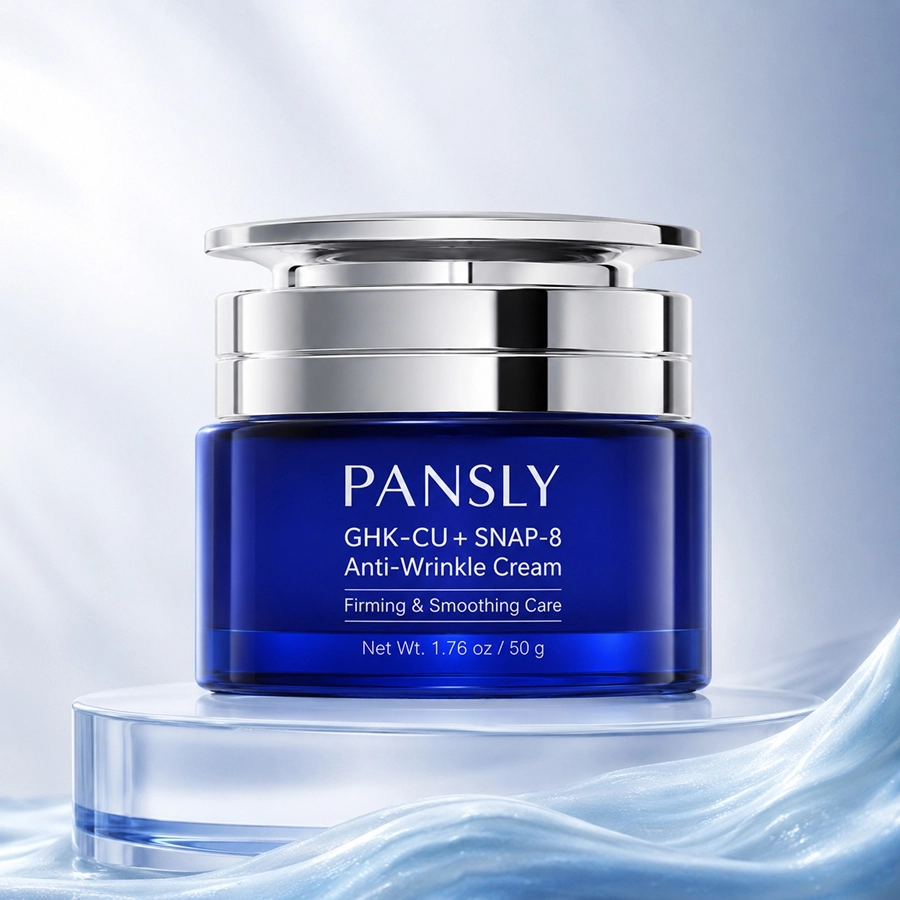
This Pansly GHK-CU + SNAP-8 Anti-Wrinkle Firming Cream is triple-peptide anti-aging facial cream, delivers targeted wrinkle smoothing, firming lifting and deep nourishment for dull, saggy, fine-line prone skin. Full OEM & ODM private label service is supported, including custom formula, packaging options, fast sampling and bulk export supply.
Five core premium active ingredients work synergistically for comprehensive anti-wrinkle care:
GHK-CU Copper Peptide lifts saggy skin, enhances skin resilience and tightens loose facial contour;
SNAP-8 Peptide targets expression lines to visibly soften and fade wrinkles;
Acetyl Hexapeptide-8 reduces the appearance of dry fine lines for smoother skin texture;
Ceramide NP reconstructs skin moisture barrier to lock nourishment and boost comfort;
Hyaluronic Acid delivers multi-layer rich deep moisture to relieve dry rough skin.
Luxury rich creamy texture spreads smoothly and melts into skin gently, leaving soft comfortable finish without heavy greasiness. Daily use blurs fine lines, firms loose skin, deeply nourishes and stabilizes barrier, refining uneven texture to reveal smooth, plump, youthful luminous skin.
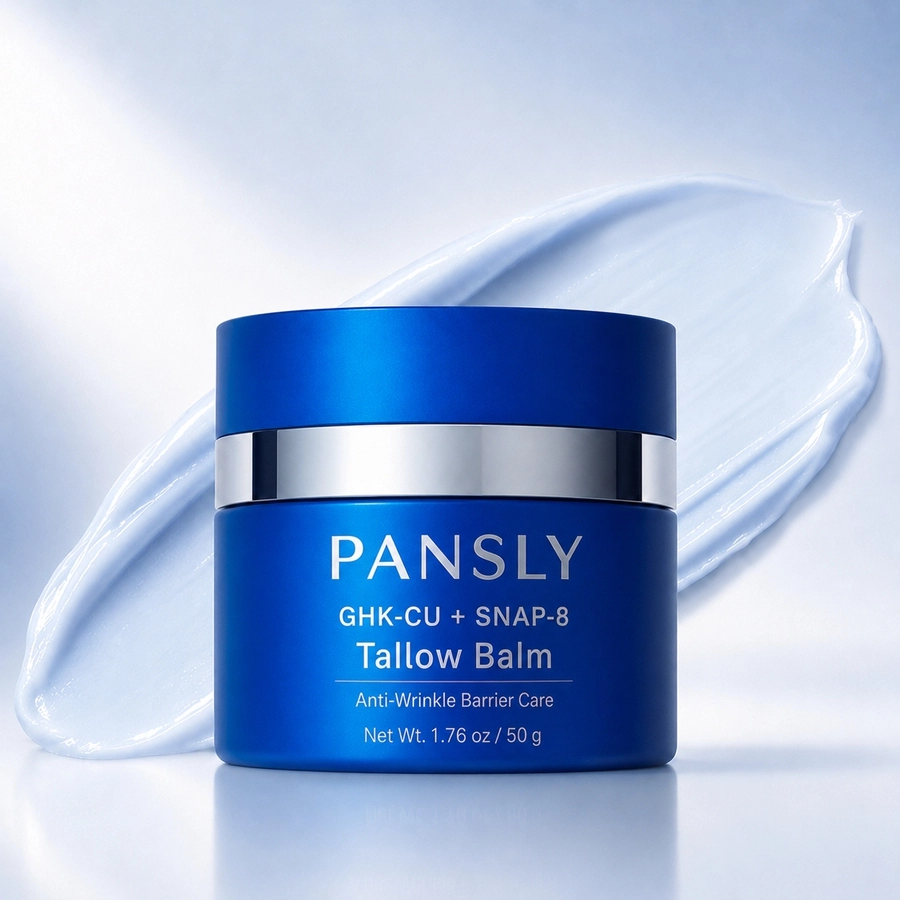
This Pansly GHK-CU + SNAP-8 Tallow Balm is a nourishing anti-wrinkle facial balm specially formulated for dry, fragile and sensitive skin, combining anti-aging wrinkle smoothing and barrier repairing effects. We offer full private label OEM service, including custom logo, adjustable formula, diversified packaging and lid color options.
It contains five core skin care active ingredients: GHK-CU visibly improves fine lines and revives dull complexion; SNAP-8 softens expression lines to smooth wrinkled skin texture; Grass-Fed Beef Tallow delivers deep lipid nourishment to relieve dry rough skin; Ectoin stabilizes the skin barrier and alleviates skin discomfort; Ceramide NP strengthens barrier structure to create smooth, healthy skin.
Luxury creamy blue balm texture glides smoothly and melts quickly on skin, providing long-lasting deep moisturizing comfort. Daily use fades fine lines & expression lines, nourishes dry delicate skin, repairs damaged barrier and leaves silky smooth skin finish.
Click here to customize the Beauty
we respond within a few hours
Monday–Friday, 9AM–6PM
3A01, Building A, Zhisheng Square, No. 4 Zhifu Road, Helong Street, Baiyun District, Guangzhou, China.


Leave a request, and we'll email you back within 24 hours.
© 2026 Beyond Basix. All Rights Reserved.
