
Formulation Insights: Active Levels in PDRN Anti-Wrinkle Serum
- Optimizing polynucleotide concentrations for dermal regeneration
- Mechanism of action and dose–response principles
- Reported topical concentration bands and clinical correlation
- Formulation strategies to maximize bioavailability
- Stability, compatibility and GMP scale-up controls
- pH, preservative systems and excipient compatibility
- Stability testing protocol and shelf-life modeling
- Manufacturing scale-up and batch release quality control
- Regulatory, safety, and efficacy verification for market entry
- Classification, claims and labeling considerations
- Safety testing: irritation, sensitization and genotoxicity screening
- Clinical endpoints and objective efficacy measurement
- Procurement checklist and vendor qualification for brand owners
- Technical dossier and analytical transparency
- Certifications, audits and on-site capability verification
- Cost modeling and margin planning
- Frequently Asked Questions
High-precision guidelines for procurement and product development: this briefing synthesizes mechanistic data, concentration ranges, stability protocols, and regulatory checkpoints for polydeoxyribonucleotide-based wrinkle reduction concentrates, enabling brand owners, formulators, and OEM/ODM partners to define target active levels, validate biological activity, and scale manufacturing within pharmaceutical-grade cosmetic GMP environments.
Optimizing polynucleotide concentrations for dermal regeneration
Mechanism of action and dose–response principles
Polynucleotide extracts exert tissue-repair activity through adenosine A2A receptor modulation, stimulation of fibroblast proliferation, angiogenesis support, and extracellular matrix remodelling. Translating these biological endpoints into topical formulations requires mapping in vitro markers (collagen type I/III expression, TIMP/MMP balance, fibroblast proliferation assays) to proposed in-use concentrations. A rational dose–response approach compares cellular efficacy thresholds against formulation stability and per-application exposure to avoid over-formulating beyond meaningful activity.
Reported topical concentration bands and clinical correlation
Published product specifications and clinical case series indicate topical polynucleotide concentrations used in consumer and professional serums typically fall into low (0.1–0.5%), medium (0.5–2.0%), and higher (2.0–5.0%) ranges. Low-level preparations aim for adjunctive maintenance; mid-range formulas seek measurable collagen stimulation in chronic use; higher levels are often reserved for professional-grade or clinic-dispensed regenerative serums. When defining a target active level, buyers should cross-reference published clinical endpoints with stability and irritancy profiles measured during preclinical testing.
Formulation strategies to maximize bioavailability
Topical bioavailability depends on molecular size, vehicle selection, enhancer systems, and pH. Oligonucleotide-derived polymers typically benefit from hydrophilic carriers combined with skin-penetration enhancers (short-chain esters, selected surfactants) and barrier-modulating excipients (niacinamide, small peptides) that support fibroblast uptake without compromising safety. Compounding decisions must balance permeation with preservative efficacy and chelation control to limit nuclease activity in the finished product.
Stability, compatibility and GMP scale-up controls
pH, preservative systems and excipient compatibility
Polynucleotide stability is pH-sensitive and prone to hydrolytic degradation under extreme alkaline or acidic conditions. Ideal formulation windows are commonly near neutral to mildly acidic (pH 5.0–6.5) to align with skin compatibility and preserve nucleotide integrity. Preservative selection must be validated for compatibility with nucleic acid-based actives; oxidative preservatives or high ethanol content can accelerate breakdown, while antimicrobial systems that function at neutral pH and with minimal chelation are preferred.
Stability testing protocol and shelf-life modeling
Robust shelf-life claims require forced-degradation studies (thermal, photostability, oxidative), accelerated stability at ICH-aligned conditions, and real-time stability in intended packaging. Key analytical assays include UV-vis and HPLC for active integrity, qPCR or gel electrophoresis for polymer integrity where applicable, microbial challenge tests, and potency-related bioassays correlated to baseline in vitro markers. Packaging decisions (airless pumps, amber glass) should be validated to control light and oxygen exposure.
Manufacturing scale-up and batch release quality control
Scaling from bench to GMP lines requires reproducible mixing, validated dispersion of high-molecular-weight actives, in-process control (ICP) sampling for active content, and validated sterilization strategies where necessary. Release testing panels should include identity, assay (% active), endotoxin (for parenteral-adjacent processes), preservative efficacy, microbial limit tests, pH, and viscosity. For contract manufacturing, buyers must require full batch records and Certificates of Analysis aligned with GMP expectations.
Regulatory, safety, and efficacy verification for market entry
Classification, claims and labeling considerations
Regulatory classification depends on intended claims: maintenance, beautification, or therapeutic regeneration. Cosmetic claims that avoid disease or physiological repair avoid drug classification, but wound-healing or medical claims trigger stricter regulatory pathways. For U.S. and EU market entry, buyers should consult national authorities and guidance: U.S. FDA Cosmetics Guidance and align manufacturing to ISO 22716 Cosmetic GMP where applicable.
Safety testing: irritation, sensitization and genotoxicity screening
Standard safety packages include skin irritation, cumulative irritation, and sensitization (e.g., HRIPT or equivalent), phototoxicity if relevant, and in vitro genotoxicity screens for nucleic-acid-derived materials as precautionary testing. Patch testing in representative matrices and clinical tolerability studies with dermatological endpoints support consumer safety claims and reduce post-market risk.
Clinical endpoints and objective efficacy measurement
Objective efficacy for wrinkle reduction should combine validated clinical scales (e.g., Lemperle wrinkle assessment), instrumental measures (cutometer firmness, 3D skin imaging), and biomarker substantiation (collagen increase by biopsy or non-invasive markers where ethically applicable). Correlating a chosen concentration band to measurable endpoints within a defined time frame strengthens marketing claims and ROI forecasts for buyers.
| Concentration Band | Typical Concentration Range | Primary Use Case | Expected Biological Effect | Manufacturing Considerations |
|---|---|---|---|---|
| Low | 0.1%–0.5% | Daily OTC maintenance serums | Adjunctive support for ECM turnover, low irritation risk | Standard mixing; moderate QC (assay, microbial) |
| Medium | 0.5%–2.0% | Cosmetic products with measurable firmness claims | Stimulates fibroblast activity and collagen markers with regular use | Enhanced stability controls, packaging validation, potency bioassay |
| High | 2.0%–5.0% | Professional-grade or clinic-dispensed serums | Higher biological response; increased risk of irritancy if not formulated | Robust QC, specialized excipients, GMP batch-release testing |
Procurement checklist and vendor qualification for brand owners
Technical dossier and analytical transparency
Buyers should require a full technical dossier that includes source validation of the polynucleotide raw material, analytical methods for assay and impurity profiling, stability data, and validated bioassay correlation to claimed endpoints. Raw material Certificates of Analysis, chain-of-custody documentation, and traceability are essential to mitigate supply chain and regulatory risk.
Certifications, audits and on-site capability verification
Preferred suppliers will demonstrate ISO 9001 quality management, GMP operation aligned to cosmetic or pharmaceutical standards as required, and third-party certifications such as CE or HALAL where relevant for target markets. Requesting audit reports, environmental monitoring data, and supplier corrective action histories provides procurement teams with objective risk assessments. For reference guidance on international regulation and quality frameworks, consult PubMed research and general cosmetic regulatory resources such as Wikipedia - Cosmetics.
Cost modeling and margin planning
Active concentration selection drives raw material cost, preservation complexity, and packaging choices. Mid-range actives commonly achieve the best balance between measurable efficacy and cost-per-unit; however, High Quality positioning may justify higher concentrations if supported by clinical evidence. Procurement should request multiple manufacturing scenarios (pilot batch, production batch, and private-label samples) to model landed cost, minimum order quantities, and time-to-market.
Guangzhou Beyond Basix Cosmetics Ltd. is a leading comprehensive cosmetics care manufacturer with over 23 years of experience in research, production, and sales. Our 12,000-square-meter facility includes a 100,000-level GMPC pharmaceutical-grade dust-free workshop and 12 production lines, equipped with advanced machinery imported from Germany, the US, and other regions.Focusing on the development of skincare products with effective ingredients for 12 years, we operate four major brands: LANTHOME, PANSLY, FIRSTSUN, and SAUVASINE. We are certified with ISO 9001, CE, MSDS, GMP, HALAL, and more.Committed to offering the best products, services, and prices, we aim to grow and progress together with our partners. We are more than just skincare—connect with us today!
Our one-stop OEM/ODM capabilities span Skincare Products, Hair Care Products, Eye Care Products, and Body Care Products; we deliver custom formulation development, small-batch pilot runs, stability and safety testing coordination, and full turnkey packaging solutions to accelerate client time-to-market while maintaining compliance with international quality standards.
Relevant guidance and regulatory references cited in this dossier include the U.S. FDA Cosmetics Guidance, the ISO 22716 Cosmetic GMP standard for manufacturing practices, and peer-reviewed literature searchable via PubMed to support mechanistic and clinical claims.
For technical partnerships, procurement packages should request: raw material COA, validated analytical methods, stability protocol summaries, GMP certificates, pilot batch samples, and an estimated timeline for scale-up and delivery.
Frequently Asked Questions
What concentration range is recommended for polynucleotide-containing topical wrinkle serums?
Published formulations and clinical reports typically use low (0.1%–0.5%), medium (0.5%–2.0%), and high (2.0%–5.0%) concentration bands; selection depends on intended use-case, stability, and tolerability profiles described in the formulation dossier.
How should biological activity of a polynucleotide serum be validated before market launch?
Biological activity should be validated using in vitro fibroblast proliferation and collagen marker assays correlated with potency assays for the finished product, supported by instrumental clinical endpoints (skin firmness, 3D imaging) for consumer-facing claims.
What regulatory and labeling considerations apply to nucleotide-based cosmetic products?
Classification depends on intended claims; cosmetic maintenance claims follow cosmetic regulation while therapeutic or regenerative claims may trigger medicinal product requirements. Buyers should consult national authorities and align to standards such as ISO 22716 and regional regulatory guidance.
Which manufacturing certifications and capabilities should brand owners require from an OEM/ODM for PDRN serums?
Request ISO 9001, GMP audit reports (ISO 22716 alignment), full batch records, Certificates of Analysis for raw materials, validated analytical methods, stability study summaries, and evidence of a controlled dust-free production environment.
What stability and packaging strategies reduce degradation risk for polynucleotide actives?
Maintain neutral-to-mildly acidic pH (approx. pH 5.0–6.5), minimize exposure to light and oxygen with airless/amber packaging, validate preservative compatibility, and perform forced-degradation and real-time stability studies to support shelf-life claims.

Elevate your professional skincare offerings with this Private Label Copper Peptide Anti-Wrinkle Firming Serum, a powerhouse concentrate designed for superior age-defying results. This sophisticated formula leverages the synergistic effects of GHK-Cu and SNAP-8 to address multiple layers of skin aging. The GHK-Cu copper peptides act as a vital signaling mechanism to enhance skin density and firmness, while the advanced SNAP-8 octapeptide specifically targets expression lines, helping to relax the appearance of deep-seated wrinkles for a smoother, more refined surface.
This lightweight, rapid-absorption serum provides a professional-grade solution for clients seeking a non-invasive lift. It effectively restores elasticity, improves skin texture, and provides essential antioxidant protection. Perfect for high-end beauty brands, this serum leaves the complexion looking visibly contoured, hydrated, and youthfully revitalized.
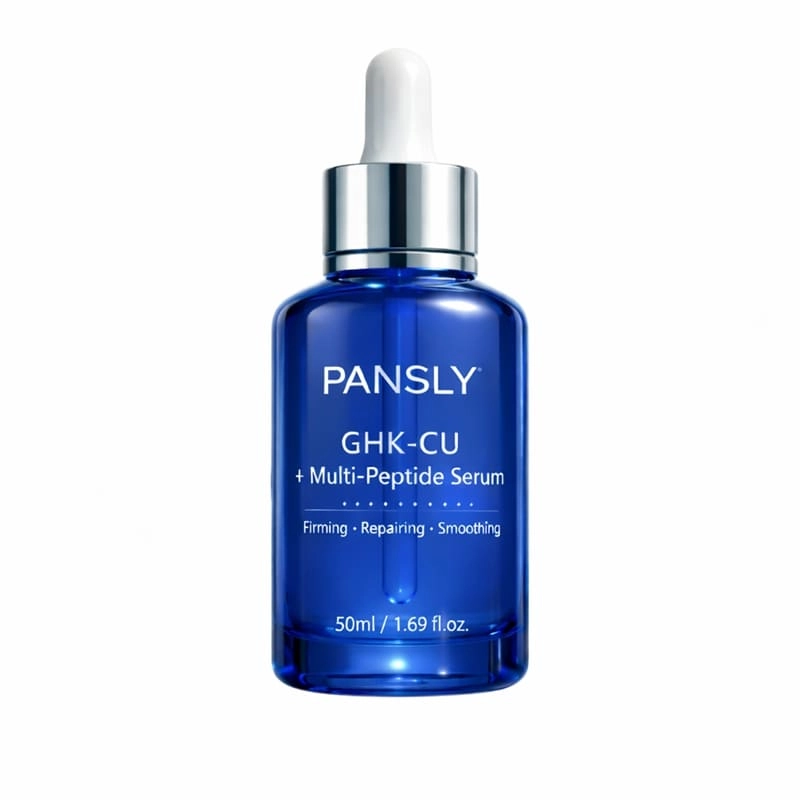
Experience visible rejuvenation with this GHK-Cu Copper Peptide Smoothing & Firming Face Serum, a high-performance concentrate designed to restore the structural integrity of aging skin. This advanced formula centers on GHK-Cu, a powerful signaling peptide clinically recognized for its ability to support natural collagen and elastin production. By promoting dermal density, it effectively tightens sagging skin and smooths the appearance of deep-set wrinkles and fine lines.
The lightweight, silky texture absorbs instantly, delivering antioxidant protection to neutralize environmental stressors that accelerate aging. Enhanced with deep-moisturizing agents, the serum reinforces the skin's moisture barrier, leaving the complexion feeling remarkably soft and resilient. With consistent use, skin texture is refined and facial contours appear more lifted, resulting in a youthfully firm and revitalized glow.
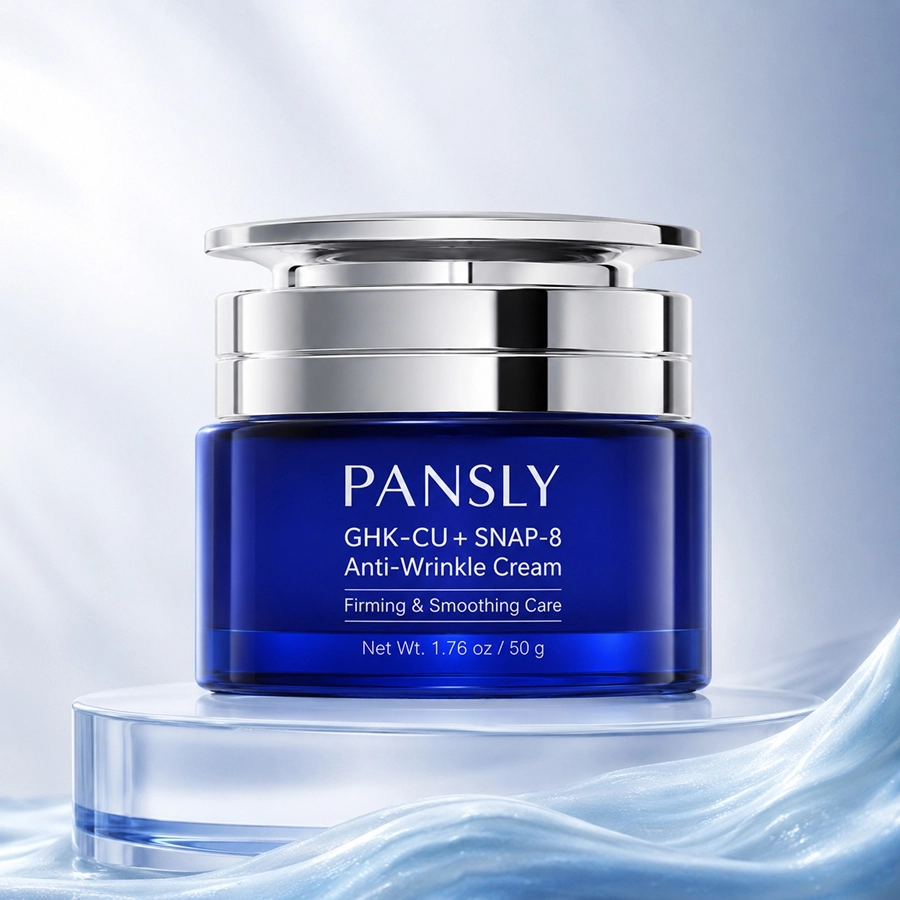
This Pansly GHK-CU + SNAP-8 Anti-Wrinkle Firming Cream is triple-peptide anti-aging facial cream, delivers targeted wrinkle smoothing, firming lifting and deep nourishment for dull, saggy, fine-line prone skin. Full OEM & ODM private label service is supported, including custom formula, packaging options, fast sampling and bulk export supply.
Five core premium active ingredients work synergistically for comprehensive anti-wrinkle care:
GHK-CU Copper Peptide lifts saggy skin, enhances skin resilience and tightens loose facial contour;
SNAP-8 Peptide targets expression lines to visibly soften and fade wrinkles;
Acetyl Hexapeptide-8 reduces the appearance of dry fine lines for smoother skin texture;
Ceramide NP reconstructs skin moisture barrier to lock nourishment and boost comfort;
Hyaluronic Acid delivers multi-layer rich deep moisture to relieve dry rough skin.
Luxury rich creamy texture spreads smoothly and melts into skin gently, leaving soft comfortable finish without heavy greasiness. Daily use blurs fine lines, firms loose skin, deeply nourishes and stabilizes barrier, refining uneven texture to reveal smooth, plump, youthful luminous skin.
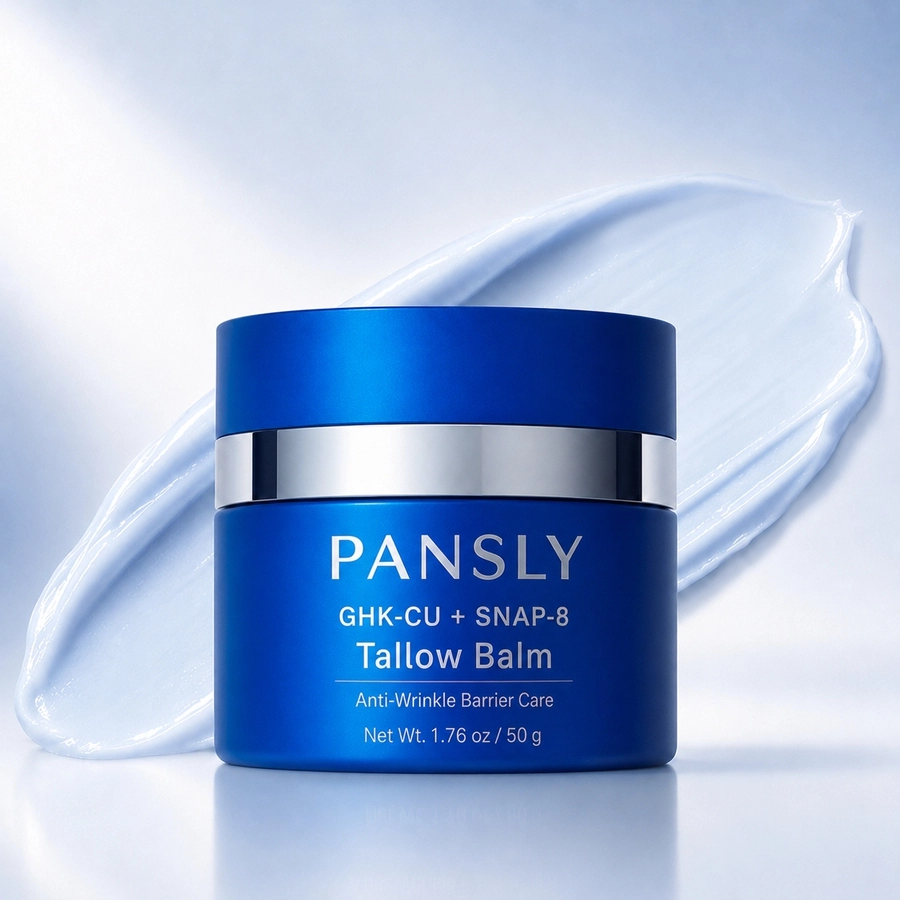
This Pansly GHK-CU + SNAP-8 Tallow Balm is a nourishing anti-wrinkle facial balm specially formulated for dry, fragile and sensitive skin, combining anti-aging wrinkle smoothing and barrier repairing effects. We offer full private label OEM service, including custom logo, adjustable formula, diversified packaging and lid color options.
It contains five core skin care active ingredients: GHK-CU visibly improves fine lines and revives dull complexion; SNAP-8 softens expression lines to smooth wrinkled skin texture; Grass-Fed Beef Tallow delivers deep lipid nourishment to relieve dry rough skin; Ectoin stabilizes the skin barrier and alleviates skin discomfort; Ceramide NP strengthens barrier structure to create smooth, healthy skin.
Luxury creamy blue balm texture glides smoothly and melts quickly on skin, providing long-lasting deep moisturizing comfort. Daily use fades fine lines & expression lines, nourishes dry delicate skin, repairs damaged barrier and leaves silky smooth skin finish.
Click here to customize the Beauty
we respond within a few hours
Monday–Friday, 9AM–6PM
3A01, Building A, Zhisheng Square, No. 4 Zhifu Road, Helong Street, Baiyun District, Guangzhou, China.


Leave a request, and we'll email you back within 24 hours.
© 2026 Beyond Basix. All Rights Reserved.
