
GHK-Cu Serum Formulation & Manufacturing Guide for OEM/ODM
- Formulation principles for copper peptide topicals and actives
- Active species, salt forms, and stability drivers
- Effective concentration ranges, vehicle selection, and claim-driven formulation
- Preservative systems, chelators, and compatibility testing
- Manufacturing and scale-up requirements for peptide-containing serums
- GMP production environments and contamination control
- Filling, packaging choices, and oxygen exclusion
- Analytical QC, stability protocols, and batch release
- Regulatory, safety testing, and claims substantiation for copper-based cosmetics
- Safety assessment and toxicology screening
- Labeling, permissible claims, and cross-border considerations
- Data integrity, documentation, and third-party testing
- Supply chain, procurement logic, and selecting a one-stop OEM/ODM partner
- Key procurement milestones and vendor evaluation
- Cost drivers, lead time optimization, and ROI considerations
- Comparing traditional lab development vs integrated OEM/ODM solutions
- Why choose Beyond Basix for OEM/ODM copper peptide projects
- Facility scale, equipment, and R&D capabilities
- Certifications, quality systems, and regulatory support
- Product breadth, customization, and partnership model
- Frequently Asked Questions
High-value manufacturers and brand owners seeking to develop a GHK-Cu topical concentrate must align peptide chemistry, chelation control, and pharmaceutical-grade production to ensure clinical performance, shelf stability, and global market compliance; this guide outlines formulation best practices, scale-up and process controls for contract production, required analytical and safety testing, packaging and cold-chain considerations, and procurement checkpoints for selecting a one-stop OEM/ODM partner.
Formulation principles for copper peptide topicals and actives
Active species, salt forms, and stability drivers
The active tripeptide typically exists as a copper complex that must be protected from oxidation and metal-catalyzed hydrolysis. Choosing the right peptide salt (e.g., acetate or chloride complexes) and maintaining controlled pH ranges (usually near neutral) reduces copper precipitation and peptide degradation. Buffer systems based on citrate, phosphate, or low-ionic-strength zwitterionic agents help maintain chelation without compromising skin tolerability. Antioxidants such as low-level ascorbyl derivatives can be used judiciously, but they require compatibility testing to avoid copper reduction and loss of activity.
Effective concentration ranges, vehicle selection, and claim-driven formulation
Define the active loading based on intended claims: anti-aging and skin-repair serums commonly use copper peptide levels in the low ppm-to-low percentage range. Choosing delivery vehicles (hydroxyethyl cellulose serums, light emulsions, or silicone-free gels) affects bioavailability, stability, and consumer sensory profile. For sensitive-skin positioning, favor minimal fragrance, low irritant surfactants, and humectant-rich bases (glycerin, butylene glycol) that improve peptide diffusion without destabilizing the metal complex.
Preservative systems, chelators, and compatibility testing
Preservative efficacy must be validated in the presence of copper complexes; some broad-spectrum biocides can complex with metal ions, reducing preservative availability. Employ targeted chelating strategies (EDTA at controlled levels or alternative chelators) and run full preservative efficacy testing (challenge test) for the final matrix. Compatibility matrices and accelerated stability protocols should evaluate pH drift, color changes, particulate formation, and proteolytic breakdown under both real-time and stress conditions.
Manufacturing and scale-up requirements for peptide-containing serums
GMP production environments and contamination control
Producing peptide-enriched topicals requires pharmaceutical-grade cleanrooms to minimize microbial and particulate risks. A 100,000-level (ISO 8) GMPC dust-free workshop or better is recommended for open-stage operations; closed transfer systems and validated CIP/SIP routines reduce cross-contamination. Batch records must capture lot numbers for raw materials (peptide, solvents, antioxidants), in-process controls, and environmental monitoring to support traceability and audit readiness.
Filling, packaging choices, and oxygen exclusion
To protect metal–peptide complexes from oxidation and photodegradation, consider opaque or UV-protective packaging, airless pump dispensers, or nitrogen blanketing for large primary containers. Selection of primary packaging impacts preservative needs and shelf-life claims—airless dispensers reduce headspace oxygen exposure while glass ampoules or aluminum tubes deliver enhanced barrier but require more complex filling lines.
Analytical QC, stability protocols, and batch release
Robust QC programs include assay methods (HPLC-UV or LC-MS for peptide content), ICP-MS or atomic absorption spectroscopy for copper quantification, microbiological testing, and preservative efficacy testing. Stability protocols should follow ICH Q1A principles for climatic zones applicable to target markets, with photostability and freeze–thaw cycles when cold chain is possible. Each commercial batch requires a Certificate of Analysis tied to the master batch record prior to release.
Regulatory, safety testing, and claims substantiation for copper-based cosmetics
Safety assessment and toxicology screening
Consistent with cosmetic safety frameworks, complete safety dossiers should include skin irritation/sensitization data (human patch or validated in vitro alternatives), systemic exposure estimation, and impurity profiling. For markets where clinical claims are made, controlled usage studies (split-face trials, instrumental measurements for elasticity and wrinkle depth) provide objective support. Regulatory guidance such as FDA Cosmetics outlines required product safety responsibilities; consult local authorities for country-specific requirements.
Labeling, permissible claims, and cross-border considerations
Claims must be substantiated and avoid drug-like language unless pursuing a regulated therapeutic route. Label languages, ingredient listing, and mandatory warnings vary by region; verify local registration needs for the EU, ASEAN, GCC, and North American markets. Maintain a complete Technical File (formulation, manufacturing steps, safety data) for market access and customs checks.
Data integrity, documentation, and third-party testing
Maintain immutable batch records, testing certificates, and supplier COAs for key raw materials. Third-party labs for stability and analytical verification add credibility during audits and retailer onboarding. International standards and registries help validate QA systems—review quality certifications such as ISO 9001 and align GMP practices with recognized guidelines like those from WHO GMP.
Supply chain, procurement logic, and selecting a one-stop OEM/ODM partner
Key procurement milestones and vendor evaluation
Buyers should require clear milestones: formulation feasibility study, stability and preservative challenge testing, pilot batches, scale-up validation, and commercial production. Evaluate suppliers on technical capabilities (analytical lab, stability chambers), regulatory support, lead times, MOQ flexibility, and post-launch service. Risk assessment should include raw material sourcing (verified peptide manufacturer), backup suppliers, and logistics for controlled-temperature shipments.
Cost drivers, lead time optimization, and ROI considerations
Major cost drivers include peptide raw material pricing, packaging complexity (airless pumps vs bottles), fill line automation, and certification costs. Economies of scale reduce per-unit cost but require accurate demand forecasting. Buyers focused on margin optimization may structure staged rollouts (initial smaller batches for market validation followed by scale-up) to balance cashflow with speed-to-market.
Comparing traditional lab development vs integrated OEM/ODM solutions
Integrated contract manufacturers that offer R&D, pilot production, and commercial GMP manufacturing reduce handoffs and documentation gaps, shortening technical transfer times and improving reproducibility. For brands seeking a fast and auditable path from concept to shelf, selecting a one-stop partner that combines formulation science, regulated production facilities, and global certifications reduces commercial risk.
| Attribute | Lab/Small-Batch Compounding | GMP One-Stop OEM/ODM |
|---|---|---|
| Typical batch size | 100 mL – 10 L | 100 L – 10,000 L |
| Environmental control | Basic lab hood, limited cleanroom | Validated cleanroom (ISO/GMPC) and controlled zones |
| Analytical QC | Basic HPLC/UV | Full QC lab (LC-MS, ICP-MS, microbiology) |
| Regulatory documentation | Minimal | Comprehensive master batch records, COA, technical files |
| Contamination risk | Higher | Lower (validated cleaning and environmental controls) |
| Typical lead time to commercial | 6–12 months | 3–9 months (with integrated workflows) |
| Unit cost (scale dependent) | High for mass market | Competitive at scale |
Why choose Beyond Basix for OEM/ODM copper peptide projects
Facility scale, equipment, and R&D capabilities
Our manufacturing infrastructure includes a 12,000-square-meter facility with a 100,000-level GMPC pharmaceutical-grade dust-free workshop and 12 production lines. The plant is equipped with advanced machinery imported from Germany and the United States, enabling automated mixing, vacuum filling, multi-lane packaging, and nitrogen blanketing where required. Our R&D team operates dedicated formulation suites and analytical labs to develop robust vehicles and validated assay methods to quantify peptide and copper content.
Certifications, quality systems, and regulatory support
We hold certifications including ISO 9001, CE, MSDS, GMP, and HALAL, and maintain QA workflows aligned with international guidance. Buyers benefit from our documented master batch records, purchasing controls, and supplier qualification processes that reduce audit overhead and accelerate market entry. Third-party testing and objective stability data are provided as part of our technical files to support labeling and claims substantiation.
Product breadth, customization, and partnership model
Beyond Basix supports full product development for Skincare Products, Hair Care Products, Eye Care Products, and Body Care Products. Our service model includes formulation feasibility, pilot production, scale-up, and full commercial manufacturing with flexible MOQs. We provide packaging engineering, cold-chain logistics options, and post-launch quality monitoring. This end-to-end approach reduces vendor complexity and shortens time-to-shelf for brands developing peptide-enriched actives.
Buyers should evaluate us on technical fit, factory tour observations, sample testing, and contract terms; our goal is to offer competitive pricing without compromising regulatory compliance or product performance.
Authoritative resources and standards referenced in this guide include the Copper peptide overview, regulatory guidance from FDA Cosmetics, and quality frameworks such as ISO 9001 and WHO GMP.
For technical engagements, request a formulation brief that includes target claims, acceptable packaging formats, target markets, and projected annual volumes to initiate a structured project plan and quotation.
Frequently Asked Questions
What is the recommended concentration range for copper peptide in a topical serum?
Effective cosmetic concentrations vary by claim but commonly fall in low ppm to low percentage ranges; final levels should be determined by stability, preservative compatibility, and clinical or instrumental efficacy testing before commercial release.
Which packaging formats best protect metal–peptide complexes from degradation?
Airless pump dispensers, opaque tubes, and UV-protective bottles reduce oxygen and light exposure; nitrogen blanketing for primary bulk containers and light barrier materials improve shelf stability for sensitive formulations.
What analytical tests are required for batch release of peptide-containing cosmetics?
Standard release tests include assay of peptide content (HPLC or LC-MS), copper quantification (ICP-MS or atomic absorption), microbiological testing, preservative efficacy (challenge test), and physical stability assessments under ICH-recommended conditions.
How does a one-stop OEM/ODM partner reduce commercialization risk compared to lab compounding?
An integrated manufacturer provides validated cleanroom production, full analytical QC, master batch documentation, regulatory dossiers, and packaging engineering, which improves traceability, reproducibility, and audit readiness while shortening technical transfer times.
What lead times and MOQs should brands expect when ordering peptide serums from a GMP-certified manufacturer?
Lead times typically range from 3–9 months from pilot to commercial depending on complexity and testing requirements; MOQs vary by packaging and production line but integrated OEM/ODM partners often offer staged volume options to accommodate market testing and scale-up.

Elevate your professional skincare offerings with this Private Label Copper Peptide Anti-Wrinkle Firming Serum, a powerhouse concentrate designed for superior age-defying results. This sophisticated formula leverages the synergistic effects of GHK-Cu and SNAP-8 to address multiple layers of skin aging. The GHK-Cu copper peptides act as a vital signaling mechanism to enhance skin density and firmness, while the advanced SNAP-8 octapeptide specifically targets expression lines, helping to relax the appearance of deep-seated wrinkles for a smoother, more refined surface.
This lightweight, rapid-absorption serum provides a professional-grade solution for clients seeking a non-invasive lift. It effectively restores elasticity, improves skin texture, and provides essential antioxidant protection. Perfect for high-end beauty brands, this serum leaves the complexion looking visibly contoured, hydrated, and youthfully revitalized.
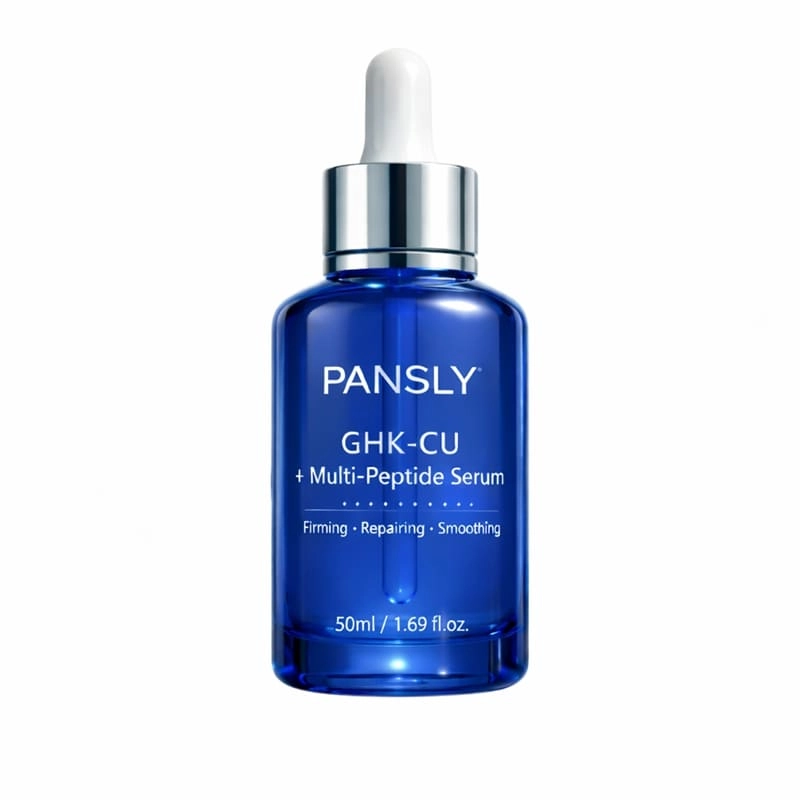
Experience visible rejuvenation with this GHK-Cu Copper Peptide Smoothing & Firming Face Serum, a high-performance concentrate designed to restore the structural integrity of aging skin. This advanced formula centers on GHK-Cu, a powerful signaling peptide clinically recognized for its ability to support natural collagen and elastin production. By promoting dermal density, it effectively tightens sagging skin and smooths the appearance of deep-set wrinkles and fine lines.
The lightweight, silky texture absorbs instantly, delivering antioxidant protection to neutralize environmental stressors that accelerate aging. Enhanced with deep-moisturizing agents, the serum reinforces the skin's moisture barrier, leaving the complexion feeling remarkably soft and resilient. With consistent use, skin texture is refined and facial contours appear more lifted, resulting in a youthfully firm and revitalized glow.
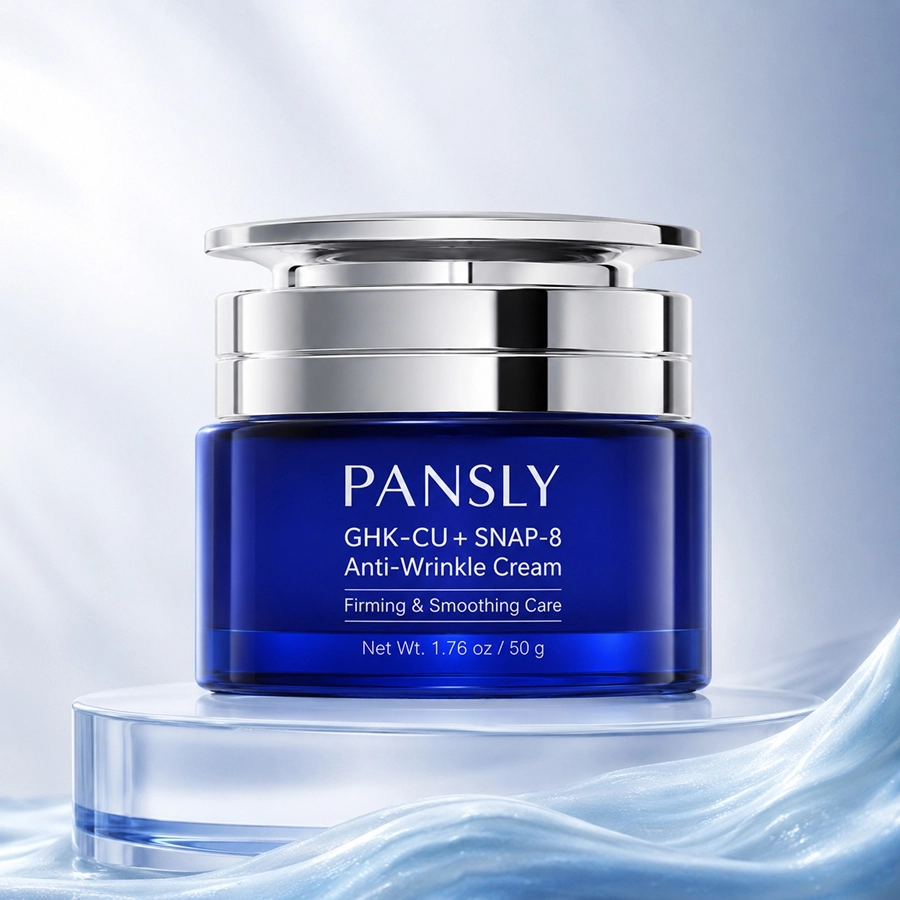
This Pansly GHK-CU + SNAP-8 Anti-Wrinkle Firming Cream is triple-peptide anti-aging facial cream, delivers targeted wrinkle smoothing, firming lifting and deep nourishment for dull, saggy, fine-line prone skin. Full OEM & ODM private label service is supported, including custom formula, packaging options, fast sampling and bulk export supply.
Five core premium active ingredients work synergistically for comprehensive anti-wrinkle care:
GHK-CU Copper Peptide lifts saggy skin, enhances skin resilience and tightens loose facial contour;
SNAP-8 Peptide targets expression lines to visibly soften and fade wrinkles;
Acetyl Hexapeptide-8 reduces the appearance of dry fine lines for smoother skin texture;
Ceramide NP reconstructs skin moisture barrier to lock nourishment and boost comfort;
Hyaluronic Acid delivers multi-layer rich deep moisture to relieve dry rough skin.
Luxury rich creamy texture spreads smoothly and melts into skin gently, leaving soft comfortable finish without heavy greasiness. Daily use blurs fine lines, firms loose skin, deeply nourishes and stabilizes barrier, refining uneven texture to reveal smooth, plump, youthful luminous skin.
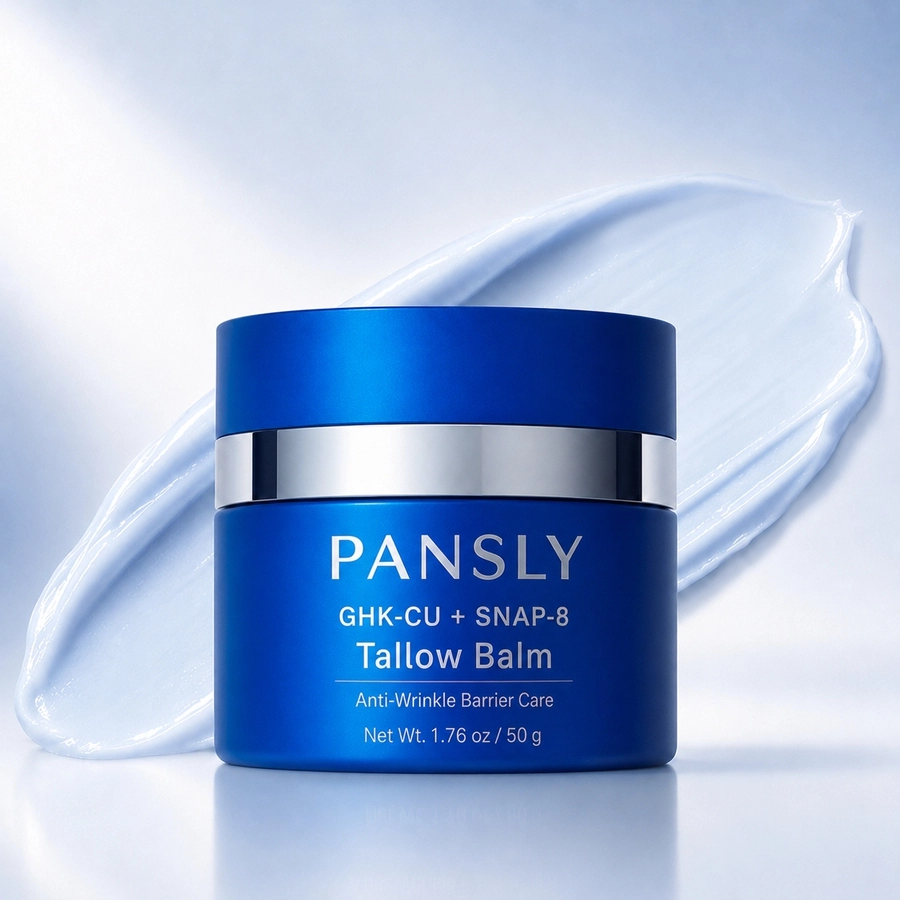
This Pansly GHK-CU + SNAP-8 Tallow Balm is a nourishing anti-wrinkle facial balm specially formulated for dry, fragile and sensitive skin, combining anti-aging wrinkle smoothing and barrier repairing effects. We offer full private label OEM service, including custom logo, adjustable formula, diversified packaging and lid color options.
It contains five core skin care active ingredients: GHK-CU visibly improves fine lines and revives dull complexion; SNAP-8 softens expression lines to smooth wrinkled skin texture; Grass-Fed Beef Tallow delivers deep lipid nourishment to relieve dry rough skin; Ectoin stabilizes the skin barrier and alleviates skin discomfort; Ceramide NP strengthens barrier structure to create smooth, healthy skin.
Luxury creamy blue balm texture glides smoothly and melts quickly on skin, providing long-lasting deep moisturizing comfort. Daily use fades fine lines & expression lines, nourishes dry delicate skin, repairs damaged barrier and leaves silky smooth skin finish.
Click here to customize the Beauty
we respond within a few hours
Monday–Friday, 9AM–6PM
3A01, Building A, Zhisheng Square, No. 4 Zhifu Road, Helong Street, Baiyun District, Guangzhou, China.


Leave a request, and we'll email you back within 24 hours.
© 2026 Beyond Basix. All Rights Reserved.
