
GHK-Cu Serum and Tretinoin: How Cosmetic Brand Positioning Should Keep Their Roles Distinct

- Quick Answer
- GHK-Cu vs Tretinoin Starts With Product Classification
- What GHK-Cu Means in a Cosmetic Product Brief
- Tretinoin Creates a Different Product Conversation
- Why “Which Is Better?” Does Not Define the Manufacturing Project
- How the Two Roles Affect Brand Positioning
- Build the GHK-Cu Formula Around the Finished Product
- A Multi-Peptide Serum Needs a Clear Product Story
- Texture and Sensory Profile Affect the Product Position
- Stability Planning Matters for Copper Peptide Products
- Packaging Should Follow the Formula
- Keep Cosmetic Claims Separate From Tretinoin Treatment Language
- Retinol and Tretinoin Should Not Be Treated as the Same Brief
- Plan GHK-Cu Within the Wider Skincare Range
- Documentation Depends on the Market and Finished Formula
- What We Need in a GHK-Cu OEM/ODM Brief
- How We Handle the Project at Beyond Basix
- FAQ
- Is GHK-Cu the cosmetic version of tretinoin?
- Can Beyond Basix develop a private label copper peptide serum?
- Is Copper Tripeptide-1 the same as GHK-Cu?
- Can a cosmetic brand position GHK-Cu as an alternative to tretinoin?
- Can GHK-Cu be combined with other peptides?
- How is a GHK-Cu serum different from a retinol serum?
- What information should we send Beyond Basix for a GHK-Cu project?
Quick Answer
GHK-Cu serum and tretinoin should not be positioned as interchangeable anti-aging products. GHK-Cu can support a peptide-led cosmetic skincare concept, while tretinoin belongs to a different treatment and regulatory context and is regulated as a drug in markets including the United States.
For a cosmetic brand, this distinction affects more than ingredient messaging. It changes the formulation brief, claims, testing, packaging, documentation, sales channel and the role the product can play within a skincare range. At Beyond Basix, we use the intended cosmetic product and destination market as the basis for a GHK-Cu OEM/ODM project rather than using tretinoin as the standard the cosmetic formula must imitate.
GHK-Cu vs Tretinoin Starts With Product Classification
When a customer brings GHK-Cu and tretinoin into the same product discussion, the two ingredients may appear to sit under a broad anti-aging theme. That does not mean they belong to the same product category.
GHK-Cu, commonly associated with Copper Tripeptide-1 in cosmetic ingredient terminology, can be incorporated into cosmetic skincare formulations. A brand may use it as part of a peptide serum, eye-care concept, cream or wider peptide-focused range, subject to the finished formula, claims and destination-market requirements.
Tretinoin has an established medical and regulatory context. In the United States, topical tretinoin products are drugs. Other markets can apply their own classification, concentration, labeling, prescription and distribution requirements.
That difference needs to be established before a brand decides what the product should say, how it should be sold or which manufacturer should develop it. A cosmetic GHK-Cu serum cannot simply borrow the product role of tretinoin because both may appear in discussions about visible signs of skin aging.
What GHK-Cu Means in a Cosmetic Product Brief
For an OEM/ODM project with us, “GHK-Cu serum” is a starting direction rather than a complete manufacturing specification.
We still need to understand the raw-material specification, intended formula architecture, supporting ingredients, texture, color, packaging, target market, testing requirements and claims direction. If the customer wants a multi-peptide product, the other peptides and supporting actives also become part of the formulation brief.
Our current product directions include GHK-Cu copper peptide serum and multi-peptide concepts. These existing directions can help establish the type of product a customer wants to develop, but the final project needs to be evaluated against its own requirements.
The finished formula matters because the commercial product is not the ingredient in isolation. Preservation, pH, sensory profile, compatibility, packaging and stability all influence whether the product can move from an ingredient concept to a repeatable manufactured SKU.
Tretinoin Creates a Different Product Conversation
A tretinoin benchmark can be useful when a brand is studying how consumers understand anti-aging or skin-renewal categories, but it should not automatically become the formula or claims benchmark for a cosmetic peptide serum.
Tretinoin's clinical use, evidence base and treatment language belong to its regulatory context. A cosmetic brand that copies this language onto a GHK-Cu serum risks blurring the boundary between cosmetic positioning and drug claims.
This is particularly important for brands selling across multiple markets. A phrase, ingredient route or distribution model that is permitted in one regulatory framework should not be assumed to transfer unchanged to another.
When the intended product is cosmetic, we keep the development discussion centered on what that cosmetic product can be formulated, tested and substantiated to do.
Why “Which Is Better?” Does Not Define the Manufacturing Project
Searches for GHK-Cu vs tretinoin often frame the subject as a direct contest. That framing becomes less useful when a brand moves from consumer research into product development.
The two ingredients have different evidence profiles, regulatory contexts and product expectations. A direct ranking does not tell us whether the customer needs a cosmetic serum, a peptide range, a retinol-related cosmetic product or a drug-regulated treatment pathway.
For manufacturing, the project needs a defined category. Once that category is clear, formulation and commercial decisions can be made inside the correct boundary.
A GHK-Cu cosmetic serum needs a defensible cosmetic role, a manufacturable formula, stability planning, appropriate packaging and claims that correspond to the finished product. A tretinoin product can require controls and approvals outside a conventional cosmetic OEM/ODM project.
How the Two Roles Affect Brand Positioning
| Planning Area | GHK-Cu Cosmetic Serum | Tretinoin Context |
|---|---|---|
| Product role | Peptide-led cosmetic skincare | Treatment-oriented and drug-regulated in markets including the United States |
| Claims framework | Cosmetic appearance and skin-conditioning claims when supported and permitted | Claims depend on the applicable drug pathway and approved use |
| Development focus | Peptide specification, formula compatibility, sensory profile, stability and packaging | Drug formulation, classification and market-specific controls where applicable |
| Portfolio role | Can support serum, eye-care or broader peptide cosmetic concepts | Requires separate consideration of treatment, classification and distribution |
| Customer expectation | Cosmetic skincare experience and substantiated appearance-related benefits | Expectation is shaped by a medical treatment context |
Build the GHK-Cu Formula Around the Finished Product
Once the project is confirmed as a cosmetic copper peptide product, the formulation work still needs to move beyond the hero ingredient.
The peptide raw material and specification are one part of the system. Humectants, emollients, additional peptides, soothing ingredients, texture modifiers, preservatives and other components can affect the finished serum. The formula also needs a suitable pH and sensory profile for the intended product.
If the concept combines GHK-Cu with another peptide or active, compatibility should be evaluated in the complete formula. Individually familiar ingredients should not automatically be assumed to remain suitable when combined at the intended levels and under the same storage conditions.
This is also why a competitor ingredient list is not a manufacturing formula. It can show a market direction, but it does not provide the processing conditions, raw-material specifications, percentages, stability data or production controls required to reproduce a finished system.
A Multi-Peptide Serum Needs a Clear Product Story
Adding more peptides can expand the formulation concept, but it can also make the product message harder to understand.
A brand developing a GHK-Cu serum with us may decide that copper peptide is the central ingredient story and other peptides play supporting roles. Another project may be positioned as a broader multi-peptide serum where GHK-Cu is one component of the active system.
Those two directions can lead to different front-of-pack communication, product names, supporting ingredients and content strategy even when both contain Copper Tripeptide-1.
The formula and the commercial story therefore need to be developed together. The ingredient list should support the intended product role rather than becoming a collection of trending actives without a clear reason for being in the same SKU.
Texture and Sensory Profile Affect the Product Position
A serum sold as a daily peptide product has to work as a complete skincare experience, not only as an ingredient claim.
Viscosity, spread, absorption, tack, finish and compatibility with the rest of a routine can affect how customers perceive the product. A lightweight serum intended for layering creates different sensory expectations from a richer treatment-style format.
These choices also affect packaging. A formula designed for a dropper may require different viscosity and dispensing behavior from one intended for a pump or airless system.
For OEM/ODM development, texture and packaging should therefore be included in the same brief as the peptide direction.
Stability Planning Matters for Copper Peptide Products
A recognizable active does not remove the need to evaluate the finished formula.
Depending on the project, stability work can monitor characteristics such as appearance, color, odor, pH, viscosity, microbiological quality and packaging compatibility under defined conditions. The exact protocol should correspond to the formula, container, intended shelf life and destination-market requirements.
Color deserves particular attention in product communication because copper peptide formulations can have a characteristic appearance depending on the raw material and finished system. A brand should not assume that every GHK-Cu serum must look identical or that a specific visual appearance alone proves active content.
If the formula changes during development, stability implications may need to be reassessed rather than assuming results from an earlier version automatically apply.
Packaging Should Follow the Formula
The package has both a functional and commercial role.
Droppers, pumps and airless systems create different dispensing experiences and may suit different viscosities, dose expectations and brand positions. Material compatibility, fill volume, decoration and shipping requirements also need to be considered.
If a customer already has a preferred component, we need its relevant specifications during development. If the package is still open, the functional requirements can be defined alongside the formula before a final component is selected.
A package chosen only because it resembles a competitor product can create avoidable problems if it does not suit the actual formulation.
Keep Cosmetic Claims Separate From Tretinoin Treatment Language
Claims are where an unclear GHK-Cu vs tretinoin comparison can create the greatest commercial risk.
A cosmetic product can communicate appearance-related and skin-conditioning benefits when the claims are supported by the finished product and permitted in the destination market. The exact wording should correspond to the available substantiation rather than to the reputation of the hero ingredient alone.
Tretinoin treatment language should not be transferred to a cosmetic copper peptide serum simply because both appear in anti-aging discussions. A cosmetic product should not imply that it treats a disease or functions as a prescription substitute unless the product actually follows the applicable regulatory pathway.
This separation helps the brand maintain consistency across packaging, website copy, distributor materials and other customer-facing communication.
Retinol and Tretinoin Should Not Be Treated as the Same Brief
Cosmetic brands also need to distinguish tretinoin from retinol when planning a retinoid-related range.
Retinol is widely used in cosmetic skincare, subject to destination-market requirements, while tretinoin has a different regulatory status. A customer asking us about a cosmetic retinoid serum or cream therefore needs to specify the actual ingredient direction rather than using “retinoid” as if every option creates the same project.
This matters when a brand wants both a peptide line and a retinol line. The products can have separate roles within the same portfolio without positioning the GHK-Cu SKU as a replacement for tretinoin.
Clear naming and claims help customers understand those roles and reduce the pressure to make unsupported cross-category comparisons.
Plan GHK-Cu Within the Wider Skincare Range
A copper peptide serum rarely exists in isolation from the rest of a brand's assortment.
If the brand already sells hydrating serums, retinol products, eye care or barrier-focused creams, the GHK-Cu product needs a distinct role. Otherwise several SKUs may compete for the same customer need with only the hero ingredient changing.
For a peptide-led range, the differentiation can come from format, supporting ingredients, target area, texture and use occasion. A face serum, eye product and cream do not need identical formulas or identical claims simply because each belongs to a peptide family.
This range-level planning is especially useful before custom formulation begins because it can prevent the brand from developing several technically different products that sound commercially identical.
Documentation Depends on the Market and Finished Formula
The documentation required for a GHK-Cu serum is not determined by the ingredient name alone.
Depending on the project and destination market, customers may need raw-material information, finished-product specifications, microbiological information, stability-related records, packaging compatibility information and other regulatory or retailer documents.
Claims can also affect the evidence a brand needs. If a customer wants a specific measurable cosmetic claim, the testing and substantiation plan should be discussed against that claim rather than added after the packaging copy has already been finalized.
For multi-market launches, requirements should be mapped by destination rather than assuming one documentation package automatically satisfies every market.
What We Need in a GHK-Cu OEM/ODM Brief
A useful brief gives us enough information to understand the product and its commercial context without requiring the customer to arrive with a finished laboratory formula.
| Project Area | Information to Define |
|---|---|
| Target market | Country or region where the finished cosmetic will be sold |
| Product role | Copper peptide serum, multi-peptide serum, eye care, cream or another cosmetic format |
| Peptide direction | GHK-Cu/Copper Tripeptide-1 requirements and any additional peptide direction |
| Supporting ingredients | Other actives or functional requirements important to the concept |
| Texture | Viscosity, absorption, finish and layering expectations |
| Packaging | Preferred dispenser, fill volume, decoration and any existing component specification |
| Claims | Desired cosmetic positioning and any planned substantiation requirements |
| Testing and documents | Customer, retailer and destination-market requirements already identified |
| Quantity | Expected order range and number of SKUs |
| Launch timing | Target commercial launch or production window |
How We Handle the Project at Beyond Basix
When a customer approaches us with a GHK-Cu concept, we use the intended cosmetic product as the center of the development discussion.
We look at the peptide direction together with the supporting formula, texture, packaging, testing, documentation, quantity and launch requirements. If a tretinoin product appears in the customer's market research, we keep its treatment and regulatory context separate rather than using it as the performance or claims template for the cosmetic formula.
This allows the GHK-Cu product to have its own commercial identity. It can be developed as a copper peptide serum, part of a multi-peptide range or another cosmetic format without implying that the product is a prescription alternative.
The same distinction also gives the brand a clearer basis for product briefs, packaging copy, distributor communication and future range extensions.
FAQ
Is GHK-Cu the cosmetic version of tretinoin?
No. They are different ingredients with different evidence, formulation and regulatory contexts. A cosmetic GHK-Cu serum should not be positioned as a direct substitute for tretinoin.
Can Beyond Basix develop a private label copper peptide serum?
We work with skincare brands on OEM/ODM projects, and our current product directions include GHK-Cu copper peptide serum and multi-peptide concepts. Final formulation, testing, packaging and commercial requirements depend on the individual project.
Is Copper Tripeptide-1 the same as GHK-Cu?
GHK-Cu is commonly associated with the cosmetic ingredient name Copper Tripeptide-1. For manufacturing, the actual raw material and specification still need to be confirmed for the proposed formula.
Can a cosmetic brand position GHK-Cu as an alternative to tretinoin?
The two should not be presented as interchangeable products. GHK-Cu can support a cosmetic peptide concept, while tretinoin has a separate treatment and regulatory context. Claims for the cosmetic serum should be based on the finished product and applicable market requirements.
Can GHK-Cu be combined with other peptides?
Multi-peptide formulation can be a product direction, but the complete system needs to be evaluated for compatibility, stability, sensory properties and the intended product positioning rather than assuming every peptide combination will behave the same way.
How is a GHK-Cu serum different from a retinol serum?
They use different active directions and can occupy different positions within a cosmetic skincare range. The formula, claims, usage communication, testing and packaging should be developed for each finished product rather than treating the two concepts as interchangeable.
What information should we send Beyond Basix for a GHK-Cu project?
Send the target market, product format, peptide direction, supporting ingredients, texture, packaging, claims direction, testing or documentation requirements, expected quantity and launch timing. Benchmark products can also be included when they are used to communicate a specific texture, format or market direction.

Elevate your professional skincare offerings with this Private Label Copper Peptide Anti-Wrinkle Firming Serum, a powerhouse concentrate designed for superior age-defying results. This sophisticated formula leverages the synergistic effects of GHK-Cu and SNAP-8 to address multiple layers of skin aging. The GHK-Cu copper peptides act as a vital signaling mechanism to enhance skin density and firmness, while the advanced SNAP-8 octapeptide specifically targets expression lines, helping to relax the appearance of deep-seated wrinkles for a smoother, more refined surface.
This lightweight, rapid-absorption serum provides a professional-grade solution for clients seeking a non-invasive lift. It effectively restores elasticity, improves skin texture, and provides essential antioxidant protection. Perfect for high-end beauty brands, this serum leaves the complexion looking visibly contoured, hydrated, and youthfully revitalized.
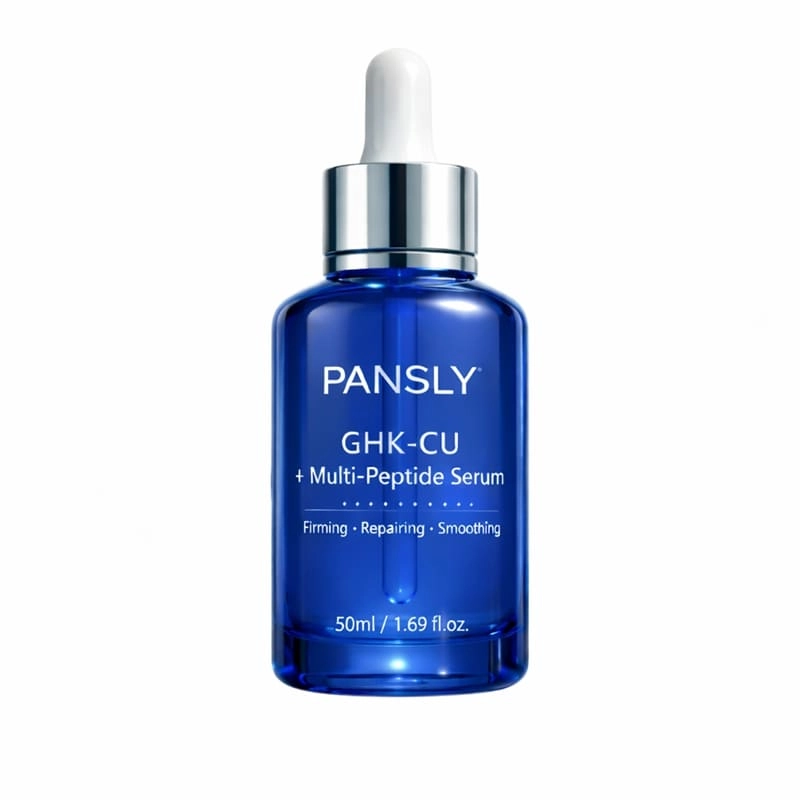
Experience visible rejuvenation with this GHK-Cu Copper Peptide Smoothing & Firming Face Serum, a high-performance concentrate designed to restore the structural integrity of aging skin. This advanced formula centers on GHK-Cu, a powerful signaling peptide clinically recognized for its ability to support natural collagen and elastin production. By promoting dermal density, it effectively tightens sagging skin and smooths the appearance of deep-set wrinkles and fine lines.
The lightweight, silky texture absorbs instantly, delivering antioxidant protection to neutralize environmental stressors that accelerate aging. Enhanced with deep-moisturizing agents, the serum reinforces the skin's moisture barrier, leaving the complexion feeling remarkably soft and resilient. With consistent use, skin texture is refined and facial contours appear more lifted, resulting in a youthfully firm and revitalized glow.
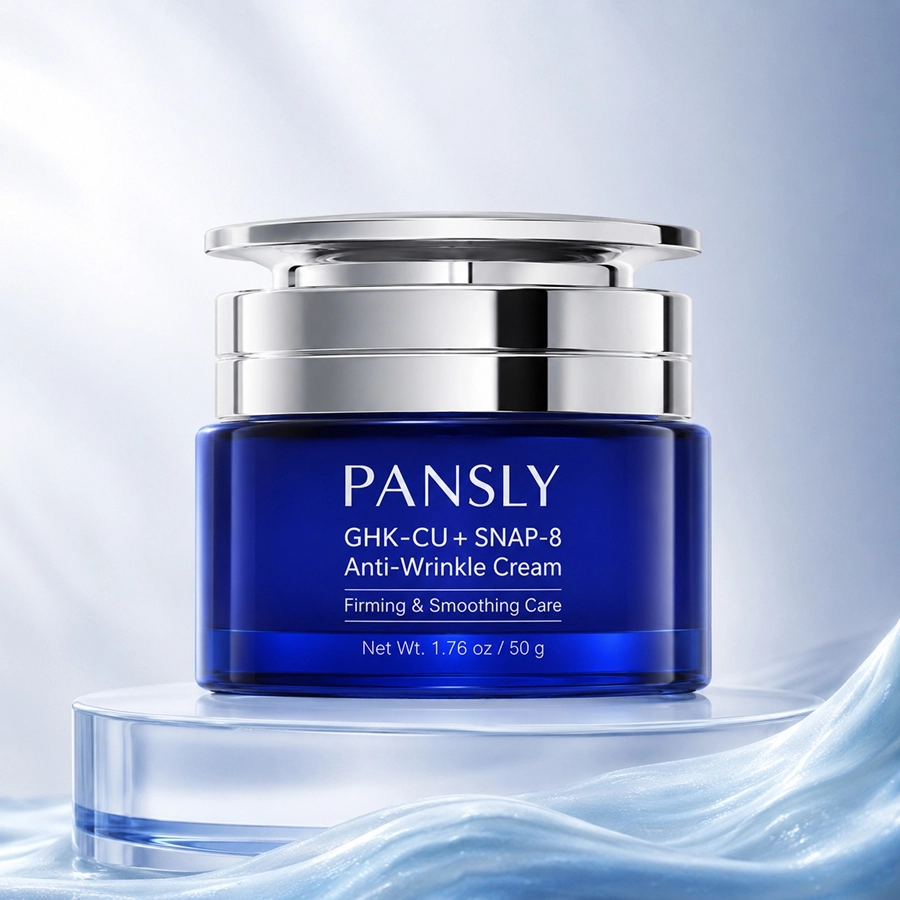
This Pansly GHK-CU + SNAP-8 Anti-Wrinkle Firming Cream is triple-peptide anti-aging facial cream, delivers targeted wrinkle smoothing, firming lifting and deep nourishment for dull, saggy, fine-line prone skin. Full OEM & ODM private label service is supported, including custom formula, packaging options, fast sampling and bulk export supply.
Five core premium active ingredients work synergistically for comprehensive anti-wrinkle care:
GHK-CU Copper Peptide lifts saggy skin, enhances skin resilience and tightens loose facial contour;
SNAP-8 Peptide targets expression lines to visibly soften and fade wrinkles;
Acetyl Hexapeptide-8 reduces the appearance of dry fine lines for smoother skin texture;
Ceramide NP reconstructs skin moisture barrier to lock nourishment and boost comfort;
Hyaluronic Acid delivers multi-layer rich deep moisture to relieve dry rough skin.
Luxury rich creamy texture spreads smoothly and melts into skin gently, leaving soft comfortable finish without heavy greasiness. Daily use blurs fine lines, firms loose skin, deeply nourishes and stabilizes barrier, refining uneven texture to reveal smooth, plump, youthful luminous skin.
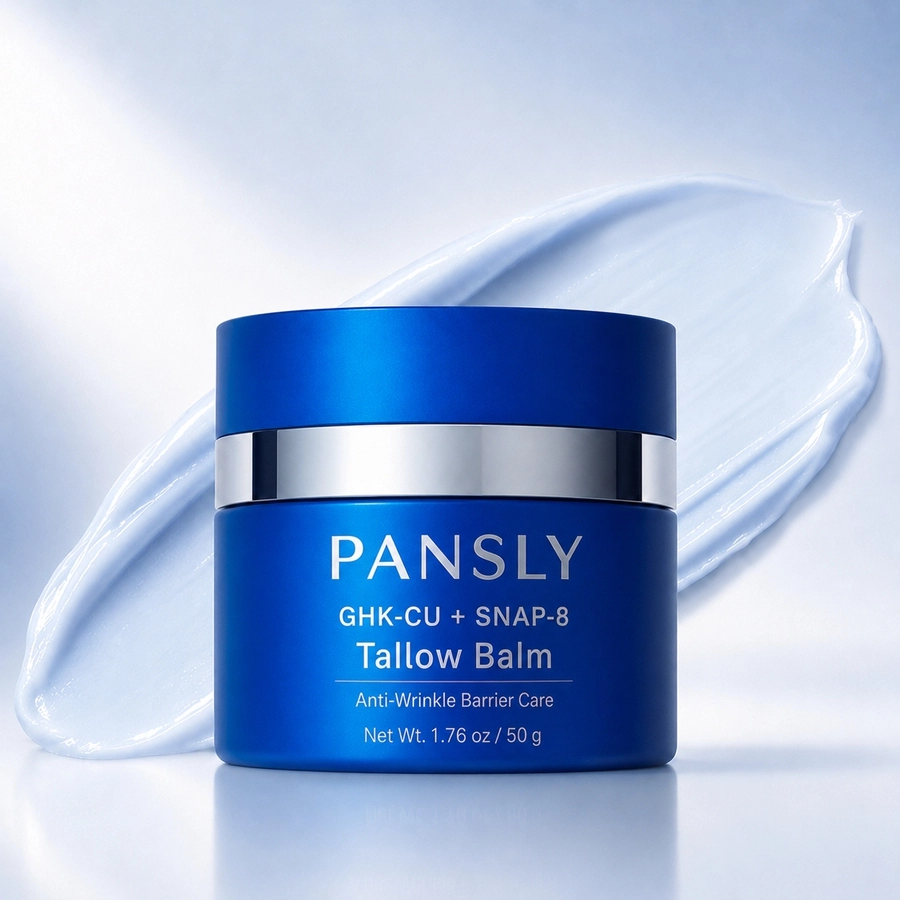
This Pansly GHK-CU + SNAP-8 Tallow Balm is a nourishing anti-wrinkle facial balm specially formulated for dry, fragile and sensitive skin, combining anti-aging wrinkle smoothing and barrier repairing effects. We offer full private label OEM service, including custom logo, adjustable formula, diversified packaging and lid color options.
It contains five core skin care active ingredients: GHK-CU visibly improves fine lines and revives dull complexion; SNAP-8 softens expression lines to smooth wrinkled skin texture; Grass-Fed Beef Tallow delivers deep lipid nourishment to relieve dry rough skin; Ectoin stabilizes the skin barrier and alleviates skin discomfort; Ceramide NP strengthens barrier structure to create smooth, healthy skin.
Luxury creamy blue balm texture glides smoothly and melts quickly on skin, providing long-lasting deep moisturizing comfort. Daily use fades fine lines & expression lines, nourishes dry delicate skin, repairs damaged barrier and leaves silky smooth skin finish.
Click here to customize the Beauty
we respond within a few hours
Monday–Friday, 9AM–6PM
3A01, Building A, Zhisheng Square, No. 4 Zhifu Road, Helong Street, Baiyun District, Guangzhou, China.


Leave a request, and we'll email you back within 24 hours.
© 2026 Beyond Basix. All Rights Reserved.
