OEM Guide: Choosing Anti-Aging Actives for Private-Label Lines
Decision-makers in private-label skincare need a synthesis of scientific efficacy, regulatory compliance, manufacturing feasibility, and market positioning when selecting age-reversal actives for commercial lines; this guide condenses mechanistic categories (retinoids, bioactive peptides, antioxidants, growth factors), supplier qualification checklists, stability and delivery best practices, cost-to-claim modeling, and real-world manufacturing constraints to help brand owners reduce time-to-market and mitigate regulatory and stability risk while maximizing consumer efficacy and ROI.
- Selecting Effective Age-Defying Active Ingredients for Private Label Lines
- Mechanism-based ingredient categories and procurement implications
- Evidence tiers and clinical endpoints for efficacy claims
- Formulation compatibility and stability risk management
- Procurement & Regulatory Considerations for Bioactive Serums and Creams
- Supplier qualification and batch consistency protocols
- Regulatory compliance, permissible concentrations, and jurisdictional nuance
- Claims substantiation, labeling, and adverse event readiness
- Manufacturing & Delivery: From Lab Bench to Retail Shelf
- Advanced delivery systems and preserving active potency
- Scaling production, quality control, and shelf-life optimization
- Packaging selection to extend product integrity
- Commercial Differentiation and Buyer ROI Modeling
- Targeting demographics and message architecture
- Pricing, cost-of-goods, and margin levers
- Sampling strategies, launch pilots, and post-market surveillance
- How Beyond Basix Supports Private-Label Anti-Aging Programs
- Manufacturing footprint and quality infrastructure
- Research focus, product categories, and formulation expertise
- Certifications, testing, and partner-oriented service model
- Commercial advantages and partner support
- Frequently Asked Questions
- Which active classes provide the fastest visible improvement for wrinkle appearance?
- What documentation should buyers insist on from active ingredient suppliers?
- How are regulatory claim differences handled between markets?
- What are the common packaging requirements for oxygen-sensitive actives?
- How should MOQ, lead time, and price be evaluated when choosing a manufacturer?
- Frequently Asked Questions
Decision-makers in private-label skincare need a synthesis of scientific efficacy, regulatory compliance, manufacturing feasibility, and market positioning when selecting age-reversal actives for commercial lines; this guide condenses mechanistic categories (retinoids, bioactive peptides, antioxidants, growth factors), supplier qualification checklists, stability and delivery best practices, cost-to-claim modeling, and real-world manufacturing constraints to help brand owners reduce time-to-market and mitigate regulatory and stability risk while maximizing consumer efficacy and ROI.
Selecting Effective Age-Defying Active Ingredients for Private Label Lines
Mechanism-based ingredient categories and procurement implications
Segment active choices by mechanism of action: cell-turnover stimulators (e.g., vitamin A derivatives), signal peptides that promote collagen synthesis, antioxidant systems that reduce oxidative stress, and biologic mediators such as growth factors. Each category carries unique sourcing demands: vitamin A derivatives typically require dark, oxygen-restrictive handling and stability data; peptides need peptide-sequence traceability and purity certificates; antioxidants like ascorbic acid demand low-pH formulation data and antioxidant potency assays; and growth factors often require cold-chain logistics and extensive safety documentation. Buyers should require Certificates of Analysis (CoA), stability profiles, and sequence-level specifications where applicable to validate supplier claims.
Evidence tiers and clinical endpoints for efficacy claims
Define the evidence needed for the intended consumer promise. For “wrinkle reduction” or “firming” claims, at minimum pursue in-vitro mechanism data and consumer panel outcomes; for stronger claims, secure randomized, controlled clinical trials with validated instruments (e.g., cutometer, high-resolution imaging). Regulatory agencies differentiate between cosmetic benefit statements and therapeutic claims; align testing scope with the label intent to avoid reclassification risks. Refer to recognized standards for clinical evaluation planning and reporting.
Formulation compatibility and stability risk management
Compatibility matrices and pre-formulation testing are indispensable. Common failure modes include pH-driven degradation (ascorbates), photolysis (retinoids), and peptide hydrolysis under elevated temperatures. Implement accelerated stability screening (ICH Q1A principles) and stress testing for oxidation, hydrolysis, and microbial challenge. Procurement contracts should include agreed stability acceptance criteria, re-test periods, and remedial steps if batches fail post-release stability checks.
Procurement & Regulatory Considerations for Bioactive Serums and Creams
Supplier qualification and batch consistency protocols
Develop a supplier scorecard covering GMP certification, analytical capability, HACCP/cleanroom conditions, supply chain redundancy, and lot-to-lot variance metrics. Require retention samples and third-party analytical confirmation for at least the first three production lots. For high-value actives, negotiate escrow for sequences (for peptides) and negotiated change-control clauses to prevent formulation-altering substitutions without prior written approval.
Regulatory compliance, permissible concentrations, and jurisdictional nuance
Understand permitted active lists and concentration limits per market. For example, regional safety reviews and notification requirements can vary significantly between markets. Consult primary regulators for current guidance: FDA for the United States, ISO standards for quality management frameworks, and global public health perspectives via WHO. Documented safety assessments and Product Information Files (PIF) are required by many authorities and should be prepared during product development.
Claims substantiation, labeling, and adverse event readiness
Create a claims matrix linking each marketing statement to specific evidence types (in-vitro, ex-vivo, clinical). Prepare a post-market surveillance plan and adverse event reporting workflow. For high-risk actives or novel molecules, consider pre-submission consultations with regulators or independent toxicologists to align claims and testing strategies before launch.
Manufacturing & Delivery: From Lab Bench to Retail Shelf
Advanced delivery systems and preserving active potency
Select delivery technologies to address stability and bioavailability: microencapsulation, liposomal carriers, nanoemulsions, and coated microspheres can reduce irritation and prevent premature degradation. Evaluate encapsulation impact on release kinetics and sensory profile; many carriers change viscosity and penetration and must be validated under expected storage and use conditions.
Scaling production, quality control, and shelf-life optimization
Plan scale-up early: pilot batches should mirror commercial processes including mixing order, shear rates, and temperature ramps. Ensure QC scope covers active assay, impurity profiling, microbial limits, preservative efficacy (challenge test), and container-closure integrity. Define shelf-life based on both real-time data and accelerated extrapolation following ICH guidance and manufacturer acceptance criteria.
Packaging selection to extend product integrity
Packaging often defines usable potency more than the base formula. Airless dispensers, opaque tubes, and nitrogen blanketing reduce oxidation for oxygen-sensitive actives. Include packaging compatibility tests (extractables & leachables) and ensure industrial partners can supply packaging at required MOQ and lead times without compromising active stability.
Commercial Differentiation and Buyer ROI Modeling
Targeting demographics and message architecture
Map actives to customer segments: retinoid-based solutions perform well for clinical anti-wrinkle claims targeting mature skin, while peptides and gentle antioxidants suit mid-market consumers seeking low-irritation alternatives. Build tiered SKUs (activity gradient, concentration tiers) to capture cross-market shelf space and manage inventory risk.
Pricing, cost-of-goods, and margin levers
Model costs across raw-material High Quality (e.g., synthetic peptides, recombinant growth factors), specialized packaging, and clinical validation. Identify margin levers: concentration optimization, hybrid ingredient blends (synergistic actives reducing individual load), and proprietary delivery systems that justify High Quality pricing. Include forecast scenarios for MOQ-driven price breaks and inventory carrying costs.
Sampling strategies, launch pilots, and post-market surveillance
Use pilot launches and validated consumer panels to collect early efficacy and tolerability data. Implement a feedback loop: early consumer data should inform reformulation or label adjustments before wide roll-out. Maintain traceability for every commercial batch to enable rapid field corrective actions if adverse trends emerge.
| Active Class | Primary Mechanism | Stability Concerns | Regulatory Complexity | Typical Cost Impact |
|---|---|---|---|---|
| Retinoids (e.g., retinol, retinal) | Keratinocyte turnover, collagen induction | Photolabile, oxidizes; requires low-oxygen packaging | Moderate (concentration limits; irritation labeling) | Medium–High |
| Peptides (signal peptides, matrikines) | Cell signaling for ECM production | Temperature-sensitive; enzymatic hydrolysis risk | Low–Moderate (sequence traceability recommended) | Medium |
| Antioxidants (ascorbic acid, vitamin E, ferulic) | Neutralize ROS; protect collagen | pH and oxidation sensitive (esp. L-ascorbic acid) | Low (stability influences formulation claims) | Low–Medium |
| Growth factors & biologics | Receptor-mediated tissue repair signaling | Requires cold-chain; proteolysis risk | High (safety documentation & sophisticated QC) | High |
How Beyond Basix Supports Private-Label Anti-Aging Programs
Manufacturing footprint and quality infrastructure
Guangzhou Beyond Basix Cosmetics Ltd. is a leading comprehensive cosmetics care manufacturer with over 23 years of experience in research, production, and sales. Our 12,000-square-meter facility includes a 100,000-level GMPC pharmaceutical-grade dust-free workshop and 12 production lines, equipped with advanced machinery imported from Germany, the US, and other regions. These capabilities allow buyers to scale from pilot to commercial volumes without changing contract manufacturers, reducing transfer risk and preserving active integrity across batches.
Research focus, product categories, and formulation expertise
Focusing on the development of skincare products with effective ingredients for 12 years, we operate four major brands: LANTHOME, PANSLY, FIRSTSUN, and SAUVASINE. Our formulation team routinely integrates encapsulation technologies, peptide stabilization workflows, and antioxidant system optimization to preserve potency. We manufacture a broad portfolio, including Skincare Products, Hair Care Products, Eye Care Products, and Body Care Products, enabling cross-category launches and consistent supply chains for multi-product brand strategies.
Certifications, testing, and partner-oriented service model
We are certified with ISO 9001, CE, MSDS, GMP, HALAL, and more. These certifications support procurement due diligence and help buyers meet global market entry requirements. Our commercial offering includes CoA generation, PIF package assembly, and coordinated stability programs. For brand owners requiring clinical validation or regulatory filings, our team coordinates with accredited labs to streamline testing and documentation.
Commercial advantages and partner support
Committed to offering the best products, services, and prices, we aim to grow and progress together with our partners. Buyers benefit from consolidated production (reducing logistics and lead time), transparent QC gates, negotiated raw-material sourcing, and tailored packaging solutions that protect sensitive actives. For novel actives or upgraded efficacy claims, our R&D works with partners to design pre-clinical and clinical study pathways that align with intended claims and target markets.
Frequently Asked Questions
Which active classes provide the fastest visible improvement for wrinkle appearance?
Retinoids typically deliver the most robust and clinically validated reductions in wrinkle depth and fine lines over weeks to months, but require tolerability and stability management; peptides and antioxidants offer more gradual benefits with lower irritation risk.
What documentation should buyers insist on from active ingredient suppliers?
Require Certificates of Analysis, impurity profiles, stability data, material safety data sheets (MSDS), GMP certificates, and batch retention sample policies. For biologicals or peptides, request sequence validation, endotoxin testing, and cold-chain documentation where applicable.
How are regulatory claim differences handled between markets?
Label language must be tailored to each jurisdiction: regulatory bodies such as FDA and local agencies interpret claim language differently. Prepare modular PIFs and consult local regulatory advisors when expanding to new geographies.
What are the common packaging requirements for oxygen-sensitive actives?
Use airless dispensers, opaque bottles, and nitrogen blanketing during filling; perform extractables and leachables testing to ensure packaging compatibility and limit oxidation pathways.
How should MOQ, lead time, and price be evaluated when choosing a manufacturer?
Evaluate total landed cost including R&D, regulatory, packaging, and storage plus per-unit manufacturing price. Confirm MOQs for both active raw materials and finished products, map lead times across suppliers, and include contingency buffers for clinical testing or regulatory review.
Contact Beyond Basix to discuss formulation samples, MOQ options, and regulatory support, or view our product portfolios to start your private-label anti-aging line.
Frequently Asked Questions
Which active classes provide the fastest visible improvement for wrinkle appearance?
Retinoids typically deliver the most robust and clinically validated reductions in wrinkle depth and fine lines over weeks to months, but require tolerability and stability management; peptides and antioxidants offer more gradual benefits with lower irritation risk.
What documentation should buyers insist on from active ingredient suppliers?
Require Certificates of Analysis, impurity profiles, stability data, material safety data sheets (MSDS), GMP certificates, and batch retention sample policies. For biologicals or peptides, request sequence validation, endotoxin testing, and cold-chain documentation where applicable.
How are regulatory claim differences handled between markets?
Label language must be tailored to each jurisdiction: regulatory bodies such as FDA and local agencies interpret claim language differently. Prepare modular Product Information Files (PIFs) and consult local regulatory advisors when expanding to new geographies.
What are the common packaging requirements for oxygen-sensitive actives?
Use airless dispensers, opaque bottles, and nitrogen blanketing during filling; perform extractables and leachables testing to ensure packaging compatibility and limit oxidation pathways.
How should MOQ, lead time, and price be evaluated when choosing a manufacturer?
Evaluate total landed cost including R&D, regulatory, packaging, and storage plus per-unit manufacturing price. Confirm MOQs for both active raw materials and finished products, map lead times across suppliers, and include contingency buffers for clinical testing or regulatory review.

Elevate your professional skincare offerings with this Private Label Copper Peptide Anti-Wrinkle Firming Serum, a powerhouse concentrate designed for superior age-defying results. This sophisticated formula leverages the synergistic effects of GHK-Cu and SNAP-8 to address multiple layers of skin aging. The GHK-Cu copper peptides act as a vital signaling mechanism to enhance skin density and firmness, while the advanced SNAP-8 octapeptide specifically targets expression lines, helping to relax the appearance of deep-seated wrinkles for a smoother, more refined surface.
This lightweight, rapid-absorption serum provides a professional-grade solution for clients seeking a non-invasive lift. It effectively restores elasticity, improves skin texture, and provides essential antioxidant protection. Perfect for high-end beauty brands, this serum leaves the complexion looking visibly contoured, hydrated, and youthfully revitalized.
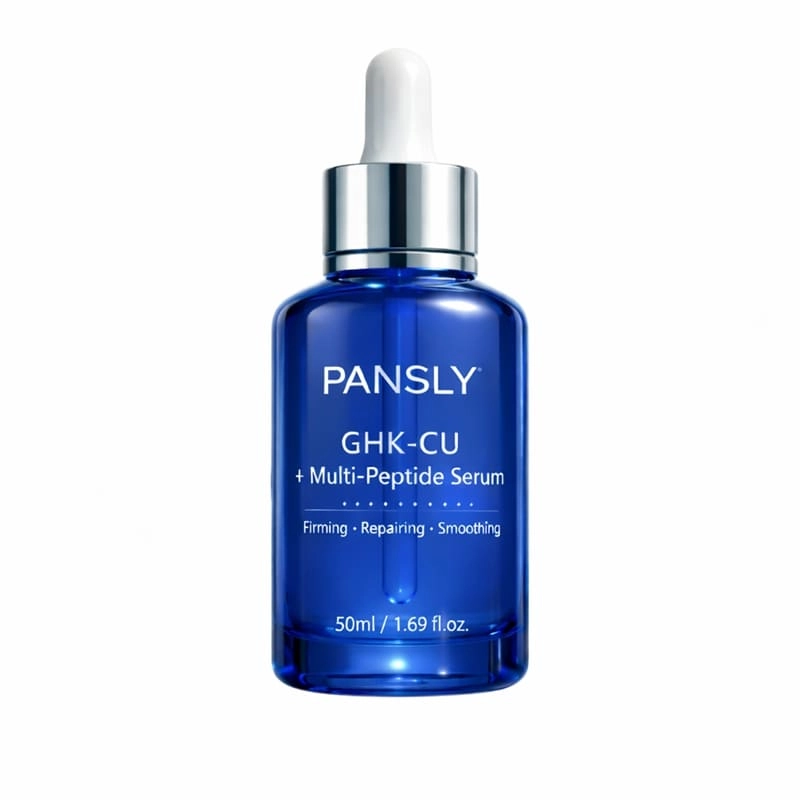
Experience visible rejuvenation with this GHK-Cu Copper Peptide Smoothing & Firming Face Serum, a high-performance concentrate designed to restore the structural integrity of aging skin. This advanced formula centers on GHK-Cu, a powerful signaling peptide clinically recognized for its ability to support natural collagen and elastin production. By promoting dermal density, it effectively tightens sagging skin and smooths the appearance of deep-set wrinkles and fine lines.
The lightweight, silky texture absorbs instantly, delivering antioxidant protection to neutralize environmental stressors that accelerate aging. Enhanced with deep-moisturizing agents, the serum reinforces the skin's moisture barrier, leaving the complexion feeling remarkably soft and resilient. With consistent use, skin texture is refined and facial contours appear more lifted, resulting in a youthfully firm and revitalized glow.
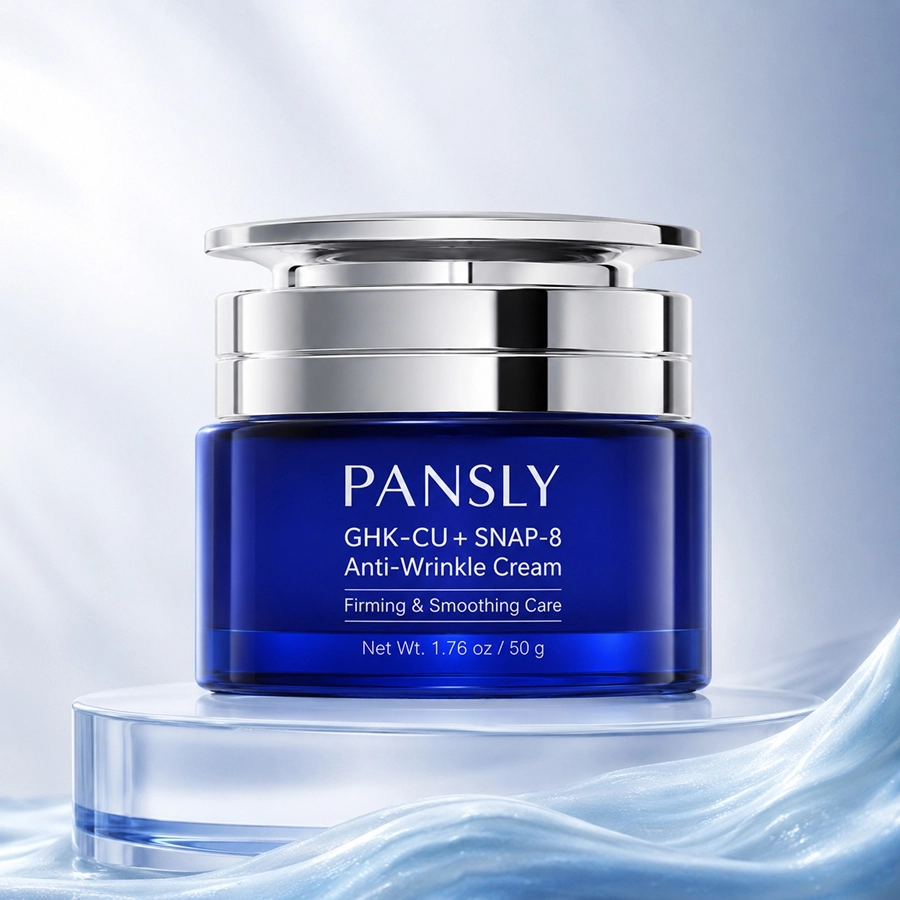
This Pansly GHK-CU + SNAP-8 Anti-Wrinkle Firming Cream is triple-peptide anti-aging facial cream, delivers targeted wrinkle smoothing, firming lifting and deep nourishment for dull, saggy, fine-line prone skin. Full OEM & ODM private label service is supported, including custom formula, packaging options, fast sampling and bulk export supply.
Five core premium active ingredients work synergistically for comprehensive anti-wrinkle care:
GHK-CU Copper Peptide lifts saggy skin, enhances skin resilience and tightens loose facial contour;
SNAP-8 Peptide targets expression lines to visibly soften and fade wrinkles;
Acetyl Hexapeptide-8 reduces the appearance of dry fine lines for smoother skin texture;
Ceramide NP reconstructs skin moisture barrier to lock nourishment and boost comfort;
Hyaluronic Acid delivers multi-layer rich deep moisture to relieve dry rough skin.
Luxury rich creamy texture spreads smoothly and melts into skin gently, leaving soft comfortable finish without heavy greasiness. Daily use blurs fine lines, firms loose skin, deeply nourishes and stabilizes barrier, refining uneven texture to reveal smooth, plump, youthful luminous skin.
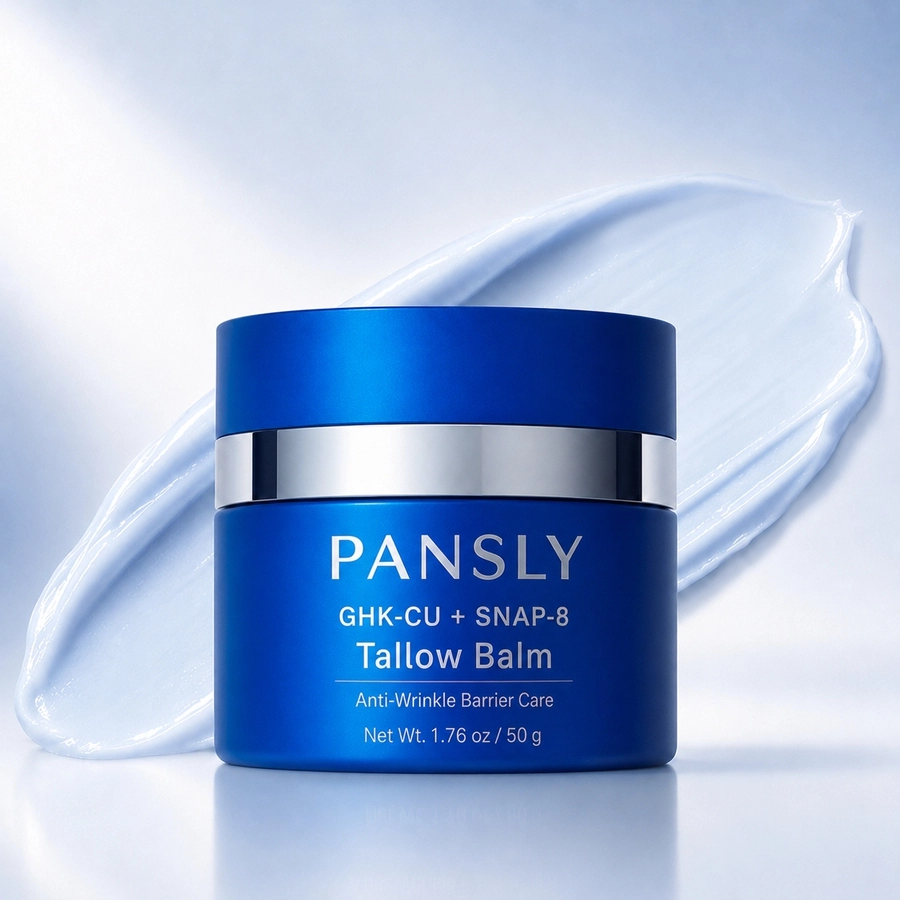
This Pansly GHK-CU + SNAP-8 Tallow Balm is a nourishing anti-wrinkle facial balm specially formulated for dry, fragile and sensitive skin, combining anti-aging wrinkle smoothing and barrier repairing effects. We offer full private label OEM service, including custom logo, adjustable formula, diversified packaging and lid color options.
It contains five core skin care active ingredients: GHK-CU visibly improves fine lines and revives dull complexion; SNAP-8 softens expression lines to smooth wrinkled skin texture; Grass-Fed Beef Tallow delivers deep lipid nourishment to relieve dry rough skin; Ectoin stabilizes the skin barrier and alleviates skin discomfort; Ceramide NP strengthens barrier structure to create smooth, healthy skin.
Luxury creamy blue balm texture glides smoothly and melts quickly on skin, providing long-lasting deep moisturizing comfort. Daily use fades fine lines & expression lines, nourishes dry delicate skin, repairs damaged barrier and leaves silky smooth skin finish.
Click here to customize the Beauty
we respond within a few hours
Monday–Friday, 9AM–6PM
3A01, Building A, Zhisheng Square, No. 4 Zhifu Road, Helong Street, Baiyun District, Guangzhou, China.


Leave a request, and we'll email you back within 24 hours.
© 2026 Beyond Basix. All Rights Reserved.