PDRN Anti-Wrinkle Serum: OEM/ODM Manufacturing Guide for Buyers
- Polydeoxyribonucleotide Rejuvenation Serum: Technical overview for OEM buyers
- Biological mechanism and topical efficacy markers
- Recommended active concentration ranges and excipient compatibility
- Safety profile, preservative strategy, and allergen minimization
- Formulation, stability, and packaging strategies for regenerative face concentrates
- Accelerated stability protocols and real-time validation
- Packaging materials and dosing systems to protect labile actives
- Labeling claims, substantiation, and marketing alignment
- Manufacturing, quality control, and scale-up checklist for contract production
- Facility class, environmental controls, and cleanroom requirements
- Analytical release testing and in-process controls
- Batch records, change control, and serialization
- Procurement criteria and vendor evaluation matrix for brand owners
- Minimum certifications and audit evidence buyers should require
- Key commercial terms: MOQ, lead times, and supply continuity
- Cost drivers, margin planning, and value-engineering options
- Supplier case integration: Why strategic OEM partnerships reduce time-to-market
- Turnkey services and regulatory support
- Quality continuity through raw-material traceability
- Data-driven launch planning and post-market surveillance
- Beyond Basix: One-stop OEM/ODM capability and competitive advantages
- Manufacturing scale, certified facilities, and production diversity
- Technical depth in actives and validated processes
- Certifications, brand houses, and global compliance
- Frequently Asked Questions
High-value regenerative topical products leveraging polydeoxyribonucleotide (PDRN) extracts require specific formulation science, validated manufacturing environments, and rigorous release testing to meet buyer ROI and regulatory risk tolerance—this guide offers a practical OEM/ODM playbook for brand owners sourcing a PDRN-based anti-aging concentrate, covering mechanism-of-action, active-range targets, stability strategies, cleanroom and filling requirements, analytical specifications, packaging options, and a validated supplier checklist that aligns with global regulatory expectations such as those from the U.S. FDA, ISO 9001, and WHO GMP.
Polydeoxyribonucleotide Rejuvenation Serum: Technical overview for OEM buyers
Biological mechanism and topical efficacy markers
Polydeoxyribonucleotide acts as a tissue-repair adjuvant by providing oligonucleotide fragments that stimulate the adenosine A2A receptor pathway, which can support dermal regeneration and collagen synthesis. For topical delivery, manufacturers must demonstrate percutaneous bioavailability proxies (e.g., skin penetration studies, ex vivo Franz cell results) and provide evidence of bioactivity through biomarker assays such as increased procollagen I, reduced MMP activity, or validated in vitro fibroblast proliferation endpoints.
Recommended active concentration ranges and excipient compatibility
For leave-on facial concentrates, production formulas commonly target PDRN equivalent concentrations in the range of 0.01%–0.5% (w/w) depending on extraction purity and claimed benefits; final concentration decisions should be supported by stability data and challenge testing. Compatibility with chelating agents (e.g., EDTA), humectants (e.g., glycerin, butylene glycol), and peptide carriers must be assessed because nucleic-acid fragments can be sensitive to nucleases and extreme pH. Buffer systems (pH 5.0–6.5) and nucleotide-stabilizing chelators are standard practices to preserve active integrity during shelf life.
Safety profile, preservative strategy, and allergen minimization
Topical formulations with biologically derived oligonucleotides require validated preservative systems to control bioburden; preservative efficacy testing (PET) must be performed per recognized standards. Where brands pursue preservative-free positioning, single-dose sterile ampoules or airless sterile filling processes should be considered. Buyers should request full viral, bacterial, and endotoxin test certificates for each lot and ensure raw-material sourcing traceability to minimize allergen or contamination risks.
Formulation, stability, and packaging strategies for regenerative face concentrates
Accelerated stability protocols and real-time validation
Stability programs should include ICH-aligned accelerated and long-term conditions (e.g., 40°C/75% RH accelerated, 25°C/60% RH long-term) plus photostability and freeze–thaw cycles to simulate distribution stress. Analytical endpoints must measure active integrity (HPLC or UHPLC quantification of nucleic-acid fragments), preservative residuals, microbial limits, and physical attributes (viscosity, color, odor). Shelf-life claims should be supported by both accelerated extrapolation and at least partial real-time data whenever a novel active is used.
Packaging materials and dosing systems to protect labile actives
Airless pump dispensers, amber or UV-protective glass, and single-dose sterile ampoules reduce oxidative and photolytic degradation. Where low-dose, high-potency positioning is required, precision dropper bottles or metered pumps ensure repeatable per-application dosing and reduce contamination risk. Compatibility testing (extractables and leachables) for polymer components is mandatory for long-term claims.
Labeling claims, substantiation, and marketing alignment
Claims such as dermal regeneration or wrinkle reduction must be substantiated by clinical or instrumental data. For cross-border distribution, claim language should be tailored to regulatory jurisdictions: cosmetic versus medicinal classification varies by market and influences claims, required safety data, and registration pathways. Buyers should request draft label copy during formulation sign-off to ensure marketing and technical data align.
Manufacturing, quality control, and scale-up checklist for contract production
Facility class, environmental controls, and cleanroom requirements
For biologically derived topical concentrates, strategic selection of a facility that operates pharmaceutical-grade environments for critical operations reduces contamination risk. Critical operations such as aseptic filtration and filling benefit from Class ISO 7/ISO 8 controlled environments depending on the filling technology. Documentation of cleanroom qualification and environmental monitoring data is essential for batch acceptance.
Analytical release testing and in-process controls
Standard release panels should include appearance, pH, viscosity, microbial limits (total aerobic microbial count, total yeast and mould), preservative content, and active assay (HPLC/UHPLC). For biologic fragments, additional assays—endotoxin (LAL), oligomer profile by electrophoresis or LC, and residual nuclease activity—are recommended. Certificates of Analysis (CoA) for each production lot must be provided to buyers with traceability to raw-material lot numbers.
Batch records, change control, and serialization
Robust batch manufacturing records, validated cleaning procedures, and defined change-control workflows protect product consistency during scale-up. Serialization or batch coding systems enable rapid recall management and market surveillance; buyers should require documented CAPA and deviation processes from prospective contractors.
| Attribute | Typical Cosmetic Serum Production | Pharmaceutical-grade Manufacture for PDRN Products |
|---|---|---|
| Cleanroom classification | ISO 8 (Class 100,000) or non-classified mixing areas | ISO 7–ISO 8 mixing, ISO 7–ISO 5 critical filling zones; validated environmental monitoring |
| Sterility & bioburden control | Routine microbial controls and PET | Aseptic filtration, microbial monitoring, endotoxin testing, validated sterilization for containers |
| Release testing panel | pH, viscosity, microbial limits, preservative efficacy | All standard panels plus active assay (HPLC for oligomers), endotoxin, extractables/leachables |
| Regulatory documentation | Ingredient declarations, safety assessment | Full CoAs, GMP batch records, stability dossiers aligned with FDA/WHO guidance |
| Typical shelf life | 12–36 months depending on formulation | 12–24 months supported by accelerated + real-time stability, depends on preservative strategy |
Procurement criteria and vendor evaluation matrix for brand owners
Minimum certifications and audit evidence buyers should require
Brand owners should request ISO 9001 certification for quality management, GMP audit reports (WHO GMP or equivalent), and Certificates of Analysis for raw PDRN extracts. For cross-border shipments, ensure suppliers provide MSDS and any regulatory registrations required for the destination market. Publicly verifiable certifications (e.g., ISO 9001) and independent lab test reports improve risk transparency.
Key commercial terms: MOQ, lead times, and supply continuity
Minimum order quantities depend on filling format (ampoule vs airless bottle) and production line throughput; typical OEM minimums range from 5,000–20,000 units for consumer serums but can be lower for prototypes or labelling-only runs. Lead times should include formula finalization, stability initiation, and packaging procurement—expect 10–16 weeks for first production runs after formulation lock, and 6–10 weeks for repeat orders from a validated supplier.
Cost drivers, margin planning, and value-engineering options
Primary cost factors include active material purity, preservative systems, sterile filling process, and High Quality packaging. Buyers can optimize gross margins by selecting concentrated drop-dose formats, shared tooling for pump components, or tiered packaging strategies. Technical trade-offs (e.g., preservative-free vs preserved formats) should be evaluated against commercial pricing and returns data.
Supplier case integration: Why strategic OEM partnerships reduce time-to-market
Turnkey services and regulatory support
Buyers benefit from suppliers offering end-to-end services: R&D translation, stability programs, regulatory dossier support, and logistics. Suppliers that provide standardized technical transfer packages and validated master batch records shorten qualification cycles and reduce compliance risk in target markets.
Quality continuity through raw-material traceability
Reliable supply of biologic extracts requires audited upstream traceability: raw-material origin, extraction method documentation, and batch-level CoAs. Insist on supplier access to third-party testing reports for PDRN purity and contaminant screening to ensure consistent clinical performance and to support marketing claims.
Data-driven launch planning and post-market surveillance
Instrumental efficacy data (cutometer, PRIMOS imaging) combined with post-market complaint tracking inform iterative reformulation and SKU rationalization. A supplier that supports consumer claim substantiation and adverse event management helps protect brand equity and regulatory standing.
Beyond Basix: One-stop OEM/ODM capability and competitive advantages
Manufacturing scale, certified facilities, and production diversity
Our team at Guangzhou Beyond Basix Cosmetics Ltd. offers more than two decades of production and R&D experience, operating a 12,000-square-meter facility with a 100,000-level GMPC pharmaceutical-grade dust-free workshop and 12 production lines fitted with advanced equipment imported from Germany and the United States. These assets enable turnkey development and scalable runs for regenerative skincare concentrates and concentrated face serums requiring stringent environmental control.
Technical depth in actives and validated processes
Focusing on active-driven skincare for 12 years, our laboratories support formulation optimization, stability validation, and analytical assay development for biologically derived ingredients. We support brands across Skincare Products, Hair Care Products, Eye Care Products, and Body Care Products with CoA-backed raw materials and validated quality release testing aligned to global expectations.
Certifications, brand houses, and global compliance
We are certified with ISO 9001, CE, MSDS documentation, GMP frameworks, and HALAL where applicable. Our portfolio includes four major brands—LANTHOME, PANSLY, FIRSTSUN, and SAUVASINE—and our compliance posture supports both cosmetic and regulated pathways depending on route-to-market. For PDRN-based topical products, our quality systems ensure traceability, batch-level documentation, and regulatory-ready dossiers that speed market entry while managing risk.
Choosing a single partner that combines research, production, and sales shortens timelines, reduces vendor management overhead, and provides predictable cost structures for brand owners pursuing high-efficacy regenerative serums.
For technical references on active terminology and manufacturing standards consult background resources such as Polydeoxyribonucleotide (PDRN) overview on Wikipedia, the U.S. FDA cosmetics guidance, and the WHO Good Manufacturing Practices.
Contact Beyond Basix to discuss formulation transfer, stability planning, and turnkey OEM/ODM production for next-generation regenerative serums.
Frequently Asked Questions
What is PDRN and how does it work in topical skincare?
PDRN (polydeoxyribonucleotide) is a mixture of DNA-derived oligonucleotide fragments that can act as tissue-repair adjuvants by stimulating cellular pathways such as adenosine A2A receptors; for topical applications manufacturers validate efficacy with skin penetration studies and biomarker assays like increased procollagen or reduced MMP activity.
What manufacturing certifications should buyers require for PDRN-containing serums?
Buyers should require ISO 9001 for quality management, GMP audit reports (WHO GMP or equivalent), full Certificates of Analysis for raw PDRN extracts, microbial and endotoxin testing, and documented environmental monitoring for any controlled cleanroom operations.
Which stability and analytical tests are essential for launch-ready regenerative serums?
Essential testing includes accelerated and real-time stability (ICH conditions), active-assay quantification by HPLC/UHPLC, preservative efficacy testing, microbial limits, endotoxin testing where applicable, and extractables/leachables for packaging compatibility.
Are preservative-free PDRN serums feasible from an OEM/ODM perspective?
Preservative-free formats are possible but usually require sterile single-dose packaging or validated aseptic filling to control bioburden; buyers should weigh the commercial trade-offs and confirm the supplier’s sterile-fill qualifications and batch sterility data.
What are typical lead times and minimum order quantities for first production runs?
Typical first-run lead times after formula lock range from 10 to 16 weeks to allow for stability initiation and packaging procurement; minimum order quantities vary by format but commonly fall between 5,000 and 20,000 units for commercial runs, with lower quantities possible for prototype or private-label trials under negotiated terms.

Elevate your professional skincare offerings with this Private Label Copper Peptide Anti-Wrinkle Firming Serum, a powerhouse concentrate designed for superior age-defying results. This sophisticated formula leverages the synergistic effects of GHK-Cu and SNAP-8 to address multiple layers of skin aging. The GHK-Cu copper peptides act as a vital signaling mechanism to enhance skin density and firmness, while the advanced SNAP-8 octapeptide specifically targets expression lines, helping to relax the appearance of deep-seated wrinkles for a smoother, more refined surface.
This lightweight, rapid-absorption serum provides a professional-grade solution for clients seeking a non-invasive lift. It effectively restores elasticity, improves skin texture, and provides essential antioxidant protection. Perfect for high-end beauty brands, this serum leaves the complexion looking visibly contoured, hydrated, and youthfully revitalized.
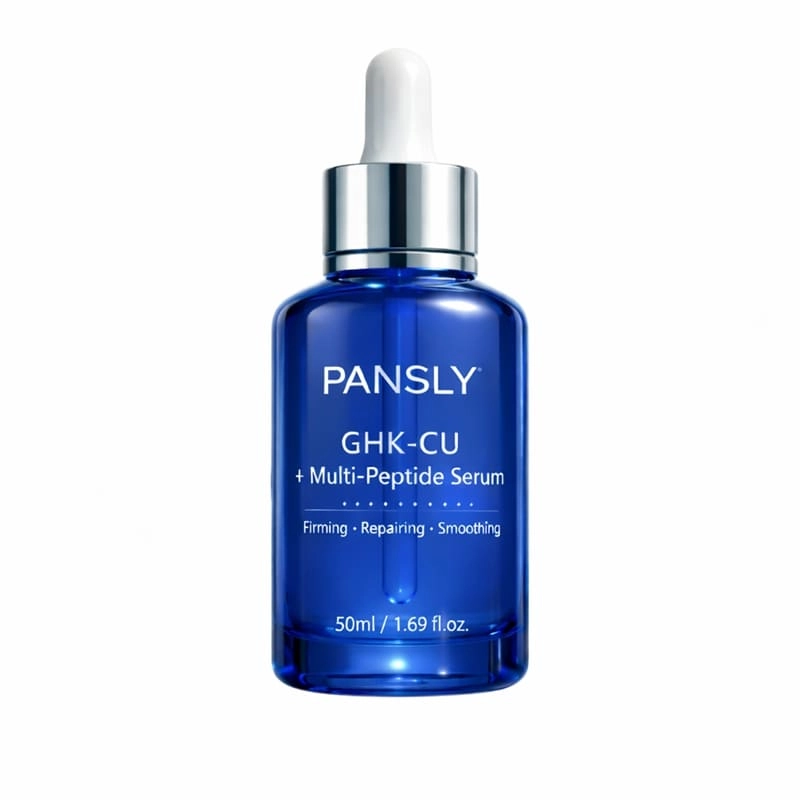
Experience visible rejuvenation with this GHK-Cu Copper Peptide Smoothing & Firming Face Serum, a high-performance concentrate designed to restore the structural integrity of aging skin. This advanced formula centers on GHK-Cu, a powerful signaling peptide clinically recognized for its ability to support natural collagen and elastin production. By promoting dermal density, it effectively tightens sagging skin and smooths the appearance of deep-set wrinkles and fine lines.
The lightweight, silky texture absorbs instantly, delivering antioxidant protection to neutralize environmental stressors that accelerate aging. Enhanced with deep-moisturizing agents, the serum reinforces the skin's moisture barrier, leaving the complexion feeling remarkably soft and resilient. With consistent use, skin texture is refined and facial contours appear more lifted, resulting in a youthfully firm and revitalized glow.
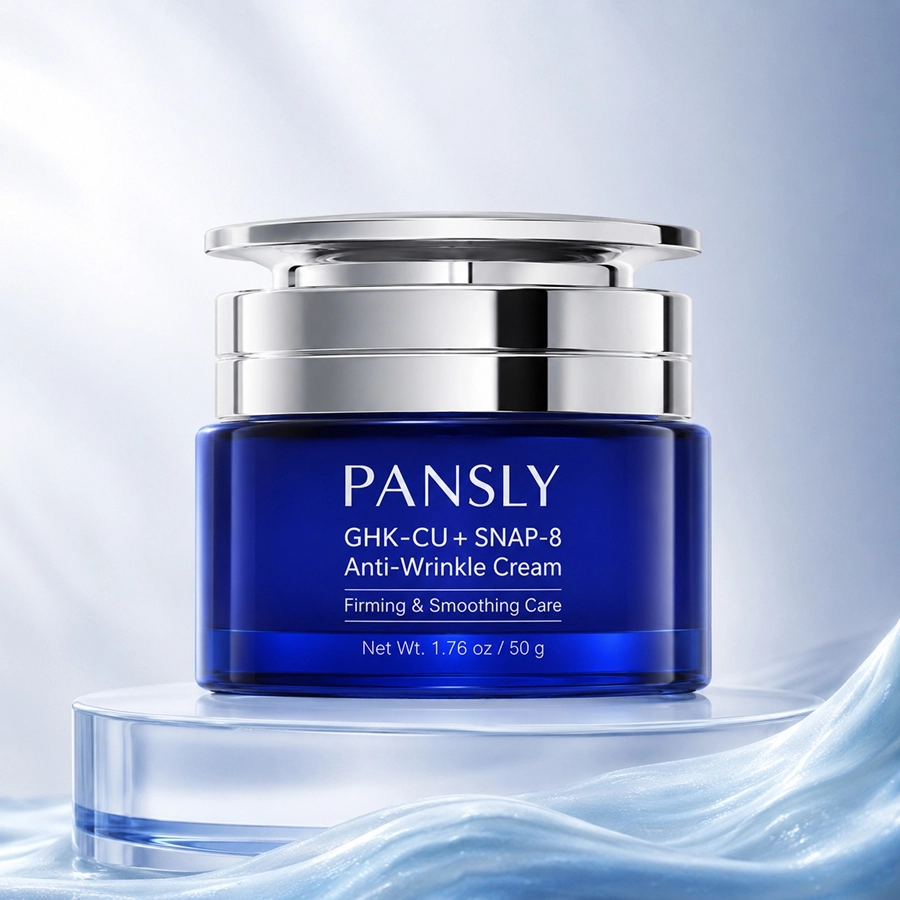
This Pansly GHK-CU + SNAP-8 Anti-Wrinkle Firming Cream is triple-peptide anti-aging facial cream, delivers targeted wrinkle smoothing, firming lifting and deep nourishment for dull, saggy, fine-line prone skin. Full OEM & ODM private label service is supported, including custom formula, packaging options, fast sampling and bulk export supply.
Five core premium active ingredients work synergistically for comprehensive anti-wrinkle care:
GHK-CU Copper Peptide lifts saggy skin, enhances skin resilience and tightens loose facial contour;
SNAP-8 Peptide targets expression lines to visibly soften and fade wrinkles;
Acetyl Hexapeptide-8 reduces the appearance of dry fine lines for smoother skin texture;
Ceramide NP reconstructs skin moisture barrier to lock nourishment and boost comfort;
Hyaluronic Acid delivers multi-layer rich deep moisture to relieve dry rough skin.
Luxury rich creamy texture spreads smoothly and melts into skin gently, leaving soft comfortable finish without heavy greasiness. Daily use blurs fine lines, firms loose skin, deeply nourishes and stabilizes barrier, refining uneven texture to reveal smooth, plump, youthful luminous skin.
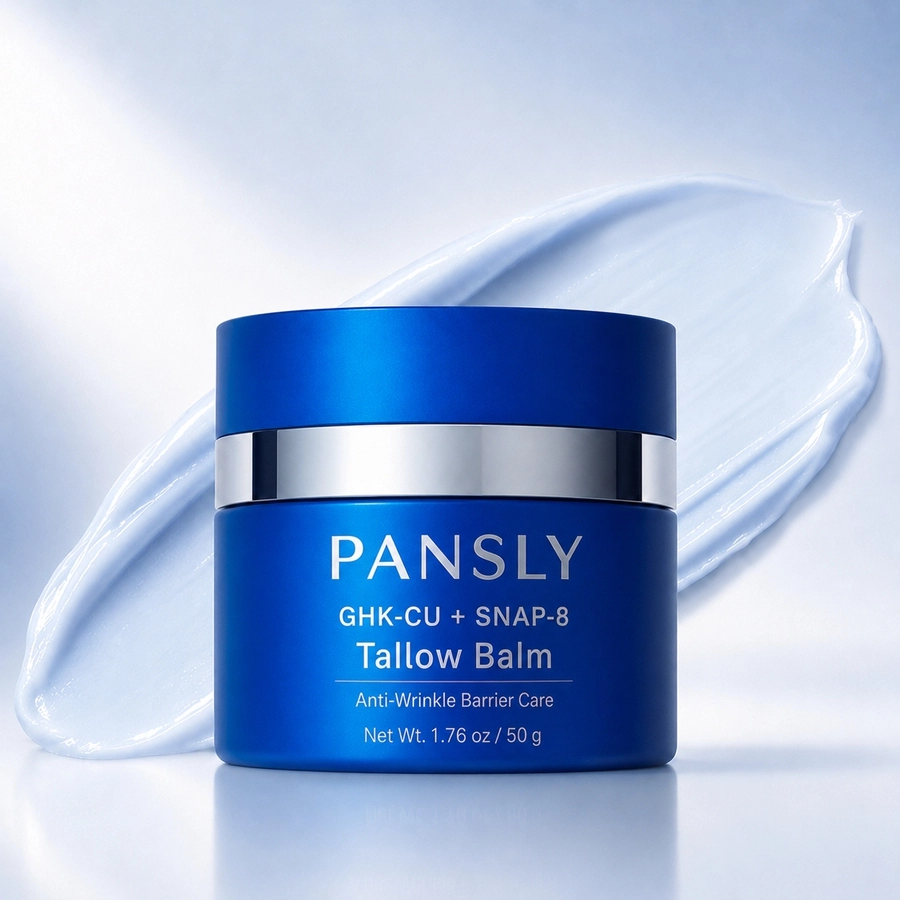
This Pansly GHK-CU + SNAP-8 Tallow Balm is a nourishing anti-wrinkle facial balm specially formulated for dry, fragile and sensitive skin, combining anti-aging wrinkle smoothing and barrier repairing effects. We offer full private label OEM service, including custom logo, adjustable formula, diversified packaging and lid color options.
It contains five core skin care active ingredients: GHK-CU visibly improves fine lines and revives dull complexion; SNAP-8 softens expression lines to smooth wrinkled skin texture; Grass-Fed Beef Tallow delivers deep lipid nourishment to relieve dry rough skin; Ectoin stabilizes the skin barrier and alleviates skin discomfort; Ceramide NP strengthens barrier structure to create smooth, healthy skin.
Luxury creamy blue balm texture glides smoothly and melts quickly on skin, providing long-lasting deep moisturizing comfort. Daily use fades fine lines & expression lines, nourishes dry delicate skin, repairs damaged barrier and leaves silky smooth skin finish.
Click here to customize the Beauty
we respond within a few hours
Monday–Friday, 9AM–6PM
3A01, Building A, Zhisheng Square, No. 4 Zhifu Road, Helong Street, Baiyun District, Guangzhou, China.


Leave a request, and we'll email you back within 24 hours.
© 2026 Beyond Basix. All Rights Reserved.