From Redness Relief to Skin Recovery: Positioning a PDRN Centella Serum
- Building a Barrier-Recovery Position for Reactive Skin
- Why redness relief must be connected to skin recovery
- The complementary logic of PDRN and Centella asiatica
- Defining the customer and use occasion
- Formulation and Procurement Criteria for a Calming Active Serum
- Ingredient specifications matter more than trend names
- Texture, packaging, and preservation are commercial decisions
- Testing that supports buyer confidence
- Turning a Recovery Serum into a Scalable Product Platform
- Designing a product ladder rather than a single SKU
- Managing claims, documentation, and market entry
- Using evidence without overpromising
- Why Beyond Basix Fits One-Stop OEM/ODM for Skincare Development
- Integrated manufacturing capacity for multi-category programs
- Technical support from active concept to finished pack
- Quality systems, certifications, and partner economics
- Frequently Asked Questions
A PDRN and Centella-based facial serum can be positioned as a barrier-support and post-irritation recovery product when its formulation, claims, packaging, testing, and regulatory strategy are aligned. For skincare buyers, successful OEM/ODM development requires more than combining popular ingredients: it requires clear consumer positioning, suitable molecular and botanical inputs, stability testing, microbial control, compliant claims, and a channel-specific launch plan. This guide explains how to evaluate the ingredient system, define measurable product benefits, compare formulation approaches, and select a one-stop manufacturing partner for skincare, hair care, eye care, and body care products.
Building a Barrier-Recovery Position for Reactive Skin
Why redness relief must be connected to skin recovery
Redness is a visible consumer concern, but it is not a single diagnosis or a complete product benefit. It may be associated with dryness, environmental stress, over-exfoliation, shaving, cosmetic procedures, acne-treatment routines, or a compromised skin barrier. A serum positioned only as an instant redness reducer may create unrealistic expectations and increase regulatory risk. A stronger commercial position connects visible comfort with progressive support for the skin barrier.
For B2B buyers, this distinction affects the product brief, claim language, testing plan, and target channel. A recovery-focused serum can be presented as a lightweight daily treatment for stressed, dry, sensitive-feeling, or sensitized-looking skin, while avoiding medical language such as treating rosacea, healing wounds, or repairing disease-related damage. The U.S. FDA guidance on cosmetic claims explains why claims that affect the structure or function of the body may move a product beyond ordinary cosmetic positioning.
The complementary logic of PDRN and Centella asiatica
PDRN, commonly described as polydeoxyribonucleotide, is a DNA-derived ingredient used in cosmetic and professional skincare discussions around revitalization and recovery. Its market appeal comes from an association with skin-conditioning, regeneration-oriented routines, and post-stress care. However, buyers should not assume that the presence of PDRN alone guarantees a visible result. Source, purification, molecular profile, dosage, delivery system, compatibility, and finished-product testing all influence commercial performance.
Centella asiatica provides a familiar botanical story built around soothing, comfort, and support for stressed-looking skin. Its key triterpenoid fractions, including asiaticoside and madecassoside, are relevant formulation considerations, although the actual profile depends on the extract specification and processing method. Combining a nucleotide-derived active with Centella can create a differentiated narrative: immediate sensory comfort from a calming formula plus a longer-term skin-conditioning routine. The positioning should remain evidence-led and should distinguish ingredient history from proven finished-product performance.
Defining the customer and use occasion
Project owners should identify whether the product is intended for daily use, seasonal barrier stress, post-cleansing tightness, post-procedure professional retail, or sensitive-skin maintenance. Each use occasion changes the required texture, preservative strategy, packaging, instructions, and claim substantiation. A professional channel may prefer sterile-looking airless packaging and controlled education, while mass retail may require rapid absorption, a lower unit cost, and a simple benefit statement.
Useful positioning language includes “barrier-support serum,” “soothing hydration for stressed-looking skin,” “comfort care for sensitive-feeling skin,” and “daily recovery care after environmental stress.” These expressions are commercially clearer and safer than promises of eliminating inflammation or accelerating tissue repair. The final wording should be reviewed for the destination market, especially where cosmetic, quasi-drug, medical device, or cosmeceutical categories differ.
Formulation and Procurement Criteria for a Calming Active Serum
Ingredient specifications matter more than trend names
Buyers should request a complete technical dossier rather than relying on a front-label ingredient name. For PDRN, the dossier should clarify source material, purification controls, specification range, identity testing, residual impurity controls, microbiological limits, storage requirements, and regulatory documentation. For Centella, the supplier should provide botanical identity, extraction method, marker compounds, solvent information, allergen considerations, and batch-to-batch consistency data.
The base formula also determines whether the active story is credible. Humectants such as glycerin, betaine, and hyaluronic acid can support a hydrated skin feel, while panthenol, allantoin, ceramides, beta-glucan, or ectoin may reinforce a barrier-care concept depending on the desired price point and regional compliance. Not every formula needs every popular active. Excessive ingredient stacking can complicate stability, increase cost, make claims difficult to isolate, and create a less elegant consumer experience.
Texture, packaging, and preservation are commercial decisions
A recovery serum is often expected to feel gentle, non-stinging, fast-absorbing, and compatible with moisturizers or sunscreen. Fragrance-free or low-fragrance development may be appropriate for a sensitive-skin audience, but the decision should be based on target consumers and sensory testing rather than assumption. The pH range, solvent system, surfactant selection, and active concentration should be assessed together because a mild ingredient list can still produce discomfort if the finished formula is poorly balanced.
Airless pumps, treatment droppers, and controlled-dose dispensers each create different risks. Droppers can deliver a High Quality laboratory aesthetic but may expose the formula to repeated handling. Airless systems can reduce backflow and help protect oxidation-sensitive formulas, although compatibility testing is still required. Packaging should be tested for leakage, dosage consistency, transport stress, light exposure, and interaction with the formulation.
Testing that supports buyer confidence
A practical development plan normally includes accelerated and real-time stability, freeze-thaw or temperature-cycle testing where relevant, packaging compatibility, preservative efficacy testing, microbial limits, viscosity and pH monitoring, and sensory evaluation. If claims involve hydration, barrier support, comfort, or reduced appearance of redness, the manufacturer should recommend an appropriate instrumental or consumer-use study rather than relying only on ingredient literature.
Manufacturing quality should be evaluated against recognized systems. ISO 22716 Good Manufacturing Practices for cosmetics addresses production, control, storage, and shipment practices. Buyers should also distinguish a manufacturing certificate from finished-product proof: GMP supports process control, while efficacy and safety claims require product-specific evidence.
| Development area | Basic approach | Higher-confidence OEM/ODM approach | Buyer value |
|---|---|---|---|
| Active selection | Choose trending PDRN and Centella ingredients by name | Review identity, purity, marker compounds, compatibility, and supply continuity | More reliable performance and fewer reformulation surprises |
| Redness positioning | Use broad “anti-redness” language | Use cosmetic-safe comfort, soothing, hydration, and barrier-support claims | Lower regulatory and marketplace risk |
| Stability | Check appearance at the end of development | Conduct stability, microbial, preservative, and package compatibility programs | Improved shelf-life confidence and fewer returns |
| Packaging | Select a container based on appearance | Match dispenser, material, light protection, dose, and transport performance to the formula | Better usability and product protection |
| Launch support | Purchase finished bulk only | Coordinate formula, filling, documentation, artwork, and market adaptation | Shorter coordination chain and clearer accountability |
Turning a Recovery Serum into a Scalable Product Platform
Designing a product ladder rather than a single SKU
A single calming serum can become the anchor of a broader sensitive-skin platform. A value version may focus on Centella, panthenol, and hydration; a High Quality version may introduce a specified PDRN grade, advanced delivery technology, or a more sophisticated airless package. A complementary cream can provide occlusive support, while a cleanser can prepare the skin without aggressive surfactants. This ladder enables distributors and brand owners to serve different price tiers without abandoning a consistent recovery narrative.
The same product-development logic can extend to eye care and body care. An eye serum requires attention to ocular-area tolerance, low sting potential, and a precise dosage format. A body lotion or post-sun product may support a larger pack size, richer emollience, and a lower cost per application. Hair and scalp products can use a separate soothing and hydration narrative, but should not transfer facial claims without appropriate testing.
Managing claims, documentation, and market entry
For international distribution, the technical file should be prepared early. Typical documents may include the ingredient list, specifications, safety data sheets where applicable, allergen declaration, certificate of analysis, stability summary, microbiological results, packaging specifications, manufacturing certificates, and artwork review. Market-specific requirements can differ substantially; a formula acceptable as a cosmetic in one region may require different wording or notification in another.
The FDA cosmetics overview is a useful reference for understanding that cosmetic products generally are not pre-approved in the same manner as medicines, while manufacturers and marketers remain responsible for product safety and truthful labeling. Buyers should also consult local authorities and qualified regulatory professionals before making market-entry decisions. Evidence should be organized around the finished formula, not just around individual raw materials.
Using evidence without overpromising
Scientific literature can strengthen product education, but it must be interpreted carefully. Research on PDRN has included biomedical and tissue-repair contexts that do not automatically validate a cosmetic serum claim. A search of PubMed literature on polydeoxyribonucleotide and skin can help teams understand the distinction between laboratory, clinical, injectable, and topical evidence. Claims should reflect the actual route of administration, concentration, study design, and tested product.
For commercial communication, it is more defensible to explain that the formula is designed to hydrate, comfort, condition, and support the appearance of a healthy barrier. Before-and-after imagery, consumer perception studies, corneometry, transepidermal water loss measurements, or redness-imaging studies may be considered when the brand requires stronger substantiation. The chosen method should match the claim and be documented in a way that retailers and regulators can understand.
Why Beyond Basix Fits One-Stop OEM/ODM for Skincare Development
Integrated manufacturing capacity for multi-category programs
Beyond Basix supports buyers seeking a coordinated route from concept development to finished goods. Guangzhou Beyond Basix Cosmetics Ltd. has more than 23 years of experience across cosmetics research, production, and sales, giving project owners access to a mature operating structure rather than a single isolated filling service. Our 12,000-square-meter facility includes a 100,000-level GMPC pharmaceutical-grade dust-free workshop and 12 production lines.
Our equipment includes advanced machinery imported from Germany, the United States, and other regions. This infrastructure supports the controlled development and manufacture of skincare products, including calming serums, moisturizers, cleansers, masks, and treatment creams. It also supports adjacent categories such as hair care products, eye care products, and body care products, allowing buyers to coordinate a complete product family through one supplier relationship.
Technical support from active concept to finished pack
Our team focuses on skincare products with effective ingredients and has maintained this development focus for 12 years. For a Centella and PDRN concept, the project process can be structured around target consumer, active specifications, texture, packaging, claim boundaries, testing, and cost objectives. This approach helps brand owners avoid a common procurement problem: selecting an attractive ingredient story before confirming whether the formula can be stabilized, manufactured, documented, and profitably distributed.
Beyond Basix can assist with formula direction, sample evaluation, packaging coordination, production planning, and product-category expansion. The objective is not merely to produce a serum, but to build a commercially coherent range. Depending on the buyer’s strategy, the same development program can include facial care, eye-area care, body care, and hair or scalp products with distinct technical requirements and compatible brand architecture.
Quality systems, certifications, and partner economics
Beyond Basix holds certifications and documentation including ISO 9001, CE, MSDS, GMP, HALAL, and other applicable credentials. Buyers should verify which certificate applies to the facility, product, process, or market requirement, but a documented quality framework provides an important foundation for supplier qualification. It also supports more efficient communication among procurement, regulatory, marketing, and operations teams.
Our four brands—LANTHOME, PANSLY, FIRSTSUN, and SAUVASINE—reflect experience in developing and operating cosmetics portfolios. For private-label and contract manufacturing clients, this background can inform packaging choices, price-tier planning, sensory direction, and launch sequencing without replacing the client’s own brand identity. Our commitment is to provide competitive products, services, and prices while building long-term progress with partners. For investors, distributors, and brand owners, the value of a one-stop OEM/ODM model lies in fewer handoffs, consolidated accountability, and a clearer path from product brief to repeat production.
Before awarding a project, buyers should request a documented development timeline, minimum order quantity, sample policy, testing scope, lead time, packaging options, change-control process, and post-launch support terms. A capable supplier should answer these questions clearly and align the commercial proposal with the intended sales channel. This procurement discipline helps transform a promising soothing active concept into a stable, compliant, and scalable product.
Contact Beyond Basix to develop a differentiated recovery-focused serum and coordinate your next skincare, hair care, eye care, or body care product range through one experienced OEM/ODM partner.
Frequently Asked Questions
What is the best positioning for a PDRN and Centella serum?
A strong position connects visible comfort with progressive skin-conditioning and barrier support. Suitable cosmetic language includes soothing hydration, comfort care for sensitive-feeling skin, and recovery care after environmental stress.
What should buyers verify about PDRN raw materials?
Buyers should review the source, purification controls, molecular profile, specification range, identity testing, residual impurity controls, microbiological limits, storage requirements, and regulatory documentation.
Which tests are important before launching a calming serum?
A practical program can include accelerated and real-time stability, freeze-thaw or temperature-cycle testing where relevant, packaging compatibility, preservative efficacy, microbial limits, viscosity and pH monitoring, and sensory evaluation. Claim-specific studies may also be appropriate.
Can a PDRN and Centella serum claim to treat redness or inflammation?
Claims should remain within the applicable cosmetic framework. Safer positioning generally focuses on hydration, soothing, comfort, conditioning, and support for the appearance of a healthy barrier rather than treating rosacea, inflammation, wounds, or medical conditions.
Why is packaging important for a recovery-focused serum?
The dispenser affects formula exposure, dosage consistency, usability, light protection, transport performance, and contamination risk. Airless pumps, droppers, and other formats should be evaluated through compatibility and stability testing rather than selected only for appearance.
What does a one-stop OEM/ODM skincare supplier provide?
A one-stop partner can coordinate formula development, active selection, testing, packaging, documentation, filling, production planning, and category expansion. This reduces handoffs and gives the buyer clearer accountability from product brief to repeat manufacturing.
What product categories can Beyond Basix support?
Beyond Basix supports skincare products and can also coordinate hair care products, eye care products, and body care products, enabling buyers to develop a broader product family through one manufacturing relationship.

Elevate your professional skincare offerings with this Private Label Copper Peptide Anti-Wrinkle Firming Serum, a powerhouse concentrate designed for superior age-defying results. This sophisticated formula leverages the synergistic effects of GHK-Cu and SNAP-8 to address multiple layers of skin aging. The GHK-Cu copper peptides act as a vital signaling mechanism to enhance skin density and firmness, while the advanced SNAP-8 octapeptide specifically targets expression lines, helping to relax the appearance of deep-seated wrinkles for a smoother, more refined surface.
This lightweight, rapid-absorption serum provides a professional-grade solution for clients seeking a non-invasive lift. It effectively restores elasticity, improves skin texture, and provides essential antioxidant protection. Perfect for high-end beauty brands, this serum leaves the complexion looking visibly contoured, hydrated, and youthfully revitalized.
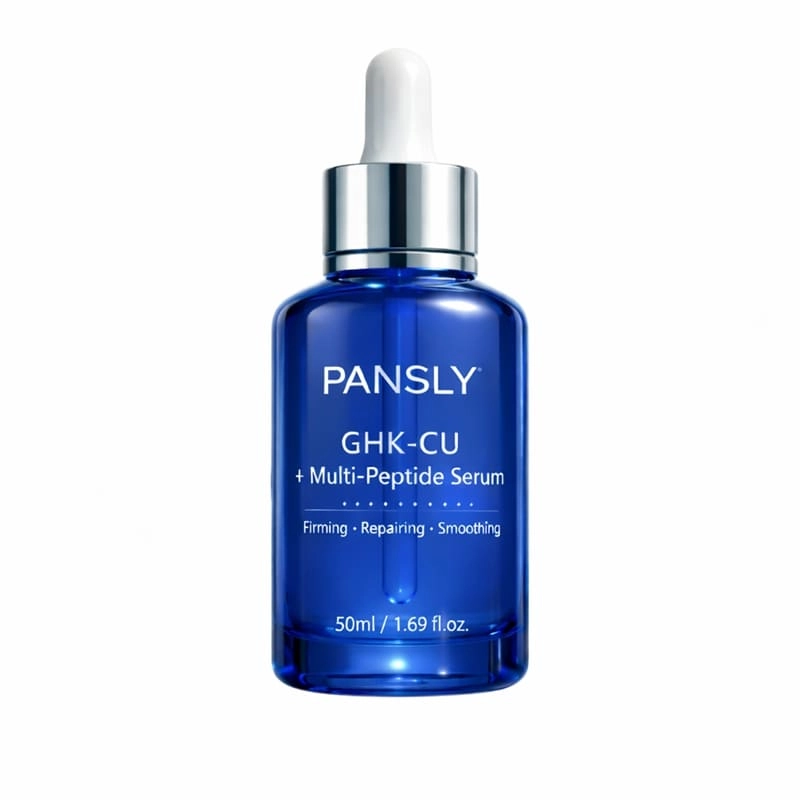
Experience visible rejuvenation with this GHK-Cu Copper Peptide Smoothing & Firming Face Serum, a high-performance concentrate designed to restore the structural integrity of aging skin. This advanced formula centers on GHK-Cu, a powerful signaling peptide clinically recognized for its ability to support natural collagen and elastin production. By promoting dermal density, it effectively tightens sagging skin and smooths the appearance of deep-set wrinkles and fine lines.
The lightweight, silky texture absorbs instantly, delivering antioxidant protection to neutralize environmental stressors that accelerate aging. Enhanced with deep-moisturizing agents, the serum reinforces the skin's moisture barrier, leaving the complexion feeling remarkably soft and resilient. With consistent use, skin texture is refined and facial contours appear more lifted, resulting in a youthfully firm and revitalized glow.
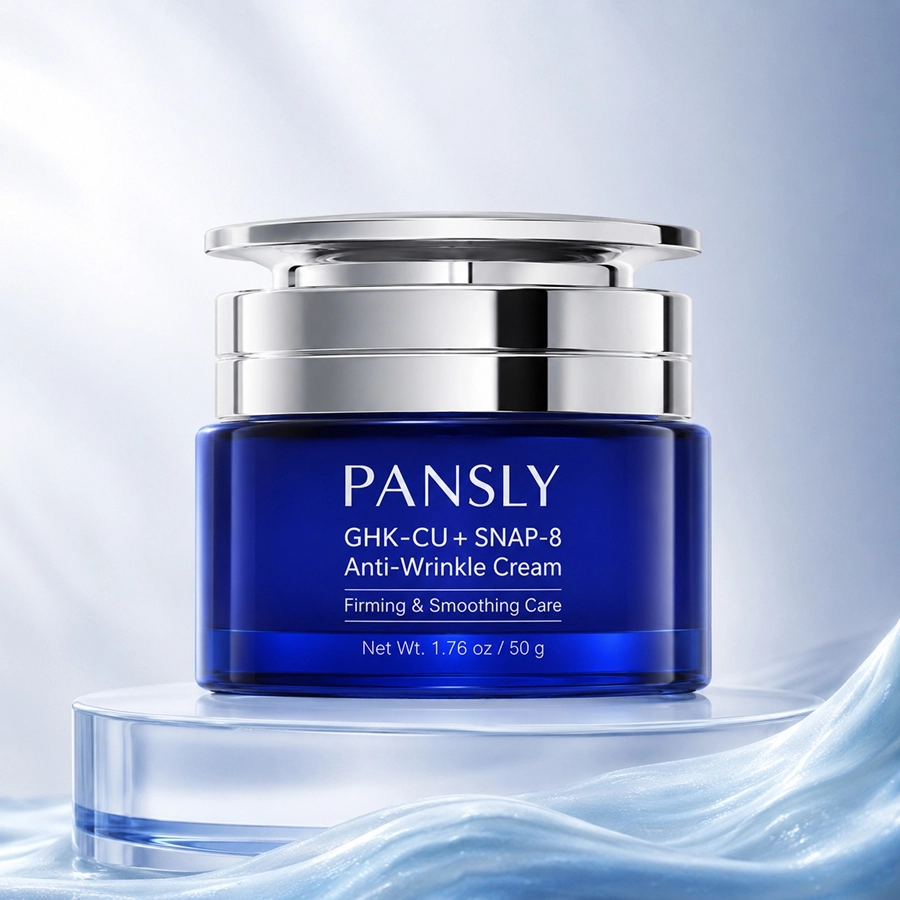
This Pansly GHK-CU + SNAP-8 Anti-Wrinkle Firming Cream is triple-peptide anti-aging facial cream, delivers targeted wrinkle smoothing, firming lifting and deep nourishment for dull, saggy, fine-line prone skin. Full OEM & ODM private label service is supported, including custom formula, packaging options, fast sampling and bulk export supply.
Five core premium active ingredients work synergistically for comprehensive anti-wrinkle care:
GHK-CU Copper Peptide lifts saggy skin, enhances skin resilience and tightens loose facial contour;
SNAP-8 Peptide targets expression lines to visibly soften and fade wrinkles;
Acetyl Hexapeptide-8 reduces the appearance of dry fine lines for smoother skin texture;
Ceramide NP reconstructs skin moisture barrier to lock nourishment and boost comfort;
Hyaluronic Acid delivers multi-layer rich deep moisture to relieve dry rough skin.
Luxury rich creamy texture spreads smoothly and melts into skin gently, leaving soft comfortable finish without heavy greasiness. Daily use blurs fine lines, firms loose skin, deeply nourishes and stabilizes barrier, refining uneven texture to reveal smooth, plump, youthful luminous skin.
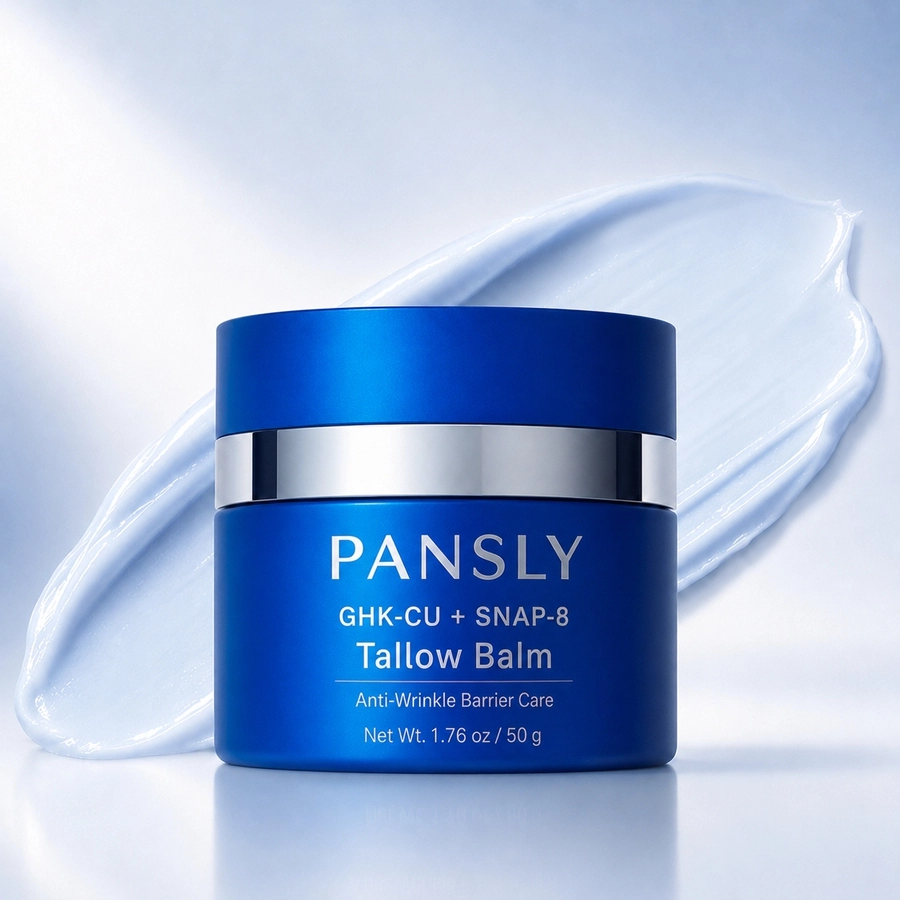
This Pansly GHK-CU + SNAP-8 Tallow Balm is a nourishing anti-wrinkle facial balm specially formulated for dry, fragile and sensitive skin, combining anti-aging wrinkle smoothing and barrier repairing effects. We offer full private label OEM service, including custom logo, adjustable formula, diversified packaging and lid color options.
It contains five core skin care active ingredients: GHK-CU visibly improves fine lines and revives dull complexion; SNAP-8 softens expression lines to smooth wrinkled skin texture; Grass-Fed Beef Tallow delivers deep lipid nourishment to relieve dry rough skin; Ectoin stabilizes the skin barrier and alleviates skin discomfort; Ceramide NP strengthens barrier structure to create smooth, healthy skin.
Luxury creamy blue balm texture glides smoothly and melts quickly on skin, providing long-lasting deep moisturizing comfort. Daily use fades fine lines & expression lines, nourishes dry delicate skin, repairs damaged barrier and leaves silky smooth skin finish.
Click here to customize the Beauty
we respond within a few hours
Monday–Friday, 9AM–6PM
3A01, Building A, Zhisheng Square, No. 4 Zhifu Road, Helong Street, Baiyun District, Guangzhou, China.


Leave a request, and we'll email you back within 24 hours.
© 2026 Beyond Basix. All Rights Reserved.