PDRN, NAD+ and Peptides: Building a Multi-Active Hydrogel Eye Patch
- Formulation Strategy for Multi-Active Under-Eye Hydrogel Masks
- Defining the role of PDRN, NAD+, and peptides
- Building compatibility into the serum and hydrogel matrix
- Manufacturing, Testing, and Regulatory Readiness
- From laboratory sample to repeatable production
- Stability, safety, and documentation requirements
- Commercial Design and Buyer Evaluation Criteria
- Turning a technical formula into a credible product proposition
- Comparing suppliers beyond the quotation
- Why Beyond Basix Fits Multi-Active Eye Care Development
- Integrated technical and manufacturing capacity
- One-stop OEM/ODM support across broader personal care categories
- Quality-focused execution for High Quality eye patches
- Frequently Asked Questions
PDRN, NAD+, and peptide hydrogel eye patches combine three high-interest ingredient categories into a High Quality under-eye care format designed for hydration, conditioning, and the appearance of improved skin smoothness. For buyers evaluating pdrn nad+ eye patches, the commercial opportunity depends less on listing fashionable actives and more on controlling ingredient quality, formula compatibility, hydrogel performance, stability, regulatory language, packaging integrity, and scalable manufacturing. A successful project therefore requires a coordinated One-Stop OEM/ODM for Skincare partner capable of managing concept development, ingredient sourcing, formulation, mold design, filling, testing, documentation, and delivery.
Formulation Strategy for Multi-Active Under-Eye Hydrogel Masks
Defining the role of PDRN, NAD+, and peptides
PDRN, or polydeoxyribonucleotide, is commonly positioned in cosmetic concepts as a skin-conditioning and revitalizing ingredient. Its source, molecular profile, purity, analytical specification, and regulatory status must be confirmed before it enters a commercial formula. Cosmetic communication should remain focused on appearance-related benefits such as moisturized, smoother-looking, refreshed, or more supple skin. Therapeutic, wound-healing, injectable, or tissue-repair claims can create a different regulatory classification and should not be used casually on packaging or product pages. Buyers should request an ingredient specification, certificate of analysis, origin statement, microbiological limits, residual solvent information where relevant, and evidence supporting the supplier’s intended cosmetic use. A scientific review of PDRN-related research can be found through PubMed, but published research should not be treated as automatic proof of finished-product performance.
NAD+, or nicotinamide adenine dinucleotide, is a naturally occurring coenzyme involved in cellular redox reactions. In topical skincare, the formulation challenge is not simply adding NAD+ to an essence. The project team must evaluate its stability in water, exposure to oxygen and light, pH tolerance, interaction with preservatives, and performance during the product’s intended shelf life. Some brands may instead evaluate NAD+ precursors or related vitamin B3 pathways, but each option requires separate substantiation and labeling review. The NCBI Bookshelf provides foundational information about NAD-related biological processes, while cosmetic claims must remain appropriate to the finished product and target market.
Peptides add a flexible platform for High Quality positioning because different peptide families can be selected for conditioning, moisturization, or the appearance of firmness and smoothness. However, the word “peptide” does not define a single performance profile. Buyers should identify the exact INCI name, recommended use level, carrier system, purity, supplier stability data, and claim evidence. A formula containing multiple peptides may sound compelling, but excessive active loading can increase cost, complicate preservation, create incompatibility, or produce limited incremental consumer value. The most commercially practical strategy is often a focused blend with clear roles rather than an overloaded ingredient list.
Building compatibility into the serum and hydrogel matrix
A hydrogel eye patch is both a delivery format and a consumer experience. The serum must wet the hydrogel evenly, while the gel must retain sufficient moisture without becoming excessively slippery, fragile, or prone to syneresis. Common design variables include polymer selection, humectant ratio, plasticizer level, electrolyte tolerance, pH, viscosity, essence loading, and release behavior. The formula also needs to balance immediate sensory appeal with reliable adhesion during the recommended wear period.
For a three-active concept, the development team should begin with a compatibility map. This map records each active’s preferred pH range, temperature sensitivity, light sensitivity, solubility, preservative compatibility, and interaction with the hydrogel base. PDRN may require careful handling to protect its specification and dispersion quality. NAD+ can require protection from oxidation and unsuitable processing conditions. Peptides may be sensitive to extreme pH, high heat, or aggressive mixing. A staged addition process, low-shear handling, opaque packaging, and controlled filling conditions may improve batch consistency.
Under-eye skin is highly exposed to sensory and safety concerns. A professional brief should define fragrance policy, colorant policy, alcohol level, cooling sensation, eye-area irritation expectations, patch dimensions, serum volume, and wear time. Buyers should also specify whether the product is intended for daily use, occasional intensive care, pre-event preparation, or professional retail channels. These decisions affect the preservative system, packaging format, claim language, and consumer instructions.
| Development factor | Conventional single-active patch | Multi-active PDRN, NAD+, and peptide patch | Procurement implication |
|---|---|---|---|
| Ingredient qualification | Usually centered on one key active and its supplier documentation | Requires separate identity, purity, stability, and compatibility review for each active | Request complete technical files before confirming the formula |
| Formula development | Lower interaction risk and simpler optimization | Requires pH, oxidation, preservative, solubility, and polymer compatibility screening | Budget for laboratory screening and pilot batches |
| Packaging protection | Standard pouch protection may be sufficient depending on the formula | Light, oxygen, moisture, and closure performance may have greater impact | Assess pouch film, seal strength, filling weight, and storage conditions |
| Claims substantiation | Often focused on moisturization or refreshing benefits | Needs disciplined, ingredient-specific and finished-product claim support | Approve claims with regulatory and marketing teams before artwork |
| Quality control | Routine appearance, fill, microbiology, and stability checks | Adds active assay or marker testing where practical and justified | Define release specifications and testing responsibility in the contract |
The table reflects formulation and procurement differences rather than universal performance outcomes. Actual specifications depend on the selected raw materials, product category, destination market, packaging, and manufacturing process. A reliable supplier should convert the concept into measurable acceptance criteria instead of relying on ingredient storytelling alone.
Manufacturing, Testing, and Regulatory Readiness
From laboratory sample to repeatable production
Prototype approval is only one stage of an eye patch project. The supplier must demonstrate that the approved sample can be reproduced at pilot and commercial scale. Critical process parameters may include water quality, raw-material charging order, mixing speed, hydration time for the polymer system, temperature exposure, degassing, filling accuracy, cutting precision, patch weight, and pouch sealing. A batch record should make these parameters traceable so that a brand receives consistent texture, serum distribution, appearance, and adhesion across production runs.
Buyers should distinguish between a sample made manually in a laboratory and a product manufactured through validated or well-controlled production procedures. Scale-up can change viscosity, air entrapment, active dispersion, and filling behavior. Pilot production is therefore valuable for identifying defects before a large purchase order. The project should define acceptable limits for patch dimensions, breakage, edge deformation, serum leakage, foreign matter, color variation, odor, pH, net content, and microbial results.
Good Manufacturing Practice is a process discipline rather than a marketing phrase. Depending on the market and product classification, buyers may review systems aligned with cosmetic GMP principles, ISO quality management, local cosmetic regulations, and customer-specific requirements. The ISO 22716 cosmetics GMP standard is a recognized reference for production, control, storage, and shipment practices in the cosmetics sector. For the United States, the FDA cosmetics laws and regulations provide important context for product safety, labeling, and claims responsibilities.
Stability, safety, and documentation requirements
Stability testing should reflect the intended market and packaging system. Typical programs may include real-time, accelerated, freeze-thaw, light exposure, package compatibility, and in-use evaluation. Testing should monitor appearance, odor, pH, viscosity or gel integrity, net content, leakage, microbial quality, and active-marker retention where validated methods are available. Accelerated results can support development decisions, but they should not be presented as a substitute for real-time shelf-life evidence.
Microbiological control is particularly important for water-rich hydrogel products. The manufacturer should establish raw-material controls, purified-water monitoring, environmental hygiene, preservation evaluation, and finished-product microbiological specifications. A preservative challenge test may be appropriate depending on the formula and destination-market expectations. Buyers should ask for test methods, laboratory qualifications, batch records, certificates of analysis, safety assessments, and retained-sample procedures rather than accepting a generic “tested” statement.
Regulatory review should cover INCI naming, ingredient restrictions, concentration limits where applicable, country-specific notification, warnings, net quantity, responsible-person details, batch coding, shelf-life or period-after-opening information, and claims. The European Union Cosmetic Products Regulation is one example of a market framework that requires structured attention to safety assessment, product information, responsible persons, and claims. A supplier supporting several markets should provide a documentation pathway rather than promising universal compliance without reviewing the destination country.
Commercial Design and Buyer Evaluation Criteria
Turning a technical formula into a credible product proposition
High Quality eye care buyers are purchasing more than an active blend. They are purchasing a reliable consumer ritual, a coherent product story, and a supply chain that can support repeat orders. The commercial brief should define target customer, price tier, channel, pack count, expected minimum order quantity, launch date, desired shelf life, visual direction, and claim hierarchy. A concise proposition such as “cooling hydration and refreshed-looking eyes” may be more defensible and easier to communicate than a long list of biological promises.
Packaging should support both formula protection and retail usability. Individual sachets improve hygiene and portability, while jars or multi-compartment formats may support a different price architecture but introduce repeated-use and contamination considerations. Film selection, seal strength, notch design, print quality, and carton protection influence customer satisfaction and logistics performance. Export buyers should also assess carton dimensions, pallet efficiency, temperature exposure during transport, and documentation for customs clearance.
Comparing suppliers beyond the quotation
A low unit price does not necessarily create the best project economics. Buyers should compare development fees, sample cycles, mold charges, testing costs, artwork support, packaging minimums, lead time, payment terms, defect handling, and reorder flexibility. The evaluation should also consider whether the supplier can coordinate raw-material procurement, formula engineering, production, packaging, quality control, and export documentation through one accountable team.
Useful supplier questions include: Which active suppliers are approved? Can the manufacturer provide batch-specific certificates? What analytical methods are available for the selected actives? How is the hydrogel cut and filled? What happens if a batch fails an appearance or microbiological specification? Which documents are supplied for the destination market? How are formula changes controlled? How long are retain samples stored? Clear answers reduce launch risk and help investors, distributors, and brand owners forecast total cost of ownership.
Why Beyond Basix Fits Multi-Active Eye Care Development
Integrated technical and manufacturing capacity
Beyond Basix is the cosmetics manufacturing division of Guangzhou Beyond Basix Cosmetics Ltd., with more than 23 years of experience in research, production, and sales. Our 12,000-square-meter facility includes a 100,000-level GMPC pharmaceutical-grade dust-free workshop and 12 production lines. Equipment imported from Germany, the United States, and other regions supports controlled production across multiple skincare formats.
Our team has focused on effective-ingredient skincare development for 12 years, giving project owners a practical platform for concepts involving advanced cosmetic actives, hydrogel textures, serum systems, and eye-area applications. For a multi-active under-eye mask, our process can connect initial product positioning with formulation screening, sample review, packaging selection, production planning, and quality documentation. This integrated approach helps reduce communication gaps between separate laboratories, packaging vendors, and filling factories.
One-stop OEM/ODM support across broader personal care categories
Beyond Basix supports brand owners with Skincare Products, Hair Care Products, Eye Care Products, and Body Care Products. This broader portfolio enables buyers to develop coordinated product families rather than treating an eye patch as an isolated SKU. A brand may combine a peptide eye patch with a facial serum, cleanser, hair treatment, body lotion, or other supporting products while maintaining consistent positioning, packaging language, and launch scheduling.
Our company operates four major brands: LANTHOME, PANSLY, FIRSTSUN, and SAUVASINE. These brands contribute market-facing insight while our OEM/ODM operations support customized projects for external partners. Certifications and compliance documents include ISO 9001, CE, MSDS, GMP, HALAL, and more, subject to product scope and applicable requirements. Buyers should still confirm which certificate applies to the specific product, facility, market, and transaction.
Our manufacturing process is designed to support both emerging brands and established distributors that require dependable repeat production. We aim to offer competitive products, services, and prices while helping partners manage development complexity, quality expectations, and commercial timelines. For investors and project owners, the value of a one-stop partner lies in accountable execution: one coordinated workflow for product concept, active selection, formula development, testing, packaging, manufacturing, and shipment preparation.
Quality-focused execution for High Quality eye patches
For a PDRN, NAD+, and peptide eye patch, Beyond Basix can help structure the project around ingredient documentation, hydrogel performance, eye-area suitability, packaging protection, batch consistency, and market-ready presentation. The appropriate formula and claims will depend on the selected materials, destination market, and agreed specifications. This disciplined approach allows buyers to pursue a High Quality active concept without confusing high ingredient count with proven product quality.
Partner evaluation should ultimately focus on evidence: facility capability, process control, technical communication, documentation, sample repeatability, and responsiveness after launch. Beyond Basix combines manufacturing infrastructure with a broad cosmetics portfolio to support partners seeking a scalable One-Stop OEM/ODM for Skincare solution.
Contact Beyond Basix to develop a compliant, scalable multi-active hydrogel eye patch or explore our skincare, hair care, eye care, and body care product capabilities.
Frequently Asked Questions
What documentation should buyers request for PDRN, NAD+, and peptide ingredients?
Buyers should request ingredient specifications, certificates of analysis, origin statements, microbiological limits, stability information, exact INCI names, recommended use levels, and evidence supporting the supplier’s intended cosmetic use.
Why is hydrogel compatibility important in a multi-active eye patch?
The serum must wet the hydrogel evenly, while the gel must retain moisture, remain intact, and provide suitable adhesion. PDRN, NAD+, and peptides may have different pH, solubility, oxidation, and processing requirements, so compatibility screening is necessary.
What stability tests are relevant for an under-eye hydrogel patch?
Relevant programs may include real-time, accelerated, freeze-thaw, light exposure, package compatibility, and in-use evaluation. Monitoring can include appearance, odor, pH, gel integrity, net content, leakage, microbial quality, and active-marker retention where validated methods are available.
How can buyers compare hydrogel eye patch OEM suppliers?
Buyers should compare formulation capability, active-ingredient documentation, pilot reproducibility, testing scope, packaging expertise, minimum order quantity, development fees, lead time, quality systems, export documentation, defect handling, and reorder flexibility rather than comparing unit price alone.
Can a manufacturer support other products alongside an advanced eye patch?
Yes. Beyond Basix supports Skincare Products, Hair Care Products, Eye Care Products, and Body Care Products, allowing brands to develop coordinated personal-care product families through one manufacturing partner.
What should cosmetic claims for this type of eye patch focus on?
Claims should generally remain appearance-related and supported by the finished product, such as moisturizing, conditioning, refreshing, smoother-looking, or more supple-looking skin. Therapeutic, injectable, wound-healing, or tissue-repair claims require separate regulatory consideration and should not be used casually.

Elevate your professional skincare offerings with this Private Label Copper Peptide Anti-Wrinkle Firming Serum, a powerhouse concentrate designed for superior age-defying results. This sophisticated formula leverages the synergistic effects of GHK-Cu and SNAP-8 to address multiple layers of skin aging. The GHK-Cu copper peptides act as a vital signaling mechanism to enhance skin density and firmness, while the advanced SNAP-8 octapeptide specifically targets expression lines, helping to relax the appearance of deep-seated wrinkles for a smoother, more refined surface.
This lightweight, rapid-absorption serum provides a professional-grade solution for clients seeking a non-invasive lift. It effectively restores elasticity, improves skin texture, and provides essential antioxidant protection. Perfect for high-end beauty brands, this serum leaves the complexion looking visibly contoured, hydrated, and youthfully revitalized.
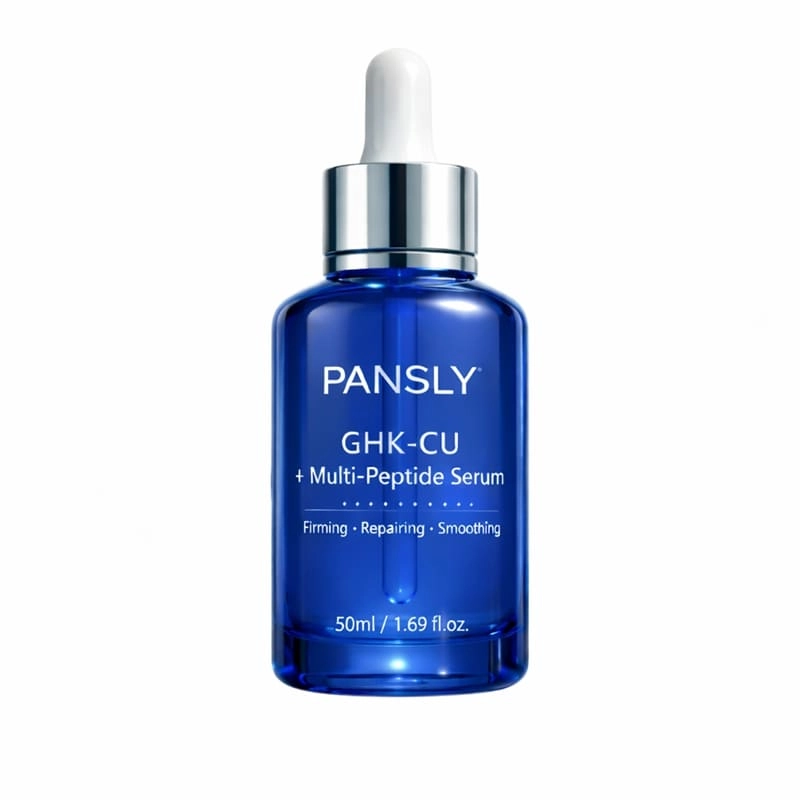
Experience visible rejuvenation with this GHK-Cu Copper Peptide Smoothing & Firming Face Serum, a high-performance concentrate designed to restore the structural integrity of aging skin. This advanced formula centers on GHK-Cu, a powerful signaling peptide clinically recognized for its ability to support natural collagen and elastin production. By promoting dermal density, it effectively tightens sagging skin and smooths the appearance of deep-set wrinkles and fine lines.
The lightweight, silky texture absorbs instantly, delivering antioxidant protection to neutralize environmental stressors that accelerate aging. Enhanced with deep-moisturizing agents, the serum reinforces the skin's moisture barrier, leaving the complexion feeling remarkably soft and resilient. With consistent use, skin texture is refined and facial contours appear more lifted, resulting in a youthfully firm and revitalized glow.
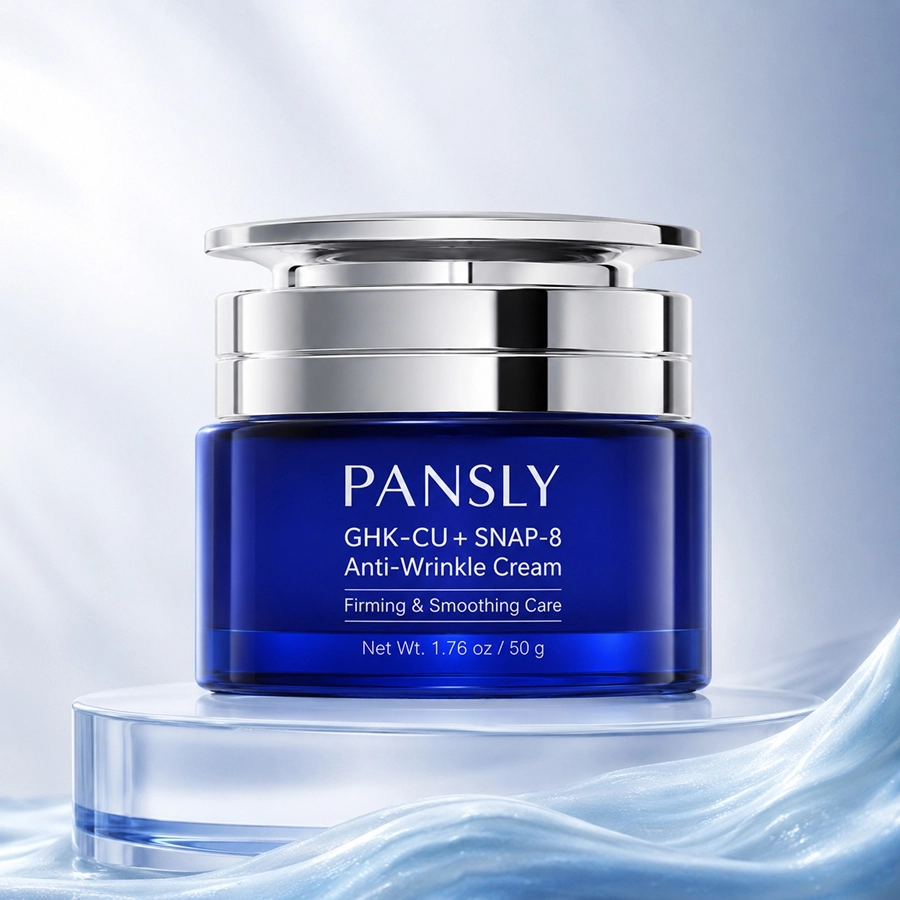
This Pansly GHK-CU + SNAP-8 Anti-Wrinkle Firming Cream is triple-peptide anti-aging facial cream, delivers targeted wrinkle smoothing, firming lifting and deep nourishment for dull, saggy, fine-line prone skin. Full OEM & ODM private label service is supported, including custom formula, packaging options, fast sampling and bulk export supply.
Five core premium active ingredients work synergistically for comprehensive anti-wrinkle care:
GHK-CU Copper Peptide lifts saggy skin, enhances skin resilience and tightens loose facial contour;
SNAP-8 Peptide targets expression lines to visibly soften and fade wrinkles;
Acetyl Hexapeptide-8 reduces the appearance of dry fine lines for smoother skin texture;
Ceramide NP reconstructs skin moisture barrier to lock nourishment and boost comfort;
Hyaluronic Acid delivers multi-layer rich deep moisture to relieve dry rough skin.
Luxury rich creamy texture spreads smoothly and melts into skin gently, leaving soft comfortable finish without heavy greasiness. Daily use blurs fine lines, firms loose skin, deeply nourishes and stabilizes barrier, refining uneven texture to reveal smooth, plump, youthful luminous skin.
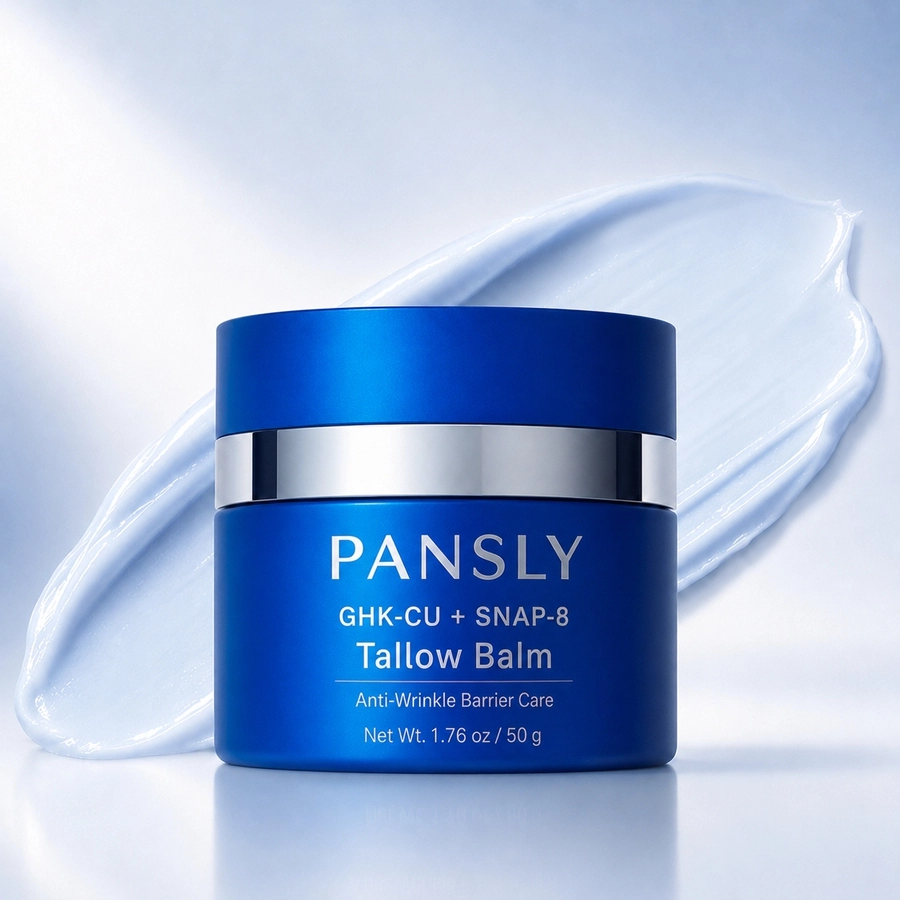
This Pansly GHK-CU + SNAP-8 Tallow Balm is a nourishing anti-wrinkle facial balm specially formulated for dry, fragile and sensitive skin, combining anti-aging wrinkle smoothing and barrier repairing effects. We offer full private label OEM service, including custom logo, adjustable formula, diversified packaging and lid color options.
It contains five core skin care active ingredients: GHK-CU visibly improves fine lines and revives dull complexion; SNAP-8 softens expression lines to smooth wrinkled skin texture; Grass-Fed Beef Tallow delivers deep lipid nourishment to relieve dry rough skin; Ectoin stabilizes the skin barrier and alleviates skin discomfort; Ceramide NP strengthens barrier structure to create smooth, healthy skin.
Luxury creamy blue balm texture glides smoothly and melts quickly on skin, providing long-lasting deep moisturizing comfort. Daily use fades fine lines & expression lines, nourishes dry delicate skin, repairs damaged barrier and leaves silky smooth skin finish.
Click here to customize the Beauty
we respond within a few hours
Monday–Friday, 9AM–6PM
3A01, Building A, Zhisheng Square, No. 4 Zhifu Road, Helong Street, Baiyun District, Guangzhou, China.


Leave a request, and we'll email you back within 24 hours.
© 2026 Beyond Basix. All Rights Reserved.