The latest trends for peptide moisturizer | Beyond Basix Ultimate Insights
- Regional Infrastructure & Manufacturing Readiness
- Capacity and Pharmaceutical-Grade Production
- Supply Chain Resilience and Raw Material Sourcing
- Automation, Analytics and Stability Testing
- Peptide Moisturizer: Ingredient & Formulation Innovations
- Peptide Selection: From Signal Peptides to Multifunctional Blends
- Delivery Systems and Stability Enhancers
- Formulation Format Diversification
- Market Demand, Channels & Supply Chain Dynamics
- Retail & Professional Channel Differentiation
- Sustainability, Cost Engineering and Packaging Innovations
- Geopolitical & Trade Considerations Affecting Lead Times
- Regulatory, Safety & Claims Landscape
- Evidence Standards and Labeling Requirements
- Good Manufacturing Practice and Certifications
- Global Regulatory Harmonization Trends
- Data & Comparative Trends
- Qualitative Comparison: Historical vs. Anticipated Trends
- Commercial Playbook for B2B Buyers
- Product Differentiation Strategies
- RFP Checklist for One-Stop OEM/ODM Evaluation
- Risk Mitigation & Time-to-Market
- FAQ
- What is a peptide moisturizer and how does it differ from peptide serums?
- How do manufacturers ensure peptide stability in a moisturizer?
- What regulatory documentation is required to launch a peptide moisturizer internationally?
- Are peptide moisturizers safe for sensitive skin?
- How should a brand decide between a peptide-rich moisturizer and a peptide serum SKU?
- What are realistic timelines from R&D to retail for a new peptide moisturizer?
- FAQ Main Title
Beyond Basix delivers a concise, forward-looking synthesis for B2B buyers evaluating peptide moisturizer programs in 2026: manufacturing readiness, peptide selection and delivery technologies, sustainability and cost pressures, regulatory verification, and channel-specific demand shifts define the next 24–36 months — this brief identifies where to invest for differentiated, scalable peptide-rich moisturizer SKUs and how One-Stop OEM/ODM partners must adapt to secure speed-to-market and margin.
Regional Infrastructure & Manufacturing Readiness
Capacity and Pharmaceutical-Grade Production
Manufacturers aiming to scale peptide moisturizer production now require pharmaceutical-level controls because peptides are sensitive to contamination and stability issues. Guangzhou Beyond Basix Cosmetics Ltd. operates a 12,000-square-meter facility with a 100,000-level GMPC dust-free workshop and 12 production lines, which aligns with ISO and GMP expectations; this level of infrastructure materially reduces batch failure risk for peptide-rich moisturizer formulations during scale-up.
Supply Chain Resilience and Raw Material Sourcing
Supply chain differentiation for peptide moisturizer programs rests on sourcing high-purity amino acid building blocks and peptide actives (signal peptides, carrier peptides, and biomimetic peptides). Buyers should require traceable certificates of analysis and multi-sourced suppliers to lower single-point-of-failure risk. Vertical integration or long-term contracts with peptide synthesis suppliers reduce lead-time variability and protect margin.
Automation, Analytics and Stability Testing
Advanced formulation and fill-finish automation are no longer optional for peptide moisturizer products. In-line PAT (process analytical technology), accelerated stability chambers, and validated sterilization workflows shorten time-to-market while maintaining safety for peptide-containing topicals. Investing in analytical methods for peptide degradation, preservative efficacy, and microbiological control is critical to defend claims.
Peptide Moisturizer: Ingredient & Formulation Innovations
Peptide Selection: From Signal Peptides to Multifunctional Blends
The current ingredient-level trend changes how peptide moisturizer claims are constructed: formulators increasingly pair short-chain signal peptides with carrier peptides and antioxidant cofactors to produce demonstrable improvements in barrier recovery and visible firmness. This shift from single-peptide serums to peptide-rich moisturizer bases supports broad-market applications and reduces consumer confusion while improving clinical translatability.
Delivery Systems and Stability Enhancers
Key innovations for peptide moisturizer performance include encapsulation (liposomes, solid lipid nanoparticles) and peptide conjugation to protect peptides from proteolysis and enhance skin penetration. Emulsifier systems and low-irritant preservative strategies optimize tolerability for daily-use moisturizing creams that contain bioactive peptides.
Formulation Format Diversification
Beyond traditional creams, the peptide moisturizer category is diversifying into lightweight gels, emulsified lotions for humid markets, and hybrid day creams with integrated UV compatibility. This product-format segmentation is driven by regional climate, consumer preference, and the need to balance peptide stability with organoleptic appeal.
Market Demand, Channels & Supply Chain Dynamics
Retail & Professional Channel Differentiation
Retail buyers seek scalable SKU concepts with clear clinical or instrumental endpoints; aesthetic clinics and dermatologists prefer peptide moisturizer prescriptions paired with in-office procedures. B2B purchasers must plan SKU families that can be pitched to mass retail (affordable peptide-rich moisturizer positioning) and professional channels (higher-concentration, performance-backed peptide creams).
Sustainability, Cost Engineering and Packaging Innovations
Manufacturers are balancing higher input costs for peptide actives with consumer demand for sustainable packaging and reduced waste. Refillable jars, meter-dosing pumps, and recyclable secondary packaging are now table stakes in RFPs; cost engineering must preserve active loading in the peptide moisturizer while meeting sustainability KPIs.
Geopolitical & Trade Considerations Affecting Lead Times
Regional trade policy and currency volatility affect peptide raw material costs and shipping windows. Buyers planning global launches for a peptide moisturizer should model 12–16 week procurement cycles for complex actives and include buffer inventory or local warehousing options to maintain continuity.
Regulatory, Safety & Claims Landscape
Evidence Standards and Labeling Requirements
Regulators globally are increasing scrutiny of performance claims for bioactive creams. Manufacturers must design clinical or instrumental endpoints into peptide moisturizer development programs to substantiate claims such as improves barrier recovery or reduces fine lines. Aligning study design with regulatory expectations in target markets speeds approval and reduces post-market corrective risk (U.S. FDA Cosmetics Guidance).
Good Manufacturing Practice and Certifications
Buyers should verify GMP, ISO 9001, and halal or vegan certifications where relevant. These seals matter when negotiating with large retailers or multinational distributors; for manufacturing partners like Beyond Basix, existing certifications such as ISO and GMP demonstrate operational maturity that supports peptide moisturizer claims and safety documentation (ISO 9001 Quality Management).
Global Regulatory Harmonization Trends
Regulatory harmonization and updates in cosmetic ingredient lists (e.g., constraints on preservatives or photostabilizers) affect peptide moisturizer formulations. Keeping a regulatory watchlist and partnering with laboratories capable of rapid claim substantiation is essential. Leverage WHO and EU guidance for cross-border launches (European Commission Cosmetics Regulation, WHO GMP guidance).
Data & Comparative Trends
Qualitative Comparison: Historical vs. Anticipated Trends
The following table compares historical characteristics of peptide topical products with projected 2026+ dynamics to help procurement and R&D teams prioritize investments for peptide moisturizer development.
| Dimension | Historical (pre-2022) | Near-Term Future (2026+) |
|---|---|---|
| Formulation Complexity | Single peptides or peptide serums; simple emulsion bases | Multipeptide blends, encapsulation, hybrid moisturizers balancing actives and stability |
| Manufacturing Requirements | Cosmetic-grade facilities; variable analytical rigor | Pharmaceutical-grade lines, validated stability, advanced PAT and sterility controls |
| Claims & Evidence | Marketing-led claims with limited clinical backing | Instrumented clinical endpoints and third-party verification for High Quality channels |
| Supply Chain | Single-sourced peptide actives; longer lead-time unpredictability | Multi-sourced high-purity peptide supply, buffer inventories, local warehousing |
| Packaging & Sustainability | Traditional jars and tubes | Refillable systems, recyclable pumps, reduced-carbon logistics |
Commercial Playbook for B2B Buyers
Product Differentiation Strategies
Pursue differentiated claims by pairing objective biomarker improvements (e.g., TEWL reduction, collagen density via imaging) with consumer-centric benefits like lightweight feel. Create tiered peptide moisturizer ranges: entry-level barrier support, mid-tier daily peptide moisturizer, and High Quality clinical-strength creams for professional channels.
RFP Checklist for One-Stop OEM/ODM Evaluation
When evaluating OEM/ODM partners for peptide moisturizer projects, include: certificates of analysis for actives, stability data protocols, full GMP and ISO certifications, capacity for clinical or instrumental testing, and sustainability commitments. Site visits to verify dust-free workshops and production line capabilities are recommended.
Risk Mitigation & Time-to-Market
Mitigate performance risk by running parallel stability studies on multiple prototype bases and securing initial low-volume production runs to validate fill-finish and packaging compatibility. This staged approach accelerates launch while preserving capital and brand reputation.
FAQ
What is a peptide moisturizer and how does it differ from peptide serums?
A peptide moisturizer is a topical cream or lotion formulated to deliver bioactive peptides within a hydrating base; it differs from peptide serums in that moisturizers typically contain higher emollient content and are optimized for everyday use, whereas serums are often higher in active concentration and used as performance adjuncts.
How do manufacturers ensure peptide stability in a moisturizer?
Manufacturers stabilize peptides through formulation pH control, encapsulation technologies (liposomes or nanoparticles), selecting compatible preservatives, and validated stability protocols conducted under accelerated and real-time conditions.
What regulatory documentation is required to launch a peptide moisturizer internationally?
Required documentation varies by market but generally includes safety assessments, ingredient lists compliant with regional regulations, GMP evidence, and whatever efficacy substantiation supports product claims. Consult regional authorities such as the U.S. FDA, EU cosmetic regulations, and national cosmetic safety agencies.
Are peptide moisturizers safe for sensitive skin?
Many peptide moisturizer formulations are designed for low irritation, but safety depends on concentration, excipient selection, and preservative systems; patch testing and clinical tolerability studies are recommended before broad claims of suitability for sensitive skin.
How should a brand decide between a peptide-rich moisturizer and a peptide serum SKU?
Decision factors include target consumer behavior, price positioning, channel strategy, and claimed performance. For mass-market reach, peptide moisturizer SKUs with approachable pricing and daily-use claims often outperform niche serums; for High Quality positioning, a high-potency serum complements a peptide moisturizer range.
What are realistic timelines from R&D to retail for a new peptide moisturizer?
Timelines vary, but a realistic plan includes 6–12 months for formulation and stability work, 3–6 months for clinical/instrumental testing (if required), and 2–4 months for scale-up and regulatory filings — plan buffers for peptide sourcing and line qualification.
Contact Beyond Basix today to discuss custom peptide moisturizer formulations and full One-Stop OEM/ODM execution for reliable market entry.
Sources: Peptide overview on Wikipedia, U.S. FDA cosmetics guidance, ISO 9001 Quality Management, European Commission Cosmetics Regulation.
FAQ Main Title
What is a peptide moisturizer and how does it differ from peptide serums?
A peptide moisturizer is a topical cream or lotion formulated to deliver bioactive peptides within a hydrating base; it differs from peptide serums in that moisturizers typically contain higher emollient content and are optimized for everyday use, whereas serums are often higher in active concentration and used as performance adjuncts.
How do manufacturers ensure peptide stability in a moisturizer?
Manufacturers stabilize peptides through formulation pH control, encapsulation technologies (liposomes or nanoparticles), selecting compatible preservatives, and validated stability protocols conducted under accelerated and real-time conditions.
What regulatory documentation is required to launch a peptide moisturizer internationally?
Required documentation varies by market but generally includes safety assessments, ingredient lists compliant with regional regulations, GMP evidence, and whatever efficacy substantiation supports product claims. Consult regional authorities such as the U.S. FDA, EU cosmetic regulations, and national cosmetic safety agencies.
Are peptide moisturizers safe for sensitive skin?
Many peptide moisturizer formulations are designed for low irritation, but safety depends on concentration, excipient selection, and preservative systems; patch testing and clinical tolerability studies are recommended before broad claims of suitability for sensitive skin.
How should a brand decide between a peptide-rich moisturizer and a peptide serum SKU?
Decision factors include target consumer behavior, price positioning, channel strategy, and claimed performance. For mass-market reach, peptide moisturizer SKUs with approachable pricing and daily-use claims often outperform niche serums; for premium positioning, a high-potency serum complements a peptide moisturizer range.
What are realistic timelines from R&D to retail for a new peptide moisturizer?
Timelines vary, but a realistic plan includes 6–12 months for formulation and stability work, 3–6 months for clinical/instrumental testing (if required), and 2–4 months for scale-up and regulatory filings — plan buffers for peptide sourcing and line qualification.

Elevate your professional skincare offerings with this Private Label Copper Peptide Anti-Wrinkle Firming Serum, a powerhouse concentrate designed for superior age-defying results. This sophisticated formula leverages the synergistic effects of GHK-Cu and SNAP-8 to address multiple layers of skin aging. The GHK-Cu copper peptides act as a vital signaling mechanism to enhance skin density and firmness, while the advanced SNAP-8 octapeptide specifically targets expression lines, helping to relax the appearance of deep-seated wrinkles for a smoother, more refined surface.
This lightweight, rapid-absorption serum provides a professional-grade solution for clients seeking a non-invasive lift. It effectively restores elasticity, improves skin texture, and provides essential antioxidant protection. Perfect for high-end beauty brands, this serum leaves the complexion looking visibly contoured, hydrated, and youthfully revitalized.
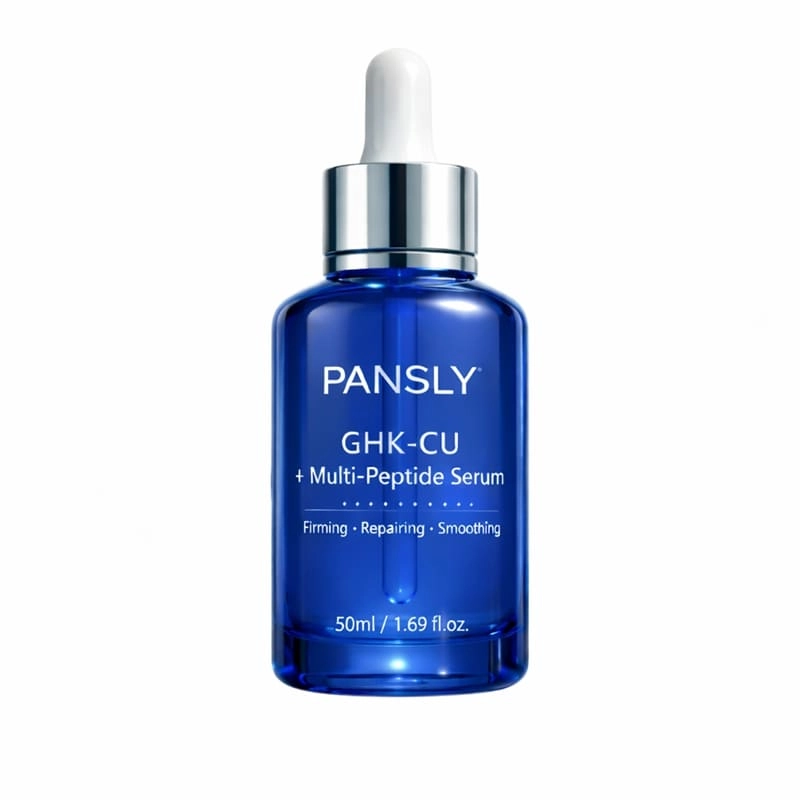
Experience visible rejuvenation with this GHK-Cu Copper Peptide Smoothing & Firming Face Serum, a high-performance concentrate designed to restore the structural integrity of aging skin. This advanced formula centers on GHK-Cu, a powerful signaling peptide clinically recognized for its ability to support natural collagen and elastin production. By promoting dermal density, it effectively tightens sagging skin and smooths the appearance of deep-set wrinkles and fine lines.
The lightweight, silky texture absorbs instantly, delivering antioxidant protection to neutralize environmental stressors that accelerate aging. Enhanced with deep-moisturizing agents, the serum reinforces the skin's moisture barrier, leaving the complexion feeling remarkably soft and resilient. With consistent use, skin texture is refined and facial contours appear more lifted, resulting in a youthfully firm and revitalized glow.
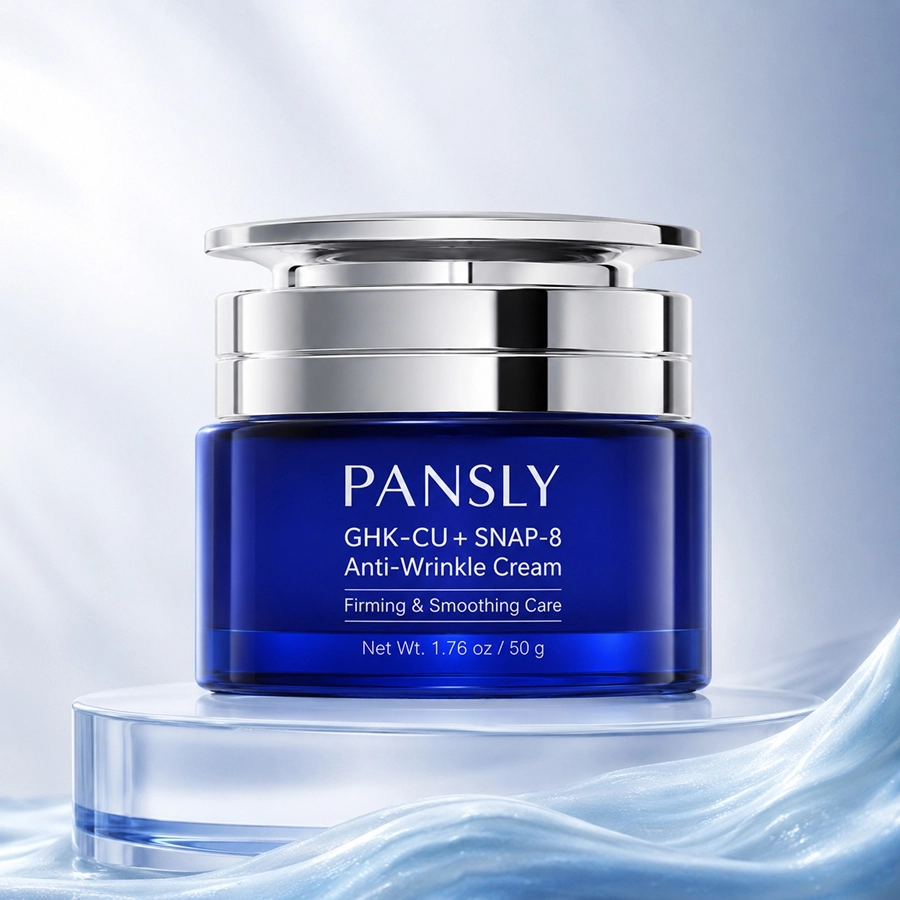
This Pansly GHK-CU + SNAP-8 Anti-Wrinkle Firming Cream is triple-peptide anti-aging facial cream, delivers targeted wrinkle smoothing, firming lifting and deep nourishment for dull, saggy, fine-line prone skin. Full OEM & ODM private label service is supported, including custom formula, packaging options, fast sampling and bulk export supply.
Five core premium active ingredients work synergistically for comprehensive anti-wrinkle care:
GHK-CU Copper Peptide lifts saggy skin, enhances skin resilience and tightens loose facial contour;
SNAP-8 Peptide targets expression lines to visibly soften and fade wrinkles;
Acetyl Hexapeptide-8 reduces the appearance of dry fine lines for smoother skin texture;
Ceramide NP reconstructs skin moisture barrier to lock nourishment and boost comfort;
Hyaluronic Acid delivers multi-layer rich deep moisture to relieve dry rough skin.
Luxury rich creamy texture spreads smoothly and melts into skin gently, leaving soft comfortable finish without heavy greasiness. Daily use blurs fine lines, firms loose skin, deeply nourishes and stabilizes barrier, refining uneven texture to reveal smooth, plump, youthful luminous skin.
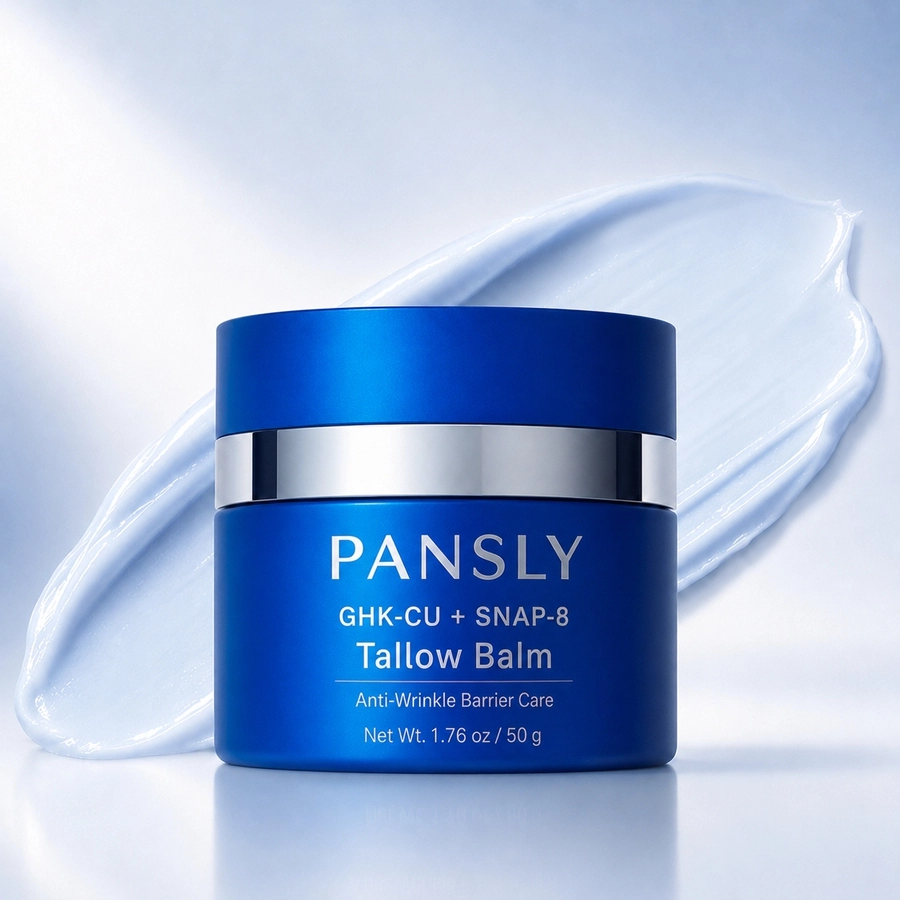
This Pansly GHK-CU + SNAP-8 Tallow Balm is a nourishing anti-wrinkle facial balm specially formulated for dry, fragile and sensitive skin, combining anti-aging wrinkle smoothing and barrier repairing effects. We offer full private label OEM service, including custom logo, adjustable formula, diversified packaging and lid color options.
It contains five core skin care active ingredients: GHK-CU visibly improves fine lines and revives dull complexion; SNAP-8 softens expression lines to smooth wrinkled skin texture; Grass-Fed Beef Tallow delivers deep lipid nourishment to relieve dry rough skin; Ectoin stabilizes the skin barrier and alleviates skin discomfort; Ceramide NP strengthens barrier structure to create smooth, healthy skin.
Luxury creamy blue balm texture glides smoothly and melts quickly on skin, providing long-lasting deep moisturizing comfort. Daily use fades fine lines & expression lines, nourishes dry delicate skin, repairs damaged barrier and leaves silky smooth skin finish.
Click here to customize the Beauty
we respond within a few hours
Monday–Friday, 9AM–6PM
3A01, Building A, Zhisheng Square, No. 4 Zhifu Road, Helong Street, Baiyun District, Guangzhou, China.


Leave a request, and we'll email you back within 24 hours.
© 2026 Beyond Basix. All Rights Reserved.