
Private Label GHK-Cu Copper Peptide Serum: OEM/ODM Sourcing Guide
- Commercial Guide to Copper Tripeptide Topicals and Market-Ready Formats
- Biological activity and formulation implications
- Product format selection: concentrate vs. ready-to-use emulsion
- Label claims, permitted statements, and safety classification
- Supplier Selection & Raw Material Specification
- Raw material grades and specification sheets
- Vendor audits, QC checkpoints, and third-party verification
- Cost drivers & minimum order quantities (MOQs)
- Formulation, Stability Management, and Packaging Engineering
- Key formulation constraints: pH, chelators, and anti-oxidant systems
- Preservation, microbial control, and shelf-life validation
- Packaging choices and barrier performance
- Scale-Up, Quality Assurance, and Commercial Rollout — Why Beyond Basix Delivers
- Manufacturing capacity, technical capabilities, and compliance
- R&D support, formulation expertise, and claim substantiation
- Product portfolio, OEM/ODM services, and certifications
- Frequently Asked Questions
High-intent buyers and product teams seeking private-label anti-aging topicals require an actionable sourcing playbook that maps ingredient variants, stability controls, vendor qualification, regulatory compliance, and cost-to-market. This guide compresses technical benchmarks, supplier audit criteria, and formulation constraints for copper tripeptide topical concentrates (including references to ghk-cu copper peptide serum formulations), enabling procurement leaders to compare raw material grades, evaluate manufacturing partners, and plan scale-up while meeting ISO and GMP expectations.
Commercial Guide to Copper Tripeptide Topicals and Market-Ready Formats
Biological activity and formulation implications
Copper-binding tripeptides are bioactive molecules known for promoting extracellular matrix remodelling and supporting dermal repair pathways. When specifying an active for a cosmetic ampoule or dropper formula, buyers should request peer-reviewed mechanism summaries and stability challenge data from suppliers. Public summaries of copper peptide biology can be referenced through authoritative scientific overviews such as Wikipedia: Copper peptide, but manufacturers must still supply primary data or validated third-party certificates for claims substantiation.
Product format selection: concentrate vs. ready-to-use emulsion
Private-label projects typically adopt one of three formats: concentrated serums (150–500 ppm active in aqueous carriers), pre-diluted ampoules for single-use dosing, or emulsion-based day/night preparations. Concentrates reduce shipping volume and extend the flexibility of brand-level claims, yet require attention to pH, chelation, and preservative efficacy to avoid peptide degradation during shelf life.
Label claims, permitted statements, and safety classification
Brand owners must map claims to regulatory frameworks early to avoid rework. Cosmetic claims such as supports skin firmness typically demand safety dossiers and stability evidence, while drug-like claims trigger stricter pathways. Regulatory guidance and cosmetic definitions are available from authorities such as the FDA Cosmetics pages; suppliers should provide assistance with claim mapping and local country registrations as part of technical documentation.
Supplier Selection & Raw Material Specification
Raw material grades and specification sheets
When selecting peptide vendors, buyers should request full Certificates of Analysis (CoA) including purity by HPLC, residual solvents, heavy metal analysis, and endotoxin where applicable. Common supply grades include technical (used in R&D), cosmetic-grade (purity >95%), and pharmaceutical-grade (purity >98% with GMP traceability). A robust specification template should also capture recommended handling, storage temperature, and reconstitution instructions.
Vendor audits, QC checkpoints, and third-party verification
A reliable supplier should allow on-site or remote audits, demonstrate chain-of-custody for raw materials, and provide batch-level QC reports. Key audit points: manufacturing environment classification, pest and contamination controls, in-process controls, and retention sample policy. Compliance to internationally recognised management systems (e.g., ISO 9001) or documented GMP processes is a procurement must.
Cost drivers & minimum order quantities (MOQs)
Primary cost drivers include peptide synthesis method, purity, packaging form (lyophilised vials vs. bulk solution), and certification requirements. Synthetic solid-phase peptide synthesis often commands higher per-kilogram costs but delivers predictable purity; bio-manufactured routes can provide scale advantages. Typical supplier MOQs for stabilized liquid concentrates run from 25–500 kg depending on fill format and certification scope; sellers should provide clear cost breakdowns for raw material and toll-manufacturing margins during quotation.
Formulation, Stability Management, and Packaging Engineering
Key formulation constraints: pH, chelators, and anti-oxidant systems
Active stability is strongly influenced by pH and metal ion availability. Copper-complexed peptides require balanced chelation chemistry to remain bioavailable without free copper precipitation. Formulators typically target mildly acidic pH ranges (4.5–6.0) and include stabilising agents (e.g., glycerin, propanediol) and antioxidants (ascorbyl derivatives, low levels of EDTA as chelator) to mitigate oxidative degradation. Compatibility testing with common cosmetic excipients is essential to prevent activity loss.
Preservation, microbial control, and shelf-life validation
Preservation strategies must be validated by challenge testing that reflects the final packaging format. Single-dose ampoules minimise preservative load but increase primary packaging costs; multi-dose dropper bottles require validated preservative systems and container-closure integrity testing. Shelf-life protocols should include real-time stability and accelerated stress studies with clearly defined acceptance criteria for appearance, potency, and microbiological limits.
Packaging choices and barrier performance
Packaging selection impacts peptide longevity; oxygen- and light-sensitive formulas benefit from amber glass droppers, UV-blocking laminate tubes, or nitrogen-flushed pump systems. Evaluate container-closure interaction, extractables and leachables reports, and the supplier’s ability to provide primary packaging that meets aesthetic and performance targets while controlling cost and logistics for private-label runs.
Scale-Up, Quality Assurance, and Commercial Rollout — Why Beyond Basix Delivers
Manufacturing capacity, technical capabilities, and compliance
Beyond Basix operates a 12,000-square-meter production campus with a 100,000-level GMPC pharmaceutical-grade dust-free workshop and 12 dedicated production lines. Our equipment portfolio includes advanced machinery imported from Germany and the United States, enabling stable scale-up from pilot to commercial batches while maintaining GMP-equivalent controls. Buyers benefit from documented quality systems and traceable batch records during transfer and production ramp-up.
R&D support, formulation expertise, and claim substantiation
Our formulation and analytical teams have focused on bioactive skincare for over 12 years, delivering prototype systems, accelerated stability matrices, and preservative optimization. We support clients with dossier preparation for market registration and provide the technical back-up required for substantiating performance claims using validated test methodologies.
Product portfolio, OEM/ODM services, and certifications
We offer turnkey private-label services across Skincare Products, Hair Care Products, Eye Care Products, and Body Care Products, enabling brands to launch differentiated lines with controlled budgets and predictable lead times. Guangzhou Beyond Basix Cosmetics Ltd. is certified with ISO 9001, CE, MSDS, GMP, HALAL, and other market-relevant credentials, which streamlines both domestic and export-oriented product launches.
| Attribute | Solid-phase synthetic peptide | Bio-fermentation-derived peptide | Pre-complexed/stabilised copper peptide solution |
|---|---|---|---|
| Typical purity | >95%–98% | Variable 90%–98% | Formulation-specified (active as complex) |
| Relative cost per kg (typical) | High | Moderate–High | Moderate (includes stabilisers) |
| Scalability | Good for limited batches | Best for large-scale runs | Dependent on formulation facility capacity |
| Stability in aqueous formulas | Requires reconstitution and stabilisers | May include natural impurities affecting stability | Optimised for immediate use; extended shelf-life possible |
| Regulatory complexity | Lower when supplied with CoA | Higher due to biological origin documentation | Medium — needs container-closure data |
This comparison helps procurement teams weigh unit economics, risk, and time-to-market when choosing an active supply route and partnering with an OEM/ODM provider.
For brand owners planning private-label copper peptide launches, procurement checklists should include: verified CoAs, stability protocols, preservative challenge results, packaging extractables data, audit reports for the finished-goods factory, and sample retention policies. Early alignment on these items reduces regulatory surprises and accelerates commercial timelines.
When assessing partners, ask for a documented supply continuity plan, contingency sourcing options, and lead-time commitments. For global launches, ensure the manufacturer can support documentation for country-specific notifications and listings.
In addition to technical capability, Beyond Basix emphasises transparent commercial terms, predictable MOQ structures, and collaborative development models that reduce iteration cycles and help buyers reach market-ready formulations faster. Our multi-brand operation (LANTHOME, PANSLY, FIRSTSUN, and SAUVASINE) demonstrates both R&D depth and market-facing manufacturing agility.
For standards and good-practice references consult global authorities such as ISO 9001 for quality systems, FDA Cosmetics for regulatory context in the United States, and general scientific overviews at Wikipedia: Copper peptide. Manufacturers should also adhere to recognised good manufacturing and documentation practices consistent with guidance from international health organisations such as WHO.
Beyond Basix is committed to delivering compliant, stable, and cost-effective private-label products across Skincare Products, Hair Care Products, Eye Care Products, and Body Care Products, leveraging our 23+ years of industry experience and certified facilities to support brand owners from concept to shelf.
Contact the Beyond Basix technical sales team to request a capability pack, pilot quotation, or NDA-protected formulation development plan.
Frequently Asked Questions
What is copper tripeptide and how does it benefit skin formulations?
Copper-binding tripeptides are bioactive molecules that support extracellular matrix remodelling and dermal repair pathways; they are used in topical products to support skin firmness and repair, but manufacturers must provide mechanism summaries and stability evidence to substantiate claims.
What purity grades are available and which should private-label brands request?
Common raw material grades include technical, cosmetic-grade (typically >95% purity), and pharmaceutical-grade (>98% with GMP traceability); buyers should request full Certificates of Analysis including HPLC purity, heavy metal testing, and residual solvent data.
What stability challenges affect peptide serums and how can they be mitigated?
Stability is influenced by pH, metal ion availability, oxidation, and packaging; mitigation strategies include targeting mildly acidic pH (4.5–6.0), including stabilising excipients and antioxidants, validated preservative systems, and selecting barrier packaging such as amber glass or nitrogen-flushed pumps.
What regulatory and safety documentation should be requested from a manufacturer?
Procurement teams should require Certificates of Analysis, microbial and preservative challenge test reports, shelf-life stability studies, extractables/leachables on packaging, safety assessments, and evidence of quality system compliance such as ISO 9001 or GMP-equivalent documentation.
What lead times and MOQs are typical for private-label copper peptide serums?
Lead times depend on formulation complexity and certification needs; typical MOQs for stabilised liquid concentrates range from 25–500 kg depending on packaging and certification levels; suppliers should provide a detailed cost breakdown and ramp plan during quotation.

Elevate your professional skincare offerings with this Private Label Copper Peptide Anti-Wrinkle Firming Serum, a powerhouse concentrate designed for superior age-defying results. This sophisticated formula leverages the synergistic effects of GHK-Cu and SNAP-8 to address multiple layers of skin aging. The GHK-Cu copper peptides act as a vital signaling mechanism to enhance skin density and firmness, while the advanced SNAP-8 octapeptide specifically targets expression lines, helping to relax the appearance of deep-seated wrinkles for a smoother, more refined surface.
This lightweight, rapid-absorption serum provides a professional-grade solution for clients seeking a non-invasive lift. It effectively restores elasticity, improves skin texture, and provides essential antioxidant protection. Perfect for high-end beauty brands, this serum leaves the complexion looking visibly contoured, hydrated, and youthfully revitalized.
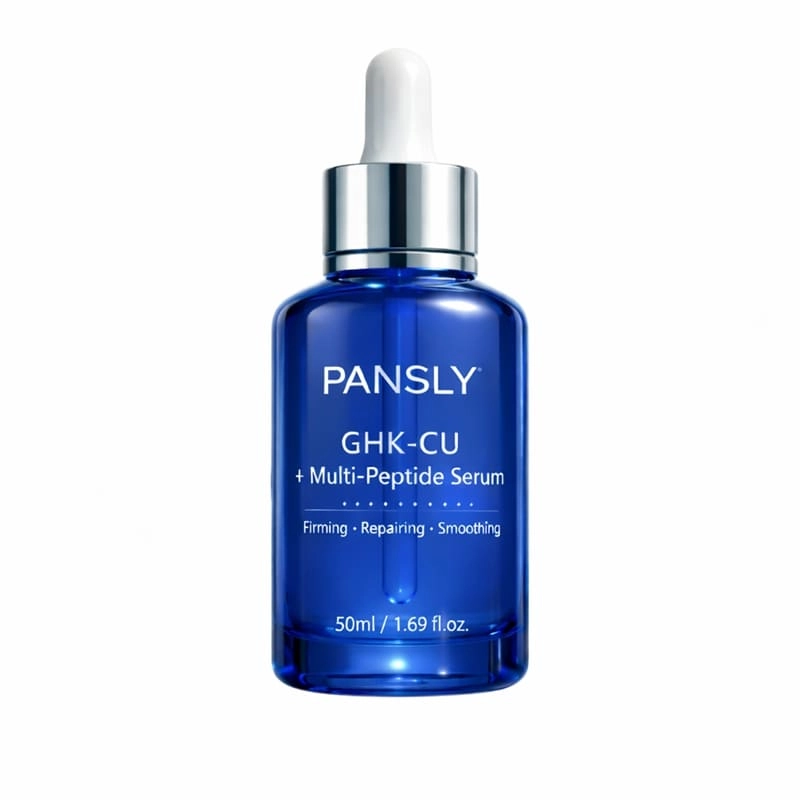
Experience visible rejuvenation with this GHK-Cu Copper Peptide Smoothing & Firming Face Serum, a high-performance concentrate designed to restore the structural integrity of aging skin. This advanced formula centers on GHK-Cu, a powerful signaling peptide clinically recognized for its ability to support natural collagen and elastin production. By promoting dermal density, it effectively tightens sagging skin and smooths the appearance of deep-set wrinkles and fine lines.
The lightweight, silky texture absorbs instantly, delivering antioxidant protection to neutralize environmental stressors that accelerate aging. Enhanced with deep-moisturizing agents, the serum reinforces the skin's moisture barrier, leaving the complexion feeling remarkably soft and resilient. With consistent use, skin texture is refined and facial contours appear more lifted, resulting in a youthfully firm and revitalized glow.
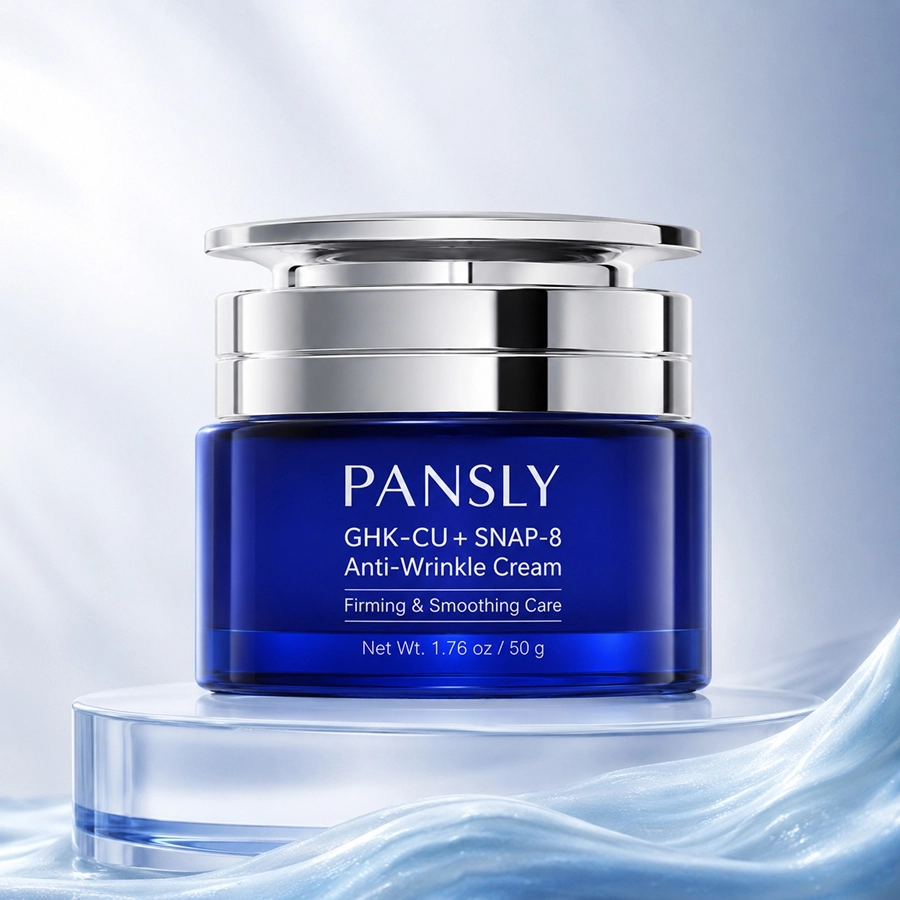
This Pansly GHK-CU + SNAP-8 Anti-Wrinkle Firming Cream is triple-peptide anti-aging facial cream, delivers targeted wrinkle smoothing, firming lifting and deep nourishment for dull, saggy, fine-line prone skin. Full OEM & ODM private label service is supported, including custom formula, packaging options, fast sampling and bulk export supply.
Five core premium active ingredients work synergistically for comprehensive anti-wrinkle care:
GHK-CU Copper Peptide lifts saggy skin, enhances skin resilience and tightens loose facial contour;
SNAP-8 Peptide targets expression lines to visibly soften and fade wrinkles;
Acetyl Hexapeptide-8 reduces the appearance of dry fine lines for smoother skin texture;
Ceramide NP reconstructs skin moisture barrier to lock nourishment and boost comfort;
Hyaluronic Acid delivers multi-layer rich deep moisture to relieve dry rough skin.
Luxury rich creamy texture spreads smoothly and melts into skin gently, leaving soft comfortable finish without heavy greasiness. Daily use blurs fine lines, firms loose skin, deeply nourishes and stabilizes barrier, refining uneven texture to reveal smooth, plump, youthful luminous skin.
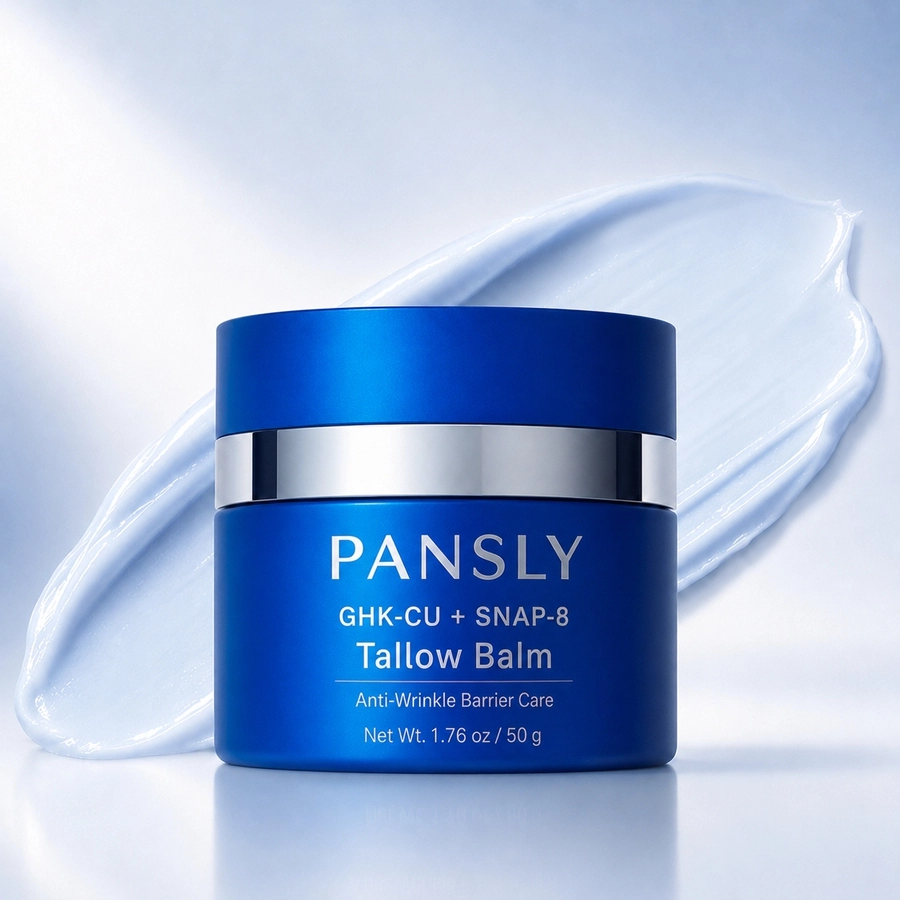
This Pansly GHK-CU + SNAP-8 Tallow Balm is a nourishing anti-wrinkle facial balm specially formulated for dry, fragile and sensitive skin, combining anti-aging wrinkle smoothing and barrier repairing effects. We offer full private label OEM service, including custom logo, adjustable formula, diversified packaging and lid color options.
It contains five core skin care active ingredients: GHK-CU visibly improves fine lines and revives dull complexion; SNAP-8 softens expression lines to smooth wrinkled skin texture; Grass-Fed Beef Tallow delivers deep lipid nourishment to relieve dry rough skin; Ectoin stabilizes the skin barrier and alleviates skin discomfort; Ceramide NP strengthens barrier structure to create smooth, healthy skin.
Luxury creamy blue balm texture glides smoothly and melts quickly on skin, providing long-lasting deep moisturizing comfort. Daily use fades fine lines & expression lines, nourishes dry delicate skin, repairs damaged barrier and leaves silky smooth skin finish.
Click here to customize the Beauty
we respond within a few hours
Monday–Friday, 9AM–6PM
3A01, Building A, Zhisheng Square, No. 4 Zhifu Road, Helong Street, Baiyun District, Guangzhou, China.


Leave a request, and we'll email you back within 24 hours.
© 2026 Beyond Basix. All Rights Reserved.
