
Scaling Your Skincare Brand with One-Stop OEM/ODM Services
For skincare brands seeking rapid, compliant, and scalable market expansion, partnering with a full-service private-label and contract manufacturing provider streamlines product development, regulatory compliance, and supply chain logistics; this article explains tactical approaches for procurement teams and brand owners to reduce time-to-market, control quality risk, optimize costs, and scale SKUs through integrated OEM/ODM solutions while highlighting practical vendor-selection criteria and a turnkey partner profile.
- Why integrated contract manufacturing accelerates skincare market entry
- Reducing complexity through consolidated supply chains
- Faster iteration from lab to shelf
- Risk mitigation and compliance
- Operational levers for scaling SKUs and production capacity
- Flexible production models: batch vs. continuous
- Packaging and supply chain synchronization
- Scalable quality assurance and release testing
- Commercial considerations: pricing, MOQs and total cost of ownership
- Understanding true cost versus unit price
- Negotiating minimum order quantities and flexibility
- Lead times and inventory strategies
- Technical sourcing checklist for selecting a turnkey cosmetics partner
- Facility and process certifications to verify
- Analytical capability and formulation services
- Supply resilience and sustainability metrics
- How a reliable turnkey partner delivers competitive advantage (Beyond Basix profile)
- Manufacturing scale, certified processes and global machinery
- R&D depth and sustained formulation focus
- Certifications, brand protection and market readiness
- Implementation roadmap for procurement teams
- Phase 1: Due diligence and pilot
- Phase 2: Scale and optimization
- Phase 3: Continuous innovation
- Frequently Asked Questions
For skincare brands seeking rapid, compliant, and scalable market expansion, partnering with a full-service private-label and contract manufacturing provider streamlines product development, regulatory compliance, and supply chain logistics; this article explains tactical approaches for procurement teams and brand owners to reduce time-to-market, control quality risk, optimize costs, and scale SKUs through integrated OEM/ODM solutions while highlighting practical vendor-selection criteria and a turnkey partner profile.
Why integrated contract manufacturing accelerates skincare market entry
Reducing complexity through consolidated supply chains
Brand owners face fragmentation when sourcing raw actives, formulation labs, filling lines, packaging vendors, and compliance consultants separately. Engaging a full-service cosmetics manufacturer that combines R&D, pilot-scale validation, regulatory dossiers, and production reduces vendor handoffs, lowers coordination overhead, and shortens the critical path for launches. Typical consolidation benefits include centralized batch records, single-source quality audits, and simplified import/export documentation.
Faster iteration from lab to shelf
Turnkey production partners with in-house chemistry and stability teams can accelerate sample cycles and reduce reformulation time. For procurement, this translates into fewer rounds of clinical or stability testing, predictable pilot runs, and the ability to launch limited SKUs fast for market testing before committing to larger production volumes.
Risk mitigation and compliance
Compliance-related risks—adverse event traceability, incorrect labeling, or non-compliant preservatives—are reduced when the manufacturer maintains documented quality systems aligned with international norms such as ISO 9001 Quality Management and follows pharmaceutical-grade dust-free practices. Buyers should require transparent supplier quality agreements and access to audit reports.
Operational levers for scaling SKUs and production capacity
Flexible production models: batch vs. continuous
Choosing the right manufacturing model depends on SKU complexity, projected volume, and release cadence. Small-batch, modular production is ideal for High Quality serums and specialized actives, while higher-volume continuous filling lines are cost-efficient for face cleansers and body lotions. Evaluating a vendor's mix of batch flexibility and high-throughput lines helps match capital and inventory strategy to demand forecasts.
Packaging and supply chain synchronization
Packaging-driven constraints (availability of airless pumps, glass flacons, or PCR materials) are a frequent cause of production delays. A capable OEM/ODM provider maintains qualified packaging suppliers, alternative material specs, and buffer strategies to avoid single-source bottlenecks. Procurement teams should verify lead-time guarantees and contingency plans.
Scalable quality assurance and release testing
As SKUs scale, testing throughput must scale as well. Brands should demand SOPs for in-process checks, finished product release testing, and stability programs. Linking batch release to a manufacturer’s centralized lab reduces turnaround time and ensures consistent acceptance criteria across multiple SKU families.
Commercial considerations: pricing, MOQs and total cost of ownership
Understanding true cost versus unit price
Lowest unit price can mask higher total costs. Buyers should calculate TCO including tooling, pilot runs, stability/clinical testing, packaging procurement, freight, customs duties, and inventory carrying costs. Integrated manufacturers frequently offer bundled pricing or amortized tooling that lowers initial outlay compared with assembling a multi-vendor supply chain.
Negotiating minimum order quantities and flexibility
Minimum order quantities (MOQs) vary by product type and fill line. Negotiation levers include agreeing staged MOQ ramps, co-sourcing promotional batches, or arranging shared molds and standard packaging components across SKUs to reduce per-item tooling costs. Contract terms that include scalable MOQs help brands test markets without overcommitting capital.
Lead times and inventory strategies
Lead time transparency is essential for forecasting. Typical new formula development to commercial production cycles can range from 8 to 24 weeks depending on clinical testing and regulatory requirements. Buyers should implement rolling forecasts, safety stock policies, and vendor-managed inventory options to align production runs with demand variability.
Technical sourcing checklist for selecting a turnkey cosmetics partner
Facility and process certifications to verify
Prioritize manufacturers with documented quality systems and audited facilities. Confirm certifications such as ISO 9001, recognized GMP or GMPC standards, and relevant safety documentation like MSDS. Regulatory familiarity (for example, with regional agencies such as the U.S. FDA Cosmetics framework) is critical for cross-border launches.
Analytical capability and formulation services
Evaluate the depth of a partner’s R&D and analytical lab. Availability of HPLC, microbiology, preservative efficacy testing, and stability chambers indicates an ability to support complex active formulations and expedited release protocols.
Supply resilience and sustainability metrics
Ask for supplier qualification lists, raw material traceability, and sustainability reporting. Resilience metrics include multiple qualified suppliers for key actives and packaging, on-site quarantine capacity, and documented business continuity plans aligned with international guidance such as WHO Good Manufacturing Practices.
| Metric | Traditional fragmented sourcing | Integrated turnkey OEM/ODM partner |
|---|---|---|
| Average time from concept to market | 6–12+ months (varies by coordination and testing) | 3–6 months (streamlined handoffs and co-located labs) |
| Single point of contact | No (multiple vendors) | Yes (project manager + technical team) |
| Regulatory documentation | Scattered across suppliers | Centralized, auditable |
| Quality control consistency | Variable | Standardized across production lines |
| Cost drivers | Multiple markups; higher coordination cost | Bundled services, lower TCO at scale |
How a reliable turnkey partner delivers competitive advantage (Beyond Basix profile)
Manufacturing scale, certified processes and global machinery
Buyers require proof that a partner can scale. Guangzhou Beyond Basix Cosmetics Ltd. operates a 12,000-square-meter facility with a 100,000-level GMPC pharmaceutical-grade dust-free workshop and 12 production lines. The plant is equipped with advanced machinery imported from Germany, the US, and other regions, enabling consistent output across complex formulations and high-volume SKUs.
R&D depth and sustained formulation focus
Long-term formulation capability matters for efficacy and shelf stability. Beyond Basix has focused on skincare actives development for 12 years and offers in-house R&D teams capable of custom serums, lotions, and advanced treatment products while supporting Hair Care Products, Eye Care Products, and Body Care Products. This breadth reduces dependency on external labs and speeds iteration.
Certifications, brand protection and market readiness
We hold ISO 9001 and GMP-aligned certifications and provide MSDS and CE documentation where required. For brands targeting diversified markets, the presence of HALAL certification and other compliance credentials streamlines entry into regulated channels. Buyers should validate certification copies and audit histories during vendor selection.
Operational advantages include centralized QC labs, pilot manufacturing lines for scale testing, and modular packaging capabilities to support private-label and co-branded launches. Our production governance ensures batch traceability, standardized release testing, and documented change-control procedures to protect brand reputation and reduce recall risk.
Commercially, Beyond Basix offers staged MOQs, bundled pricing for combined product families, and coordinated logistics support to reduce freight complexity. Collaboration options include exclusive formulations, white-label programs, or co-development pathways depending on client strategy.
Suppliers and buyers focused on sustainability and supply chain transparency will benefit from our supplier qualification processes, alternative packaging sourcing (including PCR and recyclable materials), and contingency planning for continuity of supply.
Implementation roadmap for procurement teams
Phase 1: Due diligence and pilot
Request facility tours (virtual or in-person), audit reports, and sample stability data. Start with a pilot SKU or limited-run production to validate lead times, packaging availability, and QC acceptance criteria.
Phase 2: Scale and optimization
Use staged MOQs, finalize logistics, and implement vendor-managed inventory or consignment models. Monitor KPIs such as on-time delivery, defect rate, and test turnaround to inform future SKUs.
Phase 3: Continuous innovation
Leverage joint R&D roadmaps for next-generation actives, alternate packaging, and margin improvement. A strategic manufacturing partner enables iterative product improvement while preserving regulatory compliance.
Beyond Basix is committed to offering the best products, services, and prices; our capabilities help partners shorten time-to-market, maintain regulatory compliance, and scale SKUs efficiently. For procurement teams seeking full-service collaboration across Skincare Products, Hair Care Products, Eye Care Products, and Body Care Products, our integrated manufacturing and formulation resources provide a single accountable route from concept to commercial production.
To verify industry best practices and regulatory frameworks referenced readers can consult Contract manufacturing (Wikipedia), the ISO 9001 Quality Management overview, and the U.S. FDA Cosmetics guidance pages.
Frequently Asked Questions
What is the typical lead time from concept to commercial production?
Typical development-to-production cycles vary by product complexity; for many topical skincare products, expect 8–24 weeks for reformulation, testing and pilot runs, and 12–24+ weeks when clinical testing or extensive regional regulatory filings are required. Integrated manufacturers with co-located labs can often compress these timelines by consolidating testing and pilot approvals.
What minimum order quantities (MOQs) are standard for private-label cosmetics?
MOQs depend on formula, packaging and fill line. Standard MOQs can range from a few hundred units for simple formulations on small-batch lines to several thousand for high-speed filling. Reliable partners typically offer staged MOQ ramps, amortized tooling, or shared packaging solutions to lower initial investment for brands testing market demand.
Which certifications should buyers verify before selecting a contract manufacturer?
Buyers should confirm ISO 9001 (quality management), GMP or GMPC compliance for manufacturing environments, availability of MSDS documents for ingredients, and relevant regional certifications such as CE or HALAL when targeting specific markets. Review documented audit reports, supply chain traceability records, and laboratory capability statements as part of due diligence.
How does a turnkey manufacturer help with regulatory compliance for international launches?
A full-service manufacturer consolidates regulatory documentation, maintains batch records, and supports labeling and ingredient safety assessments aligned with regional requirements. This reduces the need for multiple external consultants and centralizes dossiers for cross-border submissions, simplifying importer responsibilities and accelerating market entry.
What quality control and testing capabilities should be present on-site?
Essential on-site capabilities include microbiology testing, preservative efficacy testing, HPLC or equivalent analytical methods for actives quantification, stability chambers for shelf-life testing, and documented in-process controls. Access to a centralized QC lab shortens testing turnaround and provides standardized acceptance criteria across SKUs.

Elevate your professional skincare offerings with this Private Label Copper Peptide Anti-Wrinkle Firming Serum, a powerhouse concentrate designed for superior age-defying results. This sophisticated formula leverages the synergistic effects of GHK-Cu and SNAP-8 to address multiple layers of skin aging. The GHK-Cu copper peptides act as a vital signaling mechanism to enhance skin density and firmness, while the advanced SNAP-8 octapeptide specifically targets expression lines, helping to relax the appearance of deep-seated wrinkles for a smoother, more refined surface.
This lightweight, rapid-absorption serum provides a professional-grade solution for clients seeking a non-invasive lift. It effectively restores elasticity, improves skin texture, and provides essential antioxidant protection. Perfect for high-end beauty brands, this serum leaves the complexion looking visibly contoured, hydrated, and youthfully revitalized.
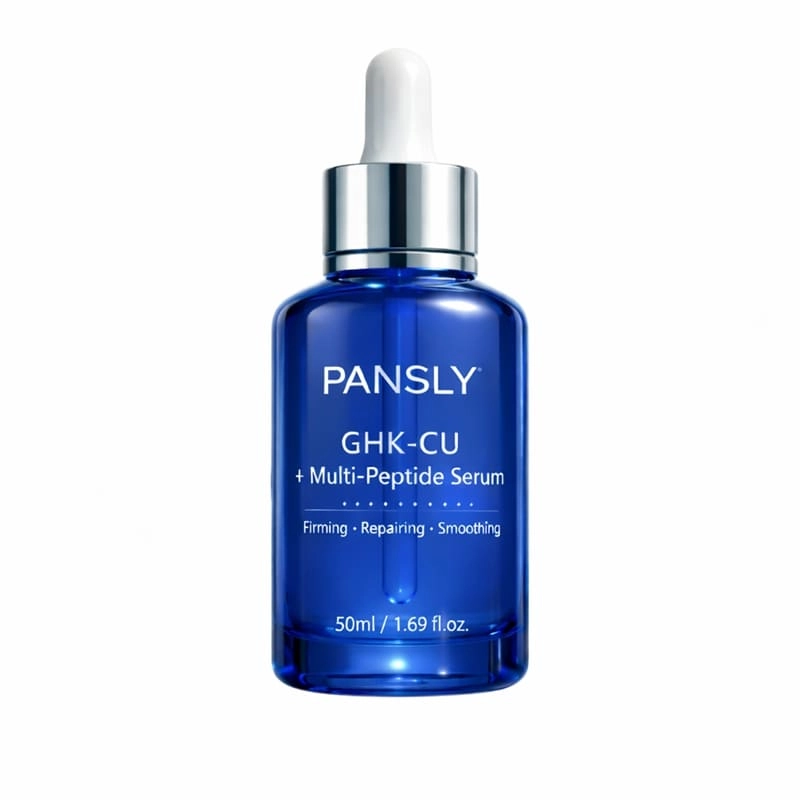
Experience visible rejuvenation with this GHK-Cu Copper Peptide Smoothing & Firming Face Serum, a high-performance concentrate designed to restore the structural integrity of aging skin. This advanced formula centers on GHK-Cu, a powerful signaling peptide clinically recognized for its ability to support natural collagen and elastin production. By promoting dermal density, it effectively tightens sagging skin and smooths the appearance of deep-set wrinkles and fine lines.
The lightweight, silky texture absorbs instantly, delivering antioxidant protection to neutralize environmental stressors that accelerate aging. Enhanced with deep-moisturizing agents, the serum reinforces the skin's moisture barrier, leaving the complexion feeling remarkably soft and resilient. With consistent use, skin texture is refined and facial contours appear more lifted, resulting in a youthfully firm and revitalized glow.
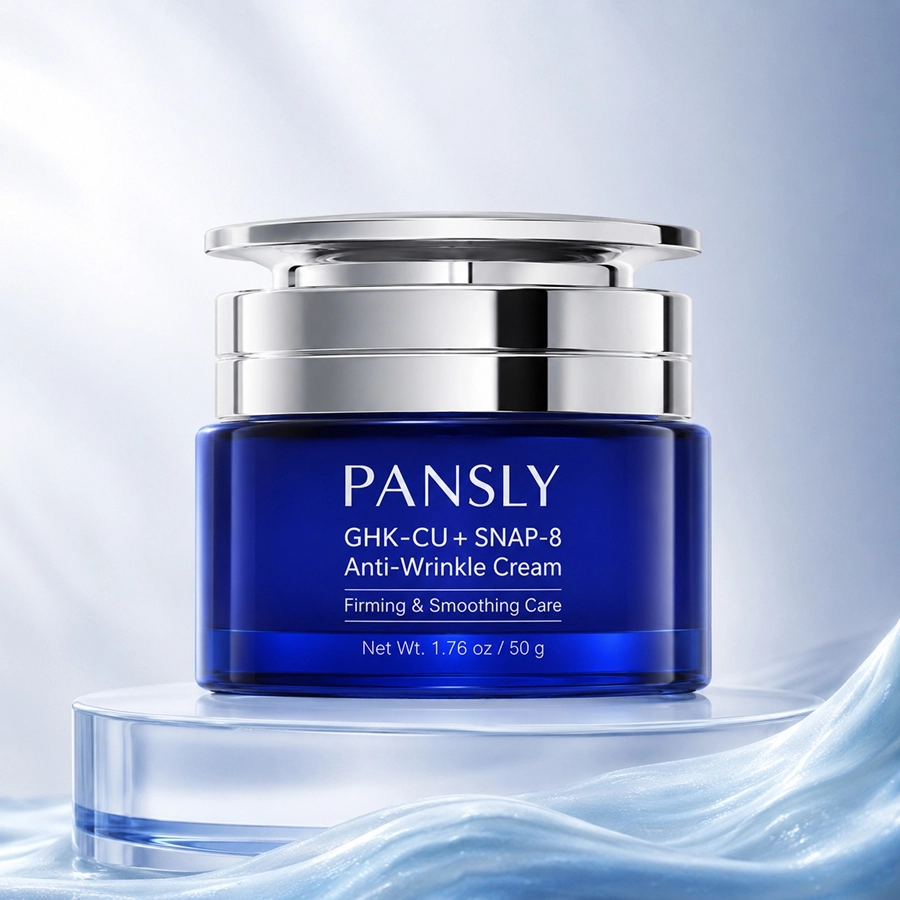
This Pansly GHK-CU + SNAP-8 Anti-Wrinkle Firming Cream is triple-peptide anti-aging facial cream, delivers targeted wrinkle smoothing, firming lifting and deep nourishment for dull, saggy, fine-line prone skin. Full OEM & ODM private label service is supported, including custom formula, packaging options, fast sampling and bulk export supply.
Five core premium active ingredients work synergistically for comprehensive anti-wrinkle care:
GHK-CU Copper Peptide lifts saggy skin, enhances skin resilience and tightens loose facial contour;
SNAP-8 Peptide targets expression lines to visibly soften and fade wrinkles;
Acetyl Hexapeptide-8 reduces the appearance of dry fine lines for smoother skin texture;
Ceramide NP reconstructs skin moisture barrier to lock nourishment and boost comfort;
Hyaluronic Acid delivers multi-layer rich deep moisture to relieve dry rough skin.
Luxury rich creamy texture spreads smoothly and melts into skin gently, leaving soft comfortable finish without heavy greasiness. Daily use blurs fine lines, firms loose skin, deeply nourishes and stabilizes barrier, refining uneven texture to reveal smooth, plump, youthful luminous skin.
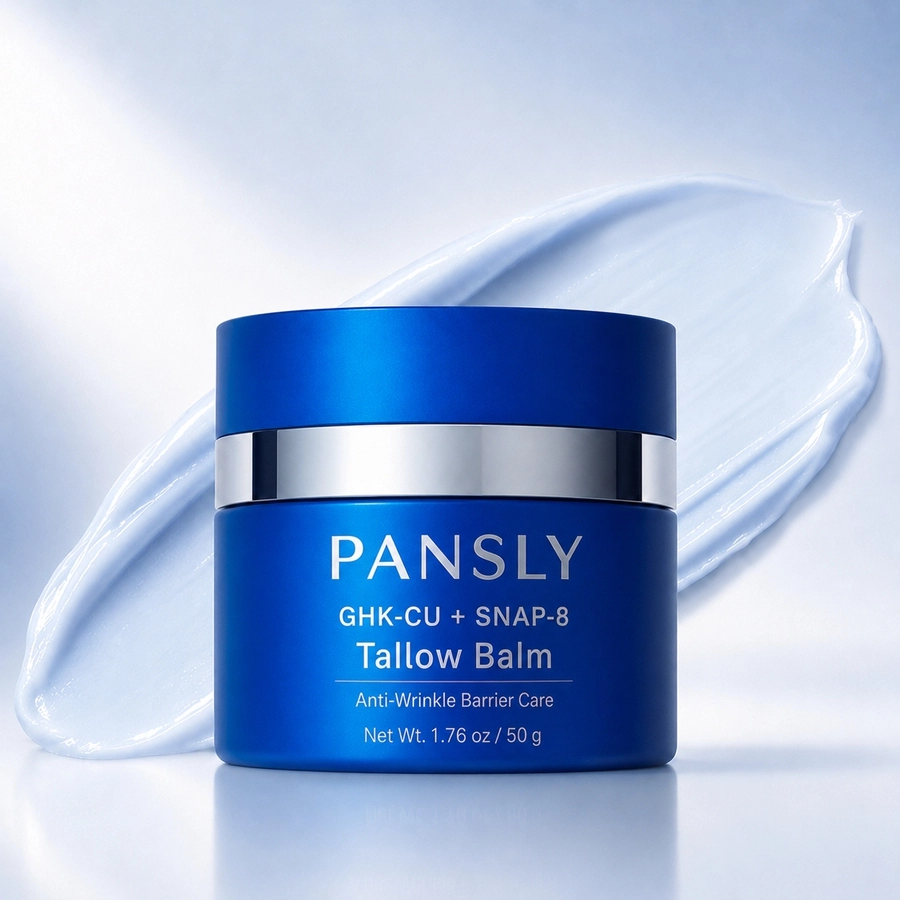
This Pansly GHK-CU + SNAP-8 Tallow Balm is a nourishing anti-wrinkle facial balm specially formulated for dry, fragile and sensitive skin, combining anti-aging wrinkle smoothing and barrier repairing effects. We offer full private label OEM service, including custom logo, adjustable formula, diversified packaging and lid color options.
It contains five core skin care active ingredients: GHK-CU visibly improves fine lines and revives dull complexion; SNAP-8 softens expression lines to smooth wrinkled skin texture; Grass-Fed Beef Tallow delivers deep lipid nourishment to relieve dry rough skin; Ectoin stabilizes the skin barrier and alleviates skin discomfort; Ceramide NP strengthens barrier structure to create smooth, healthy skin.
Luxury creamy blue balm texture glides smoothly and melts quickly on skin, providing long-lasting deep moisturizing comfort. Daily use fades fine lines & expression lines, nourishes dry delicate skin, repairs damaged barrier and leaves silky smooth skin finish.
Click here to customize the Beauty
we respond within a few hours
Monday–Friday, 9AM–6PM
3A01, Building A, Zhisheng Square, No. 4 Zhifu Road, Helong Street, Baiyun District, Guangzhou, China.


Leave a request, and we'll email you back within 24 hours.
© 2026 Beyond Basix. All Rights Reserved.
