Selecting Anti-Wrinkle Eye Cream Formulations for Private Labels
- Formulation strategies for periorbital wrinkle reduction
- Targeted active ingredient classes and evidence tiers
- Delivery systems and bioavailability considerations
- Form stability and preservative strategies for delicate zones
- Regulatory, safety and claims substantiation for ocular skincare
- Safety testing and ophthalmological evaluation
- Labeling, allowable claims, and jurisdictional differences
- Quality systems and GMP expectations
- Manufacturing, packaging and scale-up considerations for private-label lines
- Facility requirements and batch traceability
- Packaging choices to protect actives and prevent contamination
- Scale-up, lead times and MOQ planning
- Partner selection criteria and commercial decision framework
- Technical capability checklist for OEM/ODM vendors
- Cost vs performance trade-offs and pricing transparency
- Risk mitigation and supply continuity planning
- Frequently Asked Questions
For private-label brands and procurement teams seeking a high-efficacy periorbital rejuvenation product, this guide consolidates formulation strategies, safety and regulatory checkpoints, manufacturing and packaging trade-offs, and partner selection criteria to shorten development cycles and reduce commercial risk while maximizing clinical credibility and consumer satisfaction.
Formulation strategies for periorbital wrinkle reduction
Targeted active ingredient classes and evidence tiers
Choosing active categories requires balancing clinical effectiveness, irritation potential, and claim defensibility. Proven actives include retinoid derivatives for collagen stimulation, short-chain hyaluronic compounds for immediate plumping, peptides (matrix-repair and signal peptides) to support extracellular matrix synthesis, antioxidants (vitamin C derivatives, niacinamide) to reduce oxidative stress and pigmentation, and vasoconstrictive stimulants such as caffeine for temporary de-puffing. For procurement, require suppliers to provide peer-reviewed efficacy summaries and stability data. For background on retinoid mechanisms, consult Retinoids (Wikipedia).
Delivery systems and bioavailability considerations
Topical bioavailability around the eye is influenced by molecular size, vehicle polarity, and use of advanced carriers. Liposomal encapsulation, nanoemulsions, and biodegradable microspheres can increase penetration of peptides and retinoids while reducing local irritation. Hyaluronic acid of different molecular weights can be blended to provide both surface hydration and deeper dermal plumping. For a buyer, request particle size distribution (D10/D50/D90), encapsulation efficiency, and in vitro release profiles as procurement specifications.
Form stability and preservative strategies for delicate zones
Eye-area formulations must remain microbiologically stable without provoking stinging or ocular sensitivity. Preservative systems with broad-spectrum efficacy at low concentrations (e.g., PHMB alternatives or multifunctional preservatives) can be considered; alternatively, single-dose packaging enables reduced preservative requirements. Stability testing should include accelerated (40°C/75% RH), photostability, and freeze-thaw cycles to verify ingredient integrity and claim longevity.
Regulatory, safety and claims substantiation for ocular skincare
Safety testing and ophthalmological evaluation
Ocular-area products require targeted safety assessment: in-vitro irritation screens, ocular tolerance tests, and human repeat insult patch testing (HRIPT) focusing on the periorbital region. For many markets, clinical tolerance and consumer perception studies are critical to support mildness and around-the-eye claims. Buyers should mandate supplier-provided test protocols, raw data, and Certificates of Analysis (CoA) for each batch.
Labeling, allowable claims, and jurisdictional differences
Claims such as reduces fine lines vs. clinically proven to reduce periorbital wrinkles have different evidentiary thresholds. Cosmetic regulations depend on jurisdiction; in the United States consult the FDA Cosmetics Guidance for labeling boundaries, while international partners should reference regional directives and registration requirements. Buyers must define claim levels (consumer perception, instrumental endpoints, dermatologist-assessed) at the project outset to align testing scope and budget.
Quality systems and GMP expectations
Manufacturing must follow recognized quality systems to ensure consistency and safety. ISO 22716 provides a cosmetics-specific GMP framework and helps buyers verify production controls and documentation practices; see ISO 22716 Cosmetics GMP. For pharmaceutical-grade environments or cross-over production, suppliers often follow WHO or national GMP guidance to reduce contamination risk; refer to WHO GMP guidance for additional controls.
Manufacturing, packaging and scale-up considerations for private-label lines
Facility requirements and batch traceability
For eye-area products, production in a dust-controlled environment with segregated filling lines reduces cross-contamination risk. Require suppliers to demonstrate electronic batch records, raw-material traceability, and deviation management procedures. Production audits should verify controlled environments (ISO classification), environmental monitoring logs, and cleaning validation.
Packaging choices to protect actives and prevent contamination
Packaging choices materially affect product performance and regulatory risk. Airless pump bottles, single-dose ampoules, and stick applicators minimize preservative needs and reduce consumer contamination. Materials compatibility testing (extractables/leachables) is essential when using polyethylene, polypropylene, or multilayer laminates with reactive actives like ascorbyl derivatives or retinol analogs.
Scale-up, lead times and MOQ planning
Private-label buyers must align minimum order quantities and lead times with launch windows. Early-stage pilots should include engineering batches for process validation followed by stability batches. Negotiate clear manufacturing lead times, raw-material sourcing windows (especially for high-grade peptides), and contingency plans for supplier substitutions to mitigate supply chain risk.
Partner selection criteria and commercial decision framework
Technical capability checklist for OEM/ODM vendors
Vetted suppliers should provide: R&D dossiers, stability and clinical data packages, formulation scale-up history, and validated analytical methods. Request capability evidence for handling sensitive actives (peptides, encapsulated retinoids), access to pilot production, and documented QA systems. Include a scoring matrix for technical, regulatory, cost, and timeline dimensions during vendor evaluation.
Cost vs performance trade-offs and pricing transparency
Higher-efficacy ingredients and advanced delivery systems increase COGS. Buyers should model cost-per-gram, predicted shelf-life losses, and expected consumer willingness-to-pay. Transparent BOM (bill of materials) and tiered pricing for different run sizes help forecast margins—demand suppliers present sensitivity analyses for ingredient cost fluctuations.
Risk mitigation and supply continuity planning
Evaluate dual-sourcing options for critical raw materials, require safety-stock arrangements, and specify penalty clauses for missed delivery windows. For international sourcing, verify customs documentation, regulatory registration support, and supplier insurance policies to reduce procurement exposure.
| Active Class | Typical Concentration | Evidence Level | Manufacturing/Storage Note |
|---|---|---|---|
| Retinoid derivatives (retinol/retinyl esters) | 0.025–0.3% | High (clinical, histology) | Light/air sensitive; low pH stability strategies required |
| Peptides (signal, carrier) | 0.5–2% | Moderate (in-vitro + some clinical) | Heat and shear sensitivity; microencapsulation improves delivery |
| Hyaluronic fractions | 0.1–5% total (blend MWs) | High (immediate hydration effect) | High viscosity at higher MWs; dosing impacts pump selection |
| Antioxidants (vitamin C derivatives, niacinamide) | 0.5–5% | High (multiple clinical studies) | pH and chelation can affect stability; choose compatible packaging |
| Caffeine / Vasoconstrictors | 0.3–1% | Moderate (temporary effects) | Generally stable; useful for immediate sensory claims |
Choosing the right partner reduces R&D cycles, supports regulatory submissions, and minimizes product failure risk. Technical audits, sample panel testing, and reviewing prior case studies are recommended procurement steps for enterprise buyers.
With over two decades of industry experience, Guangzhou Beyond Basix Cosmetics Ltd. offers a one-stop OEM/ODM solution that aligns R&D, manufacturing, and regulatory support for private-label eye-area products. Our 12,000-square-meter facility includes a 100,000-level GMPC pharmaceutical-grade dust-free workshop and 12 production lines, equipped with advanced machinery imported from Germany, the US, and other regions. Focusing on the development of high-efficacy skincare actives for 12 years, we operate four major brands: LANTHOME, PANSLY, FIRSTSUN, and SAUVASINE, and maintain certifications including ISO 9001, CE, MSDS, GMP, HALAL, and more.
We provide end-to-end services from formulation design, ingredient sourcing, analytical method validation, clinical and tolerance testing coordination, to fill-finish and packaging engineering. Buyers benefit from documented QA systems, electronic batch records, and flexible MOQ structures that balance launch speed with cost efficiency. Our product portfolio spans Skincare Products, Hair Care Products, Eye Care Products, and Body Care Products, enabling cross-category development and unified quality control.
For procurement teams focused on reducing time-to-market while retaining clinical credibility, Beyond Basix offers validated formulation platforms (peptide-enriched serums, encapsulated retinoid emulsions, airless pump eye gels) and transparent project management. Our team supports claim strategy, regulatory dossier preparation, and post-launch stability monitoring to protect brand reputation and ROI.
Contact our commercial team to review formulation case studies, request technical dossiers, or schedule a facility audit.
Frequently Asked Questions
What active ingredients deliver the most reliable reduction in periorbital lines?
Validated actives include retinoid derivatives (collagen stimulation), peptides (matrix and signal peptides), hyaluronic acid blends (surface hydration and dermal plumping), and antioxidants (vitamin C derivatives, niacinamide) for pigmentation and oxidative stress; procurement should request clinical summaries and stability data for each active.
What safety tests are required for an eye-area topical product?
Required safety assessments typically include in-vitro irritation testing, ophthalmological tolerance tests, human repeat insult patch testing (HRIPT) focused on the periorbital region, and targeted consumer tolerance panels; suppliers should supply raw data and protocols.
How should preservative strategy and packaging be coordinated for eye solutions?
Packaging that limits consumer contamination (airless pumps or single-dose ampoules) allows for milder preservative systems or lower concentrations; materials compatibility and extractables/leachables testing are essential when selecting containers for sensitive actives.
Which regulatory references should procurement teams consult for claims and manufacturing standards?
Regulatory and quality frameworks include national cosmetic guidance such as the FDA Cosmetics Guidance, cosmetic GMP standards like ISO 22716 Cosmetics GMP, and additional manufacturing controls per WHO GMP guidance; buyers should align claim substantiation levels with jurisdictional rules.
What minimum documentation should be required from an OEM/ODM partner?
Require R&D dossiers, stability and analytical methods, Certificates of Analysis for raw materials, validated production batch records, environmental monitoring logs, corrective action records, and clinical/tolerance study reports to ensure compliance and reproducibility.

Elevate your professional skincare offerings with this Private Label Copper Peptide Anti-Wrinkle Firming Serum, a powerhouse concentrate designed for superior age-defying results. This sophisticated formula leverages the synergistic effects of GHK-Cu and SNAP-8 to address multiple layers of skin aging. The GHK-Cu copper peptides act as a vital signaling mechanism to enhance skin density and firmness, while the advanced SNAP-8 octapeptide specifically targets expression lines, helping to relax the appearance of deep-seated wrinkles for a smoother, more refined surface.
This lightweight, rapid-absorption serum provides a professional-grade solution for clients seeking a non-invasive lift. It effectively restores elasticity, improves skin texture, and provides essential antioxidant protection. Perfect for high-end beauty brands, this serum leaves the complexion looking visibly contoured, hydrated, and youthfully revitalized.
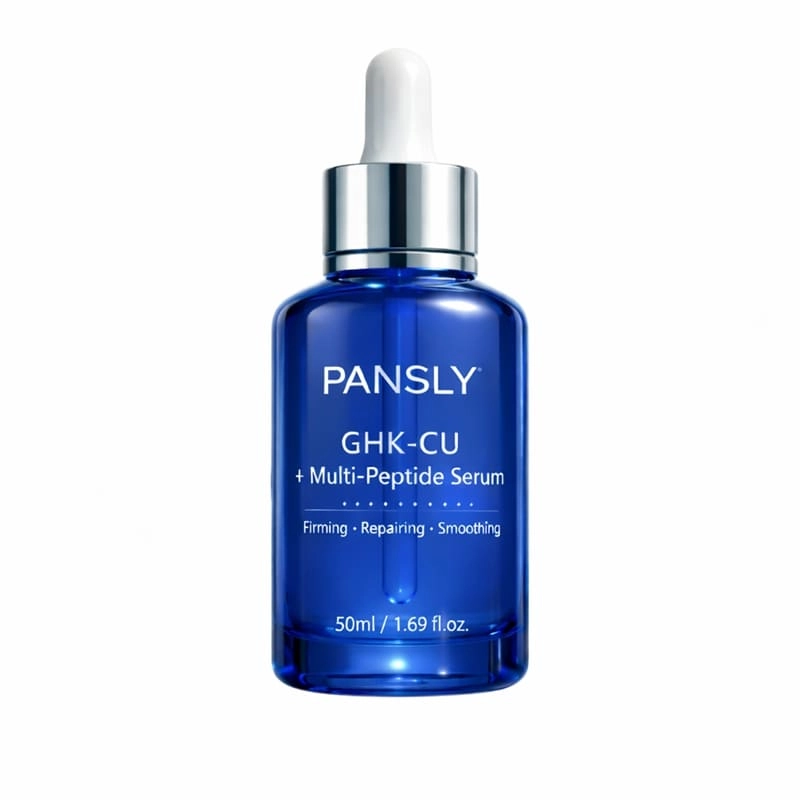
Experience visible rejuvenation with this GHK-Cu Copper Peptide Smoothing & Firming Face Serum, a high-performance concentrate designed to restore the structural integrity of aging skin. This advanced formula centers on GHK-Cu, a powerful signaling peptide clinically recognized for its ability to support natural collagen and elastin production. By promoting dermal density, it effectively tightens sagging skin and smooths the appearance of deep-set wrinkles and fine lines.
The lightweight, silky texture absorbs instantly, delivering antioxidant protection to neutralize environmental stressors that accelerate aging. Enhanced with deep-moisturizing agents, the serum reinforces the skin's moisture barrier, leaving the complexion feeling remarkably soft and resilient. With consistent use, skin texture is refined and facial contours appear more lifted, resulting in a youthfully firm and revitalized glow.
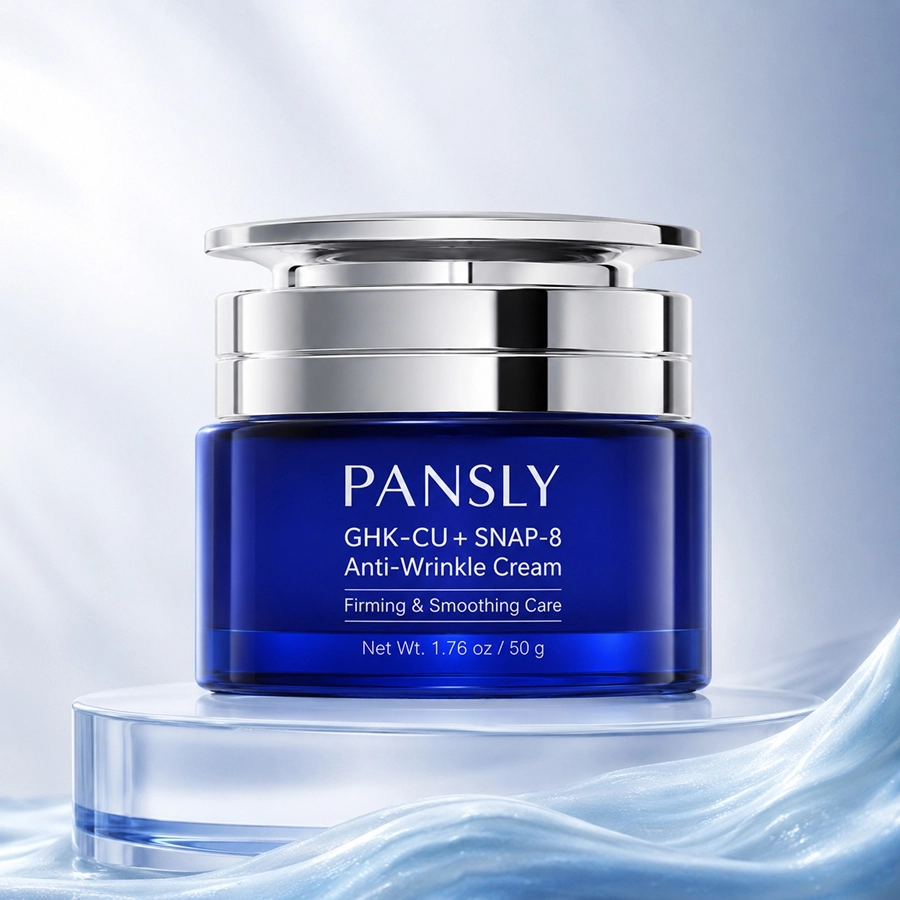
This Pansly GHK-CU + SNAP-8 Anti-Wrinkle Firming Cream is triple-peptide anti-aging facial cream, delivers targeted wrinkle smoothing, firming lifting and deep nourishment for dull, saggy, fine-line prone skin. Full OEM & ODM private label service is supported, including custom formula, packaging options, fast sampling and bulk export supply.
Five core premium active ingredients work synergistically for comprehensive anti-wrinkle care:
GHK-CU Copper Peptide lifts saggy skin, enhances skin resilience and tightens loose facial contour;
SNAP-8 Peptide targets expression lines to visibly soften and fade wrinkles;
Acetyl Hexapeptide-8 reduces the appearance of dry fine lines for smoother skin texture;
Ceramide NP reconstructs skin moisture barrier to lock nourishment and boost comfort;
Hyaluronic Acid delivers multi-layer rich deep moisture to relieve dry rough skin.
Luxury rich creamy texture spreads smoothly and melts into skin gently, leaving soft comfortable finish without heavy greasiness. Daily use blurs fine lines, firms loose skin, deeply nourishes and stabilizes barrier, refining uneven texture to reveal smooth, plump, youthful luminous skin.
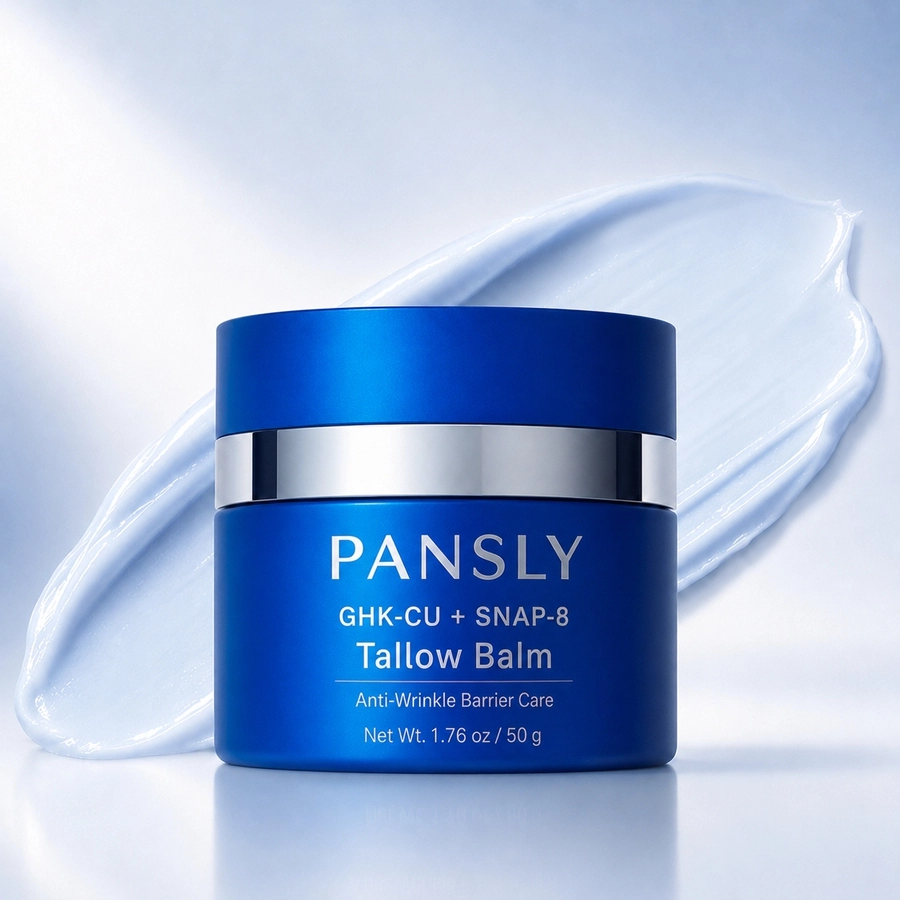
This Pansly GHK-CU + SNAP-8 Tallow Balm is a nourishing anti-wrinkle facial balm specially formulated for dry, fragile and sensitive skin, combining anti-aging wrinkle smoothing and barrier repairing effects. We offer full private label OEM service, including custom logo, adjustable formula, diversified packaging and lid color options.
It contains five core skin care active ingredients: GHK-CU visibly improves fine lines and revives dull complexion; SNAP-8 softens expression lines to smooth wrinkled skin texture; Grass-Fed Beef Tallow delivers deep lipid nourishment to relieve dry rough skin; Ectoin stabilizes the skin barrier and alleviates skin discomfort; Ceramide NP strengthens barrier structure to create smooth, healthy skin.
Luxury creamy blue balm texture glides smoothly and melts quickly on skin, providing long-lasting deep moisturizing comfort. Daily use fades fine lines & expression lines, nourishes dry delicate skin, repairs damaged barrier and leaves silky smooth skin finish.
Click here to customize the Beauty
we respond within a few hours
Monday–Friday, 9AM–6PM
3A01, Building A, Zhisheng Square, No. 4 Zhifu Road, Helong Street, Baiyun District, Guangzhou, China.


Leave a request, and we'll email you back within 24 hours.
© 2026 Beyond Basix. All Rights Reserved.