
SNAP-8 & GHK-Cu Peptide Facial Cleanser: A Product Development Guide for Beauty Brands
- Formulating peptide-enriched cleansing systems: rationale and constraints
- Functional roles of neuromodulatory and copper peptides in a wash-off vehicle
- Target claims, label language, and regulatory boundaries
- Practical concentration ranges and supplier validation
- Technical execution: stability, delivery mechanisms, and safety controls
- Peptide stability within aqueous, surfactant-rich matrices
- Delivery systems: protecting actives in rinse-off products
- Microbiology, preservatives, and manufacturing hygiene
- Market comparison: cleanser types and peptide integration
- Why partner with Beyond Basix for peptide cleanser development
- Manufacturing capacity, certifications, and cleanroom capabilities
- R&D, formulation expertise, and testing workflow
- Full-service OEM/ODM execution and multi-category product support
- Commercialization roadmap and procurement checklist for brand owners
- Sampling, scale-up milestones, and pilot validation
- Regulatory dossier and claims substantiation
- Cost modeling, MOQ, and supplier due diligence
- Frequently Asked Questions
- What inclusion levels are typical for SNAP-8 analogues and copper peptides in a rinse-off cleanser?
- Are neuromuscular-mimicking and copper peptides stable in foaming formulations?
- What regulatory testing and documentation are required for peptide-enriched cosmetics?
- Which manufacturing certifications should be required from an OEM/ODM partner?
- How long does development and scale-up usually take for a peptide facial cleanser?
This enterprise guide condenses formulation science, practical manufacturing controls, regulatory guardrails, and commercialization workflows for brands building a peptide-enriched facial wash featuring neuromodulatory sequence SNAP-8 (acetyl octapeptide variant) alongside the restorative copper complex GHK-Cu; it emphasizes solvent and surfactant strategies that protect peptide integrity in rinse-off matrices, outlines preservative efficacy and microbiological requirements for GMP production, provides an evidence-based procurement checklist for private label teams, and details how a One-Stop OEM/ODM partner can accelerate scale-up, compliance testing, and market-ready SKUs while referencing authoritative regulatory sources for cosmetics compliance.
Formulating peptide-enriched cleansing systems: rationale and constraints
Functional roles of neuromodulatory and copper peptides in a wash-off vehicle
SNAP-8-type signal peptides aim to modulate superficial expression lines by transiently reducing contraction at the epidermal-dermal interface, while copper tripeptides such as GHK-Cu support extracellular matrix remodeling and antioxidant activity. In a cleansing product the objective is to deliver measurable skin benefits (smoothing, barrier support, post-cleanse resilience) without exceeding the typical limitations of rinse-off contact time. Product positioning should therefore focus on immediate sensorial benefits and long-term supportive claims, avoiding unapproved therapeutic statements.
Target claims, label language, and regulatory boundaries
Brands must distinguish cosmetic aesthetic claims (e.g., visibly smoother-looking skin) from drug-level therapeutic claims (e.g., reduces deep wrinkles medically). Regulatory frameworks for cosmetics differ by market: consult national guidance such as FDA cosmetics for the U.S. and the EU cosmetics regulation for Europe when drafting label copy and substantiation plans.
Practical concentration ranges and supplier validation
Many bioactive peptides are effective at low ppm-to-low-percent levels in finished products; general practice for rinse-off formats is to include peptides at conservative dosages and to validate activity through stability and performance testing. Buyers should require supplier technical data sheets, certificate of analysis, and independent assay methods (HPLC or LC-MS) to confirm active content after formulation, and plan accelerated and real-time stability studies to verify claim support.
Technical execution: stability, delivery mechanisms, and safety controls
Peptide stability within aqueous, surfactant-rich matrices
Key degradation vectors include hydrolysis, oxidation, metal chelation, and pH-driven denaturation. GHK-Cu contains copper complexation that can be destabilized by high levels of chelating agents or oxidizers; SNAP-8 analogues are sensitive to prolonged exposure to alkaline pH and proteolytic impurities. Formulators should target a skin-friendly pH window (commonly mid-acidic to neutral) and avoid raw materials with high levels of metal chelators or oxidants. For broader context on peptide chemistry, see the general science overview at peptide science overview.
Delivery systems: protecting actives in rinse-off products
Encapsulation strategies (liposomes, polymeric micelles, ion-paired complexes, or biodegradable microspheres) reduce direct exposure to surfactants and preserve activity until topical contact. Where encapsulation is impractical, sequential addition during production (peptide added post-cool-down) and using non-ionic or amphoteric surfactants help maintain integrity. Compatibility tests (percent active recovery after mixing, post-formulation HPLC checks, and in-use stability) should be specified in procurement RFPs.
Microbiology, preservatives, and manufacturing hygiene
Rinse-off formats still require robust preservative systems and validated microbial controls. Preservative efficacy testing (PET), total aerobic microbial count limits, and challenge testing per recognized standards are mandatory for market entry. Production must operate under GMP conditions and include environmental monitoring, validated cleaning procedures, and batch traceability to protect peptide actives from microbial proteases. The WHO guidance on Good Manufacturing Practices provides foundational expectations for pharmaceutical-grade cleanliness and control in biologically sensitive manufacturing environments: WHO GMP.
Market comparison: cleanser types and peptide integration
| Attribute | Traditional Surfactant Cleansers | Peptide-Enriched Rinse-Off Cleansers |
|---|---|---|
| Primary benefit | Efficient sebum and dirt removal | Gentle cleansing plus short-term skin appearance support |
| Formulation complexity | Low | High (stability, delivery, preservative compatibility) |
| Cost to produce | Lower raw-material costs | Higher due to actives and testing |
| Regulatory scrutiny | Standard cosmetics compliance | Elevated need for substantiation and safety data |
| Ideal target consumer | Mass market, value-seeking | High Quality and clinical-cosmetic buyers seeking differentiated claims |
Why partner with Beyond Basix for peptide cleanser development
Manufacturing capacity, certifications, and cleanroom capabilities
Guangzhou Beyond Basix Cosmetics Ltd. is a leading comprehensive cosmetics care manufacturer with over 23 years of experience in research, production, and sales. Our 12,000-square-meter facility includes a 100,000-level GMPC pharmaceutical-grade dust-free workshop and 12 production lines, equipped with advanced machinery imported from Germany, the US, and other regions. These capabilities enable reliable scale-up from laboratory batches to full commercial runs while maintaining strict environmental and cross-contamination controls required for sensitive peptide actives.
R&D, formulation expertise, and testing workflow
Focusing on the development of skincare products with effective ingredients for 12 years, we operate four major brands: LANTHOME, PANSLY, FIRSTSUN, and SAUVASINE. Our formulation team designs encapsulation approaches, surfactant blends, and preservative systems tailored to protect SNAP-8 type sequences and copper peptide complexes in rinse-off formats. Stability, preservative efficacy, and microbiological testing are integrated into the project timeline to de-risk market launches and ensure label claim substantiation.
Full-service OEM/ODM execution and multi-category product support
We are certified with ISO 9001, CE, MSDS, GMP, HALAL, and more. Committed to offering the best products, services, and prices, we aim to grow and progress together with our partners. Our One-Stop OEM/ODM for Skincare approach supports product families across Skincare Products, Hair Care Products, Eye Care Products, and Body Care Products, enabling cross-category launch strategies that leverage the same peptide platforms or ingredient claims where suitable.
Commercialization roadmap and procurement checklist for brand owners
Sampling, scale-up milestones, and pilot validation
Procurement should require: technical data sheets, stability protocols, preservative efficacy test plans, and representative pilot runs with certificate of analysis for peptide content post-formulation. Typical development milestones include concept formulation, 1-2 prototype iterations, accelerated stability (3 months), real-time stability sampling, and a pilot production batch followed by full-scale GMP manufacturing.
Regulatory dossier and claims substantiation
Maintain a claims dossier containing supplier CoAs, safety data, stability reports, and preservative efficacy outcomes. Regulatory reviewers will expect documentation consistent with national frameworks—consult the ISO 9001 principles for quality management alignment and national agencies like FDA cosmetics for U.S. labeling expectations when preparing market submissions.
Cost modeling, MOQ, and supplier due diligence
Evaluate total landed cost including peptide raw materials, encapsulation steps, QC assays, and additional preservative or chelation controls. MOQ requirements for actives, lead times for custom peptides, and logistics for cold-chain or humidity-controlled storage can materially affect unit economics—request full TCO breakdowns in RFQs.
Frequently Asked Questions
What inclusion levels are typical for SNAP-8 analogues and copper peptides in a rinse-off cleanser?
Many signaling peptides and copper complexes are active at low concentrations; finished-product inclusion typically resides in low ppm to low-percent ranges depending on the raw material concentration and delivery system. Buyers should require supplier-provided usage guidelines and confirm active recovery via analytical testing after formulation and during stability studies.
Are neuromuscular-mimicking and copper peptides stable in foaming formulations?
Stability depends on pH, surfactant selection, and presence of oxidizers or chelators. Amphoteric or non-ionic surfactants and post-cooldown addition of peptides improve stability. Encapsulation can further protect peptides from surfactant-driven denaturation and extend shelf-life.
What regulatory testing and documentation are required for peptide-enriched cosmetics?
Key requirements include safety assessments, preservative efficacy testing, microbial limits, stability data, and accurate labeling compliant with local cosmetic regulations. Products making structure-function or therapeutic claims risk reclassification and should be reviewed against national guidance such as the FDA cosmetics framework.
Which manufacturing certifications should be required from an OEM/ODM partner?
Brands should insist on GMP-compliant production environments, ISO-based quality systems (ISO 9001), material traceability, and documented environmental controls; additional certifications like HALAL or CE may be required for specific markets. Confirm on-site auditability and request environmental monitoring records for peptide projects.
How long does development and scale-up usually take for a peptide facial cleanser?
Typical timelines range from 12 to 28 weeks depending on complexity: initial formulation and prototyping (4–8 weeks), stability and PET (8–12 weeks concurrent), and pilot-to-scale manufacturing (2–8 weeks). Complex encapsulation or novel delivery approaches can extend timelines due to additional validation steps.
Contact Beyond Basix today to discuss turnkey formulation, request technical datasheets and samples, or view our Skincare Products, Hair Care Products, Eye Care Products, and Body Care Products.

Elevate your professional skincare offerings with this Private Label Copper Peptide Anti-Wrinkle Firming Serum, a powerhouse concentrate designed for superior age-defying results. This sophisticated formula leverages the synergistic effects of GHK-Cu and SNAP-8 to address multiple layers of skin aging. The GHK-Cu copper peptides act as a vital signaling mechanism to enhance skin density and firmness, while the advanced SNAP-8 octapeptide specifically targets expression lines, helping to relax the appearance of deep-seated wrinkles for a smoother, more refined surface.
This lightweight, rapid-absorption serum provides a professional-grade solution for clients seeking a non-invasive lift. It effectively restores elasticity, improves skin texture, and provides essential antioxidant protection. Perfect for high-end beauty brands, this serum leaves the complexion looking visibly contoured, hydrated, and youthfully revitalized.
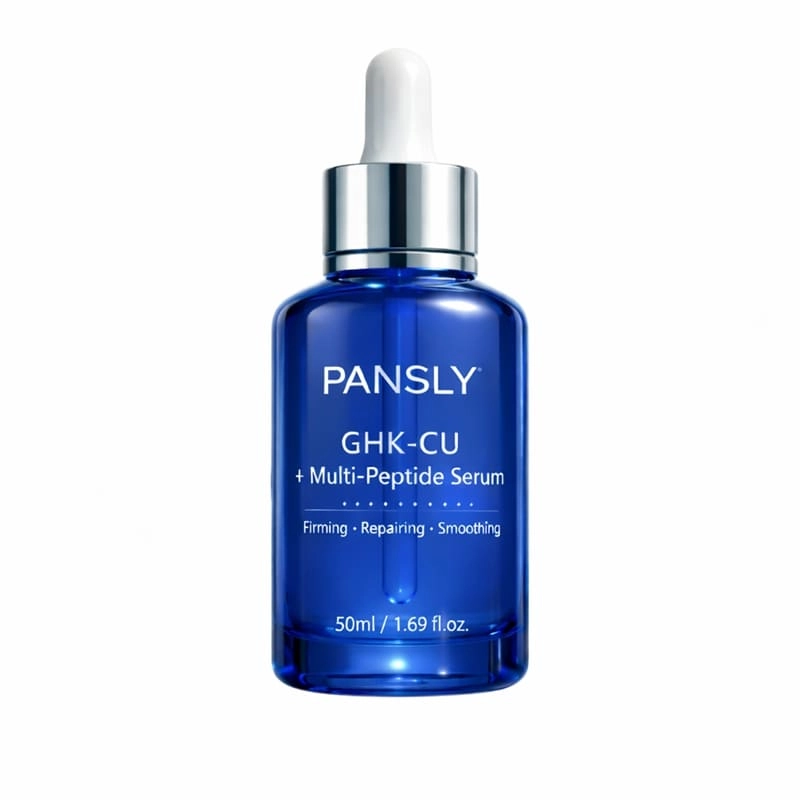
Experience visible rejuvenation with this GHK-Cu Copper Peptide Smoothing & Firming Face Serum, a high-performance concentrate designed to restore the structural integrity of aging skin. This advanced formula centers on GHK-Cu, a powerful signaling peptide clinically recognized for its ability to support natural collagen and elastin production. By promoting dermal density, it effectively tightens sagging skin and smooths the appearance of deep-set wrinkles and fine lines.
The lightweight, silky texture absorbs instantly, delivering antioxidant protection to neutralize environmental stressors that accelerate aging. Enhanced with deep-moisturizing agents, the serum reinforces the skin's moisture barrier, leaving the complexion feeling remarkably soft and resilient. With consistent use, skin texture is refined and facial contours appear more lifted, resulting in a youthfully firm and revitalized glow.
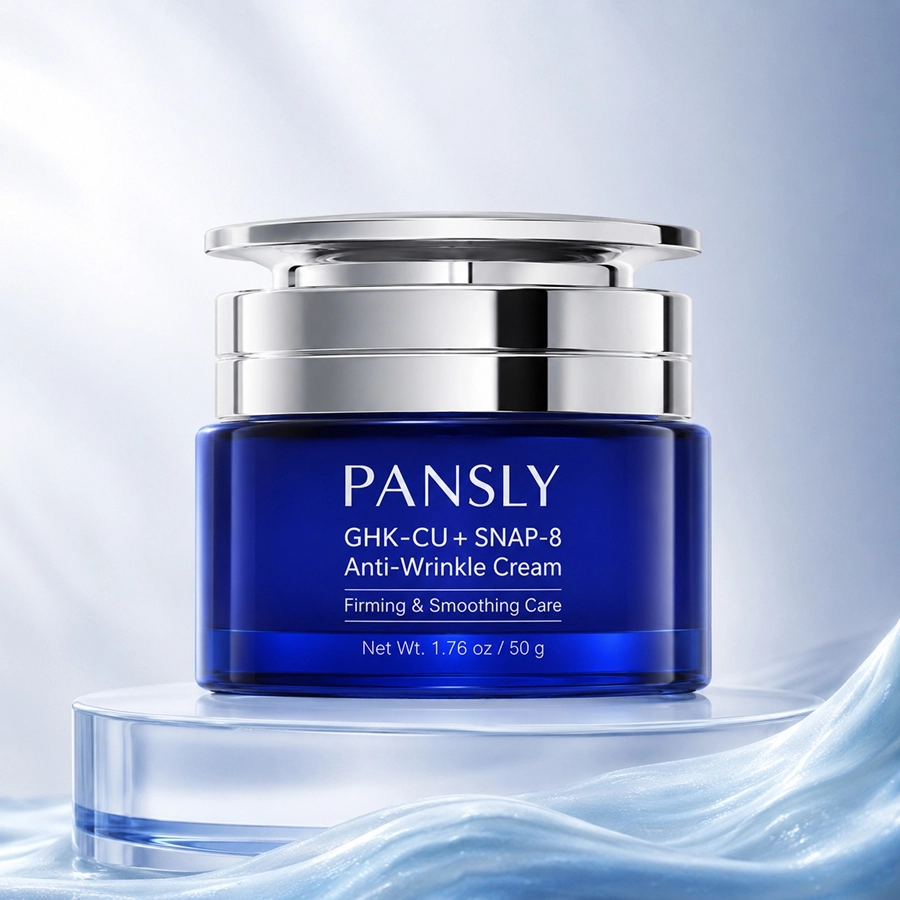
This Pansly GHK-CU + SNAP-8 Anti-Wrinkle Firming Cream is triple-peptide anti-aging facial cream, delivers targeted wrinkle smoothing, firming lifting and deep nourishment for dull, saggy, fine-line prone skin. Full OEM & ODM private label service is supported, including custom formula, packaging options, fast sampling and bulk export supply.
Five core premium active ingredients work synergistically for comprehensive anti-wrinkle care:
GHK-CU Copper Peptide lifts saggy skin, enhances skin resilience and tightens loose facial contour;
SNAP-8 Peptide targets expression lines to visibly soften and fade wrinkles;
Acetyl Hexapeptide-8 reduces the appearance of dry fine lines for smoother skin texture;
Ceramide NP reconstructs skin moisture barrier to lock nourishment and boost comfort;
Hyaluronic Acid delivers multi-layer rich deep moisture to relieve dry rough skin.
Luxury rich creamy texture spreads smoothly and melts into skin gently, leaving soft comfortable finish without heavy greasiness. Daily use blurs fine lines, firms loose skin, deeply nourishes and stabilizes barrier, refining uneven texture to reveal smooth, plump, youthful luminous skin.
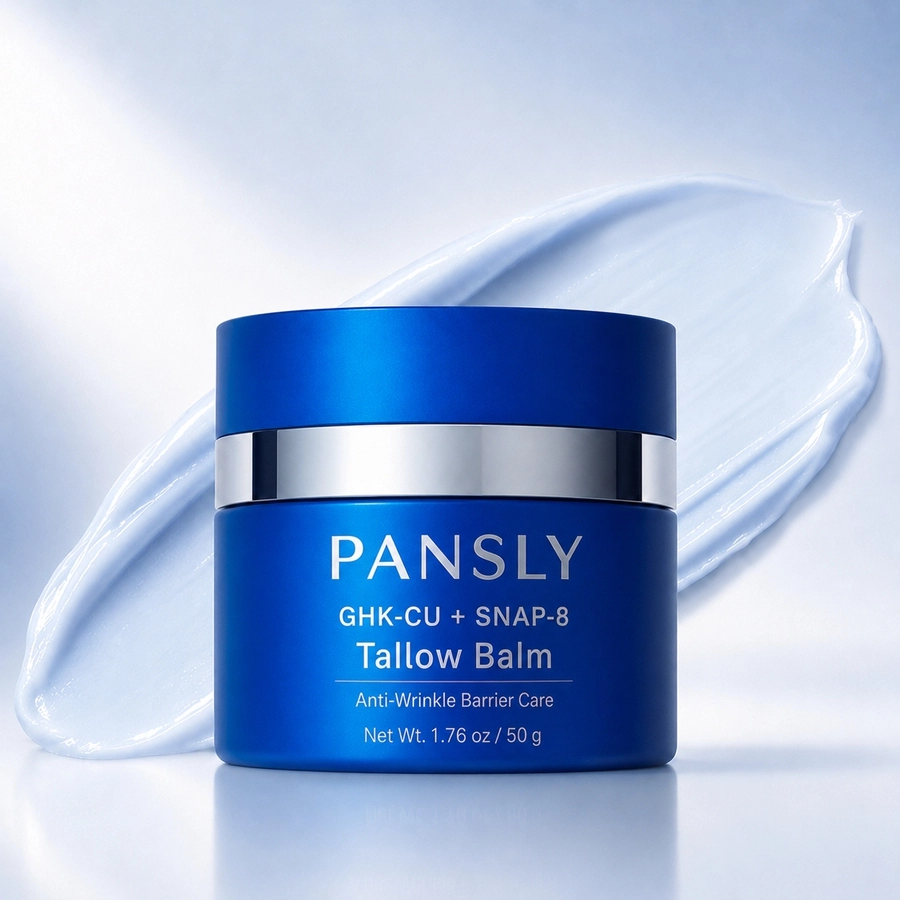
This Pansly GHK-CU + SNAP-8 Tallow Balm is a nourishing anti-wrinkle facial balm specially formulated for dry, fragile and sensitive skin, combining anti-aging wrinkle smoothing and barrier repairing effects. We offer full private label OEM service, including custom logo, adjustable formula, diversified packaging and lid color options.
It contains five core skin care active ingredients: GHK-CU visibly improves fine lines and revives dull complexion; SNAP-8 softens expression lines to smooth wrinkled skin texture; Grass-Fed Beef Tallow delivers deep lipid nourishment to relieve dry rough skin; Ectoin stabilizes the skin barrier and alleviates skin discomfort; Ceramide NP strengthens barrier structure to create smooth, healthy skin.
Luxury creamy blue balm texture glides smoothly and melts quickly on skin, providing long-lasting deep moisturizing comfort. Daily use fades fine lines & expression lines, nourishes dry delicate skin, repairs damaged barrier and leaves silky smooth skin finish.
Click here to customize the Beauty
we respond within a few hours
Monday–Friday, 9AM–6PM
3A01, Building A, Zhisheng Square, No. 4 Zhifu Road, Helong Street, Baiyun District, Guangzhou, China.


Leave a request, and we'll email you back within 24 hours.
© 2026 Beyond Basix. All Rights Reserved.
