Wholesale retinol serum for face manufacturer and supplier
Comprehensive B2B guide for sourcing wholesale retinol serum for face: evaluate MOQ flexibility, ensure formulation stability and clinical-grade quality, compare tiered pricing and lead times, and choose logistics strategies that protect potency while minimizing landed cost — with practical checklists and manufacturer selection criteria tailored for distributors, private-label brands, and large retailers seeking reliable One-Stop OEM/ODM for Skincare partners.
- Wholesale Skincare Demand and Supply Trends
- Market drivers for active anti-aging solutions
- What distributors and brands prioritize today
- Regulatory and standards context
- Factory Evaluation: Capacity, Capabilities, and Quality Assurance
- Assessing production capacity and scalability
- Formulation and ingredient expertise
- Quality control, testing, and documentation
- Commercial Terms: MOQs, Tiered Pricing, and Packaging Options
- Understanding typical MOQs and flexibility
- Tiered pricing and cost drivers
- Packaging and shelf-life options that protect potency
- Logistics, Lead Times, and Risk Mitigation for Bulk Orders
- Typical production lead times and scheduling
- Transport, customs, and preserving active integrity
- Risk mitigation and inventory strategy
- Wholesale Comparison Table
- Manufacturing Partner Checklist and How to Shortlist Suppliers
- Core questions to ask every potential manufacturer
- Technical acceptability criteria
- Commercial negotiation points
- Frequently Asked Questions
- What is a reasonable MOQ for a private-label retinol serum for face?
- How can I ensure batch-to-batch consistency of retinol potency?
- What packaging is best to protect retinol in bulk?
- Do I need special transport conditions for retinol serums?
- How long does stability testing take for a custom retinol serum?
- What certifications should I prioritize when choosing a manufacturer?
Comprehensive B2B guide for sourcing wholesale retinol serum for face: evaluate MOQ flexibility, ensure formulation stability and clinical-grade quality, compare tiered pricing and lead times, and choose logistics strategies that protect potency while minimizing landed cost — with practical checklists and manufacturer selection criteria tailored for distributors, private-label brands, and large retailers seeking reliable One-Stop OEM/ODM for Skincare partners.
Wholesale Skincare Demand and Supply Trends
Market drivers for active anti-aging solutions
Global demand for retinol face serum and retinol-based anti-aging products continues to grow as consumers prioritize proven actives that target fine lines, texture and tone. Professional channels and e-commerce both prioritize stable, clinically validated formulations and transparent ingredient sourcing. For B2B buyers, the trend means prioritizing manufacturers who can deliver consistent batches and regulatory documentation rather than only low unit costs.
What distributors and brands prioritize today
Wholesale buyers focus on three things: consistent quality (stability and potency across production lots), MOQ and price flexibility, and reliable logistics that protect the active ingredient. Retinol is light- and oxygen-sensitive, so packaging and cold-chain considerations influence landed costs and shelf life; plan procurement accordingly.
Regulatory and standards context
When selecting a supplier, require compliance evidence: ISO certifications, GMP manufacturing, safety data (MSDS), and any requested halal or CE documentation. See general background on retinol as an ingredient at Retinol — Wikipedia and on quality management at ISO 9001. For information about cosmetics regulation in the U.S., consult the FDA Cosmetics resource and for Good Manufacturing Practices see the WHO GMP guidance.
Factory Evaluation: Capacity, Capabilities, and Quality Assurance
Assessing production capacity and scalability
Ask suppliers for a clear statement of production capacity in units per month for retinol serum for face, and proof of operating production lines. Capacity should be supported by facility data (square meters), number of production lines and cleanroom class; a partner with a 100,000-level GMPC dust-free workshop and multiple automated lines reduces batch variability risk and shortens scale-up time.
Formulation and ingredient expertise
Evaluate how long the manufacturer has developed retinol formulations and what ranges of retinol concentrations they routinely manufacture (commonly 0.01% up to 1.0% in professional and OTC products). Discuss encapsulation technologies (microencapsulation, liposomes, esterified retinoids) and delivery systems that improve stability and tolerability for facial retinol serums.
Quality control, testing, and documentation
Require batch certificates, HPLC assay results for active content, stability testing (accelerated and real-time), preservative efficacy tests (challenge tests), microbiological reports, and MSDS. A reliable One-Stop OEM/ODM partner will offer ISO/GMP documentation and third-party testing options to validate each production batch.
Commercial Terms: MOQs, Tiered Pricing, and Packaging Options
Understanding typical MOQs and flexibility
MOQs vary by supplier, complexity of formulation, and packaging. For plain serum formula orders, many factories quote smaller MOQs for existing formulas and larger MOQs for customized formulations. Ask about sample runs, pilot batches, and how MOQ scales with packaging selection (bottles, airless pumps, ampoules). Negotiate a staged approach: initial smaller launch MOQ followed by scaled production once SKUs perform.
Tiered pricing and cost drivers
Price per unit for a retinol serum for face depends on active concentration, encapsulation, preservative system, packaging (airless vs. pump vs. dropper), and printing/decoration. Expect lower unit costs with larger volume bands and simpler packaging; ensure quotes include all variable costs (formulation, packaging, artwork, testing, and freight) for a true landed cost comparison.
Packaging and shelf-life options that protect potency
Because retinol degrades with light and oxygen, prioritize opaque or amber containers, airless dispensers, nitrogen-flush filling and UV-protective secondary packaging. Discuss recommended shelf life and storage conditions; ensure stability testing supports labeled shelf life and that packaging materials are compatible with the formulation.
Logistics, Lead Times, and Risk Mitigation for Bulk Orders
Typical production lead times and scheduling
Production lead times depend on whether you use an existing tested formula or require custom development. For private-label orders using standard formulas, lead times can be shorter; custom formulations require development and stability testing that add weeks. Confirm the supplier’s lead-time commitments, production capacity per month, and contingency plans for unexpected demand spikes.
Transport, customs, and preserving active integrity
Retinol shipments generally do not require temperature-controlled transport, but extreme heat during transit can accelerate degradation. Use protective packaging and choose shipping windows that avoid prolonged exposure to high temperatures. Plan for customs documentation (COO, commercial invoice, packing list, certificates) to avoid delays. Work with logistics partners who understand cosmetic classification and labelling requirements for your target markets.
Risk mitigation and inventory strategy
Adopt a two-tier inventory strategy: maintain safety stock of finished goods and raw active ingredients when feasible, and plan rolling production schedules to replace inventory before expiry. Consider staggered shipments and smaller, more frequent orders if you anticipate rapid formula changes or marketing tests.
Wholesale Comparison Table
| Order Tier | Typical MOQ (units) | Estimated Unit Price Range (USD) | Typical Lead Time |
|---|---|---|---|
| Starter / Pilot | 100–1,000 | $3.50–$8.00 | 4–8 weeks |
| Growth / Retail Launch | 1,000–10,000 | $2.20–$4.50 | 6–10 weeks |
| Volume / National Rollout | 10,000+ | $1.20–$3.00 | 8–14 weeks |
Manufacturing Partner Checklist and How to Shortlist Suppliers
Core questions to ask every potential manufacturer
Request the following: facility certifications (ISO 9001, GMP), number of production lines, sample stability data, proof of HPLC testing for retinol content, typical MOQs, packaging capabilities (airless pump, amber glass), lead times, QC protocols, and references from other B2B clients. Confirm whether they offer turnkey One-Stop OEM/ODM for Skincare services including design, filling, labeling and drop-shipping.
Technical acceptability criteria
Accept a supplier only when they can demonstrate repeatable batch-to-batch retinol potency via analytical reports, have validated filling and nitrogen-flush procedures, and provide documented stability data that supports the stated shelf life for your retinol face serum.
Commercial negotiation points
Negotiate price bands tied to volume milestones, clarify responsibilities for regulatory labeling changes, confirm intellectual property protections for custom formulas, and secure trial samples and initial small-batch options for market testing. Make sure the contract includes quality dispute resolution and rework/recall procedures.
Frequently Asked Questions
What is a reasonable MOQ for a private-label retinol serum for face?
MOQs vary by factory and formula complexity; many manufacturers offer pilot batches from a few hundred to a few thousand units for standard formulas, while fully customized formulas typically require higher MOQs—discuss staged launch options to reduce initial risk.
How can I ensure batch-to-batch consistency of retinol potency?
Require HPLC assay certificates for each batch, validated in-house QC processes, and third-party testing options; include acceptance criteria in your purchase order and test incoming shipments upon arrival when possible.
What packaging is best to protect retinol in bulk?
Airless dispensers, amber or opaque glass, and nitrogen-flush filling reduce oxidation and light exposure; avoid clear droppers for high-retinol formulations when possible.
Do I need special transport conditions for retinol serums?
Most retinol serums do not legally require cold-chain transport, but avoid extended exposure to high temperatures and sunlight during transit; use insulated packaging for hot-weather shipments to protect potency.
How long does stability testing take for a custom retinol serum?
Accelerated stability testing can provide initial guidance in weeks, but reliable shelf-life claims require real-time stability data; expect development cycles of 8–24 weeks depending on testing depth and regulatory needs.
What certifications should I prioritize when choosing a manufacturer?
Prioritize ISO 9001, GMP (or GMPC), product safety documents (MSDS), and any market-specific certifications like CE or Halal that you need for your target regions; these certifications demonstrate process control and reduce compliance risk.
Contact us for wholesale pricing, MOQs, and bulk orders based on Guangzhou Beyond Basix Cosmetics Ltd. is a leading comprehensive cosmetics care manufacturer with over 23 years of experience in research, production, and sales. Our 12,000-square-meter facility includes a 100,000-level GMPC pharmaceutical-grade dust-free workshop and 12 production lines, equipped with advanced machinery imported from Germany, the US, and other regions.Focusing on the development of skincare products with effective ingredients for 12 years, we operate four major brands: LANTHOME, PANSLY, FIRSTSUN, and SAUVASINE. We are certified with ISO 9001, CE, MSDS, GMP, HALAL, and more.Committed to offering the best products, services, and prices, we aim to grow and progress together with our partners. We are more than just skincare—connect with us today!

Elevate your professional skincare offerings with this Private Label Copper Peptide Anti-Wrinkle Firming Serum, a powerhouse concentrate designed for superior age-defying results. This sophisticated formula leverages the synergistic effects of GHK-Cu and SNAP-8 to address multiple layers of skin aging. The GHK-Cu copper peptides act as a vital signaling mechanism to enhance skin density and firmness, while the advanced SNAP-8 octapeptide specifically targets expression lines, helping to relax the appearance of deep-seated wrinkles for a smoother, more refined surface.
This lightweight, rapid-absorption serum provides a professional-grade solution for clients seeking a non-invasive lift. It effectively restores elasticity, improves skin texture, and provides essential antioxidant protection. Perfect for high-end beauty brands, this serum leaves the complexion looking visibly contoured, hydrated, and youthfully revitalized.
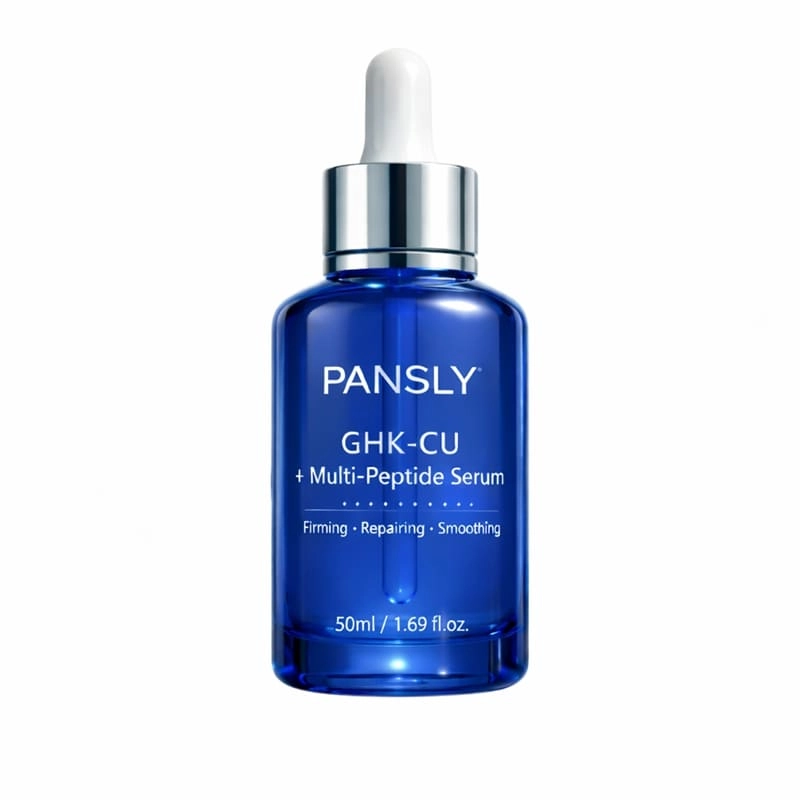
Experience visible rejuvenation with this GHK-Cu Copper Peptide Smoothing & Firming Face Serum, a high-performance concentrate designed to restore the structural integrity of aging skin. This advanced formula centers on GHK-Cu, a powerful signaling peptide clinically recognized for its ability to support natural collagen and elastin production. By promoting dermal density, it effectively tightens sagging skin and smooths the appearance of deep-set wrinkles and fine lines.
The lightweight, silky texture absorbs instantly, delivering antioxidant protection to neutralize environmental stressors that accelerate aging. Enhanced with deep-moisturizing agents, the serum reinforces the skin's moisture barrier, leaving the complexion feeling remarkably soft and resilient. With consistent use, skin texture is refined and facial contours appear more lifted, resulting in a youthfully firm and revitalized glow.
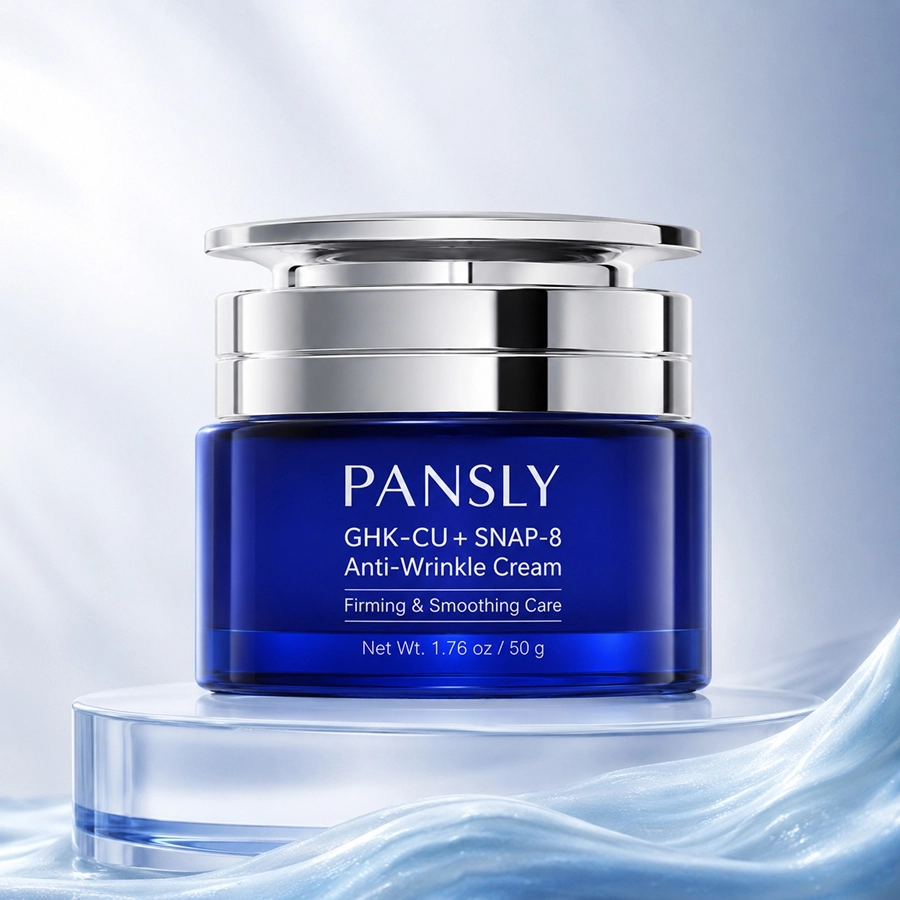
This Pansly GHK-CU + SNAP-8 Anti-Wrinkle Firming Cream is triple-peptide anti-aging facial cream, delivers targeted wrinkle smoothing, firming lifting and deep nourishment for dull, saggy, fine-line prone skin. Full OEM & ODM private label service is supported, including custom formula, packaging options, fast sampling and bulk export supply.
Five core premium active ingredients work synergistically for comprehensive anti-wrinkle care:
GHK-CU Copper Peptide lifts saggy skin, enhances skin resilience and tightens loose facial contour;
SNAP-8 Peptide targets expression lines to visibly soften and fade wrinkles;
Acetyl Hexapeptide-8 reduces the appearance of dry fine lines for smoother skin texture;
Ceramide NP reconstructs skin moisture barrier to lock nourishment and boost comfort;
Hyaluronic Acid delivers multi-layer rich deep moisture to relieve dry rough skin.
Luxury rich creamy texture spreads smoothly and melts into skin gently, leaving soft comfortable finish without heavy greasiness. Daily use blurs fine lines, firms loose skin, deeply nourishes and stabilizes barrier, refining uneven texture to reveal smooth, plump, youthful luminous skin.
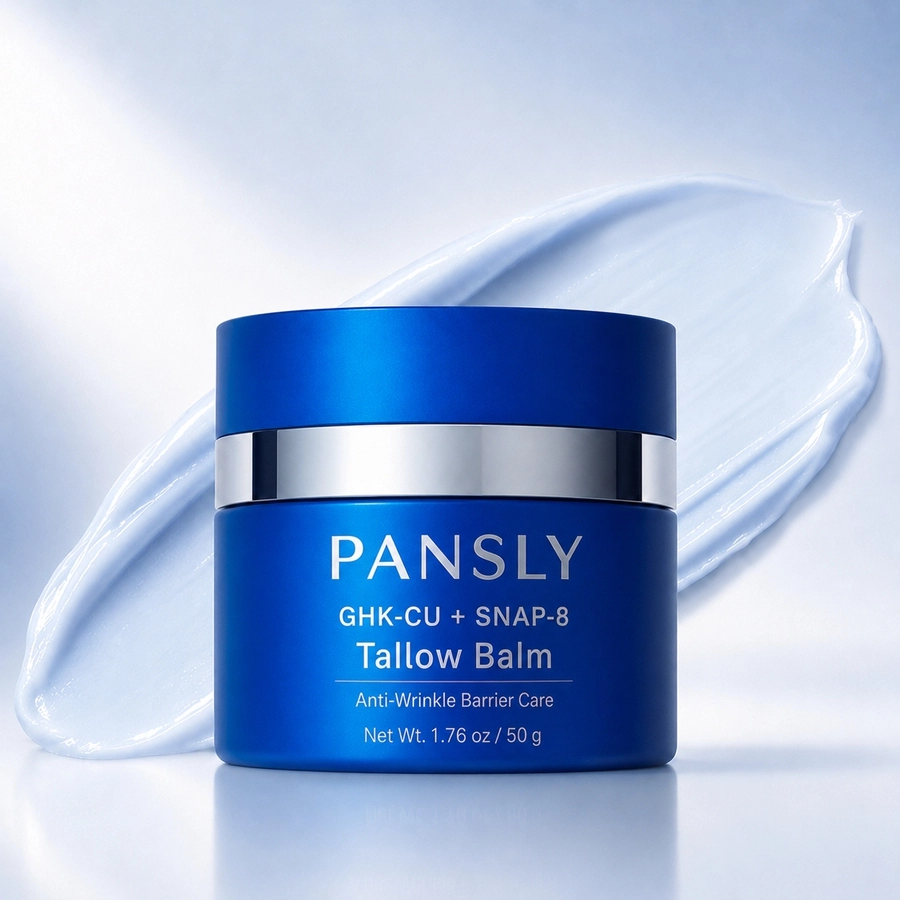
This Pansly GHK-CU + SNAP-8 Tallow Balm is a nourishing anti-wrinkle facial balm specially formulated for dry, fragile and sensitive skin, combining anti-aging wrinkle smoothing and barrier repairing effects. We offer full private label OEM service, including custom logo, adjustable formula, diversified packaging and lid color options.
It contains five core skin care active ingredients: GHK-CU visibly improves fine lines and revives dull complexion; SNAP-8 softens expression lines to smooth wrinkled skin texture; Grass-Fed Beef Tallow delivers deep lipid nourishment to relieve dry rough skin; Ectoin stabilizes the skin barrier and alleviates skin discomfort; Ceramide NP strengthens barrier structure to create smooth, healthy skin.
Luxury creamy blue balm texture glides smoothly and melts quickly on skin, providing long-lasting deep moisturizing comfort. Daily use fades fine lines & expression lines, nourishes dry delicate skin, repairs damaged barrier and leaves silky smooth skin finish.
Click here to customize the Beauty
we respond within a few hours
Monday–Friday, 9AM–6PM
3A01, Building A, Zhisheng Square, No. 4 Zhifu Road, Helong Street, Baiyun District, Guangzhou, China.


Leave a request, and we'll email you back within 24 hours.
© 2026 Beyond Basix. All Rights Reserved.