
Why Intensive Foot Care Is Becoming a High-Retention Skincare Category
- Demand Signals Driving Repeat Purchase in Foot Treatment Products
- Clinical Efficacy and Habit Formation: why consumers return
- Demographic and lifestyle tailwinds
- Retail mechanics: packaging, price tiers and subscription fit
- Formulation, Manufacturing, and Compliance Considerations for High-Retention Foot Lines
- Active selection and stability testing for therapeutic foot balms
- Packaging engineering that preserves potency and user experience
- Regulatory and quality controls buyers cannot ignore
- Commercial Strategies: Positioning Intensive Foot Care as a Retention Tool
- Channel strategy and pricing architecture
- Marketing claims and clinical substantiation
- Supply chain resilience and launch staging
- How a One-Stop OEM/ODM Partner Streamlines Launch and Scale
- From concept to compliant manufacturing
- Cost control through ingredient sourcing and production engineering
- Quality systems and certifications as commercial leverage
- Beyond Basix: Manufacturing Capability and Competitive Advantages
- Integrated facilities and production capacity
- R&D and ingredient expertise for result-driven foot therapies
- Certifications, compliance, and global market access
- Product portfolio and private labeling flexibility
- Commercial partnership model and post-launch support
- Frequently Asked Questions
- How should brand owners decide between a repair-intensive formula and a maintenance cream?
- What packaging types best preserve potency for high-active foot treatments?
- Which ingredients are most effective for callus reduction and skin softening?
- What regulatory documentation should procurement request from manufacturers?
- How can private brands maximize repeat purchases for foot care SKUs?
Intensive foot therapies are transforming into a high-retention segment within personal care due to changing consumer behaviors, measurable clinical ingredient efficacy, repeat-use treatment cycles, and favourable unit economics for subscription and retail models; this article synthesizes market signals, formulation variables (urea, AHAs, ceramides, occlusives), packaging and stability best practices, regulatory and quality checkpoints, and procurement strategies that private brands must adopt to convert one-time buyers into loyal customers while explaining how a full-service OEM/ODM partner can operationalize these opportunities.
Demand Signals Driving Repeat Purchase in Foot Treatment Products
Clinical Efficacy and Habit Formation: why consumers return
High-concentration therapeutic formulations—such as keratolytic actives (urea, salicylic acid) plus replenishing lipids (ceramides, shea butter)—produce visible improvement within 1–4 weeks, creating habit formation and higher repurchase probability. For brand owners, this creates a predictable cadence: intensive-use protocols (daily for 2–4 weeks, then maintenance) yield repeat orders and subscription-ready replenishment cycles that improve customer lifetime value (CLV).
Demographic and lifestyle tailwinds
Ageing populations, increased running and fitness participation, and occupational standing/walking exposures increase demand for corrective foot therapies. Retail buyers should target segmented SKUs (athlete-focused, geriatric emollients, fragrance-free clinical lines) to maximize basket penetration across channels from pharmacies to e-commerce marketplaces.
Retail mechanics: packaging, price tiers and subscription fit
Private brands benefit from SKU tiering—starter, intensive repair, maintenance—paired with dosing-savvy packaging (airless tubes, pumps) to minimize waste and reduce return rates. Subscription models work well when the product provides measurable week-to-week improvement; procurement teams should model refill economics and minimize SKUs with overlapping claims to reduce inventory complexity.
Formulation, Manufacturing, and Compliance Considerations for High-Retention Foot Lines
Active selection and stability testing for therapeutic foot balms
Buyers should insist on documented efficacy and stability testing for actives commonly used in heavy-duty foot care: humectants (glycerin, urea), keratolytics (salicylic acid, lactic acid), occlusives (petrolatum, dimethicone), and barrier-repair lipids (ceramides). Accelerated stability and preservative efficacy tests reduce risk of post-launch reformulation and costly recalls.
Packaging engineering that preserves potency and user experience
Airless dispensers and laminate tubes are preferred for high-water-activity formulas to prevent oxidation and microbial ingress, while jars may be acceptable for night-use masks with clear usage instructions. Procurement teams should balance unit cost versus shelf-life and adjust minimum order quantities (MOQs) to test packaging variants in pilot markets.
Regulatory and quality controls buyers cannot ignore
Compliance with GMP/GMPC frameworks, label claim substantiation, and region-specific regulations is essential. Reference materials include the FDA Cosmetics portal for U.S. claim boundaries and the ISO 9001 standard for quality systems. A reliable manufacturing partner should provide batch records, COAs, and a documented quality management system.
Commercial Strategies: Positioning Intensive Foot Care as a Retention Tool
Channel strategy and pricing architecture
Retailers and DTC brands should segment price tiers by treatment intensity and frequency of use. High Quality therapeutic lines can command higher ASPs with clinical claims and validated ingredient concentrations, while economy maintenance SKUs support wider distribution. Optimizing gross margin requires negotiating scale pricing on core excipients and packaging across multiple SKUs.
Marketing claims and clinical substantiation
Investing in third-party clinical testing or consumer-use panels supports performance claims and reduces litigation risk. Claims should be specific and measurable (e.g., percentage improvement in callus thickness, or time-to-symptom relief) and aligned with regulatory guidance on cosmetics versus OTC therapeutic categorization.
Supply chain resilience and launch staging
Staging launches with pilot markets helps validate SKU assortment. Buyers should require suppliers to present contingency plans for raw-material sourcing, especially for specialty actives like high-purity urea or pharmaceutical-grade salicylic acid. Lead-time management and multi-line production capacity lower the risk of stockouts when demand accelerates.
| Attribute | Conventional Footcare Lotions | High-Retention Intensive Treatments |
|---|---|---|
| Repurchase Cadence | Low to Moderate (maintenance use) | High (treatment + maintenance cycles) |
| Formulation Complexity | Simple emollients, low actives | Complex (keratolytics, humectants, barrier lipids) |
| Packaging Requirements | Standard tubes/jars | Airless/pump or single-dose sachets to maintain potency |
| Regulatory Burden | Low to Moderate | Moderate to High (evidence for clinical claims) |
| Customer Lifetime Value Opportunity | Limited | High (subscription and refill economics) |
| Best Channel Fit | Mass retail, general e-commerce | Pharmacy, DTC subscription, specialty retailers |
| Market Signal | Stable | Growing (see market research) |
How a One-Stop OEM/ODM Partner Streamlines Launch and Scale
From concept to compliant manufacturing
Buyers benefit from a partner that integrates R&D, pilot stability testing, production scale-up, and regulatory documentation. A one-stop manufacturer reduces coordination overhead, shortens time-to-market, and provides consolidated accountability for batch quality and shelf-life assurances.
Cost control through ingredient sourcing and production engineering
Strategic sourcing of core actives and economies of scale on packaging reduce landed cost. Production engineering—line balancing, filling optimization, and automation—lowers per-unit labor and waste, enabling competitive pricing without compromising efficacy.
Quality systems and certifications as commercial leverage
Certification credentials are commercial differentiators for B2B buyers. Organizations often request documented adherence to GMP, third-party testing, and material safety data to meet distributor onboarding requirements. For reference, general industry context on skin-care standards can be found at Skin care - Wikipedia.
Beyond Basix: Manufacturing Capability and Competitive Advantages
Integrated facilities and production capacity
Guangzhou Beyond Basix Cosmetics Ltd. operates a 12,000-square-meter facility with a 100,000-level GMPC pharmaceutical-grade dust-free workshop and 12 production lines. Our engineering team manages automated filling and packaging lines imported from Germany and the United States, allowing buyers to scale both small-batch pilot runs and large-volume production with predictable lead times.
R&D and ingredient expertise for result-driven foot therapies
Our formulation group focuses on efficacious combinations—urea-based keratolytics, AHA blends for exfoliation, ceramide-rich barriers, and high-emollient occlusives—optimized for sensory appeal and clinical performance. With 12 years concentrating on active ingredient development, our labs provide stability testing, preservative system optimization, and claim substantiation to help partners avoid costly post-launch reformulations.
Certifications, compliance, and global market access
Beyond Basix maintains ISO 9001, CE, MSDS documentation, GMP-compliant operations, and HALAL certification to facilitate entry into regulated markets. Buyers seeking compliant manufacturing for therapeutic foot products will find our documented quality management systems and batch traceability suitable for pharmacy and DTC channels. For regulatory context in the U.S., consult the FDA Cosmetics guidance.
Product portfolio and private labeling flexibility
Our production capabilities extend across Skincare Products, Hair Care Products, Eye Care Products, and Body Care Products. We support white-label and tailored branding programs, flexible MOQ structures for pilots, and full packaging services, including custom airless dispensers and single-use sachets to match the intended user journey and retail placement.
Commercial partnership model and post-launch support
Beyond Basix emphasizes collaborative go-to-market planning: SKU rationalization, pricing models for subscription channels, and promotional pack design to maximize initial conversion and long-term retention. Our supply chain team provides multi-sourcing for critical actives and transparent lead-time commitments to mitigate stockout risks during scale-up.
Frequently Asked Questions
How should brand owners decide between a repair-intensive formula and a maintenance cream?
Brand owners should base the decision on target consumer need and usage cadence: repair-intensive formulas are designed for high-actives and short-term treatment cycles (1–4 weeks) and are suited to High Quality or pharmacy channels, while maintenance creams prioritize sensory properties and daily compliance for broader retail distribution.
What packaging types best preserve potency for high-active foot treatments?
Airless dispensers, laminated tubes, and blister/sachet single doses minimize oxidation and microbial contamination and therefore best preserve potency for formulations with sensitive actives or high water activity.
Which ingredients are most effective for callus reduction and skin softening?
Keratolytic agents (urea 10–40%, salicylic acid at regulated concentrations, and alpha-hydroxy acids) combined with humectants and barrier lipids produce both exfoliation and long-term hydration; formulation balance and pH control are crucial for efficacy and tolerability.
What regulatory documentation should procurement request from manufacturers?
Procurement should request GMP/GMPC certificates, ISO quality system evidence, COAs for critical raw materials, preservative efficacy test reports, accelerated stability data, and MSDS for finished goods and actives. These documents enable compliant labeling and reduced regulatory risk.
How can private brands maximize repeat purchases for foot care SKUs?
Maximizing repeat purchases requires visible short-term efficacy, clear usage instructions, tiered SKU strategy (treatment + maintenance), subscription options, and refill-friendly packaging; pairing clinical or consumer-efficacy data with loyalty offers or bundled promotions enhances retention.
Contact Beyond Basix to discuss custom formulations, production capabilities, and private-label solutions for intensive foot care and related personal care lines.

Elevate your professional skincare offerings with this Private Label Copper Peptide Anti-Wrinkle Firming Serum, a powerhouse concentrate designed for superior age-defying results. This sophisticated formula leverages the synergistic effects of GHK-Cu and SNAP-8 to address multiple layers of skin aging. The GHK-Cu copper peptides act as a vital signaling mechanism to enhance skin density and firmness, while the advanced SNAP-8 octapeptide specifically targets expression lines, helping to relax the appearance of deep-seated wrinkles for a smoother, more refined surface.
This lightweight, rapid-absorption serum provides a professional-grade solution for clients seeking a non-invasive lift. It effectively restores elasticity, improves skin texture, and provides essential antioxidant protection. Perfect for high-end beauty brands, this serum leaves the complexion looking visibly contoured, hydrated, and youthfully revitalized.
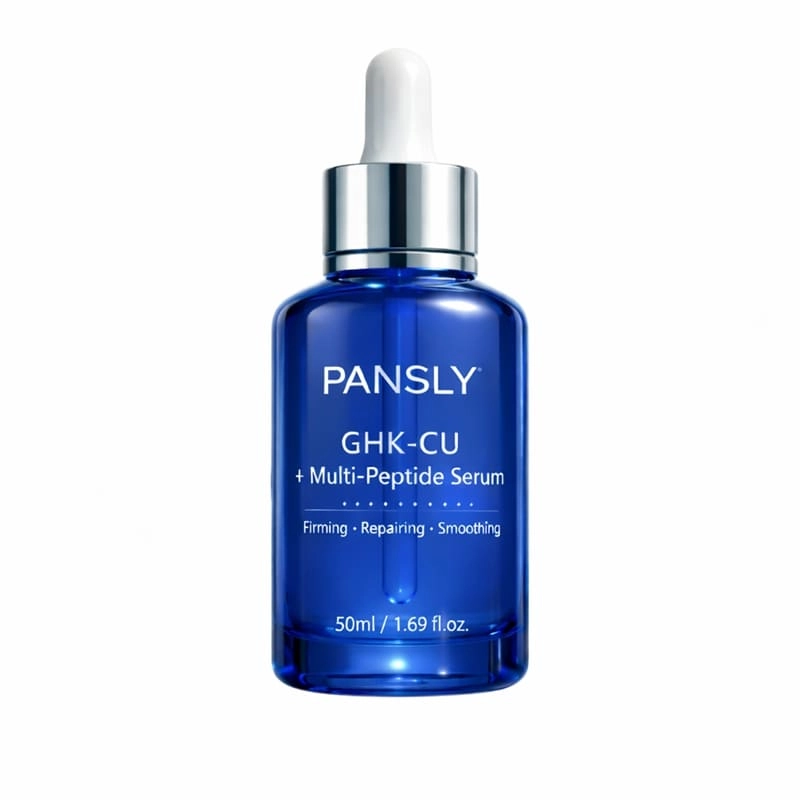
Experience visible rejuvenation with this GHK-Cu Copper Peptide Smoothing & Firming Face Serum, a high-performance concentrate designed to restore the structural integrity of aging skin. This advanced formula centers on GHK-Cu, a powerful signaling peptide clinically recognized for its ability to support natural collagen and elastin production. By promoting dermal density, it effectively tightens sagging skin and smooths the appearance of deep-set wrinkles and fine lines.
The lightweight, silky texture absorbs instantly, delivering antioxidant protection to neutralize environmental stressors that accelerate aging. Enhanced with deep-moisturizing agents, the serum reinforces the skin's moisture barrier, leaving the complexion feeling remarkably soft and resilient. With consistent use, skin texture is refined and facial contours appear more lifted, resulting in a youthfully firm and revitalized glow.
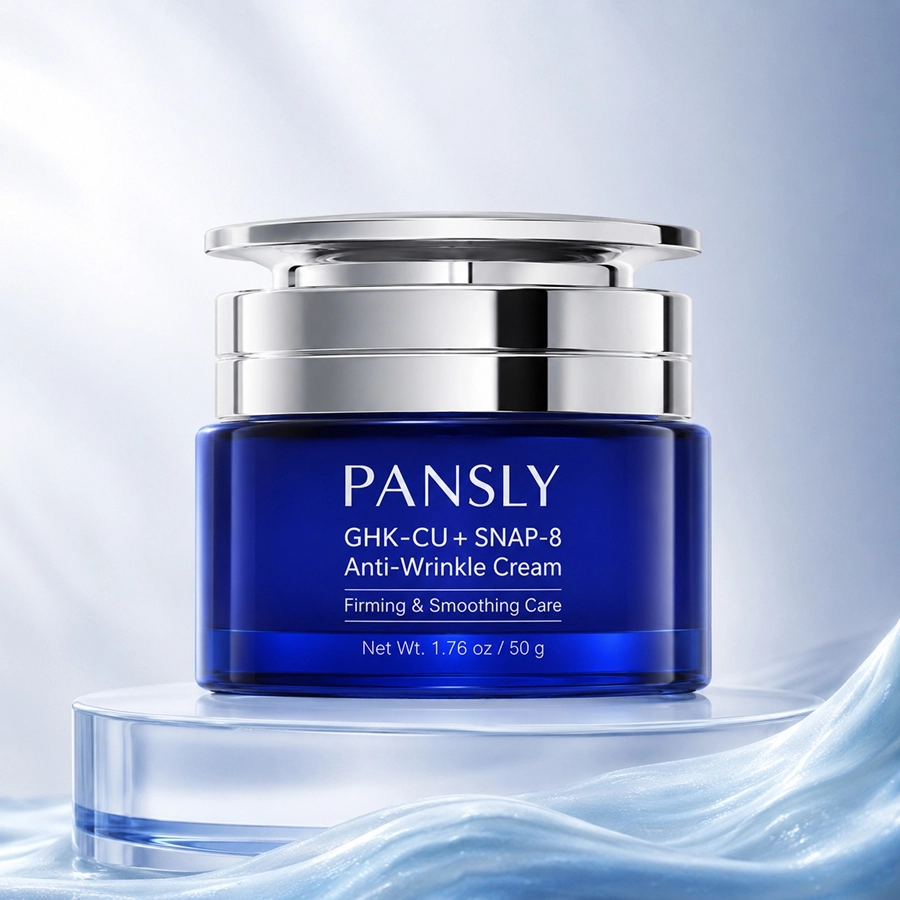
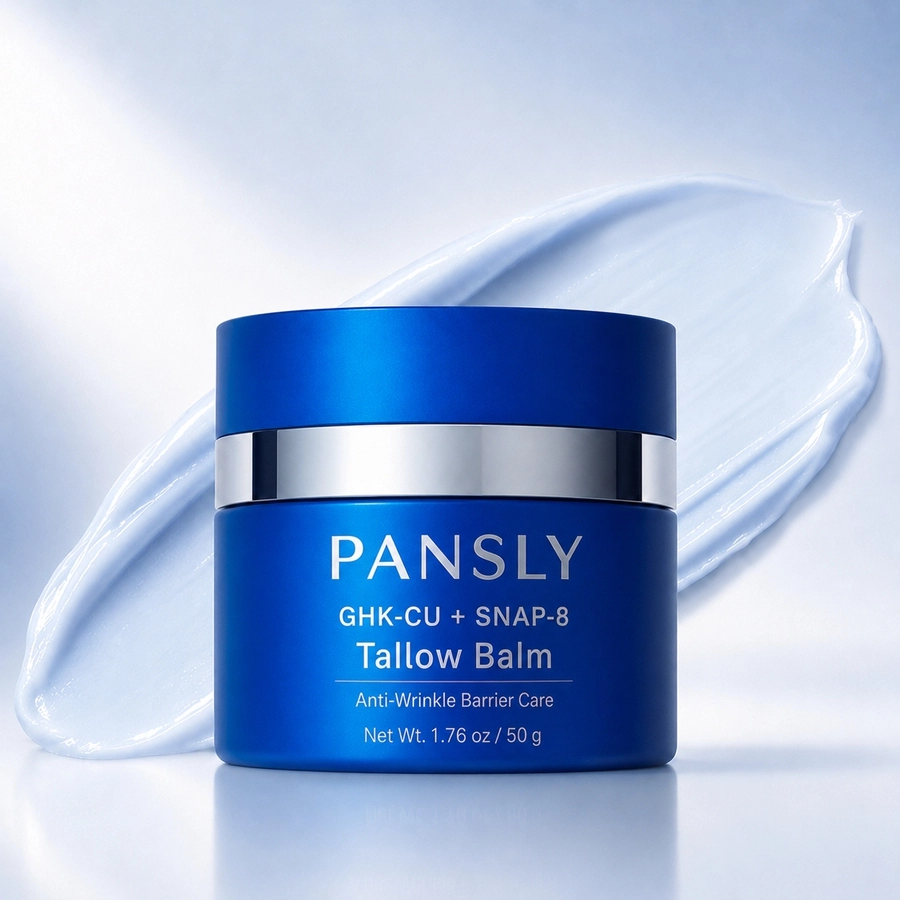
This Pansly GHK-CU + SNAP-8 Tallow Balm is a nourishing anti-wrinkle facial balm specially formulated for dry, fragile and sensitive skin, combining anti-aging wrinkle smoothing and barrier repairing effects. We offer full private label OEM service, including custom logo, adjustable formula, diversified packaging and lid color options.
It contains five core skin care active ingredients: GHK-CU visibly improves fine lines and revives dull complexion; SNAP-8 softens expression lines to smooth wrinkled skin texture; Grass-Fed Beef Tallow delivers deep lipid nourishment to relieve dry rough skin; Ectoin stabilizes the skin barrier and alleviates skin discomfort; Ceramide NP strengthens barrier structure to create smooth, healthy skin.
Luxury creamy blue balm texture glides smoothly and melts quickly on skin, providing long-lasting deep moisturizing comfort. Daily use fades fine lines & expression lines, nourishes dry delicate skin, repairs damaged barrier and leaves silky smooth skin finish.
Click here to customize the Beauty
we respond within a few hours
Monday–Friday, 9AM–6PM
3A01, Building A, Zhisheng Square, No. 4 Zhifu Road, Helong Street, Baiyun District, Guangzhou, China.


Leave a request, and we'll email you back within 24 hours.
© 2026 Beyond Basix. All Rights Reserved.
