Copper peptide serum manufacturing combines verified GHK-Cu raw materials, compatible serum formulation, appropriate preservation, packaging testing, controlled batch production and substantiated cosmetic claims. MOQ, sampling costs and lead time depend on the actual formula and packaging requirements, not a universal industry figure.
How Is a Copper Peptide Serum Manufactured for a Private Label Brand?
A copper peptide serum is developed by translating a specified peptide raw material into a stable, safe and usable finished cosmetic. A typical project starts with a formulation brief, followed by supplier documentation review, laboratory sampling, packaging selection, relevant stability and microbiological assessment, and a controlled production plan. The ingredients named on a front label do not establish the efficacy or consistency of the final serum. Manufacturing decisions must take account of the supplied chemical grade, processing conditions, supporting ingredients, preservation, packaging interactions and the cosmetic claims intended for the market.
Beyond Basix works with skincare brands developing copper peptide formulas for retail, distributor, spa and direct-to-consumer ranges. Buyers commonly arrive with a product idea such as a GHK-Cu firming serum or a GHK-Cu and SNAP-8 facial serum. We turn that idea into practical questions: which material is specified, what finish should the serum have, which bottle should dispense it, what tests and documentation are expected and how will the product fit the brand's range? A credible manufacturing plan connects these answers before final labels are printed or an order is scheduled.
What Is GHK-Cu and Why Does Raw-Material Identity Matter?
GHK-Cu is a copper complex of the tripeptide glycyl-L-histidyl-L-lysine, commonly described in cosmetic ingredient communication as copper tripeptide-1. It should not be confused with elemental copper, copper salts or every peptide blend marketed as a copper peptide. The identity of the material matters because a name alone does not disclose its purity, carrier, assay, counterions, contamination limits or behavior during processing. Scientific research on GHK-Cu gives useful context for a formulation discussion, but it does not automatically substantiate the performance of a particular retail face serum.
Before developing a commercial batch, a manufacturer should review the supplier specification and relevant certificate of analysis. Depending on the product and market, the review can include identity, concentration, microbiological limits, traceability, storage information and appropriate safety documentation. A pre-diluted raw-material solution needs to be distinguished from pure active material; the percentage of a supplier blend is not the percentage of copper peptide in the finished serum. This distinction matters for purchasing comparisons, formula costs and accurate communication. We encourage buyers to ask what the declared raw-material grade actually contains instead of selecting ingredients only from appealing trade names.
Ingredient selection should connect a verified raw-material specification to the finished serum concept.
Why Are Copper Peptide Serums Often Blue?
Copper peptide formulations are associated with blue tones because some copper complexes exhibit characteristic colors. However, the color intensity of a finished product is not an analytical measure of GHK-Cu purity, concentration or effectiveness. A serum may look different depending on its supplier grade, supporting ingredients, formula background, packaging and any permitted cosmetic color system. Buyers should not infer that darker blue means stronger or better. Color can be an important part of the brand's visual identity, but it must be managed as a specification with acceptable tolerances.
A premium copper peptide serum often benefits from a restrained look: a transparent or lightly tinted fluid, minimal decoration and packaging that communicates its intended market position. A clear glass bottle can show a distinctive blue color, but it also exposes changes in appearance that opaque packaging may conceal. During sample approval, the buyer should confirm whether shade consistency is essential and whether any visible color shift would be considered unacceptable. We would then investigate color behavior under the selected stability conditions and container configuration. Styling decisions should follow the real formula, not pressure the technical team to create an arbitrarily deep blue hue.
Can GHK-Cu Be Combined With SNAP-8 and Other Peptides?
GHK-Cu and SNAP-8 can be considered in the same cosmetic concept, provided the manufacturer evaluates the actual ingredient grades and formula. SNAP-8 is commonly used as a commercial name for an acetyl octapeptide-3 ingredient, but supplier formulations may include carriers and supporting materials. Other peptide complexes also vary in sequence, concentration and recommended use conditions. Combining peptides can create a multi-active positioning, yet the presence of several ingredient names does not establish an additive, synergistic or clinically superior effect. Compatibility, cost and claim substantiation still need separate assessment.
In developing a GHK-Cu and SNAP-8 facial serum, we would investigate the supplier guidance for each material, the selected base, pH considerations, solubility, thermal exposure and final stability. Supporting materials such as hyaluronic acid or panthenol may improve skin feel and the overall moisturizing concept, but they also affect viscosity and handling. A brand launching a premium line should be clear about which claim is supported by the complete product and which mechanism remains ingredient-level background. This prevents marketing teams from creating claims that cannot be substantiated by the final formula. A simpler, well-executed serum can be more commercially defensible than an overloaded list of actives.
Which Supporting Ingredients Fit a Copper Peptide Formula?
Supporting ingredients should be selected for a defined role rather than their popularity on social media. Humectants help shape the moisturizing sensation, rheology modifiers define the serum's flow, appropriate emollients can soften application, and a preservation system protects a water-containing product against microbial contamination. Formulators may consider hyaluronic acid, glycerin, panthenol, selected polysaccharides or compatible peptide systems depending on the target viscosity and claims. The right choice depends on the actual formulation and supplier grades. It would be misleading to publish a universal copper-peptide compatibility list without considering concentrations and processing conditions.
Buyers should also define what the finished product must avoid. Some brands require fragrance-free presentation, a particular visual clarity, low tack, a lightweight finish for layering or a specific ingredient exclusion policy. These choices can affect ingredient sourcing and technical feasibility. For a daily serum, the user may value smooth spreading and rapid settling more than a long ingredient list. For a premium mature-skin program, a slightly richer finish may be appropriate. We translate those sensory targets into measurable sampling feedback, then examine how changes affect packaging and stability. The supporting base is a major contributor to consumer experience and should receive serious development attention.
What Is the Difference Between a Stock Serum and a Custom Copper Peptide Formula?
A stock private label serum typically begins with an existing formulation platform and offers agreed branding or packaging options. This route can simplify some early decisions for a buyer who wants to test a market. A customized serum may require adjustments to texture, supporting actives, fragrance policy, color or dispensing system. Full OEM/ODM development can involve a broader brief covering ingredient choices, proprietary product goals, packaging and market-specific requirements. The distinction is not simply whether a brand logo appears on the bottle; it concerns the amount of technical work and specification control involved.
Neither development route guarantees a specific MOQ or delivery time. Existing formulas still require appropriate documentation and packaging assessment for the intended project. Changing a single component of a formula can alter preservative effectiveness, viscosity, appearance or compatibility with the container. Bespoke packaging may require a production quantity or lead time separate from the bulk serum. Brands should compare proposals using the same scope, including sample rounds, stability work, artwork, component procurement and commercial terms. Our aim is to clarify which properties are already established and which remain to be validated before promising a finished product.
How Should a Manufacturer Develop a Serum Texture?
Texture is a key product specification, not merely a finishing touch. A watery serum, gel serum and emulsion serum create different dispensing and application experiences. The target may involve spreadability, tackiness, slip, absorption perception, drying time, visible clarity or compatibility with makeup and sunscreen routines. Those attributes often depend heavily on the base ingredients, not only on the copper peptide. A serum that feels premium in a glass sample vial may dispense differently through its final pump or dropper.
We recommend structured sample feedback. Buyers can compare each laboratory version against a defined reference, record sensory differences and specify acceptable appearance. Technical teams then evaluate whether changes can be made without compromising the formula. pH and viscosity are useful quality attributes when tied to the specific formula, but there is no universal target for all copper peptide serums. They should be determined by development and supported by the stability program. Once an agreed version is selected, the approved sample becomes a reference for production quality. This reduces disputes over subjective descriptions such as silky, lightweight or fast absorbing, which can mean different things to different teams.
Dropper Bottle or Airless Pump: Which Packaging Is Better?
There is no universal best container for every GHK-Cu serum. Glass droppers communicate a recognizable premium facial-serum aesthetic and make the liquid visible. They also involve a pipette, bulb and closure that must be assessed for compatibility, dispensing and consumer handling. Airless pump systems may help provide controlled dispensing and a lower-contact user experience, but they introduce their own mechanical and material considerations. Neither packaging style automatically proves that an active ingredient will be protected throughout shelf life.
A packaging comparison should evaluate bottle material, contact surfaces, fill volume, viscosity range, pump output or dropper performance, closure integrity, transport stress, appearance and cost. Decoration choices can influence lead time as well as retail positioning. For export sales, packaging also needs to protect the product during storage and shipping, with suitable outer carton design. We would not finalize the package simply because it looks attractive in a mockup. The component should be assessed with the actual serum and any applicable testing program. A product that dispenses reliably, looks consistent and survives transportation is more valuable than an impractical but visually impressive bottle.
Glass dropperPremium visual presentation; evaluate pipette, bulb and liquid-contact compatibility.
Airless pumpMeasured dispensing and a different handling experience; assess mechanical performance.
Commercial selectionApprove real formula and components together, including transport and leakage tests.
How Can a Buyer Evaluate a Copper Peptide Serum Manufacturer?
A professional sourcing review should examine both technical capability and communication discipline. Buyers can ask for relevant manufacturing experience, sample procedures, raw-material qualification processes, quality documentation, packaging coordination and an explanation of how the supplier handles formula changes. They should also ask who reviews cosmetic claims and which tests are included in a quotation. A manufacturer who can describe limitations and unknowns may be more useful than one who promises every ingredient combination at any requested concentration.
Supplier evaluation should not rely on a generic statement of certification or claims about worldwide compliance. Requested documents need to correspond to the actual manufacturing facility, product and target jurisdiction. Brands may also need to evaluate minimum purchase quantities, formula ownership arrangements, labeling support and production communication. When comparing several offers, the buyer should require a common product specification so differences in price are not simply differences in scope. The best manufacturing partner is one that can translate a commercial brief into reproducible product specifications, communicate any technical constraints and maintain a credible quality release process.
What Tests Matter Before a Copper Peptide Serum Goes to Production?
A serum's stability must be evaluated as a finished product. Depending on the formula and proposed shelf life, appropriate work may include real-time and accelerated storage, visual appearance, color, odor, pH, viscosity, microbial quality, preservative effectiveness and packaging compatibility. Test conditions and acceptance criteria need to be selected for the specific project rather than copied from an unrelated cosmetic. A clear-looking sample has not necessarily demonstrated quantitative retention of the featured active, and a color check cannot replace an appropriate analytical assay where one is necessary and technically available.
Safety and claims also require separate consideration. An ingredient supplier's literature does not automatically establish the skin tolerance or clinical performance of the finished serum. The brand and manufacturer should agree what evaluation is needed for claims such as hydration or improved appearance of fine lines. Claims implying treatment, tissue regeneration or changes to medical conditions can create product classification issues. The evaluation plan should reflect destination-market requirements and the actual wording intended for packaging and advertising. Buyers benefit when these issues are raised during development, before artwork and bulk materials have been ordered.
Finished-product testing is distinct from isolated ingredient research.
Manufacturing stage
Main buyer decision
Output to confirm
Raw-material review
Specified GHK-Cu grade and supplier data
Qualified material specification
Sample development
Texture, appearance and ingredient system
Approved formula reference
Packaging
Dropper or pump compatibility
Validated commercial components
Quality evaluation
Stability, microbiology and claims
Agreed evidence and release criteria
Production
Batch quantity and lead time
Commercial plan and quotation
How Are Batch Consistency and Quality Control Managed?
Scale-up is the transition from a selected laboratory concept to reproducible commercial manufacturing. Mixing equipment, order of addition, batch geometry, process time and temperature can influence the finished serum. A successful laboratory sample therefore needs a controlled production specification, including raw-material checks and in-process quality attributes appropriate to the formula. Batch records, cleaning controls, material traceability and finished-product release decisions support consistency. The specific documentation required depends on the project and applicable standards.
Quality control should be tied to measurable acceptance criteria. A buyer may expect a certain color, viscosity range, packaging fill, appearance, label content and dispensing behavior. These attributes should be specified before the production run. A change in a raw-material supplier or container component may warrant re-evaluation, and product records should make such changes traceable. We encourage buyers to separate an illustrative product photograph from the controlled specification for the supplied item. Consistency across repeat orders depends on process control and communication, not on assuming that every batch will look and feel identical by chance.
Can Copper Peptide Serums Support Anti-Wrinkle and Firming Claims?
A skincare product may be marketed with appearance-based anti-wrinkle or firming language when the relevant claims are supported by appropriate evidence and permissible under the rules of the intended market. It is important to distinguish research on copper peptides from substantiation for a finished serum. A study on isolated materials, non-topical delivery or another formulation does not automatically prove what this product will do. A buyer should discuss the exact intended claim and the evidence needed before investing in premium packaging or advertising.
We favor clear, measured communication. Terms such as smoother-looking skin, moisturized skin feel or visible appearance benefits may be suitable depending on the product and substantiation. Assertions about repairing deep tissue, treating damage or reversing biological aging are much more problematic for a cosmetic. Product pages, cartons, retail listings, brochures and influencer content should use consistent claim language. A private label manufacturer can help identify realistic formulation concepts, while market-specific regulatory and legal review may still be necessary. A compelling commercial message does not need exaggerated medical promises; reliable product experience and understandable cosmetic benefits are often more defensible.
What Determines the MOQ for a GHK-Cu Serum?
Minimum order quantity depends on more than the selected hero ingredient. It can be influenced by component procurement, fill volume, production equipment, the number of SKUs, required decoration, specialty ingredients and the feasibility of a production batch. An existing formula in available packaging may have different minimums from a bespoke glass bottle or custom decorated pump. An MOQ shown on another product page should not automatically be applied to a newly specified project.
For a meaningful quote, brands should supply pack size, container type, desired order quantity, market, label languages, ingredient preferences and the type of customization required. We would also ask whether the project is a one-time market test or an ongoing retail program. That information allows the manufacturer to consider raw-material availability, packaging minimum purchase quantities and production scheduling together. Buyers should distinguish the minimum number of filled bottles from a packaging supplier's minimum component purchase quantity, because surplus printed components can affect the economics of a first run. Clear expectations early can prevent a seemingly inexpensive quotation from becoming costly later.
A meaningful OEM/ODM quotation is tied to one defined formula, container, pack size and commercial quantity—not a generic MOQ applied across unrelated products.
Which Costs Should Be Included in a Copper Peptide Serum Quote?
The per-unit price is only one element of a commercial manufacturing project. The buyer should understand whether the offer includes formula development, samples, raw materials, primary packaging, decorations, labels, outer cartons, tests, product documentation and freight. Different manufacturers may quote different scopes, making direct price comparisons misleading. Specialized ingredients may also have lead-time and cost variability, while a custom component can involve tooling or a minimum purchase commitment.
A brand planning a premium product should also consider the selling channel's commercial requirements. A heavy glass bottle can raise freight and breakage-protection costs, while elegant printed cartons can affect retail perception and fulfillment. Multi-language labels, artwork revisions, additional testing or separate shipping destinations may create further complexity. We recommend asking for assumptions and exclusions in writing so a buyer can calculate a more complete landed cost. A successful development path balances differentiated formulation and packaging with realistic retail margins and inventory risk. Cost planning is most accurate when it follows a sufficiently detailed technical brief.
How Long Does Copper Peptide Serum Development Take?
A useful timeline separates discovery, raw-material review, laboratory sampling, formula revision, packaging selection, testing, artwork, component procurement, production scheduling, filling, quality release and logistics. A new formula may require more development than an established platform, and custom closures or decoration may introduce different dependencies. Stability studies cannot always be compressed to meet a desired campaign date. Buyers should therefore ask which project stages are complete, which remain conditional and what the planned critical path is.
We prefer to discuss the launch window at the start of the inquiry. When timing is tight, buyers may consider an existing product concept and available packaging while carefully reviewing the evidence and compliance requirements. When differentiation is more important, they may accept a more extensive development program. Neither route should skip appropriate quality evaluation. A clear timeline with milestones helps both sides coordinate artwork approvals, component purchases and retail preparations. It also makes it easier to explain why a seemingly minor change requested late in development can affect the delivery date.
Should a Brand Launch a Copper Peptide Serum Alone or as a Kit?
One well-differentiated hero serum can be a strong starting point for a new brand. It concentrates visual content, marketing effort and early inventory in a product with a clear purpose. A paired moisturizer or cleanser can later support routine-building and repeat purchasing, provided each companion item serves a distinct role. A kit can work when the combination is genuinely convenient and the packaging explains the sequence of use. Launching several nearly identical peptide serums at once may create confusion and fragment demand.
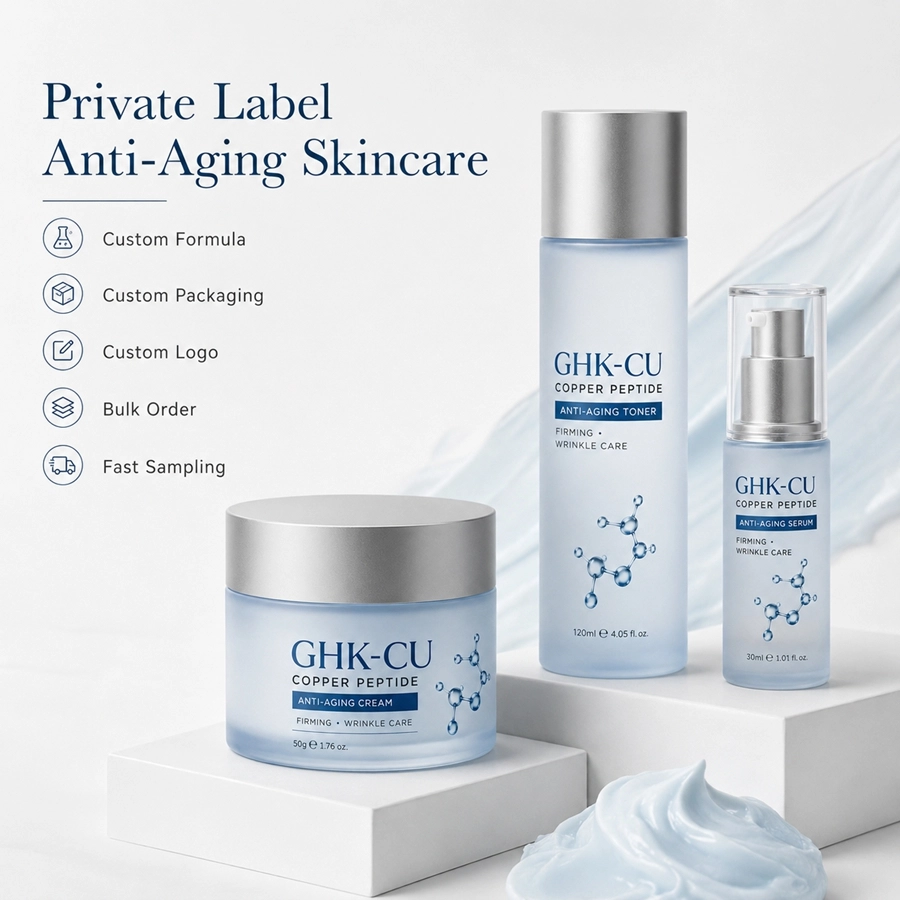
Beyond Basix has relevant GHK-Cu and SNAP-8 product concepts that can anchor different positions within a skincare range. A firming serum may serve as the hero item, while a separate cream or balm can offer a different texture for customers who prefer richer products. We should not imply that every format contains precisely the same formula or claim benefits that have not been established for the specific SKU. A coordinated collection requires accurate ingredient information, distinct product descriptions and consistent packaging. Buyers can use sample feedback and channel expectations to decide whether a single SKU or a limited routine makes more commercial sense.
What Should Be Included in the OEM/ODM Product Brief?
The brief should identify target customers, intended market, product category, required hero materials, desired finish, fragrance policy, fill size, packaging preferences and anticipated quantity. Reference products can help illustrate sensory direction, but they should not be treated as formulas that can automatically be copied. Brands should also explain ingredient exclusions, target cost range and whether they need stock private label, modifications to an existing base or full custom development.
The second part of a useful brief covers operational requirements: target launch date, shipping destination, artwork languages, any retailer onboarding demands and the expected supporting tests or documentation. A manufacturer can then separate confirmed capabilities from aspects that still need sampling or technical investigation. That reduces the risk of approving a product concept whose packaging minimums or ingredient requirements conflict with the launch plan. We also recommend clarifying how revisions will be documented and who approves the commercial reference sample. A clear written brief is a practical quality-control tool as well as a purchasing tool.
Beyond Basix Copper Peptide Product Options
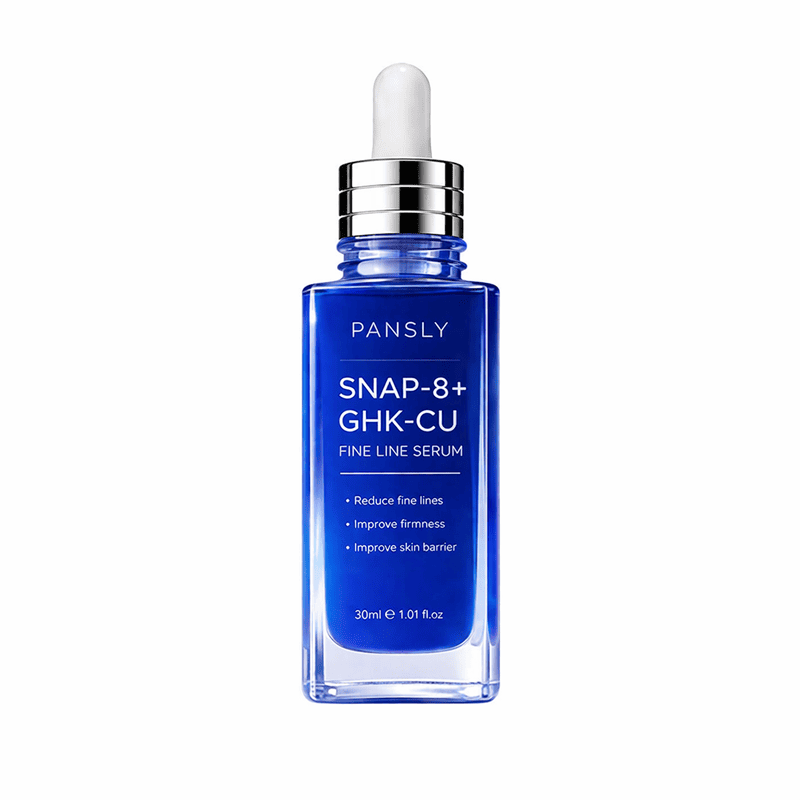
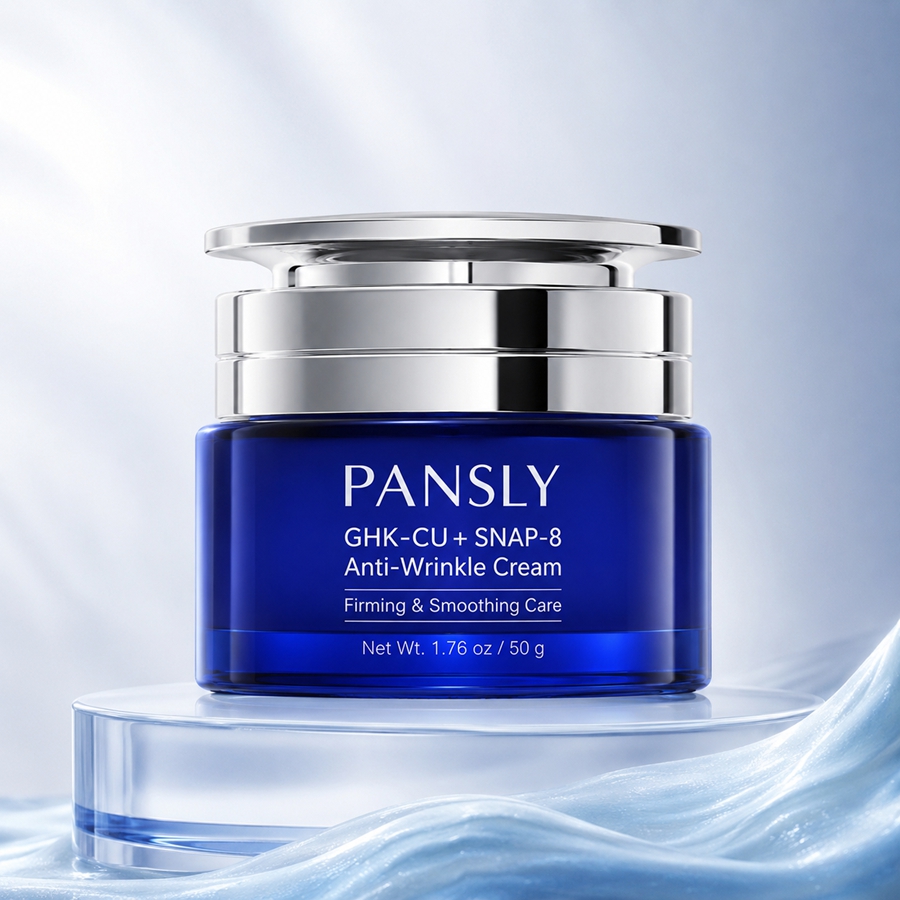
Our current range includes a private label GHK-Cu and SNAP-8 copper peptide anti-wrinkle firming serum, as well as other copper-peptide formulations and complementary textures. Buyers evaluating these products should review each item's current specification and ingredient listing rather than assume that all blue serums share one composition. The packaging shown in a catalogue can serve as a visual reference, but alternative dispensing or decoration options remain subject to availability and suitability.
We can discuss whether the desired result is a copper peptide hero serum, an anti-wrinkle peptide skincare set or a broader mature-skin range. In each case, the relevant development considerations include raw-material identity, finished formula stability, sensory performance, packaging compatibility, accurate claims and commercial quantity. A brand can build a premium collection without maximizing the number of active names on the label. Our role is to help translate the stated product concept into an actionable sampling and manufacturing plan, with clear distinctions between what is already in the catalogue and what requires additional development.
Final Sourcing Decision
A copper peptide serum manufacturer should be evaluated on how reliably it can convert ingredient intent into a documented finished product. A strong proposal addresses material specifications, compatibility, cosmetic claims, stability, preservation, packaging, batch consistency and commercial constraints. Attractive color or a familiar peptide name cannot substitute for those controls. Brands should ask for a quotation against an agreed specification and confirm which elements have been tested or are still proposed.
Beyond Basix supports buyers exploring GHK-Cu, SNAP-8 and related private label skincare concepts. The most productive first request includes the target market, desired product format, packaging preference, anticipated order volume and launch objectives. With those details established, formulation, sample evaluation and production planning can move forward on a more reliable basis. The result should be a distinctive serum that can be described accurately, dispensed consistently and supported with documentation appropriate to its intended sale.
Plan Your Custom Copper Peptide Serum
Tell us about your GHK-Cu ingredient direction, preferred packaging, order quantity and intended market.
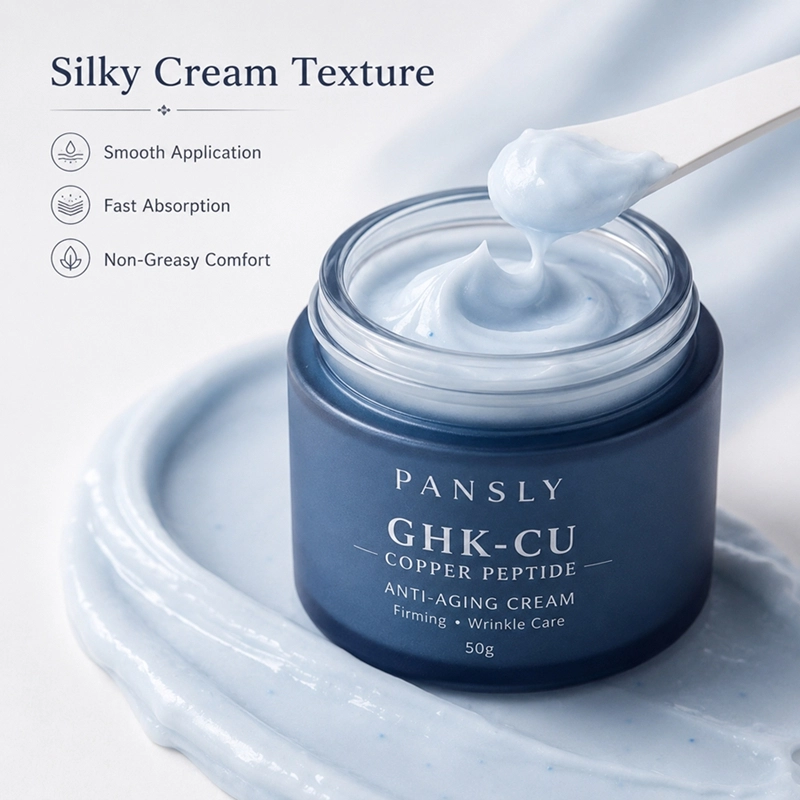
Wholesale GHK-CU Peptide Face Cream Copper Peptide Anti Wrinkle Rejuvenating Firming Facial Cream
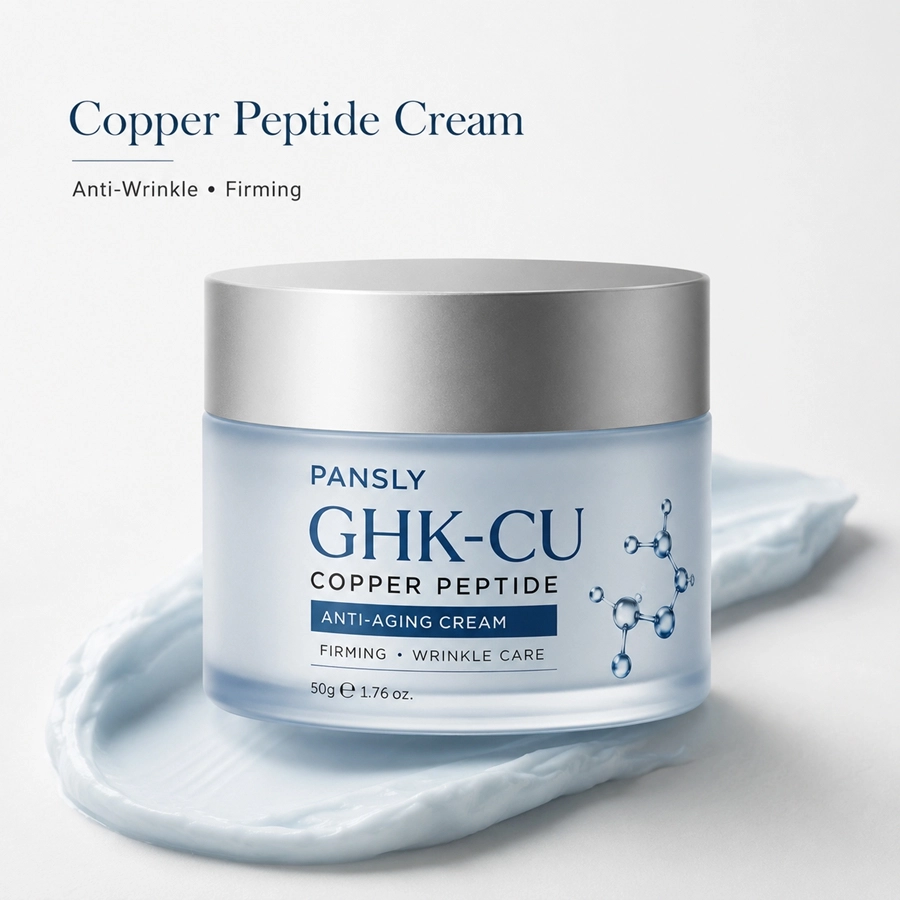
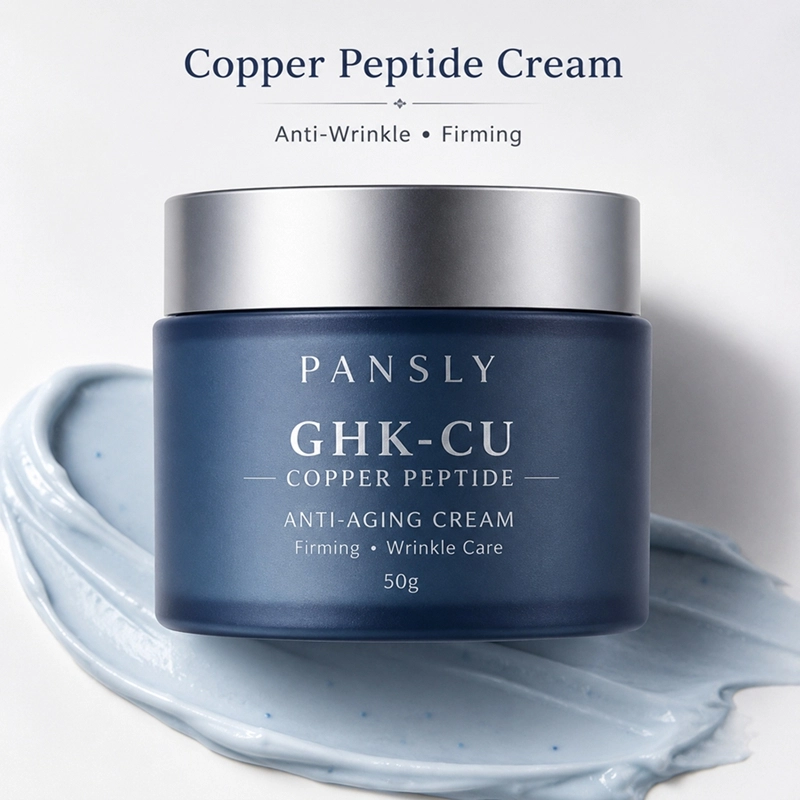
Copper peptide anti aging face cream with GHK-CU, formulated for daily facial care focused on the look of fine lines and firmness. A private-label option for skincare brands seeking a copper peptide cream for their anti-aging range.
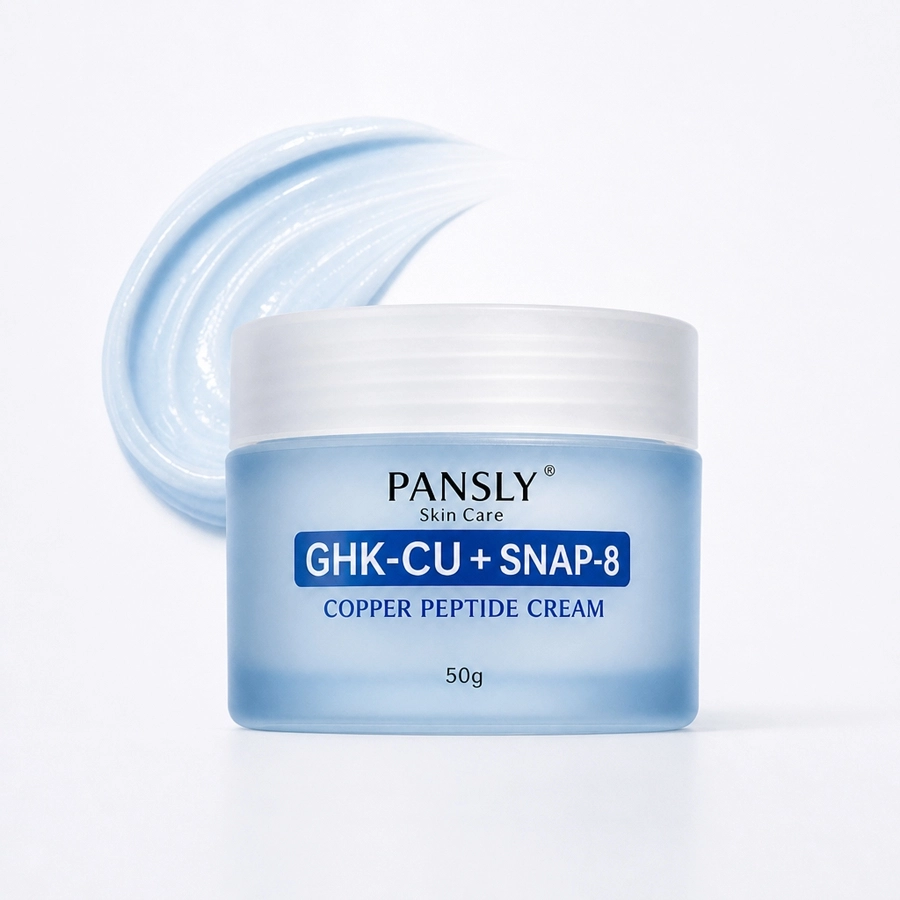
Private Label Blue Copper Peptide Face Cream Deep Moisturizing Skin Barrier Repair Anti Aging GHK-Cu Face Cream
GHK-Cu Face Cream, a copper peptide anti-aging formula, hydrates deeply and supports skin barrier repair. Private label available for bulk orders, giving brands a ready-to-sell moisturizer with a blue copper peptide base for smoother-looking skin.
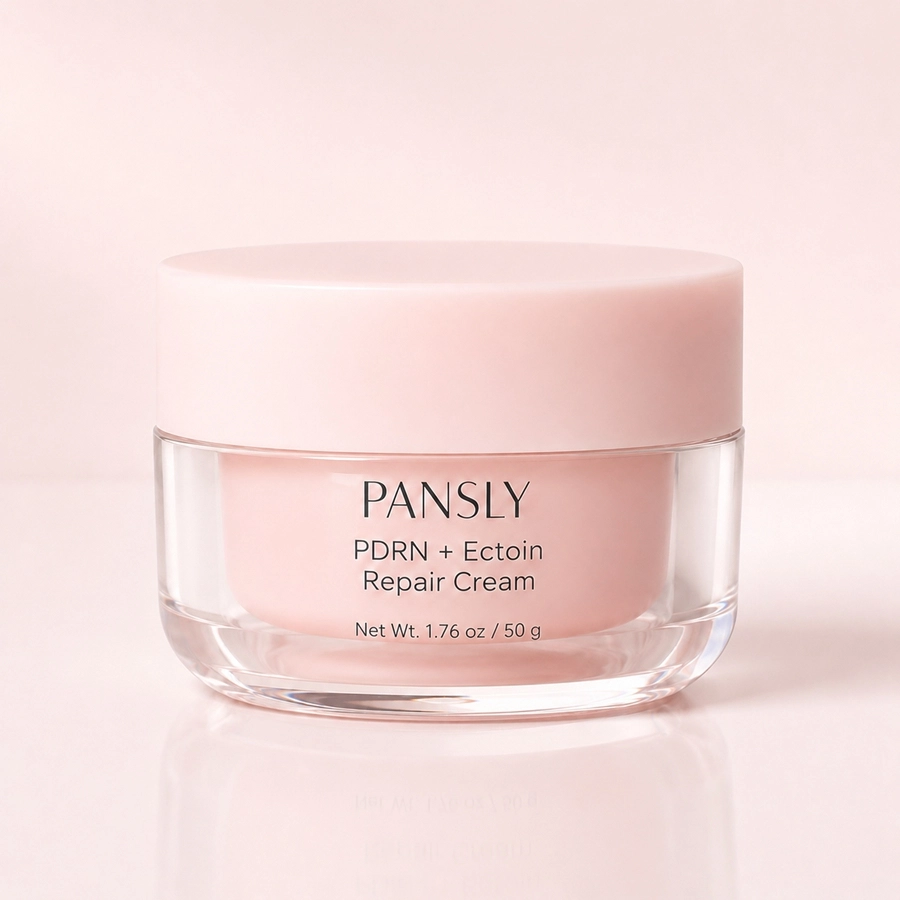
Pansly PDRN + Ectoin Repair Moisturizing Face Cream
This Pansly PDRN + Ectoin Repair Cream is daily barrier-repair moisturizer for dry, sensitive, fragile skin, delivering long-lasting deep hydration and skin soothing care.
It adopts triple core moisturizing complex: PDRN accelerates skin renewal to create smoother refined complexion; Ectoin calms dry irritated skin and reinforces skin moisture barrier; Moisture Complex locks abundant hydration to keep skin soft, supple and comfortable all day.
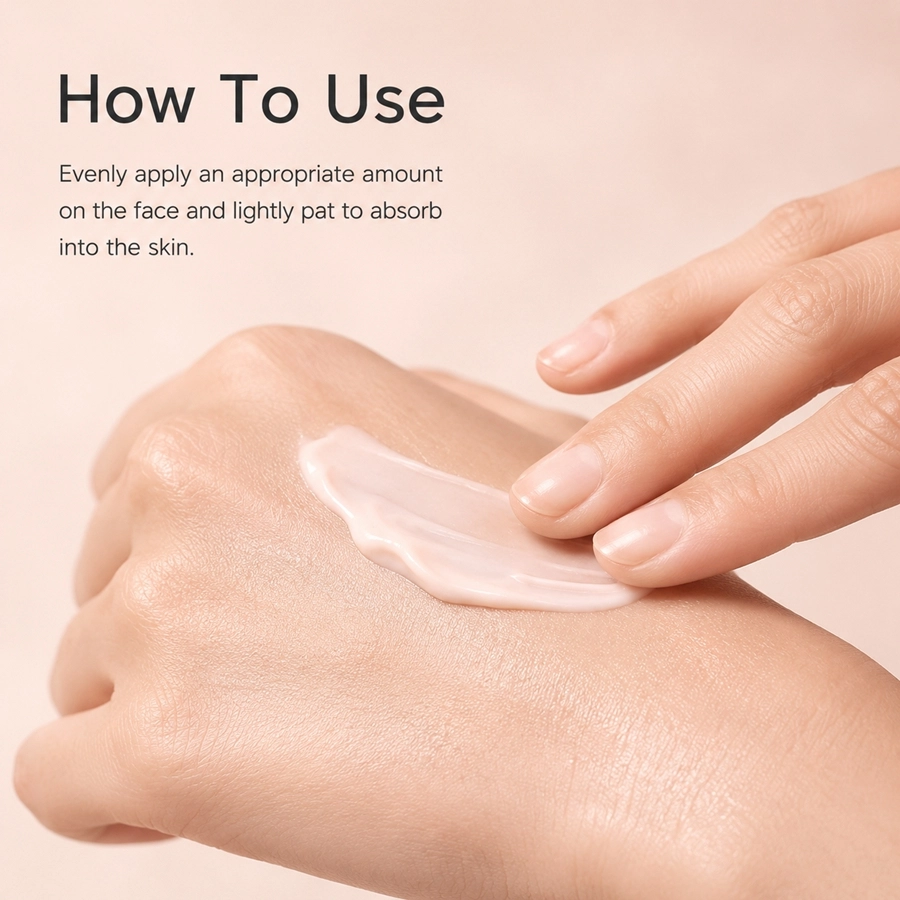
Butter-like soft melting cream texture, light dewy finish, non-comedogenic formula that won’t clog pores. Apply proper amount evenly on face and pat gently to absorb. Persistent use repairs damaged skin barrier, maintains stable moisture balance, and brings nourished smooth healthy skin.
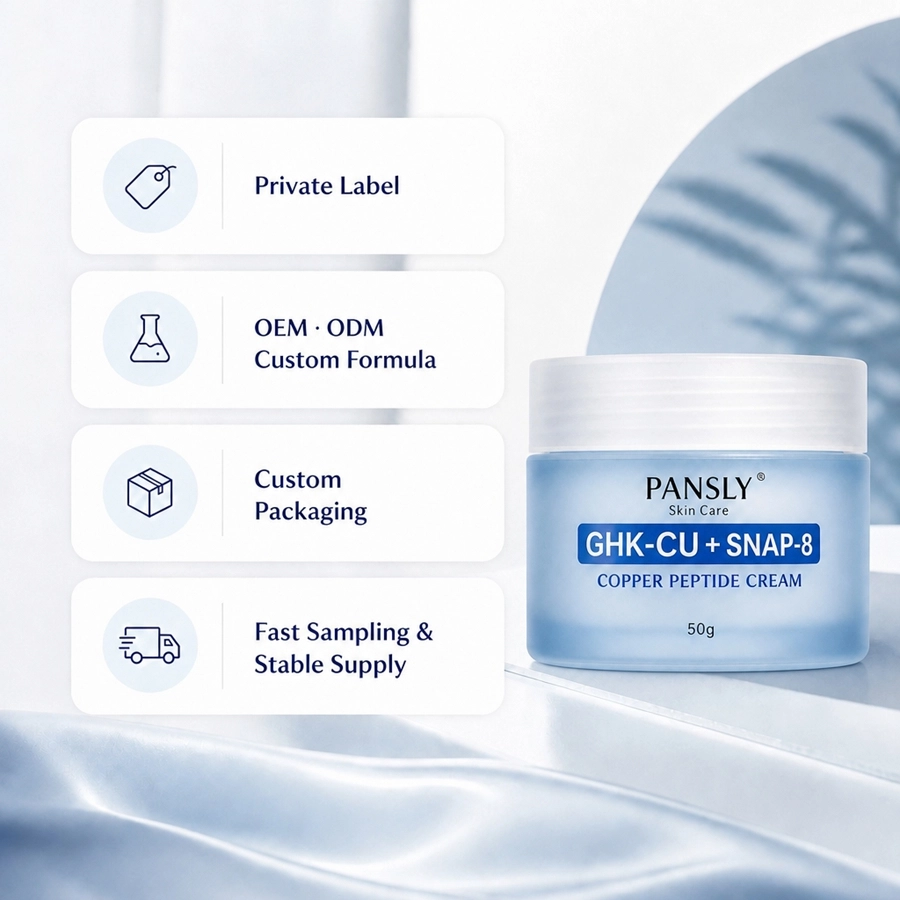
GHK-CU Cream combines copper peptide GHK-Cu and SNAP-8 in a facial cream for anti-wrinkle, firming and skin-repair care. This copper peptide SNAP-8 anti-aging cream is available for OEM and ODM customization.