Peptide Hero Serum
Private Label GHK-Cu & SNAP-8 Copper Peptide Anti-Wrinkle Firming Serum
GHK-CuSNAP-8
A peptide-led serum reference for brands that want a recognizable anti-wrinkle hero product with room for future range expansion.
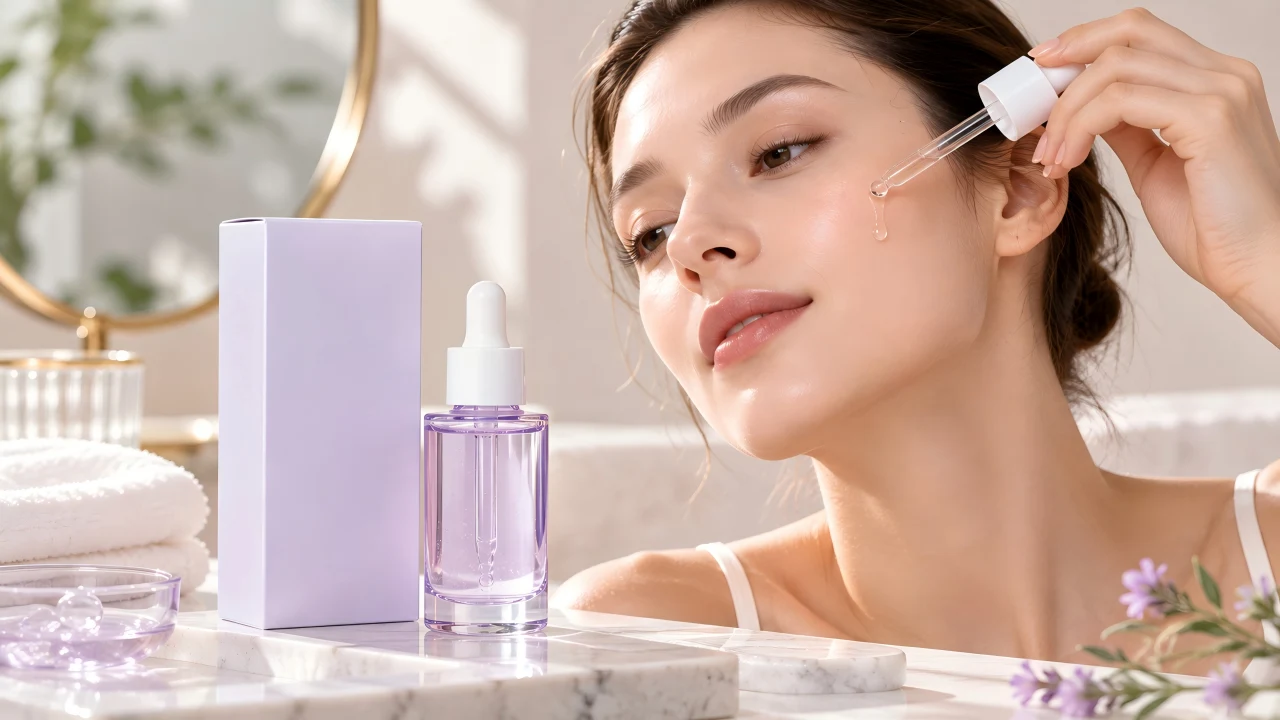
For a beauty brand, launching an anti-wrinkle serum is easy to describe and difficult to execute well. The market already contains products built around peptides, retinoid alternatives, PDRN, NAD+, hyaluronic acid, ceramides and many other active stories. Adding another serum to that landscape does not automatically give customers a reason to notice a new brand.
At Beyond Basix, we approach a private label anti-wrinkle serum as a potential hero product: the product that gives the brand a recognizable starting point, establishes the visual and ingredient language of the range, and makes future product development easier to organize.
That changes the development conversation. Instead of beginning with “Which ingredients can we put into an anti-wrinkle serum?”, we look at the commercial role the finished product needs to play. Is it the first product of a new anti-aging brand? Is it an extension for an existing skincare business? Will it lead a peptide-focused collection? Does it need to work primarily in DTC, marketplace, social commerce, professional retail or a combination of channels?
The formula still matters. So do stability, packaging, texture, claims and manufacturing specifications. But those decisions become more useful when they support one coherent product idea.
A well-defined hero serum can also create a path beyond the first launch. A cream can extend the ingredient story into moisturizing. Eye care can create a targeted application. A second serum can serve a different active direction or customer need. Bundles can turn individual SKUs into routines. The original serum becomes the center of a product architecture rather than an isolated bottle.
Ingredient trends move quickly. A beauty brand that builds its entire identity around whatever active is receiving the most attention at the moment can end up with a product that looks current at launch but has no clear place in the business afterward.
A hero-product strategy starts from a different place. The brand defines what the serum must mean to the customer and what role it must play in the assortment. Ingredients are then selected to support that direction.
For example, a brand may want a sophisticated peptide-led anti-wrinkle identity. Another may want anti-wrinkle positioning combined with hydration and barrier-support cues. A third may want a newer active story such as PDRN or NAD+ to create a different point of entry.
All three can be valid private label directions, but they should not be treated as interchangeable formulas with different front labels. Their packaging, texture, supporting ingredients, education and future product extensions may need to be different.
This is particularly important for a new brand with limited launch attention. If customers remember only one product, the hero serum needs to communicate the central idea clearly enough that the rest of the brand can grow around it.
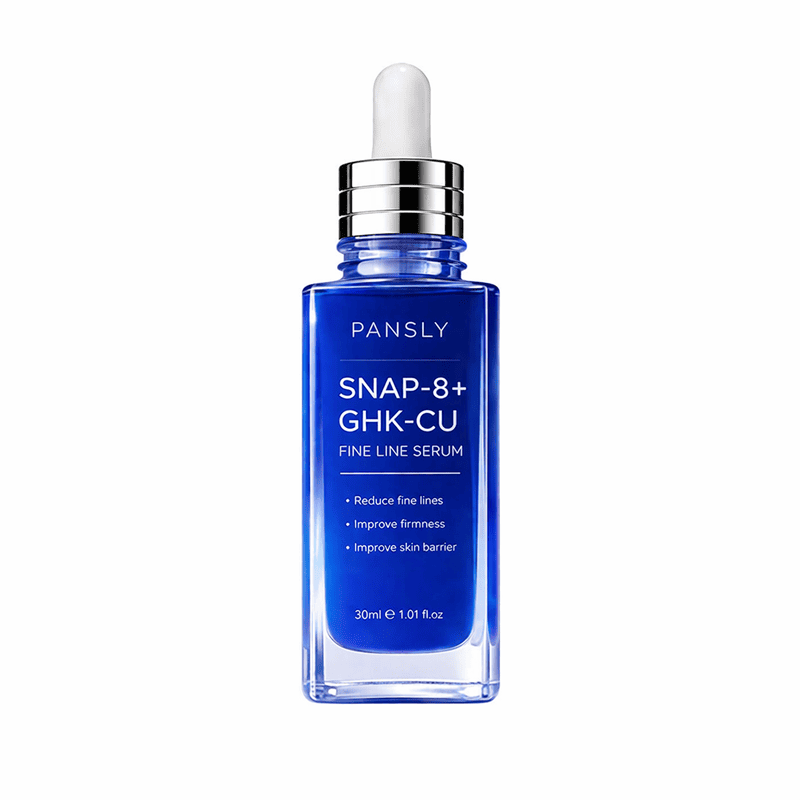
One of the strongest peptide-led directions in the current Beyond Basix range is the GHK-Cu + SNAP-8 combination. Our Private Label GHK-Cu & SNAP-8 Copper Peptide Anti-Wrinkle Firming Serum gives brands a concrete reference for building a hero product around a recognizable peptide identity.
From a brand-development perspective, the value of this combination is not simply the number of peptides on the ingredient story. GHK-Cu and SNAP-8 give the product a focused naming system that can be carried through product packaging, educational content and future extensions.
The serum can sit at the center of a collection rather than being described as a generic anti-aging product. Supporting ingredients can then be selected to improve the overall formula and sensory experience without competing for the headline position.
We keep cosmetic claims tied to the finished product and its supporting information. Ingredient recognition is useful for positioning, but an ingredient name by itself should not be treated as proof of every biological or clinical statement associated with research on that ingredient.
A common anti-aging development problem is ingredient overload. A brief begins with one hero active, then another trending ingredient is added, followed by several botanical extracts, multiple peptide names and a long list of secondary claims. The finished formula may be complex, but the product becomes harder to explain.
For a hero serum, hierarchy matters. One ingredient family or product benefit should lead. Supporting ingredients can strengthen the formulation without competing for equal attention.
A GHK-Cu + SNAP-8 serum, for example, can remain visibly peptide-led while hydration and barrier-support ingredients contribute to the finished experience. A PDRN product can lead with PDRN while Ectoin and hyaluronic acid help define a different supporting story. A NAD+ peptide serum can create another active identity.
This hierarchy also helps the creative team. Product photography, short-form video, product-page copy and packaging do not have to explain eight unrelated hero ingredients. The customer receives one clear reason to begin paying attention, then can learn more as purchase consideration deepens.
When we discuss active ingredients for an OEM anti-wrinkle serum, the useful decision is not how many actives can fit into one concept. It is how each ingredient supports the intended customer experience and product claim structure.
Humectants may support hydration and serum feel. Barrier-support ingredients may help a brand build a more comfort-oriented anti-aging proposition. Peptides can form the central active story. Other ingredients may be selected for formula performance, sensory characteristics or the positioning agreed for the project.
Every addition also introduces formulation questions. Solubility, pH, compatibility, color, odor, viscosity and packaging interaction all need to be considered in the actual product rather than assumed from a marketing ingredient list.
For the buyer, this means the formula brief should distinguish between must-have hero ingredients, preferred supporting ingredients and optional ideas. That hierarchy gives the development team room to build a coherent formula instead of treating every initial suggestion as equally non-negotiable.
Customers experience a serum through texture before they can judge any long-term cosmetic benefit. That makes sensory design part of the brand proposition.
A lightweight serum can communicate easy layering and daily use. A more cushioned texture may feel more substantial and premium to another target customer. A richer essence-like format can create a different ritual. None of these is automatically superior; the appropriate direction depends on the audience, climate, routine and channel.
Texture also influences how the serum works with other products. A hero serum may be expected to sit under moisturizer, sunscreen and makeup. Excessive tack, slow absorption or incompatibility with the rest of the routine can weaken the experience even when the ingredient story looks strong on paper.
We therefore want texture language in the brief. “Lightweight,” “watery,” “silky,” “cushioned,” “fast-absorbing,” “low tack” and similar descriptions are more useful when they are connected to reference products or specific customer expectations.
The sensory target then needs to be evaluated through samples, not assumed from a written formula description.
Packaging is not a decoration step that begins after the formula is finished. It affects dispensing, visual positioning, e-commerce presentation and the customer's perception of the product.
A technical-looking airless system can communicate a different brand personality from a classic glass dropper. A compact pump may work well for travel or controlled dispensing. A heavier bottle and secondary carton can support a premium visual language. The final choice still needs to work with formula viscosity, compatibility and protection requirements.
For peptide-led anti-wrinkle products, brands often want the pack to communicate precision and active skincare. That can be achieved through shape, finish, color, typography and decoration without making unsupported scientific claims.
The package also has to perform in the real sales environment. Marketplace thumbnails reward quick recognition. DTC product pages can support more detailed storytelling. Retail shelves require visual differentiation at a distance. Social content may show the bottle in a hand, next to the texture or as part of a routine.
Our existing material on anti-wrinkle serum packaging can help brands think through packaging formats, but the final system should be selected against the actual formula and project requirements.
A private label formula does not exist independently from the channel where customers discover it.
For DTC, the brand has room to explain the peptide system, texture, routine placement and supporting ingredients. The product page can show the serum in context and connect it to future range extensions.
For marketplaces, the product often has to communicate more quickly. The hero ingredient, product format, size and main cosmetic position need to be understandable from a smaller visual environment. Packaging that looks elegant in a full-page campaign may become difficult to read as a thumbnail.
For social commerce, the product benefits from a story that can be demonstrated or explained in short segments. Texture, application and routine placement can become important creative assets. The brand still needs disciplined claims; short-form content is not an exception to labeling and advertising requirements.
For professional or clinic-adjacent retail, buyers may expect a more technical visual system and clearer product documentation. The brand should decide whether that channel is genuinely part of the strategy before building the entire identity around it.
These differences do not require four formulas. They require one hero product whose design and communication can survive the channels the business actually plans to use.
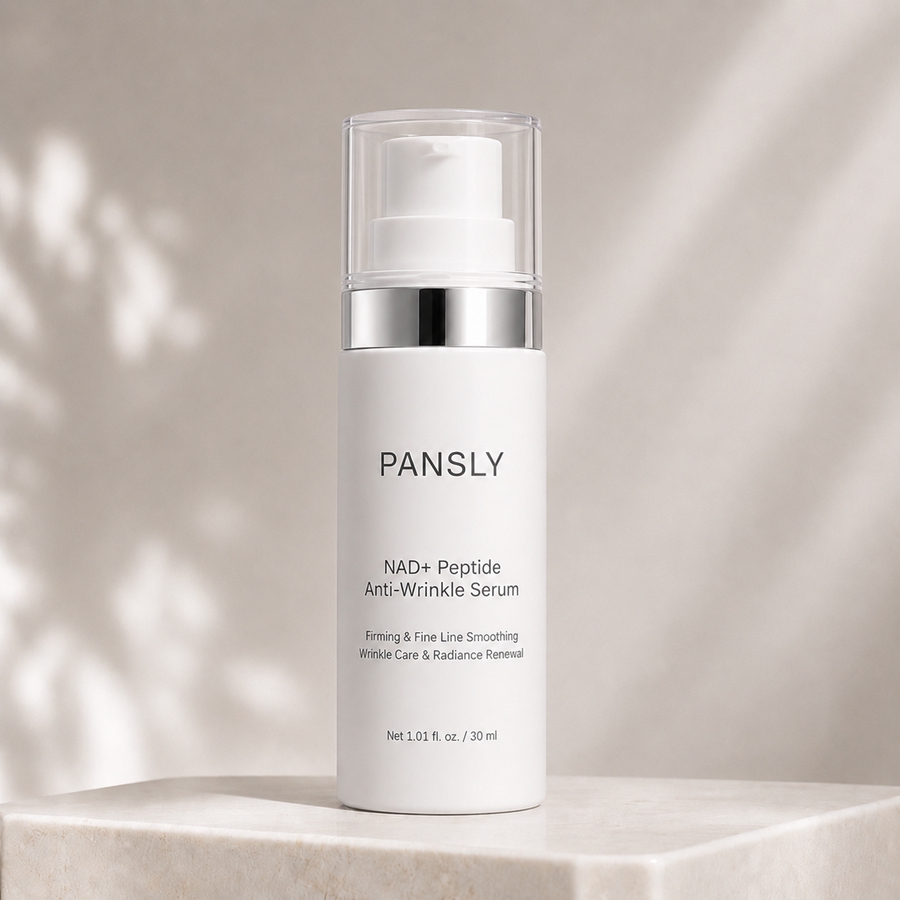
Not every anti-aging brand needs to lead with copper peptides. Beyond Basix also carries a Pansly NAD+ Peptide Firming Anti-Wrinkle Anti-Aging Serum reference. Its listed product concept combines NAD+, peptides, hyaluronic acid, Ceramide NP and Ectoin.
From a portfolio perspective, this is valuable because it gives brands another active architecture. A NAD+ and peptide concept can be developed as its own hero direction rather than being treated as a minor variation of the GHK-Cu + SNAP-8 serum.
The supporting ingredients also allow a different communication balance. Hydration and barrier-support cues can sit around the main active story while the product remains recognizable as an anti-aging serum.
If a brand eventually carries both products, the distinction needs to be clear. Two bottles should not have nearly identical copy with only the ingredient name changed. Each serum should have its own customer logic, visual emphasis and reason to exist.
A brand can carry more than one anti-wrinkle serum, but each should answer a different buying question.
The flagship might be the GHK-Cu + SNAP-8 peptide serum. Another serum might offer a different active story such as NAD+ peptides. A PDRN-based formula may be positioned around another combination of anti-aging, hydration and barrier-support cues.
The products can also occupy different price positions if formula, packaging and brand strategy support that architecture. The important point is that price should follow a clear product role. A higher price without a differentiated product experience is difficult to sustain through packaging language alone.
For a new business, it is often more practical to launch one hero serum first. The second serum can be introduced when the brand understands what customer need it will serve and how it will avoid competing with the original product.
For an established brand with an existing audience, multiple serums can make sense at launch if the customer segmentation is already clear.
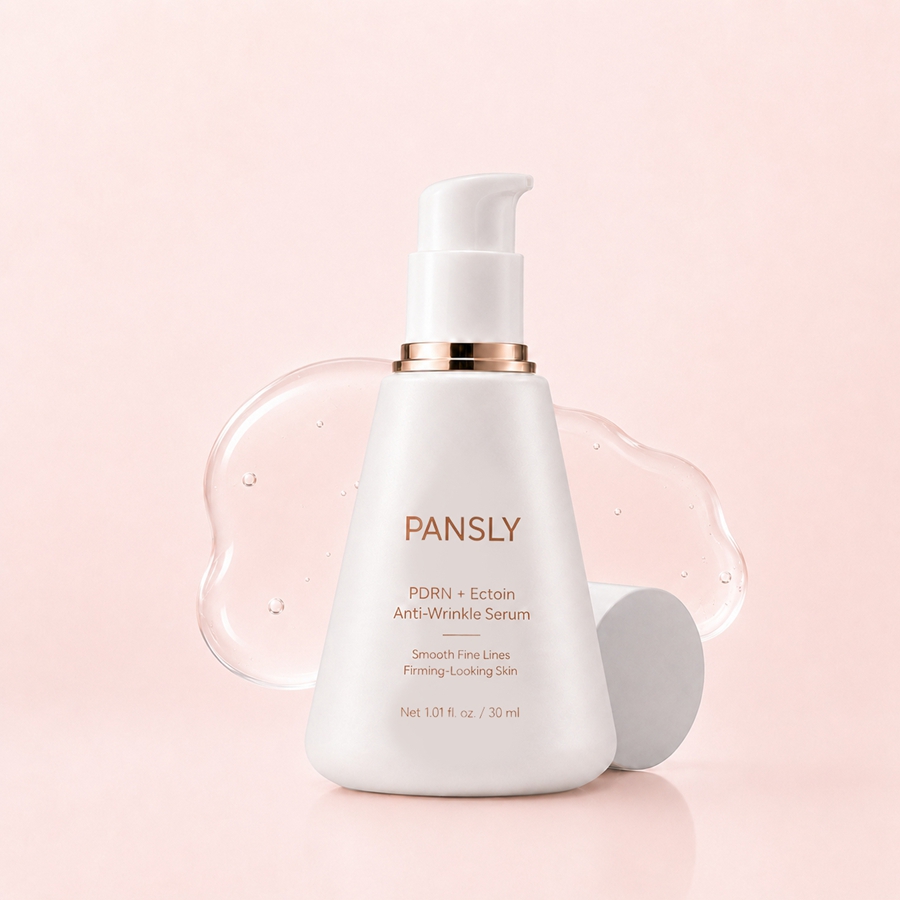
The Pansly PDRN + Ectoin Anti-Aging Anti-Wrinkle Firming Serum gives us another example of a differentiated product story. The verified product reference lists PDRN, Ectoin and Hyaluronic Acid.
This combination can support a different product architecture from a copper-peptide hero. The anti-wrinkle position can sit alongside hydration and barrier-support cues rather than relying on exactly the same peptide language.
For a brand, that distinction can be commercially useful. Customers interested in the flagship peptide product may still have a reason to consider another serum if the second formula is framed around a different routine need or ingredient preference.
The two products should still look related if they belong to the same brand. Visual consistency can come from bottle family, typography or secondary packaging while color and naming make the active stories easy to distinguish.
When three serums all use the same headline language—anti-wrinkle, firming, hydrating, smoothing—the customer may struggle to understand which one to buy. The brand then creates competition between its own products.
Product architecture can reduce that problem. One serum can be the flagship peptide product. Another can be a differentiated active alternative. Another can emphasize a different supporting skin need. The distinction needs to appear in product naming, page hierarchy, packaging and routine recommendations.
It is also useful to define what each product is not. If the GHK-Cu + SNAP-8 serum is the flagship peptide product, the PDRN serum does not need to imitate the same story. If the NAD+ serum serves a separate active-led customer, it should not be positioned as merely “another anti-aging serum.”
This clarity helps sales teams and distributors as well. A buyer can understand how the SKUs occupy different roles rather than receiving a catalog where every serum appears to promise the same result.
Once a serum has established the ingredient language, a cream is one of the most natural extensions because it occupies a different step in the routine.
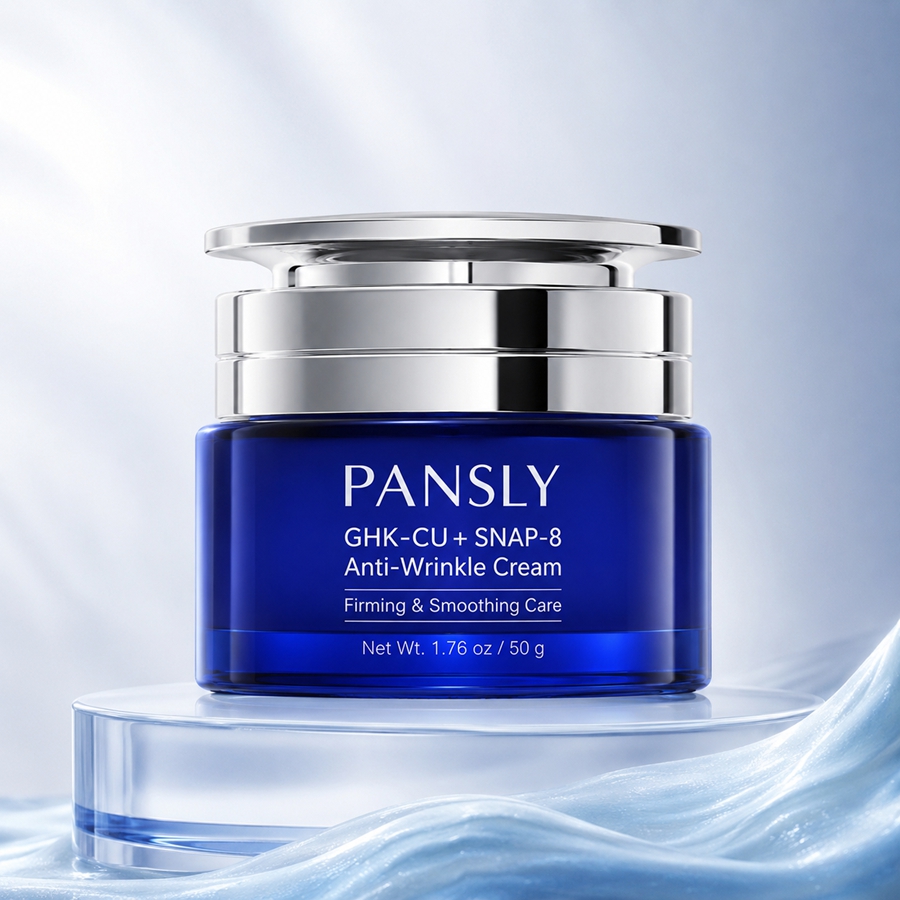
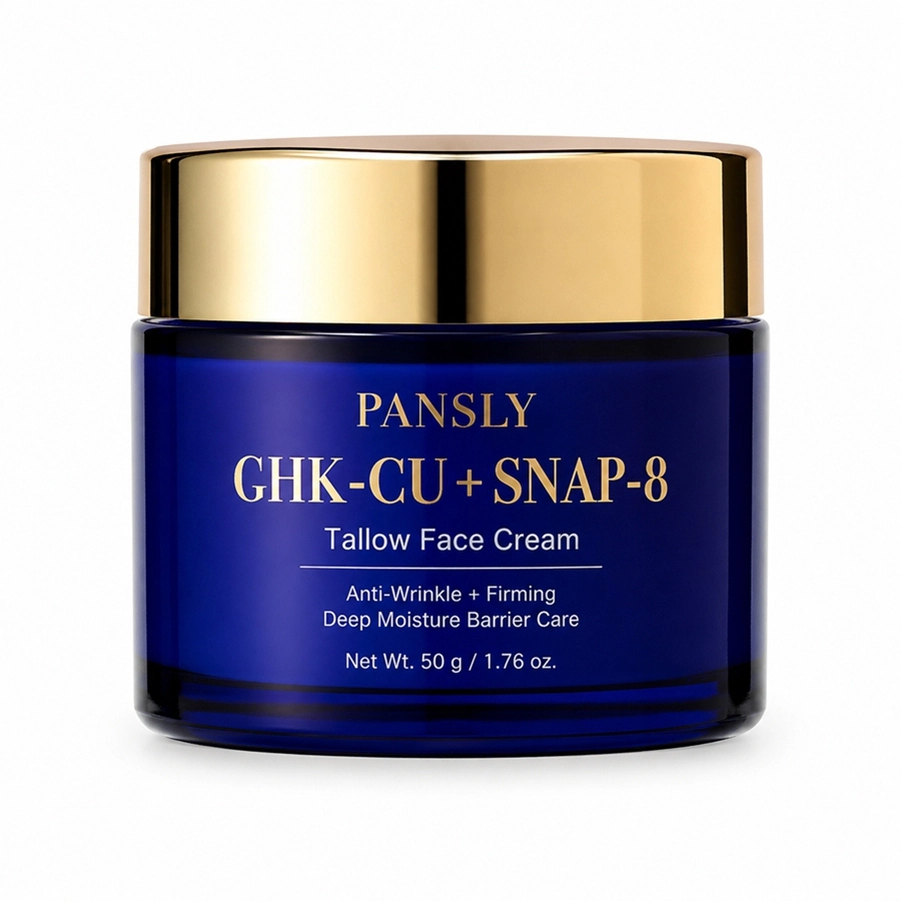
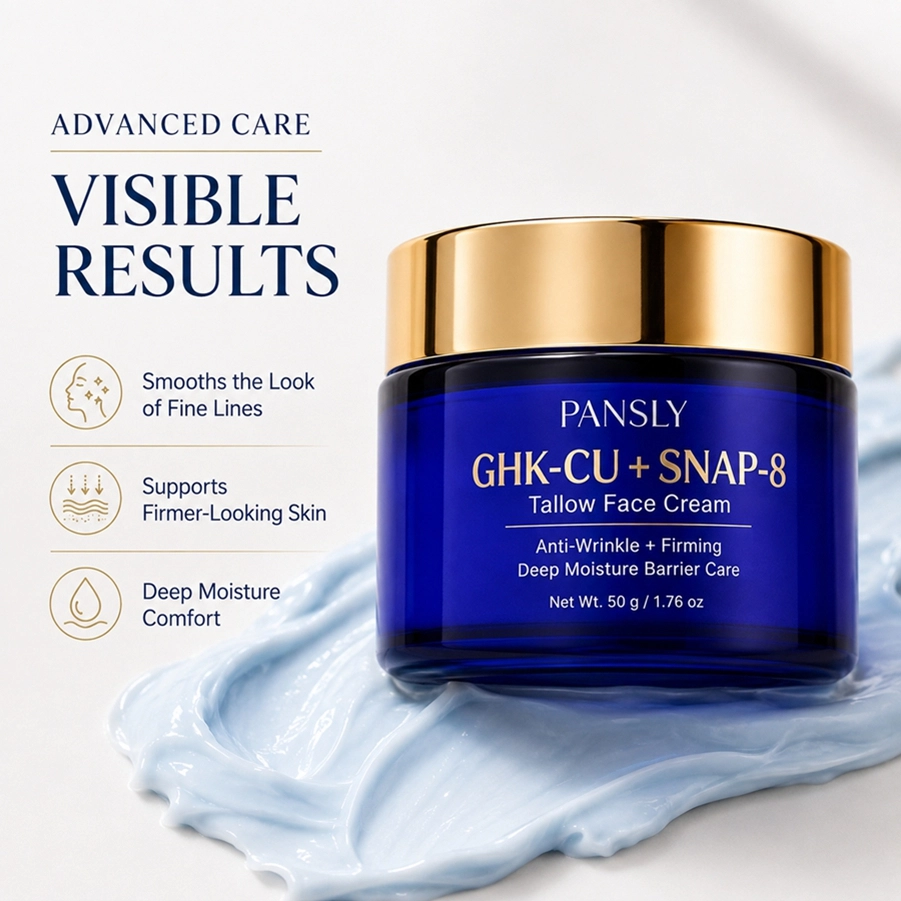
The Pansly GHK-CU + SNAP-8 Anti-Wrinkle Firming Cream shows how the same recognizable peptide direction can move into a moisturizer format. The serum remains the focused treatment step; the cream gives the customer a richer format for moisturizing and supporting the routine.
From a business perspective, this is useful because the brand can build assortment depth without introducing an entirely new identity. The same peptide language can appear across the range while the product formats remain distinct.
A serum-and-cream pair can also support bundles. The bundle is understandable because the products are complementary rather than redundant. Customers can buy the serum alone, the cream alone or the two as a routine depending on the commercial plan.
Eye care can become another branch of an anti-wrinkle range because the format and application area are distinct enough to justify a separate product.
The business decision is whether targeted eye care genuinely fits the brand's customer and channel. A serum-led DTC brand may use eye care as a second or third launch because customers already understand the anti-wrinkle identity. A new brand with limited launch resources may be better served by establishing the hero serum before adding a specialized SKU.
The eye product also needs its own formula and packaging brief. It should not be created simply by reducing the size of the face serum and changing the label. Texture, dispenser, application experience and claims should match the intended use.
When developed properly, the eye product can reinforce the brand's anti-wrinkle authority while remaining a distinct purchase decision.
One of the commercial advantages of a coherent anti-wrinkle range is that the brand can create bundles without inventing a new formula for every promotion.
The hero serum can remain the entry product. A serum-and-cream duo can become the core routine. Eye care can create a targeted add-on. A differentiated second serum can be sold as an alternative rather than automatically included in the same routine.
Bundles can also be channel-specific. A concise two-product set may suit social commerce or gifting. A broader routine may fit the brand's own DTC store. Professional retail may prefer individual products with clearer technical positioning.
The important principle is that every item in the bundle needs a role. Adding products only to increase the apparent value of a set can weaken the brand architecture if customers cannot understand why the items belong together.
A private label manufacturer cannot determine the correct retail price for every brand because pricing depends on channel, market, positioning, margin structure, acquisition costs and competitive context. But product development decisions influence what price architecture is possible.
Formula complexity, packaging choice, decoration, secondary packaging, kit components and order configuration all affect the commercial structure. The brand then needs to decide how those costs fit its target retail position.
If the hero serum is intended to sit at the top of the range, its packaging and product experience should support that role. If a cream is positioned as an accessible companion product, the pack and formula brief may be different. If a PDRN or NAD+ serum is meant to create a premium alternative, it needs a reason beyond a higher number on the price tag.
Thinking about this before sampling can prevent a common problem: developing a product that looks exciting in isolation but does not fit the brand's margin or channel model once the full cost structure is understood.
Direct-to-consumer brands have the advantage of controlling more of the product story. They can explain why the hero peptide was selected, show texture, demonstrate routine placement and introduce supporting products through email, product pages and social content.
That advantage creates a responsibility: the product concept must be rich enough to support education without depending on exaggerated claims.
A peptide-led serum can work well because ingredient education, formulation choices and routine architecture provide multiple content angles. The brand can discuss the product format, supporting ingredients, packaging and how the serum fits into a broader skincare system.
The content should still lead back to the product. A brand can publish extensive peptide education and still fail to explain why its particular serum deserves a place in the customer's routine. Product differentiation has to remain visible.
Retail buyers and distributors often evaluate products as part of an assortment. A clear range architecture can therefore be as important as the story of one formula.
If the hero serum, alternative serum, cream and eye product all have distinct roles, the buyer can understand how they might sit together on a shelf or product list. If every item uses nearly identical claims, the range can appear repetitive.
Packaging consistency helps communicate that the products belong together, while color, naming and format differences help buyers distinguish them.
For B2B sales materials, the same clarity is useful. Product specifications, key ingredients, format, pack options and customization scope can be presented without forcing the buyer to decode marketing copy.
Anti-wrinkle is a category where marketing language can quickly become stronger than the available support. Ingredient studies, supplier data and finished-product evidence are not interchangeable.
We therefore prefer to keep the claims discussion connected to the final formula, available substantiation and destination-market requirements. A product containing a well-known peptide does not automatically inherit every claim ever made about that peptide.
This is not only a compliance issue. It is a brand-building issue. When every product promises dramatic transformation, the customer loses the ability to understand the real differences between products.
A hero serum can be compelling with a narrower, clearer set of cosmetic benefits supported by its formula and product experience. Supporting SKUs can then have their own claim territories.
This separation makes the range easier to merchandise and reduces the temptation to copy the same anti-aging language across every product page.
Private label anti-wrinkle projects can begin from different levels of development. Some brands want to work from an existing reference direction and focus customization on branding, packaging and selected product details. Others want deeper formula development around a specific concept.
The appropriate route depends on timeline, differentiation goals, development resources and the level of ownership the brand wants over the product concept.
Our existing material on anti-wrinkle serum OEM and ODM options gives context for those development models. For the individual project, the actual customization scope still needs to be confirmed.
Whichever route is selected, the brand should arrive with a clear commercial brief. A manufacturer can help translate the concept into a product, but the brand still needs to know who the product is for and what position it should occupy.
One of the most useful things a customer can do before requesting samples is separate fixed requirements from flexible preferences.
Fixed requirements might include the target market, hero ingredient direction, product format, prohibited ingredients, mandatory packaging constraints or a specific channel requirement.
Preferences might include texture references, bottle shapes, secondary ingredients, color direction or decoration ideas that can be adjusted if they conflict with formula or commercial requirements.
The brief should also explain whether the serum is intended to launch alone or lead a future range. If the brand already plans a matching cream or eye product, that information can influence naming, packaging family and visual architecture from the beginning.
Useful commercial information includes expected quantity, target launch timing and the markets where the product is intended to be sold. Exact terms are confirmed for the individual project rather than assumed from a generic article.
A written concept can sound perfect and still produce the wrong customer experience. Sampling is where the brand begins to see whether the formula, texture and packaging direction actually support the intended positioning.
For a peptide serum, we recommend evaluating the sample as a complete cosmetic experience. How fluid is it? How quickly does it spread? Does it leave tack? How does the finish feel after several minutes? Does it layer with the intended moisturizer and sunscreen? Does the appearance match the brand's expectations?
If a specific dispenser is planned, the formula should also be evaluated through that system when practical. Pump output, drop size and dispensing control can change how customers perceive the same formula.
Feedback should be precise. “More premium” can mean many things. A customer might actually want more cushion, less tack, faster absorption, a denser visual appearance or a different package weight. Translating the reaction into a specific change makes sample iteration more productive.
Brands sometimes spend most of the development period on formula samples and postpone packaging decisions. For a hero product, that can create avoidable problems.
The bottle is part of the product experience and one of the main visual assets customers will see online. Component proportions, decoration area, cap or pump feel, carton dimensions and label readability all affect the finished impression.
Packaging also needs practical review. Formula compatibility, dispensing behavior, filling requirements and shipping considerations can influence the final selection.
If a serum will become the visual reference for a future range, the brand should also consider whether the component family can support later cream, eye-care or alternative-serum products without forcing an entirely new identity.
Launching a complete anti-aging collection at once can look impressive, but it also multiplies the number of formulas, components, artworks and inventory decisions that need to be correct before the brand has real customer feedback.
A staged launch can begin with the hero serum. The second stage might add a cream using the same peptide language. Eye care can follow if the audience shows interest in targeted products. A differentiated NAD+ or PDRN serum can later open another active direction.
This approach also gives the marketing team time to learn which parts of the product story customers understand and which need more education.
Staging does not mean the brand should ignore future products during initial development. The visual system, naming and packaging family can still be planned with expansion in mind. The difference is that the business does not have to manufacture the entire roadmap on day one.
A second serum deserves development when it creates a meaningful new choice for the customer.
That choice might come from a different active system, a different sensory experience, a different customer profile or a different price position supported by the product itself.
A second serum makes less sense when the only difference is that one formula uses a currently popular ingredient while the rest of the product story remains identical.
For brands considering GHK-Cu, SNAP-8 and other peptide combinations, existing comparisons can help clarify how ingredient stories differ, but the final portfolio still needs to be designed around the brand rather than around search interest in individual actives.
This is also where customer service and sales feedback become useful. Questions from real buyers can reveal whether customers want a richer product, a different active direction, a simpler routine or a more targeted format.
Sometimes the next opportunity is not another active serum. It is a different product format.
If the hero serum already communicates the brand's main active story, a cream can expand the routine without asking customers to choose between two similar treatment steps. It can also address customers who prefer richer textures or want a moisturizer that visually belongs to the same collection.
The upcoming format decision between anti-wrinkle serum and cream should therefore be based on product role, not on the assumption that one format is universally more advanced. Each can occupy a different position in the same range.
This distinction becomes important when the business plans bundles. A serum and cream can form a clear two-step set. Two nearly identical serums may require much more explanation.
The first serum may become the product customers associate most strongly with the brand. Its visual language should therefore be distinctive enough to lead and flexible enough to support future extensions.
Color can identify the peptide family. Typography can establish the technical or premium tone. Ingredient naming can follow a consistent hierarchy. Secondary packaging can create a repeatable structure for benefits, directions and required information.
When the cream or eye product launches, those cues can carry over. The customer should recognize the family while still being able to distinguish the format.
For brands planning several active families, color or secondary naming can separate GHK-Cu + SNAP-8 from NAD+ or PDRN directions while the master brand remains consistent.
This system should be designed with real production methods in mind. Decoration complexity, component availability and pack consistency all affect whether the visual concept can scale beyond the first photoshoot.
Ingredient education is useful, especially for peptide-led skincare. But a brand that publishes only ingredient explanations can accidentally make the ingredient more memorable than its own product.
Content should connect the active story to the actual serum: why this format was chosen, how the texture fits the routine, what supporting ingredients contribute, how the packaging works and which product belongs next.
That gives the brand more durable content themes. It can discuss peptide skincare without repeating the same “what is GHK-Cu?” article. It can address routine building, format selection, packaging, complementary products and buyer questions.
For B2B customers, the same principle applies. A manufacturer should not only explain ingredients; it should help the buyer understand how the ingredient story can become a coherent commercial product.
Once the first product is established, future briefs become easier because the brand has a physical reference.
The team can say that the cream should feel richer but visually belong to the same line. The eye product should retain the peptide identity but use a more targeted package. A PDRN serum should look like part of the same brand while clearly belonging to another active family.
This reduces the risk that every development project begins from zero.
The hero serum can also establish standards for photography, naming, carton hierarchy and product-page structure. Those assets can improve consistency as the range grows.
When a customer approaches Beyond Basix about a private label anti-wrinkle serum, we want to understand both the desired product and the business it needs to support.
The most useful starting information includes the target market, intended customer, primary sales channel, desired hero ingredient direction, preferred texture, packaging references, claims priorities, products already in the range, planned future extensions and target launch timing.
If the customer already has a target price architecture or pack size, that should be discussed as part of the brief. If the business is deciding between a reference direction and deeper custom development, that should also be clear.
We also want to know what must remain fixed. A mandatory peptide system, a packaging constraint or a prohibited ingredient can influence the development route.
These details allow the project to move from a broad request for an “anti-wrinkle serum” toward a product specification that can be sampled, reviewed and prepared for production.
As the project becomes more defined, the brief needs to translate the brand idea into specifications that can be evaluated consistently.
The formula section should identify the agreed active direction, sensory target and relevant ingredient requirements. The packaging section should define the selected component, decoration and secondary pack direction. The product section should capture fill size, intended use and other agreed details.
The brand should also align approved artwork, product naming and claims with the finished formula and target-market requirements. Sampling feedback should be resolved into specific approved standards rather than remaining as informal comments.
Commercial terms, quantities and timelines need to be confirmed for the actual project. We do not assume that one MOQ, lead time or packaging route applies to every private label serum.
A clear production brief protects both sides because the approved product is described in a way that can be referenced beyond the initial development conversation.
A private label anti-wrinkle serum can be a single product, but its larger value comes from what it allows the brand to build around it.
A GHK-Cu + SNAP-8 hero serum can establish a clear peptide identity. A matching cream can extend that identity into moisturizing. Eye care can create a targeted format. NAD+ peptide and PDRN + Ectoin references show how the business can later introduce differentiated active stories without making every product a copy of the original serum.
The formula, texture, package, claims and channel strategy all contribute to that architecture. None should be treated as an isolated decision.
For new brands, the practical path may be one strong hero SKU followed by staged expansion. For established skincare businesses, the same hero product can become the center of a new anti-wrinkle sub-range.
At Beyond Basix, our role is to help turn that commercial idea into a workable OEM/ODM project: a product that can be sampled, specified, packaged and produced while retaining a clear reason for customers to choose it.
The strongest peptide-led launch is not the serum with the longest ingredient list. It is the product that gives the brand a recognizable first choice and enough structure to build the next choice intelligently.
A serum can carry a focused active story, fit naturally into skincare routines and provide a clear starting point for later cream, eye-care or differentiated serum extensions.
Beyond Basix has verified GHK-Cu + SNAP-8 anti-wrinkle serum references and supports OEM/ODM private label projects. Final formula, packaging, customization and commercial requirements are confirmed for each project.
No. A brand can keep one peptide serum as the hero while using another active story, such as NAD+ peptide or PDRN + Ectoin, for a clearly differentiated supporting product.
Yes. Beyond Basix has GHK-Cu + SNAP-8 cream references that show how a recognizable peptide direction can extend from a serum into a complementary moisturizer format.
Not necessarily. A focused hero launch can make the proposition easier to understand, while cream, eye care or differentiated serum products can be added in later stages when they have clear roles.
Brands can review texture, spread, tack, absorption, after-feel, appearance, routine compatibility and dispensing behavior, then provide specific feedback against the agreed product brief.
Useful inputs include target market, customer profile, sales channel, hero ingredient direction, texture, packaging references, claim priorities, existing products, future range plans and launch timing.
Related Articles for Private Label Cosmetics




You May Also Like
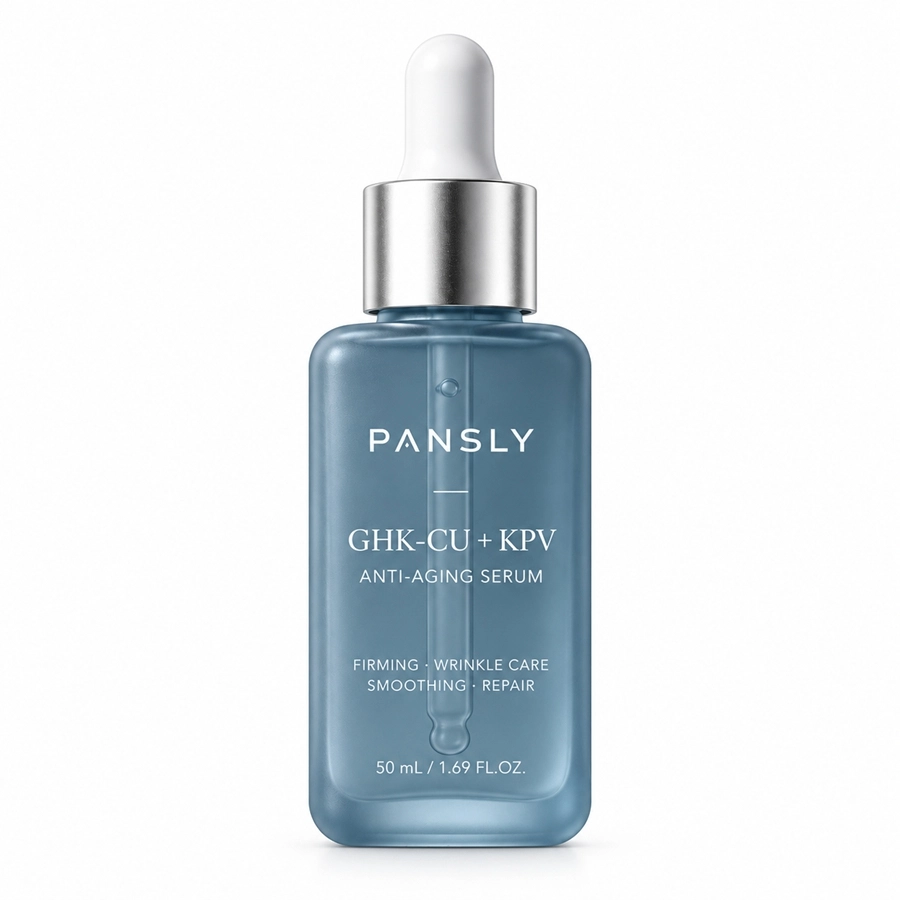
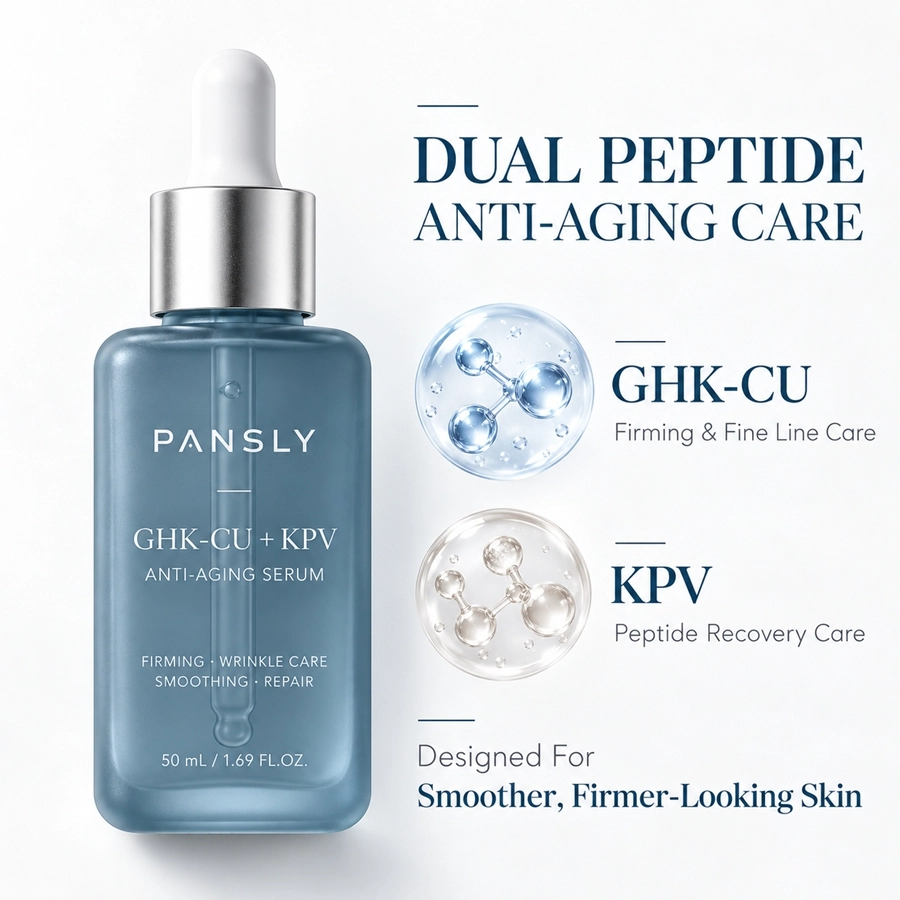
GHK-Cu KPV serum for skin is a private-label peptide face serum formulated for a firming, smoothing routine. This GHK-CU KPV Serum is positioned for wrinkle care and skin repair, making it a practical addition to an anti-aging skincare range.
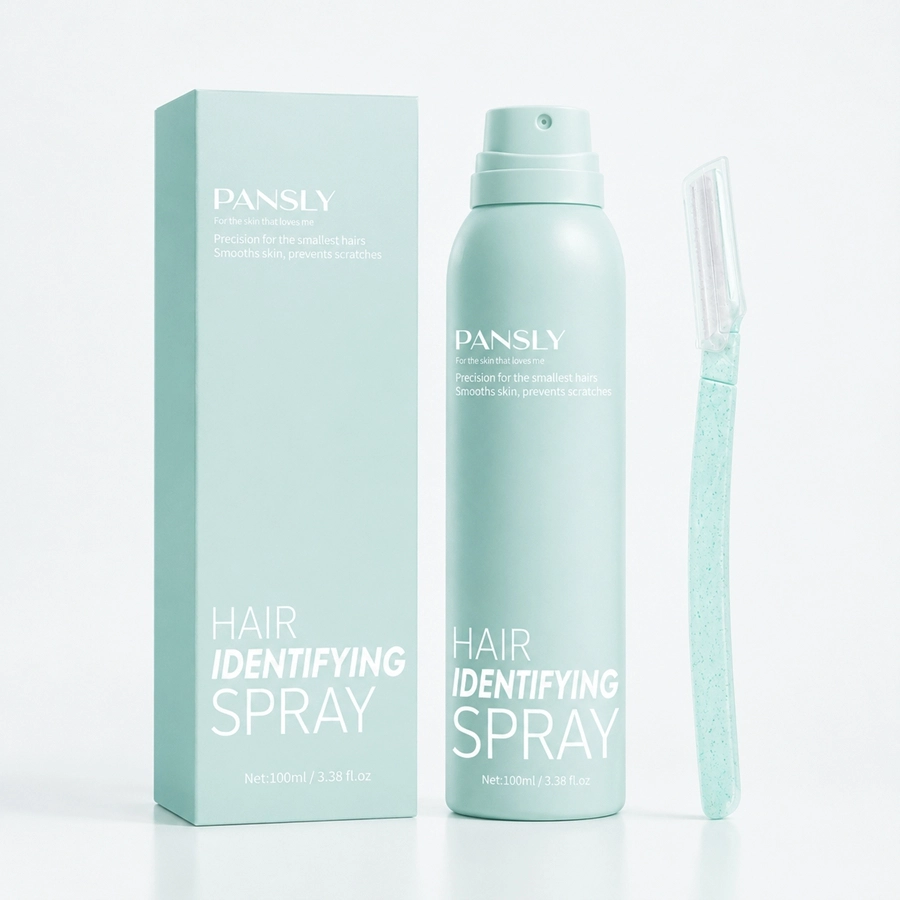
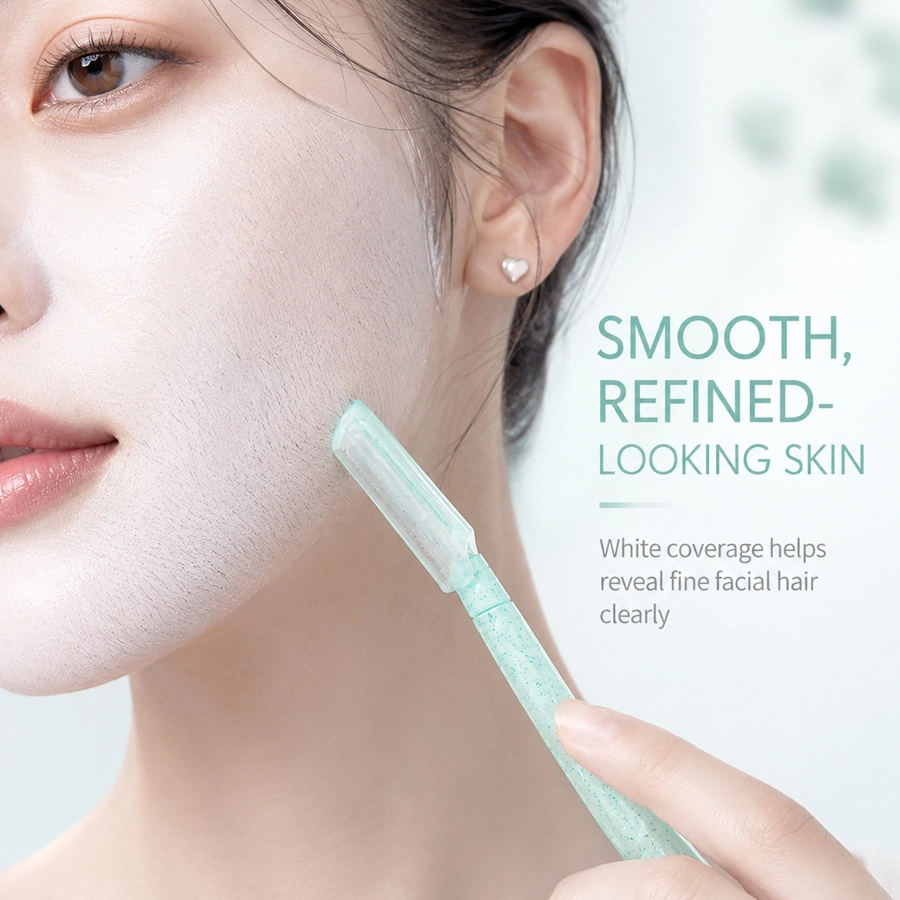
This Pansly Hair Identifying Spray Grooming Set includes a 100ml pre-shave hair identifying spray and a matching precision facial scraper, suitable for facial and body fine hair trimming.
Core functional ingredients:
Zea Mays (Corn) Starch: Forms a thin white film on dry skin to make invisible tiny vellus hairs clearly visible, supporting targeted accurate grooming;
Portulaca Oleracea Extract: Calms skin and alleviates irritation caused by scraping operations;
Hydrolyzed Keratin: Lubricates the skin surface to boost razor gliding and avoid scratches during hair removal;
Butylene Glycol: Offers gentle moisturization to keep skin comfortable throughout the grooming process.
You can finish the whole routine in 4 simple steps: Spray evenly on dry skin → Identify fine hairs via white coverage → Glide gently with the scraper → Wipe residues for silky smooth skin. It can be used on cheeks, upper lips, jawline, arms and more areas. We provide complete OEM/ODM private label service, including custom logo, multiple color selections, bulk order support and fast customization.
Get in Touch with us
If you have any comments or good suggestions, please leave us a message; later our professional staff will contact you as soon as possible.
Click here to customize the Beauty
we respond within a few hours
Monday–Friday, 9AM–6PM
3A01, Building A, Zhisheng Square, No. 4 Zhifu Road, Helong Street, Baiyun District, Guangzhou, China.
Leave a request, and we'll email you back within 24 hours.
© 2026 Beyond Basix. All Rights Reserved.
Chat with us
Want to learn more about customized cosmetic and skincare products? Chat instantly online with our experts for professional advice and answers.
Get a Free Quote
Submit your requirements and quickly get a quote for customized cosmetic and skincare products to help you make informed decisions.
Send My Request
Have a specific request or inquiry?
Send us the details through this form, and we’ll respond promptly to assist you with the next steps.
Custom Cosmetics and Skincare Products
Need a customized product?
Fill out this form and our team will work with you to provide a tailored solution to meet your needs and requirements.
Custom Cosmetics and Skincare Products
Need to customize your beauty brand product?
Fill out formula form and our team will work with you to provide a tailored solution to meet your needs and requirements.