What Is an SOS Serum? Building an Instant-Rescue Skincare Product Concept
- SOS Serum Is a Positioning Concept Before It Is a Formula Name
- Why “SOS” Can Be More Memorable Than Another Hydrating Serum
- Define the Rescue Occasion Before Building the Marketing
- The PANSLY SOS Essence Gives the Concept a Real Product Anchor
- SOS Works Best When It Solves a Positioning Problem
- SOS Serum Can Be a Hero Product or a Supporting Product
- Texture Is Central to the Rescue Experience
- Hydration Can Lead Without Making Every Claim About Moisture
- Do Not Turn Rescue Language Into a Medical Promise
- Packaging Should Reinforce “Keep It Close” Behavior
- The SOS Visual Identity Should Look Distinct Without Looking Alarming
- SOS Creates Strong Content Without Needing Ingredient Hype
- A Rescue Serum Can Sit Beside a Peptide Hero
- SOS Can Become a Small Routine Instead of Staying One Serum
- Bundles Can Turn SOS Into a Clear Commercial Offer
- Social Commerce Can Benefit From the Use-Occasion Story
- Retail Needs the SOS Concept to Be Understandable Quickly
- Sampling Should Test Whether the Product Feels Like Rescue
- A Private Label SOS Brief Needs More Than the Word “Hydrating”
- SOS and Hydrating Serum Should Not Become Two Names for the Same SKU
- A Staged SOS Launch Can Test the Concept Before Building a Full Line
- Build the SOS Concept Around a Real Customer Moment
- FAQ
SOS Serum Is a Positioning Concept Before It Is a Formula Name
“SOS” gives a skincare brand an immediate communication advantage: customers already understand the language of rescue, urgency and a product kept close for moments when skin feels like it needs extra care.
But that familiarity can also create a problem. If the product is simply a standard hydrating serum with “SOS” added to the label, the concept may feel superficial. If the marketing promises instant correction of every visible skin concern, the claim can become stronger than the finished cosmetic product supports.
At Beyond Basix, we see SOS serum as a useful product-positioning framework. The brand defines a rescue-oriented use occasion, develops an appropriate serum experience around it and then communicates the concept with disciplined cosmetic claims.
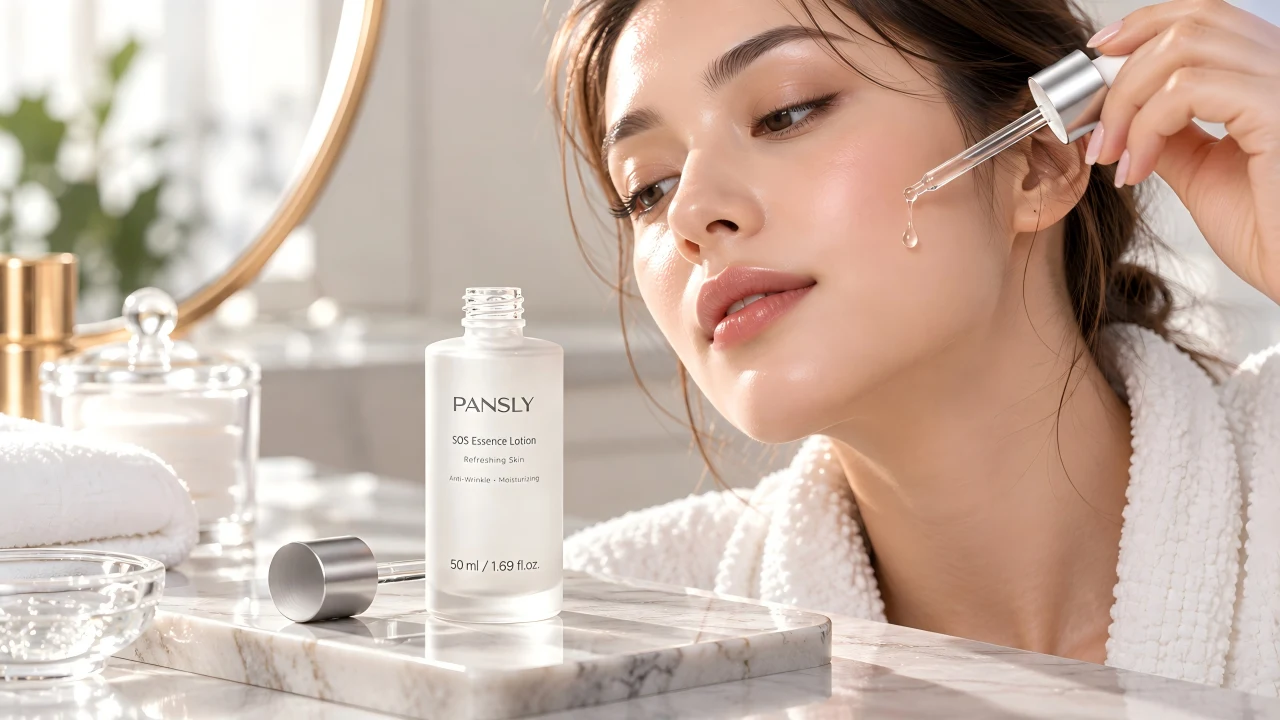
Our PANSLY SOS Essence Instant Rescue Hydrating Anti-Wrinkle Serum provides a real product reference for this direction. The important business opportunity is larger than one SKU: SOS can become a recognizable entry point into hydration, comfort and targeted skincare without forcing the brand to compete only on generic “hydrating serum” language.
Why “SOS” Can Be More Memorable Than Another Hydrating Serum
Hydrating serum is a crowded product category. Many products use similar language around moisture, plumping and daily hydration. For a new beauty brand, it can be difficult to create a distinctive reason for customers to remember one more serum.
SOS changes the frame from a broad product benefit to a recognizable use occasion. The product is no longer only “a serum that hydrates.” It becomes the serum the customer associates with moments when skin feels dry, tight, uncomfortable or visually stressed and the routine needs an extra hydration-focused step.
That does not require medical or emergency claims. The value comes from giving the customer a simple mental category.
This can be useful in e-commerce, social content and bundling because the product has a story that can be demonstrated through situations rather than ingredient lists alone.
Define the Rescue Occasion Before Building the Marketing
A strong SOS concept needs boundaries. The brand should decide when it expects customers to reach for the product.
The use occasion might be temporary dryness, a dehydrated-feeling routine, seasonal changes, travel, air-conditioned environments or a moment when the customer wants an extra hydrating and comforting serum step.
These are positioning examples rather than automatic claims for every formula. The finished product and target market determine what language is appropriate.
Defining the occasion helps the product team make better decisions. Texture can be selected for quick, comfortable layering. Packaging can be chosen for the intended usage pattern. Product-page copy can focus on the rescue moment rather than repeating generic anti-aging language.
The PANSLY SOS Essence Gives the Concept a Real Product Anchor
Beyond Basix already has the PANSLY SOS Essence Instant Rescue Hydrating Anti-Wrinkle Serum as a core reference for this direction.
The verified product naming establishes several elements of the concept: SOS/Instant Rescue language, an essence-serum format, hydration and anti-wrinkle positioning. Those elements can give a private label customer a starting point for deciding which part of the story should lead its own product.
A brand may emphasize SOS and hydration as the central proposition while treating anti-wrinkle as a secondary cosmetic position. Another may build a broader anti-aging range and use SOS as the rescue-oriented serum inside that portfolio.
The project should not assume that the phrase “Instant Rescue” proves an immediate clinical effect. Product naming and substantiated claims are separate decisions.
That distinction allows the brand to use memorable rescue language while keeping finished-product communication grounded.
SOS Works Best When It Solves a Positioning Problem
For a new skincare line, SOS can solve a common positioning problem: how to make hydration feel specific.
Instead of asking customers to compare another general-purpose serum with dozens of alternatives, the brand can define the product around a recognizable moment.
This is particularly useful if the broader range already contains a peptide hero serum, brightening product or daily moisturizer. The SOS serum does not need to replace those products. It can occupy another role.
That role separation helps prevent cannibalization. A peptide serum can remain the active-led hero. The SOS serum can become the hydration/rescue option. A cream can remain the moisturizing step.
SOS Serum Can Be a Hero Product or a Supporting Product
A brand built around hydration, sensitive-feeling skin or minimalist routines may choose SOS serum as its hero SKU. The rescue language can lead the entire identity and later expand into complementary products.
An established anti-aging brand may use the SOS serum differently. It can sit beside a peptide hero product as the hydration-focused alternative for customers who want another sensory or routine experience.
Both models can work. The product's role should be decided before the brand builds packaging and launch content.
If SOS is the hero, the pack and visual system need enough distinction to carry the brand. If it is a supporting SKU, it should clearly belong to the same family without copying the hero product's active story.
Texture Is Central to the Rescue Experience
An SOS serum is experienced in the moment it is applied. That makes texture particularly important.
The brand may want a lightweight essence that spreads quickly and layers easily, or a more cushioned serum that creates a richer sensory impression. The appropriate direction depends on customer, climate, routine and positioning.
For a rescue-oriented concept, excessive tack or a difficult layering experience can conflict with the promise of convenient extra care. Those sensory characteristics need to be evaluated through samples.
Terms such as fluid, silky, cushioned, low-tack, fast-spreading and comfortable after-feel are useful in a development brief when they are connected to clear references.
Hydration Can Lead Without Making Every Claim About Moisture
A hydration-led SOS product can still have a sophisticated formula and broader cosmetic positioning. The brand does not need to turn every supporting ingredient into another headline.
Hydration can remain the first customer message while supporting ingredients contribute to the formula's intended sensory and cosmetic profile.
This hierarchy makes the product easier to communicate. “SOS hydration” is memorable. A list of ten unrelated ingredient claims is harder to retain.
For private label development, the brief should distinguish the hero product idea from the supporting formula requirements. That gives the development process a clearer target.
Do Not Turn Rescue Language Into a Medical Promise
Words such as rescue, SOS, recovery and repair can sound powerful. Brands need to consider how those terms are used in context and what the finished product can support in the destination market.
An SOS serum is still a cosmetic product. Marketing should not imply that it treats disease, injury or a medical emergency unless the product falls into a different regulated category and meets the applicable requirements.
Even within cosmetic language, immediate performance claims should not be assumed simply because “instant” appears in a product name. The final claims should follow the formula, available substantiation and regulatory context.
Disciplined claims can make the concept stronger because customers receive a clear use occasion without an unrealistic promise.
Packaging Should Reinforce “Keep It Close” Behavior
An SOS concept can influence packaging differently from a traditional treatment serum.
If the product is positioned as something customers keep accessible for rescue moments, convenience can become part of the pack brief. Size, dispensing, portability and cap security may matter alongside visual premiumization.
A pump can create controlled, quick use. A dropper can preserve familiar serum ritual and texture visibility. Another appropriate serum system may fit the formula and brand.
The package still needs to be evaluated with the actual viscosity and formulation. “Portable” or “airless” should not be used as a substitute for real compatibility and leakage evaluation.
The SOS Visual Identity Should Look Distinct Without Looking Alarming
Rescue language can tempt brands toward emergency-style graphics. That may work for some identities, but it can also make skincare look medical or overly aggressive.
A beauty brand can communicate SOS through color accents, concise naming and visual contrast while keeping the overall presentation cosmetic and premium.
The design should also fit the master brand. If SOS is one product inside a broader range, customers should recognize the family. If SOS becomes a dedicated sub-line, the visual system can have more independence.
In e-commerce, the word SOS and the product format should remain readable at thumbnail size. Secondary claims can be explained in the gallery and product page.
SOS Creates Strong Content Without Needing Ingredient Hype
A rescue-oriented product naturally creates content scenarios. The brand can discuss travel routines, seasonal dryness, layering, how the serum fits with moisturizer and when customers may want an extra hydration step.
This is commercially useful because the content stays connected to product use rather than depending entirely on trending ingredients.
Ingredient education can still be part of the story, but it does not have to carry the whole marketing strategy.
For a new brand, that gives the product more ways to remain relevant after the initial launch campaign.
A Rescue Serum Can Sit Beside a Peptide Hero
Beyond Basix already has peptide-led anti-wrinkle serum references such as GHK-Cu + SNAP-8. An SOS serum can coexist with that type of hero product because the buying logic is different.
The peptide serum can lead with a focused active identity. The SOS serum can lead with a hydration/rescue occasion. The customer can understand why both exist without the brand claiming that one is simply a stronger version of the other.
This is a useful model for a broader skincare portfolio: differentiate products by role as well as ingredients.
SOS Can Become a Small Routine Instead of Staying One Serum
If customers understand the SOS concept, the brand can consider extending it into a small rescue-oriented routine.
A moisturizer could become the next logical format if the brand wants to extend hydration and comfort into a richer step. A mask or other appropriate cosmetic format could serve a more occasional use case. The exact extensions should follow verified product development opportunities rather than being added only because the name can be reused.
The serum should remain the reference point. Each extension needs a distinct routine role so the SOS line does not become several products with identical claims.
Bundles Can Turn SOS Into a Clear Commercial Offer
An SOS serum can be sold alone, paired with a moisturizer or included in a broader routine bundle depending on the brand architecture.
The product's rescue identity can also make it suitable for travel-focused or seasonal merchandising if those use occasions fit the actual product communication.
Bundles should still be built around product roles. A set is stronger when customers understand why each item is included rather than seeing several similar hydrating products grouped together.
For DTC, the bundle can also create a simple way to introduce customers to another product without changing the hero positioning of the serum.
Social Commerce Can Benefit From the Use-Occasion Story
SOS is naturally compatible with short-form storytelling because the product can be introduced through a situation: skin feels dry after travel, the routine needs an extra hydration step, or seasonal conditions change the desired skincare experience.
The creative should avoid turning those situations into unsupported before-and-after promises. Texture, application and routine placement can provide strong visual material without requiring exaggerated efficacy claims.
The product name can create the hook; the actual serum experience needs to support the reason customers keep using it after the first purchase.
Retail Needs the SOS Concept to Be Understandable Quickly
On a retail shelf or distributor line sheet, the product may not have a long explanation available. The naming, product format and primary cosmetic position need to communicate quickly.
“SOS Essence” or “SOS Serum” can create recognition, but the supporting language should make clear whether hydration, comfort, anti-wrinkle positioning or another verified cosmetic benefit leads the product.
The brand should avoid putting so many secondary claims on the front panel that the rescue concept becomes difficult to see.
Sampling Should Test Whether the Product Feels Like Rescue
The concept should be evaluated physically during sampling.
Does the texture spread easily when the customer wants an extra serum step? Does it layer comfortably? Is the finish appropriate for the intended use occasion? Does the dispensing experience feel convenient?
The brand should review the product against its own rescue concept rather than only asking whether the sample is a good serum in general.
Specific feedback about viscosity, tack, absorption and after-feel helps translate the desired experience into an approved production target.
A Private Label SOS Brief Needs More Than the Word “Hydrating”
When a customer approaches Beyond Basix for a private label SOS serum, useful inputs include the intended rescue occasion, target customer, primary channel, texture direction, packaging references, cosmetic claims priorities, target market and future range plans.
The brief should also clarify whether SOS is the hero of the brand or one supporting product inside a larger collection.
If the customer wants anti-wrinkle positioning alongside hydration, the hierarchy should be clear. One message can lead while the other supports it.
Commercial terms, quantities, final formula, packaging and customization scope are confirmed for the individual project.
SOS and Hydrating Serum Should Not Become Two Names for the Same SKU
If a brand eventually carries both an SOS serum and a standard hydrating serum, it needs a reason for customers to distinguish them.
The SOS product can be organized around a rescue occasion and a more targeted product story. The daily hydrating serum can remain the straightforward everyday hydration step.
Texture, packaging, supporting ingredients and communication can reinforce the distinction.
This separation becomes especially important as the range grows. Without it, the brand risks creating two products that compete for the same customer need.
A Staged SOS Launch Can Test the Concept Before Building a Full Line
A new brand does not need an SOS serum, cream, mask and mist on day one.
Launching the serum first allows the business to test whether customers understand and respond to the rescue positioning. The brand can learn which use occasions resonate, which content performs well and whether customers ask for a richer or more portable companion product.
Future formats can then be developed around observed product-line needs rather than assumptions.
The visual identity can still be designed with expansion in mind so the first serum does not become a dead end if the concept succeeds.
Build the SOS Concept Around a Real Customer Moment
An SOS serum becomes commercially useful when the customer knows when and why to reach for it.
The product does not need to claim that it fixes every skin concern instantly. It needs a clear rescue-oriented position, an appropriate serum experience and claims that match the finished cosmetic formula.
For Beyond Basix customers, the PANSLY SOS Essence gives the concept a real starting point. From there, the private label project can define its own hierarchy between hydration, anti-wrinkle positioning, texture, packaging and future range development.
The result can be more memorable than another generic hydrating serum because the brand is not only selling an ingredient list. It is giving the customer a recognizable product role.
FAQ
What is an SOS serum?
SOS serum is a skincare positioning concept built around a rescue-oriented use occasion. The finished product may emphasize hydration, comfort or other supported cosmetic benefits, depending on its formula and claims.
Is SOS serum the same as hydrating serum?
It can overlap with hydration, but the positioning can be different. An SOS serum can be organized around a specific rescue occasion, while a standard hydrating serum may be positioned as an everyday hydration step.
Does 'Instant Rescue' mean the serum has an immediate clinical effect?
Not automatically. Product naming and substantiated efficacy claims are separate. Final claims should follow the finished formula, available supporting information and destination-market requirements.
Can SOS serum be a skincare brand's hero product?
Yes. A hydration- or rescue-led brand can use SOS serum as its hero SKU, while an established brand can use it as a differentiated supporting serum within a broader range.
What should be included in a private label SOS serum brief?
Useful inputs include the intended rescue occasion, target customer, sales channel, texture, packaging references, cosmetic claim priorities, target market, future range plans and whether SOS will be the hero or a supporting SKU.
Related Articles for Private Label Cosmetics
Why Two Mineral Sunscreens With the Same SPF Can Feel Completely Different
Beyond Ordinary Tallow Balm: How GHK-Cu and SNAP-8 Create a Different Skincare Story
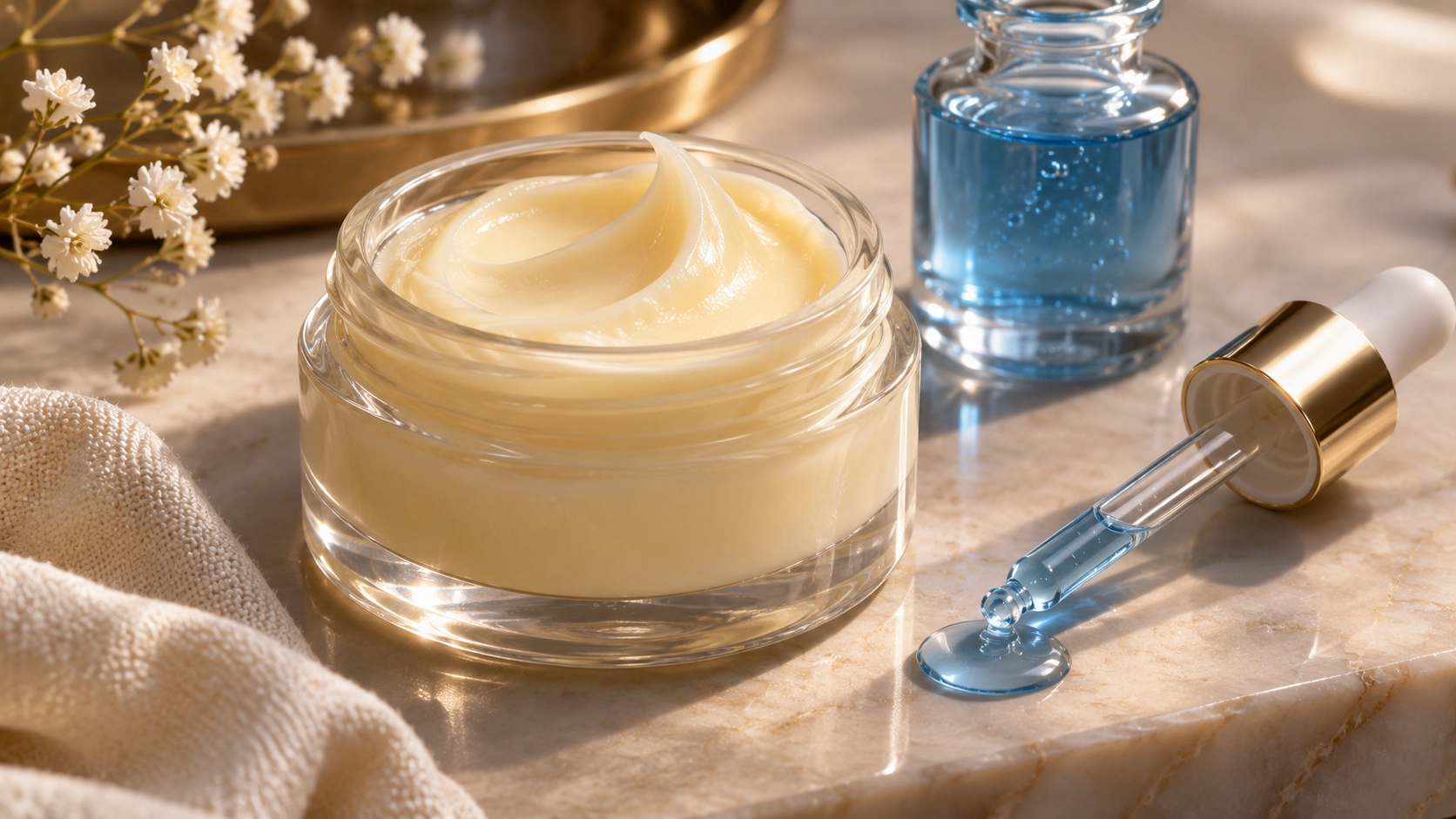
When Blue Copper Peptides Meet Beef Tallow: A New Direction for Premium Skincare
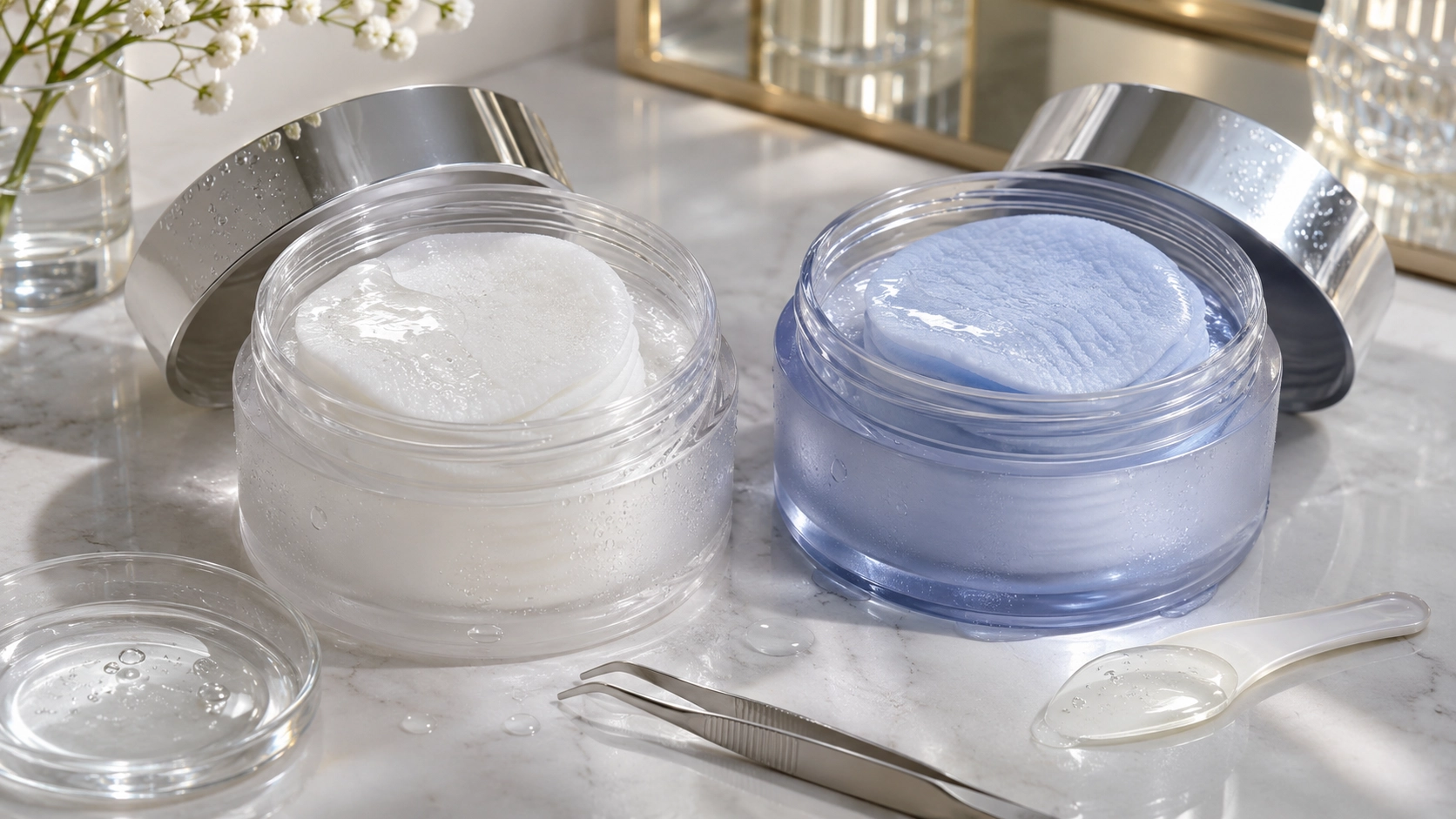
PDRN Toner Pads vs GHK-Cu + SNAP-8 Peptide Toner Pads: Private Label Manufacturing Decisions
You May Also Like
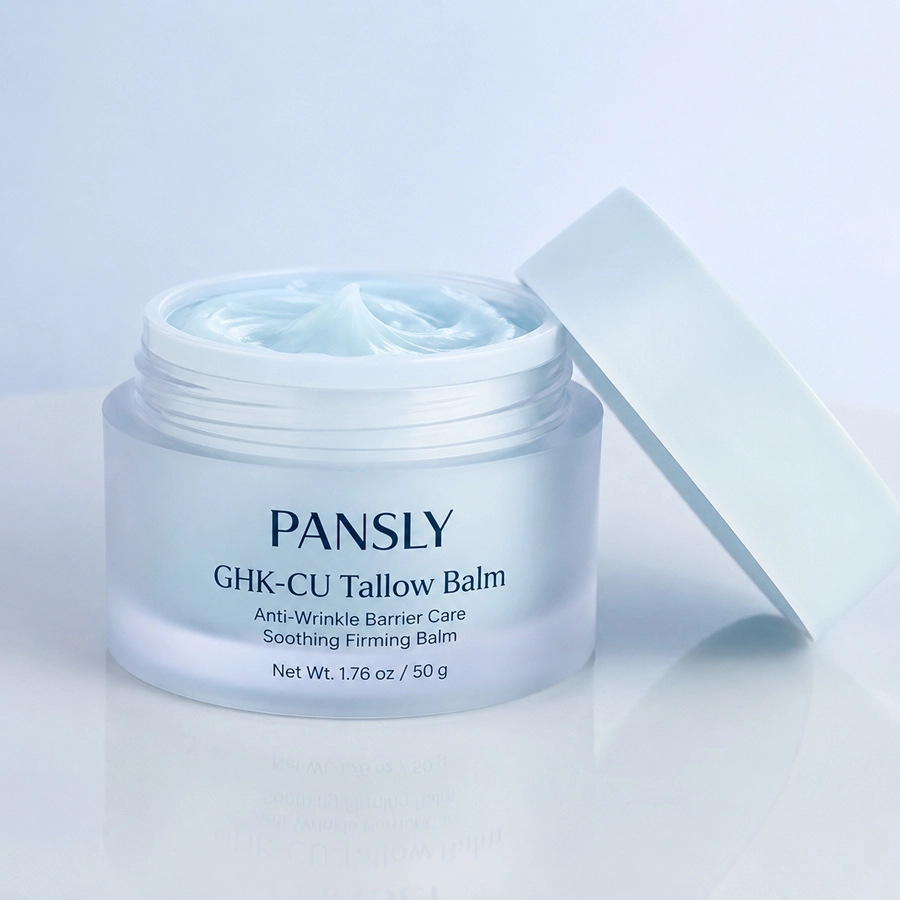
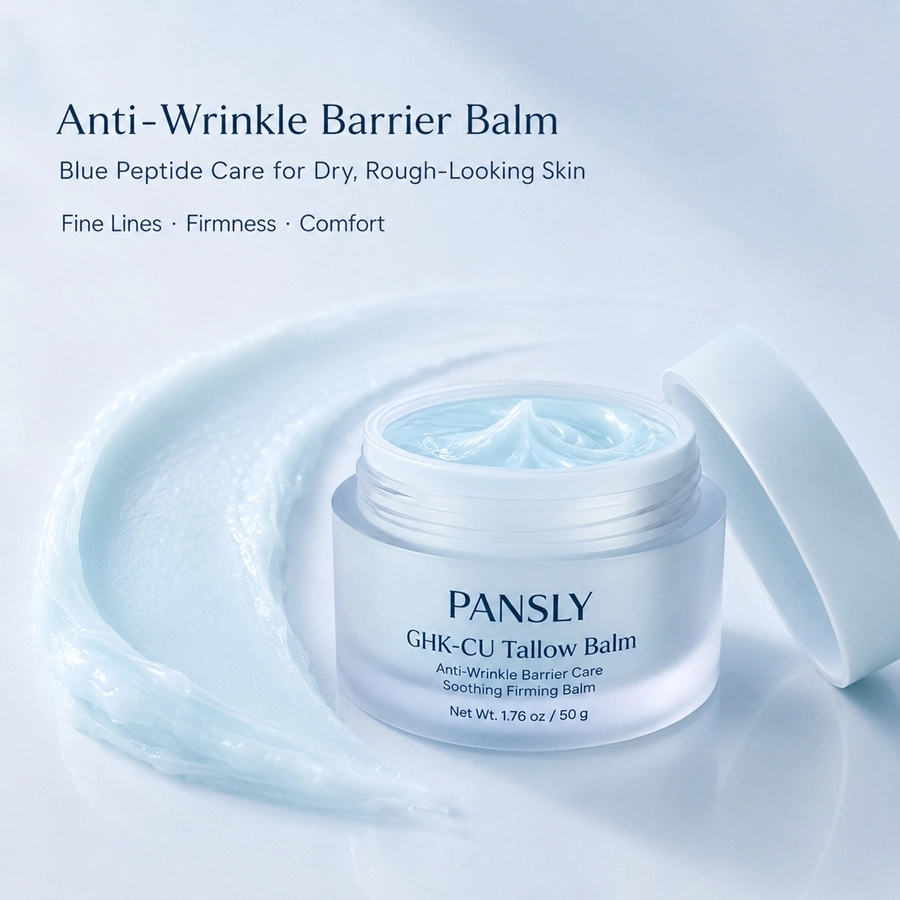
This Pansly GHK-CU + SNAP-8 Grass-Fed Tallow Anti-Wrinkle Barrier Balm is dual-peptide nourishing anti-wrinkle balm, specially developed for dry, rough textured skin, targeting fine lines, sagging contours and weakened skin barrier. Full OEM & ODM private label support is offered, including formula customization, packaging selection, fast sampling and bulk supply.
Five core premium active ingredients work synergistically for multi-dimensional skin care:
GHK-CU Copper Peptide lifts and firms loose skin to boost skin tightness and smooth fine lines;
SNAP-8 Peptide softens expression lines to reduce wrinkle visibility;
Grass-Fed Tallow delivers rich lipid nourishment to relieve persistent dry flaky rough skin;
Ceramide NP reconstructs skin moisture barrier to enhance skin comfort and resilience;
Squalane melts lightly into skin to provide silky long-lasting hydration.
Luxury rich light blue cushion balm texture glides smoothly and absorbs quickly without heavy greasy residue. Daily use improves dry rough texture, blurs dry fine lines, lifts saggy skin and stabilizes skin barrier, leaving skin soft, calm and smooth with healthy supple glow.
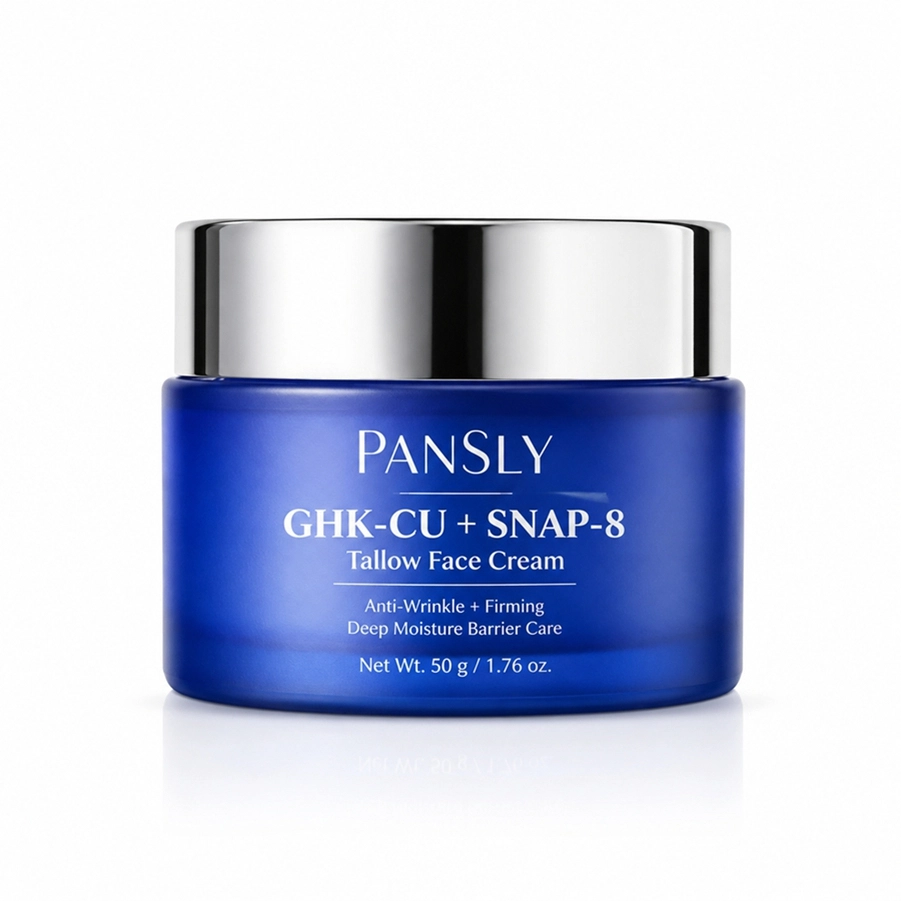
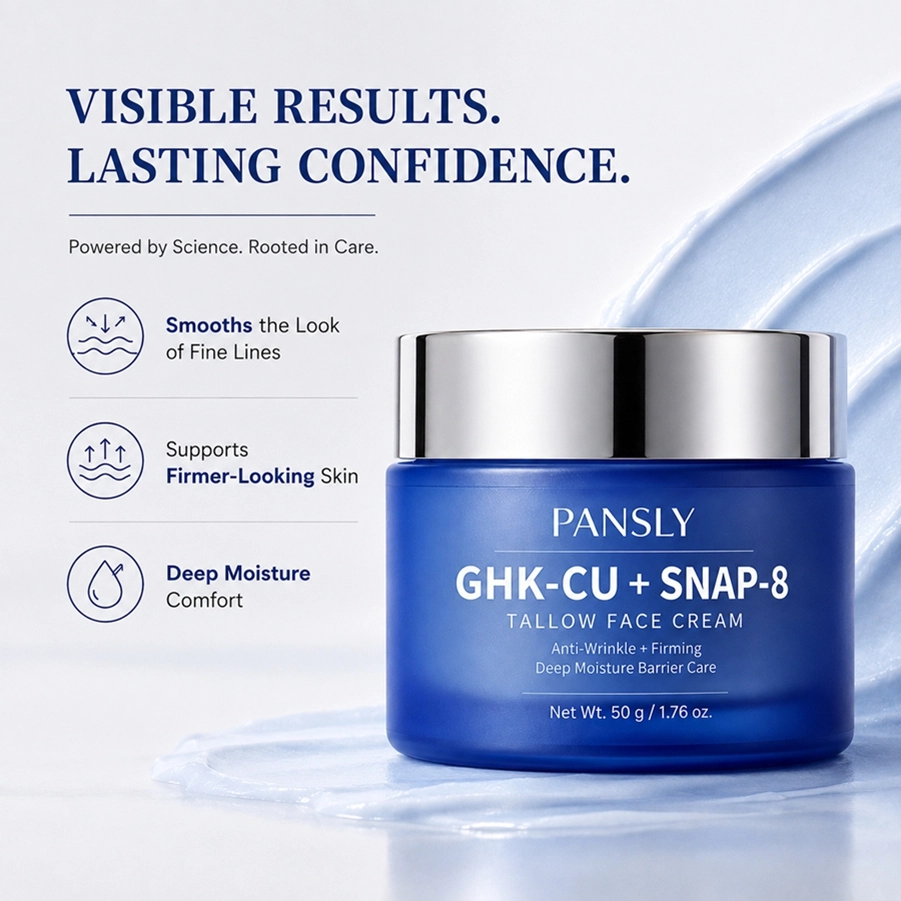
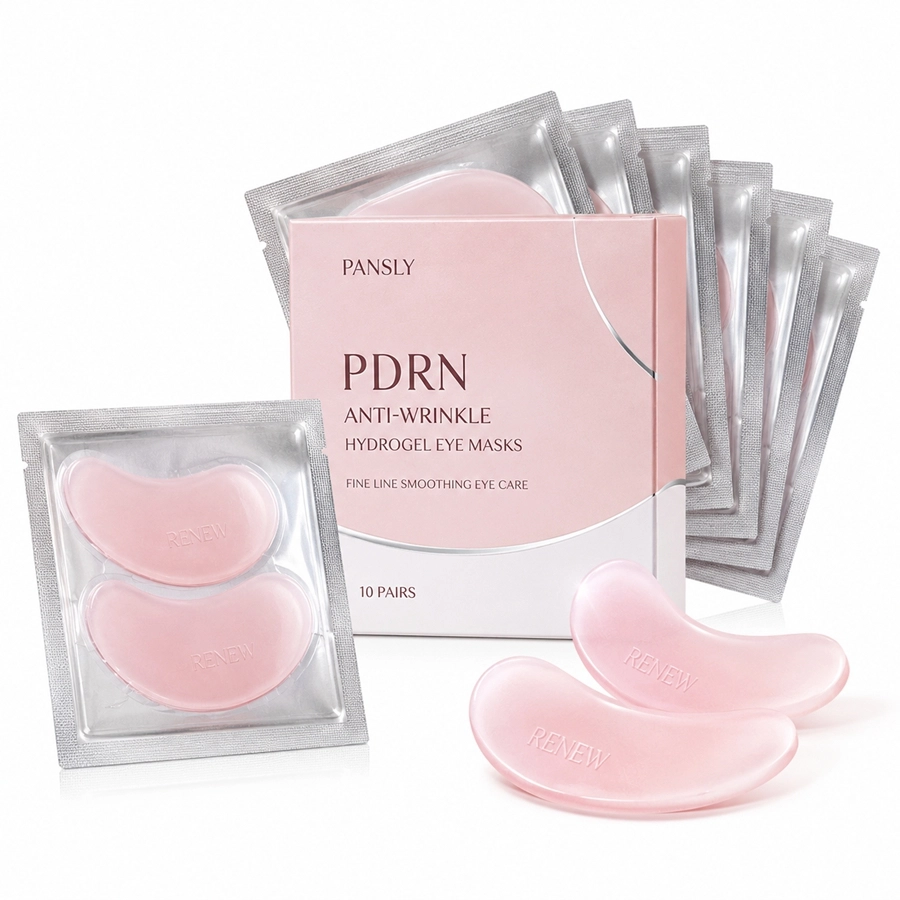
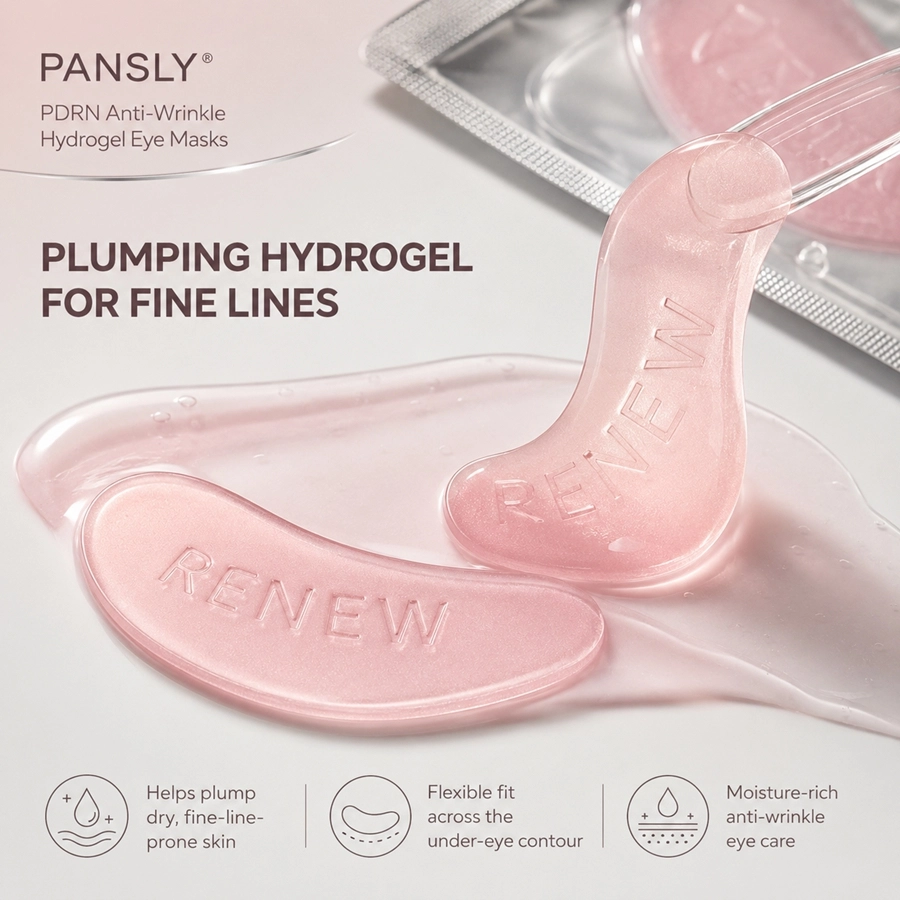

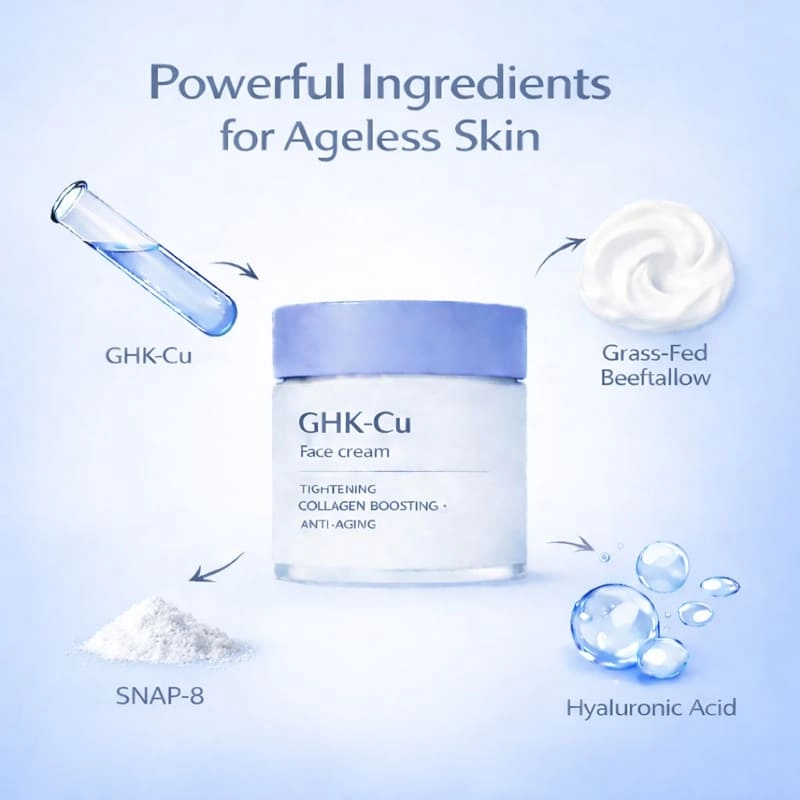
This GHK-Cu & SNAP-8 Beef Tallow Anti-Wrinkle Cream represents a unique fusion of traditional skin nourishment and cutting-edge peptide science. By utilizing Grass-Fed Beef Tallow as a bio-compatible base, the formula provides a rich profile of vitamins A, D, E, and K that mimics the skin's natural sebum for unparalleled absorption. This nutrient-dense foundation is supercharged with GHK-Cu (Copper Peptide) to support dermal density and SNAP-8 (Octapeptide-3) to help relax the appearance of expression lines and deep-set wrinkles.
Designed specifically for aging or depleted skin, this intensive cream provides a protective moisture barrier while actively working to improve firmness and elasticity. The result is a multi-layered approach to rejuvenation that smooths texture, deeply hydrates, and restores a youthful, resilient "bounce" to the complexion without the use of synthetic fillers.
Get in Touch with us
If you have any comments or good suggestions, please leave us a message; later our professional staff will contact you as soon as possible.
Click here to customize the Beauty
we respond within a few hours
Monday–Friday, 9AM–6PM
3A01, Building A, Zhisheng Square, No. 4 Zhifu Road, Helong Street, Baiyun District, Guangzhou, China.


Leave a request, and we'll email you back within 24 hours.
© 2026 Beyond Basix. All Rights Reserved.