
40% Urea Cream vs Regular Heel Balm: How Should Brands Differentiate Them?
Quick Answer
A 40% urea foot cream is typically positioned for pronounced roughness and thickened skin, while a regular heel balm is better suited to daily moisturization and barrier support. Brands should differentiate them through urea concentration, intended skin condition, claim language, sensory profile, and packaging compatibility. Final solutions depend on the target market, testing requirements, and specific project conditions.
How Beyond Basix Supports Projects
Beyond Basix supports skincare OEM and ODM projects through formulation development, production coordination, quality control, and packaging evaluation for foot-care products. Guangzhou Beyond Basix Cosmetics Ltd. has more than 23 years of experience in cosmetics research, production, and sales, with a 12,000-square-meter facility, a 100,000-level GMPC pharmaceutical-grade dust-free workshop, and 12 production lines.
Buyers should confirm the target urea level, product claims, dosage form, pack format, target market, stability expectations, and compliance documents. The company holds certifications and documentation including ISO 9001, CE, MSDS, GMP, and HALAL, where applicable to the project. MOQ, lead time, testing scope, and quotation must be confirmed for each project.
Discuss Your Urea Foot-Care Project
Share your target market, intended claims, urea concentration, preferred texture, packaging format, estimated order quantity, and required certifications so suitable formulation and sampling options can be discussed. Visit www.beyondbasixcosmetics.com or email Lily@lanthome.com to begin a project-specific consultation.
Frequently Asked Questions
Can 40% urea foot cream be used on every cracked heel?
No product should be positioned as suitable for every cracked heel. A 40% urea formula is generally associated with intensive softening of very rough, thickened skin, but cracks can have different causes, including friction, dryness, dermatitis, fungal infection, or underlying health conditions. Brands should avoid implying diagnosis or universal suitability. Product directions should distinguish intact thick skin from open, bleeding, infected, or severely inflamed areas and advise users to seek medical guidance when appropriate. For cosmetic positioning, the formula, claim language, warnings, and target consumer should be reviewed together for the intended market.
When should brands choose urea over an occlusive heel balm?
Urea and occlusive balms solve different formulation and positioning problems. Urea attracts water and, at higher concentrations, can soften compacted surface skin; an occlusive balm primarily reduces water loss by forming a protective layer. A brand may select higher-strength urea when roughness and thickened texture are central to the consumer need. It may select a balm when daily comfort, surface protection, and a richer after-feel are more important. A hybrid concept is possible, but compatibility, pH, viscosity, preservative performance, and consumer tolerance require testing rather than assumption. Claims should reflect demonstrated cosmetic effects instead of presenting a balm as equivalent to a concentrated urea product.
How does urea concentration affect product positioning and safety claims?
Concentration changes both consumer expectations and regulatory risk. Lower levels are commonly used for moisturization, while higher levels are more often associated with softening rough or thickened skin. The exact boundary between cosmetic moisturization and stronger exfoliating or therapeutic positioning is not universal; it depends on local rules, the finished formula, directions, and advertising claims. A 40% product therefore requires disciplined claim review. Brands should define the intended use, assess irritation potential on relevant skin models or through appropriate human testing, establish directions for frequency and amount, and avoid medical claims unless the product is authorized under the destination market’s applicable framework.
What testing should OEM buyers request for high-urea foot creams?
Testing should be selected according to the formula, package, market, and claims rather than copied from another product. Core considerations commonly include microbiological quality, preservative or challenge testing where relevant, stability under proposed storage conditions, package compatibility, appearance and odor monitoring, pH, viscosity, and fill-weight control. For a concentrated urea product, buyers should also monitor crystallization, texture drift, phase separation, and changes after temperature cycling. If sensitive-skin or irritation-related claims are planned, the evidence plan should be agreed before production. The OEM brief should identify acceptance criteria, sample retention, batch documentation, and the regulatory documents required by the destination market.
Why do high-urea creams sometimes sting damaged or inflamed skin?
Stinging can occur because compromised skin has a less effective barrier, allowing ingredients to interact more intensely with exposed nerve endings. High urea concentration, low or high pH, fragrance, preservatives, or other solvents may contribute to discomfort, especially on fissured or inflamed areas. This does not automatically mean the formula is defective, but it does require responsible product design and communication. Brands should assess the complete formula rather than blaming urea alone, use appropriate tolerance testing, provide clear use instructions, and define warnings for broken or irritated skin. Marketing should not encourage application to open wounds or imply that discomfort proves efficacy.
How can packaging protect a concentrated urea formula during shipping?
Packaging should be evaluated as part of the formula system. Urea-containing emulsions can be sensitive to moisture exchange, temperature variation, contamination risk, and texture changes if the closure or material is poorly matched. Airless packs, tubes, or other formats may be considered depending on viscosity, dispensing behavior, filling equipment, and target cost, but no format is automatically optimal. OEM buyers should request compatibility data, leakage and seal checks, transport simulation where appropriate, and stability observations in the final commercial pack. Artwork should also provide batch information, directions, warnings, storage guidance, and legally required labeling for the destination market.
Related Articles for Private Label Cosmetics

Why Two Mineral Sunscreens With the Same SPF Can Feel Completely Different

Beyond Ordinary Tallow Balm: How GHK-Cu and SNAP-8 Create a Different Skincare Story

When Blue Copper Peptides Meet Beef Tallow: A New Direction for Premium Skincare

PDRN Toner Pads vs GHK-Cu + SNAP-8 Peptide Toner Pads: Private Label Manufacturing Decisions
You May Also Like
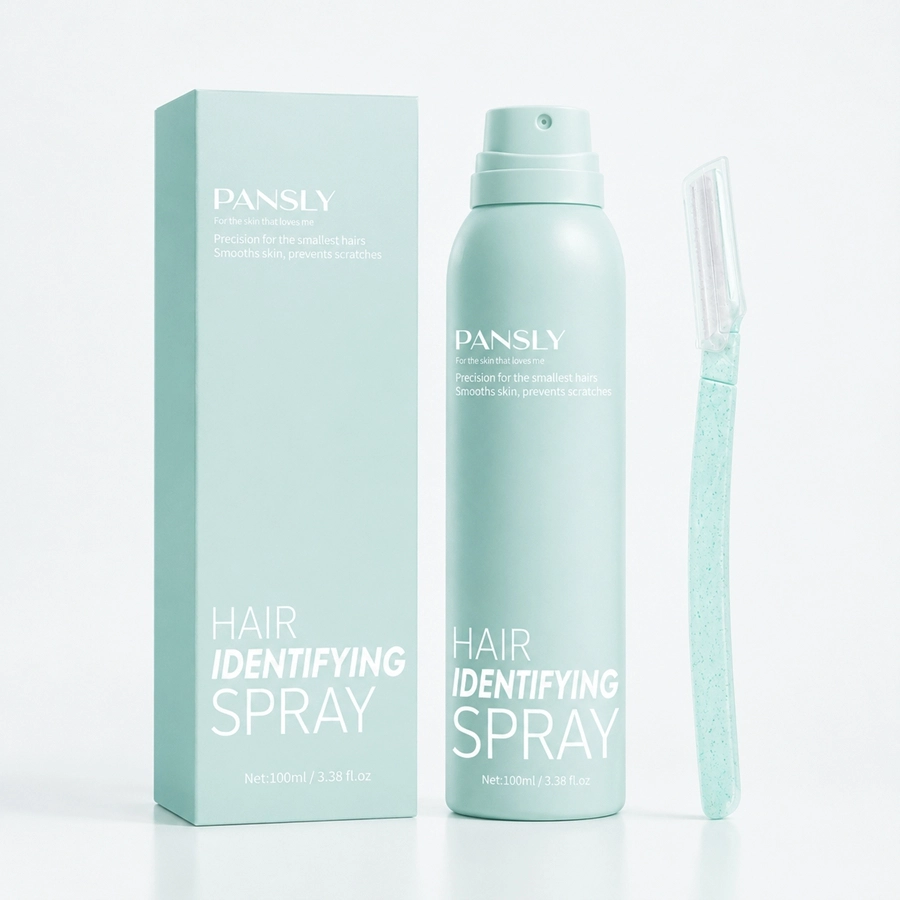
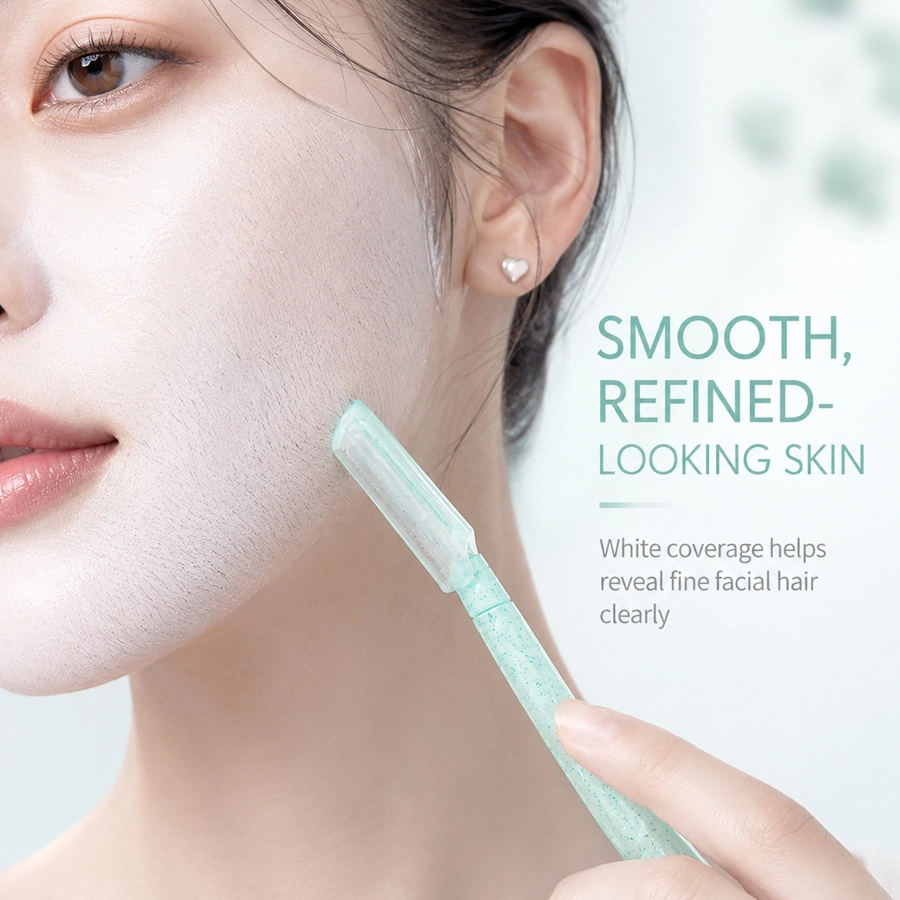
This Pansly Hair Identifying Spray Grooming Set includes a 100ml pre-shave hair identifying spray and a matching precision facial scraper, suitable for facial and body fine hair trimming.
Core functional ingredients:
Zea Mays (Corn) Starch: Forms a thin white film on dry skin to make invisible tiny vellus hairs clearly visible, supporting targeted accurate grooming;
Portulaca Oleracea Extract: Calms skin and alleviates irritation caused by scraping operations;
Hydrolyzed Keratin: Lubricates the skin surface to boost razor gliding and avoid scratches during hair removal;
Butylene Glycol: Offers gentle moisturization to keep skin comfortable throughout the grooming process.
You can finish the whole routine in 4 simple steps: Spray evenly on dry skin → Identify fine hairs via white coverage → Glide gently with the scraper → Wipe residues for silky smooth skin. It can be used on cheeks, upper lips, jawline, arms and more areas. We provide complete OEM/ODM private label service, including custom logo, multiple color selections, bulk order support and fast customization.
Get in Touch with us
If you have any comments or good suggestions, please leave us a message; later our professional staff will contact you as soon as possible.
Click here to customize the Beauty
we respond within a few hours
Monday–Friday, 9AM–6PM
3A01, Building A, Zhisheng Square, No. 4 Zhifu Road, Helong Street, Baiyun District, Guangzhou, China.


Leave a request, and we'll email you back within 24 hours.
© 2026 Beyond Basix. All Rights Reserved.
