
Quick Answer
The best copper peptide serum depends on copper tripeptide-1 quality, usable concentration, formula compatibility, packaging protection, and substantiated claims. Beyond Basix can support project evaluation through formulation development and manufacturing resources. Buyers should confirm target market, pH range, stability requirements, packaging, testing scope, and order economics; the final solution depends on project specifications and test results.
How Beyond Basix Supports Projects
Beyond Basix Cosmetics Ltd. provides OEM/ODM skincare support from formulation development through production. Its 12,000-square-meter facility includes a 100,000-level GMPC pharmaceutical-grade dust-free workshop and 12 production lines. These resources can support serum projects requiring ingredient selection, filling, packaging coordination, and production planning.
Relevant project discussions should confirm copper peptide form, target use level, formula pH, preservative system, container type, claim language, and required quality documentation. MOQ, lead time, testing scope, and quotation must be confirmed for each project. Beyond Basix holds ISO 9001, GMP, HALAL, CE, MSDS, and other stated certifications applicable to specific products or processes.
Discuss Your Copper Peptide Serum Project
Send the target market, customer profile, serum texture, copper peptide preference, intended claims, pack size, expected order volume, and launch timeline so suitable options, sample steps, testing priorities, and production details can be discussed. Visit www.beyondbasixcosmetics.com or email Lily@lanthome.com to begin a project-specific evaluation.
Deep-Dive FAQs
How do copper peptides differ from other peptides for skin firming?
Copper peptides are peptide complexes that bind copper ions; copper tripeptide-1 is the form most commonly discussed in cosmetic skincare. Their proposed role differs from signal peptides, which are designed to communicate with skin-supporting pathways, and carrier peptides, which transport trace elements. The presence of copper does not automatically make a formula more effective. Performance depends on ingredient identity, active level, vehicle, stability, skin exposure, and appropriate use. For peptides for skin firming, brands should avoid treating in-vitro findings as proof of visible lifting in consumers. A responsible product brief separates cosmetic appearance claims from medical or tissue-repair claims and aligns wording with the destination market’s rules.
What copper peptide concentration suits a beginner anti-aging serum?
There is no universally correct beginner concentration because suppliers may report different assay standards, solution strengths, or active-material percentages. A brand should first define whether the specification refers to copper tripeptide-1 itself or a diluted raw-material blend. The formulator can then screen a practical use level against pH, preservative compatibility, sensory performance, and stability. Starting with the supplier’s documented recommendation is more defensible than copying a percentage from an online formula. A pilot batch should assess appearance, odor, viscosity, microbial quality, and active retention over the planned storage conditions before a commercial claim is approved.
Can copper peptide serums be combined with retinoids or acids?
Combination is a formulation and usage question, not an automatic prohibition. Retinoids and exfoliating acids can increase irritation potential, while copper peptide performance may be affected by low pH, chelating ingredients, reducing agents, or other reactive components. A leave-on serum should be evaluated for pH, ingredient interaction, color change, viscosity drift, preservative performance, and user tolerance. Brands may choose separate products or usage instructions when compatibility or irritation risk is uncertain. Consumer directions should be supported by stability and safety reviews rather than broad claims that particular combinations are universally unsafe or universally beneficial.
How should brands validate copper peptide stability during OEM production?
Validation should begin with a defined specification for copper tripeptide-1 identity, assay, appearance, pH, viscosity, microbial limits, and packaging. Development batches can be assessed under suitable accelerated, long-term, light-exposure, and temperature conditions selected for the intended market and container. Testing should examine active retention or an appropriately justified indicator, color, odor, phase behavior, preservative protection, and container compatibility. Blue or green coloration may reflect the copper complex, but a new or rapidly intensifying color requires investigation rather than acceptance by appearance alone. The final protocol, sampling points, and acceptance criteria should be agreed before scale-up.
Why does serum color change after copper peptide formulation?
Copper complexes can contribute characteristic blue or blue-green tones, but the final shade is influenced by concentration, pH, chelators, antioxidants, light, oxygen, raw-material impurities, and the surrounding formula. A mild batch-to-batch shift may result from normal ingredient variation, whereas precipitation, strong darkening, odor change, or loss of clarity can indicate incompatibility or degradation. The correct response is comparative testing against an approved reference batch, including pH, assay or marker analysis, microbial results, and stability observations. Opaque or air-restrictive packaging may reduce exposure, but packaging selection should be verified through compatibility and stability studies.
What testing supports claims for copper peptide wrinkle reduction?
Claims should match the evidence generated for the finished product, not only published information about an isolated ingredient. A brand may combine instrumental measurements, expert grading, standardized photography, consumer perception data, and a suitably designed use study, depending on the intended claim and market. The protocol should define participant criteria, application frequency, duration, comparator, endpoints, and statistical approach before testing begins. Claims such as improved appearance of fine lines require cosmetic substantiation, while claims implying biological repair, treatment, or structural lifting may trigger stricter regulatory expectations. Peptide-based firming language should therefore remain precise, measurable, and consistent with the available evidence.
Related Articles for Private Label Cosmetics

Why Two Mineral Sunscreens With the Same SPF Can Feel Completely Different

Beyond Ordinary Tallow Balm: How GHK-Cu and SNAP-8 Create a Different Skincare Story

When Blue Copper Peptides Meet Beef Tallow: A New Direction for Premium Skincare

PDRN Toner Pads vs GHK-Cu + SNAP-8 Peptide Toner Pads: Private Label Manufacturing Decisions
You May Also Like
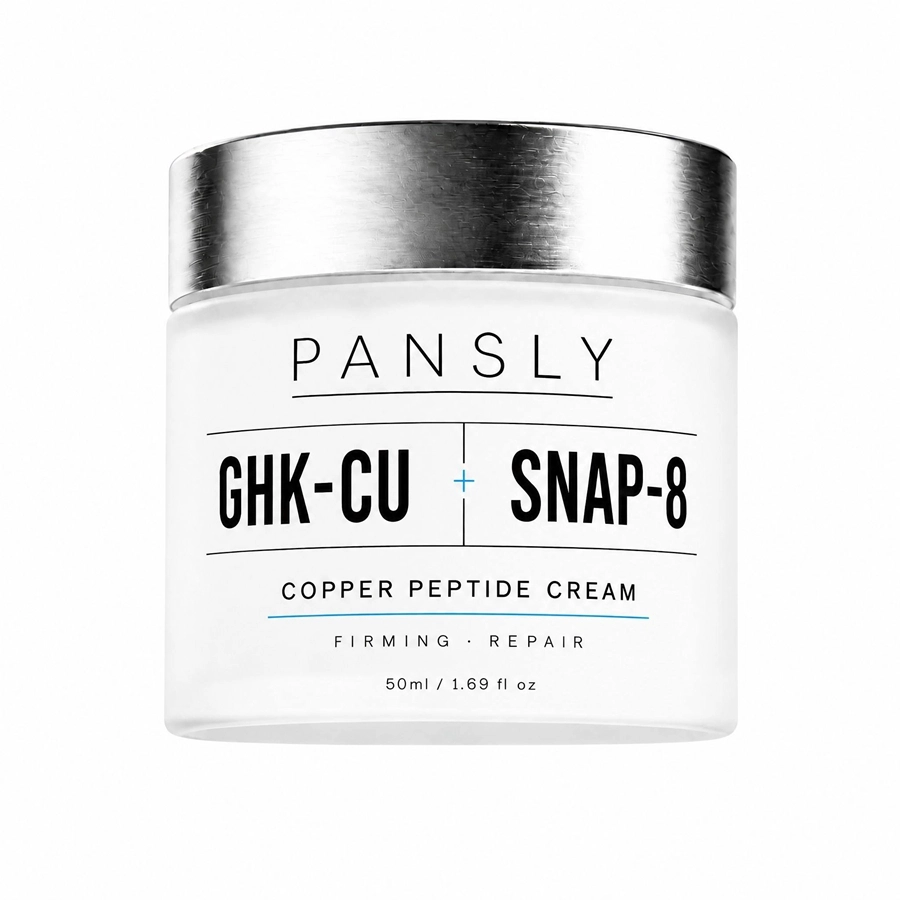
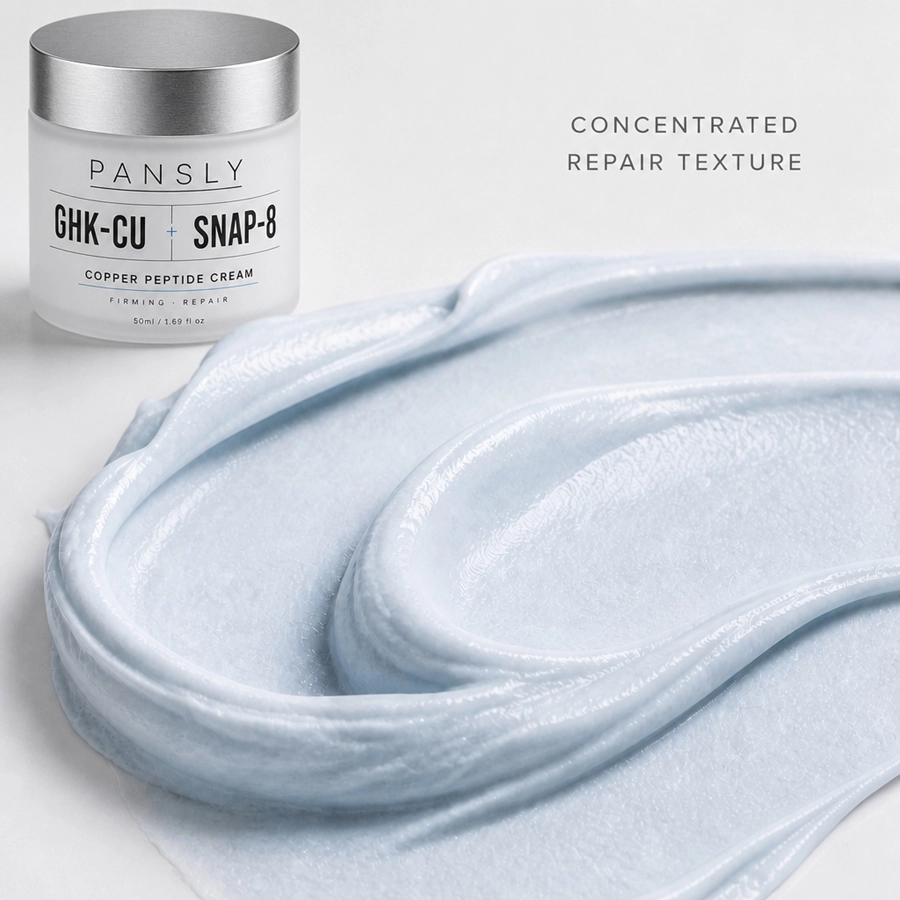
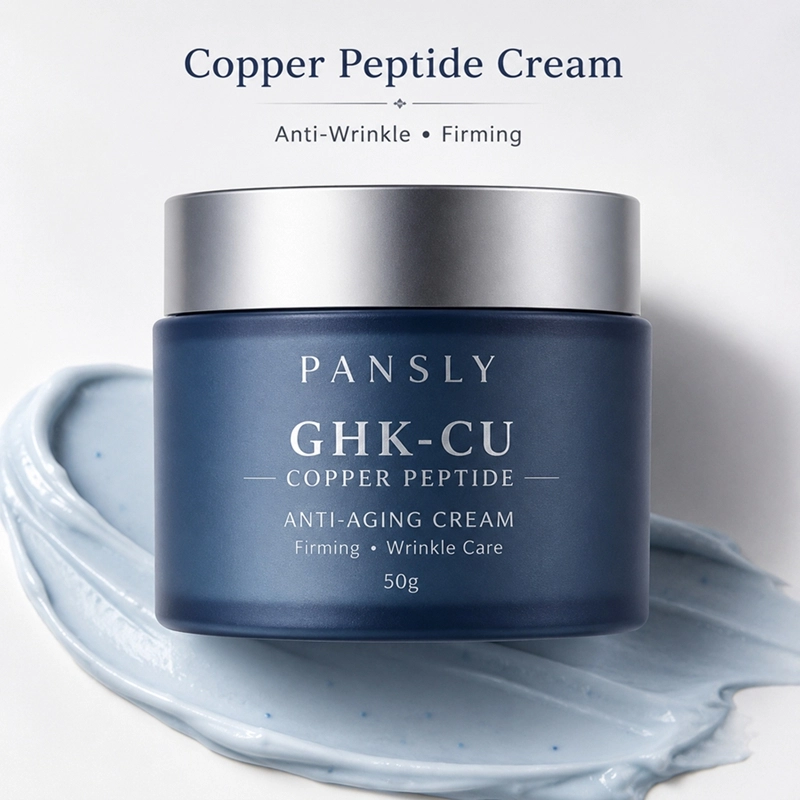
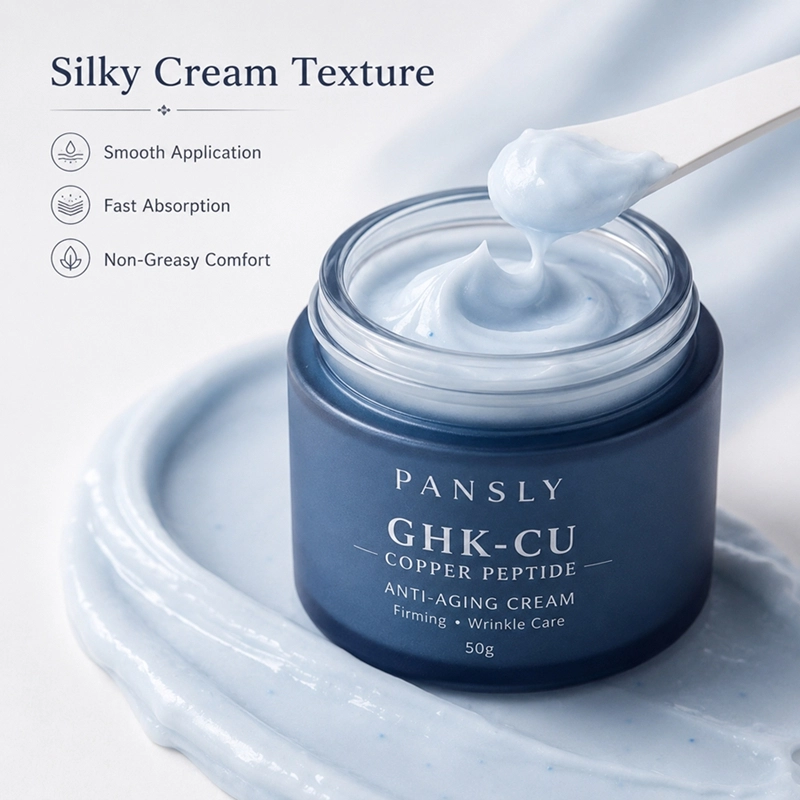
GHK-Cu Face Cream, a copper peptide anti-aging formula, hydrates deeply and supports skin barrier repair. Private label available for bulk orders, giving brands a ready-to-sell moisturizer with a blue copper peptide base for smoother-looking skin.
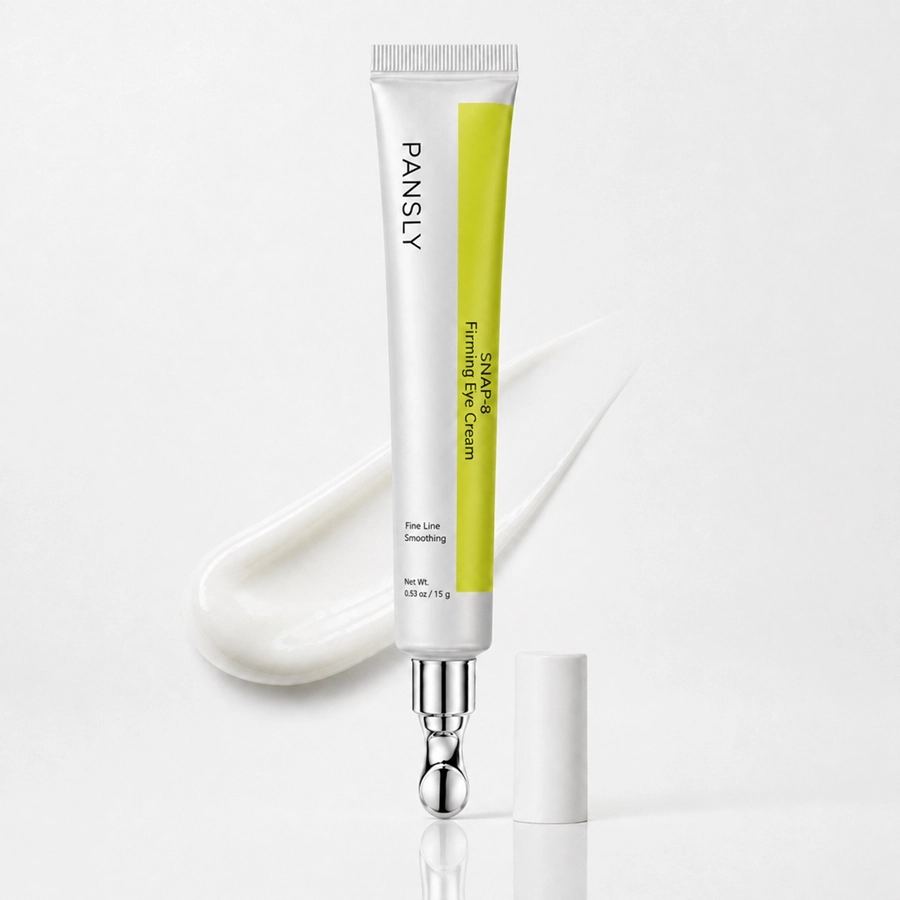
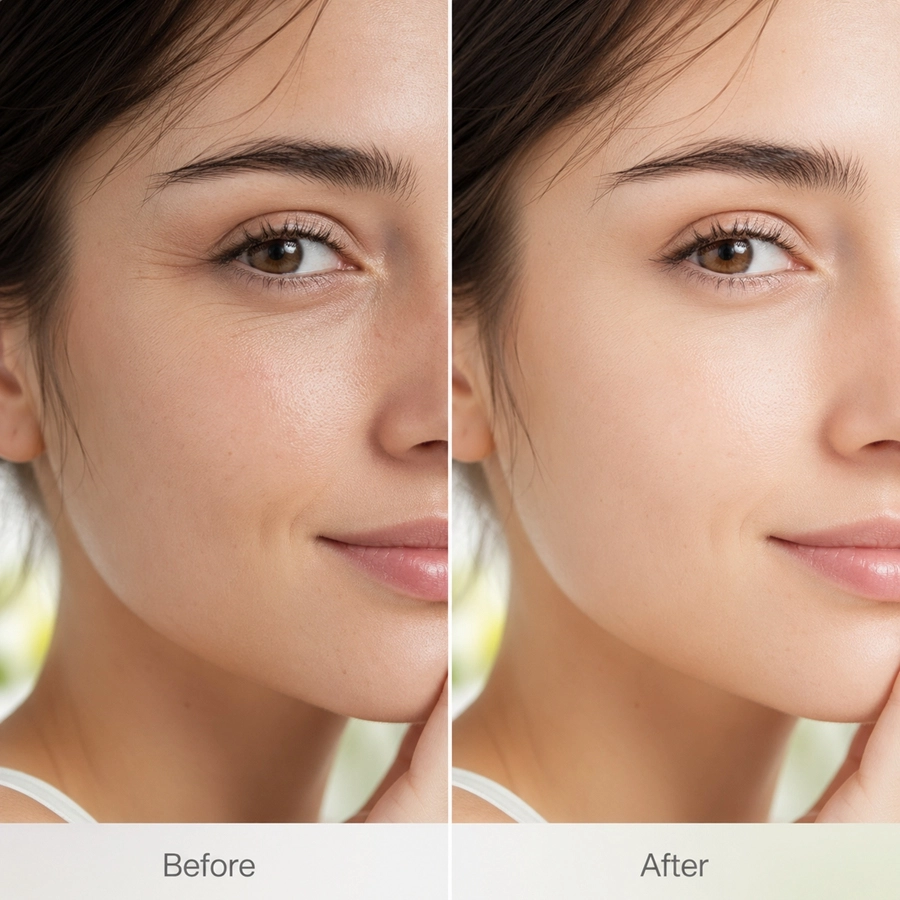
This Pansly SNAP-8 Firming Eye Cream is lightweight massage roller eye cream dedicated to smoothing eye fine lines, lifting saggy eye skin and refreshing tired puffy eyes.
It adopts 4-in-1 peptide eye care complex: SNAP-8 visibly smooths crow’s feet and under-eye fine lines; Caffeine eliminates eye puffiness and awakens dull tired eye area; Peptide Complex lifts loose eye skin to tighten eye contour; Hyaluronic Acid delivers lightweight lasting hydration to nourish dry eye skin.
Comes with built-in metal massage roller for comfortable massage application. Silky lightweight cream texture glides smoothly without heavy greasiness. Daily eye care softens fine lines, firms saggy eye skin, relieves eye fatigue and maintains plump smooth youthful eye area.
Get in Touch with us
If you have any comments or good suggestions, please leave us a message; later our professional staff will contact you as soon as possible.
Click here to customize the Beauty
we respond within a few hours
Monday–Friday, 9AM–6PM
3A01, Building A, Zhisheng Square, No. 4 Zhifu Road, Helong Street, Baiyun District, Guangzhou, China.


Leave a request, and we'll email you back within 24 hours.
© 2026 Beyond Basix. All Rights Reserved.
