
Blue Copper Peptide: Why the Blue Color Matters | Beyond Basix
Quick Answer
Blue Copper Peptide appears blue because copper is coordinated with the peptide, producing visible-light absorption that a clear, uncomplexed solution would not show. For peptides for skin firming, color is a formulation clue—not proof of potency. Beyond Basix can evaluate ingredient specification, target pH, compatibility, packaging, and stability requirements, but final solutions depend on the formula, testing plan, and site conditions.
How Beyond Basix Supports Projects
Guangzhou Beyond Basix Cosmetics Ltd. provides OEM/ODM skincare development backed by more than 23 years in cosmetics research, production, and sales. Its 12,000-square-meter facility includes a 100,000-level GMPC pharmaceutical-grade dust-free workshop and 12 production lines. For copper peptide concepts, the project discussion can cover formula design, ingredient documentation, batch control, filling format, and production coordination.
Buyers should confirm the peptide’s INCI name and specification, intended concentration, formula pH, packaging format, target market, and required stability or microbiological testing. MOQ, lead time, testing scope, and quotation must be confirmed for each project. Beyond Basix holds certifications and documentation including ISO 9001, CE, MSDS, GMP, and HALAL, subject to the applicable product and project scope.
Discuss Your Blue Copper Peptide Project
Send the target market, product type, desired claims, formula or texture preference, expected order volume, packaging concept, and required compliance documents. We can discuss suitable ingredient options, sample steps, testing priorities, and production planning for a private-label or custom formulation. Visit www.beyondbasixcosmetics.com or email Lily@lanthome.com to discuss your project with Beyond Basix.
Deep-Dive FAQs
Why is blue copper peptide blue instead of clear?
The blue appearance generally comes from a coordination complex between copper ions and the peptide commonly identified in cosmetics as Copper Tripeptide-1, also known as GHK-Cu. Copper can absorb selected wavelengths of visible light, and the remaining reflected or transmitted light creates a blue to blue-violet appearance. This is a chemical and optical property, not a dye effect by definition. The precise shade can vary with concentration, pH, solvent system, counter-ions, impurities, and lighting. A clear product is not automatically ineffective, and a vivid blue product is not automatically more active. During raw-material approval, a brand should compare the supplier’s specification, identity documentation, appearance range, assay information, and batch records rather than use visual intensity as the acceptance criterion.
Does darker blue mean stronger peptide for skin firming?
No. Color depth cannot establish peptide concentration, bioavailability, purity, or finished-product performance. It is influenced by optical path length, dilution, container color, background, pH, and the way copper is complexed. A darker batch may simply contain a higher apparent color intensity or use a different vehicle. For peptides for skin firming, responsible evaluation separates visual inspection from analytical and performance evidence. A buyer should request the raw material’s identity and assay method, review the finished formula’s theoretical concentration, and define appearance limits during quality control. If a product makes firming or wrinkle-related claims, those claims should be supported by an appropriate cosmetic substantiation program, such as instrumental measurements, expert grading, or controlled consumer testing. Marketing language should not imply that blue intensity predicts clinical results.
How should brands test copper peptide identity and stability?
Identity and stability should be treated as separate questions. Identity work can combine supplier documentation with an appropriate analytical method, such as chromatographic peptide assessment, spectroscopic comparison, or another validated laboratory procedure selected for the matrix. Stability work should monitor appearance, odor, pH, viscosity where relevant, assay or marker content, microbial quality, and container compatibility over the proposed shelf-life conditions. The blue color may be recorded as a useful visual indicator, but it cannot replace quantitative testing. A development protocol should include the bulk formula, filled package, temperature and light exposures relevant to distribution, and defined acceptance criteria. Sampling at planned intervals helps distinguish reversible color variation from chemical degradation or packaging interaction. The final method and limits should be agreed with the responsible quality or regulatory function before commercial release.
What pH range suits copper tripeptide facial formulas?
There is no universal pH value that suits every copper tripeptide formula. The workable range depends on the raw material specification, peptide concentration, solvent system, buffers, preservatives, co-ingredients, and the tolerance of the package. The formula must also remain acceptable for facial use and compatible with its broader claim and preservative strategy. Instead of copying a generic online pH number, formulators should screen a justified range and monitor color, pH drift, viscosity, assay or marker retention, and microbial results during development. Strongly acidic or strongly alkaline environments may alter ingredient compatibility and can increase consumer-sensation or stability concerns, but the actual risk is formula-specific. The supplier’s technical data should be used as a starting constraint, followed by pilot batches and stability testing in the intended container.
Can copper peptide be combined with retinoids and acids?
Combination decisions should be based on the complete formula, not on a blanket rule that copper peptides are incompatible with all active ingredients. Retinoids, exfoliating acids, antioxidants, chelating agents, surfactants, and preservatives can change pH, oxidation conditions, solubility, or copper availability. A combined formula therefore needs compatibility screening, including appearance, pH, assay or marker retention, viscosity, odor, and package interaction. Separate products may be more practical when the desired actives require conflicting pH or stability conditions, or when the consumer routine could increase irritation. Claims should also reflect the finished product’s tested composition rather than the presence of multiple popular ingredients. For an OEM or ODM brief, provide the complete active list, target levels, delivery format, intended use frequency, and market requirements so the development team can assess whether one formula or a coordinated product system is more defensible.
Which packaging protects blue peptide products during distribution?
The best package is determined by the finished formula’s sensitivity to light, oxygen, moisture, handling, and repeated consumer exposure. Opaque or light-reducing packaging can be considered when light exposure affects appearance or stability, while an airless or otherwise controlled-dispensing format may reduce repeated air exchange and contamination risk. These features should not be selected solely because the product is blue. Compatibility testing must examine extractables or interaction risks where relevant, color change, leakage, pump performance, closure integrity, and formula assay during transport and storage. The distribution profile matters: temperature cycling, shipping duration, warehouse conditions, and point-of-sale lighting can differ by market. Brands should approve the filled package rather than the empty component alone, and should establish storage language only after the product and package have been evaluated together.
Related Articles for Private Label Cosmetics

Why Two Mineral Sunscreens With the Same SPF Can Feel Completely Different

Beyond Ordinary Tallow Balm: How GHK-Cu and SNAP-8 Create a Different Skincare Story

When Blue Copper Peptides Meet Beef Tallow: A New Direction for Premium Skincare

PDRN Toner Pads vs GHK-Cu + SNAP-8 Peptide Toner Pads: Private Label Manufacturing Decisions
You May Also Like
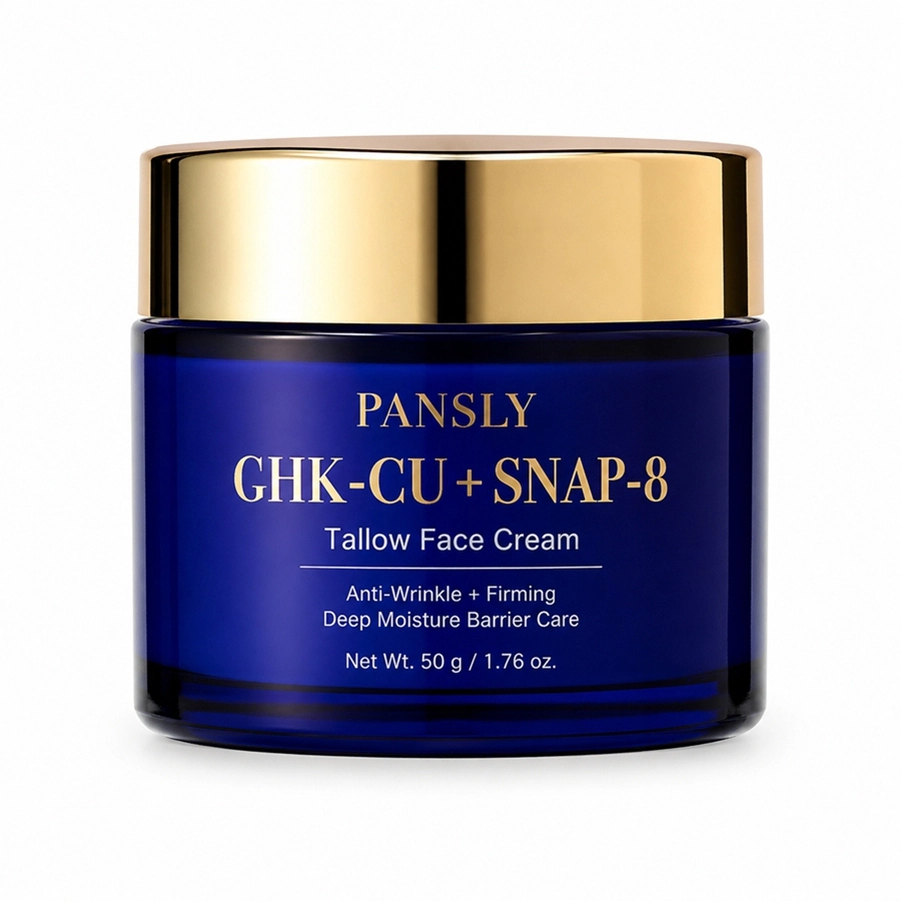
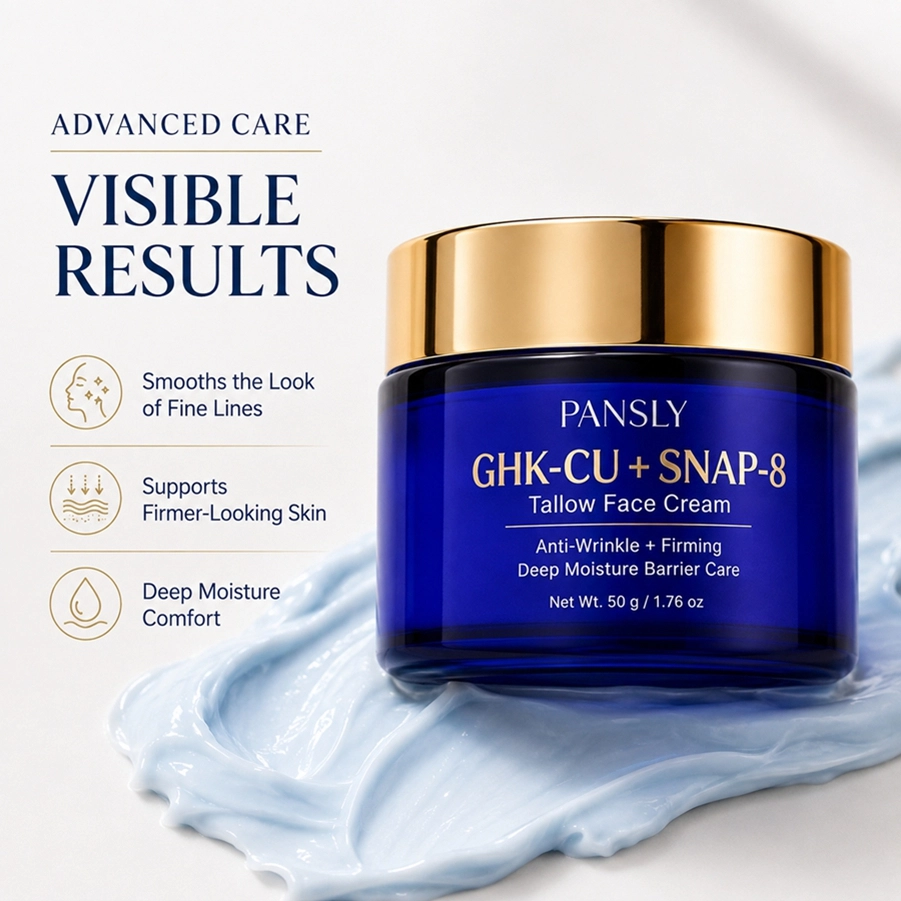
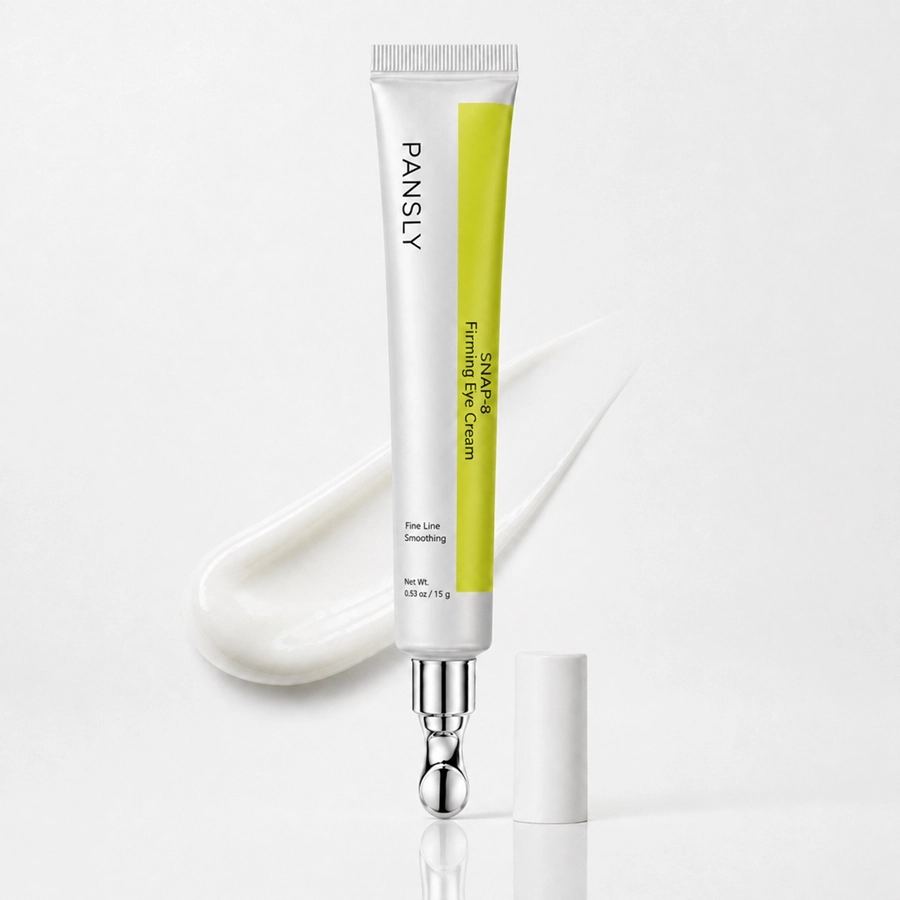
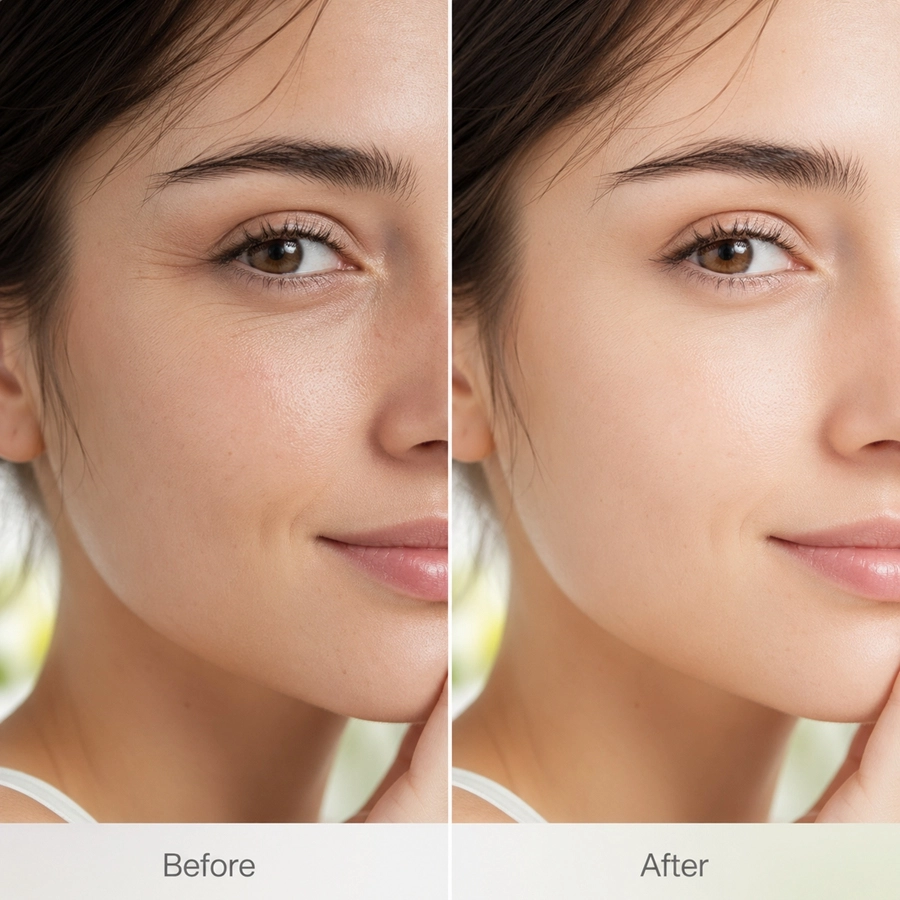
This Pansly SNAP-8 Firming Eye Cream is lightweight massage roller eye cream dedicated to smoothing eye fine lines, lifting saggy eye skin and refreshing tired puffy eyes.
It adopts 4-in-1 peptide eye care complex: SNAP-8 visibly smooths crow’s feet and under-eye fine lines; Caffeine eliminates eye puffiness and awakens dull tired eye area; Peptide Complex lifts loose eye skin to tighten eye contour; Hyaluronic Acid delivers lightweight lasting hydration to nourish dry eye skin.
Comes with built-in metal massage roller for comfortable massage application. Silky lightweight cream texture glides smoothly without heavy greasiness. Daily eye care softens fine lines, firms saggy eye skin, relieves eye fatigue and maintains plump smooth youthful eye area.
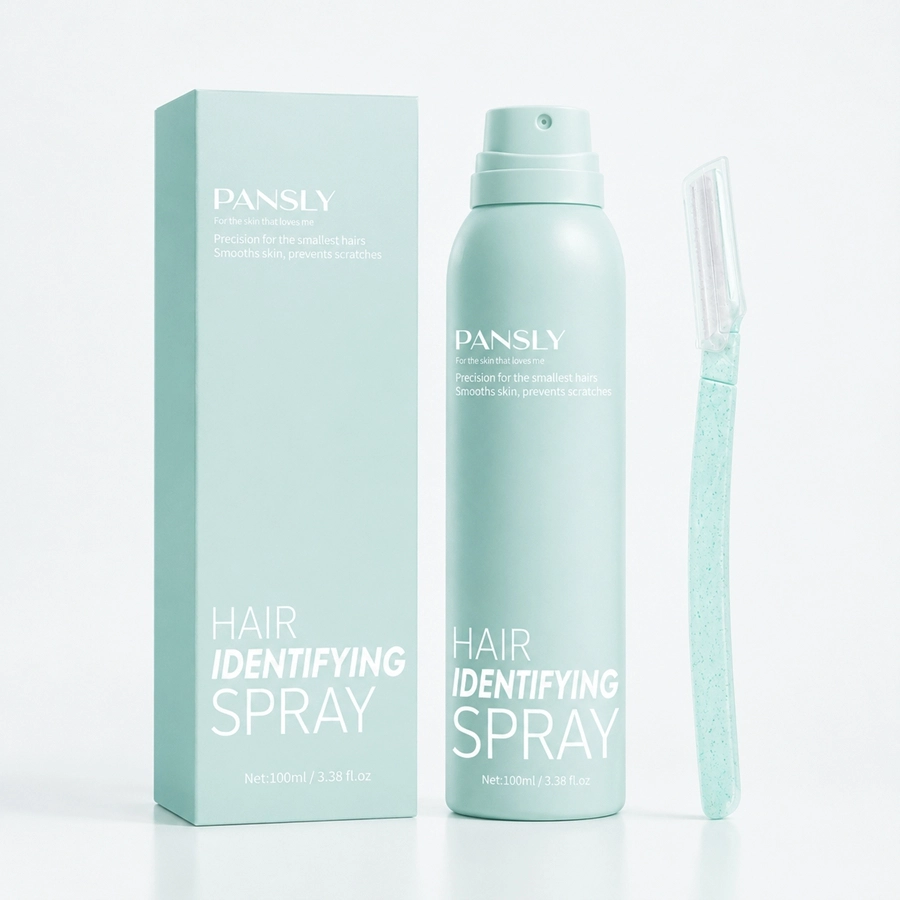
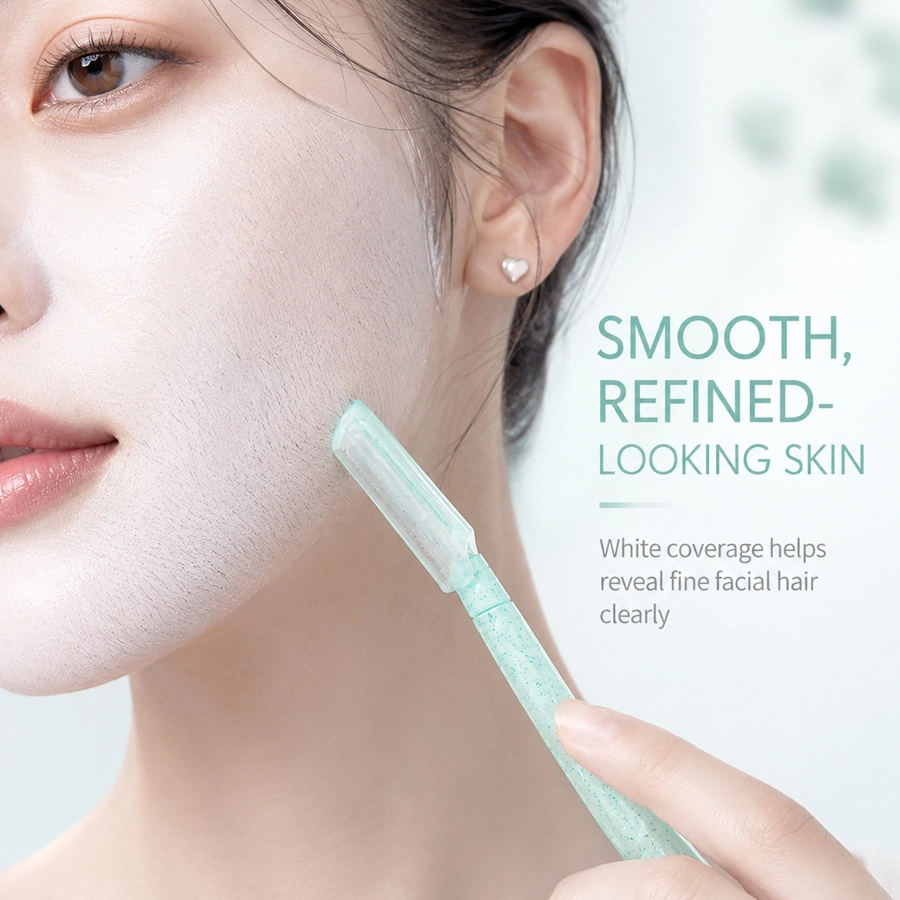
This Pansly Hair Identifying Spray Grooming Set includes a 100ml pre-shave hair identifying spray and a matching precision facial scraper, suitable for facial and body fine hair trimming.
Core functional ingredients:
Zea Mays (Corn) Starch: Forms a thin white film on dry skin to make invisible tiny vellus hairs clearly visible, supporting targeted accurate grooming;
Portulaca Oleracea Extract: Calms skin and alleviates irritation caused by scraping operations;
Hydrolyzed Keratin: Lubricates the skin surface to boost razor gliding and avoid scratches during hair removal;
Butylene Glycol: Offers gentle moisturization to keep skin comfortable throughout the grooming process.
You can finish the whole routine in 4 simple steps: Spray evenly on dry skin → Identify fine hairs via white coverage → Glide gently with the scraper → Wipe residues for silky smooth skin. It can be used on cheeks, upper lips, jawline, arms and more areas. We provide complete OEM/ODM private label service, including custom logo, multiple color selections, bulk order support and fast customization.
Get in Touch with us
If you have any comments or good suggestions, please leave us a message; later our professional staff will contact you as soon as possible.
Click here to customize the Beauty
we respond within a few hours
Monday–Friday, 9AM–6PM
3A01, Building A, Zhisheng Square, No. 4 Zhifu Road, Helong Street, Baiyun District, Guangzhou, China.


Leave a request, and we'll email you back within 24 hours.
© 2026 Beyond Basix. All Rights Reserved.
