
Can a Tallow Balm Target Both Dryness and Visible Expression Lines?
Quick Answer
A tallow balm can support both dryness and the appearance of expression lines, but through different mechanisms. Its lipid-rich base may reduce moisture loss and improve softness, while copper tripeptide and SNAP-8 require suitable formulation and testing before appearance-related claims are considered. Beyond Basix can review ingredient compatibility, target market, packaging, testing scope, and cost factors; final solutions depend on the project brief and validation results.
How Beyond Basix Supports Projects
Beyond Basix develops skincare products with effective ingredients and supports OEM/ODM projects from formulation direction through production. For a balm concept, the development discussion can cover the emollient profile, peptide selection, texture, fragrance position, container format, and intended cosmetic claims. Its 12,000-square-meter facility includes a 100,000-level GMPC pharmaceutical-grade dust-free workshop and 12 production lines.
Buyers should confirm the target market, regulatory category, ingredient restrictions, claim language, pack configuration, stability expectations, and quality documentation. Beyond Basix operates under documented manufacturing and quality systems and holds certifications including ISO 9001, GMP, HALAL, CE, and MSDS documentation as applicable. MOQ, lead time, testing scope, and quotation must be confirmed for each project.
Discuss Your Dryness and Expression-Line Balm Project
Share your target market, skin type focus, desired texture, ingredient preferences, fragrance requirements, packaging format, target claims, and estimated order volume. These details allow discussion of suitable base options, peptide positioning, sample stages, testing needs, and production planning. Visit www.beyondbasixcosmetics.com or email Lily@lanthome.com to begin a project-specific formulation discussion.
Deep-Dive FAQs
Can ghk-cu tallow balm relieve dryness without feeling greasy?
A balm can reduce the sensation of dryness by supplying occlusive and emollient lipids that help limit transepidermal water loss, but a greasy after-feel depends on the full oil-and-wax balance, application amount, melting point, and skin type. Tallow is not automatically non-comedogenic or cosmetically elegant. For development, assess spreadability, absorption perception, residue, odor, and compatibility with the intended climate. Consumer testing should compare the finished formula rather than judging the raw material alone. A humectant or water-containing phase cannot simply be added to an anhydrous balm without addressing preservation, water activity, emulsion stability, and microbial risk.
Does SNAP-8 visibly soften expression lines in tallow formulas?
SNAP-8 is commonly marketed as an acetyl octapeptide-3 associated with expression-line appearance, but a finished balm should not imply botulinum-toxin-like effects. Cosmetic evidence is ingredient- and formulation-dependent, and visible results cannot be inferred from the presence of a peptide alone. The supplier specification, recommended use level, pH exposure during processing, heat history, and compatibility with the anhydrous base should be reviewed. A responsible claim may focus on the appearance of fine lines or smoother-looking skin only when supported by the finished product's safety and efficacy assessment, appropriate consumer-use data, or instrumental testing.
How should brands test peptide stability inside tallow balm?
Stability work should examine the complete formula in its final package, not only the peptide raw material. Relevant checkpoints can include appearance, odor, color, texture, phase behavior, fill compatibility, microbial status where applicable, and assay or identity testing for sensitive actives when an appropriate validated method is available. Samples are typically evaluated under defined temperature, humidity, light, and time conditions selected for the target market and packaging. Because copper peptides and other cosmetic peptides may be affected by formulation environment, the development record should document processing temperature, mixing order, raw-material specifications, and any interaction with metal surfaces or package components.
Which skin types should avoid copper peptide tallow products?
There is no universal rule that excludes every person with a particular skin type, but suitability depends on the finished formula and individual tolerance. Rich anhydrous balms may feel heavy on oily or acne-prone skin, while fragrance, oxidation products, or other supporting ingredients may concern reactive users. The product should undergo a safety assessment and controlled compatibility or patch-testing approach appropriate to its market. Label directions should discourage use on damaged skin and explain how to stop use if irritation occurs. Buyers should also review local restrictions and allergen-labeling requirements before making sensitive-skin or suitability claims.
Can OEM suppliers substantiate anti-wrinkle claims for balm?
An OEM supplier can help build a substantiation plan, but an anti-wrinkle claim belongs to the finished cosmetic product and its target market. Evidence may include a documented literature review, ingredient rationale, safety assessment, controlled user study, self-assessment, expert grading, or instrumental measurements such as skin hydration and wrinkle-profile analysis where suitable. The chosen method must match the exact wording, duration, population, control design, and statistical interpretation. Claims should avoid implying treatment of disease or paralysis of facial muscles. Regulatory review is essential because acceptable wording and evidence thresholds vary by jurisdiction.
What packaging protects peptides from oxidation and contamination?
Packaging should be selected after considering the formula's water content, oxygen and light sensitivity, viscosity, dispensing behavior, consumer use pattern, and compatibility with the container. An airless or otherwise restricted-dispensing format may reduce repeated exposure compared with an open jar, but no package should be assumed protective without compatibility and stability evidence. Opaque or light-limiting components can be relevant when photostability is a concern. The project should also assess closure integrity, fill accuracy, microbiological risk, leakage, transport conditions, and whether the consumer can remove the product hygienically. Packaging claims should follow test results rather than material assumptions.
Related Articles for Private Label Cosmetics

Why Two Mineral Sunscreens With the Same SPF Can Feel Completely Different

Beyond Ordinary Tallow Balm: How GHK-Cu and SNAP-8 Create a Different Skincare Story

When Blue Copper Peptides Meet Beef Tallow: A New Direction for Premium Skincare

PDRN Toner Pads vs GHK-Cu + SNAP-8 Peptide Toner Pads: Private Label Manufacturing Decisions
You May Also Like
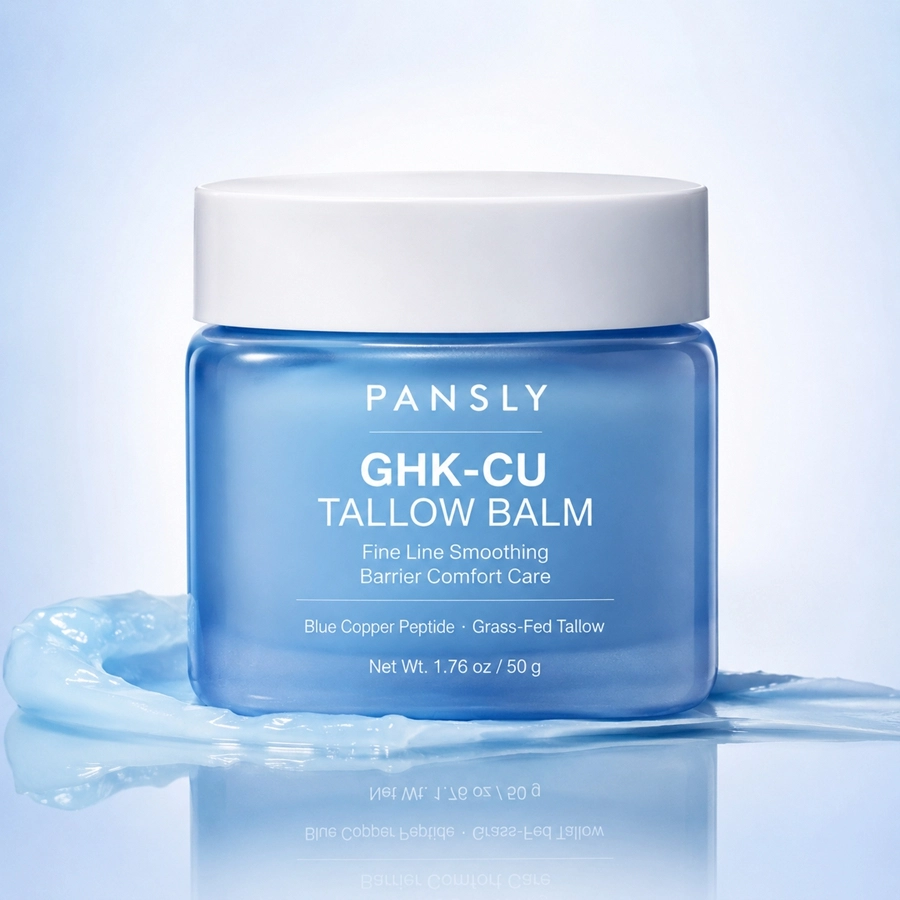
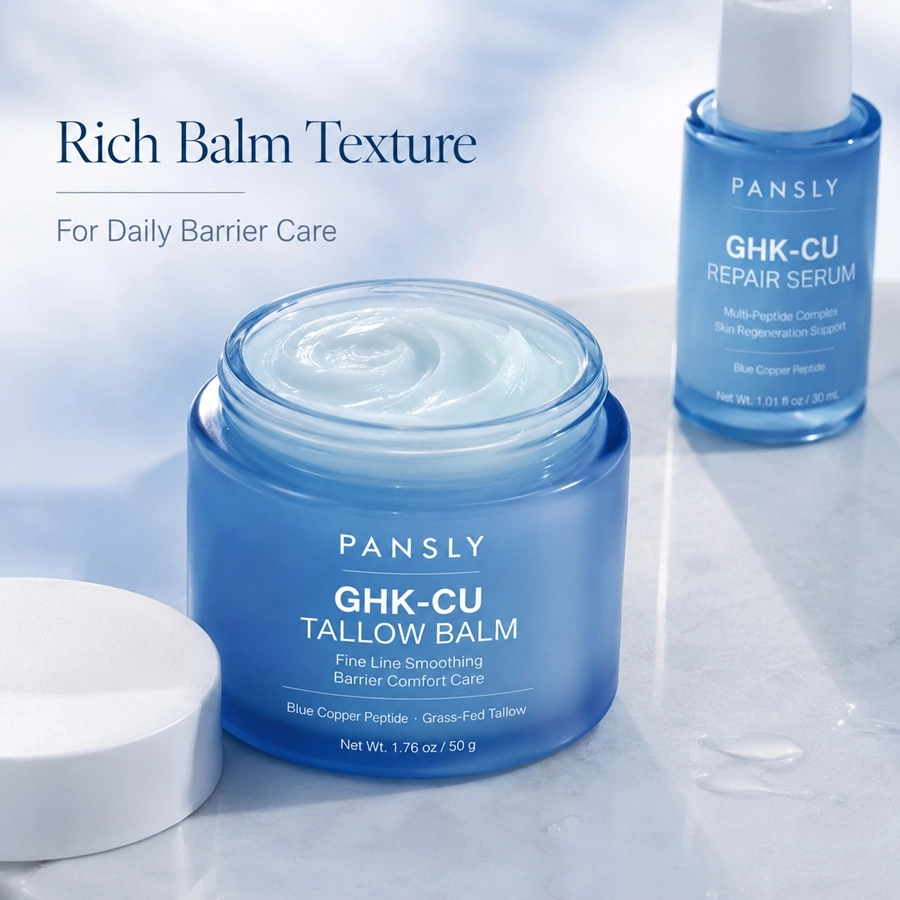
This Pansly GHK-CU Tallow Balm is nourishing barrier repair facial balm focused on smoothing fine lines and comforting sensitive dry skin. Formulated with 5 skin-friendly core actives to deliver anti-wrinkle, hydrating and barrier-strengthening triple care.
Premium multi-nutrient complex formula: GHK-CU Blue Copper Peptide visibly smooths fine lines and revitalizes dull complexion; Grass-Fed Tallow acts as nourishing base to supply rich lipid nourishment for dry skin; Ceramide NP reinforces skin moisture barrier to reduce sensitivity; Squalane delivers lightweight slip to create soft silky skin texture; Panthenol soothes skin discomfort and boosts long-lasting comfort.
Rich creamy lightweight balm texture melts comfortably into skin without sticky greasiness. Daily use blurs fine lines, deeply nourishes dry skin, repairs fragile barrier and leaves skin soft, smooth and healthy radiant.
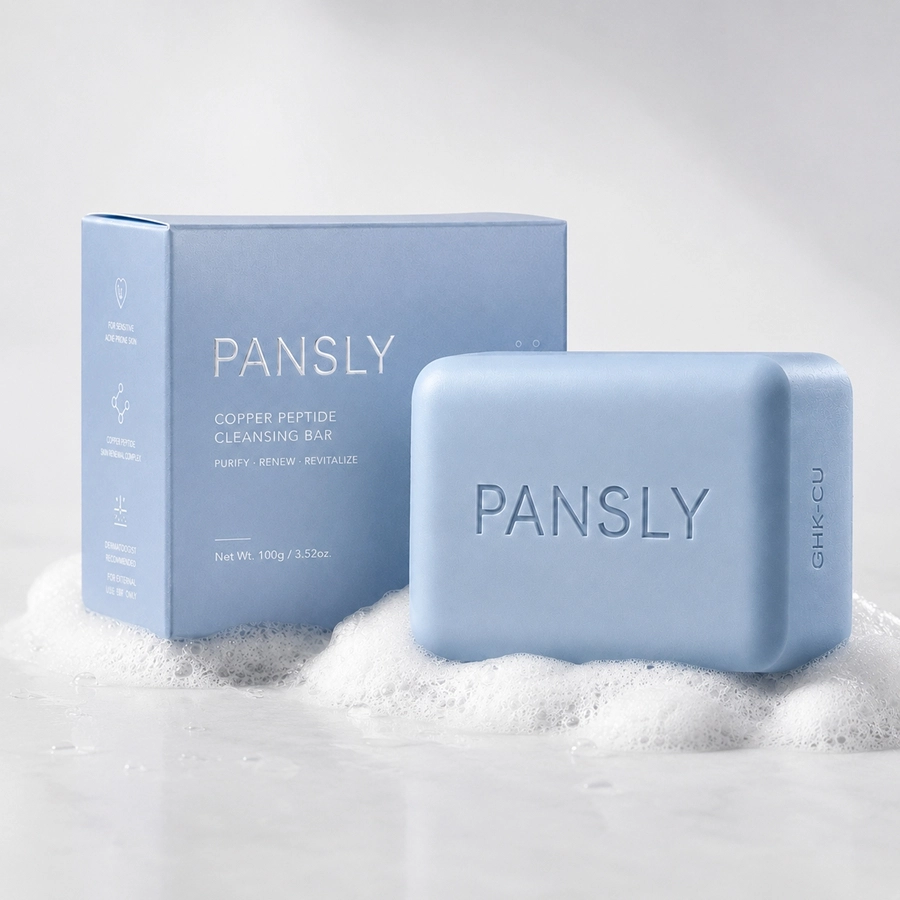
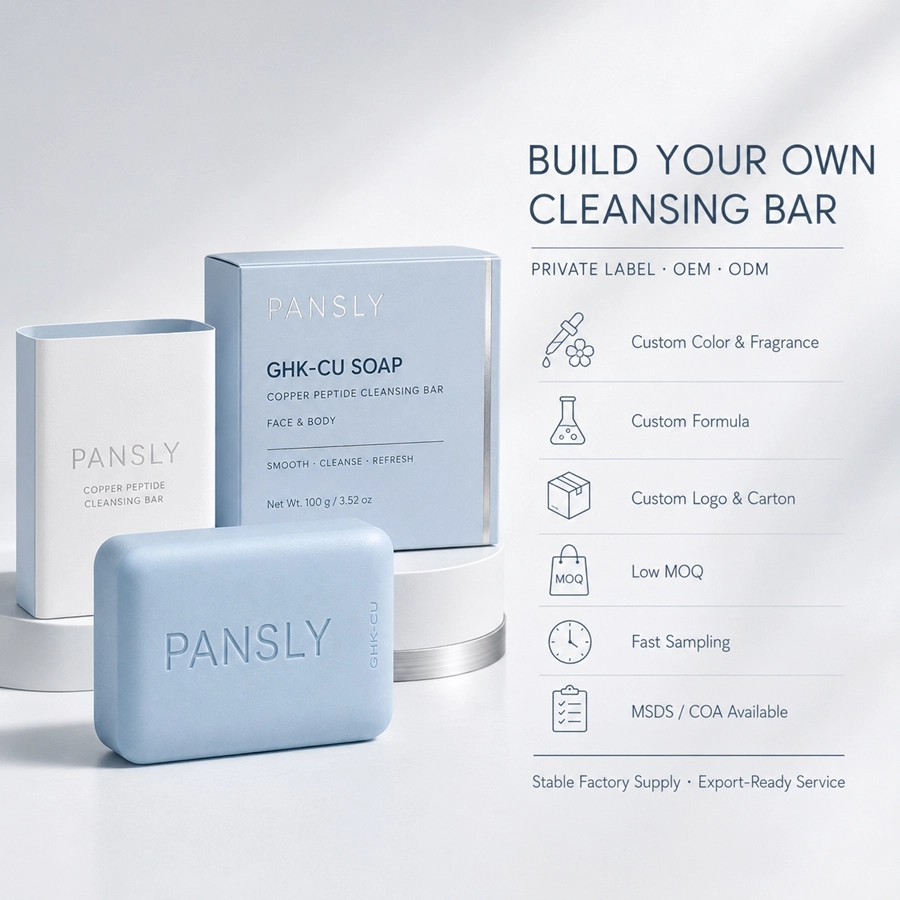
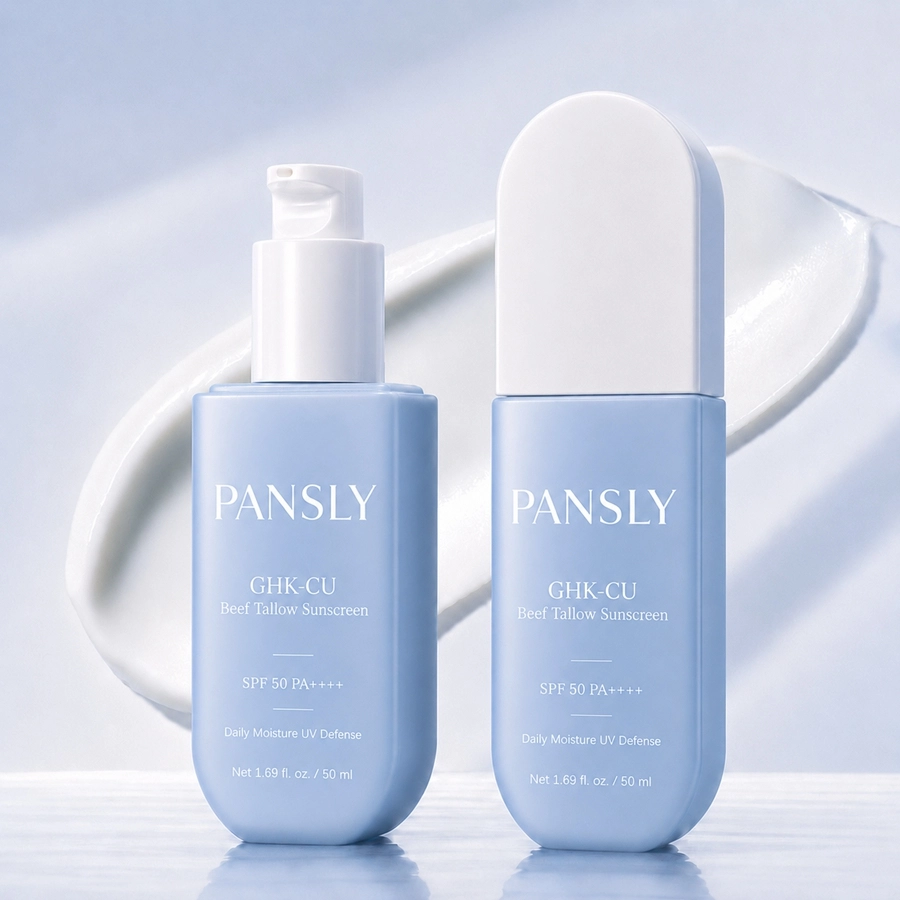
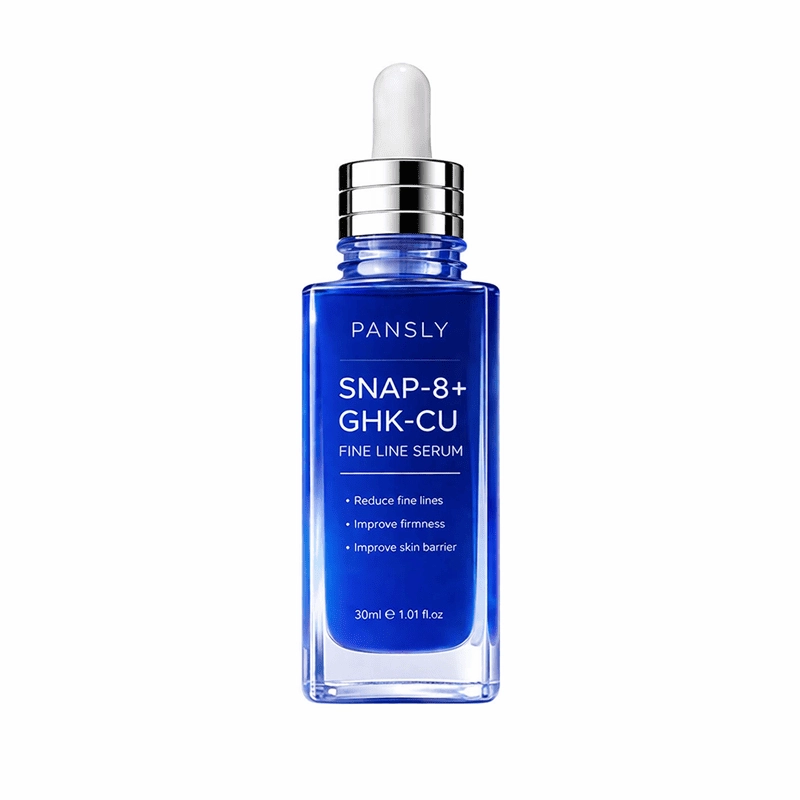
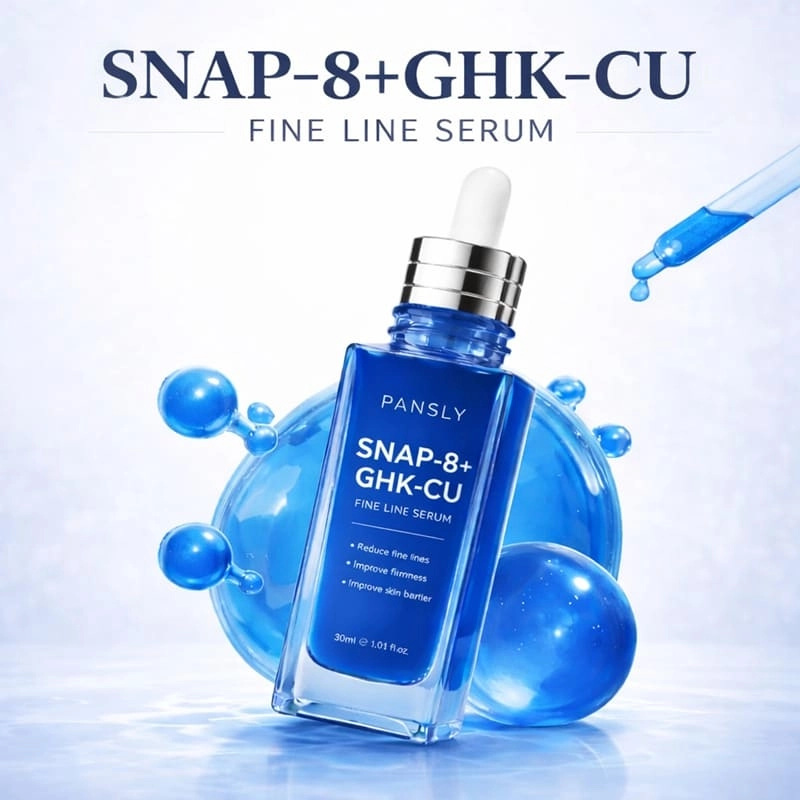
Private label GHK-Cu + SNAP-8 copper peptide serum for beauty brands developing peptide-led anti-aging and expression-line skincare. The formula combines a copper-peptide ingredient story with SNAP-8 positioning and can be discussed with custom texture, supporting skincare ingredients and packaging options.
Beyond Basix supports OEM/ODM sample development, packaging coordination and production planning. Final ingredient levels, claims, MOQ and lead time are confirmed according to the approved formula, target market and order requirements.
Get in Touch with us
If you have any comments or good suggestions, please leave us a message; later our professional staff will contact you as soon as possible.
Click here to customize the Beauty
we respond within a few hours
Monday–Friday, 9AM–6PM
3A01, Building A, Zhisheng Square, No. 4 Zhifu Road, Helong Street, Baiyun District, Guangzhou, China.


Leave a request, and we'll email you back within 24 hours.
© 2026 Beyond Basix. All Rights Reserved.
