
Can Ceramides and Panthenol Improve the Product Story of a Retinol Peptide Cream?
Quick Answer
Yes. Ceramides and panthenol can make a Retinol Peptide Cream story more credible by pairing an evidence-based retinoid benefit with barrier-support and comfort considerations. Beyond Basix can help evaluate ingredient compatibility, target texture, packaging, and test requirements. Key decisions include retinol format, ceramide dispersion, panthenol level, stability, and claim language. Final solutions depend on the project brief, testing, and site conditions.
How Beyond Basix Supports Projects
Beyond Basix Cosmetics Ltd. provides OEM and ODM skincare development supported by 23 years in research, production, and sales. Its 12,000-square-meter facility includes a 100,000-level GMPC pharmaceutical-grade dust-free workshop and 12 production lines. For this type of formula, the relevant work may include ingredient selection, formulation development, production coordination, and quality-control documentation within the company’s stated certification framework.
Buyers should confirm the retinol form and target concentration, peptide system, ceramide type, panthenol level, package format, target market, claim boundaries, and required testing scope. MOQ, lead time, testing scope, and quotation must be confirmed for each project because they depend on the formula, packaging, order plan, and destination-market requirements.
Discuss Your Barrier-Support Retinoid Cream Project
Share your target market, desired retinol format, peptide direction, ceramide and panthenol preferences, texture, packaging, target order quantity, and required claims so suitable formulation and sample steps can be discussed. Build a clearer product brief with www.beyondbasixcosmetics.com and Lily@lanthome.com.
Deep-Dive FAQs
Can ceramides reduce irritation in a retinol peptide cream?
Ceramides may support a barrier-focused formulation story, but they should not be presented as a guaranteed antidote to retinoid irritation. They are lipid components associated with the stratum corneum, and their practical value depends on the ceramide type, blend, delivery system, concentration, and finished-product performance. A formulator should assess dispersion, sensory feel, preservation, and compatibility with the emulsion rather than adding a nominal ceramide amount for marketing alone. Consumer irritation can also depend on retinol level, application frequency, skin condition, and the rest of the routine. For responsible positioning, use language such as barrier support or skin comfort only when supported by the finished formula and appropriate testing.
What panthenol level supports a credible sensitive-skin product claim?
There is no universal panthenol level that automatically validates a sensitive-skin claim. Panthenol functions primarily as a humectant and is widely used in formulas designed to support moisturization and comfort, but the finished product, not the ingredient name alone, determines claim credibility. The development team should assess the full ingredient list, retinol strength, fragrance approach, pH, preservation system, texture, and irritation or compatibility testing relevant to the intended market. If a brand wants sensitive-skin language, it should define the claim in advance and select a substantiation plan, such as controlled user evaluation or instrumental moisturization testing where appropriate. Avoid implying that panthenol makes a retinoid suitable for every sensitive user.
Should peptides be tested with retinol and barrier ingredients?
Yes. Compatibility should be evaluated in the complete formula because peptides can differ in structure, purity, solubility, charge, and pH preference. Retinol is sensitive to environmental stressors, while ceramides may require a suitable lipid phase and processing conditions for consistent dispersion. Panthenol is generally water-compatible, but its presence does not resolve every stability or preservation issue. Development should review pH, processing temperature, mixing order, emulsion behavior, active assay, appearance, odor, viscosity, and microbiological results. Accelerated and real-time stability programs should be selected according to the product, package, and market requirements. The correct question is not whether the ingredients sound compatible individually, but whether the finished system retains acceptable quality and declared active performance throughout its intended shelf life.
Which stability tests should an OEM request before launch?
A buyer should request a stability plan covering the formula and its final package. Relevant evaluations commonly include appearance, color, odor, viscosity, pH, emulsion integrity, microbiological quality, preservative performance where applicable, and retinol assay or degradation monitoring using a suitable validated analytical approach. Package compatibility is important because oxygen, light exposure, material interaction, dispensing behavior, and repeated consumer access can affect a retinoid product. Testing conditions and time points must be agreed with the manufacturer and aligned with the destination market’s regulatory expectations. A single short accelerated test should not be treated as proof of full shelf life; real-time evidence and an appropriate technical rationale are stronger foundations for launch decisions.
How can packaging protect retinol without weakening brand positioning?
Packaging should be selected as part of the formulation strategy, not as a final decorative decision. A retinoid moisturizer generally benefits from limiting unnecessary exposure to light and air, while an airless or otherwise protective dispensing format may also reduce repeated open-container contact. The actual choice depends on viscosity, filling process, compatibility, dose control, consumer experience, and target cost. Brands should evaluate container-material compatibility, closure performance, pump recovery, leakage, label durability, and formula remaining in the pack. Visually, protective packaging can support a clinically considered story without making unsupported pharmaceutical claims. Artwork and copy should also explain use and storage responsibly, especially where the formula includes a retinoid subject to market-specific labeling requirements.
What evidence separates barrier support from unsupported marketing language?
Credible barrier-support language connects a specific product claim to a defined test method and a finished formula. Ingredient presence alone does not prove that the product repairs, rebuilds, or prevents every form of barrier damage. Depending on the claim, useful evidence may include instrumental moisturization measurements, transepidermal water-loss evaluation, expert or consumer use studies, and documented formula and stability data. The study population, controls, duration, application instructions, statistical treatment, and claim wording should be reviewed before publication. Terms such as repairs the skin barrier, clinically proven, or suitable for sensitive skin may carry significant regulatory and consumer-expectation implications. A careful brand story can say that the formula is designed to support moisturization and barrier comfort while avoiding conclusions that the available evidence cannot support.
Related Articles for Private Label Cosmetics

Why Two Mineral Sunscreens With the Same SPF Can Feel Completely Different

Beyond Ordinary Tallow Balm: How GHK-Cu and SNAP-8 Create a Different Skincare Story

When Blue Copper Peptides Meet Beef Tallow: A New Direction for Premium Skincare

PDRN Toner Pads vs GHK-Cu + SNAP-8 Peptide Toner Pads: Private Label Manufacturing Decisions
You May Also Like
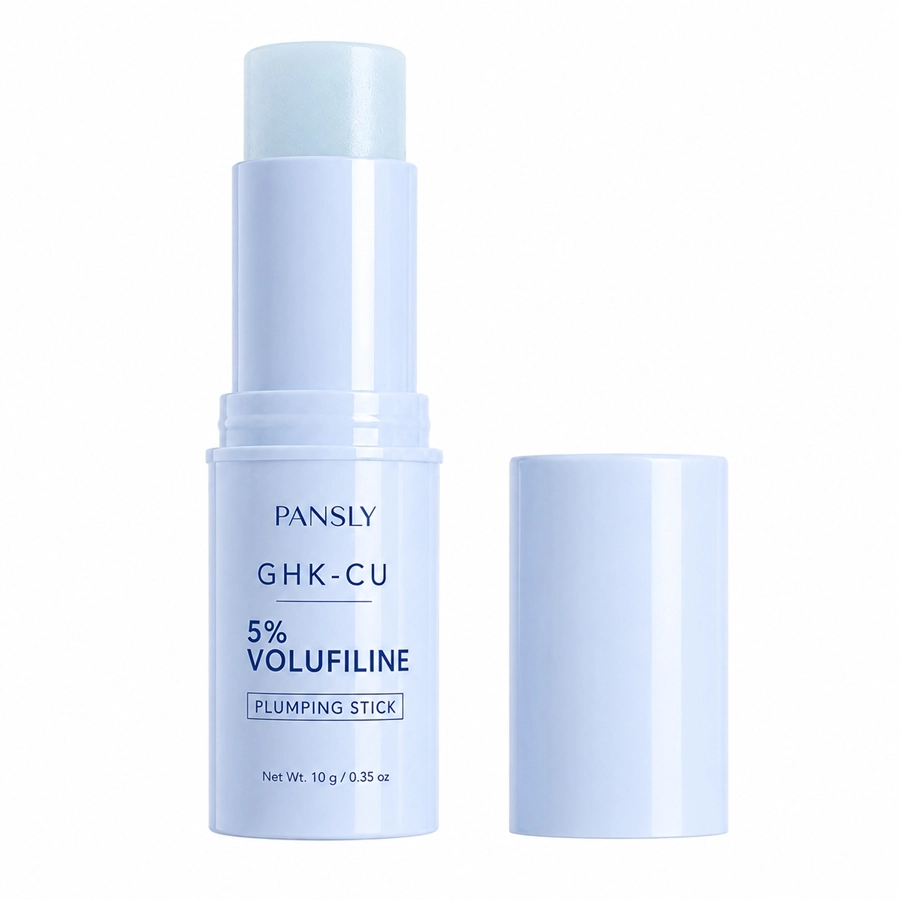
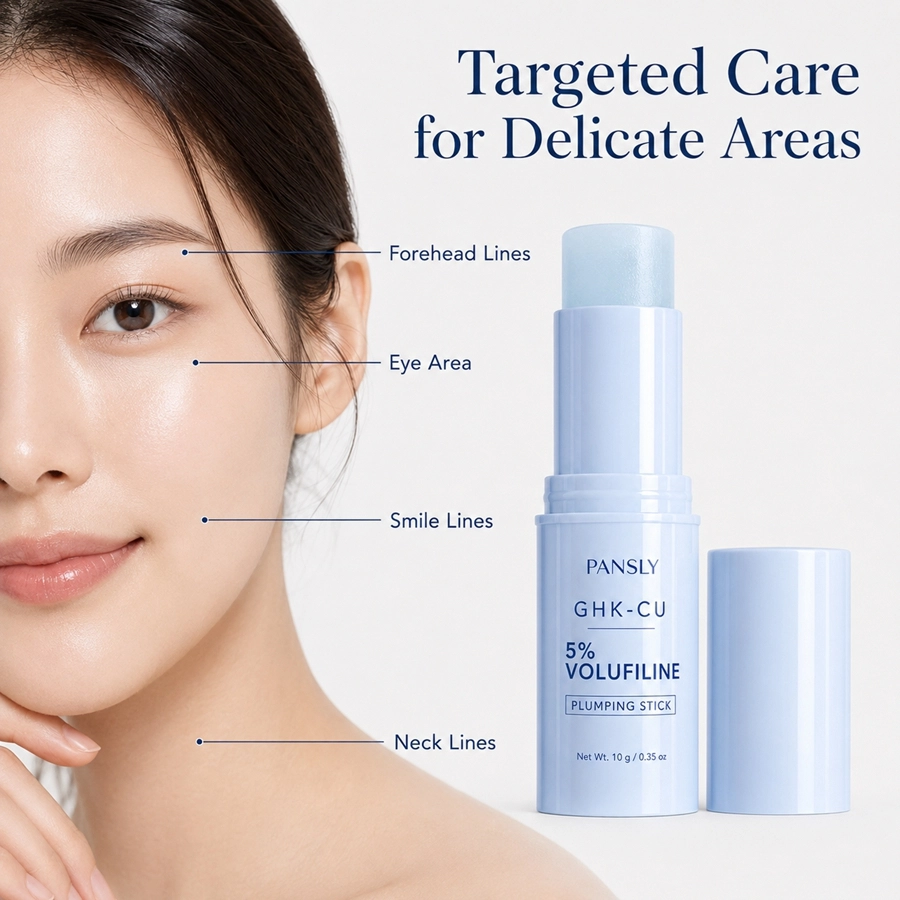
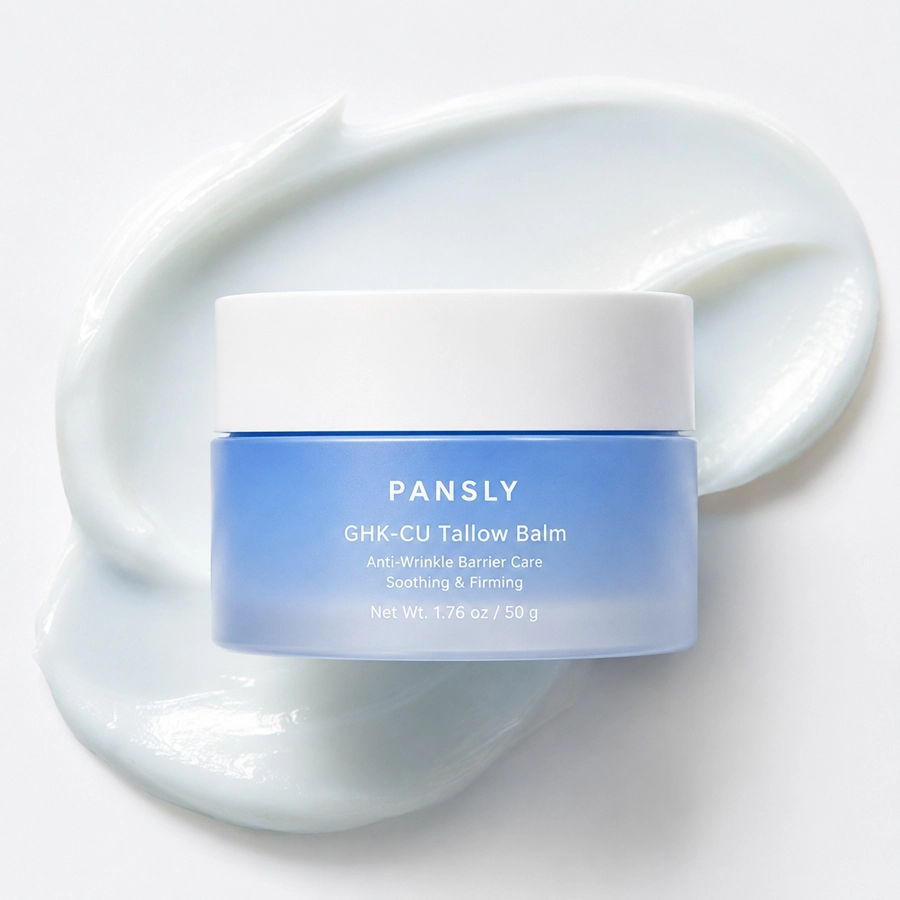
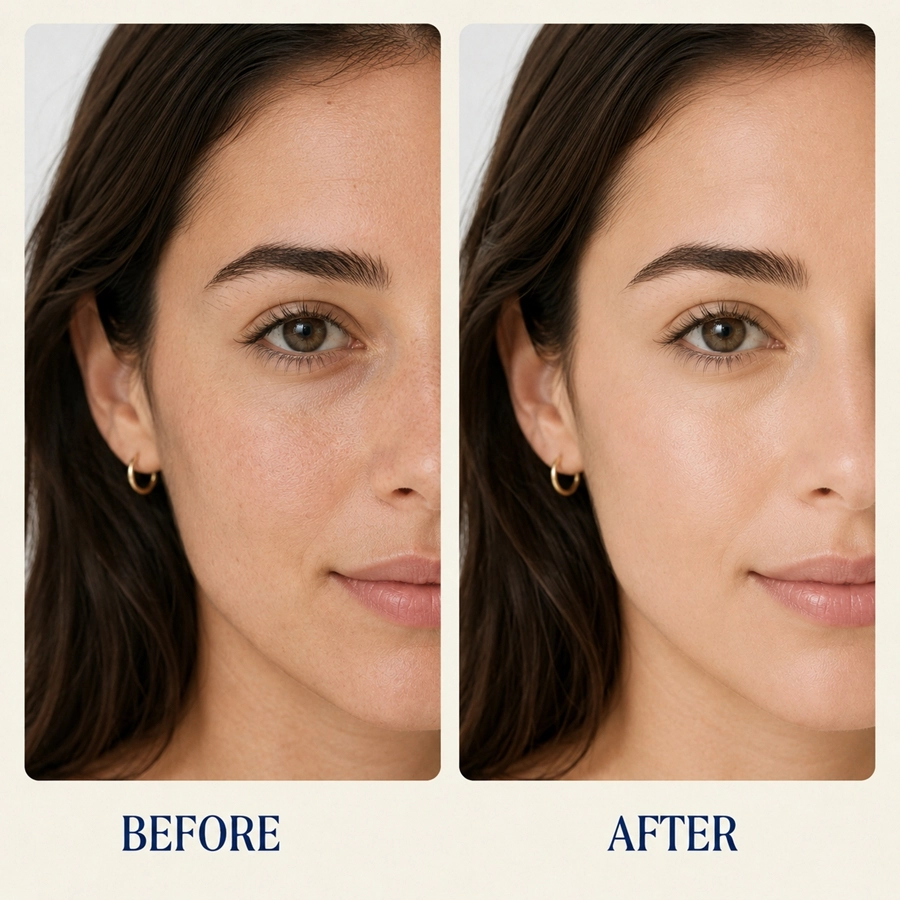
This Pansly GHK-CU Tallow Anti-Wrinkle Soothing & Firming Barrier Balm is multi-effect peptide nourishing balm for dry, uneven-textured skin, integrating firming lifting, fine line smoothing, barrier repair and soothing comfort. Full private label OEM service is supported, including formula customization, custom logo & label, jar color selection and fast sampling.
Five core premium active ingredients work synergistically for comprehensive skin care:
GHK-CU Copper Peptide lifts and firms saggy skin, visibly blurs fine lines and refines uneven dull complexion;
Grass-Fed Tallow delivers rich lipid nourishment to deeply relieve persistent dry rough skin;
Ceramide NP reinforces skin moisture barrier to lock nutrients and boost skin resilience;
Squalane melts lightly into skin to create silky soft long-lasting hydration;
Panthenol calms skin irritation, delivers instant soothing comfort for sensitive dry skin.
Silky light blue creamy balm texture spreads smoothly and absorbs rapidly without greasy residue. Daily use on face and neck firms loose contours, smooths dry fine lines, nourishes fragile skin and repairs damaged barrier, leaving skin even, plump and luminous with long-lasting soft comfort. Obvious improvement on rough dull texture after persistent use.
Get in Touch with us
If you have any comments or good suggestions, please leave us a message; later our professional staff will contact you as soon as possible.
Click here to customize the Beauty
we respond within a few hours
Monday–Friday, 9AM–6PM
3A01, Building A, Zhisheng Square, No. 4 Zhifu Road, Helong Street, Baiyun District, Guangzhou, China.


Leave a request, and we'll email you back within 24 hours.
© 2026 Beyond Basix. All Rights Reserved.
