
Should Foot Cream Be Positioned for Daily Care or Overnight Intensive Care?
Quick Answer
Foot cream can be positioned for daily care, overnight intensive care, or a two-product routine, depending on consumer needs and market language. A private label intensive foot care cream is usually better suited to overnight use when its sensory profile is richer. Key decisions include moisturization level, absorption speed, packaging, claims, and target-market compliance. Final solutions depend on project objectives, testing, and site-specific requirements.
How Beyond Basix Supports Projects
Beyond Basix supports skincare OEM/ODM projects through product development, manufacturing, and quality-control coordination. Its 12,000-square-meter facility includes a 100,000-level GMPC pharmaceutical-grade dust-free workshop and 12 production lines. Buyers can discuss daily-use or overnight-use textures, ingredient direction, packaging format, and market positioning with the manufacturer.
Guangzhou Beyond Basix Cosmetics Ltd. has more than 23 years of experience in research, production, and sales, with 12 years focused on effective-ingredient skincare development. The company holds certifications and documents including ISO 9001, GMP, HALAL, CE, and MSDS, as applicable to project requirements. MOQ, lead time, testing scope, regulatory documentation, and quotation must be confirmed for each project.
Discuss Your Foot Cream Positioning Project
Share your target market, consumer profile, preferred daily or overnight positioning, texture preference, packaging format, expected order volume, and required claims. These details allow discussion of suitable formulation directions, sample stages, testing needs, and launch documentation. Visit www.beyondbasixcosmetics.com or email Lily@lanthome.com to discuss your project with Beyond Basix.
Deep-Dive FAQs
Should foot cream target daily maintenance or overnight repair users?
Positioning should follow the consumer problem rather than the word "repair," which can create regulatory and substantiation issues in some markets. Daily products generally need fast absorption, low transfer, and comfortable use with footwear. Overnight products can support a richer, more occlusive experience because consumers have more time before walking. A brand may use one formula with different usage instructions, but separate products often make sensory expectations and claims clearer. Avoid implying that cosmetic cream repairs medical conditions, fissures, infection, or damaged tissue unless the product is regulated and supported for that purpose in the target market.
What ingredient profile supports intensive foot care without greasy residue?
The formulation brief should balance humectancy, emollience, and occlusion rather than selecting one hero ingredient. Humectants help attract water, emollients improve softness and slip, and occlusive materials reduce water loss from the surface. The correct ratio depends on climate, skin feel, intended application area, and packaging. Urea is widely used in foot-care products, but concentration, claims, compatibility, and local cosmetic rules require review before use. A richer formula can still feel acceptable when its spread, absorption, residue, fragrance, and after-feel are tested on representative users. Sensory panels should compare application immediately and after several minutes.
How should private label foot cream claims differ across markets?
Claims should be built from the product formula, intended cosmetic function, available evidence, and the regulations of each destination market. "Moisturizes dry feet" and "softens rough-feeling skin" are generally cosmetic-style directions, while claims about treating cracked heels, eczema, fungus, inflammation, or wounds may move the product into a different regulatory category. Translation alone is not a claims review. Buyers should prepare a claims matrix linking each statement to ingredient rationale, test evidence, label wording, and market requirements. The manufacturer can help organize documentation, but the brand remains responsible for confirming local compliance with its regulatory adviser.
Which packaging protects an overnight foot cream from contamination?
Packaging selection should consider formula viscosity, preservative system, opening frequency, user behavior, and compatibility over the intended shelf life. A tube can limit repeated direct contact and is practical for bathroom use; a pump or airless format may reduce exposure further, but it must be compatible with the formula's flow properties. A jar may support a premium presentation yet involves repeated finger contact, making usage instructions and preservation performance particularly important. Packaging compatibility testing should examine leakage, deformation, discoloration, odor changes, pump function, and formula interaction under relevant storage conditions. The final choice should be validated with stability and packaging tests.
How can brands validate moisturization claims before launching a foot cream?
A responsible validation plan begins by defining the exact claim and its measurement method. Consumer perception testing can assess softness, comfort, and reduced tightness, while instrumental approaches may measure changes in skin hydration under controlled protocols. The study design should specify participant characteristics, application frequency, comparator, evaluation timing, environmental conditions, and statistical approach. Testing on hands alone may not represent thicker, drier heel skin, so the selected protocol should match the intended use area when practical. Product stability, microbiological quality, packaging compatibility, and safety assessment are separate requirements and should not be replaced by a consumer satisfaction survey.
What MOQ and testing questions should first-time buyers ask?
First-time buyers should ask how MOQ changes between stock, customized, and fully developed formulas; whether packaging has a separate minimum; and which costs apply to samples, artwork, tooling, testing, and regulatory files. They should also request a proposed development sequence covering brief review, sample revisions, packaging confirmation, production approval, and quality release. Testing questions should identify stability scope, microbiological assessment, compatibility, safety documentation, and claim substantiation relevant to the destination market. Lead time and quotation should be treated as project-specific because formula complexity, packaging availability, order quantity, and approval cycles can materially change the schedule.
Related Articles for Private Label Cosmetics

Why Two Mineral Sunscreens With the Same SPF Can Feel Completely Different

Beyond Ordinary Tallow Balm: How GHK-Cu and SNAP-8 Create a Different Skincare Story

When Blue Copper Peptides Meet Beef Tallow: A New Direction for Premium Skincare

PDRN Toner Pads vs GHK-Cu + SNAP-8 Peptide Toner Pads: Private Label Manufacturing Decisions
You May Also Like
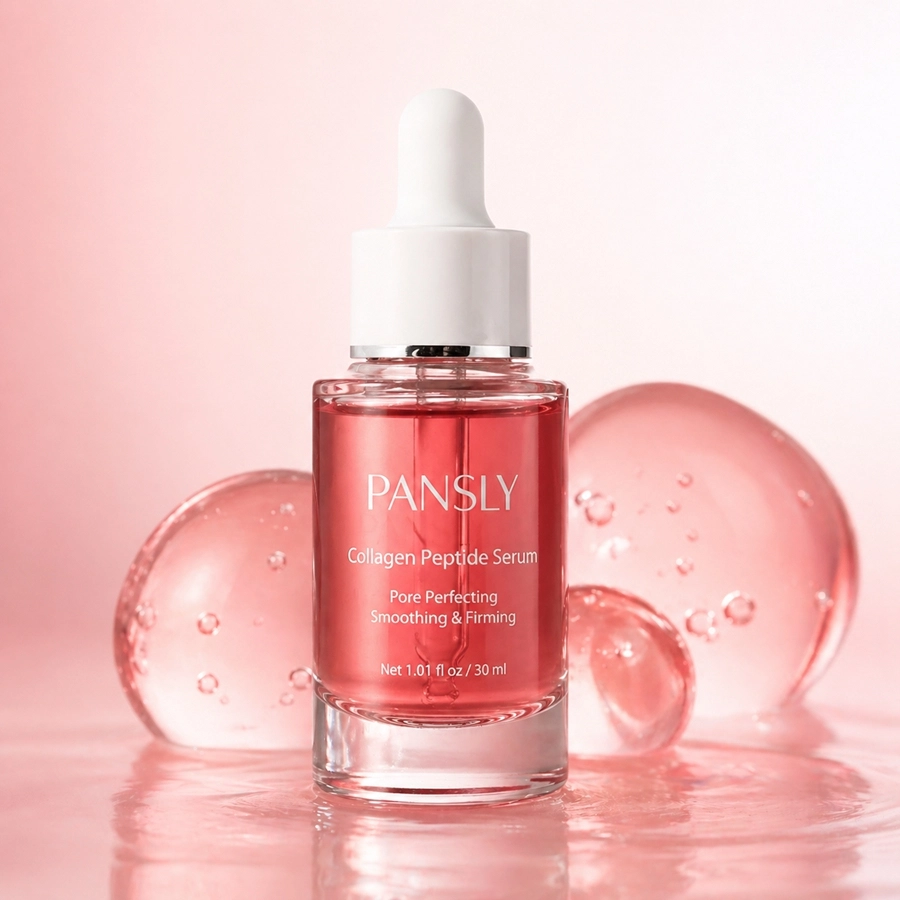
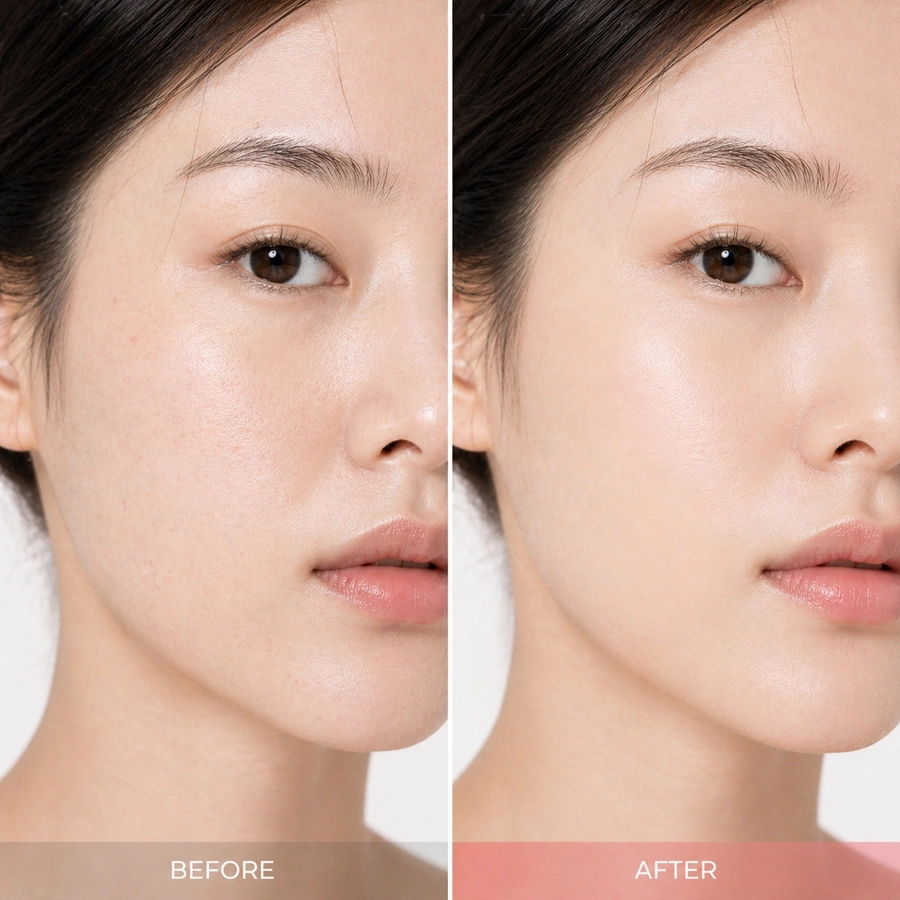
This Pansly Collagen Peptide Pore Perfecting Serum is lightweight multi-effect facial essence, designed to refine enlarged pores, boost skin firmness and deliver long-lasting hydration.
Four premium active ingredients work synergistically to renew skin texture:
Collagen Peptide supports skin firmness, lifts saggy dull complexion;
Hyaluronic Acid delivers deep multi-layer hydration to relieve dryness;
Niacinamide refines pores and evens uneven skin tone;
Panthenol soothes and repairs vulnerable skin barrier.
It adopts lightweight pink serum texture, quickly penetrates deep into skin, non-sticky and comfortable after absorption. Daily use minimizes visible pores, smooths rough texture, firms skin and maintains plump, soft, radiant complexion. OEM & ODM private label service is available, including formula customization and packaging options.
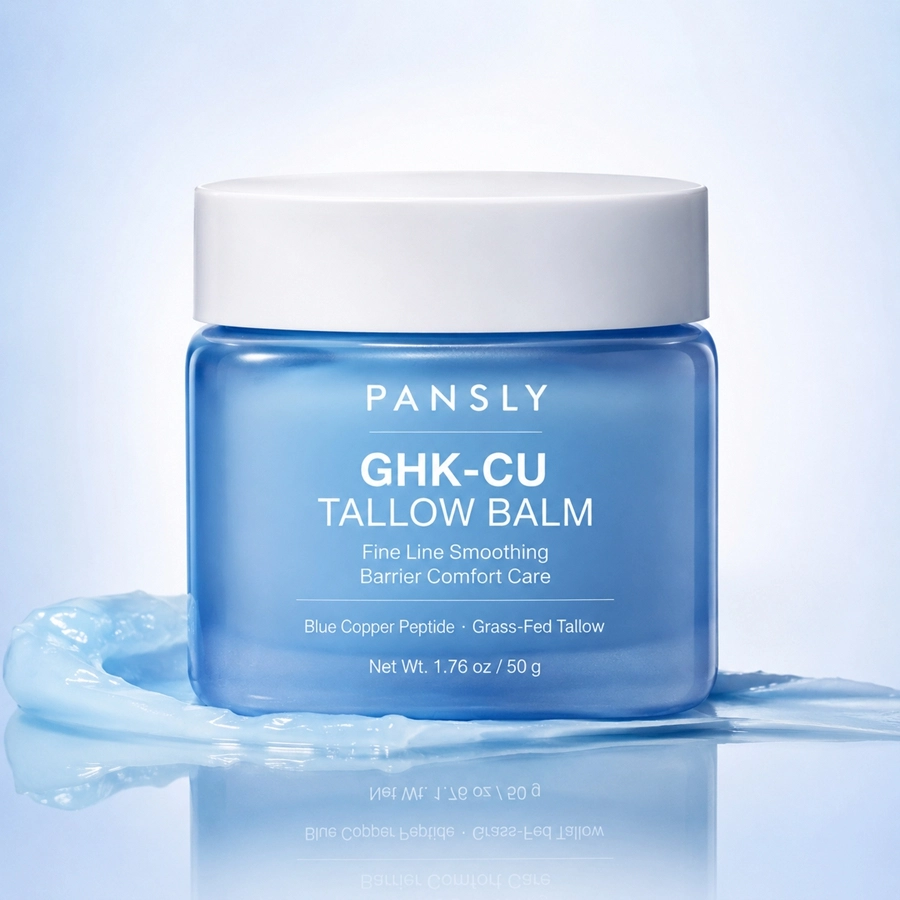
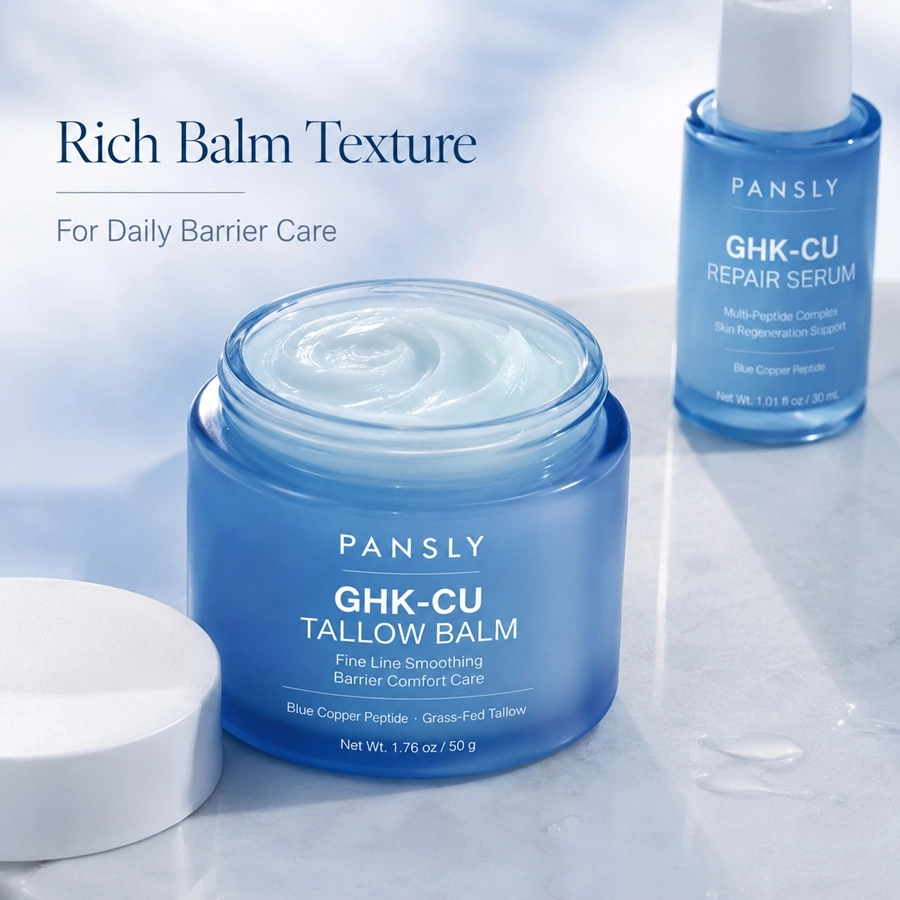
This Pansly GHK-CU Tallow Balm is nourishing barrier repair facial balm focused on smoothing fine lines and comforting sensitive dry skin. Formulated with 5 skin-friendly core actives to deliver anti-wrinkle, hydrating and barrier-strengthening triple care.
Premium multi-nutrient complex formula: GHK-CU Blue Copper Peptide visibly smooths fine lines and revitalizes dull complexion; Grass-Fed Tallow acts as nourishing base to supply rich lipid nourishment for dry skin; Ceramide NP reinforces skin moisture barrier to reduce sensitivity; Squalane delivers lightweight slip to create soft silky skin texture; Panthenol soothes skin discomfort and boosts long-lasting comfort.
Rich creamy lightweight balm texture melts comfortably into skin without sticky greasiness. Daily use blurs fine lines, deeply nourishes dry skin, repairs fragile barrier and leaves skin soft, smooth and healthy radiant.
Get in Touch with us
If you have any comments or good suggestions, please leave us a message; later our professional staff will contact you as soon as possible.
Click here to customize the Beauty
we respond within a few hours
Monday–Friday, 9AM–6PM
3A01, Building A, Zhisheng Square, No. 4 Zhifu Road, Helong Street, Baiyun District, Guangzhou, China.


Leave a request, and we'll email you back within 24 hours.
© 2026 Beyond Basix. All Rights Reserved.
