
Can a GHK-Cu SNAP-8 Serum Become the Hero SKU of a Peptide Skincare Line?
Quick Answer
A GHK-Cu SNAP-8 serum can become the hero SKU of a peptide skincare line when its formulation, claims, sensory profile, and supply model are clearly differentiated. Beyond Basix can support evaluation of peptide identity and dosage, pH and preservation compatibility, packaging protection, target-market claims, and projected MOQ and cost. Final solutions depend on the project brief, testing, regulatory review, and site-specific production conditions.
How Beyond Basix Supports Projects
Beyond Basix Cosmetics Ltd. provides OEM/ODM skincare development backed by more than 23 years in cosmetics research, production, and sales. Its 12,000-square-meter facility includes a 100,000-level GMPC pharmaceutical-grade dust-free workshop and 12 production lines. For peptide serum projects, the relevant work may include formulation adjustment, sample development, production coordination, and quality-control documentation.
Beyond Basix holds certifications including ISO 9001, GMP, HALAL, CE, and MSDS documentation as listed by the company. Buyers should confirm peptide specifications, target dosage, pH range, packaging format, claim language, market requirements, batch size, and testing scope. MOQ, lead time, testing scope, and quotation must be confirmed for each project.
Discuss Your Peptide Hero SKU Project
Share your target market, customer profile, desired claims, peptide specifications, serum texture, packaging format, expected order volume, and launch timeline. These details allow suitable formulation options, sample stages, testing requirements, and production planning to be discussed. For a project-specific consultation, visit www.beyondbasixcosmetics.com or email Lily@lanthome.com.
Frequently Asked Questions
Can a GHK-Cu SNAP-8 serum anchor a peptide product line?
Yes, but hero-SKU potential depends on more than the ingredient story. A copper peptide and SNAP-8 combination can provide a recognizable technology platform, yet the product must also offer acceptable sensory performance, a credible use case, clear differentiation, and repeat-purchase potential. GHK-Cu is commonly associated with Copper Tripeptide-1, while SNAP-8 is generally associated with Acetyl Octapeptide-3. The manufacturer should verify the exact INCI names, supplier documentation, recommended use levels, and compatibility before making a development decision. A line architecture can then extend into complementary products such as an essence, cream, or eye product without forcing every item to duplicate the same claims.
How should copper peptide and SNAP-8 compatibility be validated before launch?
Compatibility should be assessed in the finished formula rather than inferred from isolated ingredient descriptions. Development should review pH, solvent system, chelating agents, preservatives, fragrances, botanical extracts, and other actives that may affect color, odor, assay, or physical stability. Samples should be monitored through appropriate accelerated and real-time programs, with appearance, pH, viscosity, microbial quality, and relevant ingredient testing defined in advance. The supplier should also provide current technical and safety documentation. A clear pass or fail specification is more useful than assuming that two peptides remain stable simply because both are water-compatible.
What claims can a peptide serum legally support across target markets?
Claims must be matched to the destination market, product classification, substantiation, and final wording. Cosmetic claims such as improving the appearance of fine lines, supporting smoother-looking skin, or helping skin appear more hydrated may be assessed differently from claims implying treatment, physiological alteration, or repair of disease. In the European Union, Regulation (EC) No 1223/2009 and the common criteria for cosmetic claims are relevant; in the United States, intended use influences whether a product is treated as a cosmetic or drug. Brands should review the finished formula, evidence, label, advertising, and influencer language together. Ingredient presence alone does not substantiate a consumer claim.
Which stability tests matter for copper peptide combination serums?
A practical stability plan commonly considers accelerated storage, room-temperature or real-time observation, freeze-thaw cycles, light exposure where relevant, package compatibility, microbial limits, and preservative efficacy testing when applicable. The exact protocol should reflect the formula, container, market, and internal specification. Copper-containing systems deserve close observation for color shift, precipitation, odor change, viscosity drift, and assay loss. Testing should use the intended commercial package because an airless pump, dropper, or other dispenser can change oxygen exposure and dosing behavior. Stability data should support the proposed shelf life rather than be used as a substitute for formulation control.
How should packaging protect a sensitive multi-peptide formula?
Packaging selection should begin with measured product sensitivity and user behavior, not a blanket preference for one format. Light- and oxygen-sensitive formulas may benefit from opaque or protective packaging, while an airless dispenser can reduce repeated exposure compared with an open jar; neither option is automatically suitable. The development team should check container-closure compatibility, adsorption, leakage, pump performance, dose consistency, recyclability requirements, and interaction with the serum. Filling-line compatibility also matters for an OEM project. A package that protects the formula but delivers an inconvenient dose can weaken compliance and repurchase, so usability testing should accompany technical review.
What MOQ and sampling decisions shape a hero SKU launch?
A hero SKU should be validated in stages: brief and ingredient review, laboratory samples, sensory assessment, stability and packaging checks, pilot or pre-production confirmation, then bulk manufacturing. Sampling should use a written revision record so changes in peptide level, pH, fragrance, viscosity, or container are traceable. MOQ affects unit economics, inventory exposure, packaging purchase, and the ability to revise the formula after market feedback. Brands should request a project quotation that separates formulation, testing, packaging, filling, and logistics assumptions. MOQ, lead time, sample charges, testing scope, and production capacity should be confirmed in writing because they vary by formula and order specification.
Related Articles for Private Label Cosmetics

Why Two Mineral Sunscreens With the Same SPF Can Feel Completely Different

Beyond Ordinary Tallow Balm: How GHK-Cu and SNAP-8 Create a Different Skincare Story

When Blue Copper Peptides Meet Beef Tallow: A New Direction for Premium Skincare

PDRN Toner Pads vs GHK-Cu + SNAP-8 Peptide Toner Pads: Private Label Manufacturing Decisions
You May Also Like
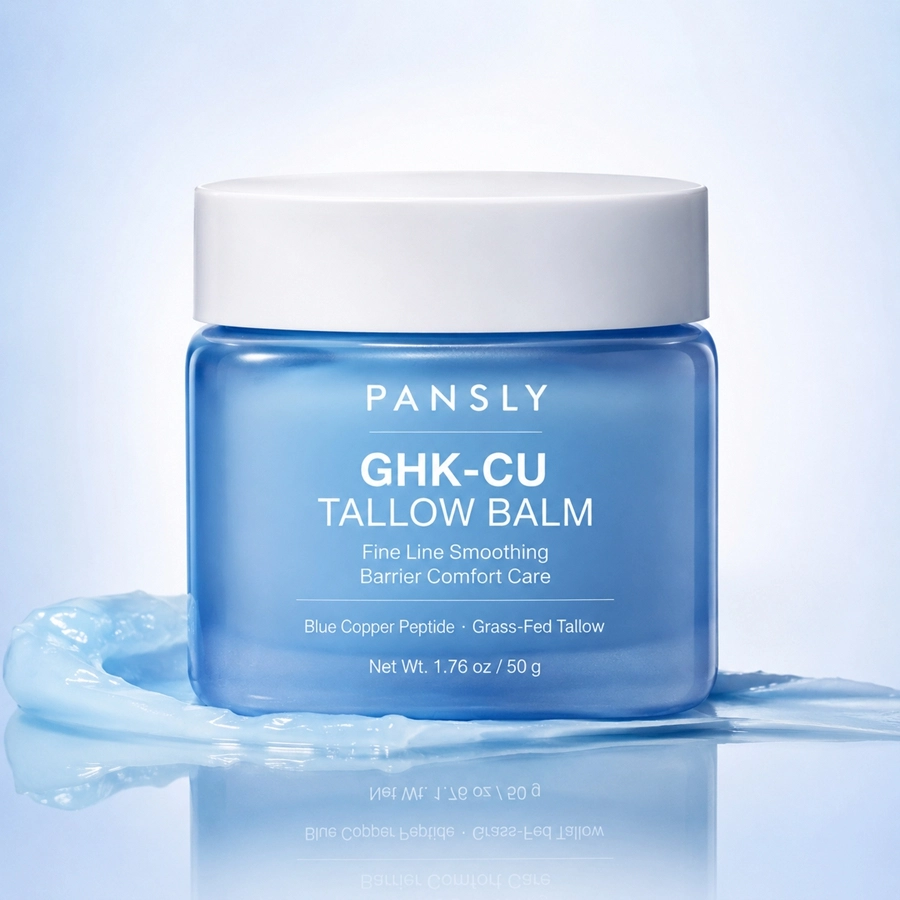
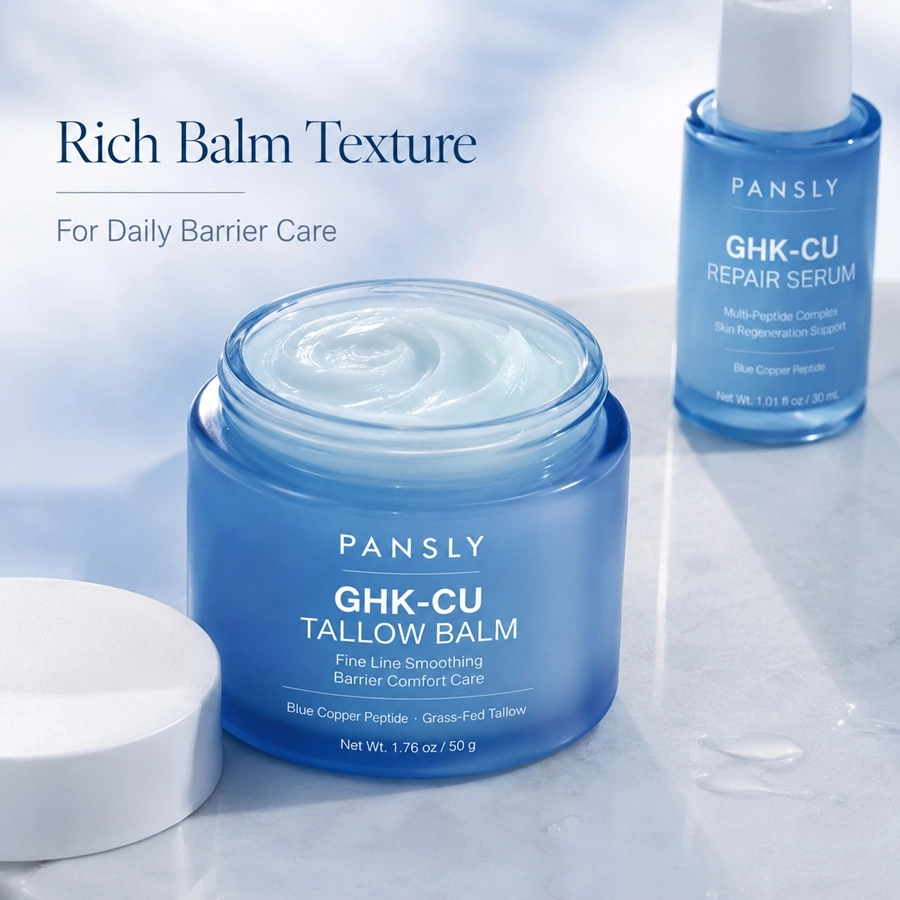
This Pansly GHK-CU Tallow Balm is nourishing barrier repair facial balm focused on smoothing fine lines and comforting sensitive dry skin. Formulated with 5 skin-friendly core actives to deliver anti-wrinkle, hydrating and barrier-strengthening triple care.
Premium multi-nutrient complex formula: GHK-CU Blue Copper Peptide visibly smooths fine lines and revitalizes dull complexion; Grass-Fed Tallow acts as nourishing base to supply rich lipid nourishment for dry skin; Ceramide NP reinforces skin moisture barrier to reduce sensitivity; Squalane delivers lightweight slip to create soft silky skin texture; Panthenol soothes skin discomfort and boosts long-lasting comfort.
Rich creamy lightweight balm texture melts comfortably into skin without sticky greasiness. Daily use blurs fine lines, deeply nourishes dry skin, repairs fragile barrier and leaves skin soft, smooth and healthy radiant.
Get in Touch with us
If you have any comments or good suggestions, please leave us a message; later our professional staff will contact you as soon as possible.
Click here to customize the Beauty
we respond within a few hours
Monday–Friday, 9AM–6PM
3A01, Building A, Zhisheng Square, No. 4 Zhifu Road, Helong Street, Baiyun District, Guangzhou, China.


Leave a request, and we'll email you back within 24 hours.
© 2026 Beyond Basix. All Rights Reserved.
