
What stability and shelf-life should GHK-Cu SNAP-8 Serum have?
What stability and shelf-life should GHK-Cu SNAP-8 Serum have?
Comprehensive stability blueprint for GHK-Cu SNAP-8 serum: targets for assay retention, pH drift, copper recovery, microbial limits, plus analytical methods (HPLC/LC-MS/ICP-MS), packaging, preservative compatibility, and realistic unopened/in-use shelf-life ranges aligned to ICH Q1A and ISO 11930.
Introduction: Manufacturers and OEM/ODM buyers in One-Stop OEM/ODM for Skincare frequently ask what measurable stability targets are realistic and defendable when formulating a copper peptide combined with SNAP-8. The commercial risk — color change, loss of activity, or preservative failure — is real and avoidable with disciplined formulation controls, targeted analytics, and packaging decisions. Below we summarize the professional benchmarks an OEM/ODM should use to specify, test, and claim shelf-life for a peptide serum containing these actives.
Key test standards to require: real-time stability series at 25°C/60%RH (0, 3, 6, 9, 12, 18, 24 months) plus supportive accelerated data at 40°C/75%RH for 3–6 months following ICH Q1A(R2) principles; preservative efficacy per ISO 11930; and in-use (open jar/airless pump) challenge or simulated-use testing. Analytical methods must include peptide integrity by HPLC or LC-MS and total copper quantification by ICP-MS or AAS. These tests underpin defensible label claims and regulatory responses.
Conclusion & Brand Advantage: Beyond Basix has 15+ years delivering One-Stop OEM/ODM solutions for peptide serums and routinely builds stability protocols that meet both regulatory expectations and commercial realities: defined acceptance criteria, appropriate analytical packages, packaging selection, and documented manufacturing controls. Our technical teams translate peptide chemistry constraints into practical formulation and packaging specifications that preserve efficacy, aesthetic stability, and microbial safety across the product life cycle.
Contact us for a tailored stability and manufacturing plan or a quote at www.beyondbasixcosmetics.com or Lily@lanthome.com.
Frequently Asked Questions
What packaging minimizes degradation of GHK-Cu SNAP-8 serum?
Select packaging that limits oxygen, light and headspace interactions. Use amber glass vials, opaque PET, or coated tubes for light protection, and prefer airless pump dispensers to reduce repeated air exposure during consumer use. Avoid direct contact with metal closures and unlined aluminum; metal surfaces can catalyze oxidation and adsorb copper. Nitrogen blanketing at fill and secondary sealing increase shelf stability; single-dose ampoules or serum sticks are appropriate for high-value peptide formulas intended for extended shelf claims. Packaging decisions directly cut the primary degradation vectors for a copper‑peptide plus SNAP‑8 formulation.
Which analytical methods quantify peptide and copper integrity reliably?
Use orthogonal, validated assays: reversed-phase HPLC or LC-MS for SNAP‑8 and GHK peptide integrity (identify cleavage, deacetylation, or adducts), and ICP‑MS or flame/graphite AAS to quantify total copper content and detect leaching/ loss. Complement with UV‑Vis and colorimetry to track oxidation/discoloration and DSC or DLS if aggregation is a risk. Microbial testing should follow ISO 11930 challenge test results and routine aerobic/anaerobic plate counts during stability time points. Together these methods provide a defensible dataset to demonstrate potency retention, copper recovery, and aesthetic stability over claimed shelf‑life.
How does pH and buffer choice affect peptide copper stability?
Peptide and copper chemistry are pH sensitive. Aim for slightly acidic to near‑neutral formulations (roughly pH 4.0–6.5) where both GHK‑Cu complexes and SNAP‑8 show reasonable stability and skin compatibility. Strongly alkaline conditions accelerate peptide hydrolysis; strongly acidic environments can promote decomplexation of copper or side‑reactions. Avoid phosphate buffers that can precipitate copper as insoluble phosphates; instead consider citrate/bicarbonate systems cautiously because strong chelators (see below) can compete with the GHK ligand. Always confirm buffer compatibility with forced degradation studies and quantitative copper assays.
Which preservatives are compatible with copper peptide and SNAP-8?
Preservative selection must preserve microbial safety without stripping copper or modifying peptides. Avoid strong chelating preservatives or heavy use of EDTA which can sequester Cu2+ from the GHK complex. Phenoxyethanol, certain parabens, and formaldehyde‑donor systems (where permitted) are commonly used successfully with copper peptides, but compatibility must be proven empirically. Beware high concentrations of ascorbic acid or unstable vitamin C derivatives; reducing agents can redox‑cycle copper and accelerate oxidative degradation. Always run ISO 11930 preservative efficacy tests with the final formula and monitor peptide/copper integrity concurrently.
What realistic shelf-life claims can OEMs defend for peptide serum?
Shelf‑life depends on formulation, packaging, and data. Industry defensible ranges: a minimum target of 12 months unopened at 25°C with supportive accelerated data is standard; with robust packaging and formal stability data many OEMs can justify 18–24 months. In‑use (opened) claims should be conservative — typically 3–6 months depending on preservative efficacy and dispensing format; airless pumps can extend in‑use life. Acceptance criteria commonly used: peptide assay retention ≥90% at claimed shelf endpoint, copper recovery within ±10% of initial, pH drift ≤0.5 units, no visible precipitation, and passing ISO 11930 microbial limits.
How to design stability studies for GHK-Cu SNAP-8 serum?
Create a matrixed program: real‑time studies at 25°C/60%RH with sampling at 0, 3, 6, 9, 12, 18, 24 months; accelerated supportive studies at 40°C/75%RH for 3–6 months. Include photostability (IFT/ISO photostability guidance) and a freeze‑thaw cycle if cold chain disruptions are plausible. Test critical attributes: peptide assay (HPLC/LC‑MS), total copper (ICP‑MS), pH, viscosity, color/odor, particulate, and preservative efficacy (ISO 11930). Add in‑use/simulated consumer testing (28‑day pump use or open jar study) and document manufacturing controls, batch variability, and container closure integrity. Define pass/fail criteria upfront (e.g., ≥90% assay, pH ±0.5, microbial limits) so claims are scientifically defensible.
Related Articles for Private Label Cosmetics

Why Two Mineral Sunscreens With the Same SPF Can Feel Completely Different

Beyond Ordinary Tallow Balm: How GHK-Cu and SNAP-8 Create a Different Skincare Story

When Blue Copper Peptides Meet Beef Tallow: A New Direction for Premium Skincare

PDRN Toner Pads vs GHK-Cu + SNAP-8 Peptide Toner Pads: Private Label Manufacturing Decisions
You May Also Like
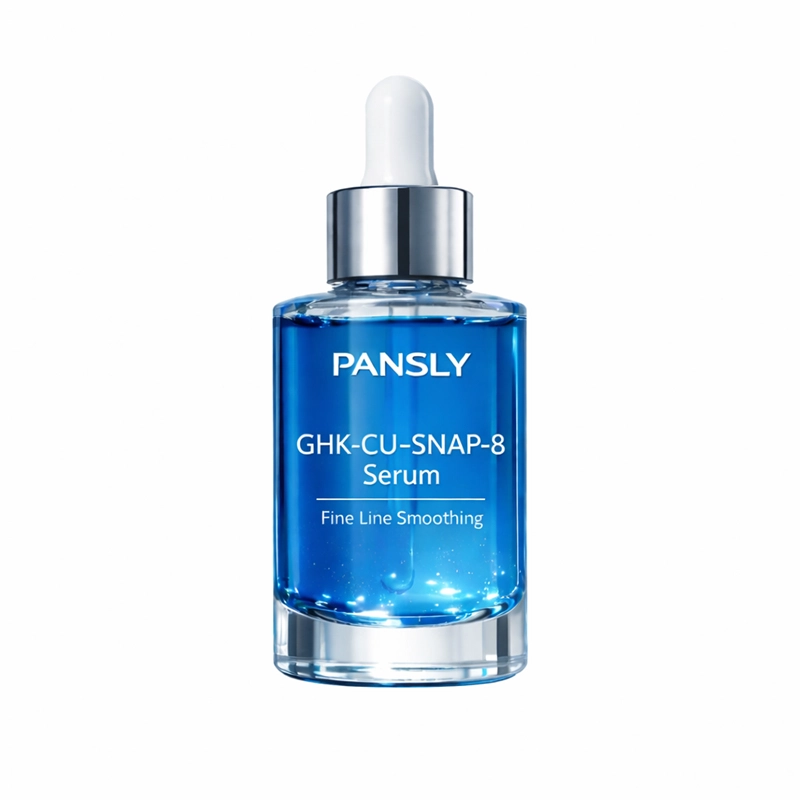
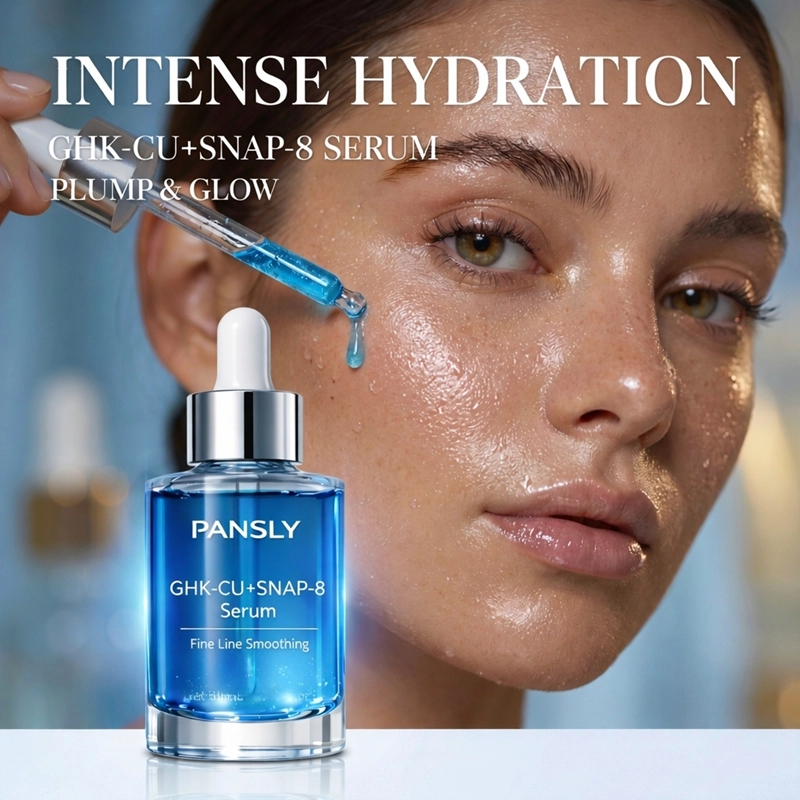
This Pansly GHK-CU + SNAP-8 Fine Line Smoothing Serum features premium dual-peptide complex formula to deliver multi-dimensional anti-aging skincare.
Formulated with two star peptide actives: GHK-CU Copper Peptide lifts sagging skin, boosts collagen production and enhances skin elasticity for firmer contour; SNAP-8 Anti-Wrinkle Peptide visibly smooths fine lines and wrinkles to fade expression creases. Complemented with Panthenol and Hyaluronic Acid, it provides soothing care and deep long-lasting hydration, revitalizing dull skin to restore a youthful radiant glow.
Lightweight watery texture absorbs quickly without sticky residue, suitable for daily anti-aging maintenance of all skin types.
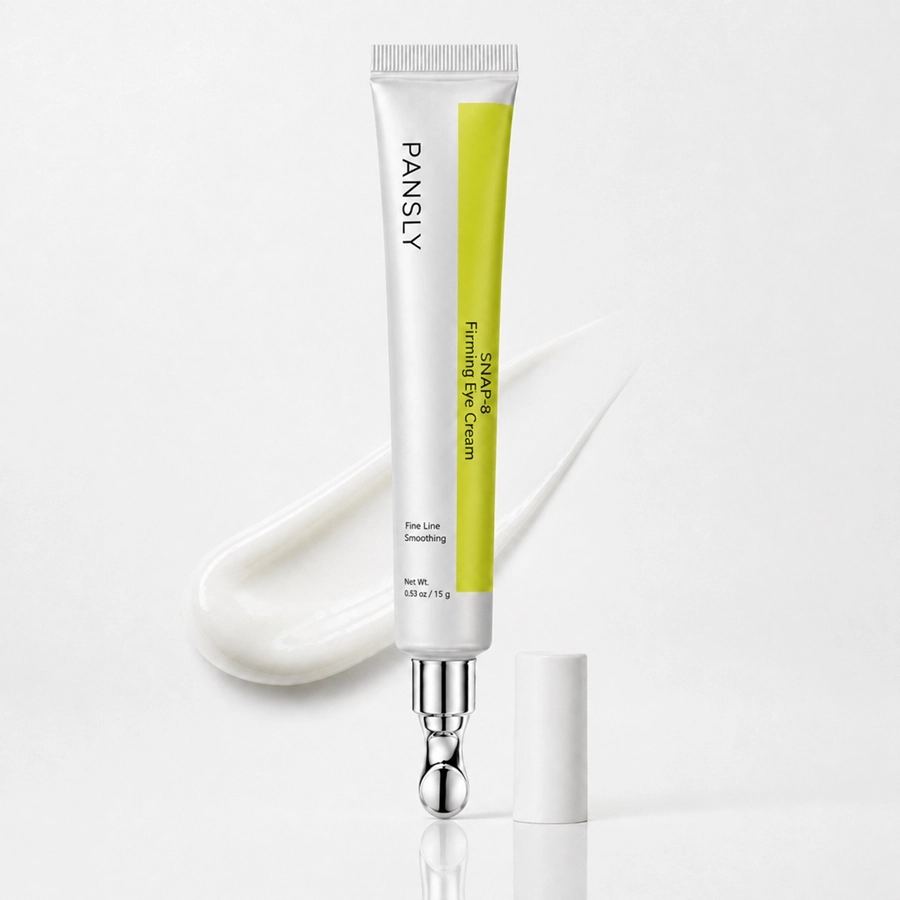
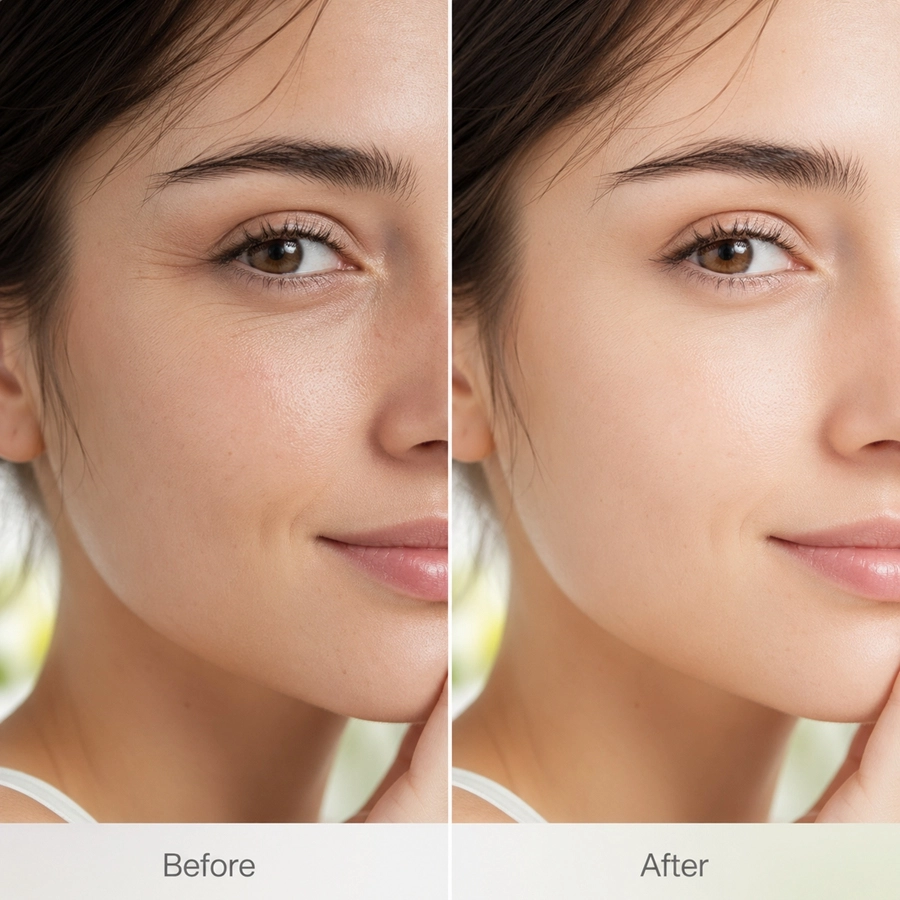
This Pansly SNAP-8 Firming Eye Cream is lightweight massage roller eye cream dedicated to smoothing eye fine lines, lifting saggy eye skin and refreshing tired puffy eyes.
It adopts 4-in-1 peptide eye care complex: SNAP-8 visibly smooths crow’s feet and under-eye fine lines; Caffeine eliminates eye puffiness and awakens dull tired eye area; Peptide Complex lifts loose eye skin to tighten eye contour; Hyaluronic Acid delivers lightweight lasting hydration to nourish dry eye skin.
Comes with built-in metal massage roller for comfortable massage application. Silky lightweight cream texture glides smoothly without heavy greasiness. Daily eye care softens fine lines, firms saggy eye skin, relieves eye fatigue and maintains plump smooth youthful eye area.
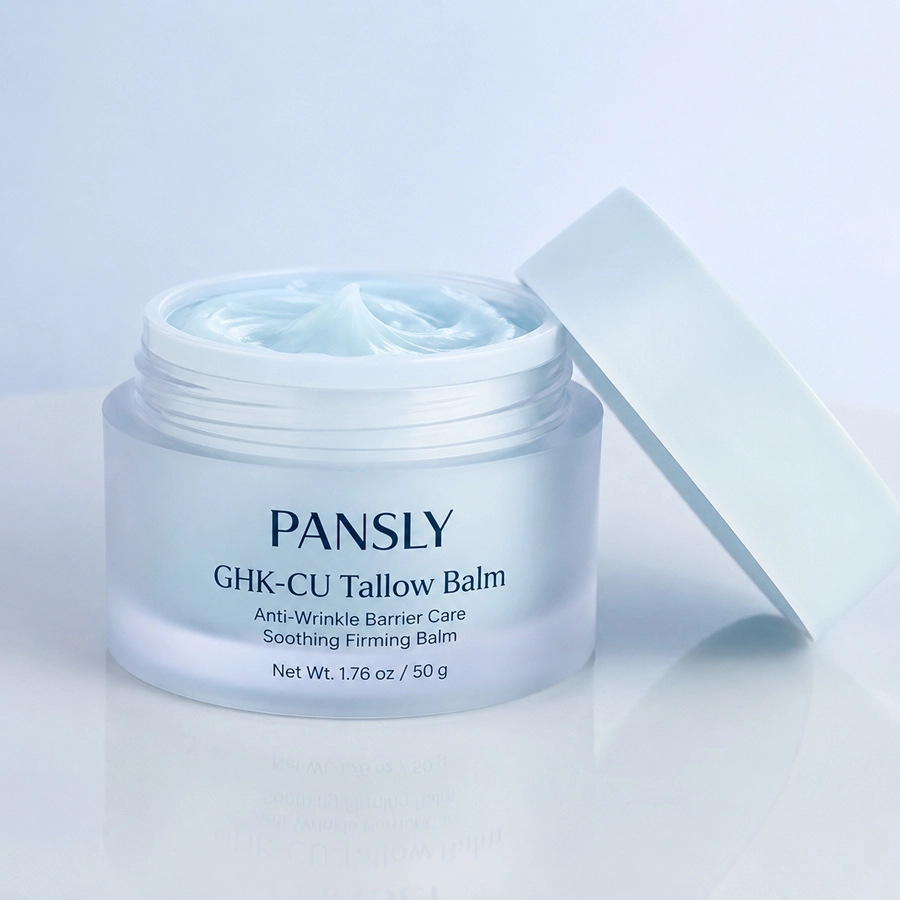
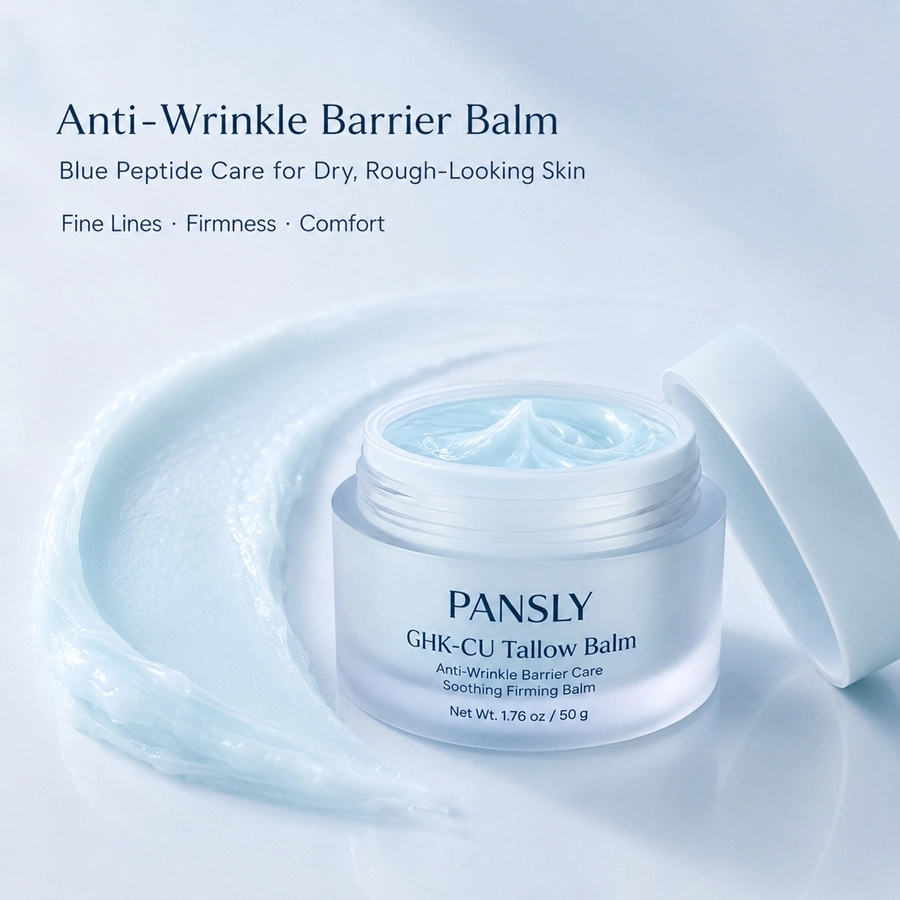
This Pansly GHK-CU + SNAP-8 Grass-Fed Tallow Anti-Wrinkle Barrier Balm is dual-peptide nourishing anti-wrinkle balm, specially developed for dry, rough textured skin, targeting fine lines, sagging contours and weakened skin barrier. Full OEM & ODM private label support is offered, including formula customization, packaging selection, fast sampling and bulk supply.
Five core premium active ingredients work synergistically for multi-dimensional skin care:
GHK-CU Copper Peptide lifts and firms loose skin to boost skin tightness and smooth fine lines;
SNAP-8 Peptide softens expression lines to reduce wrinkle visibility;
Grass-Fed Tallow delivers rich lipid nourishment to relieve persistent dry flaky rough skin;
Ceramide NP reconstructs skin moisture barrier to enhance skin comfort and resilience;
Squalane melts lightly into skin to provide silky long-lasting hydration.
Luxury rich light blue cushion balm texture glides smoothly and absorbs quickly without heavy greasy residue. Daily use improves dry rough texture, blurs dry fine lines, lifts saggy skin and stabilizes skin barrier, leaving skin soft, calm and smooth with healthy supple glow.
Get in Touch with us
If you have any comments or good suggestions, please leave us a message; later our professional staff will contact you as soon as possible.
Click here to customize the Beauty
we respond within a few hours
Monday–Friday, 9AM–6PM
3A01, Building A, Zhisheng Square, No. 4 Zhifu Road, Helong Street, Baiyun District, Guangzhou, China.


Leave a request, and we'll email you back within 24 hours.
© 2026 Beyond Basix. All Rights Reserved.
