
What Makes GHK-Cu, SNAP-8 and Beef Tallow an Unusual Anti-Aging Combination?
Quick Answer
A ghk-cu snap-8 tallow balm combines a copper tripeptide, a peptide associated with expression-line appearance claims, and an occlusive lipid base. Its unusual profile reflects both ingredient complementarity and formulation risk. Key decisions include peptide compatibility, concentration targets, oxidation control, skin-feel expectations, and packaging. Beyond Basix can help assess formulation routes, but the final solution depends on project testing and site conditions.
How Beyond Basix Supports Projects
Beyond Basix Cosmetics Ltd. supports OEM/ODM skincare development through formulation work, production planning, and manufacturing at its 12,000-square-meter facility. The site includes a 100,000-level GMPC pharmaceutical-grade dust-free workshop and 12 production lines, supporting balm concepts that require controlled processing and consistent filling.
For a copper-peptide and tallow project, buyers should confirm the ingredient specifications, target percentages, anhydrous or emulsion format, packaging type, intended market, and claim direction. MOQ, lead time, testing scope, and quotation must be confirmed for each project. Beyond Basix certifications include ISO 9001, GMP, HALAL, CE, and MSDS-related documentation, with applicability confirmed by product and market.
Discuss Your GHK-Cu, SNAP-8 and Tallow Balm Project
Share your target market, customer profile, desired texture, product format, ingredient preferences, target order volume, packaging concept, and intended claims so suitable formulation options and sample steps can be discussed. Start a focused OEM/ODM conversation through www.beyondbasixcosmetics.com or Lily@lanthome.com.
Deep-Dive FAQs
Can GHK-Cu and SNAP-8 remain stable in tallow balm?
They can be incorporated into an oil-rich balm concept, but compatibility should not be assumed from the ingredient list. GHK-Cu is a water-soluble copper peptide, while a conventional tallow balm is primarily lipid-based. This creates a delivery and dispersion question before stability is even considered. SNAP-8 is also a peptide and requires protection from unsuitable pH, heat, moisture, and prolonged processing conditions. A formulator should determine whether the product needs a genuinely anhydrous system, a dispersed aqueous phase, or a different delivery format. Stability work should examine appearance, odor, color, phase behavior, peptide identity or assay where practical, copper-related color change, and performance throughout the proposed shelf life. The presence of tallow does not automatically stabilize either peptide.
Is beef tallow suitable for sensitive or acne-prone skin?
Suitability depends on the individual, the tallow's refining profile, the complete formula, and the amount applied. Beef tallow supplies an occlusive, emollient phase, but its fatty-acid composition can vary according to sourcing and processing. It may feel protective on dry skin while feeling heavy on oily or acne-prone skin. There is no sound basis for labeling every tallow product non-comedogenic without testing, and ingredient-level assumptions cannot replace a finished-product assessment. Buyers should define whether the balm is intended for dry areas, facial use, body use, or barrier-support positioning. Sensory testing, repeat-insult patch testing where appropriate, and carefully worded market claims are more reliable than broad claims that tallow is universally suitable or inherently harmful.
What testing should private-label buyers request before placing orders?
A private-label buyer should request documentation matched to the formula and destination market rather than relying on a generic certificate package. For an anhydrous peptide balm, relevant work may include raw-material specifications, identity and purity documentation, accelerated and real-time stability, container-compatibility review, appearance and odor monitoring, and microbiological risk assessment. If water is introduced, preservation efficacy and broader microbial testing become more significant. Buyers should also clarify batch release criteria, manufacturing records, allergen or animal-origin declarations, and the regulatory status of cosmetic claims in the target country. The exact test panel depends on composition, packaging, production process, and sales jurisdiction; a quotation should separate routine quality controls from optional substantiation studies.
Does SNAP-8 work like injectable botulinum toxin in cosmetics?
No. SNAP-8 is a cosmetic peptide commonly identified as acetyl octapeptide-3, and topical products may position it around the appearance of expression lines. Injectable botulinum toxin is a regulated medical treatment that acts through neuromuscular transmission; a topical peptide does not create an equivalent pharmacological effect. Similar marketing language can therefore mislead consumers and create regulatory exposure. A compliant brief should describe the intended cosmetic appearance benefit without implying injection-level performance, paralysis, medical treatment, or identical mechanism. Product developers should review the current ingredient documentation and the claim rules of each target market before approving packaging copy, advertising, before-and-after imagery, or influencer content.
How should brands substantiate anti-aging claims for this balm?
Claim substantiation should connect the exact wording to evidence on the finished product, not simply to published information about isolated ingredients. A brand making appearance claims can consider controlled consumer-use studies, standardized photography, instrumental hydration or barrier measurements, and dermatologist or expert assessments, depending on the wording and market. Claims such as moisturizes, softens, or improves the appearance of fine lines require different evidence from claims implying collagen remodeling, wrinkle removal, or biological treatment. GHK-Cu research includes laboratory and formulation-specific limitations, while SNAP-8 evidence should not be extrapolated into injectable outcomes. The formula, dosage, application frequency, study duration, comparator, statistical approach, and adverse-event recording should be documented before a claim is promoted.
Which packaging protects copper peptides and tallow from degradation?
Packaging should limit the main threats identified during development: oxygen, light, moisture ingress, heat exposure, repeated contamination, and dispensing losses. An opaque or low-light package can help reduce light stress, while an airless or otherwise low-exposure dispenser may be preferable to an open jar when the formula and viscosity permit it. However, packaging cannot correct an unstable formula. Copper-containing systems require particular attention to unwanted color changes and interactions with the container or formula components, while tallow requires monitoring for rancid odor and oxidation. Compatibility testing should cover the actual pack, closure, headspace, transport conditions, and repeated-use pattern. The final choice should follow stability results, viscosity, filling equipment, consumer usage, cost, and target-market expectations.
Related Articles for Private Label Cosmetics

Why Two Mineral Sunscreens With the Same SPF Can Feel Completely Different

Beyond Ordinary Tallow Balm: How GHK-Cu and SNAP-8 Create a Different Skincare Story

When Blue Copper Peptides Meet Beef Tallow: A New Direction for Premium Skincare

PDRN Toner Pads vs GHK-Cu + SNAP-8 Peptide Toner Pads: Private Label Manufacturing Decisions
You May Also Like
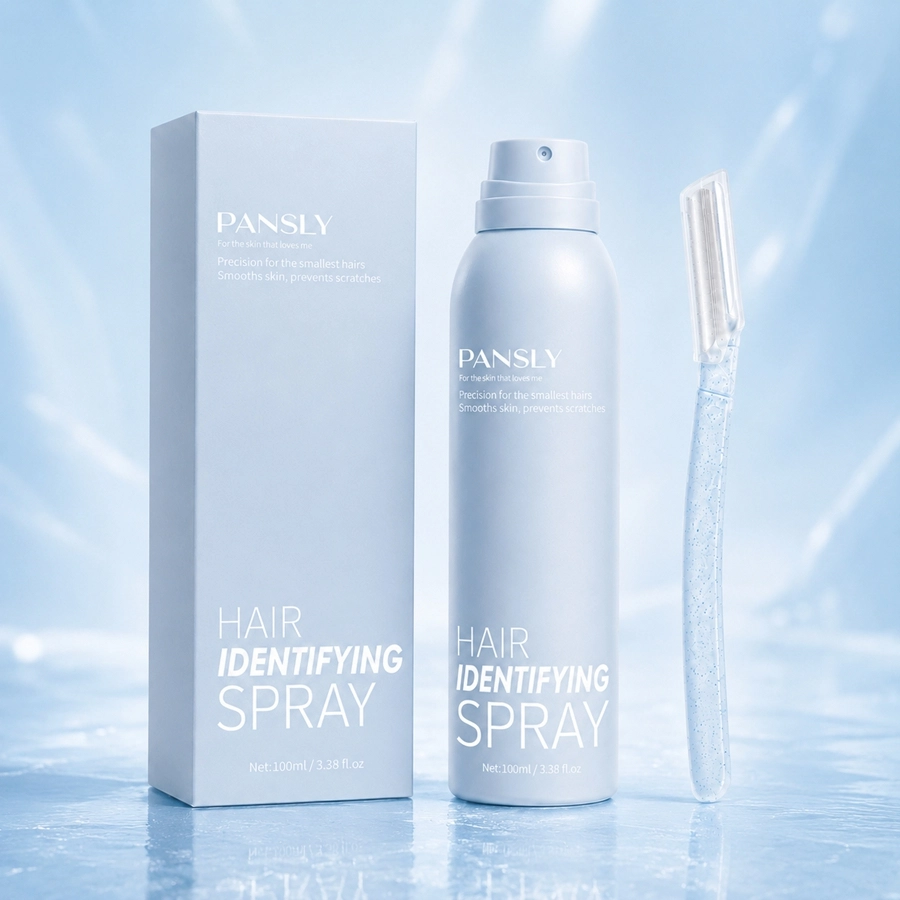
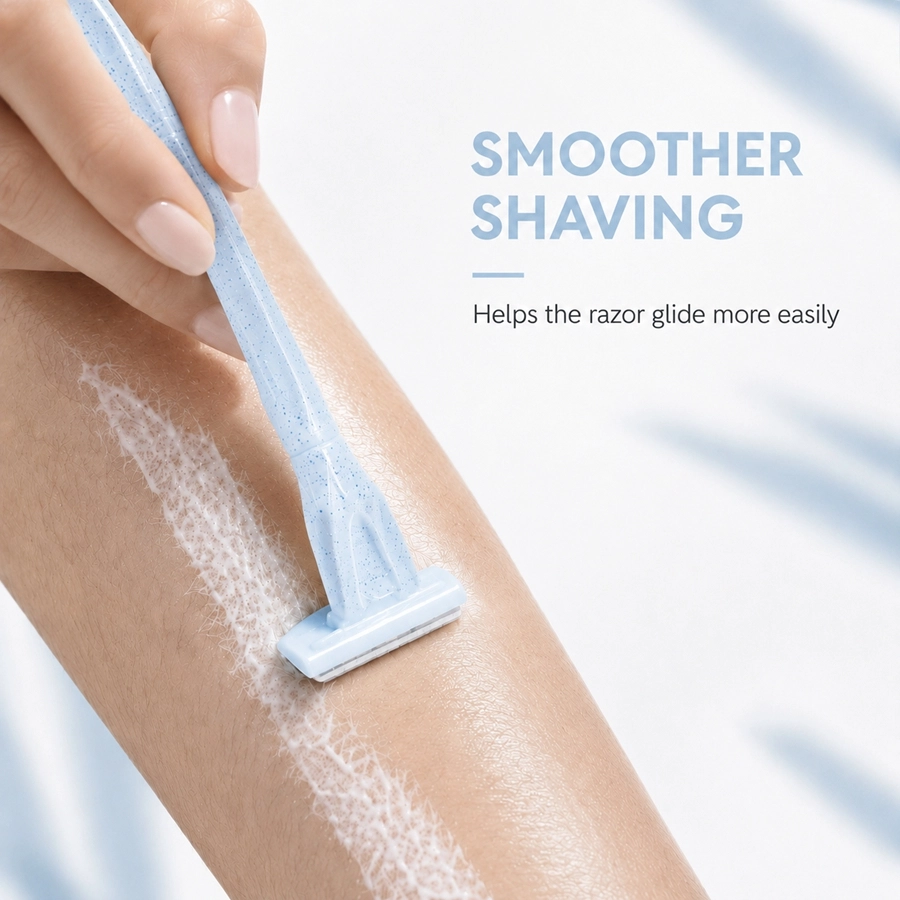
This Pansly Hair Identifying Spray Grooming Set contains 100ml pre-shave hair identifying spray and a matching precision facial scraper, designed for precise facial and body fine hair removal and dermaplaning.
Core functional ingredients:
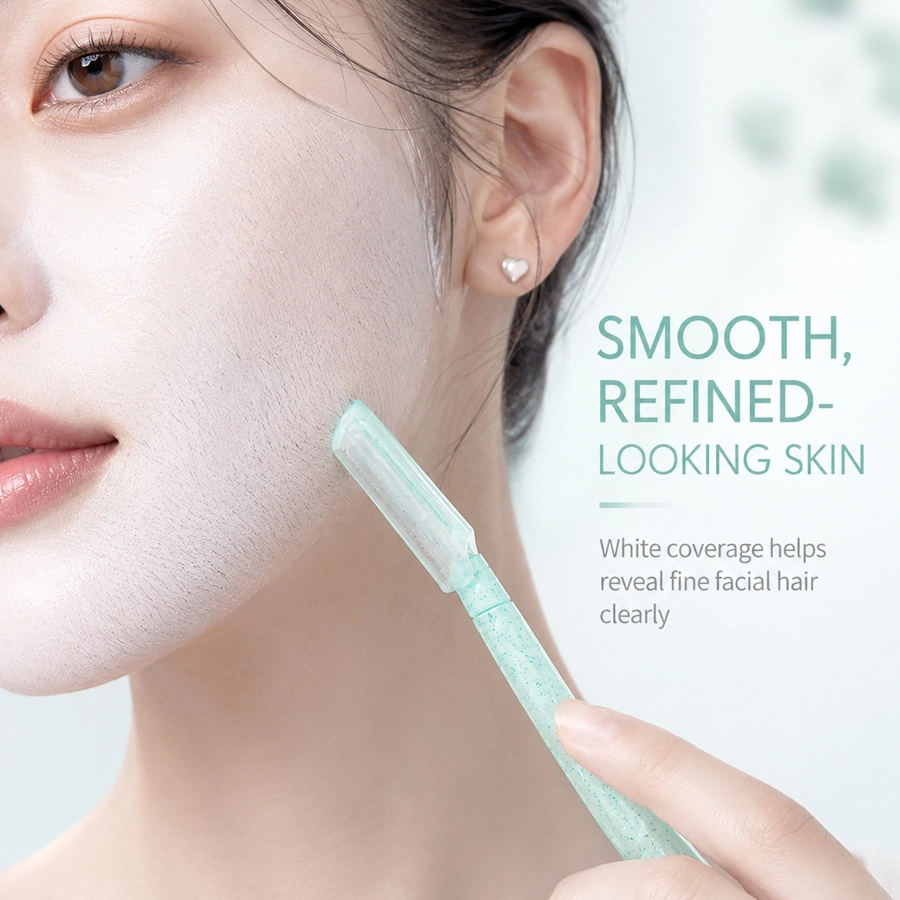
Zea Mays (Corn) Starch: Creates a thin white film on dry skin to expose invisible tiny vellus hairs, enabling targeted, accurate grooming;
Portulaca Oleracea Extract: Soothes sensitive skin and relieves irritation caused by scraping;
Hydrolyzed Keratin: Lubricates skin surface, improves scraper gliding performance and effectively prevents scratches;
Butylene Glycol: Delivers gentle hydration to maintain skin comfort during hair trimming.
Adopt ultra-fine mist design, evenly spray on clean dry skin. Complete grooming through 4 simple steps: Spray → Identify fine hairs → Gentle Glide with scraper → Wipe away residues. Suitable for cheeks, upper lip, jawline, arms and other areas to achieve cleaner, smoother shaving results. We provide full OEM & ODM private label service, support custom logo, multiple packaging color options, fast sampling and bulk order supply.
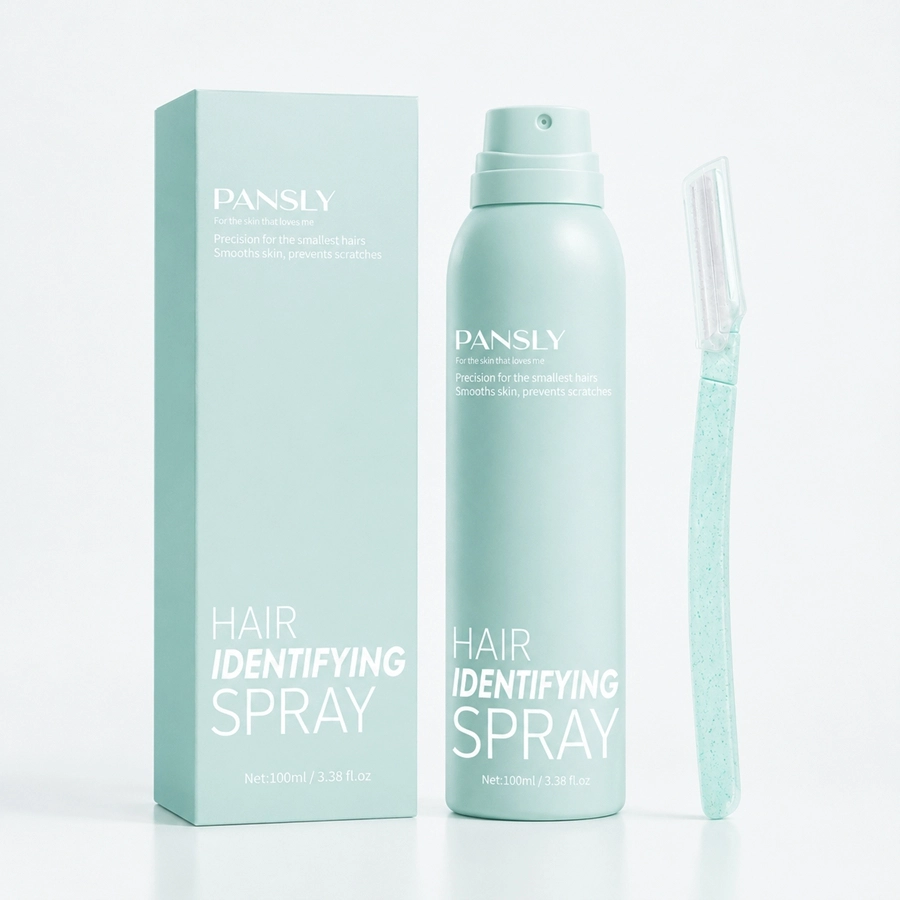
This Pansly Hair Identifying Spray Grooming Set includes a 100ml pre-shave hair identifying spray and a matching precision facial scraper, suitable for facial and body fine hair trimming.
Core functional ingredients:
Zea Mays (Corn) Starch: Forms a thin white film on dry skin to make invisible tiny vellus hairs clearly visible, supporting targeted accurate grooming;
Portulaca Oleracea Extract: Calms skin and alleviates irritation caused by scraping operations;
Hydrolyzed Keratin: Lubricates the skin surface to boost razor gliding and avoid scratches during hair removal;
Butylene Glycol: Offers gentle moisturization to keep skin comfortable throughout the grooming process.
You can finish the whole routine in 4 simple steps: Spray evenly on dry skin → Identify fine hairs via white coverage → Glide gently with the scraper → Wipe residues for silky smooth skin. It can be used on cheeks, upper lips, jawline, arms and more areas. We provide complete OEM/ODM private label service, including custom logo, multiple color selections, bulk order support and fast customization.
Get in Touch with us
If you have any comments or good suggestions, please leave us a message; later our professional staff will contact you as soon as possible.
Click here to customize the Beauty
we respond within a few hours
Monday–Friday, 9AM–6PM
3A01, Building A, Zhisheng Square, No. 4 Zhifu Road, Helong Street, Baiyun District, Guangzhou, China.


Leave a request, and we'll email you back within 24 hours.
© 2026 Beyond Basix. All Rights Reserved.
