
How Can a PDRN Skincare Line Avoid Looking Like Every Other Trend-Driven Brand?
Quick Answer
A distinctive PDRN skincare line is built around a clear skin concern, coherent product architecture, credible claims, and recognizable design—not an ingredient name alone. Beyond Basix can support development through formulation selection, packaging coordination, quality control, and production planning. Key variables include target market, dosage and format, packaging compatibility, testing scope, and order volume. Final solutions depend on the specific project, testing results, and site conditions.
How Beyond Basix Supports PDRN Projects
Beyond Basix Cosmetics has more than 23 years of experience in cosmetics research, production, and sales, including 12 years focused on effective-ingredient skincare development. Its 12,000-square-meter facility includes a 100,000-level GMPC pharmaceutical-grade dust-free workshop and 12 production lines. These resources support OEM and ODM coordination for product formats, packaging execution, batch production, and quality-control planning.
Buyers should confirm the intended market, product category, PDRN specification, packaging format, claim boundaries, sample requirements, and documentation needs before quotation. MOQ, lead time, testing scope, and pricing must be confirmed for each project. Beyond Basix holds certifications and documentation including ISO 9001, CE, MSDS, GMP, and HALAL, with applicability depending on the product and destination market.
Discuss Your PDRN Brand Positioning and Product Plan
Share your target market, customer profile, hero skin concern, planned product formats, positioning, target price, packaging direction, and expected order volume. The discussion can then cover suitable formulation routes, claim-support requirements, packaging options, sample stages, and production planning. Send your project brief to www.beyondbasixcosmetics.com and Lily@lanthome.com to begin a focused OEM/ODM discussion.
Deep-Dive FAQs
How can PDRN packaging create distinction beyond ingredient-led visual trends?
Packaging should express the brand’s use case and proof structure rather than simply display a DNA, salmon, molecule, or laboratory graphic. Start by defining the product role: daily barrier support, post-cleansing hydration, targeted texture care, or another substantiated cosmetic function. Then translate that role into hierarchy, typography, color, dispensing format, and on-pack education. Airless pumps, droppers, tubes, and jars each create different hygiene, usability, and compatibility considerations; the choice should follow the formula and consumer routine. Avoid implying injectable, clinical, or regenerative outcomes unless the destination market permits those claims and the business has appropriate evidence. Packaging copy should distinguish factual ingredient information, cosmetic benefit language, directions, warnings, volume, batch identification, and responsible-party details. This creates a recognizable system that can extend across products without copying the visual codes of short-lived trend brands.
What formulation evidence should private label PDRN skincare brands request?
A buyer should request documentation that connects the formula to its intended cosmetic claims, rather than treating the presence of PDRN as proof of performance. The review may include the ingredient’s INCI name, supplier identity, specification or certificate of analysis, source information where legally and commercially available, concentration or use level, microbiological controls, and storage conditions. The finished formula also needs appropriate stability and packaging-compatibility assessment. Depending on the product type and market, preservative efficacy or challenge testing, microbial limits, safety assessment, and compatibility checks may be relevant. PDRN terminology can be used inconsistently across suppliers, and topical cosmetic products should not automatically inherit evidence from injectable or clinical applications. A credible development file separates raw-material evidence from finished-product testing and links every consumer-facing claim to the actual formula.
How should a PDRN brand build a defensible product architecture?
Begin with one commercially meaningful problem and assign each SKU a distinct job. A cleanser, essence, serum, cream, and mask should not repeat the same promise with different textures. Define the customer sequence, frequency of use, hero benefit, supporting ingredients, texture, pack size, and repurchase logic before expanding the range. A strong architecture can use a core product for recognition, a complementary product for routine completion, and a targeted item for a clearly defined concern. This approach also improves forecasting and reduces the risk of launching numerous low-differentiation SKUs. Ingredient selection should support the product role instead of creating an overloaded label. Naming, shade or format conventions, and claim language should follow a documented brand system. The result is a portfolio that can develop over time while remaining understandable to distributors, retailers, and end users.
Which claims can PDRN skincare packaging legally support across markets?
There is no single global answer because cosmetic claim rules differ by jurisdiction, product category, advertising channel, and evidence standard. In the European Union, cosmetic claims are assessed under the principles of Regulation (EU) No 655/2013, including truthfulness, evidential support, and fair communication. In the United States, intended use and claim wording can affect whether a product remains within the cosmetic framework or raises drug-related concerns. Claims such as hydration, smoothing appearance, or helping skin feel comfortable generally require appropriate substantiation and careful wording; claims suggesting wound healing, tissue regeneration, injection-like action, or treatment of disease require much greater regulatory scrutiny. A brand should prepare a claim matrix for each market, retain supporting evidence, review translations, and check front-panel language, digital advertising, influencer scripts, and retailer copy. Regulatory review should occur before artwork approval, not after bulk production.
How do MOQ and testing choices affect a differentiated PDRN launch?
MOQ is not only a purchasing threshold; it affects cash exposure, packaging economics, inventory age, and the number of variations a new brand can responsibly carry. Custom components, printed finishes, multiple formats, and low-volume production may increase unit cost or require supplier negotiation. Testing decisions have a similar commercial effect. A formula may need different assessments from a stable, simple product depending on its water content, preservation system, packaging, intended use, and destination market. Cutting relevant testing to reach a launch date can create greater cost through rework, complaints, or relabeling. Conversely, applying every possible test without a risk-based rationale can inflate development time and price. Ask the manufacturer to separate formulation, packaging, testing, artwork, and production assumptions in the quotation. Confirm sample acceptance criteria and decision gates before committing to a bulk order.
Why does PDRN source and grade matter for brand credibility?
PDRN is a material category, not a universal guarantee of identical composition or cosmetic performance. Source, processing, purification, molecular characteristics, residual controls, specification limits, and storage requirements can differ among suppliers. A brand therefore needs a supplier-level technical file rather than a marketing description alone. Review the certificate of analysis, identity information, microbiological and relevant impurity controls, recommended use level, transport conditions, and lot traceability. Also verify whether the supplied nomenclature is appropriate for the destination market and finished-product label. Source stories involving salmon or other biological materials should be communicated accurately and consistently with the supplier documentation; ethical, allergen, halal, and market-specific considerations may require additional review. The finished formula must still be assessed independently, because raw-material quality does not automatically establish stability, safety, or consumer benefit after incorporation.
Related Articles for Private Label Cosmetics

Why Two Mineral Sunscreens With the Same SPF Can Feel Completely Different

Beyond Ordinary Tallow Balm: How GHK-Cu and SNAP-8 Create a Different Skincare Story

When Blue Copper Peptides Meet Beef Tallow: A New Direction for Premium Skincare

PDRN Toner Pads vs GHK-Cu + SNAP-8 Peptide Toner Pads: Private Label Manufacturing Decisions
You May Also Like
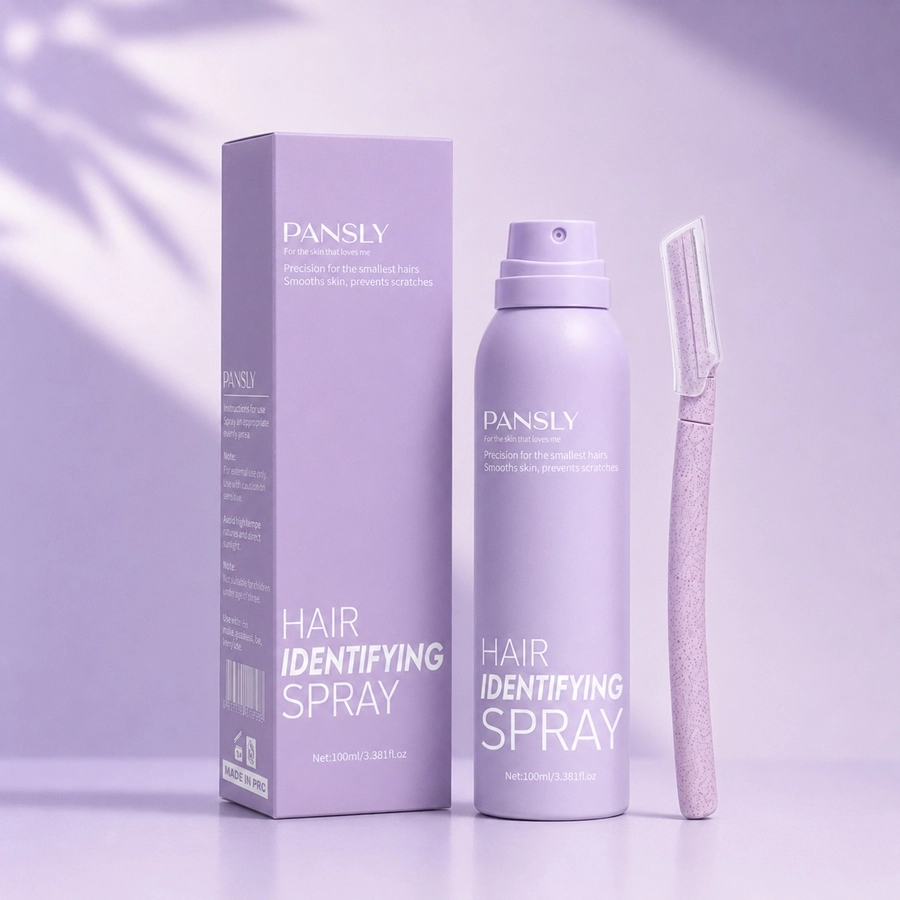
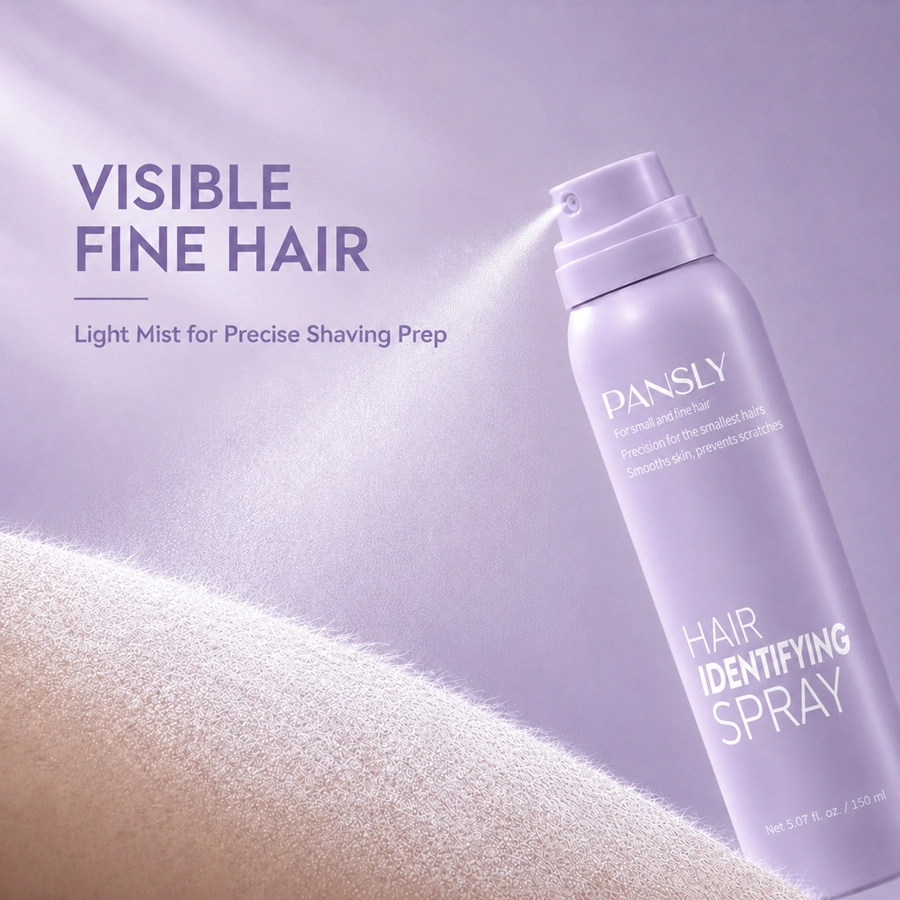
This Pansly Hair Identifying Spray Shaving Prep Set includes Hair Identifying Spray (100ml) and a precision facial scraper, specially designed for accurate facial and body hair removal. The lightweight fine mist spray evenly deposits a subtle film on clean dry skin, instantly highlighting tiny invisible fine vellus hairs, so you can clearly observe every hair for controlled, thorough shaving. It softens skin surface and effectively reduces blade friction, preventing scratches and irritation during dermaplaning. Suitable for face, jawline, upper lip, arms and other body areas. Simple 3-step routine: Spray → Reveal fine hairs → Shave with the matching scraper. Support full OEM & ODM private label service, customizable bottle, box and scraper design, logo & color customization and fast sampling.
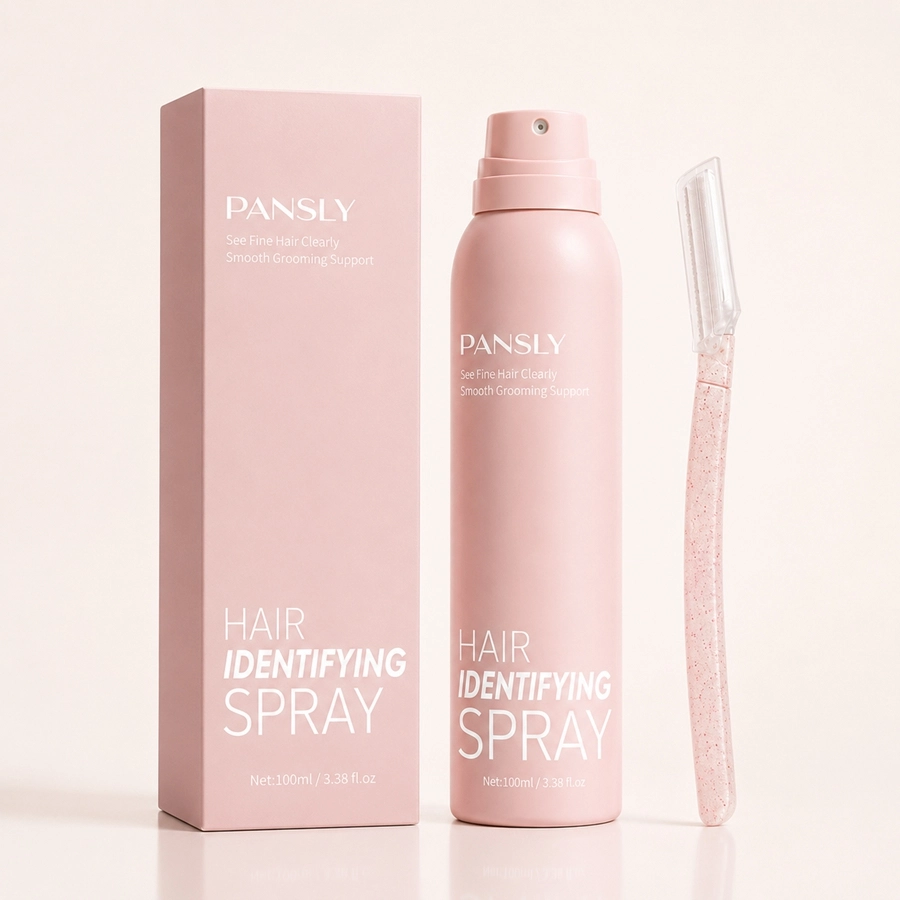
Pansly Fine Hair Visibility Grooming Set
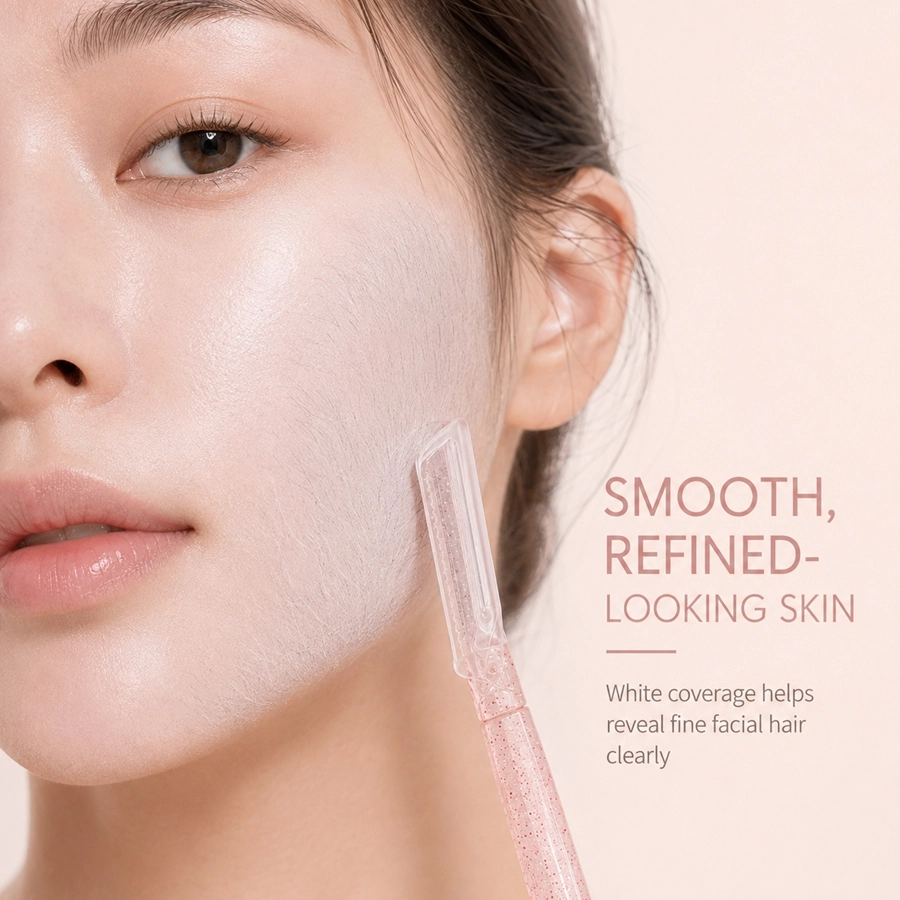
This grooming kit includes 100ml hair identifying spray and a ergonomic facial scraper, specially designed for facial dermaplaning and body fine hair trimming. The spray forms a lightweight white film on dry skin to display invisible vellus hairs, helping you achieve precise trimming.
Key Ingredients:
Zea Mays (Corn) Starch: Creates white covering layer to expose tiny fine hairs clearly;
Portulaca Oleracea Extract: Calms skin and alleviates trimming irritation;
Hydrolyzed Keratin: Delivers lubrication, reduces friction to avoid skin scratches;
Butylene Glycol: Offers mild moisturization to keep skin comfortable during grooming.
Easy 4-step operation: Spray evenly on dry skin → Identify fine hairs → Gently scrape unwanted hair → Clean residual powder. Suitable for upper lip, cheeks, jawline, arms and other areas. We support OEM & ODM private label service, customizable bottle colors, custom logo and bulk wholesale.
Get in Touch with us
If you have any comments or good suggestions, please leave us a message; later our professional staff will contact you as soon as possible.
Click here to customize the Beauty
we respond within a few hours
Monday–Friday, 9AM–6PM
3A01, Building A, Zhisheng Square, No. 4 Zhifu Road, Helong Street, Baiyun District, Guangzhou, China.


Leave a request, and we'll email you back within 24 hours.
© 2026 Beyond Basix. All Rights Reserved.
