
How to ensure stability and efficacy in copper peptide face serum?
Practical, formulation-level guidance to preserve copper peptide activity: control pH and ionic environment, avoid competing chelators and reducing actives, select compatible preservatives and packaging, and validate with HPLC/ICP and biological assays—tailored for OEM/ODM skincare development.
Copper peptides (notably GHK-Cu) are prized for wound-healing and collagen-stimulating activity, but their functional integrity depends on formulation chemistry, manufacturing controls, and packaging. In a One-Stop OEM/ODM for Skincare environment, success requires aligning analytical testing, GMP operations, and claim-supporting bioassays. Below is an industry-grade synthesis of the crucial controls every brand and contract manufacturer must implement to deliver stable, efficacious copper peptide serums at scale.
Key formulation controls include maintaining a mildly acidic pH window to prevent hydrolysis and metal disproportionation, minimizing free metal contaminants and reactive oxygen species, and avoiding ingredients that competitively chelate or chemically reduce the peptide–copper complex. Manufacturing must use high-purity inputs and metal-free processing lines; finished-product stability and potency require orthogonal analytical monitoring (HPLC/LC-MS for peptide integrity; ICP-MS/OES for copper content and speciation) and microbiological challenge testing per ISO 11930 or equivalent.
Packaging and delivery are intrinsic to performance: airless, opaque dispensers, single-dose ampoules, or nitrogen-purged glass ampoules dramatically reduce oxidation and photodegradation risks. Regulatoryly, claims about collagen synthesis or skin repair must be backed by in vitro or clinical data—biomarker assays (pro-collagen I, TIMP/MMP ratios) and small-scale clinical endpoints (transepidermal water loss, standardized photography) are common evidence routes in OEM/ODM dossiers.
Beyond formulation and testing, robust change control, retained sample programs, and accelerated/real-time stability protocols (ICH Q1A(R2) mapping: 40°C/75% RH accelerated, 25°C real-time) are essential for launch readiness. For brands working with pdrn pink peptide serum concepts or combining multiple peptide actives with copper, a dedicated pre-formulation compatibility matrix and staged stability screening will prevent expensive late-stage reformulation.
Beyond Basix brings 15+ years of One-Stop OEM/ODM for Skincare experience: formulation R&D, GMP manufacturing, analytical release testing, and dossier-ready clinical support to translate copper peptide science into stable, market-ready serums.
For a technical formulation quote and OEM/ODM partnership, contact us at www.beyondbasixcosmetics.com or email Lily@lanthome.com.
FAQ
How does pdrn pink peptide serum differ from copper peptides?
Copper peptides (eg, GHK-Cu) are metal–peptide complexes whose activity derives from the bound copper ion that modulates cellular signaling; pdrn pink peptide serum is a different class typically using polynucleotide fragments (PRDN/PDNR variants) or peptide blends aimed at regeneration. The formulation risk profile differs: copper complexes require strict metal speciation control and avoidance of strong chelators or reducing agents, while polynucleotide/peptide blends are more susceptible to proteolytic degradation and microbial contamination. In OEM/ODM terms, treat copper peptide products as metal-complex formulations with specialized analytical endpoints (ICP-MS for copper, LC-MS for peptide integrity) rather than standard peptide-only serums.
What formulation pH preserves copper peptide stability in serums?
Published formulation experience and stability data converge on a mildly acidic window—approximately pH 3.5 to 5.5—as optimal for most copper peptide complexes. At higher pH you increase risk of copper hydrolysis and peptide decomplexation; at strongly acidic pH you may accelerate peptide cleavage or acid-catalyzed side reactions. Set target pH early in pre-formulation, then perform forced-degradation studies across the 2.5–7.0 range to define the product-specific stability envelope; document assay drift with HPLC and copper speciation with ICP to support shelf-life assignments.
Which chelators and buffers are safe for copper peptide serums?
Avoid strong, polyvalent chelators (EDTA, DTPA) at formulation-relevant concentrations because they can strip copper from the peptide complex and reduce biological activity. Prefer weak, competitive-compatible buffers such as low-concentration acetate, citrate (used cautiously), or amino-acid-based buffers where histidine can act as a stabilizing ligand without displacing the native copper–peptide coordination. If a chelating excipient is required for preservation efficacy, perform binding-competition studies (isothermal titration calorimetry or competitive ICP assays) to confirm the copper remains associated with the active peptide in finished product conditions.
How to prevent oxidation and discoloration in copper peptide serums?
Oxidation and discoloration stem from free-radical chemistry and copper redox cycling. Mitigation strategies: 1) exclude reducing agents such as ascorbic acid or high concentrations of thiols that change copper valence; 2) incorporate non-reducing antioxidants (tocopherol, stabilized derivatives) only after compatibility screening; 3) minimize dissolved oxygen during fill (nitrogen blanketing, vacuum deaeration) and use oxygen-impermeable containers; 4) opt for opaque or amber glass to block photoreactive degradation; 5) control metal contamination upstream by using high-purity water (resistivity >1 MΩ·cm) and metal-tested excipients; and 6) include an early accelerated photostability and oxidative stress panel in pre-launch testing so color endpoints and assay loss are quantified.
What packaging options maximize shelf life for peptide serums?
Packaging decisions materially affect stability: choose airless pumps or single-dose glass ampoules to eliminate headspace oxygen; amber or metallized containers to reduce photodegradation; and inert liners (PTFE or fluoropolymer) to prevent metal ion leaching. For high-value copper peptide serums, consider nitrogen-purged filling and cold-fill processes to reduce thermal stress. Validate extractables and leachables for the chosen system and include secondary packaging that minimizes thermal exposure during transport. For OEM/ODM production, specify 316L stainless contact tooling and a validated container closure integrity program to protect shelf-life claims.
How to validate efficacy and stability during OEM/ODM development?
Implement a tiered validation plan: 1) Analytical stability: HPLC/LC-MS for peptide integrity, ICP-MS/OES for copper content and total metal balance, and forced-degradation studies (thermal, photolytic, oxidative). 2) Microbial control: preservation efficacy and challenge testing per ISO 11930, plus routine microbiological release. 3) Functional bioassays: in vitro fibroblast proliferation/collagen synthesis (pro-collagen I ELISA), MMP inhibition assays, and ex vivo skin explant markers supporting mechanistic claims. 4) Clinical bridging: where claims require consumer-visible endpoints, a small randomized, controlled study measuring objective metrics (TEWL, standardized image analysis, validated wrinkle scales) is appropriate. 5) Stability protocol: ICH-aligned accelerated and real-time studies with stability-indicating assays, impurity profiling, and retained sample banking. Document all methods and acceptance criteria in the OEM/ODM batch-release and technical dossier to ensure reproducible performance and defensible marketing claims.
Related Articles for Private Label Cosmetics

Why Two Mineral Sunscreens With the Same SPF Can Feel Completely Different

Beyond Ordinary Tallow Balm: How GHK-Cu and SNAP-8 Create a Different Skincare Story

When Blue Copper Peptides Meet Beef Tallow: A New Direction for Premium Skincare

PDRN Toner Pads vs GHK-Cu + SNAP-8 Peptide Toner Pads: Private Label Manufacturing Decisions
You May Also Like
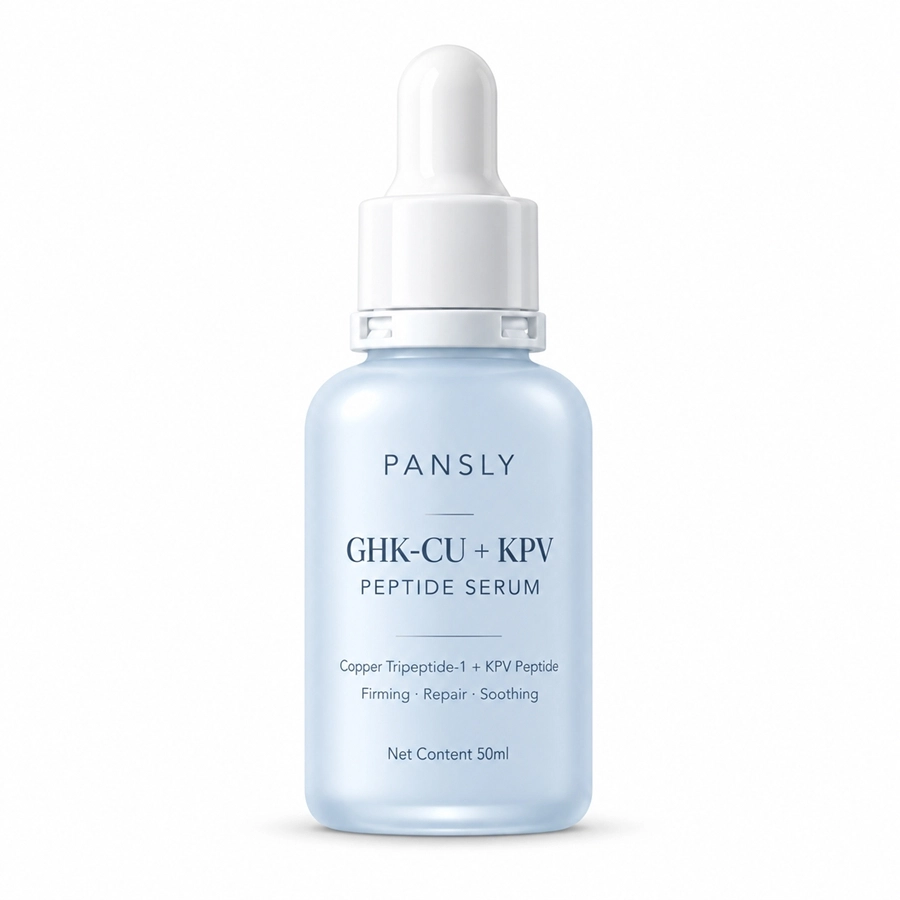
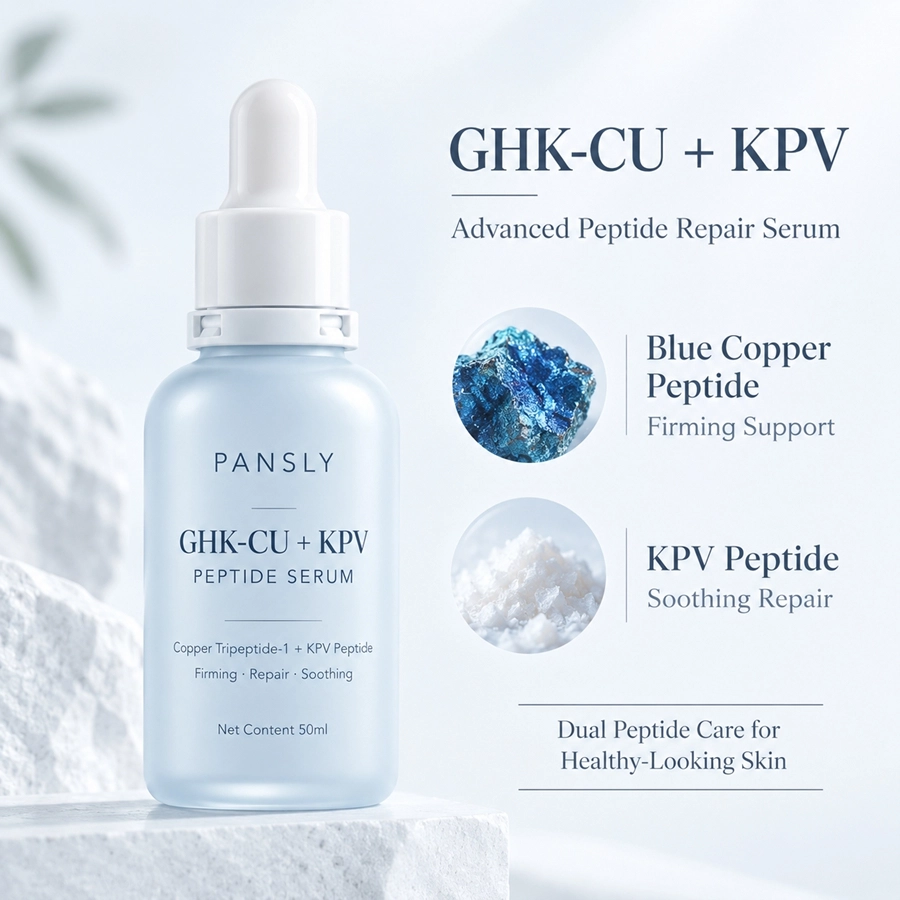
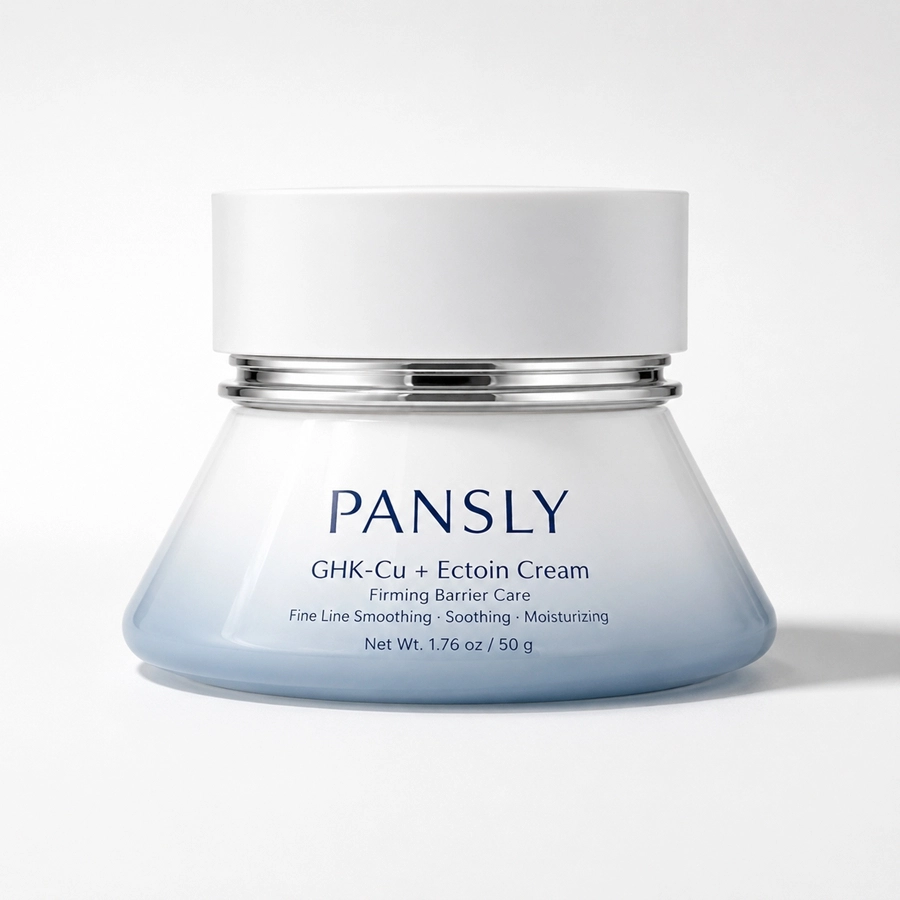
GHK-Cu KPV serum for skin is a private-label peptide face serum formulated for a firming, smoothing routine. This GHK-CU KPV Serum is positioned for wrinkle care and skin repair, making it a practical addition to an anti-aging skincare range.
Get in Touch with us
If you have any comments or good suggestions, please leave us a message; later our professional staff will contact you as soon as possible.
Click here to customize the Beauty
we respond within a few hours
Monday–Friday, 9AM–6PM
3A01, Building A, Zhisheng Square, No. 4 Zhifu Road, Helong Street, Baiyun District, Guangzhou, China.


Leave a request, and we'll email you back within 24 hours.
© 2026 Beyond Basix. All Rights Reserved.
