Mineral vs Chemical Sunscreen: What Should Private Label Brands Choose?

Cecilia Pan
Skincare Product Development & OEM/ODM Specialist
Tuesday, September 01, 2026
Compare mineral and chemical sunscreen systems for private label brands, including UV-filter choices, texture, white cast, market requirements, SPF testing, packaging and OEM/ODM development.

Quick answer: mineral and chemical sunscreen systems can both be commercially viable, but they create different formulation, sensory, regulatory and testing requirements. Mineral formulas usually center on inorganic UV filters such as zinc oxide and titanium dioxide, while chemical—also called organic—filter systems use permitted organic UV filters that vary by market. A private label brand should not choose between them on trend language alone. Target country, desired SPF/UVA claims, texture, white-cast tolerance, skin-feel target, packaging and test budget all need to be defined before the formula route is locked.

Mineral vs Chemical Sunscreen: The Difference That Matters to a Brand

For consumers, the conversation often becomes “physical versus chemical.” For a skincare brand developing a commercial product, the decision is more technical. The UV-filter system affects dispersion, viscosity, transparency, sensory profile, compatibility with supporting skincare ingredients, packaging and the testing program required before launch.

Mineral sunscreen formulas typically rely on zinc oxide, titanium dioxide or a combination of the two where permitted. These filters can support a mineral-positioned product story, but they also make particle dispersion, rub-in behavior, white cast and texture engineering important development questions. Chemical or organic filter systems can allow different textures and appearance profiles, but the exact filters available to a manufacturer depend on the intended market and its permitted-filter rules.

This means a formula cannot simply be developed for one country and assumed to be suitable everywhere. A serious OEM/ODM brief begins with the target markets first, then works backward into filter selection, claims, SPF/UVA testing, label language and production requirements.

Decision factorMineral filter directionChemical / organic filter direction
Brand storyUseful for mineral-positioned, sensitive-skin-oriented or skincare-hybrid concepts when supported by the finished formula.Useful for lightweight, transparent or cosmetically elegant formats depending on the selected filter system.
AppearanceWhite cast and visible residue can become key formulation challenges, especially at higher mineral-filter loads.Often easier to develop without mineral opacity, although color and clarity still depend on the full formula.
Texture engineeringDispersion quality, particle handling, rheology and film formation are central.Solubility, oil-phase design, filter compatibility and crystallization control can be important.
Market rulesPermitted filters, concentrations and labeling requirements must be checked for the destination market.The available filter list can vary substantially between markets; a formula may need market-specific adaptation.
TestingBoth routes require finished-product testing appropriate to the intended SPF/UVA claims, formula, packaging and target market.

Why Mineral Sunscreen Is Often More Expensive to Formulate Well

A mineral sunscreen is not expensive simply because zinc oxide or titanium dioxide is “better.” Cost can rise because a high-quality mineral product needs controlled dispersion, suitable emulsification, careful rheology and sensory work to avoid a chalky or heavy result. The brand may also request a more elegant finish, reduced white cast, added emollients or barrier-support ingredients, all of which can make development more demanding.

Packaging can add another layer. A thicker mineral cream may behave differently in a pump, tube or airless package, so dispensing and residual-volume testing matter. If the brand wants a premium facial sunscreen rather than a basic body SPF, the sensory target is usually tighter and the sample-development process can take more iterations.

Does “Chemical Sunscreen” Mean a Simpler Formula?

No. Organic UV-filter systems solve some problems and create others. Filter solubility, photostability, oil-phase balance, crystallization risk, sensory finish and market-specific filter restrictions must all be managed. A lightweight formula may look easier to the consumer, but it can still require a sophisticated internal structure.

For brands selling across several regions, filter availability is especially important. A formula designed around a filter combination accepted in one market may need reformulation for another. That is why “global sunscreen formula” should never be used as a shortcut for regulatory planning.

Mineral Sunscreen for Sensitive Skin: Formulation Still Matters

Mineral filters are often selected for products positioned toward sensitive or reactive skin, but the filter category alone does not determine how gentle the finished product will feel. Fragrance, solvent system, preservatives, surfactants, botanical extracts, emollients and the overall film can all affect skin comfort.

A brand that wants a sensitive-skin sunscreen should therefore define the full product concept: fragrance-free or fragranced, intended face or body use, finish, hydration level, skin type and supporting ingredients. Claims should follow the finished formula and test data, not assumptions based only on the word “mineral.”

Can a Sunscreen Also Be a Moisturizer?

Yes, a sunscreen can be designed as a daily skincare hybrid, provided the UV-protection system remains the primary technical requirement. Humectants, emollients and barrier-support ingredients can be incorporated to improve daily wear, but they must be compatible with the filter system and must not compromise the tested protection profile.

For a facial sunscreen, this hybrid direction can be commercially useful because the product has a clear place in the morning routine. The formula may be positioned around hydration, comfort, smoother application or a more nourishing finish, while the exact SPF/UVA claims remain tied to finished-product testing.

Where GHK-Cu and Tallow Fit Into a Mineral Sunscreen Concept

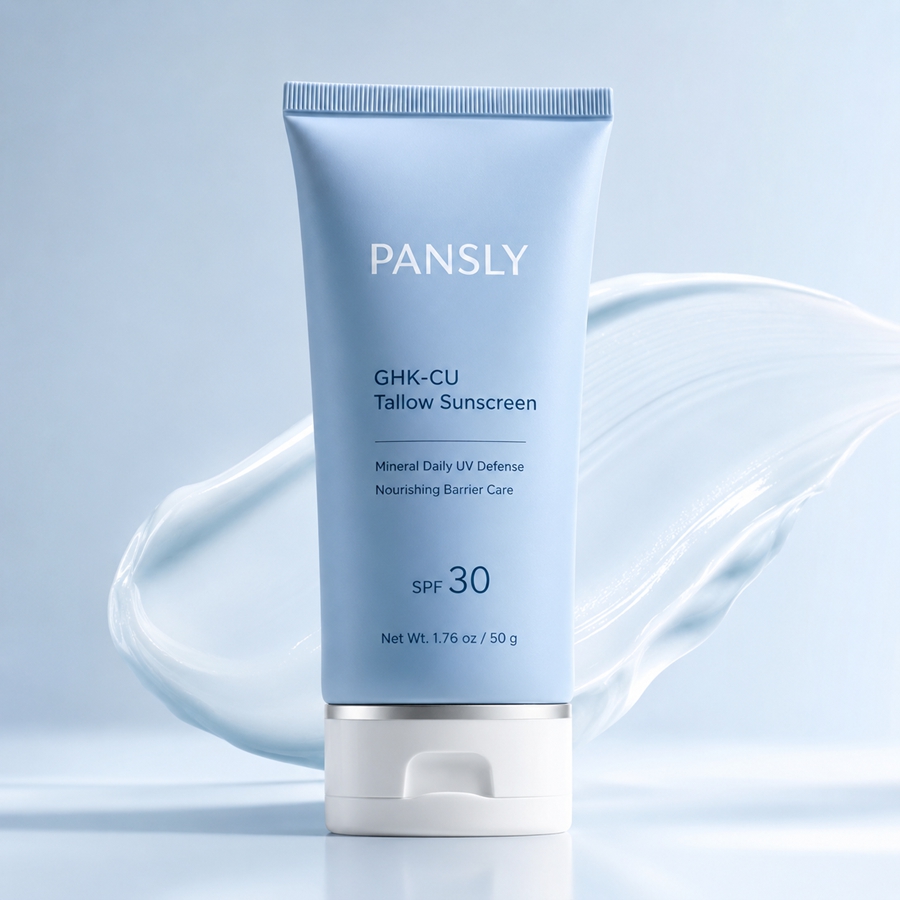
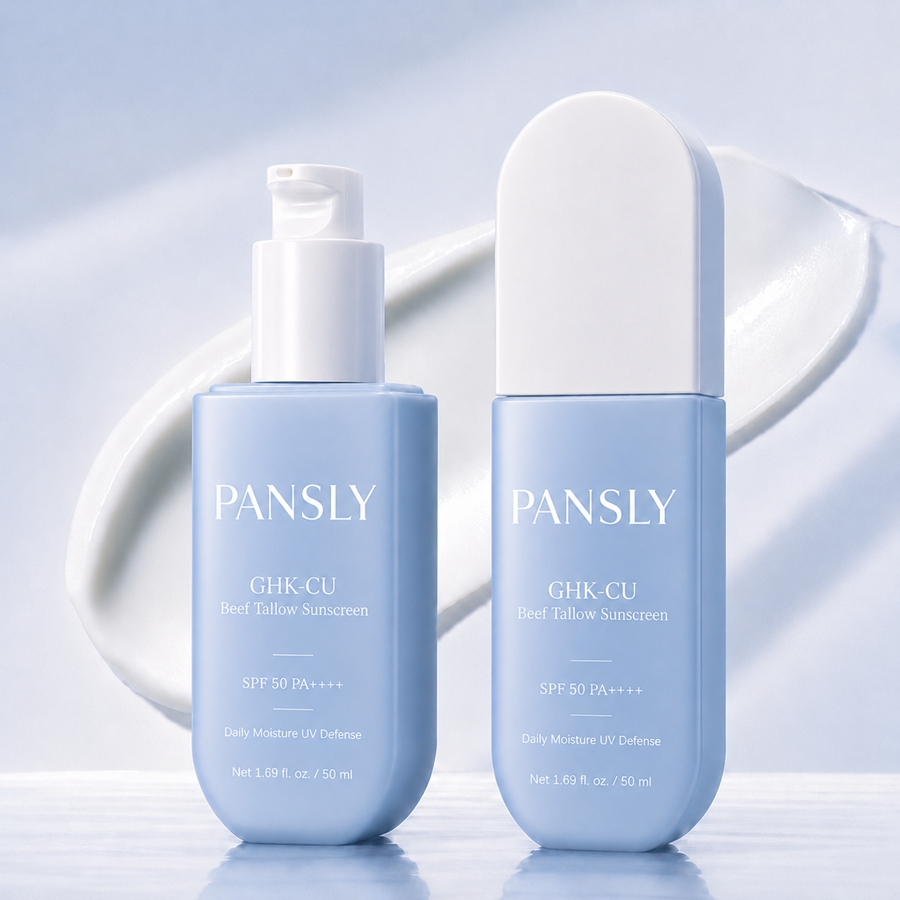
Beyond Basix currently develops mineral sunscreen concepts that combine zinc oxide and/or titanium dioxide with a richer skincare story built around GHK-Cu copper peptide and tallow. These ingredients do not replace UV filters; they change the emollient, sensory and brand-positioning architecture around the sunscreen.

For a brand, the benefit is differentiation. Instead of launching another generic facial SPF, the product can sit inside a peptide, barrier-care or nourishing skincare range. The tradeoff is that every added active or lipid system increases the need for compatibility and stability evaluation.
SPF Number Is Not a Formula Specification

“SPF 30” or “SPF 50” is not enough information for an OEM brief. A manufacturer also needs to know the target UVA claim, destination markets, intended use, water-resistance goal if any, face or body application, tint preference, finish, packaging and label strategy. The test program and regulatory pathway depend on these decisions.

Brands should also avoid assuming that a theoretical filter percentage automatically guarantees a particular SPF. Protection claims belong to the finished product and must be supported by appropriate testing. Changes to filter system, dispersion, film formation, emollients or packaging can affect the final development program.

What Buyers Should Ask About Sunscreen Testing

A useful sourcing conversation should clarify which tests are required for the intended market and claim set. Depending on the project, this may include SPF testing, UVA-related testing, stability, microbiological quality, preservative performance where relevant, packaging compatibility and other market-specific assessments.

The key purchasing question is not “Do you have an SPF formula?” but “What evidence will support the exact commercial product we intend to sell?” That distinction protects the brand from treating a laboratory prototype, stock formula or historical test as if it automatically validates every customized version.

Buyer note: if a private label project changes the UV-filter system, active package, pigment, emollient balance or other formula elements, the need for renewed or additional testing should be discussed before launch. Do not assume a modified formula inherits all performance data from the original base.

Packaging: Tube, Pump or Airless?

Packaging should be selected around formula viscosity, dispensing consistency, consumer use and compatibility. Tubes are common for sunscreen creams because they work across a wide viscosity range and can be practical for travel and retail. Pumps can create a more premium facial-skincare presentation, while airless packs may be useful when the brand wants controlled dispensing and reduced repeated air exchange.

The pack still needs compatibility evaluation. Wall staining, oil migration, leakage, poor pump priming, clogging and residual product can all become commercial problems even when the formula itself is stable.

Which Direction Fits Your Brand?

Choose a mineral-led route when…mineral positioning is central to the brand story and you are willing to invest in dispersion, white-cast control and sensory refinement.
Choose an organic-filter route when…the target markets and desired skin feel favor an approved organic-filter system and the formula can be designed around those regional requirements.
Choose a skincare-hybrid route when…the sunscreen needs to sit inside an existing peptide, barrier-care or moisturizing range rather than operate as an isolated SPF SKU.
Choose market-specific formulas when…one filter system cannot efficiently satisfy the regulatory, sensory or commercial requirements of every destination market.

What to Put in a Private Label Sunscreen Brief

Before sampling, define the countries where the product will be sold, preferred mineral or organic-filter direction, SPF/UVA target, face or body use, desired finish, tint or no-tint preference, skin-type positioning, packaging, fill size, target price tier and launch date. If the brand wants supporting ingredients such as GHK-Cu, tallow, vitamin E, humectants or barrier-care actives, include those in the same brief so compatibility can be evaluated from the beginning.

A complete brief helps the formulation team avoid developing an attractive sample that later fails to match the target market, packaging or testing budget.

Develop a Private Label Sunscreen With Beyond Basix

Beyond Basix supports OEM/ODM sunscreen development from formula direction and sampling through packaging coordination and production planning. Share the target market, SPF/UVA goals, texture, filter preference, packaging and commercial positioning so the project can be evaluated against a practical testing and manufacturing path.

Explore sunscreen cream options or review our existing mineral sunscreen concepts before starting a custom sample.


Frequently Asked Questions

Mineral vs chemical sunscreen: which is better for a private label brand?

Neither system is automatically better. Mineral sunscreen can support a mineral-positioned or skincare-hybrid concept, but dispersion, white cast and texture need careful development. Chemical or organic filter systems can support different sensory profiles, but permitted UV filters vary by market. The stronger route depends on target countries, desired SPF/UVA claims, skin feel, packaging, testing budget and brand positioning.

Why can mineral sunscreen cost more to develop?

Mineral formulas can require more work on particle dispersion, rheology, rub-in behavior, white-cast control and sensory refinement. Premium facial sunscreen projects may also include added emollients, humectants or skincare actives, which increases compatibility work. Packaging and finished-product testing should also be included in the commercial plan.

Can mineral sunscreen be formulated for sensitive skin?

It can be developed for a sensitive-skin-oriented positioning, but the UV-filter category alone does not determine gentleness. Fragrance, preservatives, solvents, surfactants, botanical extracts, emollients and the overall formula all affect skin feel and tolerability. Finished-product claims should follow the actual formula and available substantiation.

Can sunscreen include GHK-Cu or other skincare actives?

Supporting skincare ingredients can be considered when they are compatible with the sunscreen system. They do not replace UV filters or determine SPF. Adding actives changes the formulation architecture and may affect stability, appearance, sensory properties or testing needs, so the complete formula should be evaluated in the proposed commercial package.

What information should a brand provide before sunscreen sampling?

A useful brief includes target countries, mineral or organic-filter preference, SPF and UVA goals, intended face or body use, texture, finish, tint preference, skin-type positioning, packaging, fill size, target price tier and launch timing. The manufacturer can then evaluate filter options, sample development, testing scope and production requirements more accurately.

Related Articles for Private Label Cosmetics

Two unbranded mineral sunscreens with different cream textures in natural sunlight - Beyond Basix

Why Two Mineral Sunscreens With the Same SPF Can Feel Completely Different

Why Two Mineral Sunscreens With the Same SPF Can Feel Completely Different
GHK-Cu and SNAP-8 tallow balm with blue peptide serum and skincare cream - Beyond Basix

Beyond Ordinary Tallow Balm: How GHK-Cu and SNAP-8 Create a Different Skincare Story

Beyond Ordinary Tallow Balm: How GHK-Cu and SNAP-8 Create a Different Skincare Story
Creamy beef tallow balm beside a glass bottle of blue copper peptide serum - Beyond Basix

When Blue Copper Peptides Meet Beef Tallow: A New Direction for Premium Skincare

When Blue Copper Peptides Meet Beef Tallow: A New Direction for Premium Skincare
Two open jars of PDRN and peptide toner pads with moisture and applicators - Beyond Basix

PDRN Toner Pads vs GHK-Cu + SNAP-8 Peptide Toner Pads: Private Label Manufacturing Decisions

PDRN Toner Pads vs GHK-Cu + SNAP-8 Peptide Toner Pads: Private Label Manufacturing Decisions
Product Categories

You May Also Like

白底图 - Beyond Basix
2 - Beyond Basix
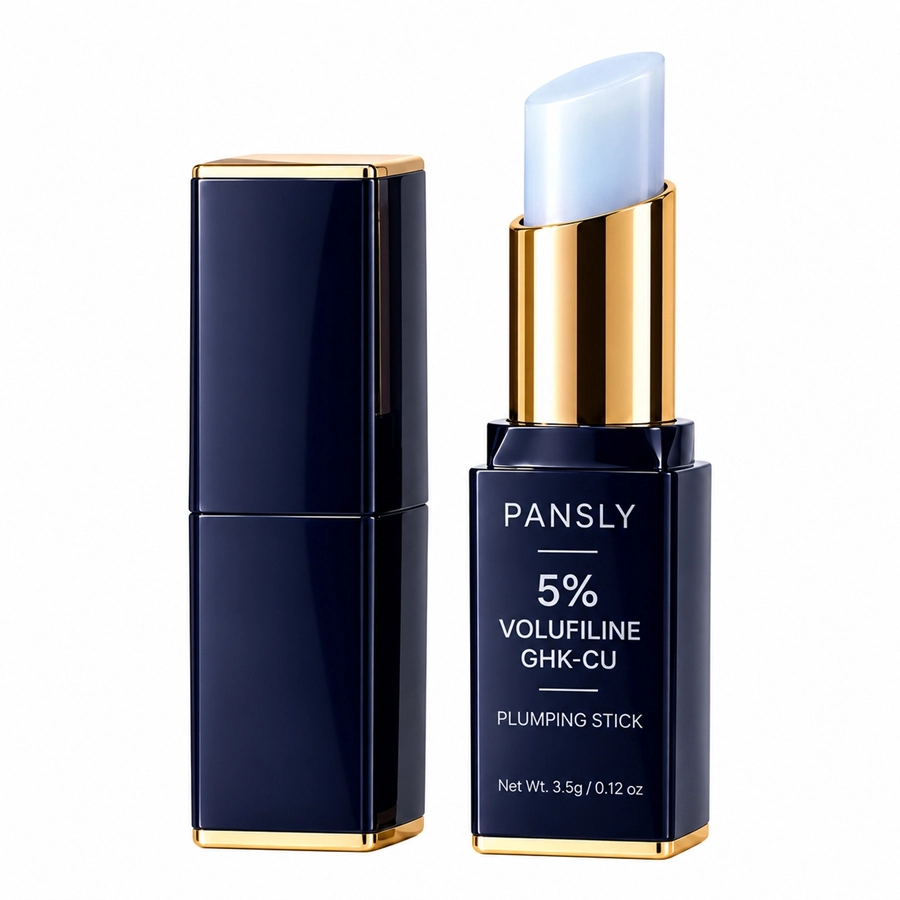
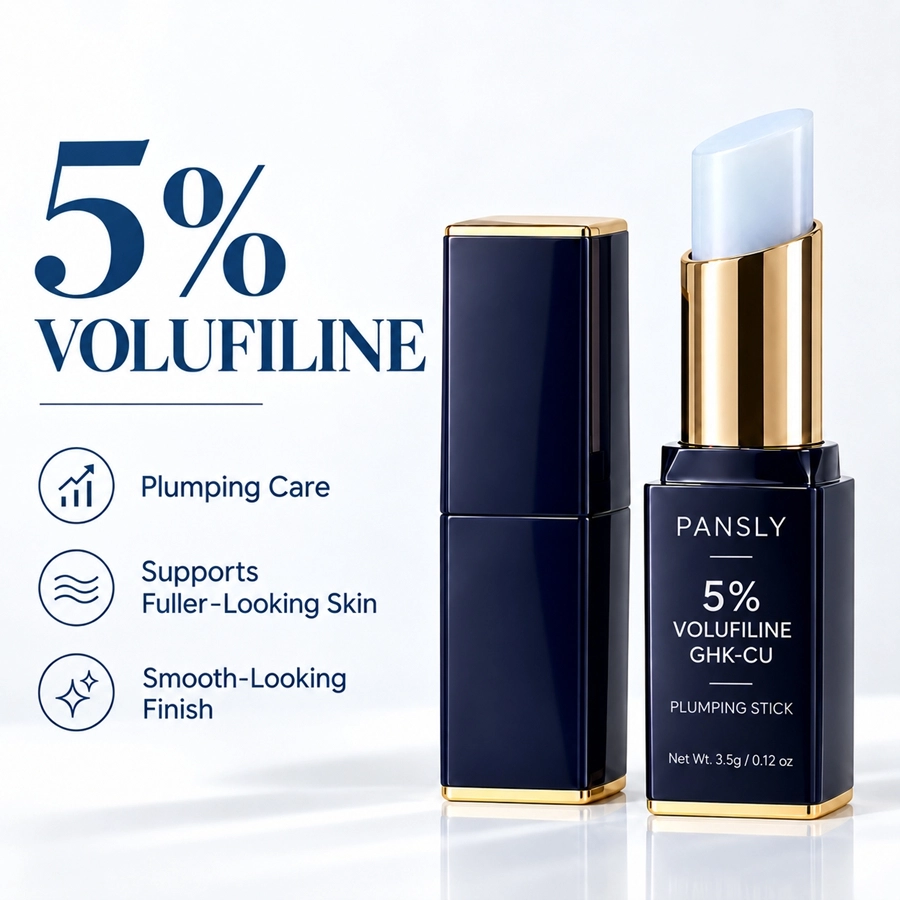
Private Label GHK-CU 5% Volufiline Plumping Stick Copper Peptide Firming Smoothing Hydrating Face Balm Volufiline Stick

The Volufiline Plumping Stick contains 5% Volufiline in a portable balm for targeted facial care. Apply the Volufiline Lip Plumping Balm Stick to moisturize lips and dry areas, or use the Volufiline Anti Wrinkle Multi Balm to help skin feel smooth and hydrated.

Private Label GHK-CU 5% Volufiline Plumping Stick Copper Peptide Firming Smoothing Hydrating Face Balm Volufiline Stick
GHK-CU SNAP-8 Beef Tallow Copper Peptide Cream Multi-Peptides Hyaluronic Acid Firming Anti-wrinkle Face Cream (1) - Beyond Basix
GHK-CU SNAP-8 Beef Tallow Copper Peptide Cream Multi-Peptides Hyaluronic Acid Firming Anti-wrinkle Face Cream (3) - Beyond Basix
GHK-CU SNAP-8 Beef Tallow Copper Peptide Anti Wrinkle Cream

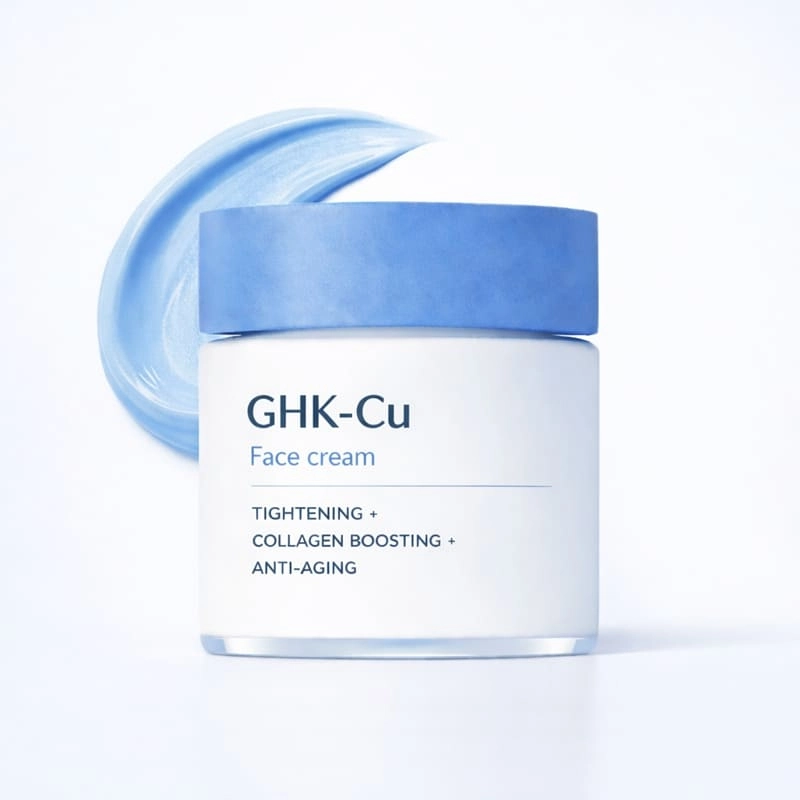
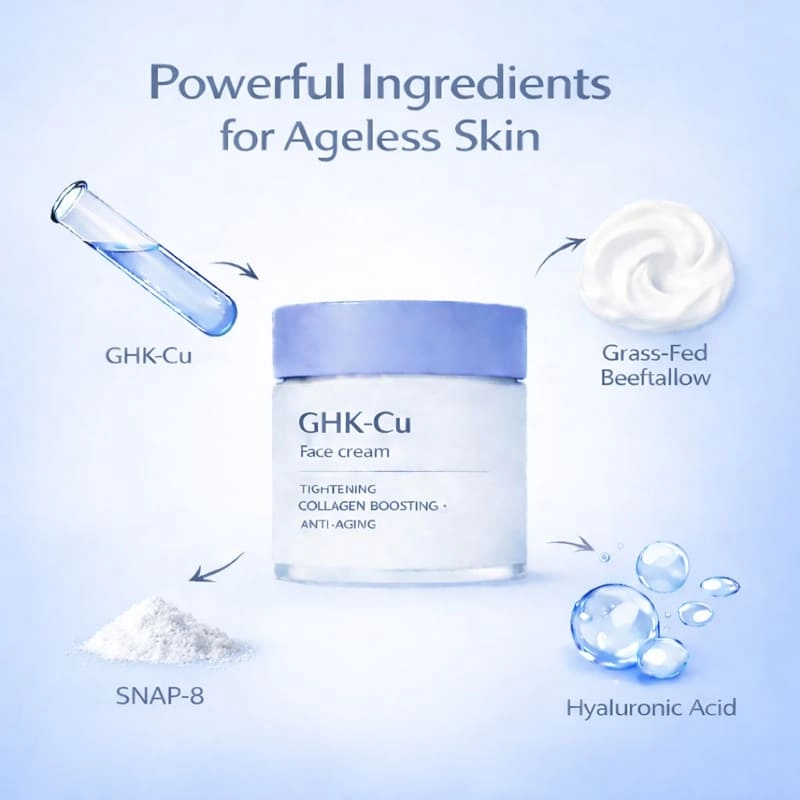
This GHK-Cu & SNAP-8 Beef Tallow Anti-Wrinkle Cream represents a unique fusion of traditional skin nourishment and cutting-edge peptide science. By utilizing Grass-Fed Beef Tallow as a bio-compatible base, the formula provides a rich profile of vitamins A, D, E, and K that mimics the skin's natural sebum for unparalleled absorption. This nutrient-dense foundation is supercharged with GHK-Cu (Copper Peptide) to support dermal density and SNAP-8 (Octapeptide-3) to help relax the appearance of expression lines and deep-set wrinkles.

Designed specifically for aging or depleted skin, this intensive cream provides a protective moisture barrier while actively working to improve firmness and elasticity. The result is a multi-layered approach to rejuvenation that smooths texture, deeply hydrates, and restores a youthful, resilient "bounce" to the complexion without the use of synthetic fillers.

GHK-CU SNAP-8 Beef Tallow Copper Peptide Anti Wrinkle Cream
1 - Beyond Basix
6 - Beyond Basix
Wholesale GHK-CU SNAP-8 Copper Peptide Face Cream Anti-Aging Firming Repair Moisturizing Night Cream
GHK-CU SNAP-8 Cream is a copper peptide night moisturizer for routines focused on hydration and a firmer-looking complexion. Available for wholesale, this GHK-Cu Peptide Collagen Firming Cream suits anti-aging, moisturizing, and skin-repair product ranges.
Wholesale GHK-CU SNAP-8 Copper Peptide Face Cream Anti-Aging Firming Repair Moisturizing Night Cream
白底图 - Beyond Basix
3 - Beyond Basix
Private Label GHK-CU SNAP-8 Beef Tallow Face Cream Anti Wrinkle Firming Moisturizing Copper Peptide Facial Cream
GHK-CU SNAP-8 Cream is a copper peptide night moisturizer for routines focused on hydration and a firmer-looking complexion. Available for wholesale, this GHK-Cu Peptide Collagen Firming Cream suits anti-aging, moisturizing, and skin-repair product ranges.
Private Label GHK-CU SNAP-8 Beef Tallow Face Cream Anti Wrinkle Firming Moisturizing Copper Peptide Facial Cream

Get in Touch with us

If you have any comments or good suggestions, please leave us a message; later our professional staff will contact you as soon as possible.

Name must not exceed 100 characters.
Invalid email format or length exceeds 100 characters. Please re-enter.
Please enter a valid phone number!
Quantity must not exceed 100 characters.
Please select Are you a...
Content must not exceed 3000 characters.

Chat with us

Want to learn more about customized cosmetic and skincare products? Chat instantly online with our experts for professional advice and answers.

×
Name must not exceed 100 characters.
Invalid email format or length exceeds 100 characters. Please re-enter.
Please enter a valid phone number!
Quantity must not exceed 100 characters.
Please select Are you a...
Content must not exceed 3000 characters.

Get a Free Quote

Submit your requirements and quickly get a quote for customized cosmetic and skincare products to help you make informed decisions.

×
Name must not exceed 100 characters.
Invalid email format or length exceeds 100 characters. Please re-enter.
Please enter a valid phone number!
Quantity must not exceed 100 characters.
Please select Are you a...
Content must not exceed 3000 characters.

Send My Request

Have a specific request or inquiry?

Send us the details through this form, and we’ll respond promptly to assist you with the next steps.

×
Name must not exceed 100 characters.
Invalid email format or length exceeds 100 characters. Please re-enter.
Please enter a valid phone number!
Please select Product Type
Inquired Product must not exceed 100 characters.
Quantity must not exceed 100 characters.
Net Weight must not exceed 100 characters.
Budget must not exceed 100 characters.
Launch Time must not exceed 100 characters.
Please select Country
Specific Address must not exceed 100 characters.
Remark must not exceed 3000 characters.

Custom Cosmetics and Skincare Products

Need a customized product?

Fill out this form and our team will work with you to provide a tailored solution to meet your needs and requirements.

×
Name must not exceed 100 characters.
Invalid email format or length exceeds 100 characters. Please re-enter.
Please enter a valid phone number!
Please select Country
Inquired Product must not exceed 100 characters.
Quantity must not exceed 100 characters.
Net Weight must not exceed 100 characters.
Sales Channel must not exceed 100 characters.
Target Market must not exceed 100 characters.
Remark must not exceed 3000 characters.

Custom Cosmetics and Skincare Products

Need to customize your beauty brand product?

Fill out formula form and our team will work with you to provide a tailored solution to meet your needs and requirements.

×
Name must not exceed 100 characters.
Invalid email format or length exceeds 100 characters. Please re-enter.
Please enter a valid phone number!
Country must not exceed 100 characters.
Fill in full name, not "CAN" (Canada ) Thanks.
Company Name must not exceed 150 characters.
Please select Formula Choices ( 1 or More )
Please select Product Type Interest
Content must not exceed 3000 characters.