
Can One Peptide Platform Support a Cleanser, Serum, Cream and Eye Care Line?
Quick Answer
Yes, one peptide platform can anchor a coordinated cleanser, serum, cream, and eye care line, but it should not use one unchanged formula. A private label peptide skincare range requires format-specific decisions around peptide compatibility, pH, rinse-off exposure, preservation, packaging, and claims support. Beyond Basix can assess these variables through project-based OEM/ODM development, with final solutions depending on testing, specifications, and market conditions.
How Beyond Basix Supports Projects
Beyond Basix Cosmetics Ltd. supports peptide line development through OEM/ODM formulation planning, production across 12 lines, and manufacturing in a 12,000-square-meter facility that includes a 100,000-level GMPC pharmaceutical-grade dust-free workshop. Its experience developing effective-ingredient skincare can help coordinate a shared ingredient concept across different product formats.
Buyers should confirm the peptide objective, target markets, product textures, packaging system, claims direction, testing scope, and forecast volume before quotation. Peptide compatibility, preservative strategy, filling process, and labeling requirements must be reviewed by SKU. MOQ, lead time, testing scope, and quotation must be confirmed for each project with Beyond Basix.
Discuss Your Peptide Line Architecture
Send the target market, product formats, peptide objective, desired claims, target retail price, packaging preference, and estimated order volume so suitable development routes, sample steps, testing requirements, and production planning can be discussed. Send your brief to Lily@lanthome.com and visit www.beyondbasixcosmetics.com to discuss your peptide line architecture.
Frequently Asked Questions
Can one peptide formula work across four different product formats?
A single formula is rarely suitable for all four formats because cleanser, serum, cream, and eye care products have different residence times, sensory requirements, preservation conditions, and packaging interfaces. A better platform approach uses the same peptide family, supplier specification, or efficacy concept while adapting the base for each application. Cleansers face surfactant compatibility and short contact time; serums prioritize delivery, clarity, and texture; creams require emulsion stability; eye products require careful irritation and migration assessment. The platform should therefore standardize what is scientifically shared, not force identical compositions.
How should peptide levels change between cleanser and leave-on products?
There is no universal conversion factor between rinse-off and leave-on products. A cleanser has limited skin contact and may expose the peptide to surfactants, salts, fragrance components, and elevated processing stress. A serum or cream remains on the skin longer, so the relevant assessment includes peptide stability in the finished base, intended use level, preservation system, and substantiation plan. The supplier’s recommended use range, assay method, and finished-product testing should guide concentration decisions. Increasing the level alone does not establish greater consumer benefit, and claims should reflect evidence from the finished formula rather than raw-material marketing language.
What stability tests are needed for a multi-product peptide range?
Each SKU needs its own stability program because the same active can behave differently in aqueous, emulsion, gel, or surfactant systems. Core checks commonly include appearance, odor, color, pH, viscosity or flow, package compatibility, microbiological quality, and peptide or marker-content assessment where an appropriate analytical method is available. Testing should cover the intended container, production batch, and relevant storage conditions for the target market. Freeze-thaw or transport studies may be appropriate when logistics create temperature stress. A raw-material certificate cannot replace finished-product stability evidence, particularly when the peptide is sensitive to hydrolysis, oxidation, adsorption, or formulation pH.
Can the same peptide claim be used across every SKU?
A shared ingredient story does not automatically support an identical claim across every product. Claims depend on the finished formula, concentration, directions for use, exposure time, target market, and available substantiation. A rinse-off cleanser may support a cleansing or skin-conditioning communication, while a leave-on serum may be evaluated for a different cosmetic benefit. Eye-area language also requires careful review because consumers may interpret it as a higher-risk or quasi-medical promise. Claim wording should be checked against the regulations and advertising expectations of each destination market, with evidence linked to the actual product rather than transferred uncritically from the ingredient supplier.
How do eye cream requirements differ from facial cream requirements?
Eye care products are applied close to the ocular area, so tolerability, migration, applicator design, fragrance choices, and preservative exposure require closer attention than in a general facial cream. A stable facial emulsion may still be unsuitable around the eyes if it spreads excessively or causes discomfort. Packaging should limit repeated contamination and support controlled dispensing, while the formula should be assessed for ocular-area use according to the intended market and product directions. The difference is not simply a lower active concentration; it involves the complete risk profile, sensory behavior, labeling, usage instructions, and safety assessment of the finished product.
What MOQ and packaging choices affect a peptide line launch?
MOQ is influenced by the formula, filling equipment, component availability, decoration method, and whether several SKUs share bottles, jars, pumps, cartons, or labels. Custom components may require higher commitments or longer procurement than stock packaging, while a common component architecture can simplify purchasing and visual consistency. Airless or opaque packaging may be considered when the formula or peptide is sensitive to oxygen or light, but compatibility must be tested rather than assumed. Forecast volume should be separated into development samples, pilot quantities, and commercial production. The final MOQ, lead time, and quotation should be confirmed after formula, component, decoration, and destination-market requirements are defined.
Related Articles for Private Label Cosmetics

Why Two Mineral Sunscreens With the Same SPF Can Feel Completely Different

Beyond Ordinary Tallow Balm: How GHK-Cu and SNAP-8 Create a Different Skincare Story

When Blue Copper Peptides Meet Beef Tallow: A New Direction for Premium Skincare

PDRN Toner Pads vs GHK-Cu + SNAP-8 Peptide Toner Pads: Private Label Manufacturing Decisions
You May Also Like
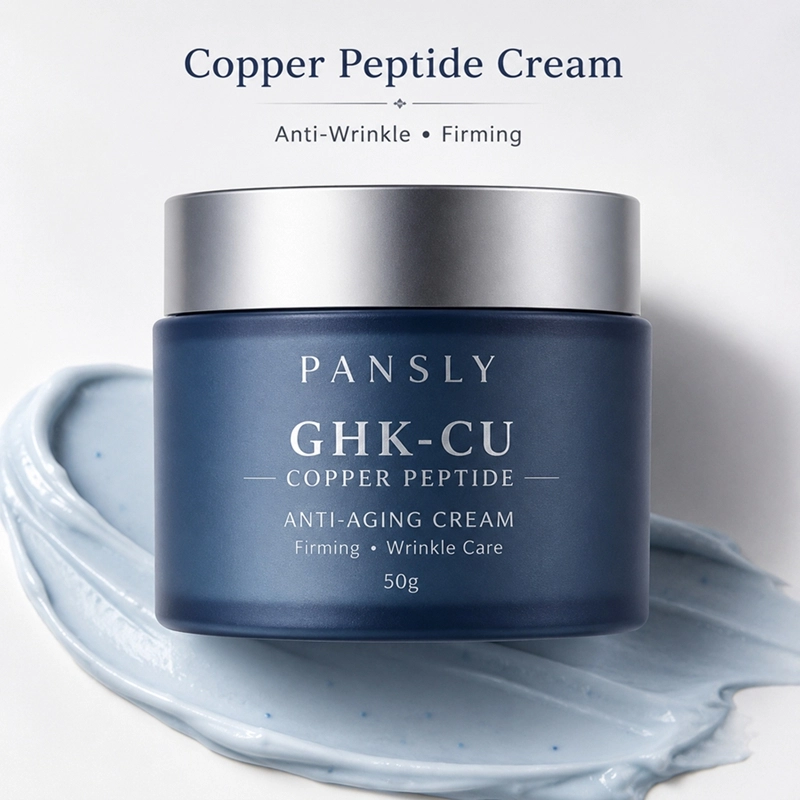
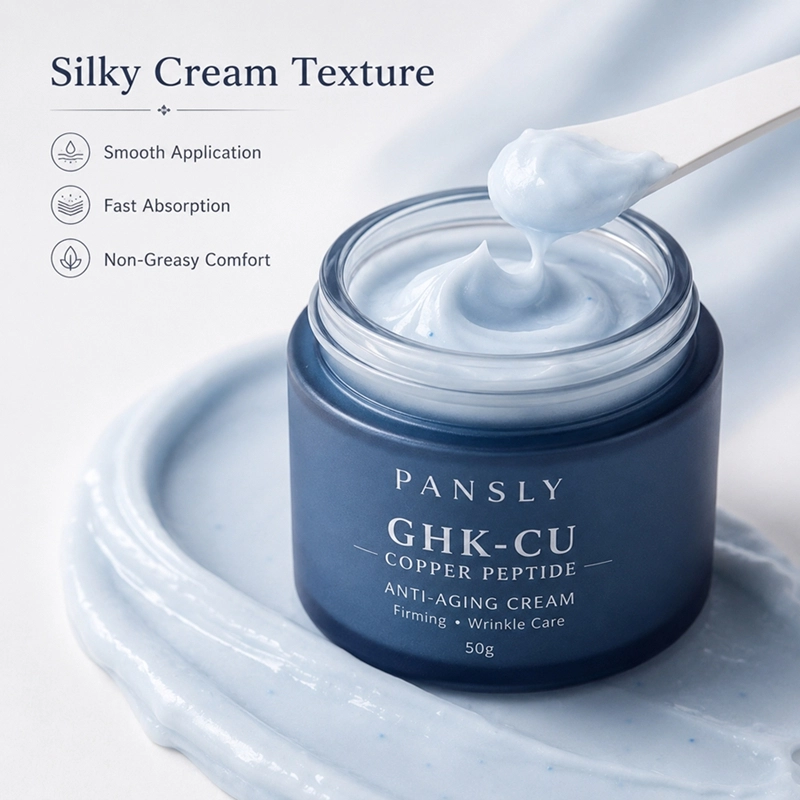
GHK-Cu Face Cream, a copper peptide anti-aging formula, hydrates deeply and supports skin barrier repair. Private label available for bulk orders, giving brands a ready-to-sell moisturizer with a blue copper peptide base for smoother-looking skin.
Get in Touch with us
If you have any comments or good suggestions, please leave us a message; later our professional staff will contact you as soon as possible.
Click here to customize the Beauty
we respond within a few hours
Monday–Friday, 9AM–6PM
3A01, Building A, Zhisheng Square, No. 4 Zhifu Road, Helong Street, Baiyun District, Guangzhou, China.


Leave a request, and we'll email you back within 24 hours.
© 2026 Beyond Basix. All Rights Reserved.
