
What Is a PDRN Capsule Face Cream and Why Use Encapsulated Beads?
Quick Answer
A pdrn capsule face cream combines a PDRN-containing cosmetic formula with encapsulated beads designed to support ingredient protection, controlled release, or a distinctive application experience. Beyond Basix can support evaluation through OEM/ODM formulation, production, and quality-control coordination. Key factors include PDRN identity, bead compatibility, stability, packaging, and target-market requirements. The final solution depends on project objectives, testing results, and site conditions.
How Beyond Basix Supports Projects
Beyond Basix Cosmetics Ltd. provides one-stop OEM/ODM skincare support covering formula development, manufacturing coordination, packaging selection, and quality-control review. Its 12,000-square-meter facility includes a 100,000-level GMPC pharmaceutical-grade dust-free workshop and 12 production lines, supporting structured scale-up for bead-containing cream concepts.
For a PDRN project, buyers should confirm the raw-material specification, intended concentration, bead technology, emulsion compatibility, packaging format, claim language, and target-market compliance route. Beyond Basix can discuss sample development and production planning, while MOQ, lead time, testing scope, and quotation must be confirmed for each project.
Discuss Your PDRN Capsule Cream Project
Please provide your target market, product positioning, preferred PDRN source or specification, expected texture, packaging concept, target order volume, and required claims. These details allow suitable formulation options, sample steps, stability reviews, and production considerations to be discussed. Visit www.beyondbasixcosmetics.com or email Lily@lanthome.com to begin a project-specific assessment.
Deep-Dive FAQs
What exactly is inside a PDRN capsule face cream bead?
The bead may contain a PDRN raw material, a carrier phase, and supporting excipients selected for the formulation. Its appearance alone does not identify the contents. Buyers should request the ingredient specification, source information, assay or content documentation, particle-size description where relevant, and compatibility data for the finished cream. PDRN commonly refers to purified DNA-derived polymers, often sourced from fish materials, but source and processing specifications differ between suppliers. A formula review should therefore distinguish the declared cosmetic ingredient from the delivery vehicle and from any marketing term such as capsule or pearl.
Does encapsulation make topical PDRN penetrate deeper into skin?
Not automatically. Encapsulation can be designed to improve dispersion, protect an ingredient from selected environmental stresses, modify release, or create a particular sensory effect, but it does not by itself prove deeper skin penetration. Topical delivery depends on particle characteristics, carrier composition, product pH, skin condition, application amount, and contact time. In addition, evidence for a cosmetic topical product cannot be inferred from clinical results involving injected PDRN or other medical procedures. A responsible OEM review should separate in-vitro release or penetration findings from consumer claims and confirm that wording fits the target market’s cosmetic regulations.
How can buyers verify PDRN identity, purity, and concentration?
Verification should begin with supplier documentation, including the product specification, certificate of analysis, manufacturing information, source declaration, storage conditions, and relevant safety documents. The buyer should then define acceptance criteria for identity, assay or content, microbiological quality, heavy metals where applicable, and batch consistency. Testing methods must be suitable for the material because a generic DNA measurement may not fully describe the declared PDRN grade or functional suitability. The finished cream also requires confirmation that processing and storage do not materially change the active specification. Independent or qualified laboratory testing may be appropriate when claims, import rules, or customer requirements create additional scrutiny.
Are visible beads evidence of genuine encapsulated PDRN delivery?
No. Visible beads may contain an active, a moisturizer, a colorant, or another sensory component, and some systems break during application while others remain dispersed. Visual appearance is therefore a packaging and consumer-experience feature, not proof of PDRN content or release performance. Buyers should request microscopy or particle characterization where relevant, a description of the bead shell and core, compatibility observations in the finished emulsion, and a defined release or breakup assessment. Comparative samples should be stored and tested under planned conditions because bead integrity can change with temperature, agitation, pH, and preservative interactions.
Which stability tests should an OEM request before launch?
A project should establish a stability protocol covering appearance, odor, color, pH, viscosity, emulsion integrity, bead distribution, bead integrity, and microbiological quality. Packaging compatibility is important because the container can influence oxygen exposure, water loss, dispensing, and mechanical damage to the beads. Accelerated and real-time studies should follow an agreed schedule and relevant market expectations; the exact conditions depend on the formula, package, and intended distribution environment. Freeze-thaw or transport simulation may be considered when logistics create that risk. Stability is not demonstrated by a single pass result, so acceptance limits and sampling points should be defined before testing begins.
How should brands substantiate PDRN skincare claims across markets?
Claims should describe the cosmetic function that can be supported by the finished product, such as moisturization or a specified skin-feel benefit, rather than implying injection-equivalent repair or medical treatment. Substantiation may combine ingredient documentation, finished-product testing, instrumental measurements, consumer studies, and literature review, depending on the wording and jurisdiction. Regulatory classification, prohibited medical language, required translations, and advertising standards vary by market. Brands should map each proposed claim to evidence before artwork approval and keep records linking the claim to the tested formula and batch. A claim review should also consider whether the word PDRN triggers additional scrutiny in the destination market.
Related Articles for Private Label Cosmetics

Why Two Mineral Sunscreens With the Same SPF Can Feel Completely Different

Beyond Ordinary Tallow Balm: How GHK-Cu and SNAP-8 Create a Different Skincare Story

When Blue Copper Peptides Meet Beef Tallow: A New Direction for Premium Skincare

PDRN Toner Pads vs GHK-Cu + SNAP-8 Peptide Toner Pads: Private Label Manufacturing Decisions
You May Also Like
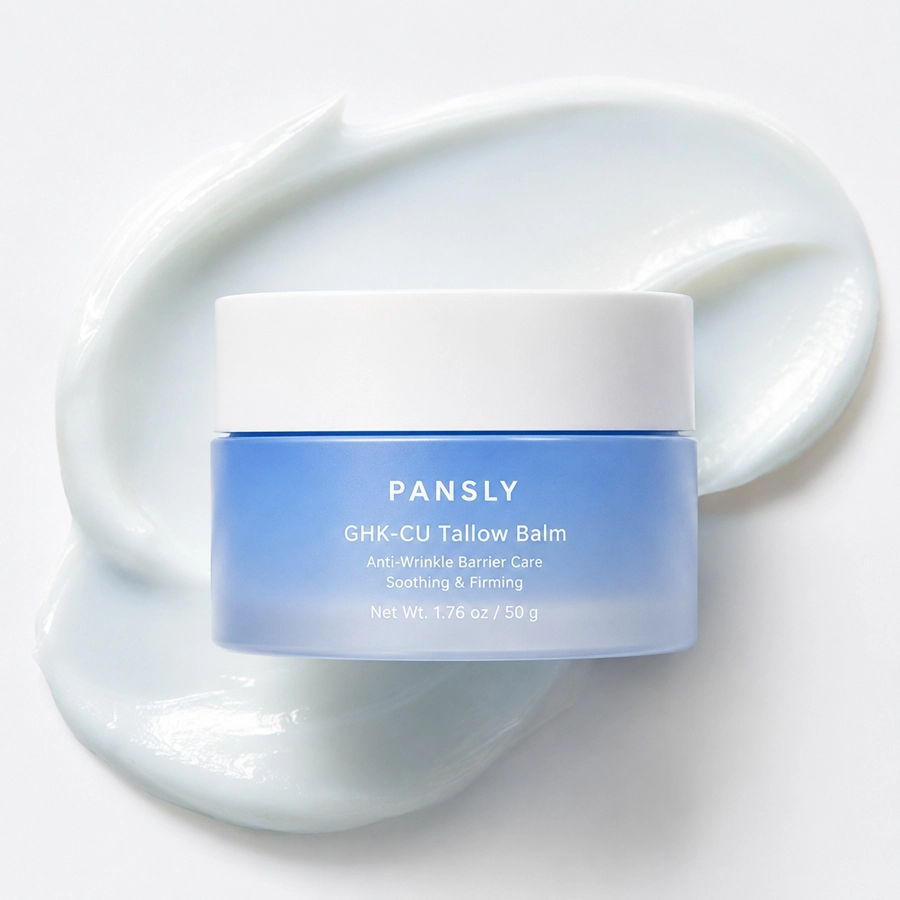
This Pansly GHK-CU Tallow Anti-Wrinkle Soothing & Firming Barrier Balm is multi-effect peptide nourishing balm for dry, uneven-textured skin, integrating firming lifting, fine line smoothing, barrier repair and soothing comfort. Full private label OEM service is supported, including formula customization, custom logo & label, jar color selection and fast sampling.
Five core premium active ingredients work synergistically for comprehensive skin care:
GHK-CU Copper Peptide lifts and firms saggy skin, visibly blurs fine lines and refines uneven dull complexion;
Grass-Fed Tallow delivers rich lipid nourishment to deeply relieve persistent dry rough skin;
Ceramide NP reinforces skin moisture barrier to lock nutrients and boost skin resilience;
Squalane melts lightly into skin to create silky soft long-lasting hydration;
Panthenol calms skin irritation, delivers instant soothing comfort for sensitive dry skin.
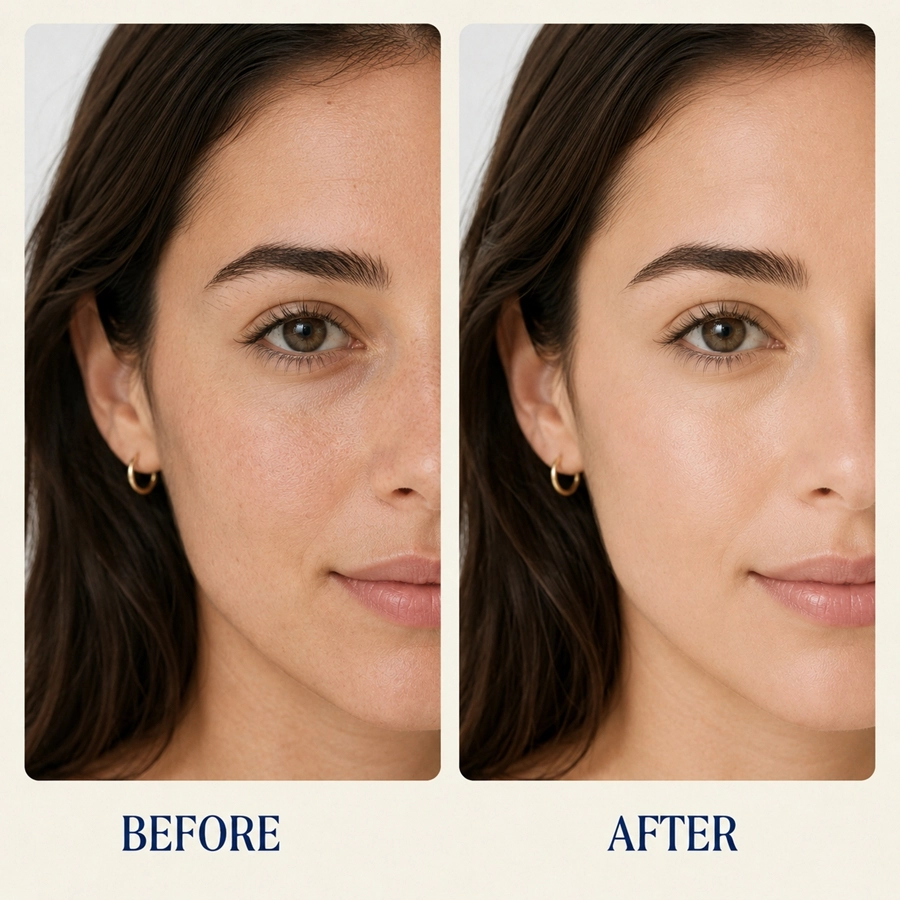
Silky light blue creamy balm texture spreads smoothly and absorbs rapidly without greasy residue. Daily use on face and neck firms loose contours, smooths dry fine lines, nourishes fragile skin and repairs damaged barrier, leaving skin even, plump and luminous with long-lasting soft comfort. Obvious improvement on rough dull texture after persistent use.
Get in Touch with us
If you have any comments or good suggestions, please leave us a message; later our professional staff will contact you as soon as possible.
Click here to customize the Beauty
we respond within a few hours
Monday–Friday, 9AM–6PM
3A01, Building A, Zhisheng Square, No. 4 Zhifu Road, Helong Street, Baiyun District, Guangzhou, China.


Leave a request, and we'll email you back within 24 hours.
© 2026 Beyond Basix. All Rights Reserved.
