
How Should Brands Differentiate a Peptide Tallow Balm From Traditional Face Balms?
Quick Answer
A peptide tallow balm should be differentiated through verified peptide identity, compatibility, stability, claim substantiation, and a clearly defined sensory profile—not by calling it a stronger traditional balm. A ghk-cu snap-8 tallow balm combines an anhydrous lipid base with peptide-focused positioning, but the final concept depends on formula design, packaging, testing, target market requirements, and project-specific site conditions.
How Beyond Basix Supports Projects
Beyond Basix supports skincare OEM/ODM projects through custom formulation development, production in a 12,000-square-meter facility, and manufacturing across 12 production lines. Its experience with effective-ingredient skincare allows buyers to discuss the balance between tallow texture, peptide inclusion, fragrance direction, packaging compatibility, and intended cosmetic claims.
Buyers should confirm the INCI strategy, target market, package format, batch size, sensory standard, stability expectations, and required documentation before quotation. MOQ, lead time, testing scope, and pricing must be confirmed for each project. Beyond Basix operates with ISO 9001 and GMP-related manufacturing credentials, while certifications and documentation required for a specific market should be verified during project review.
Discuss Your Peptide Tallow Balm Project
Share your target market, customer profile, preferred tallow positioning, peptide concept, desired texture, packaging format, expected order volume, and claim direction so suitable formulation options, sample stages, documentation, and production conditions can be discussed. Visit www.beyondbasixcosmetics.com or email Lily@lanthome.com to begin the project conversation.
FAQ
How does a peptide tallow balm differ from traditional balms?
Traditional face balms are generally positioned around occlusion, emollience, cleansing, or barrier-supportive sensorial benefits. A peptide tallow balm adds an active-ingredient development challenge: the brand must verify the identity and dosage of ingredients such as Copper Tripeptide-1 or Acetyl Octapeptide-3, assess their compatibility with the anhydrous lipid system, and substantiate any cosmetic claims. Tallow is a base material, not proof of superior peptide performance. Differentiation should therefore combine measurable formula specifications with texture, odor control, packaging, and compliant communication.
Is GHK-Cu compatible with Snap-8 in tallow balm formulas?
Compatibility cannot be assumed from the fact that both ingredients are peptides. GHK-Cu is commonly associated with Copper Tripeptide-1, while SNAP-8 is commonly associated with Acetyl Octapeptide-3; the exact INCI declaration and supplier specification must be confirmed. A mostly oil-based balm may also be a challenging vehicle for ingredients whose recommended incorporation conditions involve a water phase or specific pH. The formulator should review supplier data, processing temperature, dispersion method, antioxidant strategy, packaging, and peptide assay or identity testing before approving the combination.
What testing should validate peptide stability in a tallow balm?
A suitable testing plan normally begins with appearance, odor, color, texture, viscosity or hardness, fill-weight control, and package compatibility. Because anhydrous balms can be affected by oxidation and temperature cycling, accelerated and real-time stability studies should be considered using conditions appropriate to the target market and packaging. Peptide-specific verification is important when the marketing strategy depends on active retention; analytical feasibility, sampling method, and acceptance criteria should be agreed with the testing laboratory. Microbiological risk should not be dismissed solely because a product contains little or no water, since contamination can still occur through raw materials, manufacturing, or consumer use.
Can tallow texture improve delivery of copper peptides?
A rich lipid base can influence spreadability, residence time, and the consumer's perception of nourishment, but it does not establish enhanced delivery of copper peptides through skin. Topical delivery depends on peptide chemistry, concentration, vehicle design, skin condition, application amount, and testing methodology. Brands should avoid converting a pleasant occlusive feel into a penetration claim without appropriate evidence. For cosmetic positioning, safer differentiation may focus on texture, finish, ingredient transparency, and moisturization-related claims that can be supported by formula testing and compliant market-specific wording.
Which claims can brands make for peptide tallow balms?
Claims must match the product's formula, evidence, and destination market. Cosmetic language may discuss appearance, softness, smoothness, conditioning, or moisturization when supported by suitable testing and when it does not imply treatment of disease or physiological alteration. Claims such as wrinkle reduction, collagen stimulation, skin repair, or deep delivery require greater substantiation and may create regulatory risk depending on jurisdiction. In the European Union, cosmetic claims are assessed under the common criteria in Regulation (EU) No. 655/2013; other markets apply different rules. A claim review should cover wording, product documentation, consumer evidence, label space, and advertising channels.
How should OEM buyers compare balm MOQ and formulation cost?
MOQ and unit cost should be compared only after the formula architecture and packaging specification are fixed. A peptide tallow balm may incur costs from peptide raw materials, minimum supplier pack sizes, stability or compatibility studies, filling requirements, artwork, component tooling, documentation, and rejected or adjusted pilot batches. Buyers should request a transparent quotation showing formula development, samples, testing, packaging, filling, and bulk production separately where possible. Compare equivalent specifications rather than headline prices, and confirm whether the quoted peptide level, package, testing scope, lead time, and documentation are included.
Related Articles for Private Label Cosmetics

Why Two Mineral Sunscreens With the Same SPF Can Feel Completely Different

Beyond Ordinary Tallow Balm: How GHK-Cu and SNAP-8 Create a Different Skincare Story

When Blue Copper Peptides Meet Beef Tallow: A New Direction for Premium Skincare

PDRN Toner Pads vs GHK-Cu + SNAP-8 Peptide Toner Pads: Private Label Manufacturing Decisions
You May Also Like
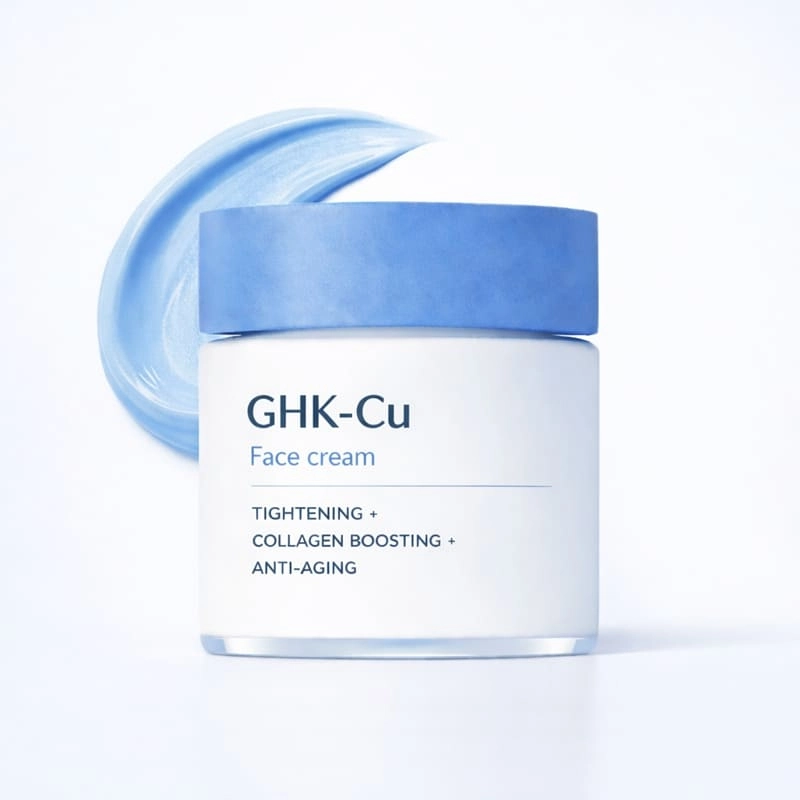
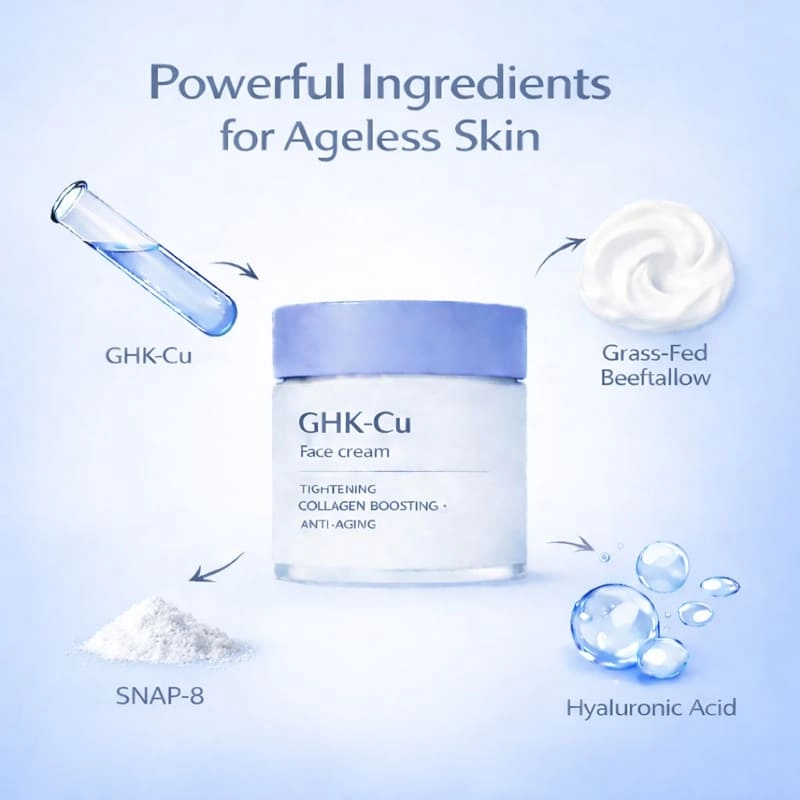
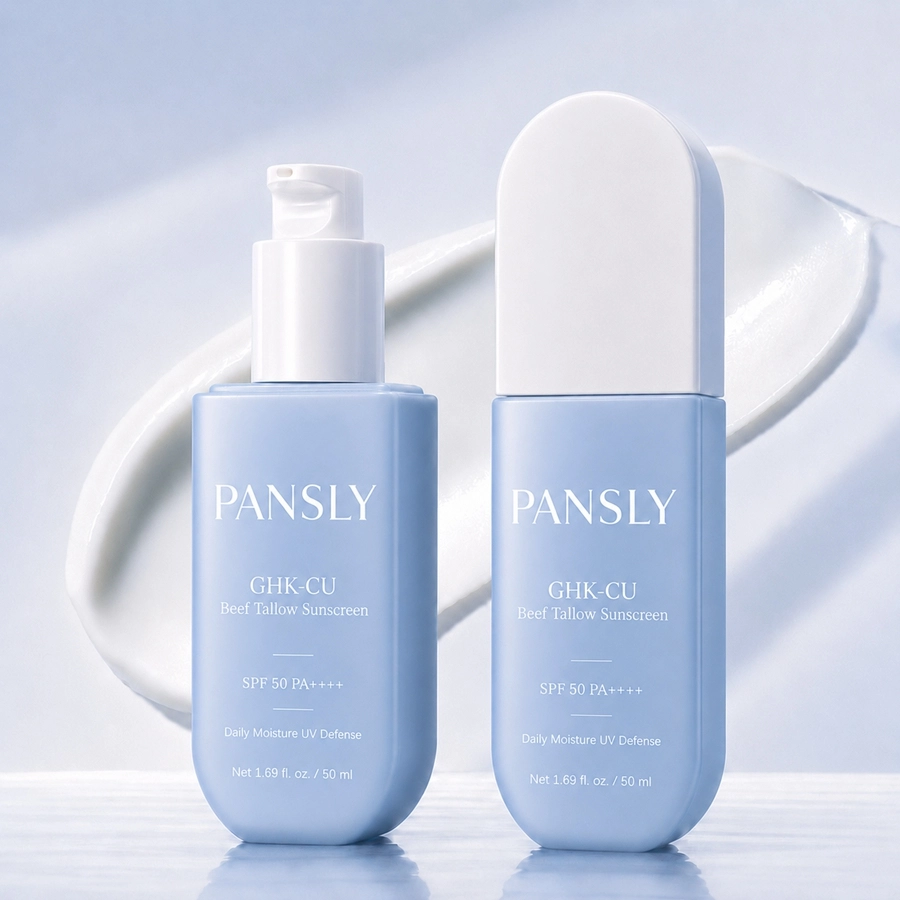
This GHK-Cu & SNAP-8 Beef Tallow Anti-Wrinkle Cream represents a unique fusion of traditional skin nourishment and cutting-edge peptide science. By utilizing Grass-Fed Beef Tallow as a bio-compatible base, the formula provides a rich profile of vitamins A, D, E, and K that mimics the skin's natural sebum for unparalleled absorption. This nutrient-dense foundation is supercharged with GHK-Cu (Copper Peptide) to support dermal density and SNAP-8 (Octapeptide-3) to help relax the appearance of expression lines and deep-set wrinkles.
Designed specifically for aging or depleted skin, this intensive cream provides a protective moisture barrier while actively working to improve firmness and elasticity. The result is a multi-layered approach to rejuvenation that smooths texture, deeply hydrates, and restores a youthful, resilient "bounce" to the complexion without the use of synthetic fillers.
Get in Touch with us
If you have any comments or good suggestions, please leave us a message; later our professional staff will contact you as soon as possible.
Click here to customize the Beauty
we respond within a few hours
Monday–Friday, 9AM–6PM
3A01, Building A, Zhisheng Square, No. 4 Zhifu Road, Helong Street, Baiyun District, Guangzhou, China.


Leave a request, and we'll email you back within 24 hours.
© 2026 Beyond Basix. All Rights Reserved.
