
Retinol Cream vs Peptide Serum: Which Should a Brand Launch First?
Quick Answer
A peptide serum is often the lower-barrier first launch for brands seeking broad daily-use appeal, while a retinol cream suits brands prepared to manage stronger usage guidance and stability controls. A Retinol Peptide Cream may combine both positioning routes, but selection depends on target consumer, active levels, packaging, claim strategy, and expected order volume. Final solutions depend on project specifications, testing results, and site conditions.
How Beyond Basix Supports Projects
Beyond Basix supports OEM and ODM skincare development through custom formulation work, production across 12 lines, and manufacturing in a 12,000-square-meter facility that includes a 100,000-level GMPC pharmaceutical-grade dust-free workshop. For this category, the development discussion can cover retinol or peptide positioning, texture, packaging compatibility, usage directions, and market-specific claim boundaries.
Beyond Basix operates with documented quality systems and holds certifications including ISO 9001, GMP, HALAL, CE, and MSDS-related documentation, where applicable to the project. Buyers should confirm active specifications, packaging format, target market, sample requirements, MOQ, lead time, testing scope, and quotation for each project rather than relying on general estimates.
Discuss Your Retinol and Peptide Launch Plan
Share your target market, customer profile, preferred product format, active positioning, desired packaging, expected order volume, and launch timeline. These details allow discussion of suitable cream or serum options, sample steps, testing priorities, claim direction, and production planning. Start your project at www.beyondbasixcosmetics.com or email Lily@lanthome.com for a focused consultation.
Deep-Dive FAQs
Which launch order suits a beginner skincare brand's first product?
The better first product depends on the brand's customer promise, regulatory market, tolerance for usage education, and available development budget. A peptide serum can be easier to position for routine use because peptides are commonly associated with conditioning and visible signs of skin aging without retinol-specific acclimation guidance. A retinol cream may provide a stronger age-management proposition, but it requires careful instructions covering gradual introduction, evening use, sunscreen habits, irritation risk, and suitability limitations. The decision should be based on the intended claim set and consumer research rather than the assumption that one active is universally superior. A staged portfolio can begin with the product that best matches the brand's distribution channel, then add the complementary format after repeat-purchase and feedback data are available.
Can peptides protect retinol during storage and daily use?
Peptides should not be treated as a built-in stabilizer for retinol. Retinol is sensitive to oxidation, light, heat, and formulation conditions, and compatibility varies by peptide type, solvent system, pH, antioxidants, emulsion structure, and preservative system. A combined formula needs analytical and physical stability work rather than a theoretical compatibility claim. Development teams should monitor active content or an appropriate validated indicator, appearance, odor, viscosity, pH, microbial quality, and package interaction under defined storage conditions. Airless or otherwise protective packaging may reduce exposure, but the chosen pack still requires compatibility assessment. If the combined system becomes difficult to stabilize, separate products may provide clearer technical control and more precise consumer dosing.
What testing compares a retinol cream with peptide serum?
A meaningful comparison uses the same decision criteria while recognizing that the two formats have different sensory and delivery characteristics. Both prototypes should undergo stability testing, package compatibility review, preservative efficacy testing where relevant, microbial limits, and basic physical-chemical checks. The retinol prototype needs particular attention to active retention and oxidation-related changes. Consumer or instrumental studies should use a defined protocol, suitable sample size, controlled application instructions, and a stated evaluation period; otherwise, a cream-to-serum comparison can confuse texture preference with efficacy. Claims should reflect the evidence generated for the final formula and package, not ingredient literature alone. A supplier should also clarify which tests are included in the quotation and which require separate approval.
How should MOQ affect a retinol product launch decision?
MOQ should be treated as a risk and cash-flow variable, not simply as a unit-price threshold. A retinol product may require more careful packaging selection, stability work, controlled filling, and usage-claim review, so a low initial forecast can make development and inventory economics less attractive. A peptide serum may offer a simpler route in some projects, but its MOQ still depends on formula complexity, container type, decoration, raw-material purchasing, and production scheduling. Ask for a cost model that separates formulation, samples, testing, packaging components, filling, and finished goods. Confirm whether the quoted MOQ applies to one SKU, one fragrance or texture, one package decoration, or a combined production order. The correct launch choice balances technical readiness with realistic sell-through.
Which claims remain compliant for retinol peptide cream packaging?
Claims must be reviewed against the destination market, the final ingredient concentrations, product classification, and supporting evidence. Cosmetic language generally focuses on appearance, texture, moisturization, conditioning, or the look of fine lines, while disease treatment, drug-like action, or unsubstantiated structural claims may create regulatory concerns. Retinol also has market-specific restrictions and labeling expectations, so a claim approved in one jurisdiction may not transfer to another. Packaging should include clear directions, relevant warnings, storage guidance, ingredient declaration, batch information, and responsible-use language required by the target market. Do not describe a peptide as repairing tissue or a retinoid cosmetic as treating a dermatological condition without the legal basis to do so. Regulatory review should occur before artwork approval and bulk production.
When does a two-step regimen outperform one multifunctional cream?
A two-step regimen can be preferable when the brand needs different application zones, dosage flexibility, or clearer separation of active technologies. A peptide serum may be used broadly, while a retinol cream can be introduced at a controlled frequency, allowing consumers to adjust the routine more easily. Separate formats also let the manufacturer optimize each formula's pH, emulsion or aqueous structure, packaging, and sensory profile independently. One multifunctional cream can be more convenient and may reduce routine complexity, but combining actives can narrow formulation options and make stability, claims, and consumer instructions more demanding. The choice should follow user research, compatibility results, package testing, and channel behavior. Convenience is valuable only when the final product remains stable, understandable, and suitable for the intended audience.
Related Articles for Private Label Cosmetics

Why Two Mineral Sunscreens With the Same SPF Can Feel Completely Different

Beyond Ordinary Tallow Balm: How GHK-Cu and SNAP-8 Create a Different Skincare Story

When Blue Copper Peptides Meet Beef Tallow: A New Direction for Premium Skincare

PDRN Toner Pads vs GHK-Cu + SNAP-8 Peptide Toner Pads: Private Label Manufacturing Decisions
You May Also Like
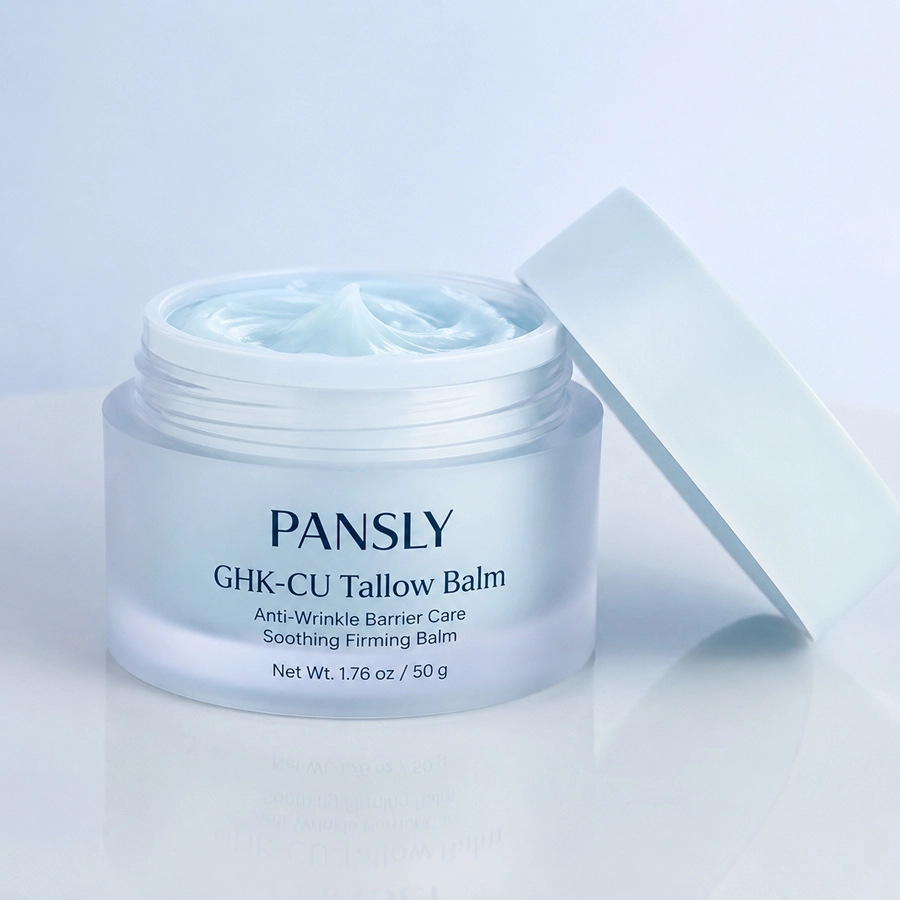
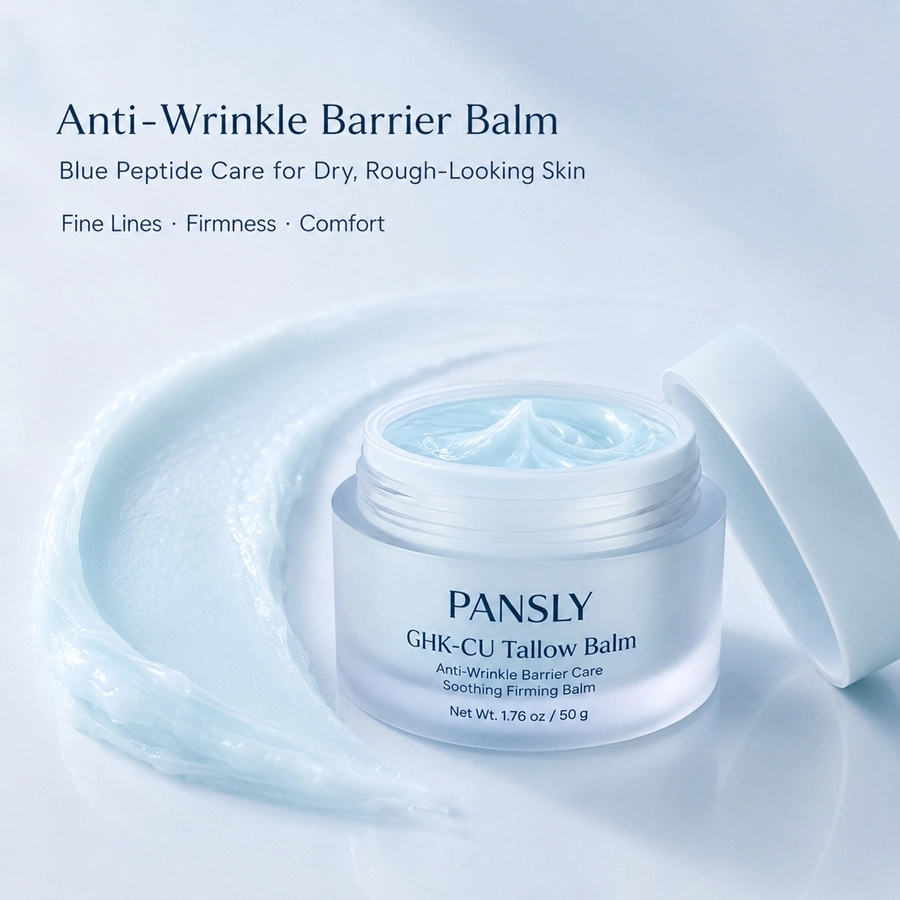
This Pansly GHK-CU + SNAP-8 Grass-Fed Tallow Anti-Wrinkle Barrier Balm is dual-peptide nourishing anti-wrinkle balm, specially developed for dry, rough textured skin, targeting fine lines, sagging contours and weakened skin barrier. Full OEM & ODM private label support is offered, including formula customization, packaging selection, fast sampling and bulk supply.
Five core premium active ingredients work synergistically for multi-dimensional skin care:
GHK-CU Copper Peptide lifts and firms loose skin to boost skin tightness and smooth fine lines;
SNAP-8 Peptide softens expression lines to reduce wrinkle visibility;
Grass-Fed Tallow delivers rich lipid nourishment to relieve persistent dry flaky rough skin;
Ceramide NP reconstructs skin moisture barrier to enhance skin comfort and resilience;
Squalane melts lightly into skin to provide silky long-lasting hydration.
Luxury rich light blue cushion balm texture glides smoothly and absorbs quickly without heavy greasy residue. Daily use improves dry rough texture, blurs dry fine lines, lifts saggy skin and stabilizes skin barrier, leaving skin soft, calm and smooth with healthy supple glow.
Get in Touch with us
If you have any comments or good suggestions, please leave us a message; later our professional staff will contact you as soon as possible.
Click here to customize the Beauty
we respond within a few hours
Monday–Friday, 9AM–6PM
3A01, Building A, Zhisheng Square, No. 4 Zhifu Road, Helong Street, Baiyun District, Guangzhou, China.


Leave a request, and we'll email you back within 24 hours.
© 2026 Beyond Basix. All Rights Reserved.
