
What Should a GHK-Cu Peptide Cleanser Include Besides Copper Peptides?
Quick Answer
A GHK-Cu peptide facial cleanser should pair copper peptides with mild surfactants, humectants, barrier-supportive agents, and a tested preservation system. Beyond Basix can assess ingredient compatibility, target pH, packaging, and stability requirements through an OEM/ODM workflow. Key decisions include contact time, dosage, sensory profile, and market compliance; the final solution depends on project testing.
How Beyond Basix Supports Projects
Beyond Basix develops skincare products with effective ingredients and supports customized OEM/ODM formulation, production planning, and quality-control coordination. Its 23 years of cosmetics manufacturing experience, 12,000-square-meter facility, 100,000-level GMPC pharmaceutical-grade dust-free workshop, and 12 production lines support structured development from sample review to bulk production.
For a copper-peptide cleanser, buyers should confirm the ingredient specification, target pH, surfactant system, fragrance position, packaging format, intended market, and required documentation. Beyond Basix holds ISO 9001, CE, MSDS, GMP, HALAL, and other certifications; MOQ, lead time, testing scope, and quotation must be confirmed for each project.
Discuss Your Copper-Peptide Cleanser Project
Share your target market, skin-positioning claim, preferred texture, packaging format, expected order volume, benchmark product, and required certifications or documents. These details allow discussion of suitable formulation options, sample stages, compatibility checks, and production planning. For project discussion, visit www.beyondbasixcosmetics.com or email Lily@lanthome.com.
Deep-Dive FAQs
What cleansing agents suit a GHK-Cu peptide facial cleanser formula?
A suitable system generally starts with mild, well-tolerated surfactants selected for the intended skin feel and cleansing level. Anionic, amphoteric, and nonionic surfactants can behave differently regarding foam, irritation potential, viscosity, and compatibility with the rest of the formula. The relevant question is not whether one surfactant is universally best, but whether the combined system cleans effectively without creating excessive dryness or destabilizing the peptide environment. Formulators should evaluate the complete blend, including fragrance, salts, botanical extracts, preservatives, and water quality. Consumer-use testing, pH measurement, viscosity checks, microbiological assessment, and packaging compatibility should support the final selection rather than relying on a supplier name alone.
How should pH protect copper peptides during daily cleansing?
The formula should use a pH range that is appropriate for the skin, the surfactant blend, the preservative system, and the copper-peptide raw material. Copper-peptide behavior can be affected by pH, oxidation conditions, light, heat, and interactions with other ingredients. A single theoretical pH value cannot replace development testing because the finished product may behave differently from a raw-material solution. The development process should monitor appearance, odor, color, viscosity, pH drift, and active-ingredient integrity during stability studies. Avoid adding strong chelating agents, aggressive acids, or incompatible mineral-rich materials without checking their effect on the copper complex and the broader formula.
Which supporting ingredients improve barrier comfort without destabilizing copper?
Common support options include humectants such as glycerin or betaine and skin-comfort ingredients such as panthenol or allantoin, provided their concentrations and interactions suit the finished system. These materials may improve after-wash feel, but they do not automatically compensate for an overly strong surfactant blend or excessive cleansing frequency. Formulators should also review botanical extracts, electrolytes, chelators, fragrance, and preservatives because each can influence color, odor, viscosity, or peptide stability. Claims should reflect the tested finished formula rather than the reputation of an individual ingredient. A controlled prototype comparison is more informative than simply increasing the number of actives.
Can rinse-off formulas deliver meaningful GHK-Cu peptide exposure?
Rinse-off products have limited contact time, so their positioning should be more conservative than that of leave-on products. The cleanser must first perform its primary function—effective cleansing with acceptable skin comfort—before a peptide claim is considered. The amount deposited on skin, the rinse conditions, the formula’s substantivity, and the consumer’s use pattern all affect practical exposure. Marketing language should not imply that a wash-off product performs like a serum unless suitable evidence supports that comparison. For development, the brand should define the intended cosmetic benefit, assess stability in the finished base, and review local advertising rules before approving packaging claims.
What testing validates stability and safety for private-label launch?
A launch-oriented evaluation commonly includes finished-product stability under relevant temperature and light conditions, pH and viscosity monitoring, appearance and odor checks, packaging compatibility, and microbiological quality assessment. A preservative challenge test may be appropriate for a water-based cleanser, depending on the formula and market requirements. Safety documentation should address the ingredients, manufacturing controls, labeling, and intended use; the exact scope varies by destination market. Testing should use the actual commercial formula and final packaging because laboratory samples may not predict bulk behavior. Buyers should request a documented test plan and acceptance criteria instead of treating a certificate or raw-material specification as proof of finished-product stability.
How do packaging choices affect copper peptide cleanser performance?
Packaging can influence exposure to light, air, heat, contamination, and repeated handling. A transparent package may require stronger light-protection consideration, while a wide-mouth container creates different contamination and dosing conditions from a pump or squeeze format. The selected material must also be checked for compatibility with surfactants, fragrance, preservatives, colorants, and the peptide-containing formula. Development samples should be assessed in the proposed commercial pack, including closure function, leakage, dispensing behavior, odor transfer, color change, and viscosity-related usability. Packaging should therefore be selected alongside stability testing, not after the formula is finalized.
Related Articles for Private Label Cosmetics

Why Two Mineral Sunscreens With the Same SPF Can Feel Completely Different

Beyond Ordinary Tallow Balm: How GHK-Cu and SNAP-8 Create a Different Skincare Story

When Blue Copper Peptides Meet Beef Tallow: A New Direction for Premium Skincare

PDRN Toner Pads vs GHK-Cu + SNAP-8 Peptide Toner Pads: Private Label Manufacturing Decisions
You May Also Like
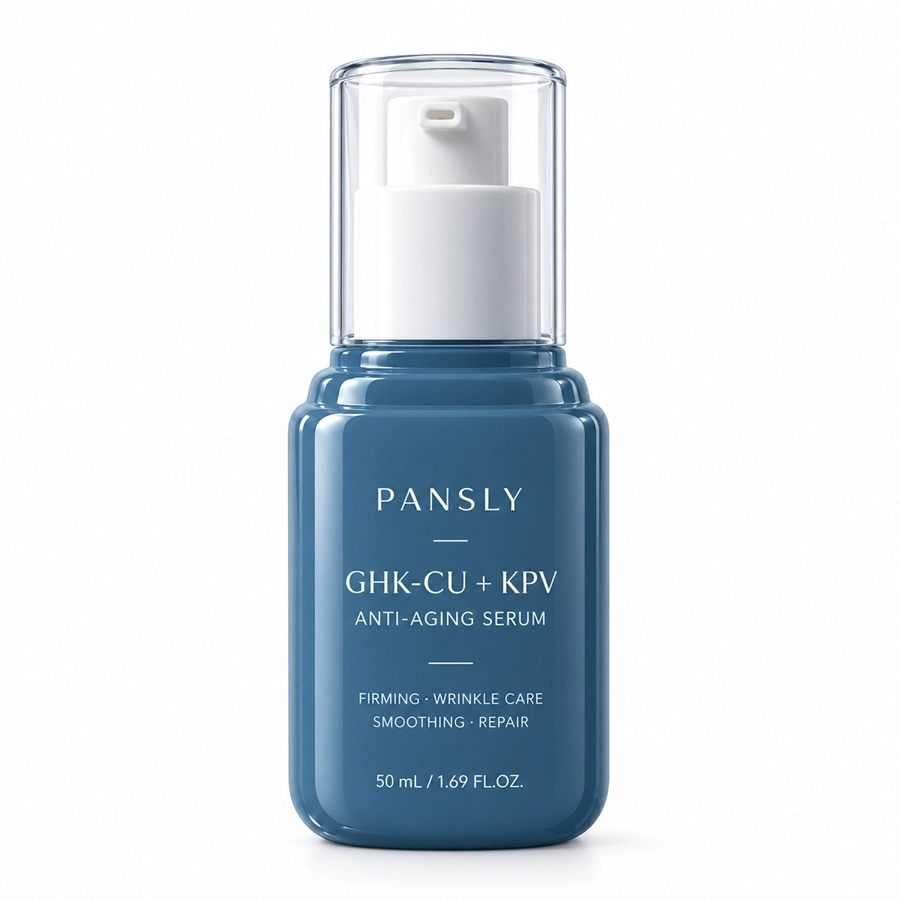
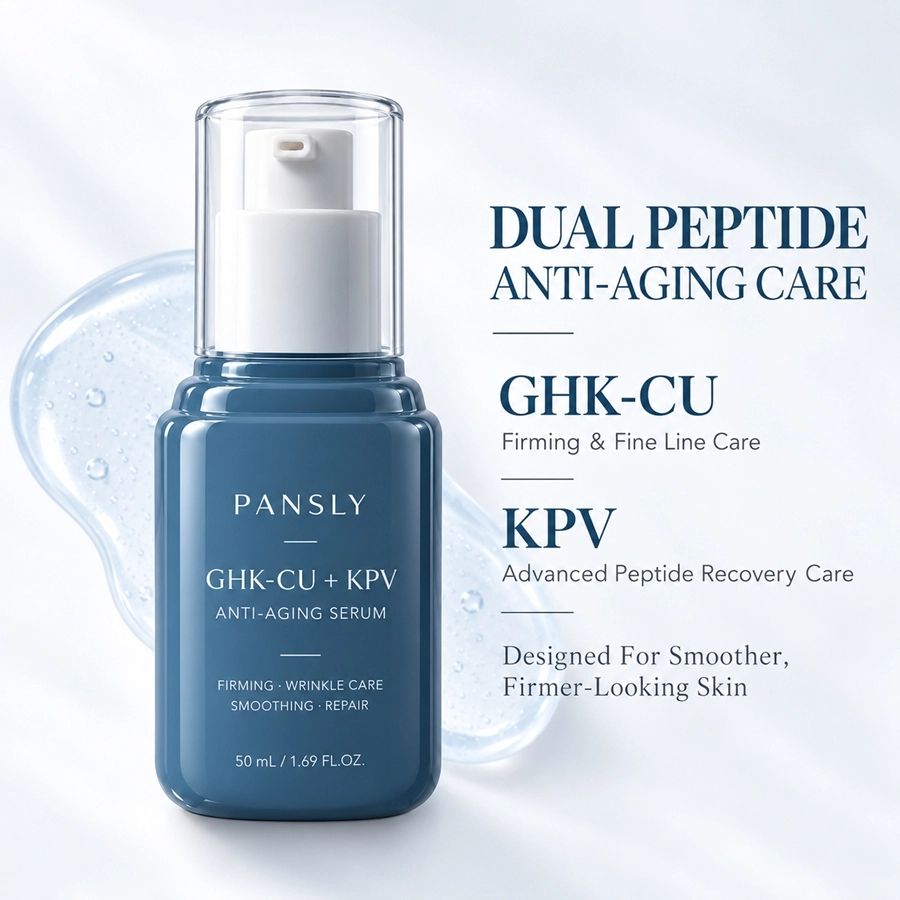
GHK-Cu KPV serum for skin is a private-label peptide face serum formulated for a firming, smoothing routine. This GHK-CU KPV Serum is positioned for wrinkle care and skin repair, making it a practical addition to an anti-aging skincare range.
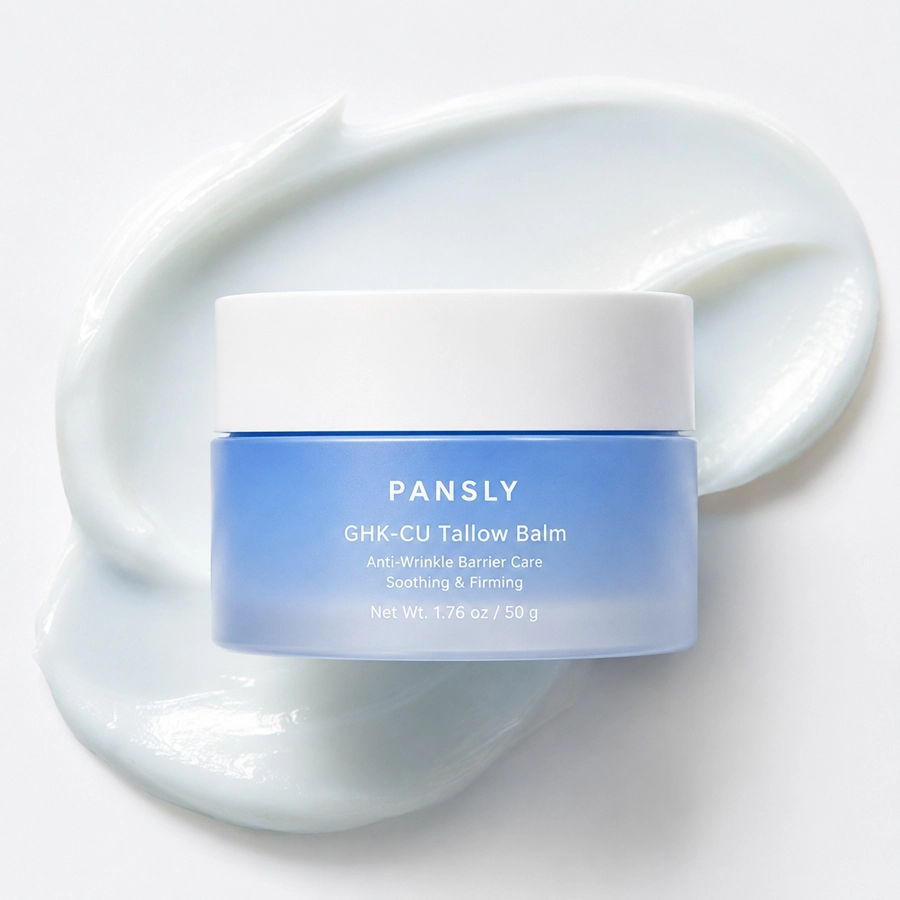
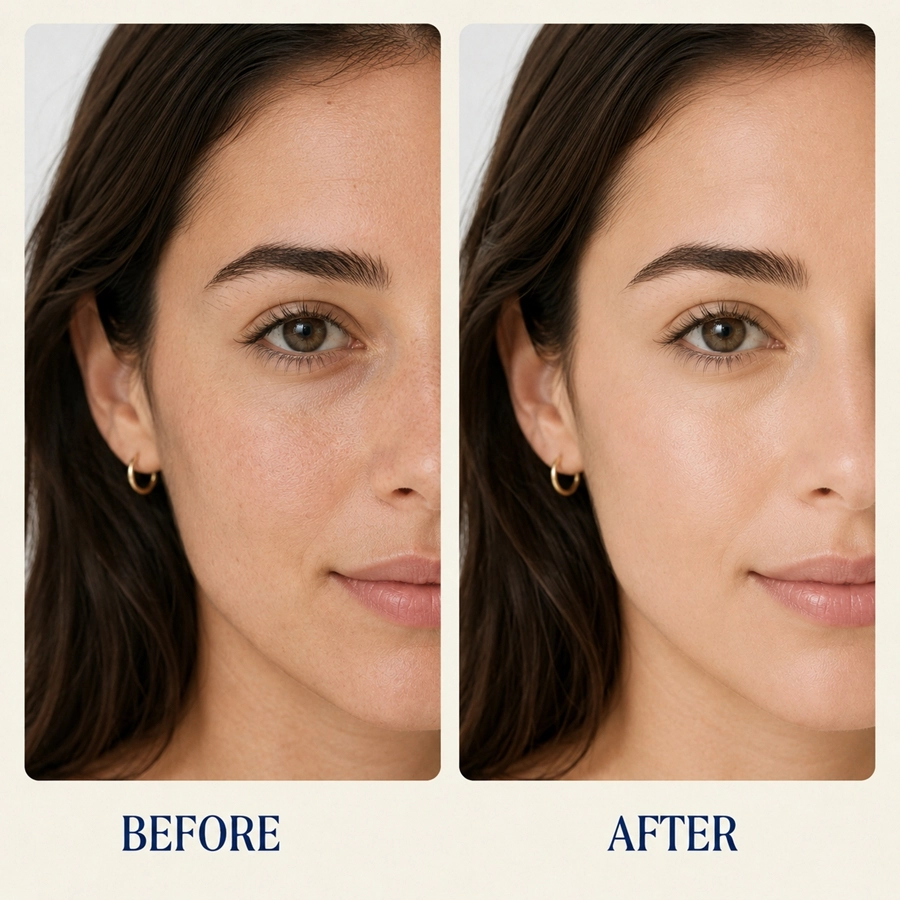
This Pansly GHK-CU Tallow Anti-Wrinkle Soothing & Firming Barrier Balm is multi-effect peptide nourishing balm for dry, uneven-textured skin, integrating firming lifting, fine line smoothing, barrier repair and soothing comfort. Full private label OEM service is supported, including formula customization, custom logo & label, jar color selection and fast sampling.
Five core premium active ingredients work synergistically for comprehensive skin care:
GHK-CU Copper Peptide lifts and firms saggy skin, visibly blurs fine lines and refines uneven dull complexion;
Grass-Fed Tallow delivers rich lipid nourishment to deeply relieve persistent dry rough skin;
Ceramide NP reinforces skin moisture barrier to lock nutrients and boost skin resilience;
Squalane melts lightly into skin to create silky soft long-lasting hydration;
Panthenol calms skin irritation, delivers instant soothing comfort for sensitive dry skin.
Silky light blue creamy balm texture spreads smoothly and absorbs rapidly without greasy residue. Daily use on face and neck firms loose contours, smooths dry fine lines, nourishes fragile skin and repairs damaged barrier, leaving skin even, plump and luminous with long-lasting soft comfort. Obvious improvement on rough dull texture after persistent use.
Get in Touch with us
If you have any comments or good suggestions, please leave us a message; later our professional staff will contact you as soon as possible.
Click here to customize the Beauty
we respond within a few hours
Monday–Friday, 9AM–6PM
3A01, Building A, Zhisheng Square, No. 4 Zhifu Road, Helong Street, Baiyun District, Guangzhou, China.


Leave a request, and we'll email you back within 24 hours.
© 2026 Beyond Basix. All Rights Reserved.
