
Why Is Ectoin Becoming More Relevant to Stress- and Barrier-Focused Skincare?
Quick Answer
Ectoin is becoming more relevant because it helps support cellular water balance and resilience when skin faces environmental or formulation-related stress. An ectoin barrier repair serum should be assessed through ectoin level, delivery format, pH, preservative system, packaging, and substantiated claims. Beyond Basix can support OEM/ODM development, but the final solution depends on the project brief, testing, and market requirements.
How Beyond Basix Supports Projects
Beyond Basix Cosmetics Ltd. provides OEM/ODM skincare development supported by more than 23 years in cosmetics research, production, and sales. Its 12,000-square-meter facility includes a 100,000-level GMPC pharmaceutical-grade dust-free workshop and 12 production lines. These resources can support the development and scale-up of ectoin-focused serums within the selected product format.
Buyers can discuss ingredient positioning, formula texture, packaging compatibility, production planning, and applicable documentation, including available ISO 9001, GMP, HALAL, CE, and MSDS certifications. MOQ, lead time, testing scope, quotation, target market, and claim language must be confirmed for each project rather than assumed from a reference formula.
Discuss Your Ectoin Serum Development Brief
Share your target market, product format, desired ectoin positioning, texture preference, packaging type, expected order volume, and claim requirements. The project discussion can then cover suitable formulation directions, sample stages, testing needs, documentation, and production planning. Send your brief to www.beyondbasixcosmetics.com or Lily@lanthome.com to start a focused ectoin serum project.
Frequently Asked Questions
Why does ectoin suit stress-exposed, barrier-compromised skin better?
Ectoin is a naturally occurring extremolyte produced by certain microorganisms to help maintain cellular stability in harsh environments. In topical skincare, research and supplier data commonly describe its role in supporting water retention, membrane stability, and protection from environmental stress. That does not mean it repairs every form of barrier damage or replaces established moisturization systems. For product development, position it as a supportive active alongside humectants, emollients, and barrier lipids, while verifying the finished formula through instrumental hydration, irritation, and consumer-use testing where appropriate.
Can ectoin replace ceramides in a barrier repair formula?
Ectoin and ceramides address different formulation functions, so substituting one for the other is usually an oversimplification. Ceramides are skin-identical or skin-related lipids used to support the stratum corneum lipid matrix, while ectoin is an osmolyte associated with cellular protection and water-balance support. A formula may use ectoin with ceramides, cholesterol, fatty acids, glycerin, panthenol, or other compatible ingredients, but the choice depends on claims, texture, cost, pH, emulsification, and target-market expectations. Comparative testing should support any superiority or replacement claim.
How should ectoin serum claims be substantiated for export markets?
Claims should be matched to evidence generated for the finished product and reviewed against the regulations of each target market. Statements such as hydration or improved skin comfort may require appropriate instrumental or controlled user testing, while stronger claims about repair, protection, inflammation, or disease-related conditions can create additional regulatory risk. Ingredient literature alone is not equivalent to finished-product proof. The development file should document formula composition, test protocols, statistical interpretation, claim wording, safety assessment, artwork review, and market-specific restrictions before bulk production.
What ectoin concentration balances efficacy, sensory feel, and cost?
There is no universal concentration that suits every serum because the appropriate level depends on the ectoin grade, supplier specification, formula architecture, intended claim, product positioning, and target cost. A practical development program can compare several technically realistic levels in the same base, then assess appearance, odor, pH, viscosity, tack, hydration performance, preservation, and packaging interaction. Buyers should avoid selecting a dose solely from competitor labels or raw-material marketing. The final level should reflect finished-product evidence and commercial feasibility rather than an isolated percentage.
Does ectoin work with acids, retinoids, and sensitive-skin routines?
Ectoin may be incorporated into routines containing exfoliating acids or retinoids, but compatibility must be evaluated in the complete formula and use pattern. Low-pH acids, oxidation-sensitive actives, preservatives, solvents, and packaging materials can influence stability and skin feel. Ectoin should not be presented as canceling the irritation potential of retinoids or acids. Development teams should assess pH drift, active potency, preservative performance, accelerated stability, freeze-thaw behavior where relevant, and user tolerability. Routine guidance should also distinguish supportive hydration from treatment claims.
Which stability tests matter before launching an ectoin serum?
A pre-launch stability program should reflect the formula, container, distribution route, and target climate. Typical considerations include appearance, odor, color, pH, viscosity, fill weight, microbial quality, preservative effectiveness where applicable, active or marker analysis, and container compatibility. Accelerated and real-time studies provide different information; neither should be treated as interchangeable. Light exposure, temperature cycling, transport simulation, and in-use evaluation may be relevant for transparent or air-sensitive packaging. Acceptance criteria must be defined before testing, and any claim-supporting study should use the final commercial formula.
Related Articles for Private Label Cosmetics

Why Two Mineral Sunscreens With the Same SPF Can Feel Completely Different

Beyond Ordinary Tallow Balm: How GHK-Cu and SNAP-8 Create a Different Skincare Story

When Blue Copper Peptides Meet Beef Tallow: A New Direction for Premium Skincare

PDRN Toner Pads vs GHK-Cu + SNAP-8 Peptide Toner Pads: Private Label Manufacturing Decisions
You May Also Like
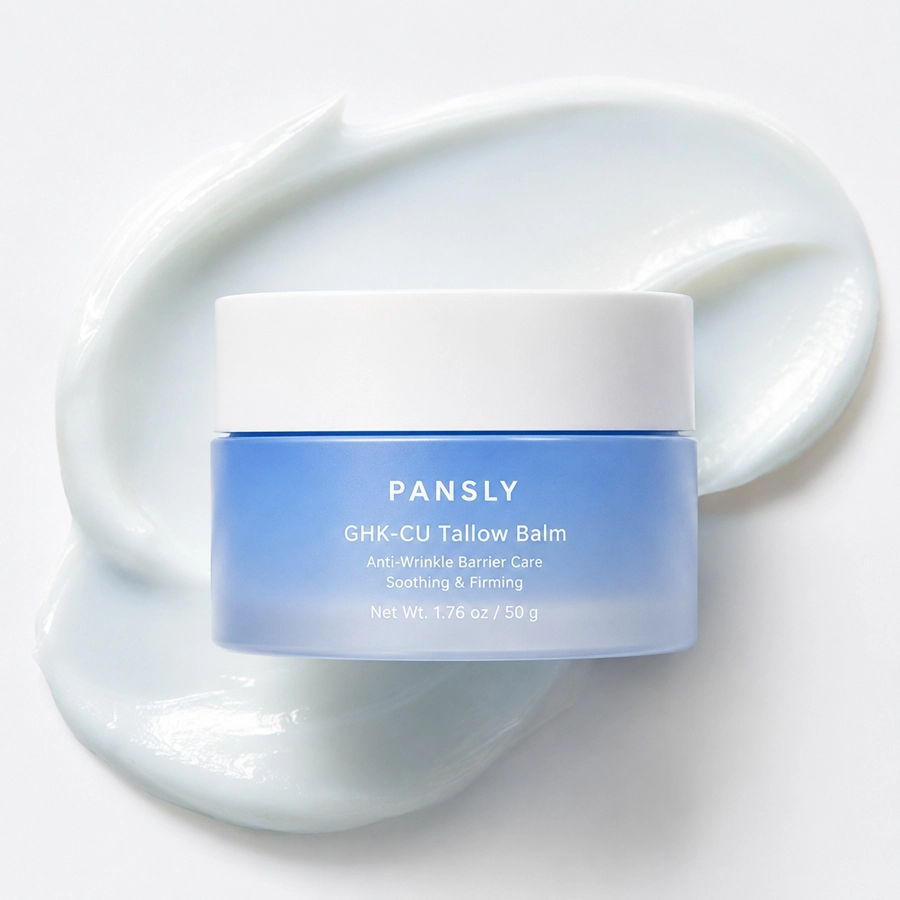
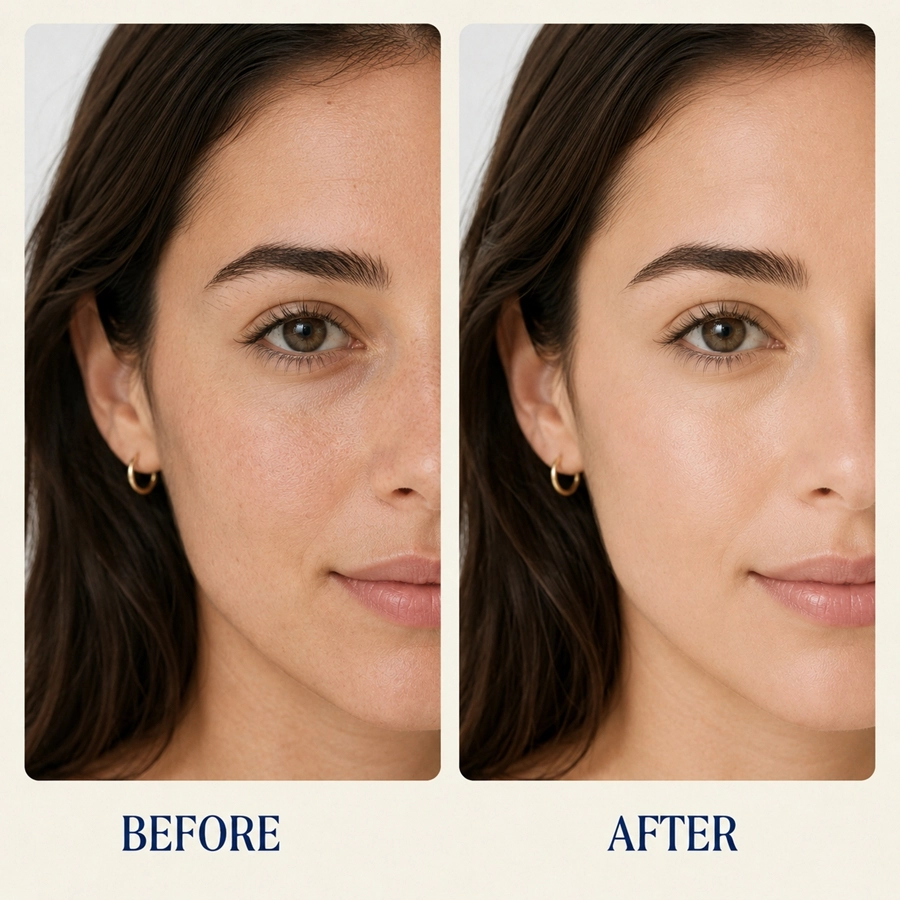
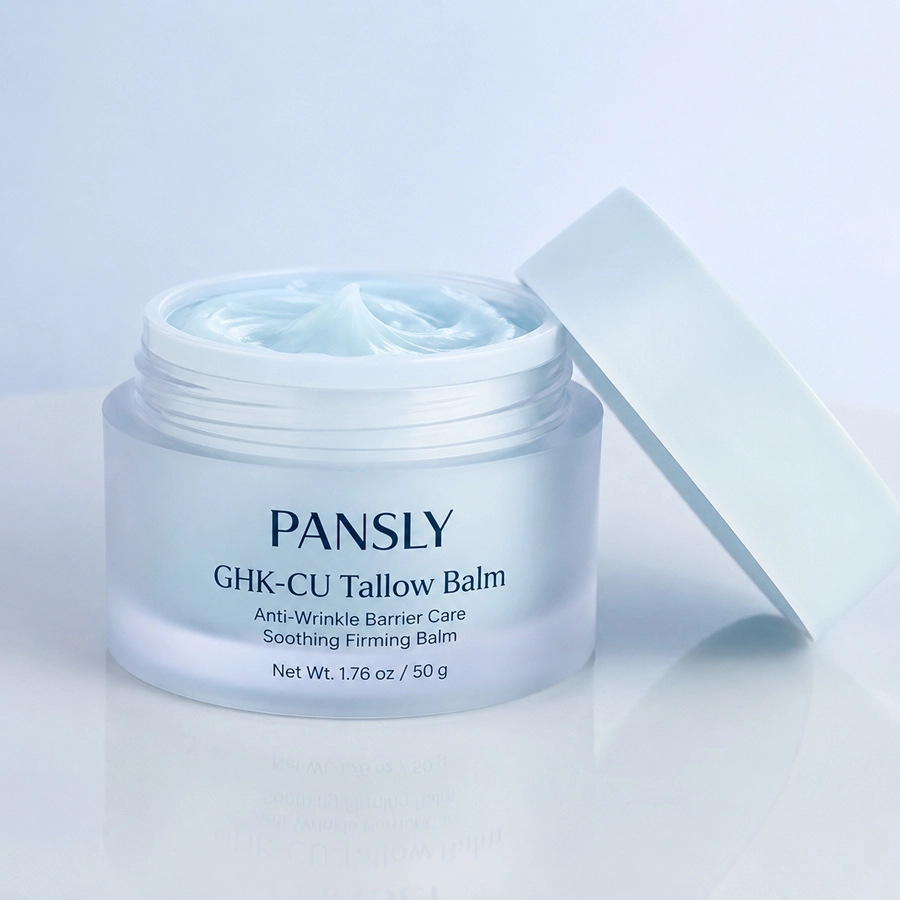
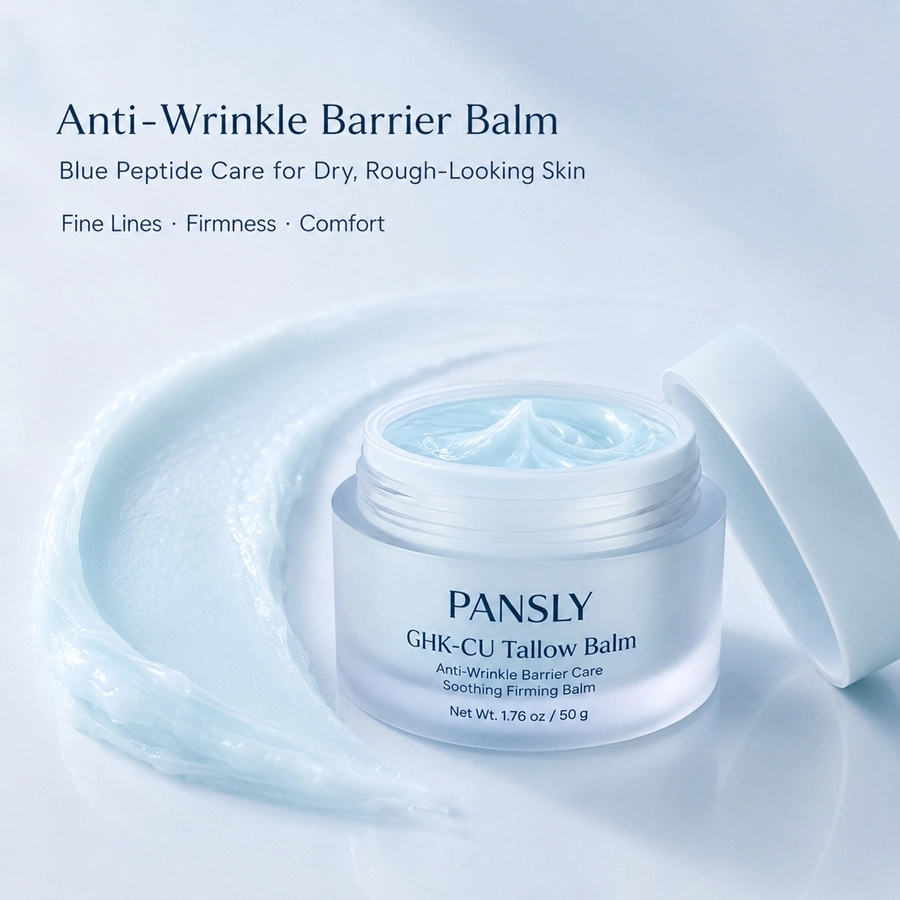
This Pansly GHK-CU Tallow Anti-Wrinkle Soothing & Firming Barrier Balm is multi-effect peptide nourishing balm for dry, uneven-textured skin, integrating firming lifting, fine line smoothing, barrier repair and soothing comfort. Full private label OEM service is supported, including formula customization, custom logo & label, jar color selection and fast sampling.
Five core premium active ingredients work synergistically for comprehensive skin care:
GHK-CU Copper Peptide lifts and firms saggy skin, visibly blurs fine lines and refines uneven dull complexion;
Grass-Fed Tallow delivers rich lipid nourishment to deeply relieve persistent dry rough skin;
Ceramide NP reinforces skin moisture barrier to lock nutrients and boost skin resilience;
Squalane melts lightly into skin to create silky soft long-lasting hydration;
Panthenol calms skin irritation, delivers instant soothing comfort for sensitive dry skin.
Silky light blue creamy balm texture spreads smoothly and absorbs rapidly without greasy residue. Daily use on face and neck firms loose contours, smooths dry fine lines, nourishes fragile skin and repairs damaged barrier, leaving skin even, plump and luminous with long-lasting soft comfort. Obvious improvement on rough dull texture after persistent use.
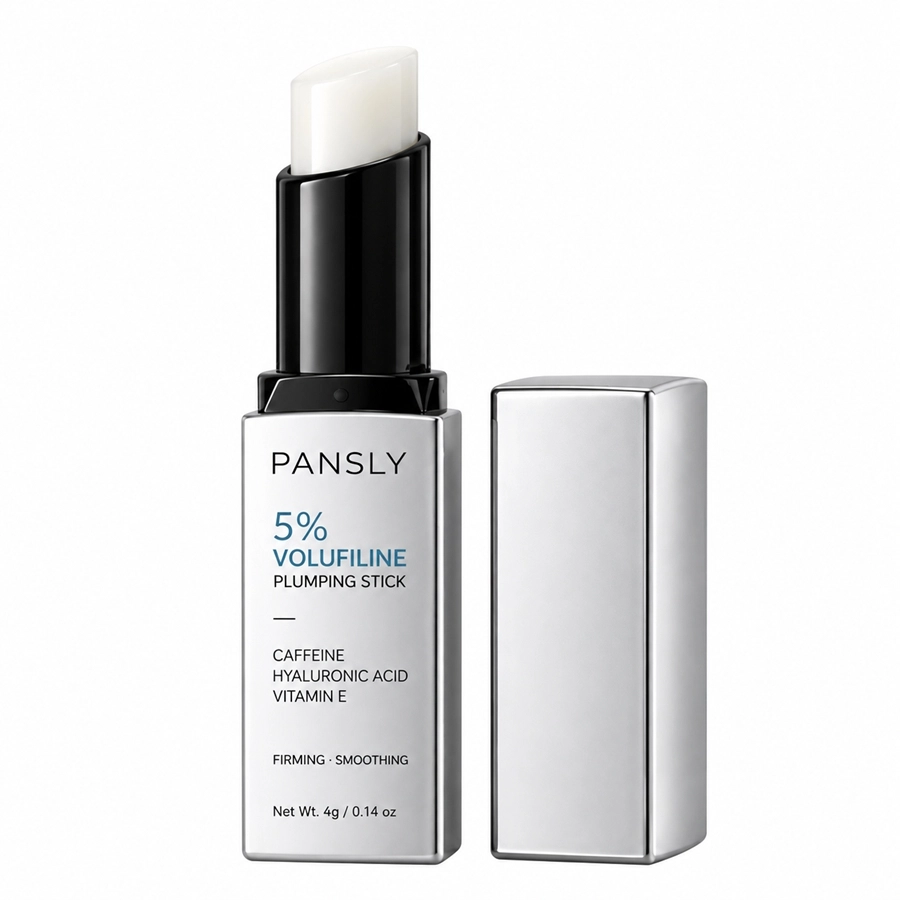
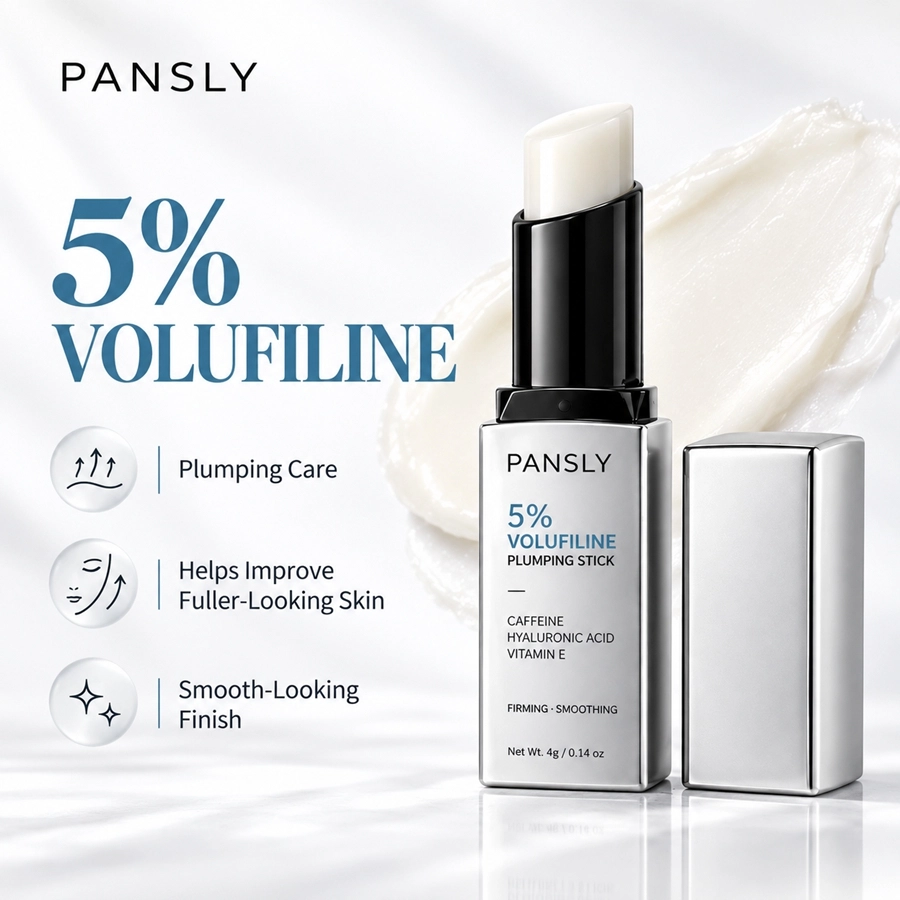
The Volufiline Plumping Stick contains 5% Volufiline in a portable balm for targeted facial care. Apply the Volufiline Lip Plumping Balm Stick to moisturize lips and dry areas, or use the Volufiline Anti Wrinkle Multi Balm to help skin feel smooth and hydrated.
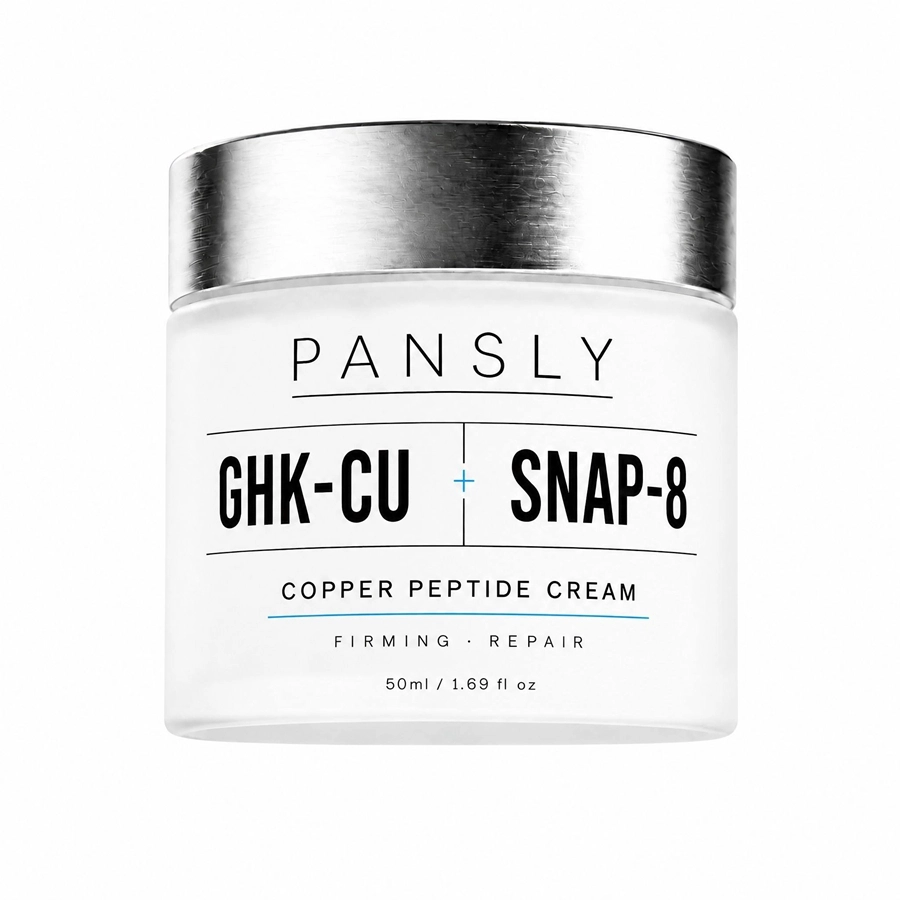
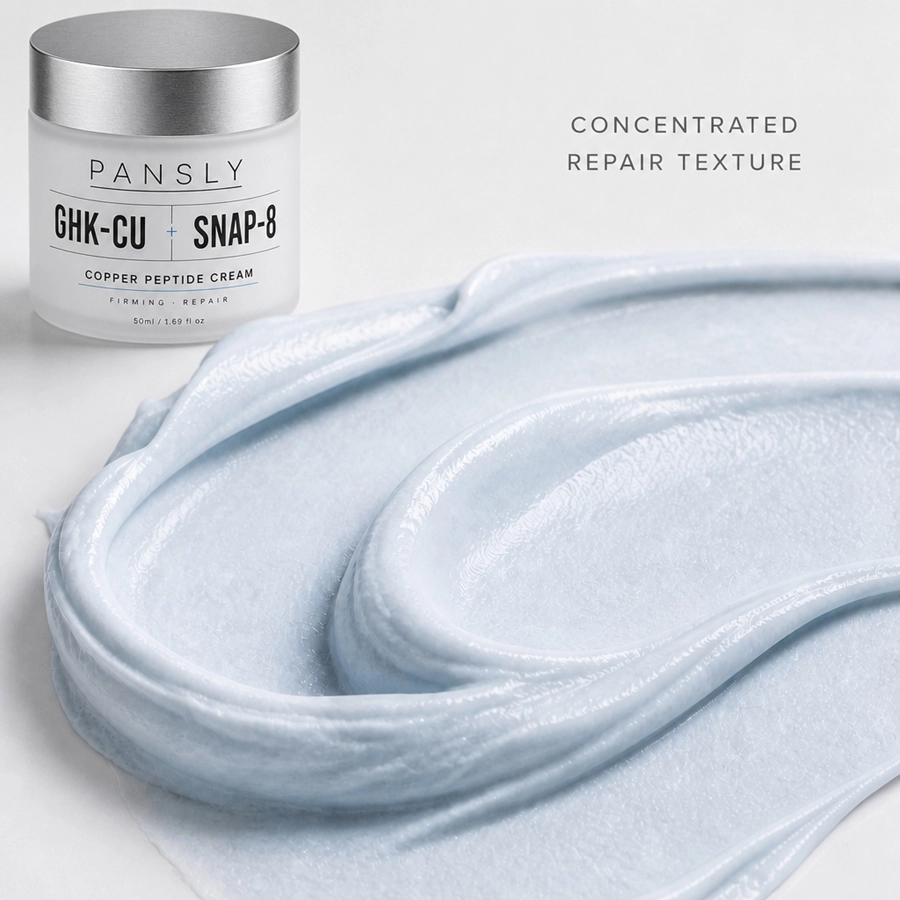
This Pansly GHK-CU + SNAP-8 Grass-Fed Tallow Anti-Wrinkle Barrier Balm is dual-peptide nourishing anti-wrinkle balm, specially developed for dry, rough textured skin, targeting fine lines, sagging contours and weakened skin barrier. Full OEM & ODM private label support is offered, including formula customization, packaging selection, fast sampling and bulk supply.
Five core premium active ingredients work synergistically for multi-dimensional skin care:
GHK-CU Copper Peptide lifts and firms loose skin to boost skin tightness and smooth fine lines;
SNAP-8 Peptide softens expression lines to reduce wrinkle visibility;
Grass-Fed Tallow delivers rich lipid nourishment to relieve persistent dry flaky rough skin;
Ceramide NP reconstructs skin moisture barrier to enhance skin comfort and resilience;
Squalane melts lightly into skin to provide silky long-lasting hydration.
Luxury rich light blue cushion balm texture glides smoothly and absorbs quickly without heavy greasy residue. Daily use improves dry rough texture, blurs dry fine lines, lifts saggy skin and stabilizes skin barrier, leaving skin soft, calm and smooth with healthy supple glow.
Get in Touch with us
If you have any comments or good suggestions, please leave us a message; later our professional staff will contact you as soon as possible.
Click here to customize the Beauty
we respond within a few hours
Monday–Friday, 9AM–6PM
3A01, Building A, Zhisheng Square, No. 4 Zhifu Road, Helong Street, Baiyun District, Guangzhou, China.


Leave a request, and we'll email you back within 24 hours.
© 2026 Beyond Basix. All Rights Reserved.
