
Why Is Intensive Foot Care an Underrated Private Label Skincare Category?
Quick Answer
Intensive foot care is underrated because recurring concerns such as dryness, rough texture, and cracked heels create clear opportunities for targeted positioning and repeat purchasing. A private label intensive foot care cream should be assessed through skin feel, ingredient suitability, claim evidence, packaging compatibility, and target-market regulations. Final solutions depend on the specific project, testing requirements, and distribution conditions.
How Beyond Basix Supports Projects
Guangzhou Beyond Basix Cosmetics Ltd. supports foot-care development through OEM and ODM services, ingredient-focused skincare development, production planning, and quality systems. Its 12,000-square-meter facility includes a 100,000-level GMPC pharmaceutical-grade dust-free workshop and 12 production lines, supporting structured production for customized skincare concepts.
For a foot-care brief, buyers should confirm the intended market, texture, fragrance direction, ingredient restrictions, packaging format, claim strategy, and required testing scope. Beyond Basix operates under documented ISO 9001 and GMP-related systems, while MOQ, lead time, testing scope, and quotation must be confirmed for each project rather than assumed in advance.
Discuss Your Intensive Foot Care Cream Project
Share your target market, customer profile, desired texture, key concerns, preferred ingredients, packaging format, expected order volume, and claim requirements so suitable formulation and sampling options can be discussed. Visit www.beyondbasixcosmetics.com or email Lily@lanthome.com to begin a project-specific discussion.
Deep-Dive FAQs
Why do intensive foot creams outperform broad skincare in repeat purchase potential?
Foot-care products address a concentrated use case: consumers apply them to specific areas affected by dryness, roughness, friction, or heel cracking. This makes the benefit easier to understand than a broad general-purpose moisturizer. Repeat purchase should not be assumed, however. It depends on usage frequency, climate, footwear habits, product feel, pack size, price, and whether the formula fits the consumer’s routine. A product brief should define the intended use, application frequency, and cosmetic positioning before forecasting demand. Brands should also avoid implying that a cosmetic cream treats a medical condition unless the product has the required regulatory status and evidence in its target market.
Which ingredients suit cracked heels without creating regulatory problems?
Ingredient selection should begin with the target market’s cosmetic regulations, restricted-substance rules, labeling requirements, and permitted claims. Common cosmetic approaches for rough, dry feet include humectants that attract water, emollients that improve softness, and occlusive materials that reduce moisture loss. The suitability of a particular ingredient depends on concentration, formula pH, skin tolerance, interactions with preservatives, and the intended claim. Claims such as moisturizing, softening, smoothing, and improving the appearance of rough skin are generally more straightforward than treatment claims, but wording must still be reviewed locally. A qualified regulatory review and stability, compatibility, and safety assessment should precede commercialization.
How should private label foot cream claims be substantiated?
Claims should match the formula’s tested performance and the legal standards of each sales market. A brand can define measurable cosmetic endpoints such as moisturization, skin smoothness, or the appearance of roughness, then select appropriate instrumental or consumer-use methods through its testing plan. Product literature should distinguish cosmetic improvement from medical treatment, infection control, wound healing, or disease prevention. Evidence also needs to reflect the finished formula in its final packaging, not merely an ingredient supplier’s general data. Claim wording, test design, participant profile, application schedule, and statistical interpretation should be documented before packaging artwork is finalized.
What packaging protects rich foot cream during distribution?
Packaging selection should consider viscosity, dispensing behavior, air exposure, light sensitivity, closure performance, transport temperature, and the consumer’s intended application. Tubes can support controlled dispensing and convenient bathroom use, while jars may suit richer textures but introduce repeated finger contact. The correct choice cannot be determined from appearance alone. Compatibility testing should examine odor, color, viscosity, leakage, deformation, seal integrity, and interaction between the formula and packaging components under relevant storage conditions. The pack also needs sufficient space for legally required ingredient labeling, directions, warnings, batch information, and market-specific responsible-party details.
How can brands set MOQ and pricing for foot care?
MOQ and unit pricing are shaped by formula complexity, raw-material purchasing, packaging selection, decoration method, filling requirements, testing scope, and production scheduling. A standard stock package may reduce development complexity, while custom molds, special finishes, or low-volume components can raise the effective cost. Buyers should request a quotation based on a defined specification rather than compare unexplained per-unit figures. The brief should state target quantity, pack size, formula status, packaging preference, destination market, artwork requirements, and desired delivery window. Sampling, testing, tooling, freight, and registration-related work may need to be evaluated as separate cost items.
Should a foot cream be tested differently for sensitive skin?
The finished product should be assessed according to its intended users, application site, formula composition, and target-market expectations. Feet have thicker skin in some areas, but that does not make every formula suitable for irritated, fissured, or sensitive skin. Fragrance, exfoliating acids, preservatives, cooling agents, and high concentrations of certain functional ingredients may affect tolerance. A sensitive-skin positioning should be supported by an appropriate safety and tolerance strategy rather than inferred from a single ingredient. The manufacturer and brand should agree on stability, compatibility, microbiological, safety, and any human-use testing needed for the final formula and packaging.
Related Articles for Private Label Cosmetics

Why Two Mineral Sunscreens With the Same SPF Can Feel Completely Different

Beyond Ordinary Tallow Balm: How GHK-Cu and SNAP-8 Create a Different Skincare Story

When Blue Copper Peptides Meet Beef Tallow: A New Direction for Premium Skincare

PDRN Toner Pads vs GHK-Cu + SNAP-8 Peptide Toner Pads: Private Label Manufacturing Decisions
You May Also Like
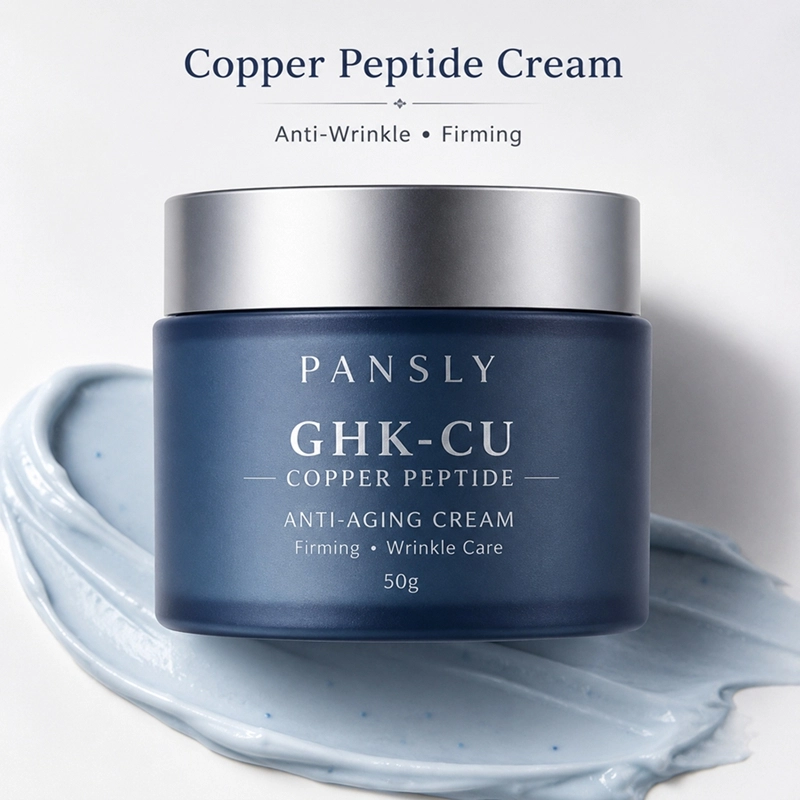
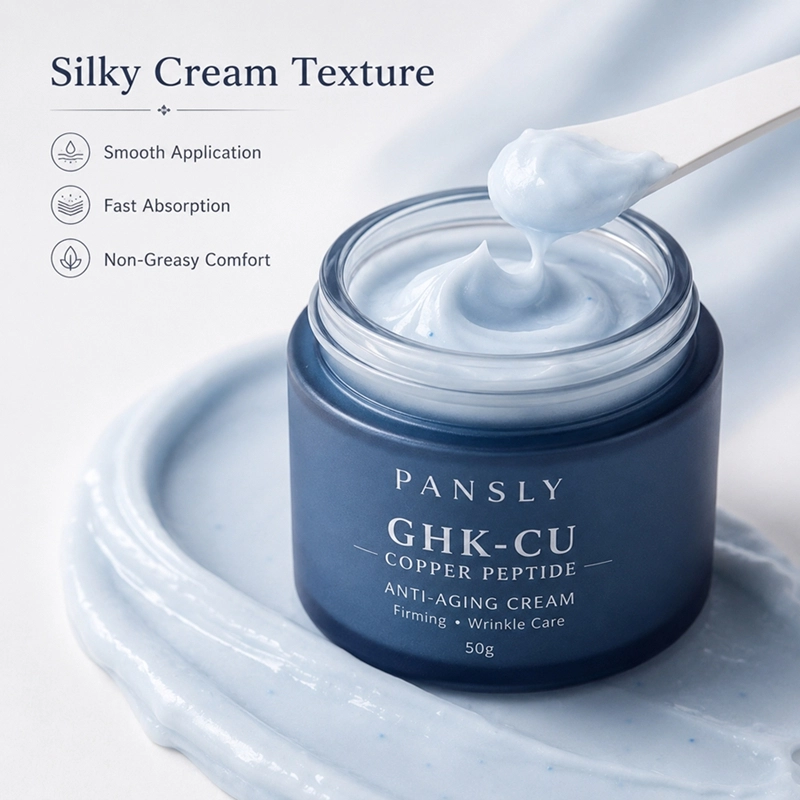
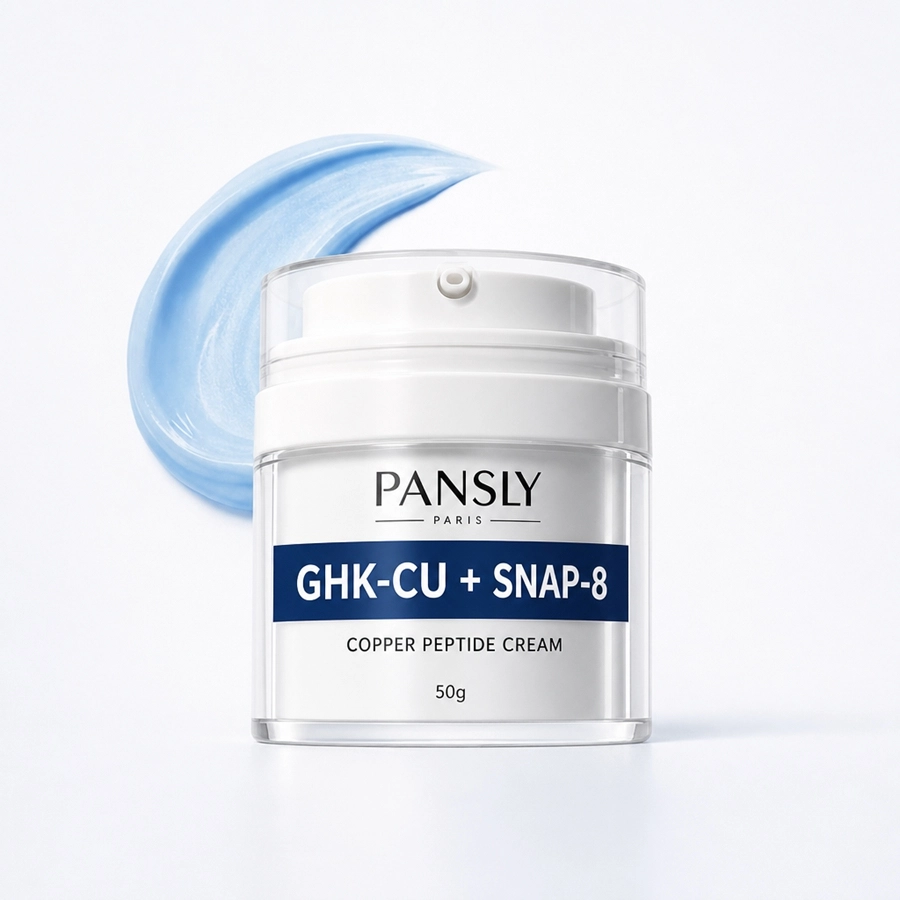
GHK-Cu Face Cream, a copper peptide anti-aging formula, hydrates deeply and supports skin barrier repair. Private label available for bulk orders, giving brands a ready-to-sell moisturizer with a blue copper peptide base for smoother-looking skin.
Get in Touch with us
If you have any comments or good suggestions, please leave us a message; later our professional staff will contact you as soon as possible.
Click here to customize the Beauty
we respond within a few hours
Monday–Friday, 9AM–6PM
3A01, Building A, Zhisheng Square, No. 4 Zhifu Road, Helong Street, Baiyun District, Guangzhou, China.


Leave a request, and we'll email you back within 24 hours.
© 2026 Beyond Basix. All Rights Reserved.
